monogastric nutrition- horses
 Call Kai
 Learn
Learn Practice Test
 Spaced Repetition
 Match
Match Flashcards
 Knowt Play
1/32

There's no tags or description
Looks like no tags are added yet.
Name | Mastery | Learn | Test | Matching | Spaced | Call with Kai |
|---|
No analytics yet
Send a link to your students to track their progress
33 Terms
foregut
what type of digestion
how much percent crude protein
2 regions
how long does digestion take
what is secreted
enzymatic digestion
3-4 hours
52-58 percent crude protein and all soluble carbohydrates
stomach
rigid and small in size
squamous upper region does not have protective coating
glandular lower area has gastric juices and protective coating
pepsin secreted into the stomach- break down proteins
gastric lipase secreted by stonach and pancrease into si to break down fat
foregut- small intestine
stomach linked to small intestine by pyrolus
duodenum- bile continuously trickles- fat digestion and absorption
jejunum- absorption of starch, protein, fat and fat soluble vitamins
ileum- connects to the large intestine
hindgut
length
4 parts
capacity
how long
what type of digestion occurs here
8m long
caecum, large colon, small colon and the rectum
makes up about 65 percent of the digestive system.
more than 100l capacity
can take up to 72 hours for digesta to pass through LI
all undigested food end up here
change from enzymatic to fermentation digestion
microbial digestion of fibre occurs in cecum and colon
most horses energy comes from this hundgut digestive process
large intestine
caecum, large and small colon and the rectum
caecum including caecum capacity
25-35l
large fermentation- micro organisma
gut flora is present to break down cellulose
sensitive to dietary changes
large colon
length in feet
capacity
reabsorption of water
10-13ft long
capacity 90-110litres
folded into 4 regions with 3 sharp bends within the large colon
sternal pelvic and diaphragmic
small colon
length
role
long (10-13ft) narrower than the large colon
role of the small colon continuation absorption of water, electrolytes and vfa not prev absorbed by the large colon
litte to no vfa
rectum
short 30cm straight tube connecting small colon to anus
acts as a storage area for faeces ready for passing out body through anus
vfa in the hindgut
where does microbial digestion of fibre occur
where is protein absorption more efficient
microbial digestion of fibre occurs i the cecum and colon
vfa produced
microbes require protein and carbs to produce these
vfa absobred and converted to glucose or fat
protien absorption less efficient process
protien absorption more efficient in small intestine
overview of digestion
how many days
what is the foregut sensitive to
what are microbes sensitive to
process of food from mouth to manure takes around 3 days
foregut is more efficient and sensitive to feed volumes
hindgut is necessary to cope with dietary fibre but mirobes are sensitive to rapid dietary change and must be kept healthy
always provife plently of fibre
how much hours should horses graze
16 hours a day
body condition scoring
A- neck • B- wither • C- Behind the shoulder • D- Ribs • E- Top line • F- Tail head
Two scoring systems • 1 to 5 • 1 under weight → 3 ‘normal’ → 5 obese • 1 to 9 (Henneke et al., 1983) • 4 to 6 ‘normal’ → 9 obese
forage or roughage features
high fibre
contain large amouns of digestible and indigestible fibres
fresh grass
preserved hay or haylage
alfalfa and chaffs, preserved by drying and grounding to use in mixed feeds
main feed
protein, vitamin and mineral content of forage is highly variable
what may be needed to add if main feed is roughage
balancer for correct vitamin and mineral
what do mixes contain
oats, barley, maize, sugar beet, bran, peas and or beans which are soaked, boiled or extruded
oil
pre mixes
supplementation with minerals
play critical role in the health of the horse
amount supplemented to horse must be considered as minerals often influence absorption and metabolism of other nutrient
vitamin
risks in a high forage based diet
organic substances that the body requires for various biological processes
lack in diet- lead to deficiency- diseases
nearly all vitamins are supplied by good quality pasture and usnlight
horses with a high forage based diet which is rich in potassium can commonly lack sodium- salt supplementation
pther supplements
electrolytes
succulents (treats)- carrots, apples, parsnip
energy requirement
• Megajoules of Digestible energy (MJDE) measured in the UK
• MegaCals (Mcal) measured United states
• Convert Megacals to Megajoules multiple MegaCals by 4.186
• For example 16.7 Mcal X 4.186 = 70 Mjoules
guidelines from national research council animal nitriition
appetite- how much percent of body weight
maximum DM intake- how much percent body weight
approx how much digestible energy per kg body weight
Appetite = 2% to 2.5% body weight •
Maximum daily dry matter (DM) intake 2.5% to 3% body weight
• Approximately 3.34 of digestible energy (DE) per kg of bodyweight
weight gain
how much kg is one unit change in body condition score equivalent to
1 unit change in Body condition score (BCS) = 16 to 20 kg actual BW • Increase digestible energy 10
weight loss
Decrease digestible energy 10%
pregnancy
common mistakes
risk of a diet rich in concentrates during pregnancy
common mistake is over feeding broadmares duirng early pregnancy and underfeeding during lactation
a diet rich in conc during pregnancy can lead to increased incidence of osteochondritis dissecans
feeding for early growth
how to populate the hindgut with bacteria
too much protein
foals and growing horses have undeveloped cecal and colonic digestion so little microbial digestion for less than 3 months
coprophagia may be necessary to populate the hindgut with bacteria
require a low fibre diet- needs to be digested in the foregut, early days rely on mares milk
introduce creep feeding—-
— gradually from a few weeks
— too much protein can predispose them developmental orthopaedic disease
— beware stealing mare feed
energy requirement for performance
500kg horse at maintenance requires 70 MJ DE
Digestible energy requirement Exercise (NCR, 2007) : Light Work = maintenance X 1.20
Moderate Work = maintenance X 1.4
Hard Work= maintenance X 1.9
feeding for high performance
including protein limits
electrolytes
increased protein
limits of 2.5 percent bw/day protein
effect of over feed protein
higher heart and resp rate
strain kidneys
higher rate of sweating and dehydration as body cannot metabollse but must secrete
under feeding protein
decreased growth
foetal loss in preg
weight loss
loss of muscle
reduced appetite
nitrogen is lost in sweat
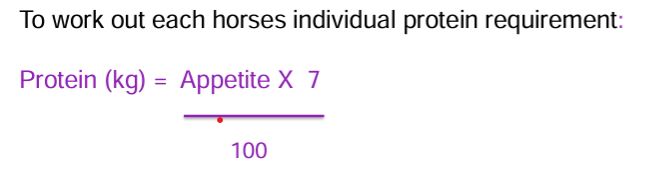
maintenance protein requirement- formula to calculate
7-8 percent
serious issues caused by suboptimal nutrition and feeding practices
colic
gastric ulcers
stables vices
behaviour issues
restricted feeding even in high BCS horses can cause colic, hyperlipidemia, laminitis
where could you auscultate with a stethoscope to assess colic
right: caecum
left: descending colon/ jejunum/small intestine
how could entrapment of the ascending colon affect the blood supply and impact the colon
branches of the caudal mesenteric artery can be twisted reducing passage of blood into the coon wall.
two important physiological functions of the large intestine include storage and absorption of fluid and retention of digesta for microbial digestion
in colic by entrapment, these functions would be compromised, impairing fluid and eletrolyte balance and reducing microbial digestion which is reguated by the the rate of passage of digesta through the large intestine.
why is manure management important?
in general, horses do not have latrine areas ina field and will not eat where they have defecated
therefore manure management is iportant to stop selective grazing and the development of lawns and roughs
can be controlled by manual colleciton or harrowing
may bealso important to discuss the importane of management relating to parasite management and the development of anthelminitic resistance.