DHED 315: Chapter 11 (Basic Injection Techniques)
 Call Kai
 Learn
Learn Practice Test
 Spaced Repetition
 Match
Match Flashcards
 Knowt Play
1/19

There's no tags or description
Looks like no tags are added yet.
Name | Mastery | Learn | Test | Matching | Spaced | Call with Kai |
|---|
No analytics yet
Send a link to your students to track their progress
20 Terms
What are the categories of anesthesia administration?
1) Surface anesthesia
2) Local infiltration
3) Supraperiosteal injection (field block)
4) Nerve block
What is surface anesthesia?
applied on mucosa
• blocks free nerve endings of soft tissue only
• topical anesthetics (2-3mm depth)
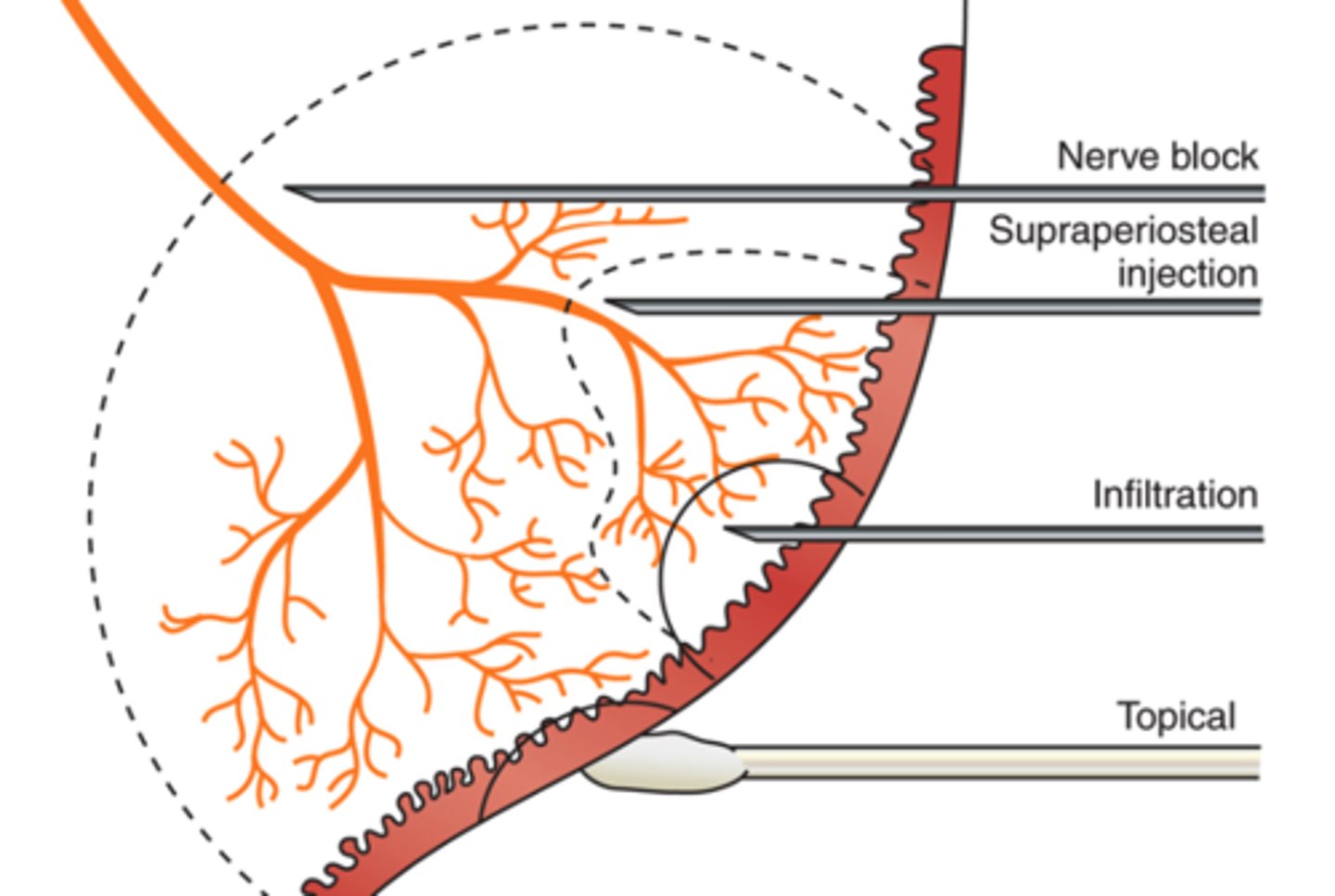
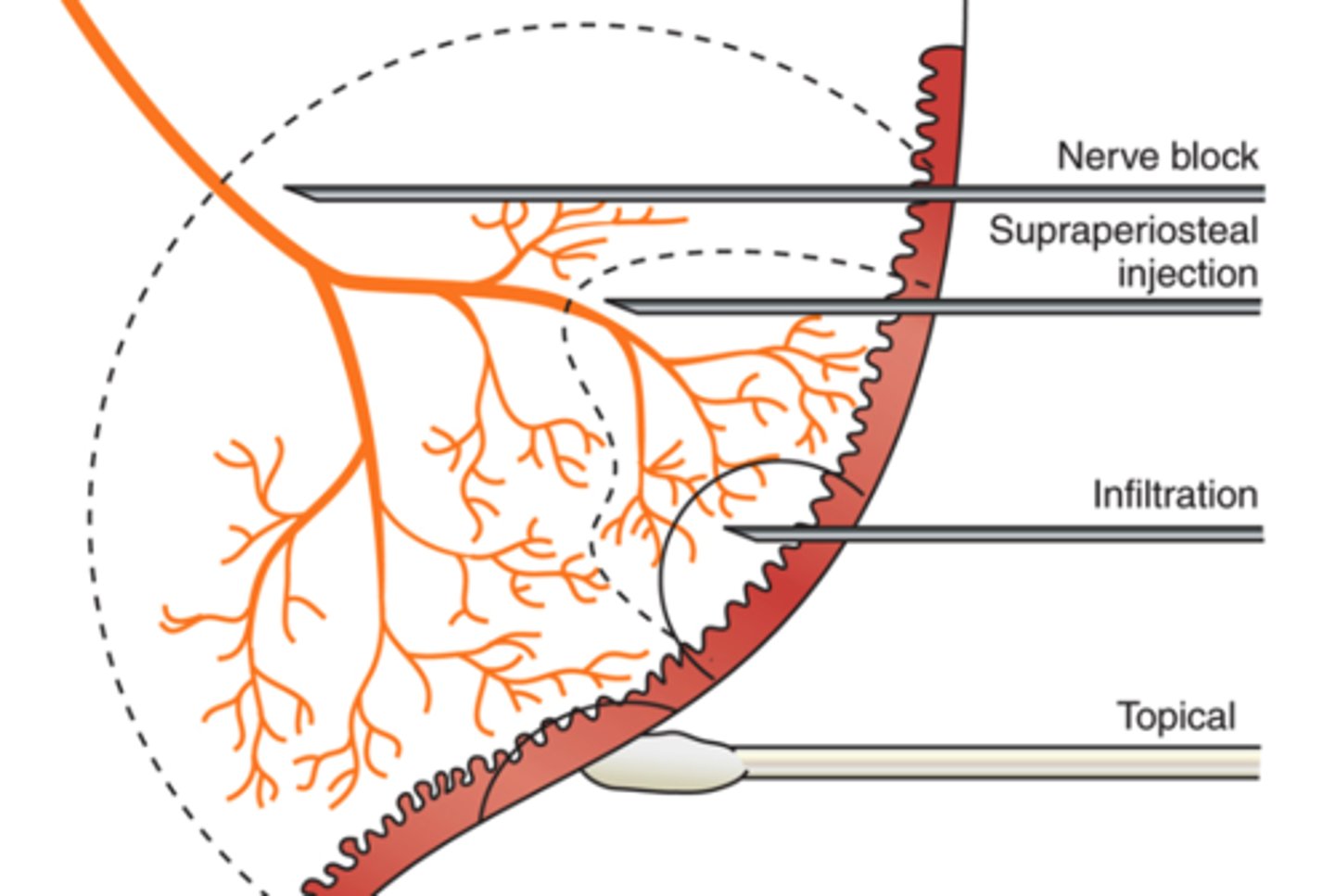
What is local infiltration?
anesthesia of small terminal nerve endings at site
• provides soft tissue anesthesia only
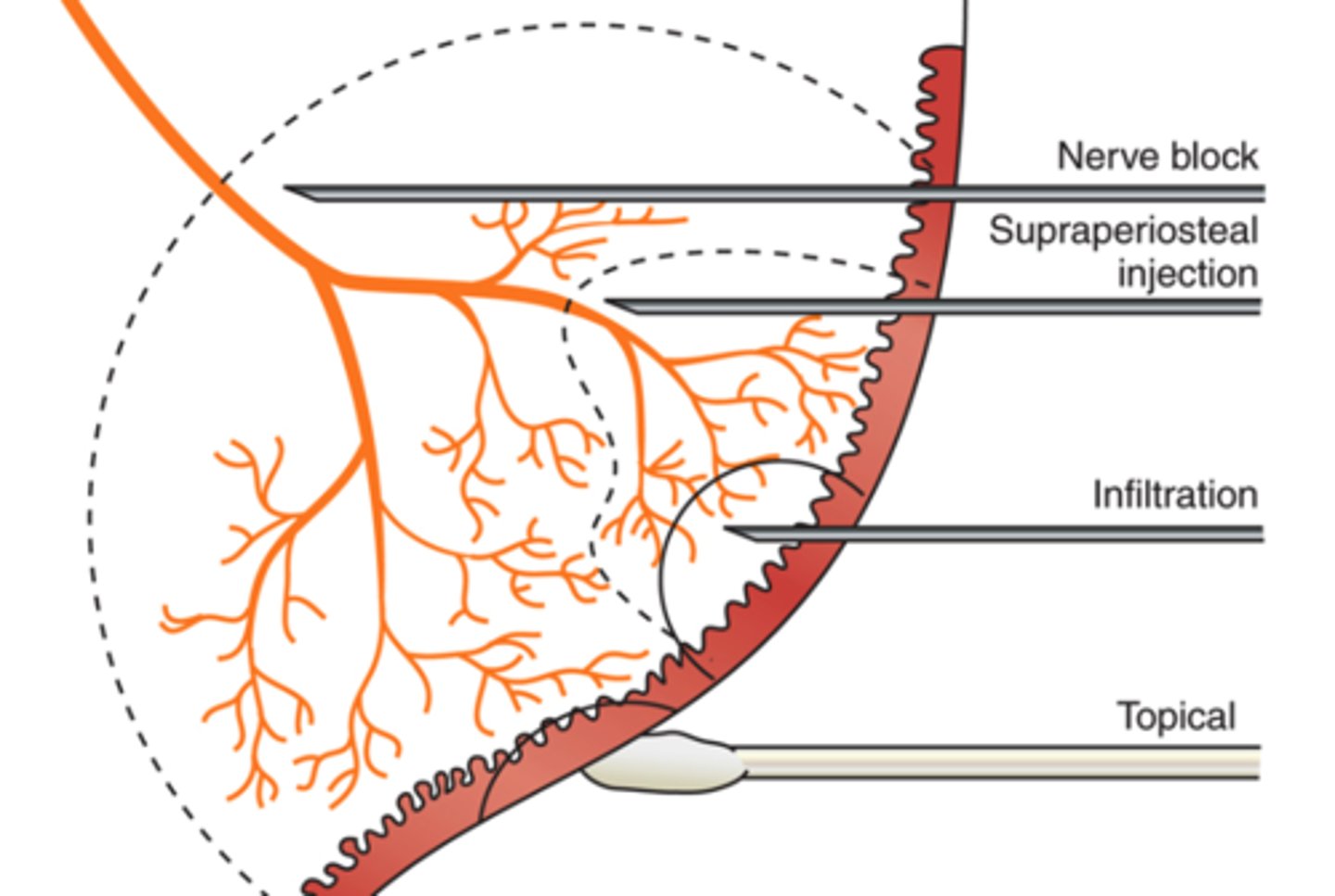
What is a supraperiosteal injection?
"field block"
• regional anesthesia near large terminal nerve branch
• provides pulpal + soft tissue anesthesia of single tooth
You cannot do a supraperiosteal injection on the ____ arch.
mandibular
• due to increased cortical bone density
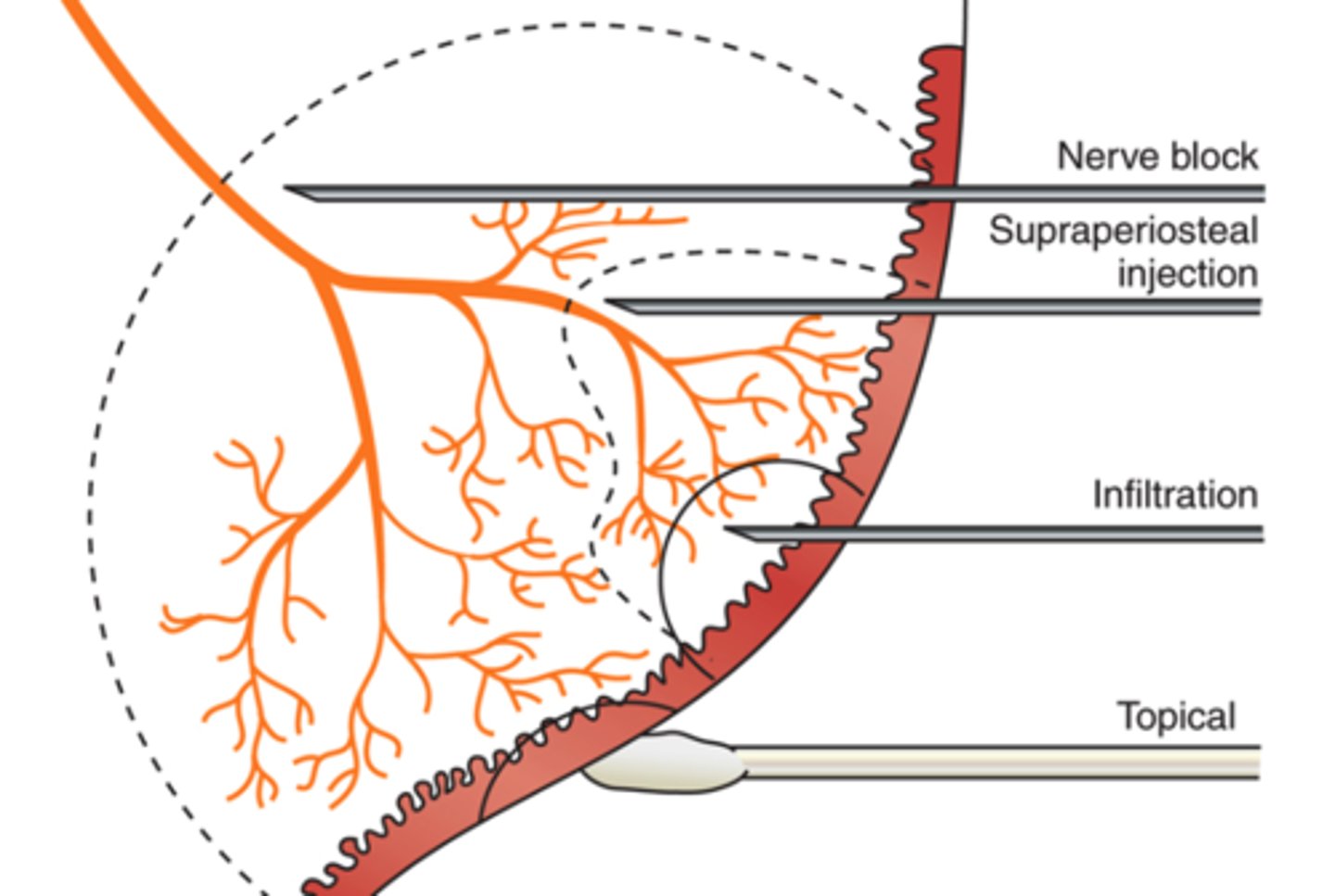
What is a nerve block?
anesthesia of major nerve trunk
• provides pulpal + soft tissue anesthesia over a large area
What does "aspiration on 2 planes" mean?
procedure = aspirate → rotate the barrel of syringe 45 degrees and aspirate again
**ensures that bevel is not against blood vessel wall at first aspiration
What is step 1 in the delivery of anesthesia?
Patient assessment: includes med hx, vitals, consults
What is step 2 in the delivery of anesthesia?
selection of local anesthetic - based on:
• pt's physical status (med hx; contraindications)
• duration of treatment
• post-op pain control needed
• volume of L.A. needed (more invasive tx = more volume)
• hemostasis need
• possibility of self-mutilation
• MRD of patient
What is step 3 in the delivery of anesthesia?
confirm patient care plan:
1) divide tx into sextants/quadrants
2) based on: appt time, extent of periodontal involvement
3) avoid double mandibular blocks (swallowing/mutilation)
What is step 4 in the delivery of anesthesia?
informed consent -
• received and documented
• include risks/benefits of using L.A.
What is step 5 in the delivery of anesthesia?
selection of injection - based on:
1) areas to be anesthetized
2) presence of infection (inject away from infected sites)
3) hemostasis (infiltration)
What is step 6 in the delivery of anesthesia?
preparation of equipment - out of patient's vision
What is step 7 in the delivery of anesthesia?
check equipment -
1) bevel orientation
2) large window orientation
3) expel drops to ensure flow
**gently pull back on thumb ring = no dripping anesthetic in mouth
What is step 8 in the delivery of anesthesia?
patient position - usually supine; have pt turn head for access
What is step 9 in the delivery of anesthesia?
tissue preparation/patient communication -
1) dry area - apply topical for 1-2 min
2) reassure patient
3) avoid words like: shot, pain, hurt
What is step 10 in the delivery of anesthesia?
visualize/palpate penetration site -
1) remove topical
2) use cotton tip applicator or finger to evaluate penetration site
**practice angulation of injection
What is step 11 in the delivery of anesthesia?
initial needle penetration -
1) pick up syringe - palm up
2) orient large window and bevel
3) establish a fulcrum
-- finger rest on pt face
-- tuck elbow in
-- elbow "rest"
4) make tissue TAUT
-- use fingers, mouth mirror, 2x2
5) keep syringe out of site
6) gently insert needle until bevel is buried
-- watch for discomfort = freeze → drop of L.A. → wait → advance
-- reassure pt = acknowledge discomfort
7) slowly advance needle to target site
**address discomfort as you advance
What is step 12 in the delivery of anesthesia?
aspirate at target area
How do you aspirate?
by GENTLY tugging back on thumb ring
• if NEG → rotate barrel 45 degrees and aspirate again
• if POS → retract 1-2mm and aspirate
• if NEG → rotate barrel 45 degrees and aspirate again
• if POS → withdraw completely; reassess insertion point