culture unit 3 test
 Call Kai
 Learn
Learn Practice Test
 Spaced Repetition
 Match
Match Flashcards
 Knowt Play
1/74

There's no tags or description
Looks like no tags are added yet.
Name | Mastery | Learn | Test | Matching | Spaced | Call with Kai |
|---|
No analytics yet
Send a link to your students to track their progress
75 Terms
Culture: folk culture
(Local diversity)→ primarily practiced by small homogeneous groups living in isolated, rural areas, enduring traditional practices of their own people.
Culture: Popular culture
(Globalization)→ practiced by large heterogenous societies that share certain habits, rapidly changing tastes and customs of a group.
Culture: Diffusion of folk culture
Relocation→people physically moving bringing culture traditions with them, folk cultures are small isolated and rooted in specific places, spreading mainly when another group migrates. carrying customs with them. Contagious→ happens only over a small distance.
Culture: Diffusion of folk culture (distance decay)
Folk cultures are localized, their customs stay strong near the hearth, but fade with distance (further away two groups are, the less interaction they have.)
Culture: diffusion of pop culture
Hierarchical→ spreads from centers of power or influence to other people/ places with less influence.(celebrities, influencers, fashion hubs, media corporations). Contagious→through person to person, internet, streaming platforms.
Culture: Diffusion of pop culture (time space compression)
-likelihood of spreading depends on connectivity with each-other. Modern technology reduces the time it takes to interact, reducing the importance between places (internet, phone) making cultures from all around the world global cultures.
Culture: Assimilation
When a foreign culture submits to the dominant culture, erasing their original cultural identity.
Culture:Acculturation
When a foreign person keeps a connection to their original culture, while learning the dominant culture.
Culture:Melting pot
Assimilation→ a society where many different culture groups blend together, forming a single unified culture, assimilating into the newly made culture.
Culture: Mixed salad
Society where many cultural groups co-exist, meaning each of their cultural identities mix without losing their uniqueness
Culture:Folk cultures impact on physical environment: creative destruction on physical environment.
Local, small scaled and closely tied to environment. environment tens to be sustainable and plant based.
-uses local materials, traditional land use, low environment footprint, and preserves natural scenery
Culture:Pop cultures impact on physical environment: creative destruction on physical environment.
Global, mass produced, spread through media &tech, environment tends to be large-scale, and standardized
-mass consumption→ increased resource demand, uniform cultural landscape (places start looking the same), environmental modification→ to fit global preferences, and large eco footprint (fast fashion, fast food, tourism).
Culture: placelessness
Cultural landscape look generic everywhere if you go in a specific pop area.
Culture: Cultural hearth of pop culture (NYC, LA, London, Tokyo)
Hearths can be anywhere as long as you’re “connected” through the internet.
Culture: Cultural hearth of pop culture (NYC, LA, London, Tokyo) role of manufactures
Design and produce new cultural goods, controls marketing &advertising→ turning cities into centers of innovation. (Media)
Culture: Cultural hearth of pop culture (NYC, LA, London, Tokyo) role of Celebs
Act as cultural amplifiers→ Turning new ideas into trends by using influence and visibility, collabs, social media, and act as early adapters (reinforcing hearth through influence)
Culture: cultural appropriation is negative because…
It’s the process which a dominant culture adapts other cultures and customs/knowledge from another cultures and using them to their own benefit.
Culture: Neolocalism creates what
Seeking out a regional culture and reinvigorating it in response to the uncertainty of the modern world.
-creates ethnic neighborhoods (enclaves) by introduction. Newest immigrants are most authentic because they were the ones who came together to create a new community , after reinvigorating it into their own combined culture.
Culture: rettoralization
The process in which people adapt and reshape an element of global culture &place
-stimulus diffusion→ when the core idea spreads, but the cultures changes or adapts the traits instead of copying it exactly. (McDonald’s menu in India changing Mc burgers to fit with their food taboos.
Culture: Gendered spaces
Areas in the cultural landscape that are purposely used or organized in ways that reflect cultural ideas about gender roles.
-religious spaces, public transportation, workspaces, schools, bathrooms & locker rooms.
Culture: Food taboos in Southeast Asia & India (pork, alcohol, beef)
This relates to religious/ cultural enforced restrictions.
→ pork is considered unclean
→alcohol is considered haram
→cows are viewed as sacred (beef) thus not eaten.
Culture: popular culture impact on women’s issues (diffusion of western ideas and products)
Spreads gender equality, individual freedom, modern lifestyle changes→ increased female education, work force participation, (can create conflicts with traditional values, and introduce western beauty standards)-[clothes, makeup]. Can lead people to abandon their original cultural ideas for the dom pops.
Culture: Commodification
The process of taking something that was previously not bought or sold on the market, turning it into a product that can be bought or sold in the market.
authenticity- real, true, or “original” becomes wanted by tourist.
Culture: when a culture becomes commodified, its authenticity becomes a selling point.
Consumers want “real” cultural experiences but versions received are often staged or modified to meet expectations.→ this shows how globalization produces constructed forms of authenticity and changes how cultures present themselves on a landscape.
Language: creolized language
A stable fully developed language that forms when a pidgin (simplified mix of 2 languages used for basic communication) becomes the native language of a community.
Language: dialect
Is a regional or social variation of a language that differs in pronunciation, grammar, and vocabulary from other forms of the same language. Reflecting local identity and culture.
Language: isogloss
A geographical boundary that separates areas where different linguistic features are used. It shows when one dialect , word or pronunciation ends and another begins.
Language: Lingua Franca
A common language used by people who speak different native languages, they communicate for practical purposes like trade, business and politics.
Language: Why is English lingua Franca?
Because many countries were colonized by British power, forcing them to learn English. And also because of he U.S economic power amongst countries.
Language: Why do languages die?
Because there i nobody left alive to speak it. And it wasn’t passed down to future generations (to carry their legacy).
Language: Mandarin (Chinese)
has the largest number of people who speak it as a first language. China is the most populated country in the world. Chinese global influence has grown economically and politically, so has mandarin.
Language: English
Highest number of 2nd-3rd learned language in the world. It is the global lingua Franca, frequently used in international business, science, technology, diplomacy and the internet. Historically, the British colonized many, spreading it across the globe.
Language: Anatolian (agricultural) hearth theory
Turkey. Relocation and contagious diffusion, as farming populations gradually migrated into Europe, farmers moved outwards, bringing crops, techniques, and their language with them.→ slow, peaceful expansion NOT conquest.
Language spread due to agriculture
Language: Linguistic diversity- India has 18 official languages
-Is home to many different linguistic families→ Indo-European, Indo Aryan, dravidian, Shinto-Tibetan, Austroasiatic (historical diversity).
- large pop+ regional identities→ thinali, tamali, Bengali, Telogy, marathi.
POLITICAL NEED FOR INCLUSIVITY
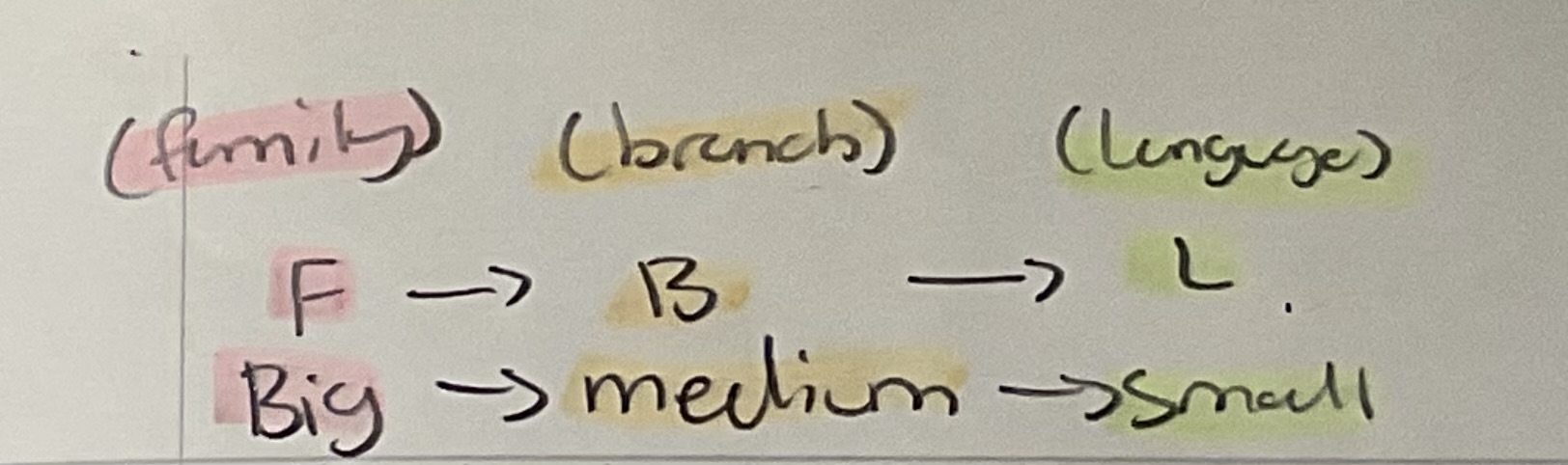
Language: Indo- European family
Romance branch= Spanish, French, Italian, Portuguese, Romanian. (Evolved from Latin, Roman Empire.)
Germanic branch= English, German, Dutch Swedish, danish, Norwegian, Icelandic. (Germanic tribes, northern Europe.[English is a west Germanic language])
![<ul><li><p>Romance branch= Spanish, French, Italian, Portuguese, Romanian. (Evolved from Latin, Roman Empire.)</p></li><li><p>Germanic branch= English, German, Dutch Swedish, danish, Norwegian, Icelandic. (Germanic tribes, northern Europe.[English is a west Germanic language])</p></li></ul><p></p>](https://knowt-user-attachments.s3.amazonaws.com/6aee6142-a13f-4516-b488-267f8681d36b.jpg)
Language: sino-Tibetan
sinitic branch (where mandarin belongs)= mandarin(putonghua) most spoken language in the world.
Religion: animism
The Belief that natural objects have spirits, sounds, or conscious life.
Religion: Fundamentalism
A form of religion where people strictly follow traditional beliefs, teachings and practices often seek to preserve their faith exactly as it was in the past.
Religion: Secularism
The principle of keeping religion separate from government or public life. Relating to people using religious influence on everyday decision making is REDUCED→ relying more on non- religious ideas in everyday life.
Religion: Monotheism
Only believing in one singular god.
Religion: Polytheism
Believing in multiple gods
Religion: Theocracy
Is a system of government in which religious leaders hold political power, laws of the state being based on religious doctrine.
Religion:Universalizing
A religion that seeks to appeal everywhere not just those in specific ethnic groups or religions. Actively seeks out converts, spreading through globalization, colonization, and missionary work.
Religion: Ethnic
A religion that is closely tied to a particular ethnic group, culture or place, it does not actively seeks out converts,
Religion: Burial rights
Christianity, Islam, Judaism→ uses a lot of land to dedicate to the dead cultural landscape (eternal rest, bodily resurrection)
Religion: cremation of bodies
Hindus, believe in reincarnation (removing all ties the soul has on the body)
Religion: the U.S is majority…
Protestant due to its English and Northern European colonial origin.
Religion: the world is majority …
Roman Catholic because Catholicism spread globally through European colonization and missionary activities.
Religion: 3 major branches eastern orthodox
Traditional, national patriarch based churches, (spread through contagious, later relocation diffusion)
Religion: 3 major branches Catholicism
Largest, centralized with the pope, (spread through relocation diffusion)
Religion: 3 major branches protestantism
Reformation based, decentralized with many denominations
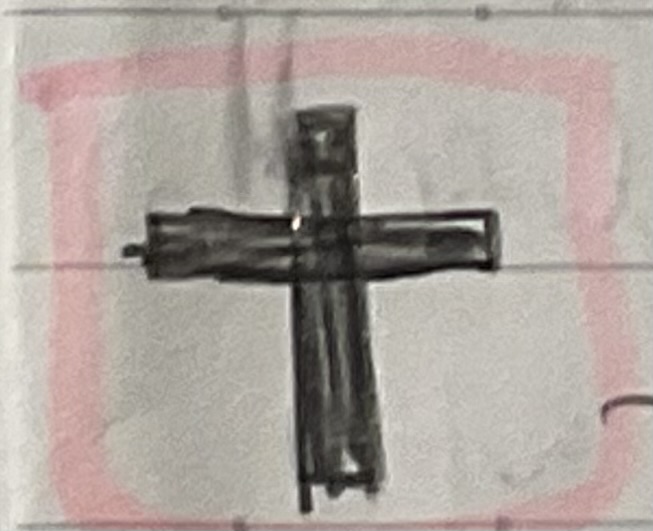
Religion: Christianity
Sw Asia- Jerusalem
Contagious diffusion and hierarchical
Diffused to nearing countries
Holy place is church
Modest clothing, church veiling
Icons, stained glass with religious figures, cross symbol on church and necklaces
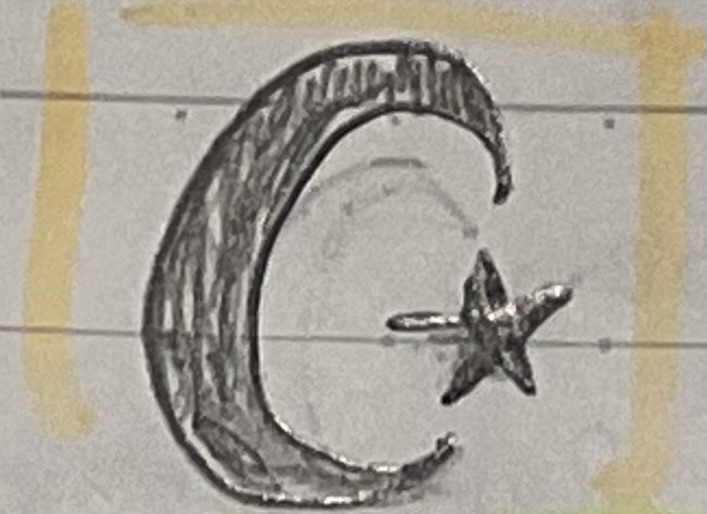
Religion: Islam
Mecca/media- Saudi Arabia
Contagious diffusion through conquest, and trade routes
Holy place = mosque
Dome shaped building, calligraphy of quaran verses, faces towards Mecca
Full Modest clothing, hijab, niqab
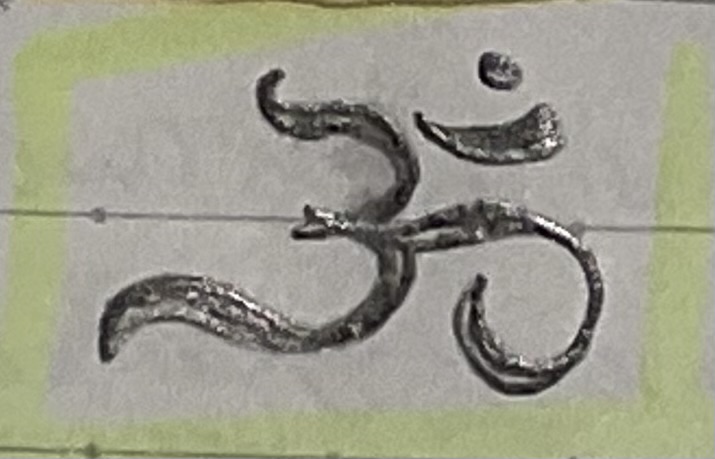
Religion: Hinduism
indo-gangetic plain
Does not spread like universal religions is ethnic
Spreads through relocation, not missionary focuses
Spread to Southeast Asia and India diaspora
Holy place=mandirs
Mandirs shaped like mountain (home of the gods) lots of carvings of gods, animals, and mythological creatures.
Jewelry, lotus flowers, swastika symbol (OF GOOD FORTUNE AND PEACE)
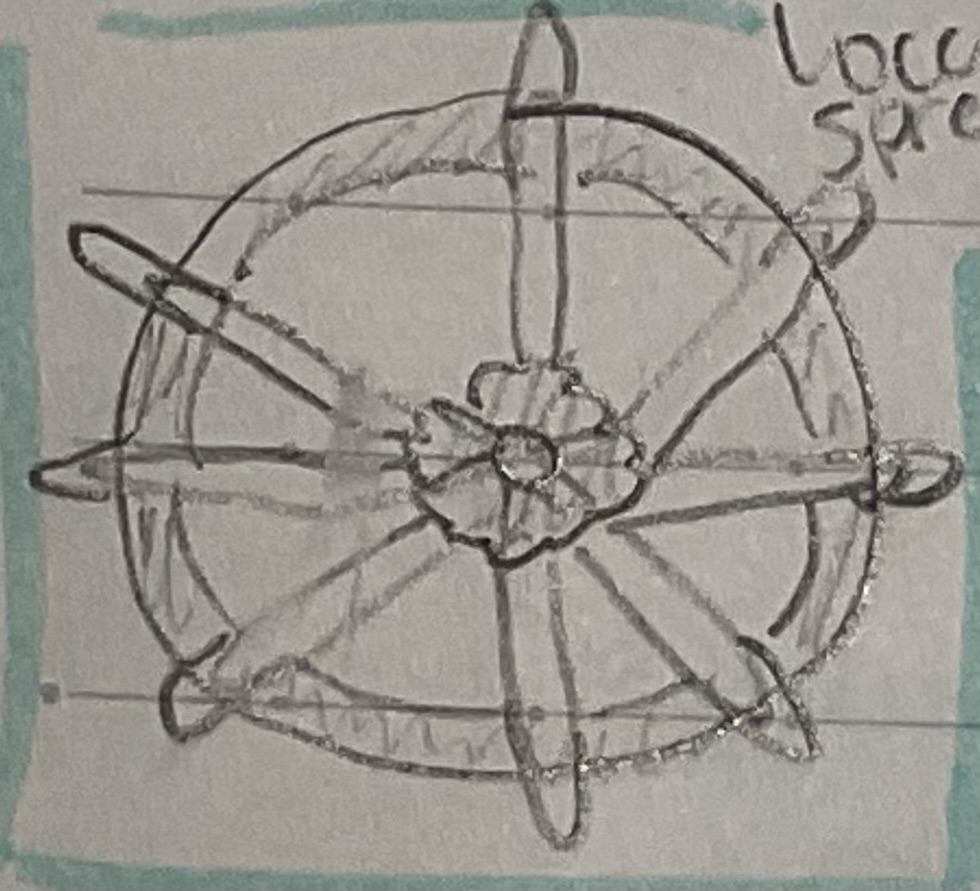
Religion:Buddhism
India & Nepal
Relocation diffusion from monks moving, and contagious, and hierarchical from kings
Temples (VIHRAS) monasteries (PAGODAS)
Don’t shrines with Buddha and ancient relics, dhamra wheel, geometric art, lotus flower
Monks wear robes, women are modest, white clothing to vihras
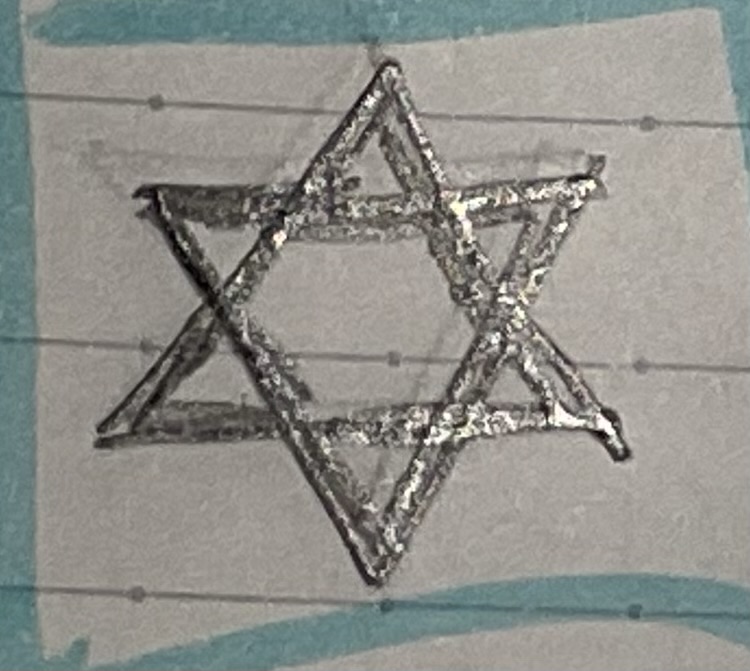
Religion:Judaism
land of Canaan (Israel & Palestine)
Relocation (due to exiles), limited contagious and limited hierarchical due to being ethnic
Went to Babylon Mesopotamia ( Iraq), North Africa
Holy place= synagogue
Holds Torah scrolls, eternal flame symbolizing gods presence, wailing wall, Hebrew writing on tombstones.
Star of David, women are modest, and men wear skull caps
What type of diffusion is it when missionaries move and bring their religion with them
Relocation diffusion
Stimulus diffusion
A type of cultural diffusion where an idea or innovation spreads from one culture to another, but the original form s modified to fit local customs and beliefs.
Expansion diffusion
The spread of an idea, innovation, or cultural trait from a point of origin, or hearth, to new areas, while the trait remains strong in its original location.
Maladaptive diffusion
The spread of a cultural trait or innovation that proves to be impractical or harmful in its new context, leading to negative consequences for the adopting society or environment.
Syncretism
The blending or merging of different religious, cultural, or philosophical traditions into a new system.
Amalgamation theory
A term used in several fields to describe the blending of multiple entities into a single new entity.
Semiotics
The study of signs and symbols and how they create meaning.
“Site” characteristics
Physical characteristics of the local environment→ soil, elevation, climate, etc.
Mentifacts
Refer to the values, laws, and beliefs of a society or group. These are passes down to future generation and are a part of non-material culture.
Cultural relativism
An attitude in which a person makes an effort to understand another persons culture based on the standards of that persons culture, rather than their cultural standards.
Material culture
Refers to physical objects that represent the culture of a group of people.
Globalization simple def
Refers to the social, economic, and political interconnections of the world.
Centrifugal force
Factors that pull people and regions within a state apart, leading to division, instability, and potential conflict.
Placemaking
Is the act of creating a space to highlight local cultures, ethnicities, and a sense of place.
Formal region
Is united by a shared cultural or geographic characteristic
Language: pidgeon language
A language that emerges when you need to develop a quick language out of necessity (having a very simple structure and vocabulary) to be able to communicate fast and effectively.
Language: Creole Language
A more sophisticated, more vocabulary infused language, making it more complex leading to it becoming the native tongue in a specific area over time. Specifically sprouts after a pidgeon language.
Ethnocentrism
Judging other cultures by the Standards of your own, often leading to the belief that your culture I superior, normal, or more correct. Which can cause prejudices, stereotyping, and conflict
Centripetal forces
Things that bring people together and create unity within a country or group.