electricity
 Call Kai
 Learn
Learn Practice Test
 Spaced Repetition
 Match
Match Flashcards
 Knowt Play
1/29

There's no tags or description
Looks like no tags are added yet.
Name | Mastery | Learn | Test | Matching | Spaced | Call with Kai |
|---|
No analytics yet
Send a link to your students to track their progress
30 Terms
current (I)
the rate of flow of electrical charge (i.e., electrons)
measured in Amps (A)
resistance (R)
opposes current flow
measured in ohms (Ω)
potential difference (PD or V)
property that determines the energy given to the circuit and the energy taken by the components
measured in volts (V)
electrical energy (E)
the ability to do work due to the movement of charge
measured in joules (J)
charge (Q)
a property of an object that allows it to experience a force in an electric field
measured in coulombs (C)
power (P)
the rate of energy transfer (or rate at which work is done)
measured in watts (W)
electrical work done (W)
the energy expended to move a charge that makes a component work
measured in joules (J)
what kind of circuit is this?
series circuit
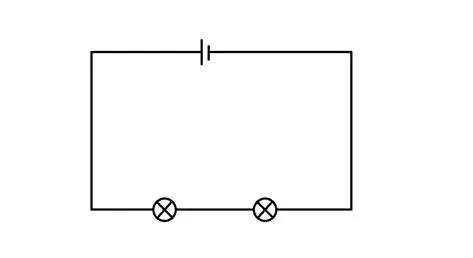
what kind of circuit is this?
parallel circuit
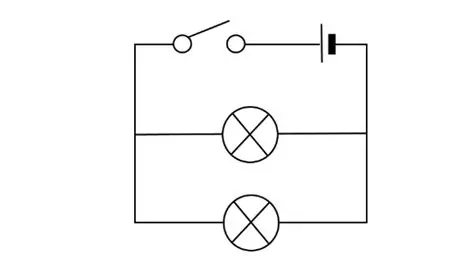
what is the current, pd, resistance in a series circuit?
current = the same at any point in the circuit
R total = R1 + R2 + …
pd = shared between components
what is the current, pd, resistance in a parallel circuit?
current = splits into different branches
1 / R total = 1/R1 + 1/R2 + …
pd = the same in each branch
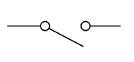
open switch
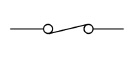
closed switch

cell
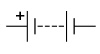
battery
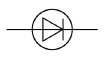
diode
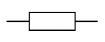
resistor
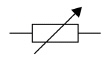
variable resistor
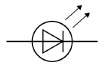
light emitting diode (LED)
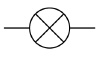
lamp
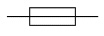
fuse
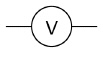
voltmeter
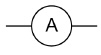
ammeter
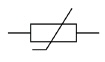
thermistor
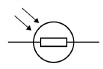
light dependent resistor (LDR)
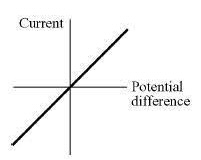
what is this the current-pd graph of?
resistor at constant temperature
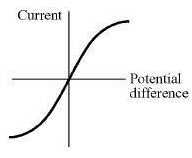
what is this the current-pd graph of?
filament lamp
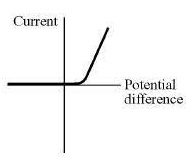
what is this the current-pd graph of?
diode
what is needed for a circuit to work?
a closed circuit
source of pd from a cell or battery
how does temperature affect a circuit?
a high temperature increases the kinetic energy of particles which means they collide with each other and the wire surface more. this makes it harder for charge carriers to pass, therefore resistance increases