Suturing/Surgical Instruments/Knot Tying
 Call Kai
 Learn
Learn Practice Test
 Spaced Repetition
 Match
Match Flashcards
 Knowt Play
1/130

There's no tags or description
Looks like no tags are added yet.
Name | Mastery | Learn | Test | Matching | Spaced | Call with Kai |
|---|
No analytics yet
Send a link to your students to track their progress
131 Terms
1st suturing
Yay
Indications
-Control bleeding
-Promote healing
-Minimize infection
-Optimize cosmetic outcome
Contraindications
-Signs of infection
-Deep puncture wounds
-Devitalized tissue (its dead why you saving it)
-Wounds >12 hours old
-Foreign bodies or retained debris
Supplies
-Suture kit (needle driver, forceps, scissors)
-Suture material
-Antiseptic
-Local anesthetic (Lidocaine)
-Syringe and needle for injection
-Sterile drapes and gloves
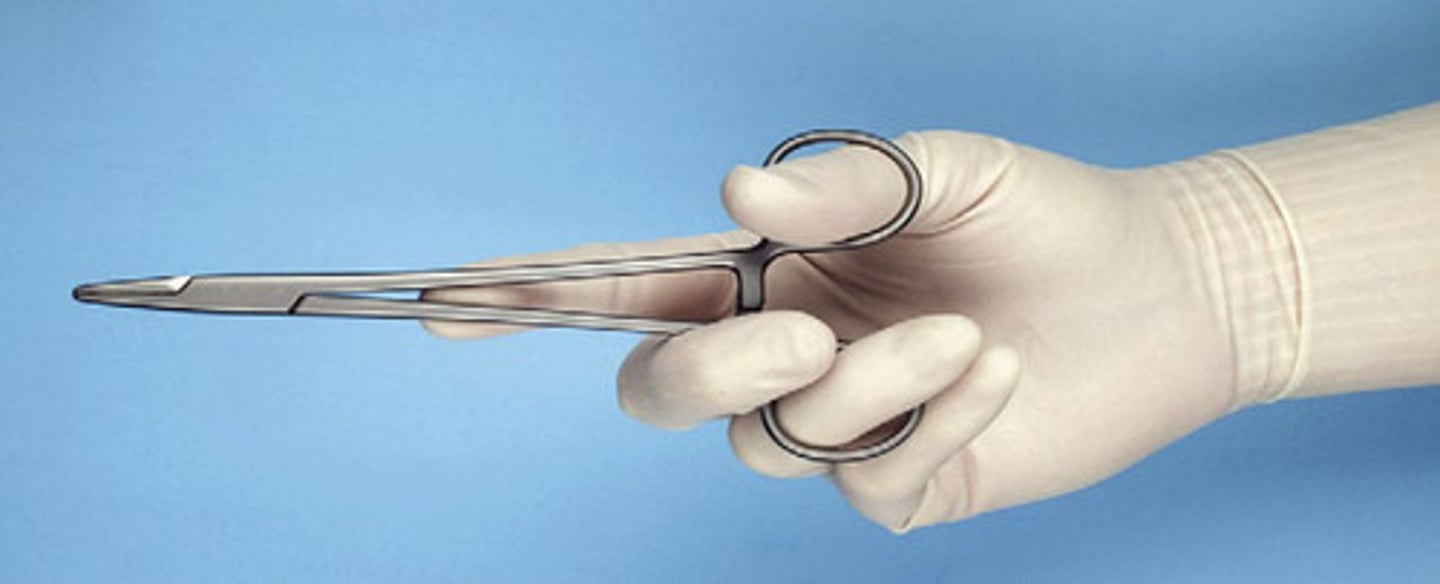
How to hold needle holder
Thumb and 4th digit close to first or second rachet
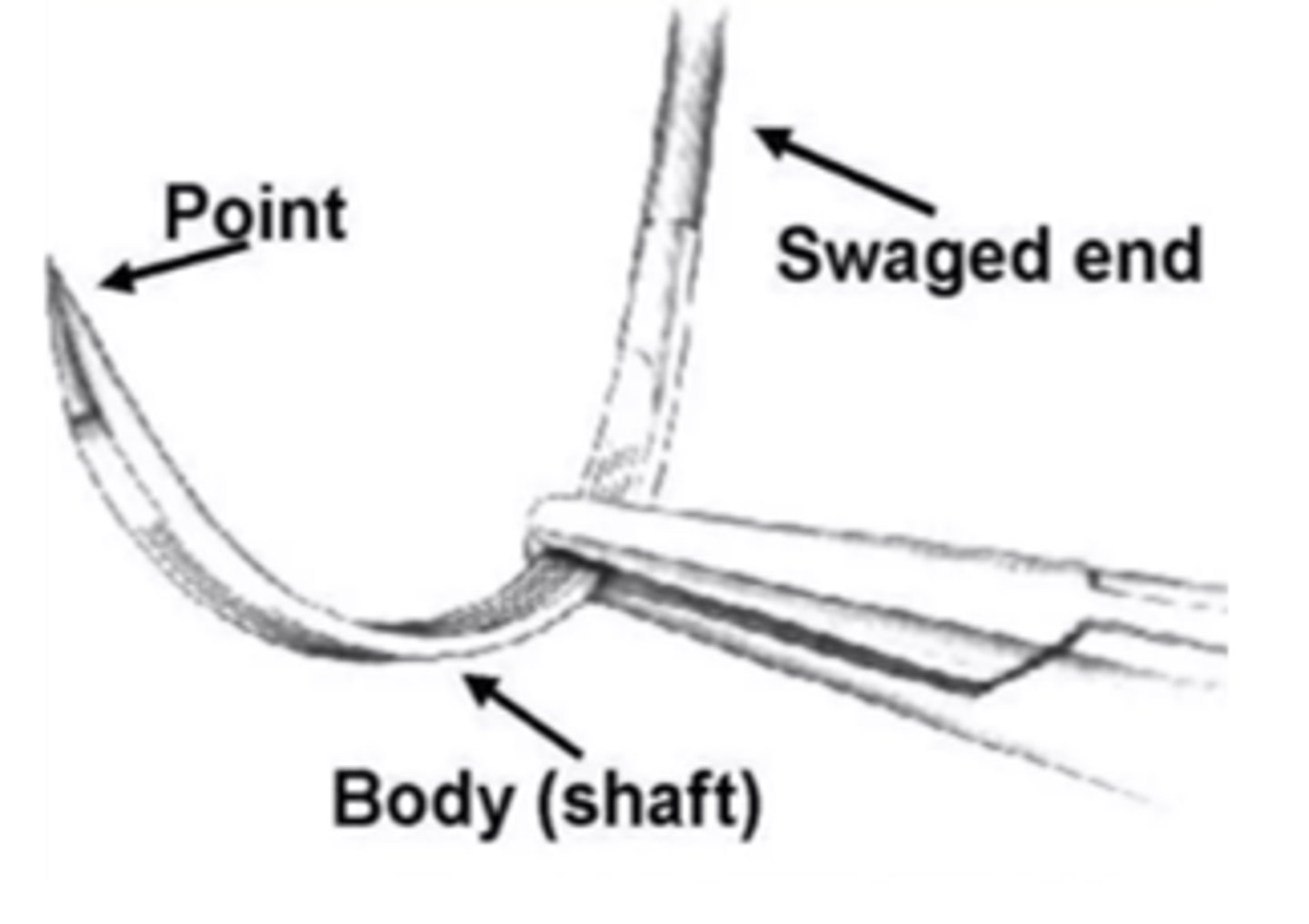
Needle structure
-Tip/point
-Body/shaft
-eye/swaged end
Cutting needle
Skin
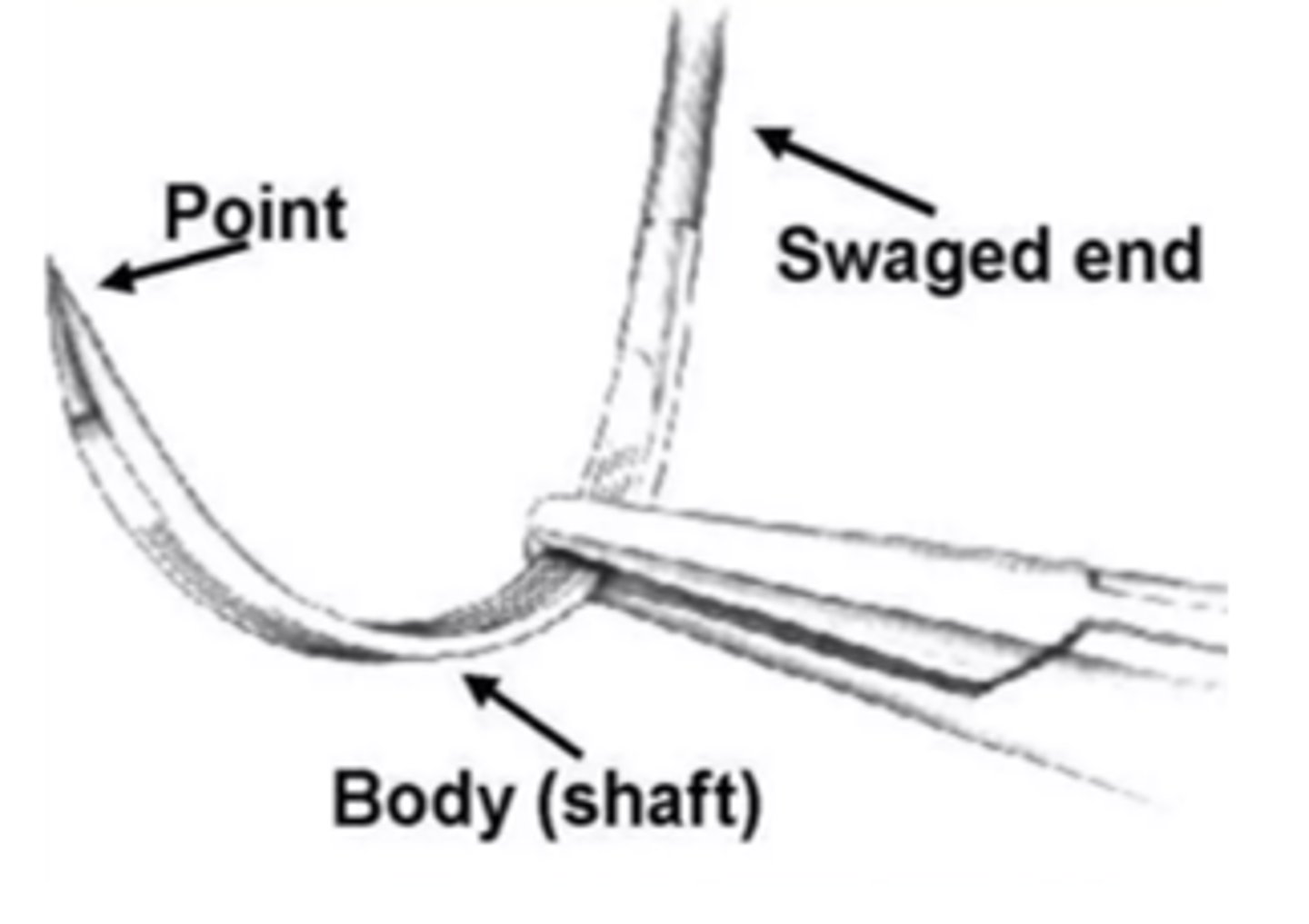
Reverse cutting needle
Stronger, less tissue trauma
Tapered needle
-Internal structures (bowel)
Blunt Needle
Friable tissue (liver)
Common needle sizes
a.6-0: Face
b.5-0: Hand
c.4-0: Extremities
d.3-0: Scalp, trunk
*Larger number=finer suture
Absorbable suture material
•Vicryl, Chromic gut, Monocryl, PDS
Non-absorbable suture material
•Nylon, Prolene, Silk
Vicryl
-Deep dermal, mucosa (10/10)
Nylon
Skin closure
Chromic gut
oral mucosa, pediatric (Ive seen this one used in the peds urgent care im at)
Monofilament
smooth, slides through tissue easily, difficult to knot
Multifilament
easy to knot, capillary actions where bacteria may lodge, can be coated with silicone to make it smooth
Prolene
•Gen surg
•Plastics
•Cardiovascular surgery
•Skin closure
Advantages of Prolene
• won't lose tensile strength
•Good knot security
•Little tissue reaction
•High plasticity
Disadvantages of Prolene
•Stretch when pulled
•Loosens when edema subsides
Silk
-Opthalmic surgery
-General surgery
-Plastic surgery
Advantage of silk
-Ease of handling
-Good knot security
-Cost effective
Disadvantages of Silk
-Reactive
-Can't be used in the presence of infection
Vicryl info
•Intra oral suturing, gut anastomosis, vascular ligature, ophthalmic surgery, superficial soft tissue approximation of the skin and mucosa
Advantages of vicryl
minimal tissue reactivity, can be used in infected tissue, stronger than gut
Disadvantages of Vicryl
delayed absorption and increased inflammation
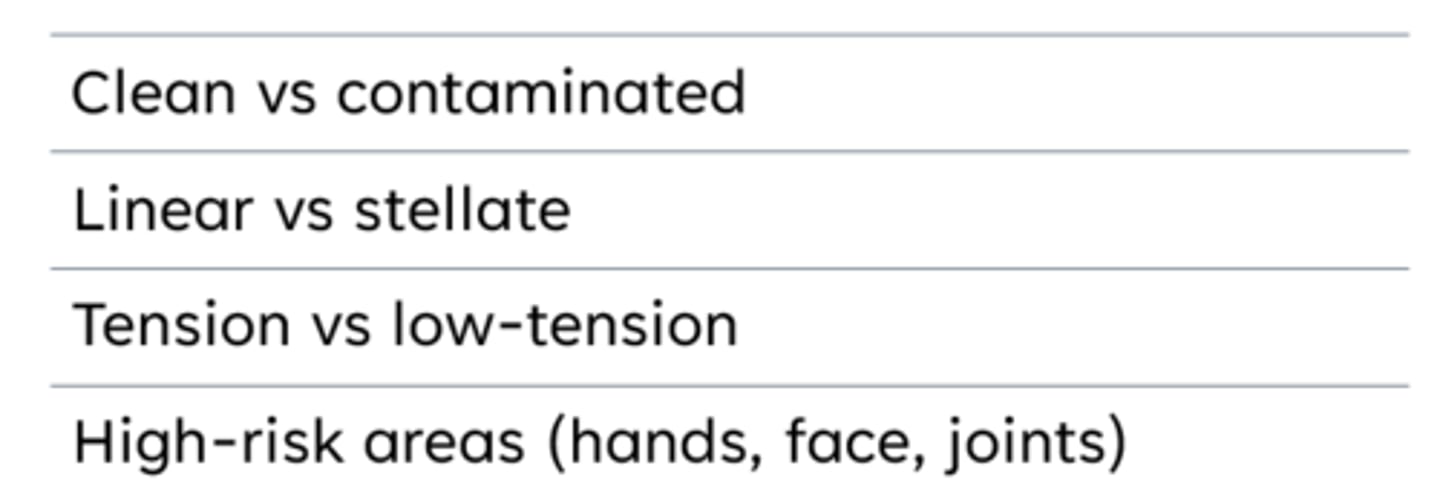
Types of lacerations
Principles of suturing
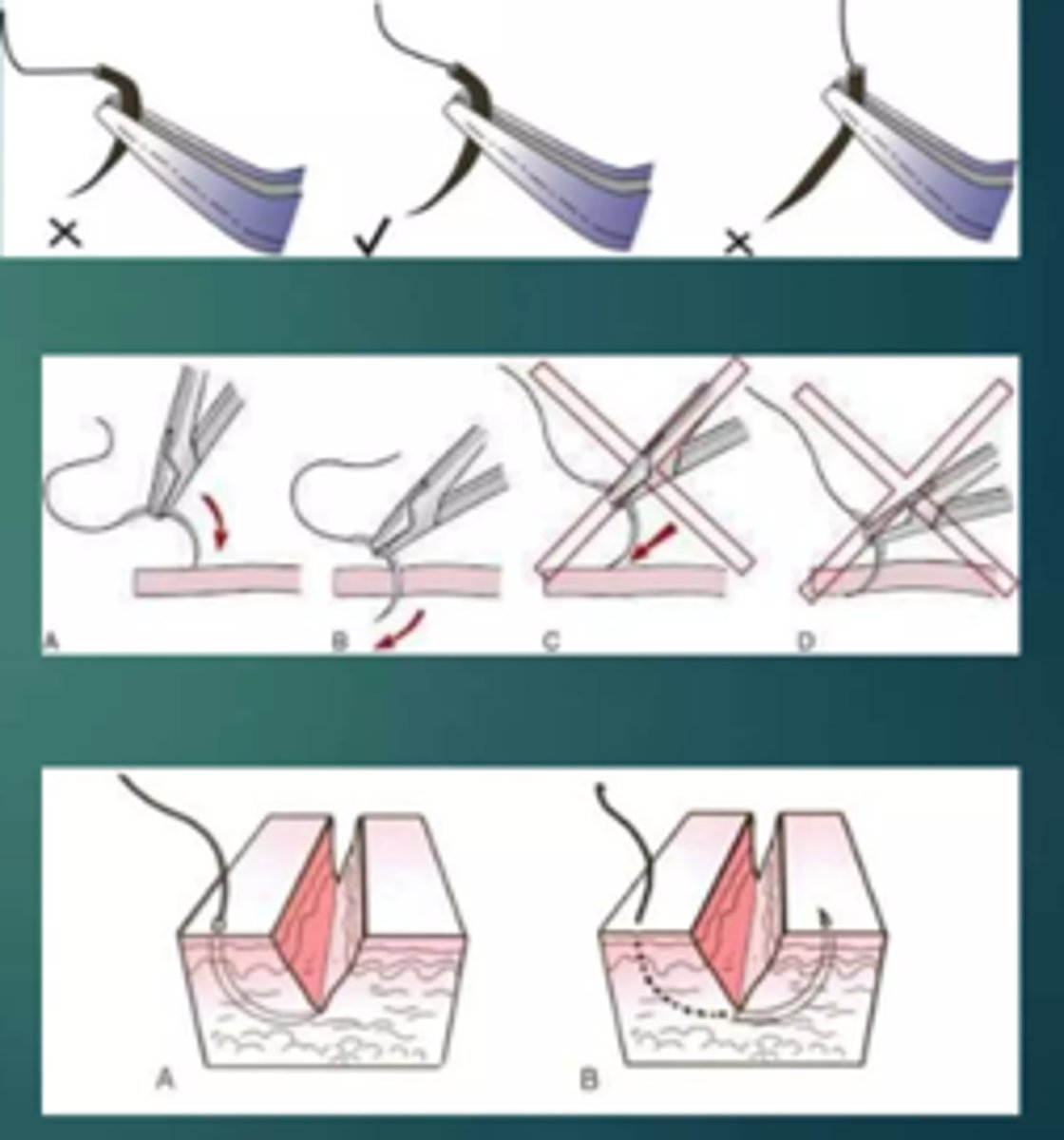
•Needle should be grasped at approximately 1/3 of the distance from the eye & 2/3 from the point
•Needle should pierce the tissue perpendicular to its surface
•Needle should be placed equidistant (2-3mm) from the incision line
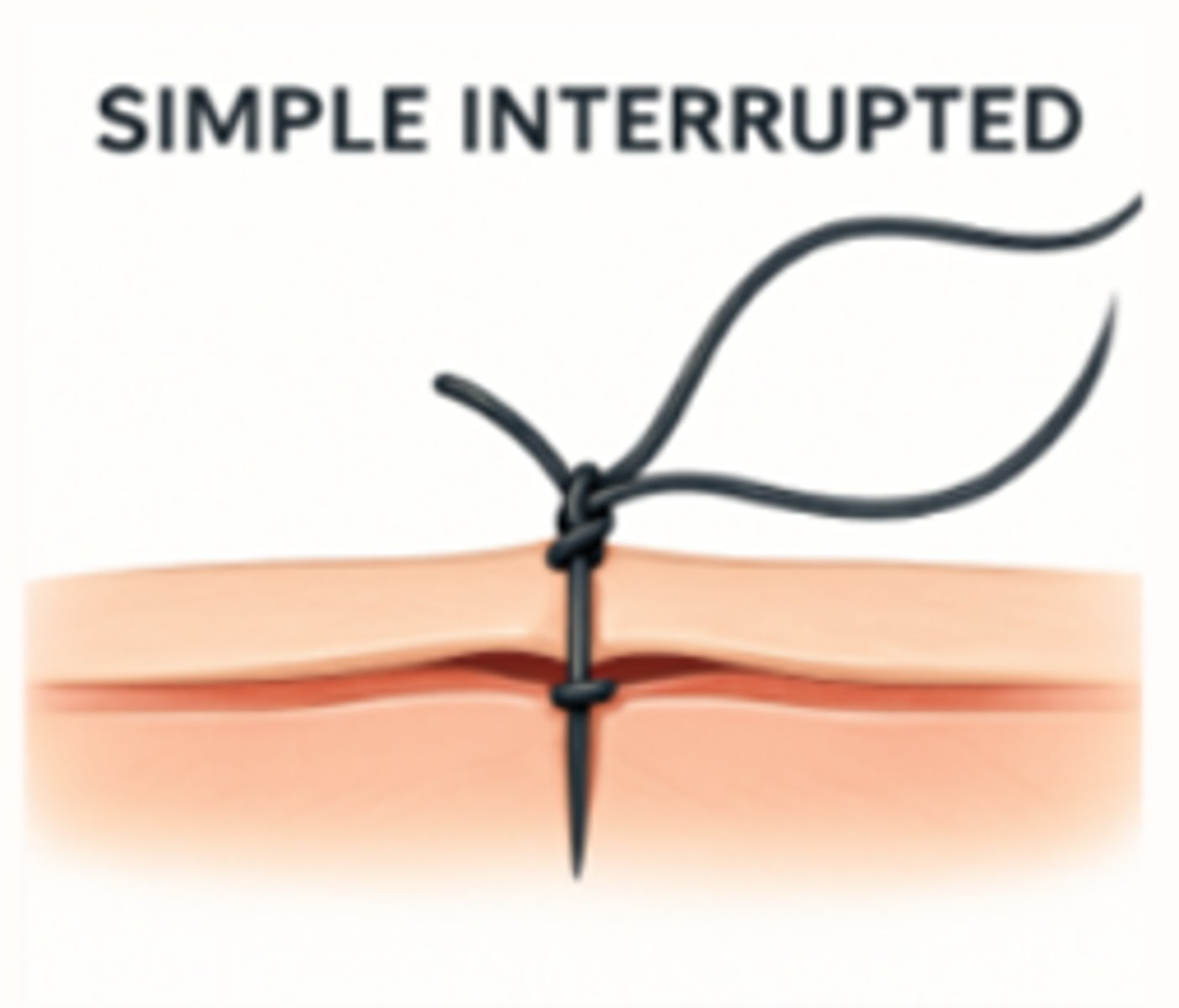
Simple Interrupted suture
-most widely used type of suture (versatile, secure, allows for easy adjustment of each individual suture without affecting the others)
-Creates individual knots
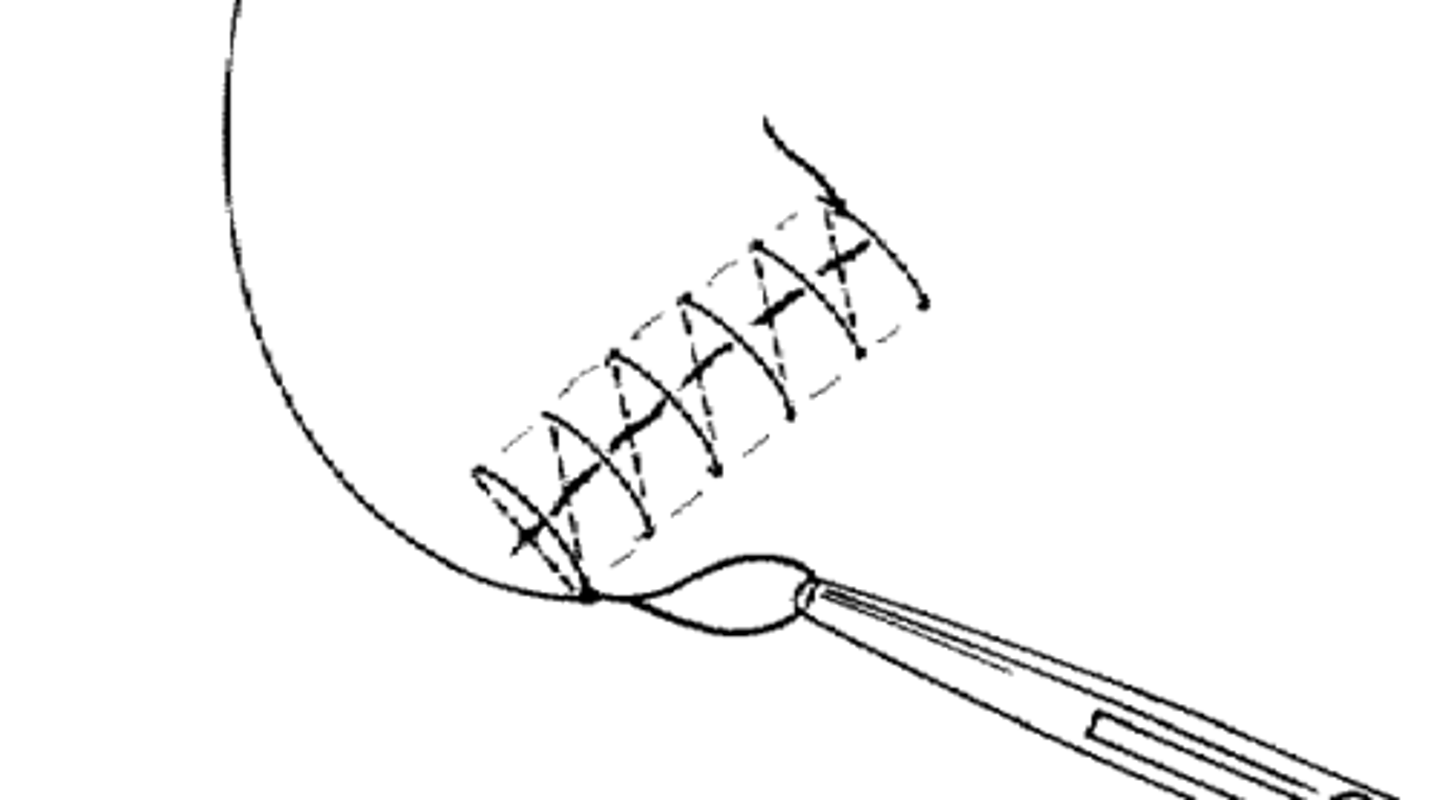
Running suture
-series of stitches made without tying each knot creating a single running sitch.
-Quick, less secure
-Shouldn't be used in areas of existing tension. Not possible to free a few sutures at a time. When one suture breaks it affects the whole closure.
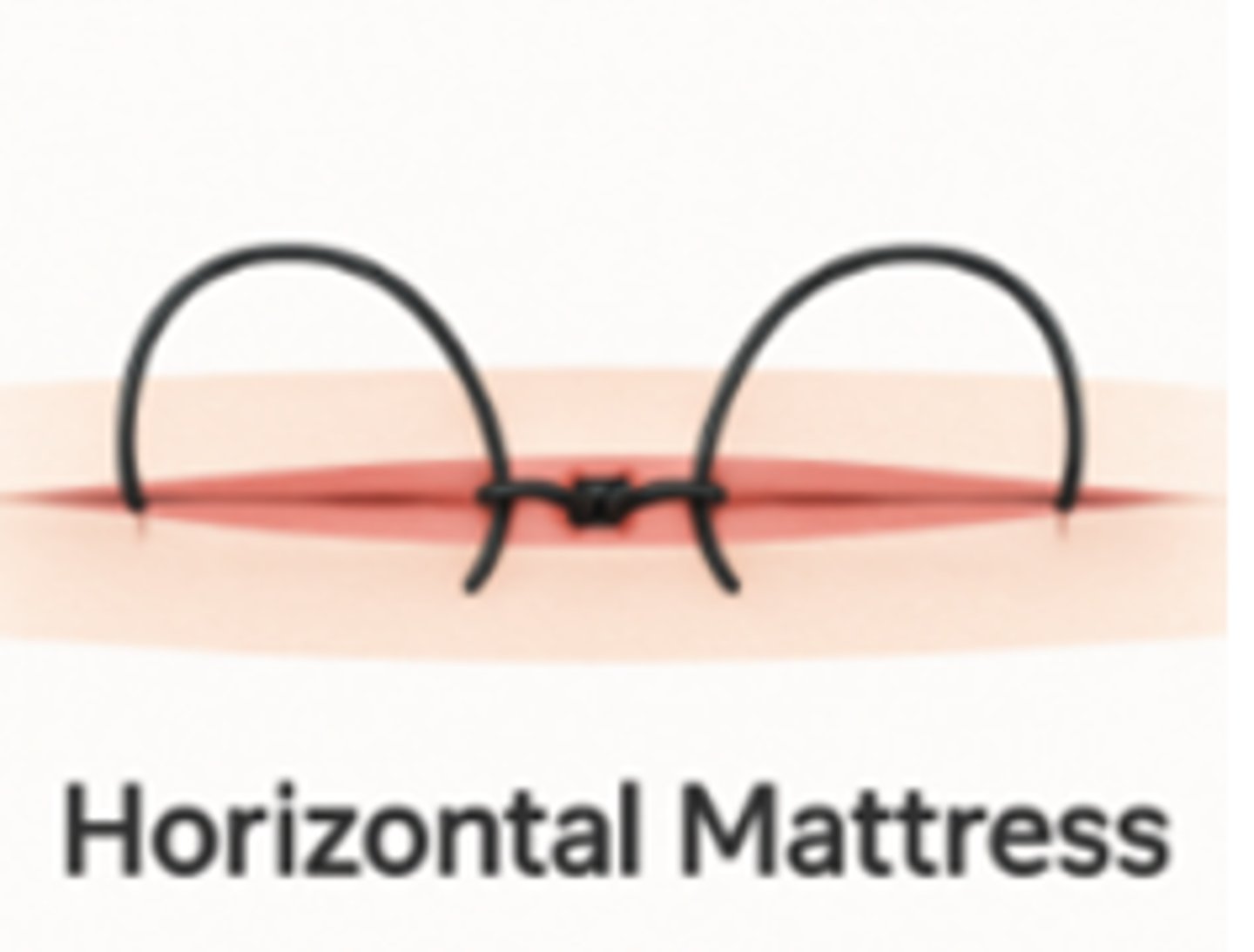
Horizontal mattress Suture
-Helpful for approximating skin edges
-water tight closure
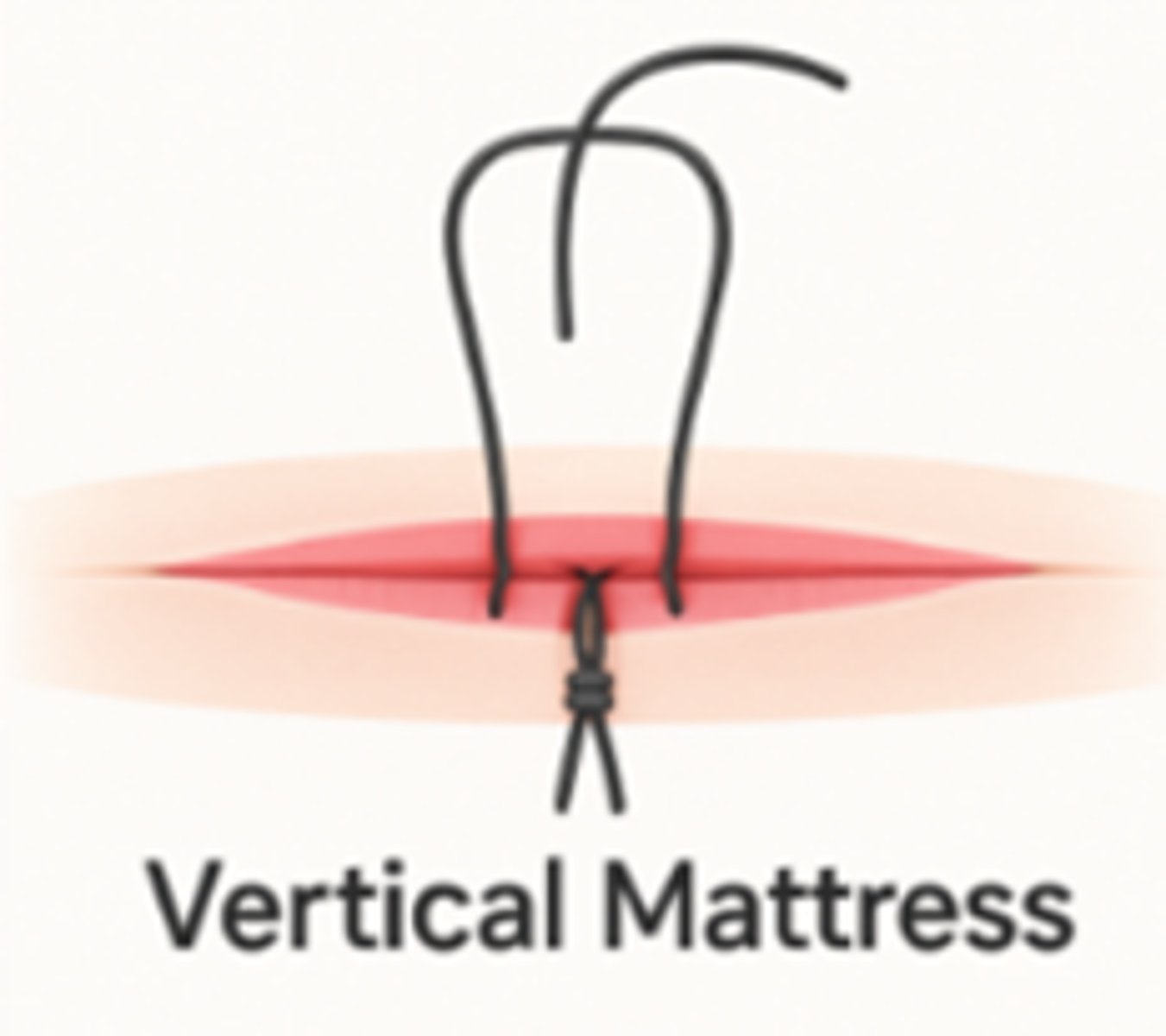
Vertical mattress suture
-stitch creates a raised platform
-good for wounds under tension or with large gap
where the needle is brought back from the second flap to the first, the depth of penetration is more superficial
-Great for "wound edge eversion"
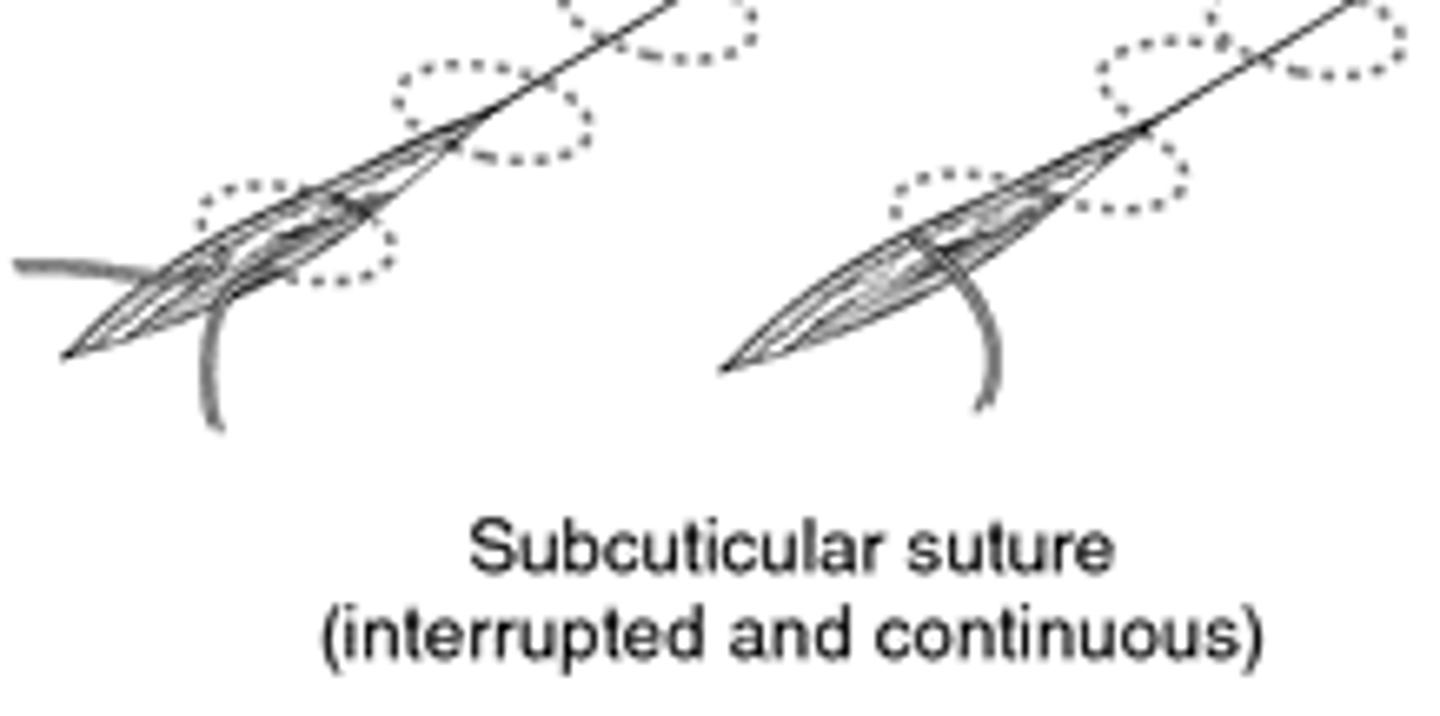
Subcuticular suture
Use in simple wounds that are not under tension, fast, excellent cosmetic closure ***
No stitch to remove
Doesn't hold in thin skin--- elderly..
Removal of suture
Face: 3-5 days
Lip: 3-5 days
Oral cavity: 6-8 days
Neck: 5-6 days
Scalp: 7-10 days
Chest: 10-14 days
Abdomen 10-14 days
Leg: 10-14 days
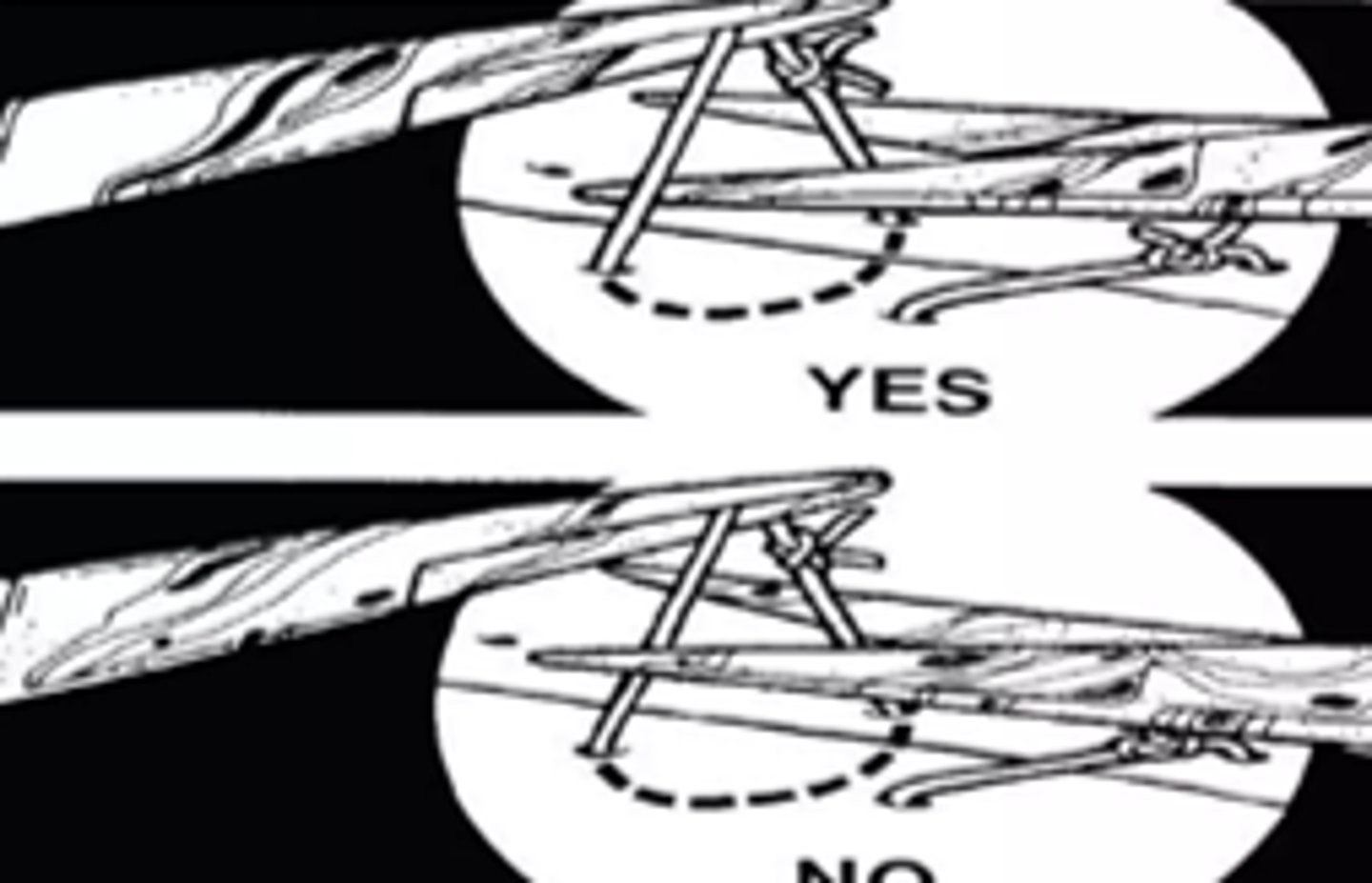
What happens if pieces of suture are left?
Uhm infection
Glues and staples
Glues are inexpensive, lower infx rate
Staples: fast, fairly cheap
Key questions
•Ask about healing difficulties (race, drugs, anatomical location, medical conditions)
•Avoid strangulation of tissue
•Count and remove all foreign objects
•Choose the right material and needle
•Not all wounds need to be closed
•Crush injuries require antibiotics
•Hand lacs: ROM, explore the wound, neurovascular exam
•Practice improves confidence and outcomes!!
What race is more likely to have problems with healing
African-American
Now surgical instruments
woo
Instrument pans
These pans are used in cases as bowel resections and whipple procedures, where instruments must be available in a variety of lengths, widths, and types
Minor Surgical Instrument pan
These instrument pans are used for cases such as hernia repairs and mastectomies, which do not require as many instruments.
What do we use clamps for?
securing drapes or equipment, retraction, staple removal, grabbing, manipulating, or dissecting tissue, and hemostatic control.
Knocker clamp
A heavy, straight hemostat with interlocking teeth on the tip. It can be used to grasp heavy tissue or as a clamp. The jaws may be straight or curved.
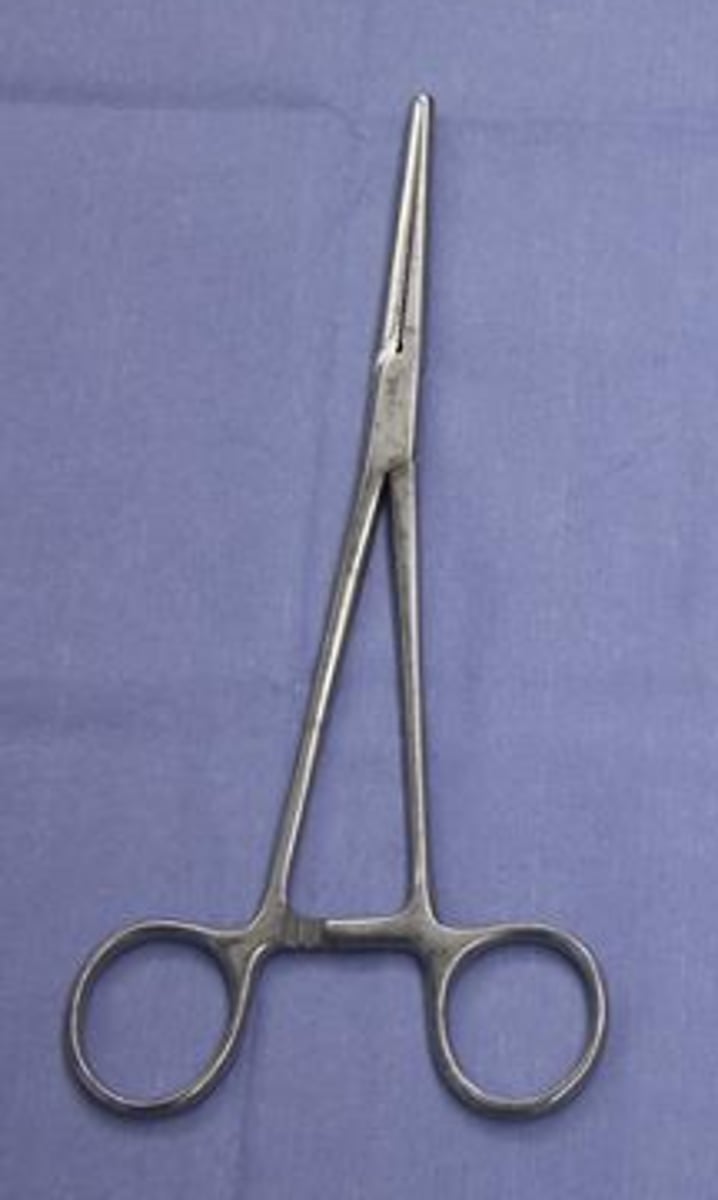
Backhaus Towel Clip
A clamp used for fixing drapes to the skin of anesthetized patients. A scissor action with ratchet fixation at the finger loops and sharp, incurving, needle-like blades.
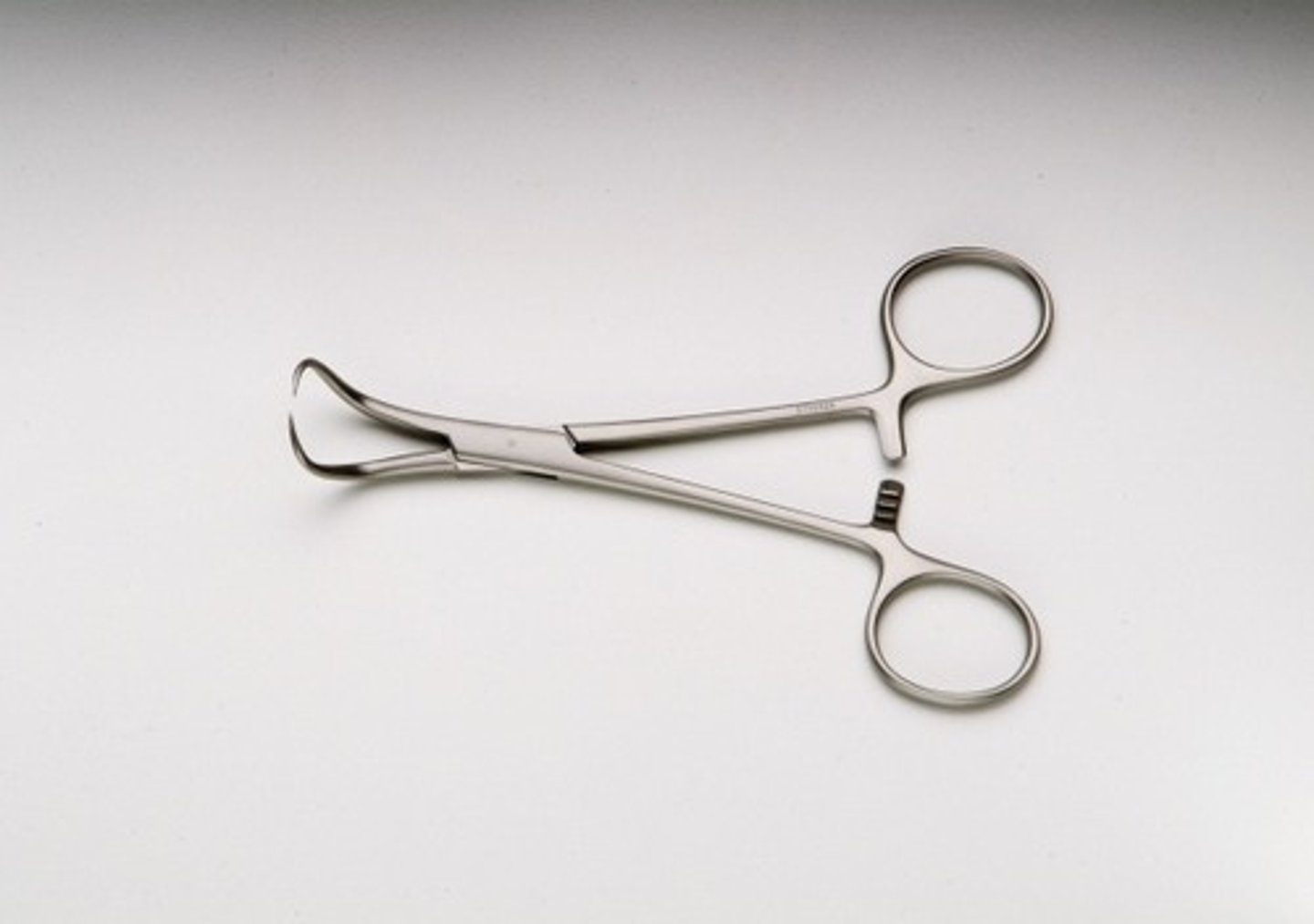
Sponge stick
Sponge sticks can be straight or curved and can have smooth or serrated jaws. It is used to grasp sponges or atraumatically hold viscera such as the bowels or bladder.
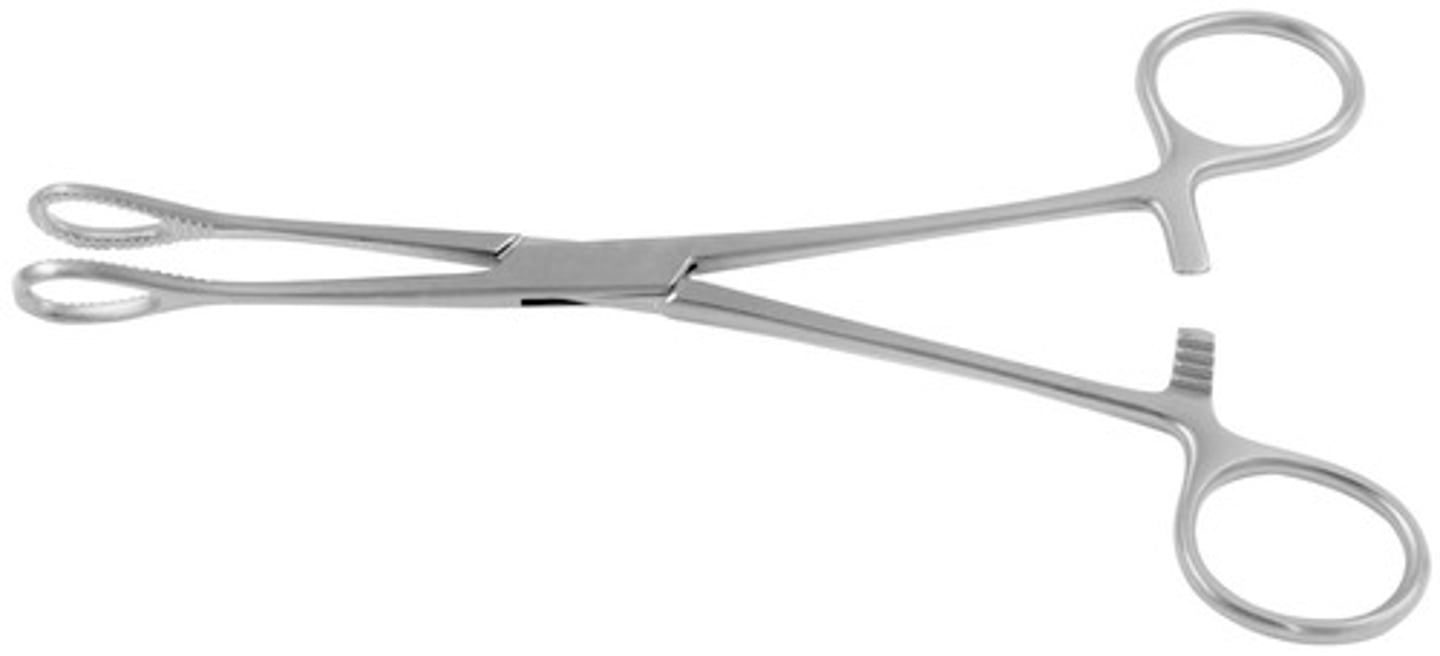
Right Angle Clamp
A right angle clamp is used to clamp hard to reach vessels and to place sutures behind or around a vessel.
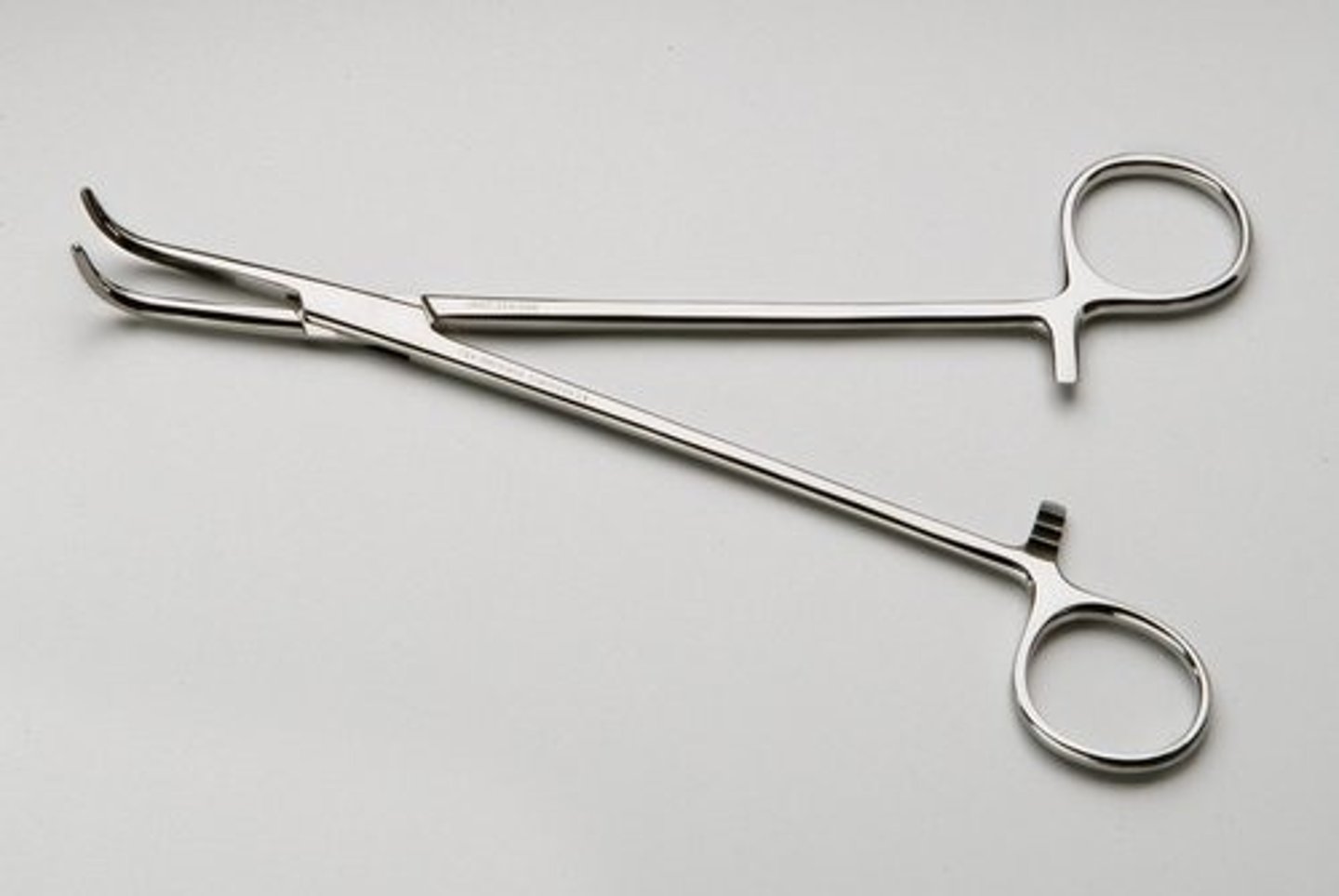
A right angle with a suture is called?
"tie on a passer"
MGH clamp
Forceps with inward-curving toothed blades and a ratcheted handle. Designed for grasping facia, tendons.
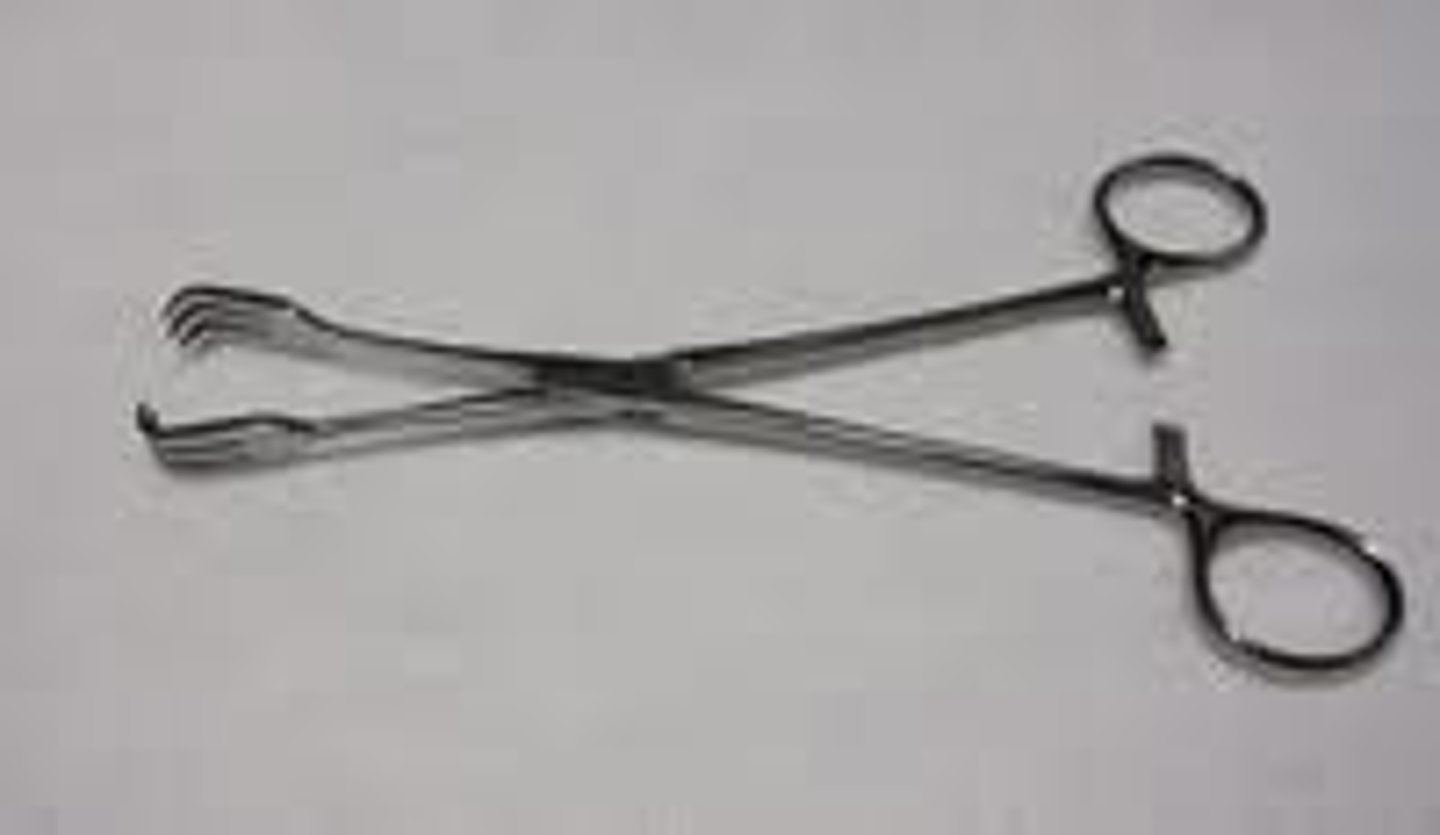
Allis Clamp
A straight grasping forceps with serrated jaws, used to forcibly grasp or retract tissues or structures. Often used for grasping soft tissue such as breast or bowel tissue.
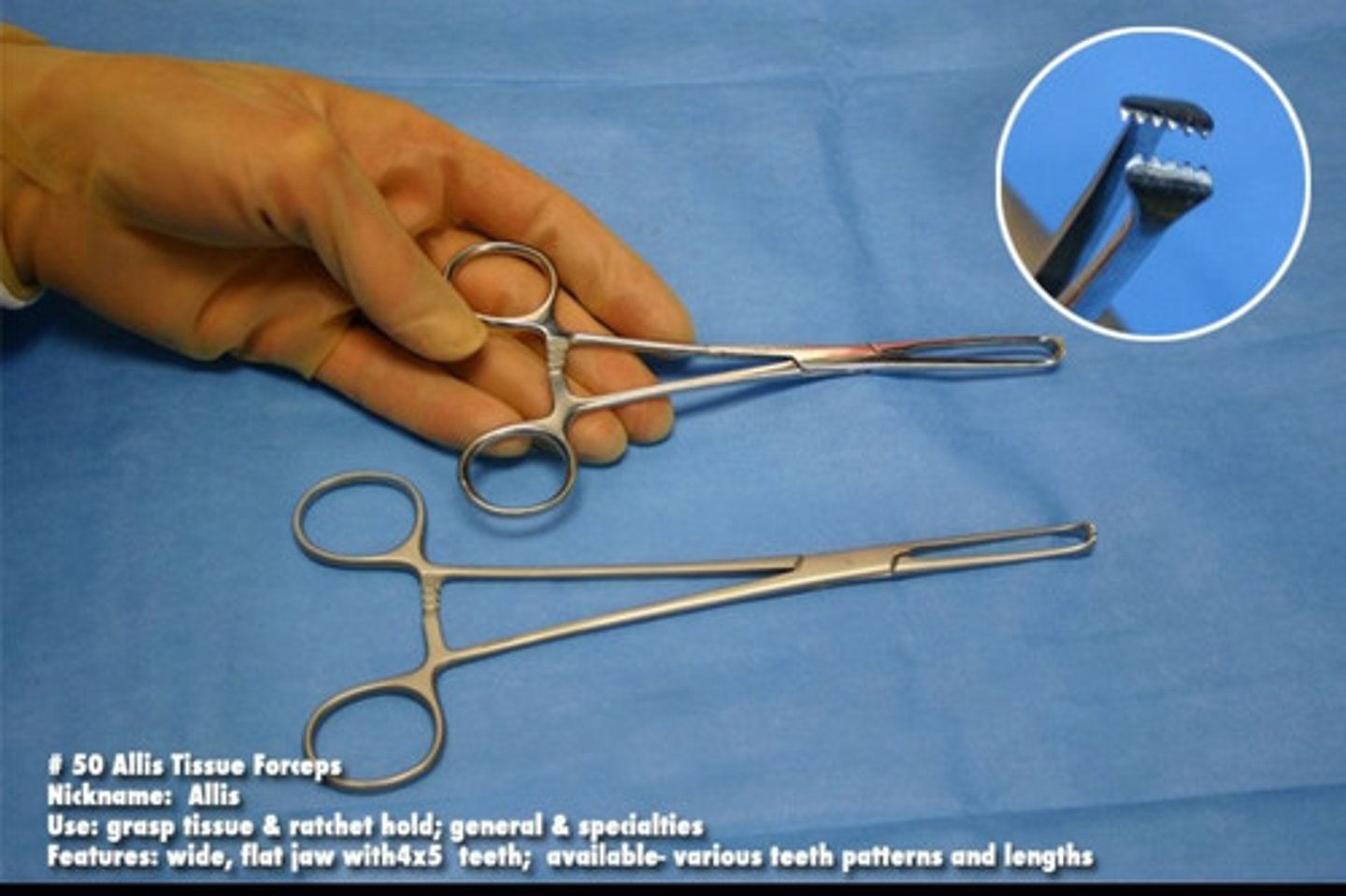
Babcock clamp
Forceps with loop bldes which are also semicircular in sagittal cross-section. Designed to grasp delicate tissue such as the intestine, fallopain tube, ovary without compressing it.
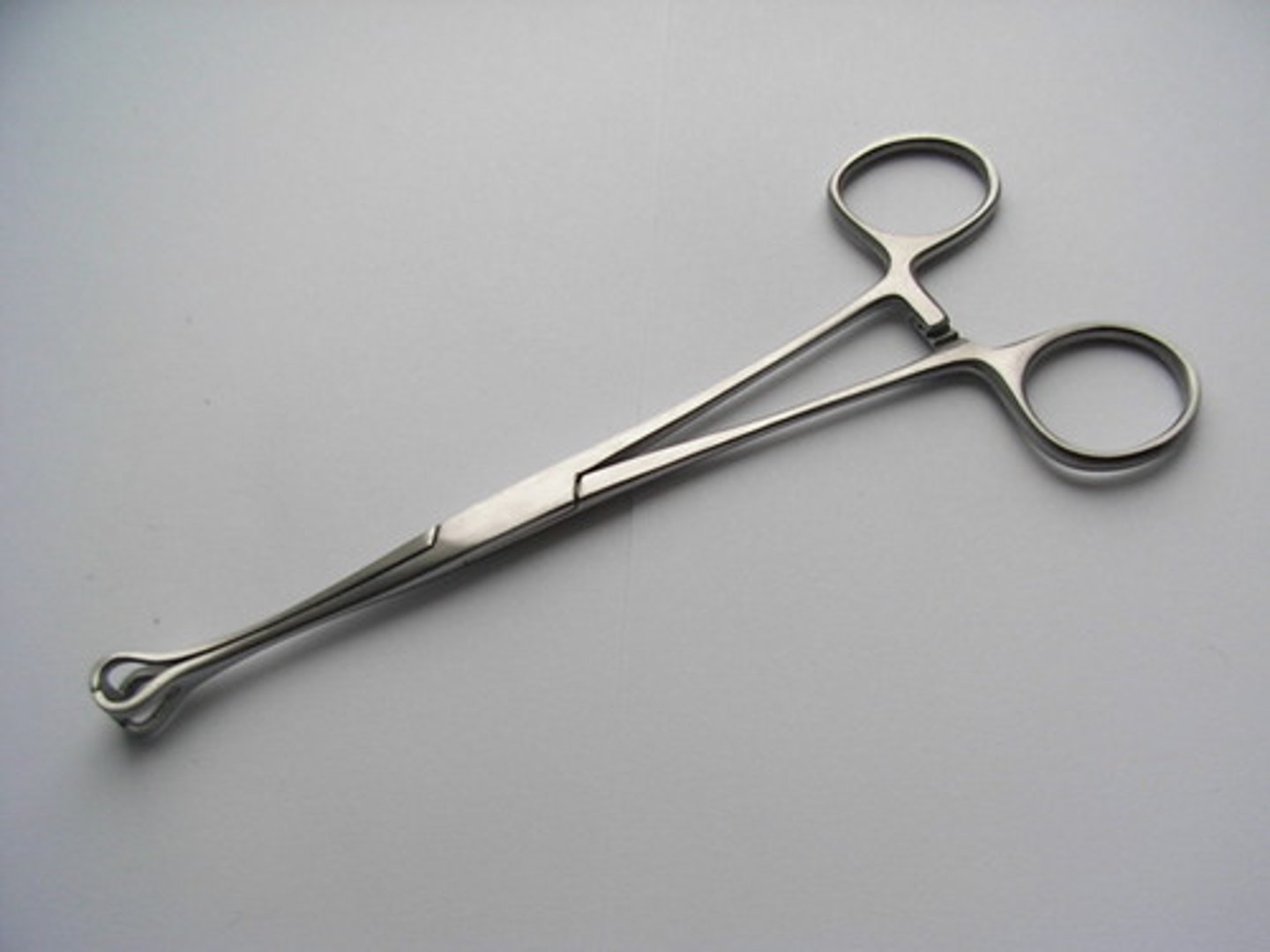
Straight mosquito clamp
A mosquito clamp is used to clamp small blood vessels. Its jaws may be straight or curved.
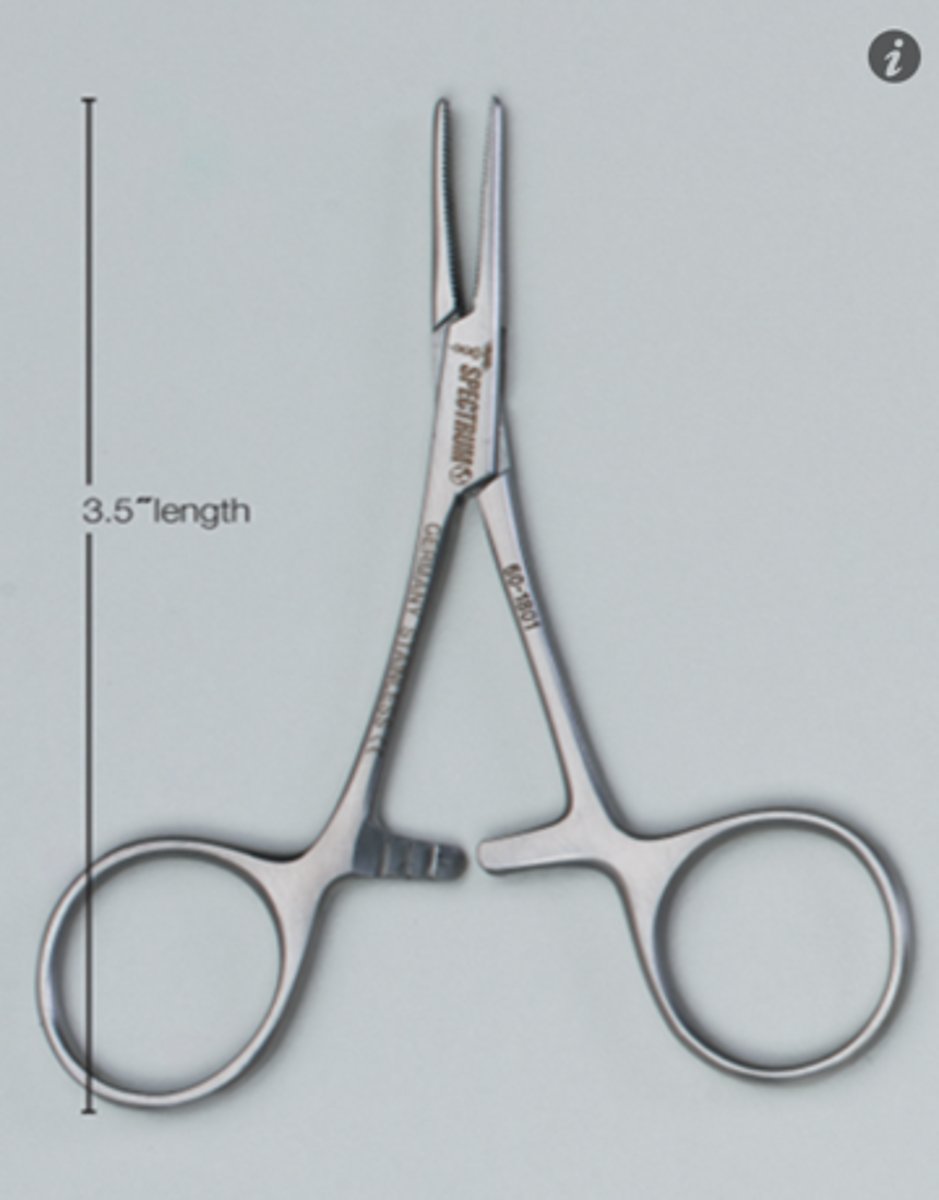
Curved mosquito clamp
A mosquito clamp is used to clamp small blood vessels, its jaws may be straight or curved.
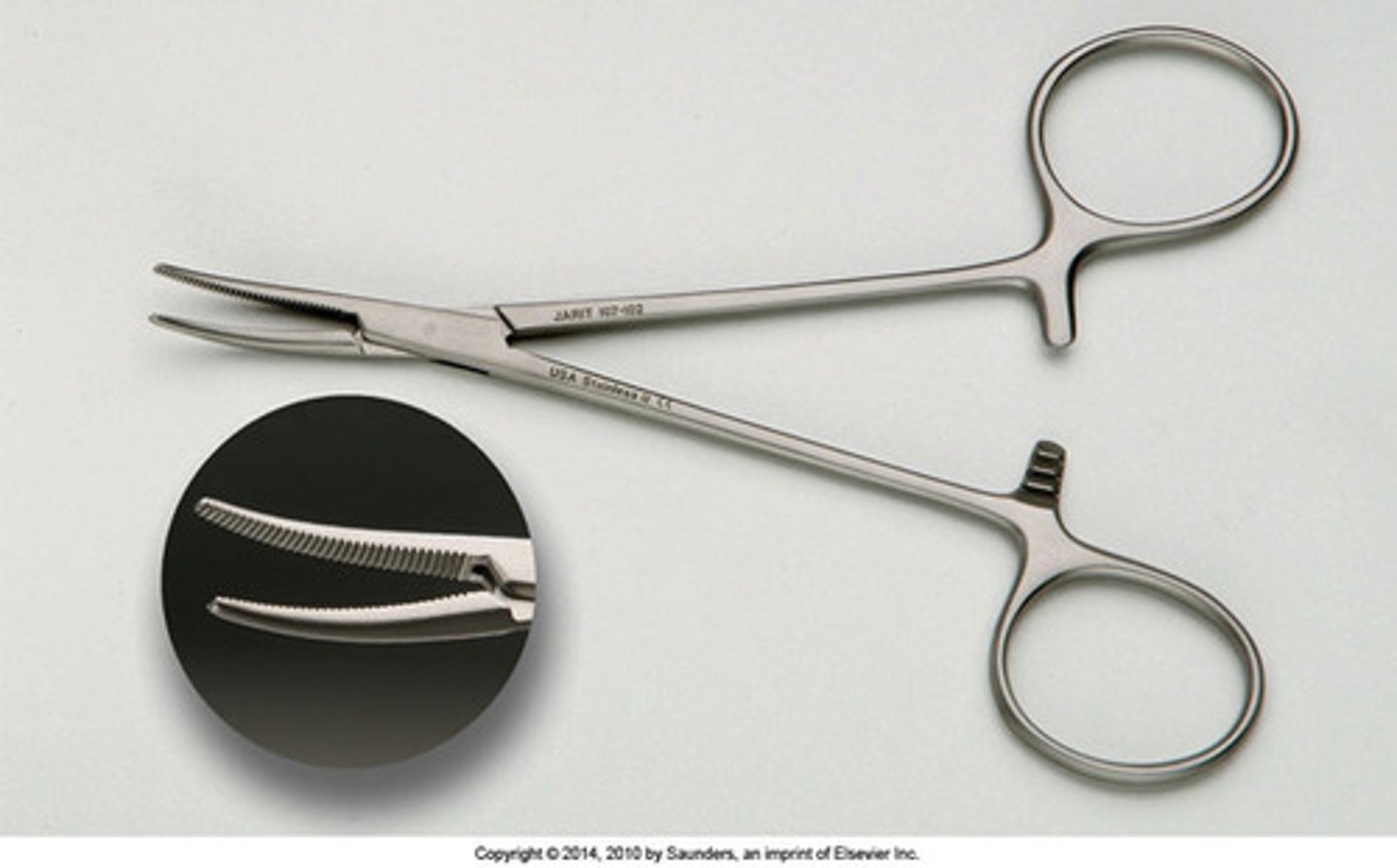
Large Kelly Clamp
Designed with two handles are used to create a lever action and has a blunted grip. The grip often has multiple grooves in it. This device is used to grasp small objects or may be used to hold back tissue to free the surgeon's hand during surgery.
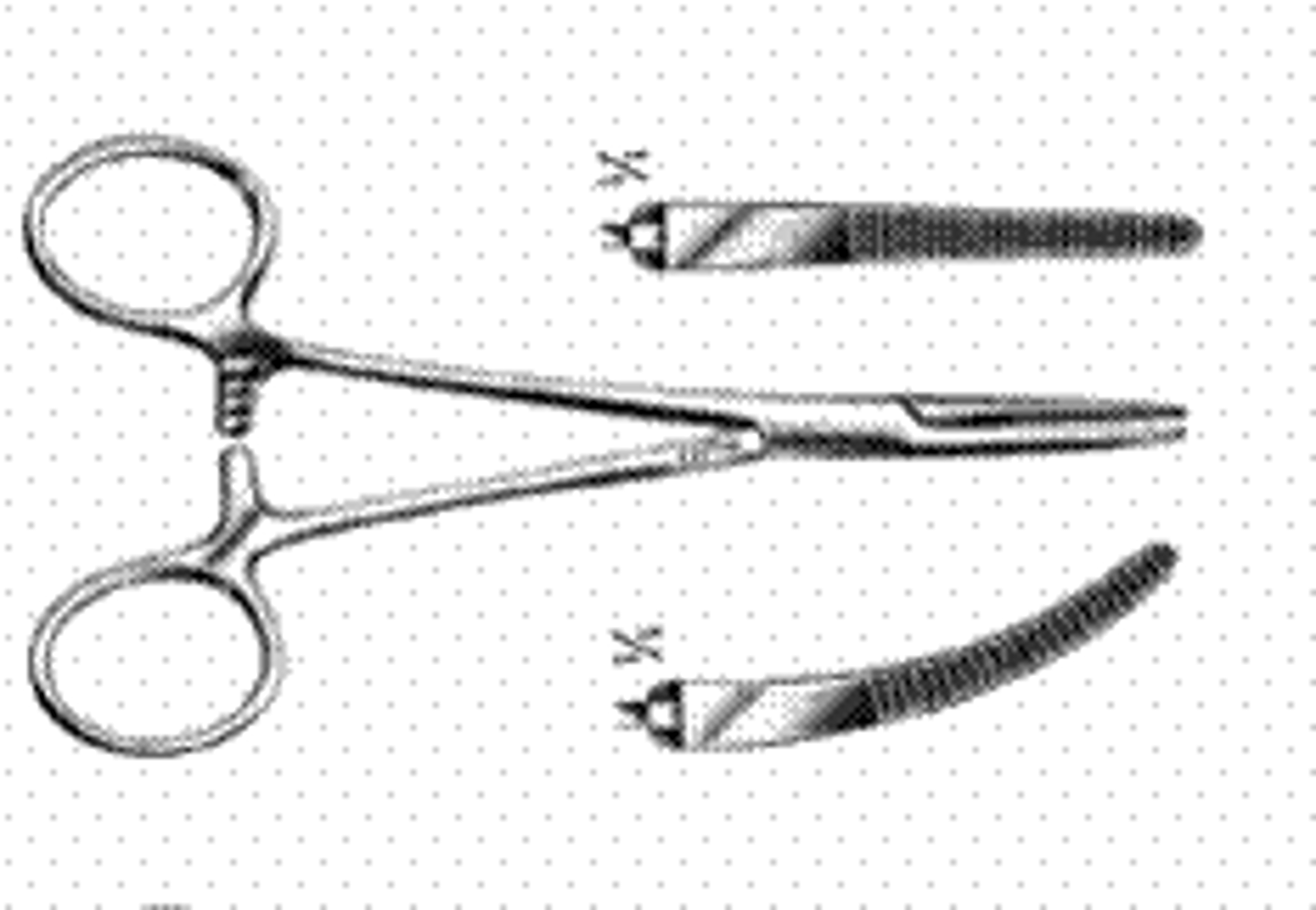
Small Kelly Clamp
Designed with two handles are used to create a lever action and has a blunted grip. The grip often has multiple grooves in it. This device is used to grasp small objects or may be used to hold back tissue to free the surgeon's hand during surgery.
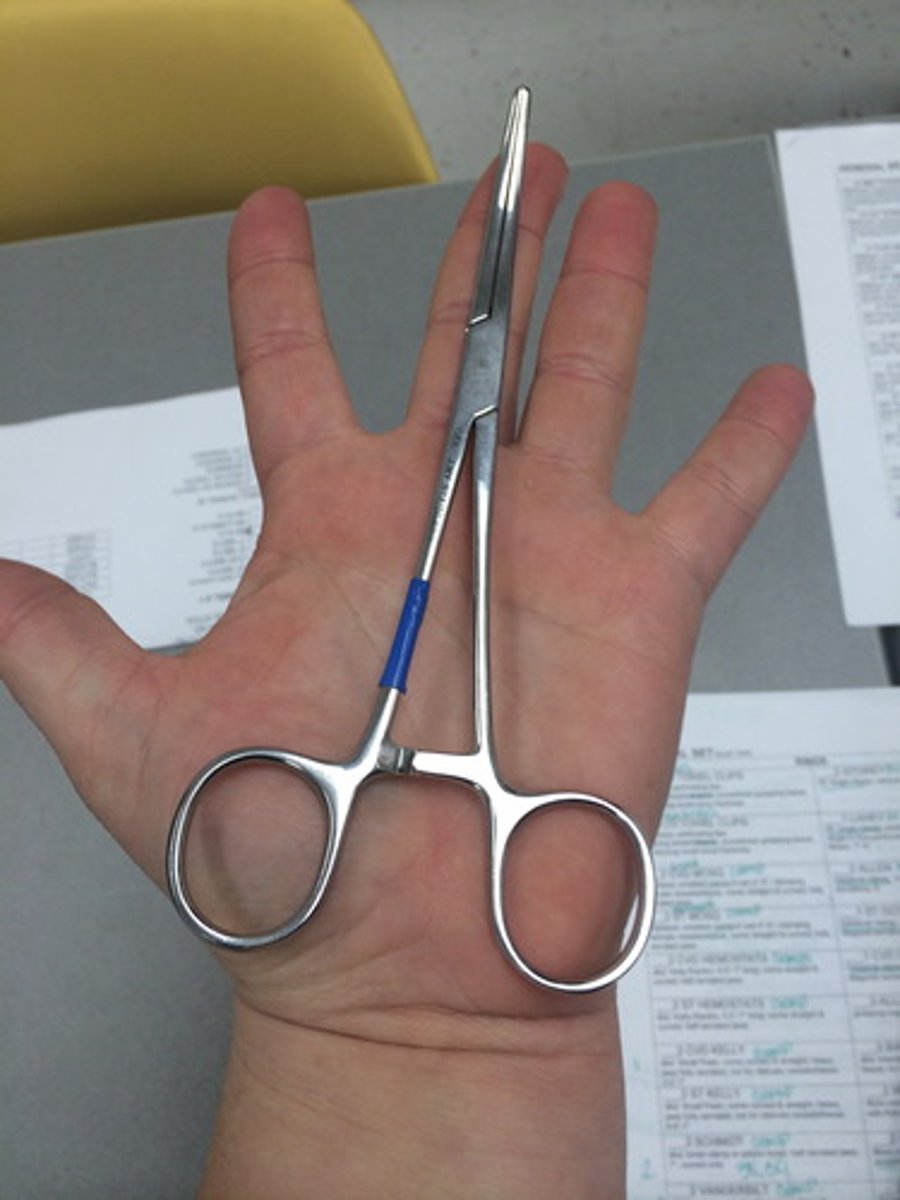
Straight Kelly Clamp
Designed with two handles are used to create a lever action and has a blunted grip. The grip often has multiple grooves in it. This device is used to grasp small objects and to clamp small vessels. Jaws may be straight or curved.
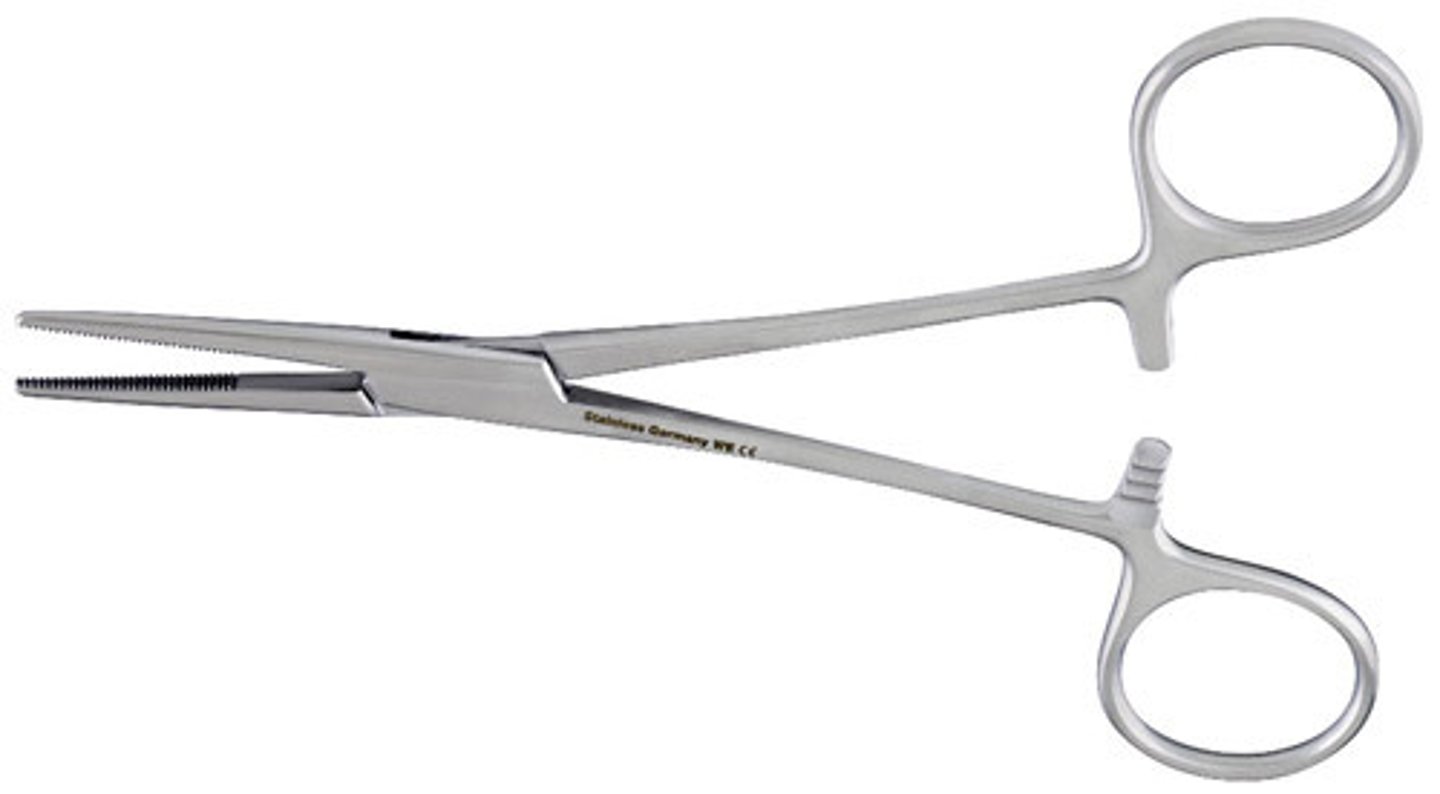
Tonsil Clamp
This instrument has two closed finger rings and it is used to clamp deep blood vessels.
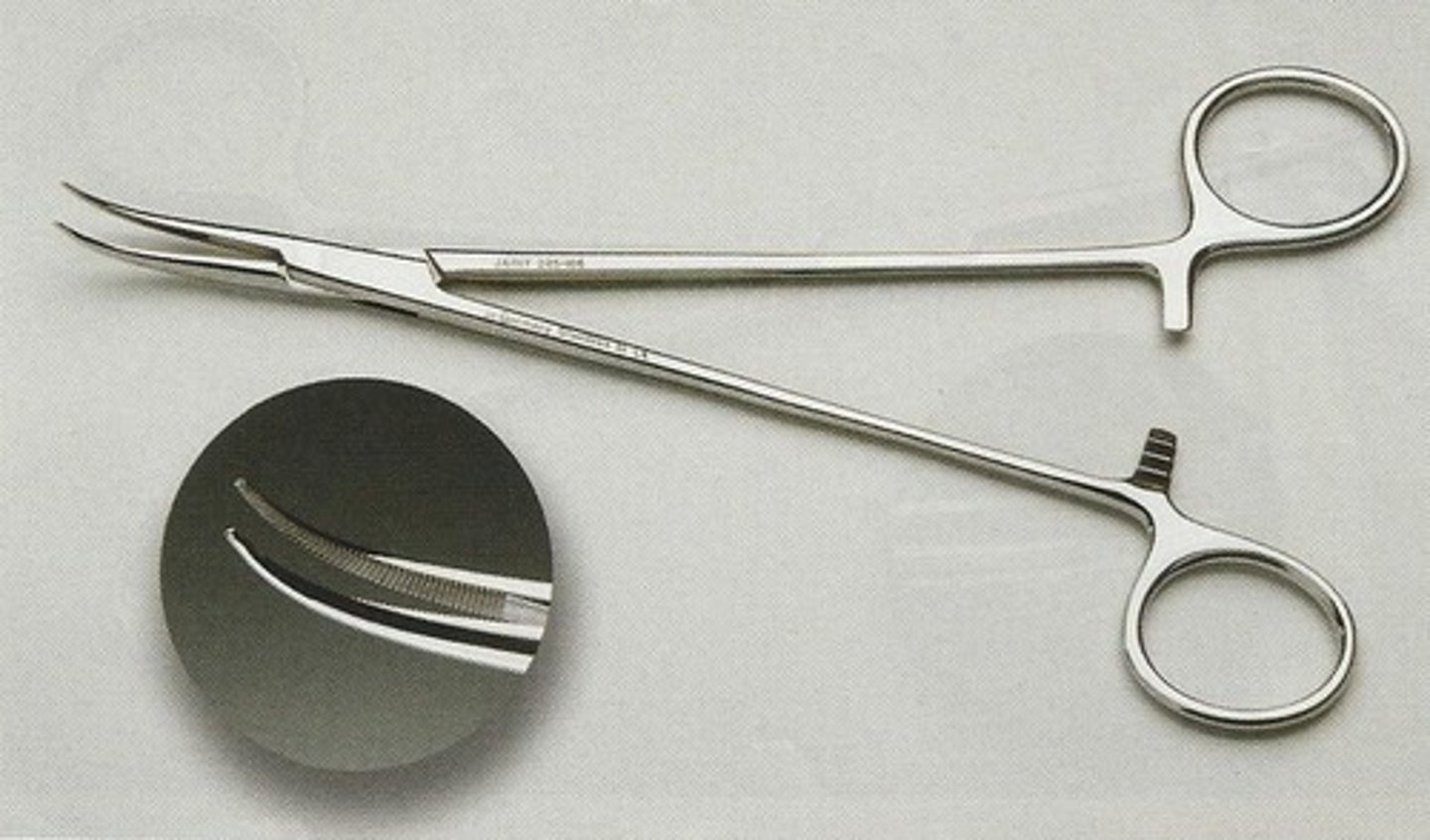
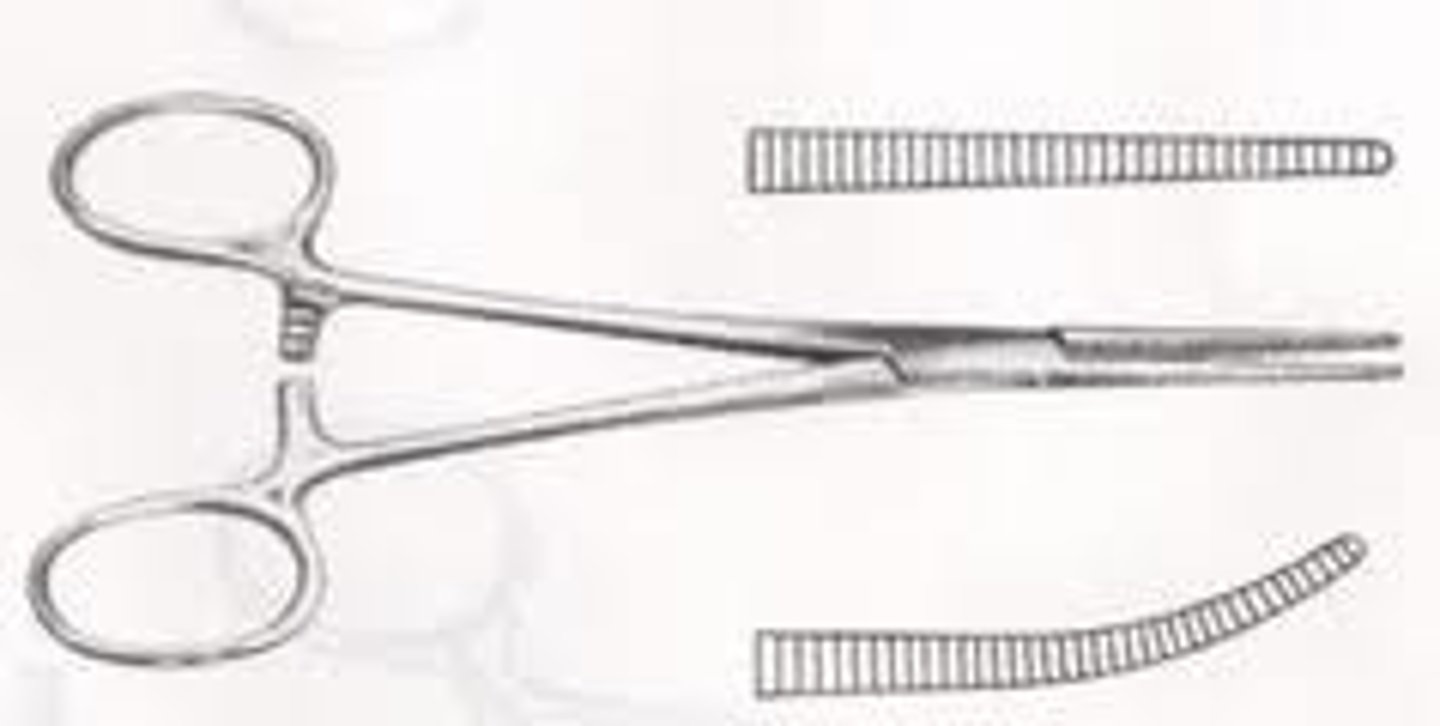
Crile Clamp
Standard type of hemostats with box joint, ratchet catch, long blades with cross ridging on the blade face. It is used to clamp blood vessels or tag sutures. The jaws may be straight or curved.
What forceps are used for deep tissue work?
Debakey forceps, Russian forceps, and long single and multi-toothed forceps are used for deep tissue work.
What are adson forceps commonly used for?
Any type of adson forceps is commonly used on skin and for suturing superficial incisions.
Dressing forceps are used for?
Dressing forceps are used to pack dressing materials into a deep wound.
Purpose of a Handle no.7 especially if combined with a 15 blade?
To cut deep and delicate tissue
Handle No.4 especially when used with a number 20 blade?
to cut skin
Purpose of a handle no.3 especially if used with a 10 blade?
to cut superficial tissue
Basic purpose of retractors
Retractors are used to establish and maintain optimal visualization of the surgical field.
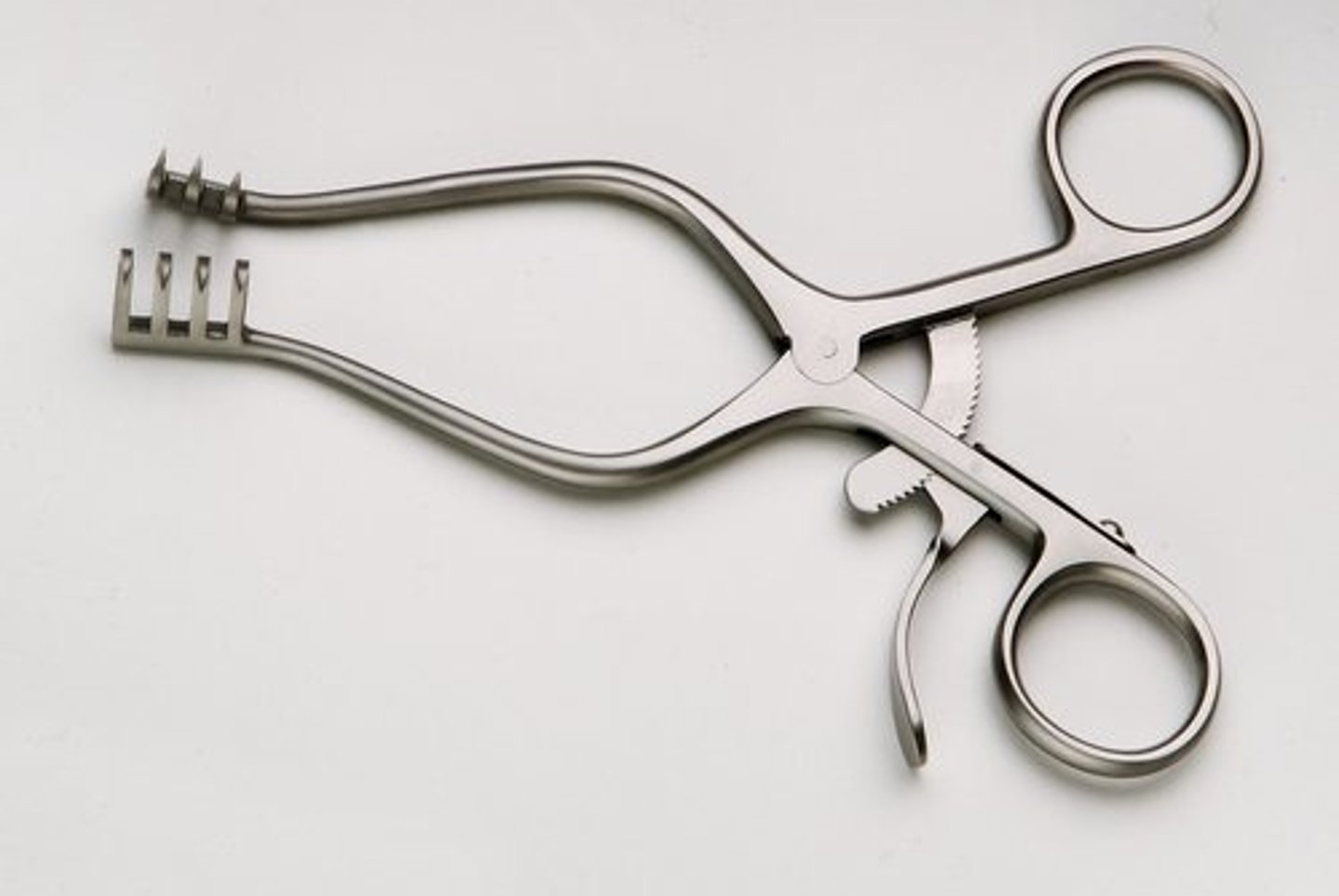
Weitlander retractor
A self-retraining instrument, shaped like a scissor but the blades open when the ratcheted handles are closed. The blades each have four downward-pointing, curved prongs, which retain their position in a spread wound. It is used to retract shallow incisions.
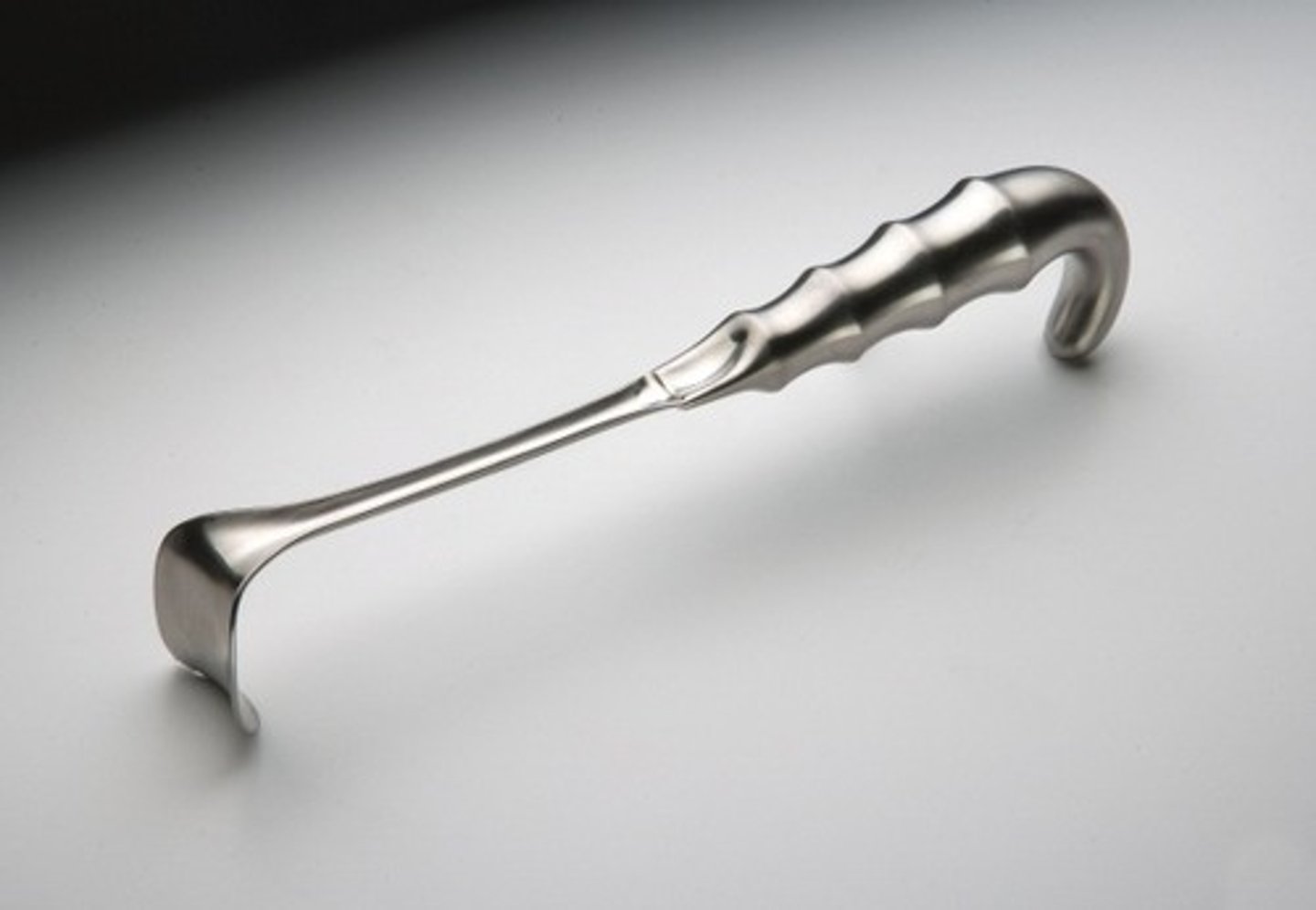
Richardson Retractor
Avaliable in multiple sizes as well as single and double ended. This is one of the most common general surgery retractors. It is used to retract deep abdominal or chest incisions.
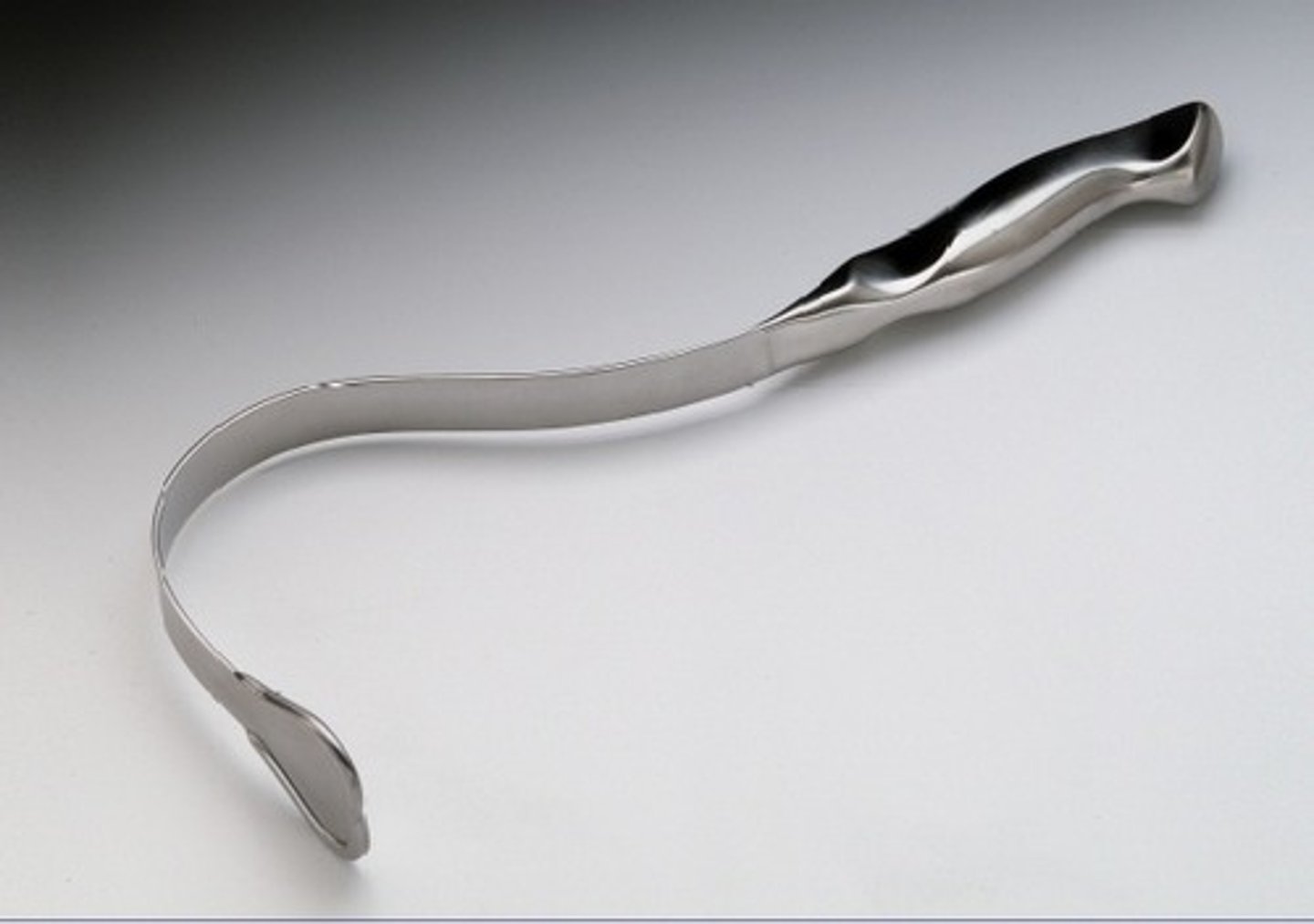
Sweatheart retractor
One of the longest, deepest retractors for abdominal wounds. It is used to retract organs for exposure of the surgical site.
-Aww, it has a heart
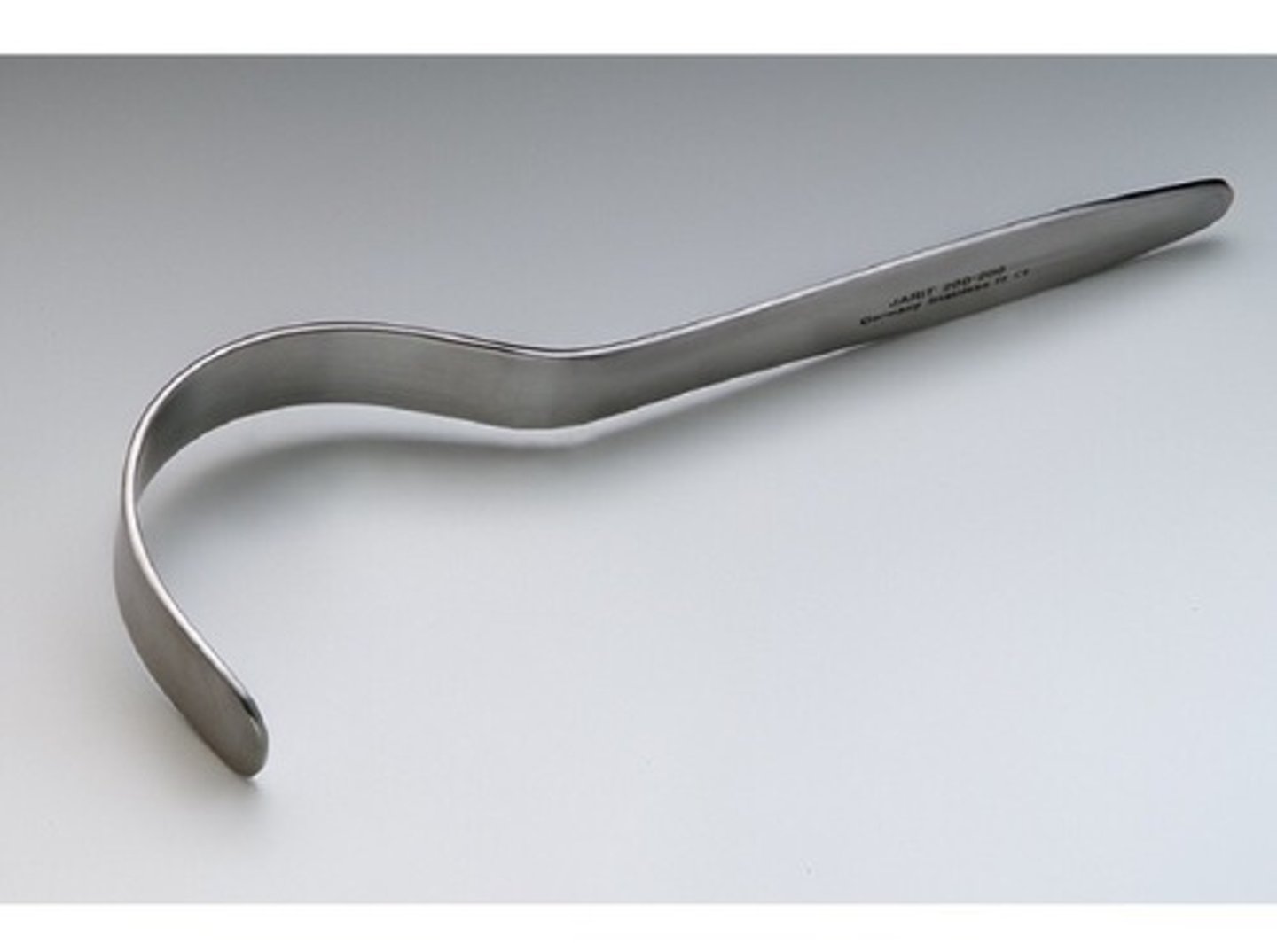
Deavor retractor
A manual retractor that is used to retract deep abdominal or chest incisions. Avaliable in various widths.
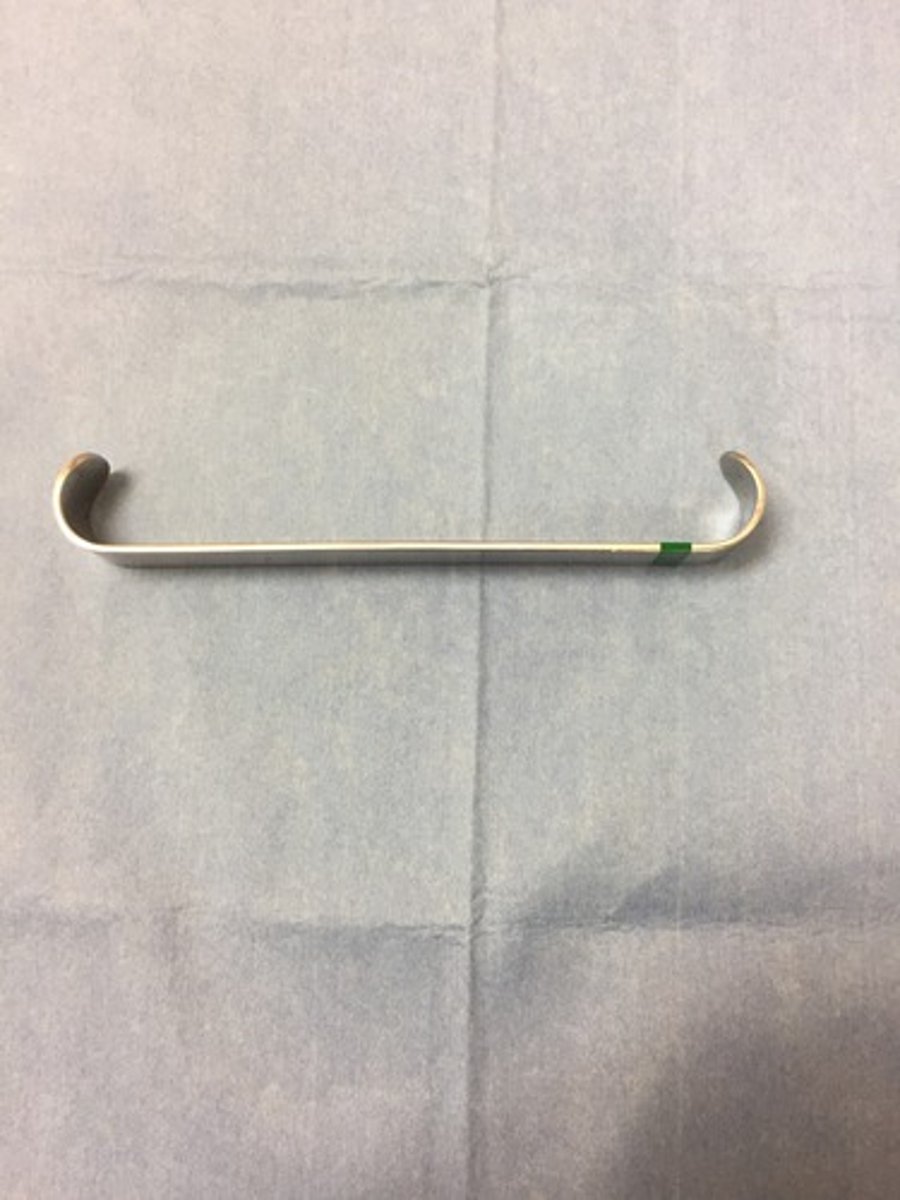
Double ended retractors
A manual retractor that is used to retract shallow or superficial incisions.
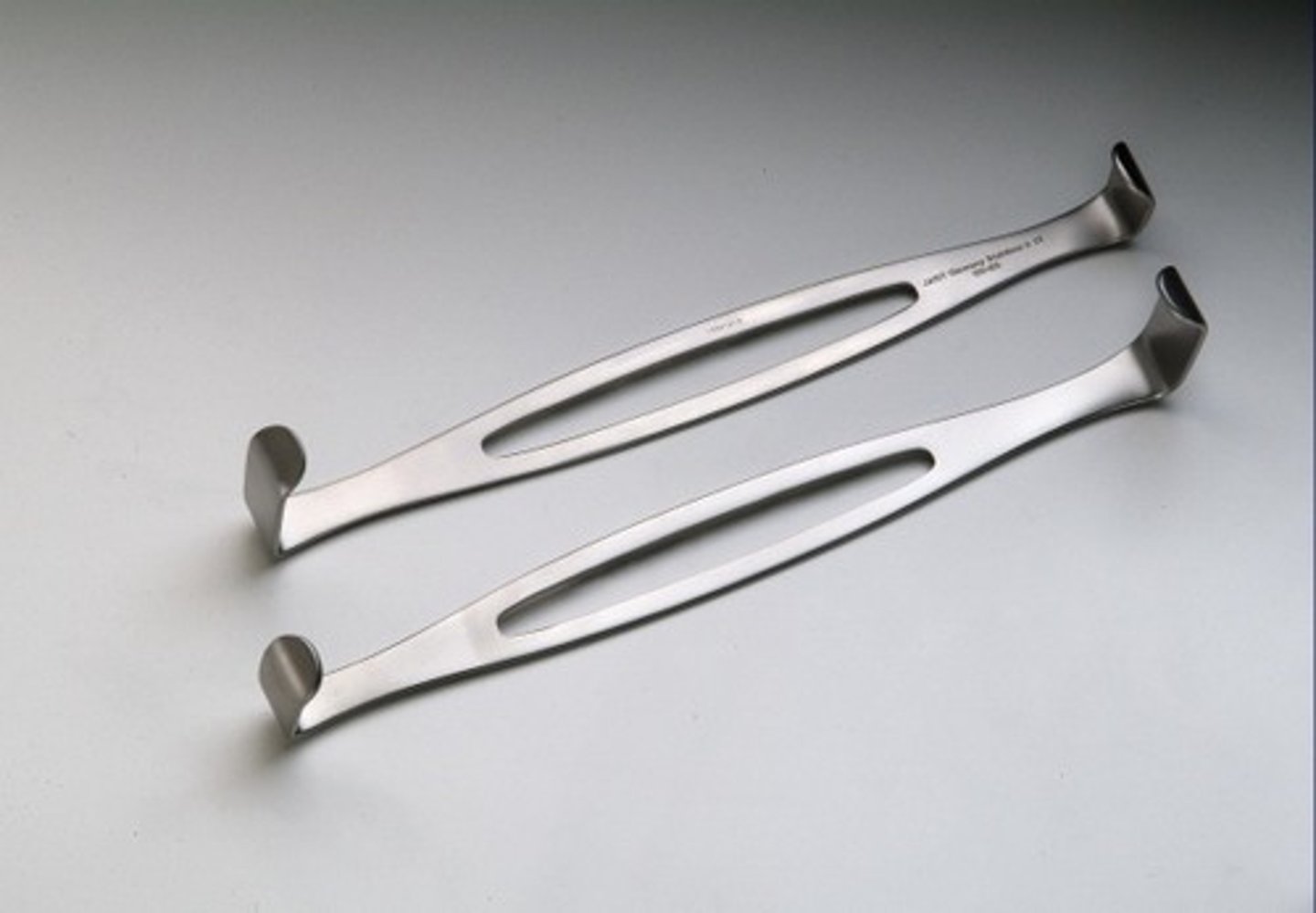
Army navy retractor
A manual retractor that has one deeper than other. It is used for superficial and deeper retraction of wound edges or tissue.
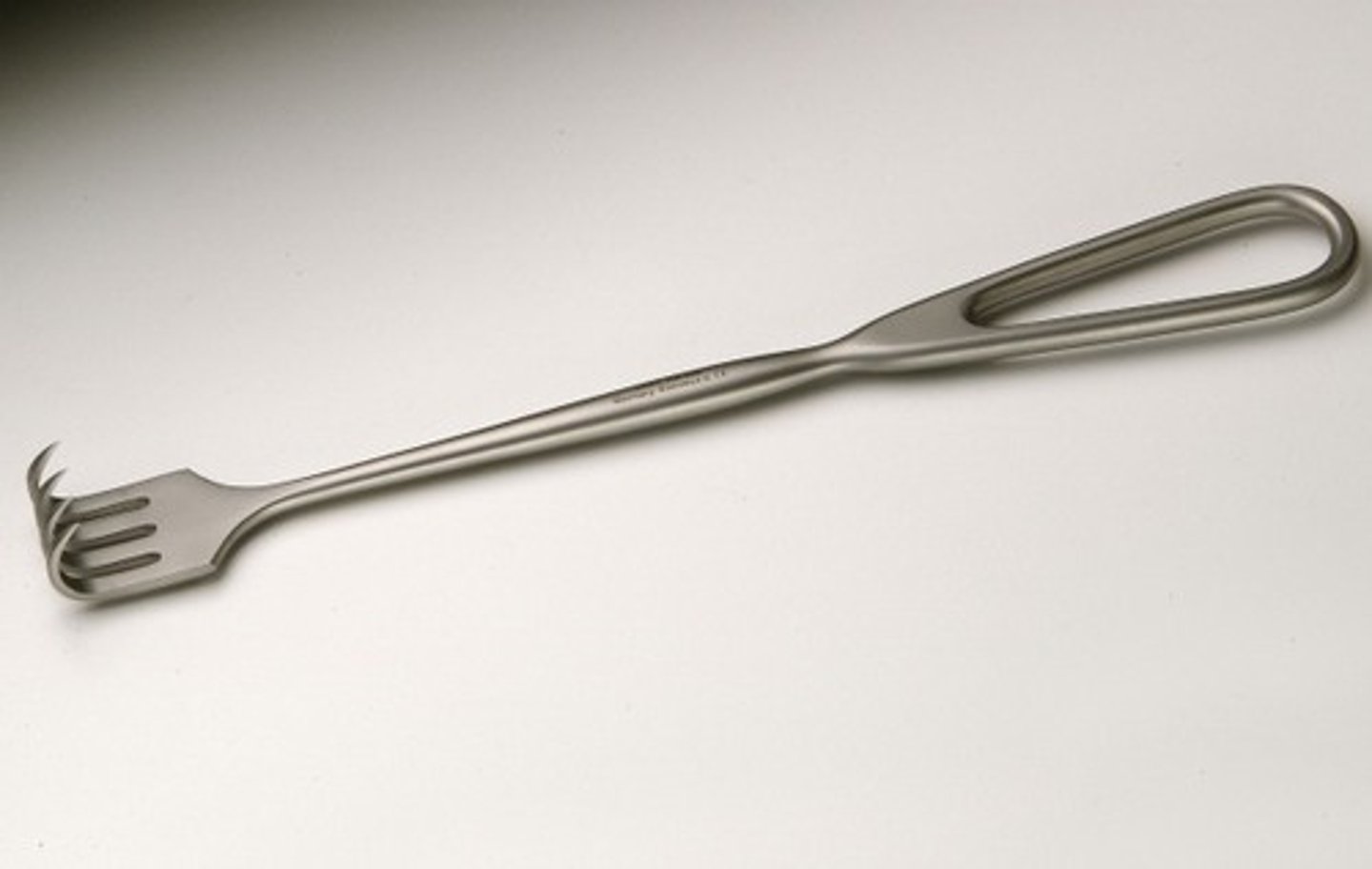
Rake retractor
A handheld instrument shaped like a kitchen fork except that the prongs are curled back on themselves halfway through their length; two to six pronged. It is used to separate incised tissues.
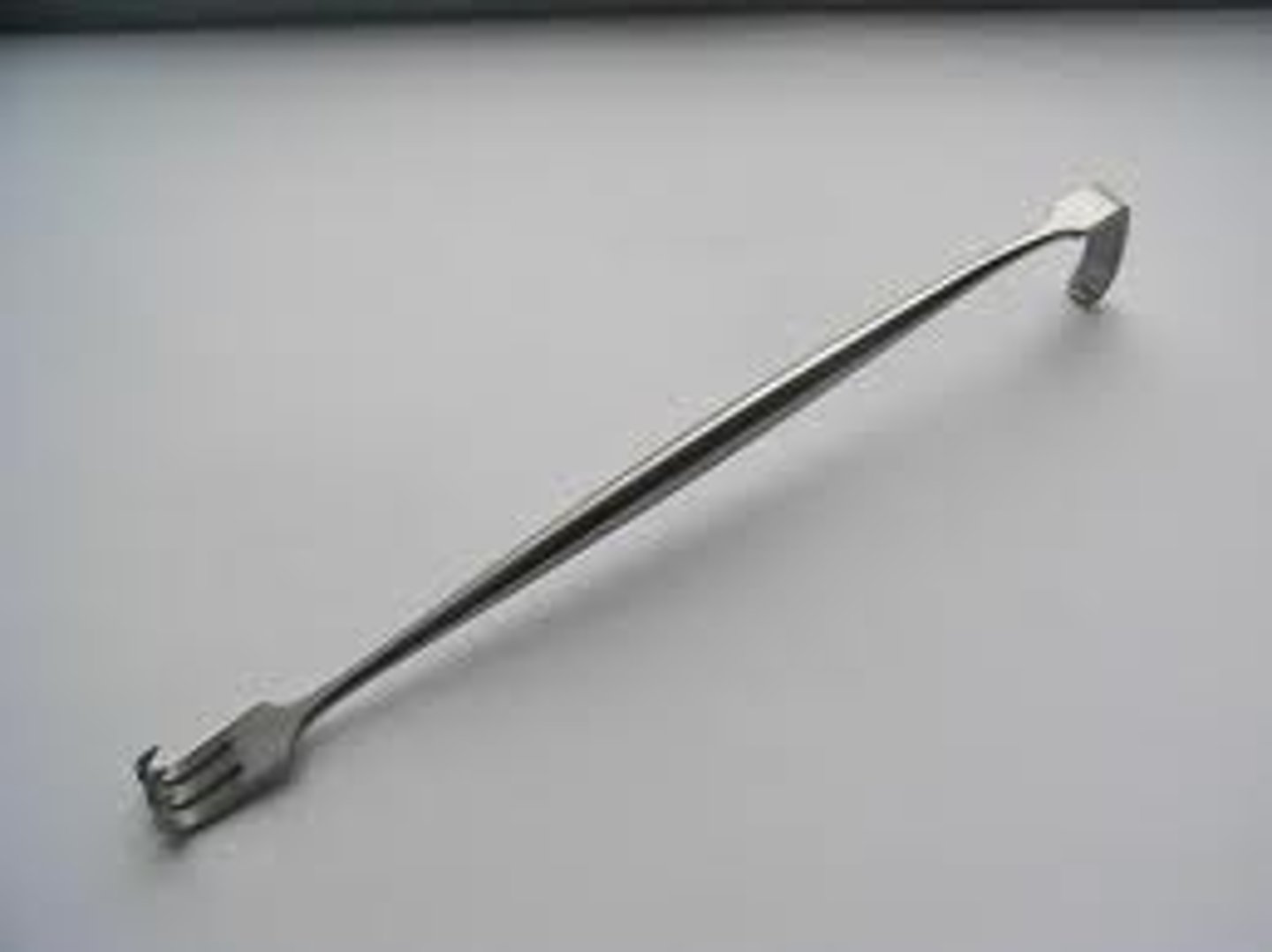
Senn Retractor
A handheld instrument with a curled, three pronged claw at one end and a right-angled, single blade at the other. This is used to retract tissue layer on procedure involving hands, fingers, and small anatomy.
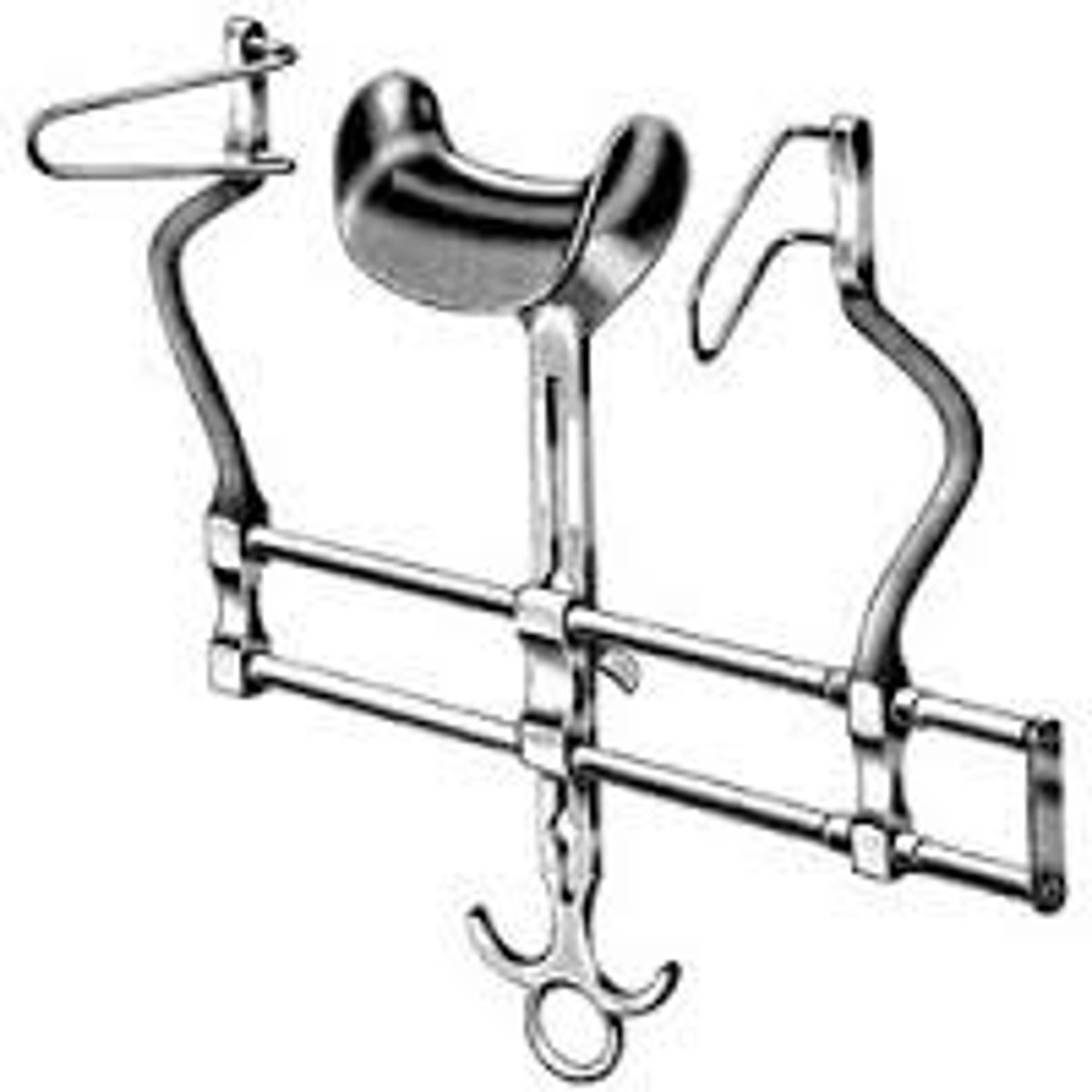
Balfour retractor
This is a self retaining retractor that has a long rod with two attached loops on either side and a central retractor blade. The loops can be pushed apart to open up the wound, and a ratcheting device holds them in place. The central blde can be raised or lowered to increase the view of the surgical field. This is used to retract wound edges during deep abdominal procedures.
(this just looks like a torture device)
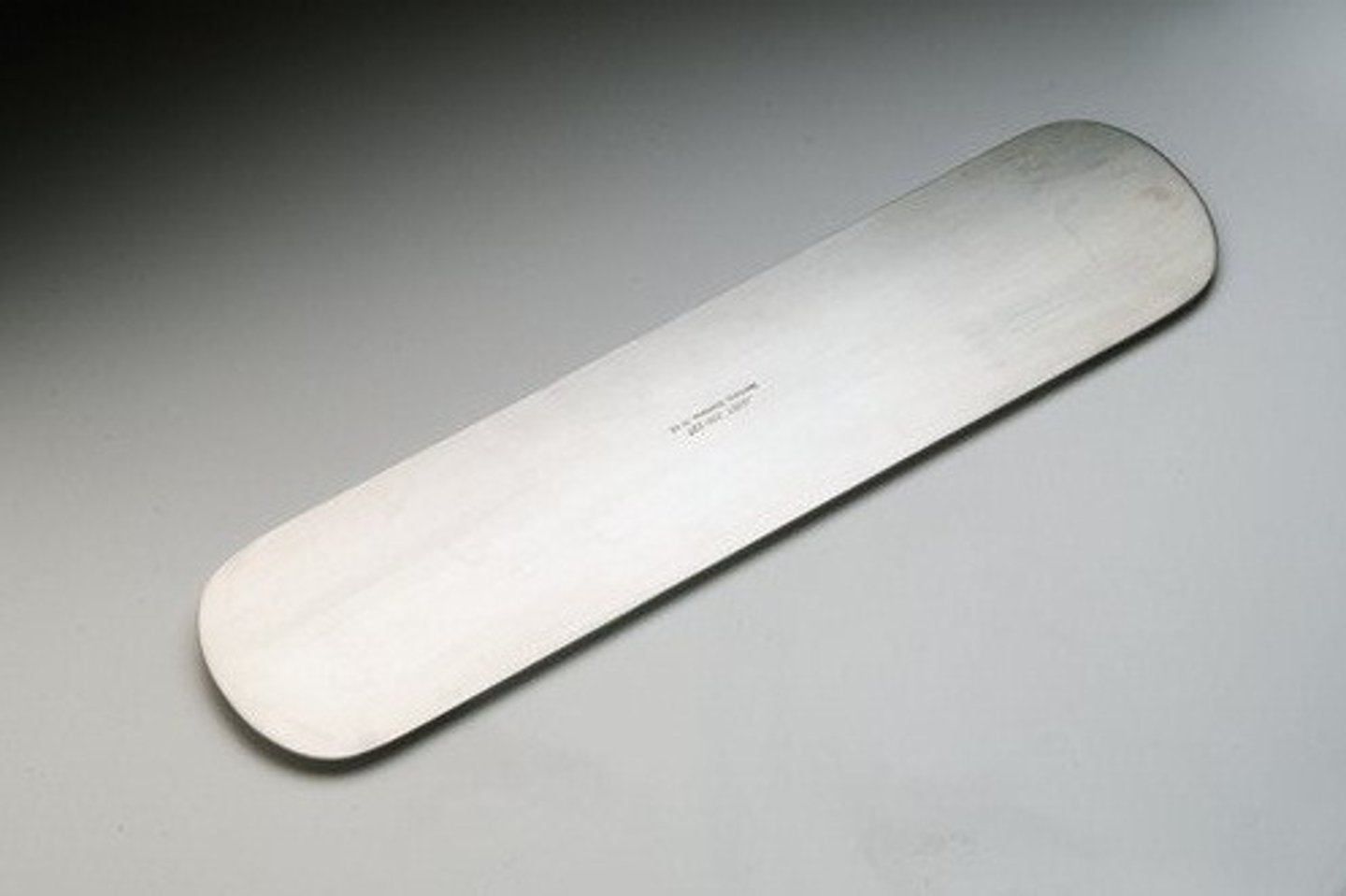
Ribbon Retractor
A malleable handheld retractor that can be bent to fit wound depth. This is used to retract deep wounds.
Nurses Scissors
These instruments are designed with blunt tips and is used for safely cutting gauze and other bandage materials.
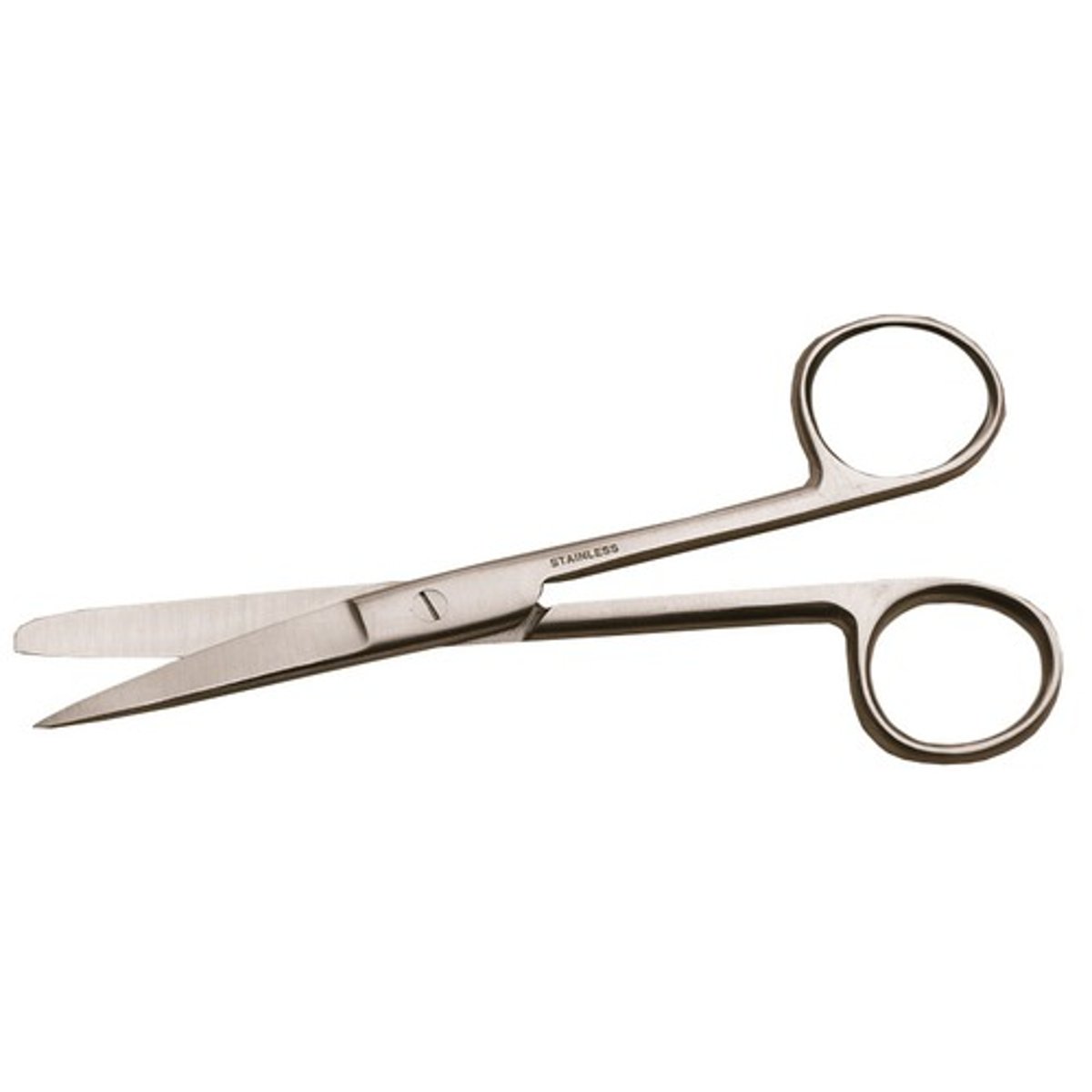
Straight Mayo Scissors
This surgical scissor has semi bunt ends. Straight bladed Mayo scissors are designed for cutting body tissues near the surface of the wound. They are known as suture scissors and are used to cut suture material, trim mesh or other synthetic grafts, and shape dressing materials.
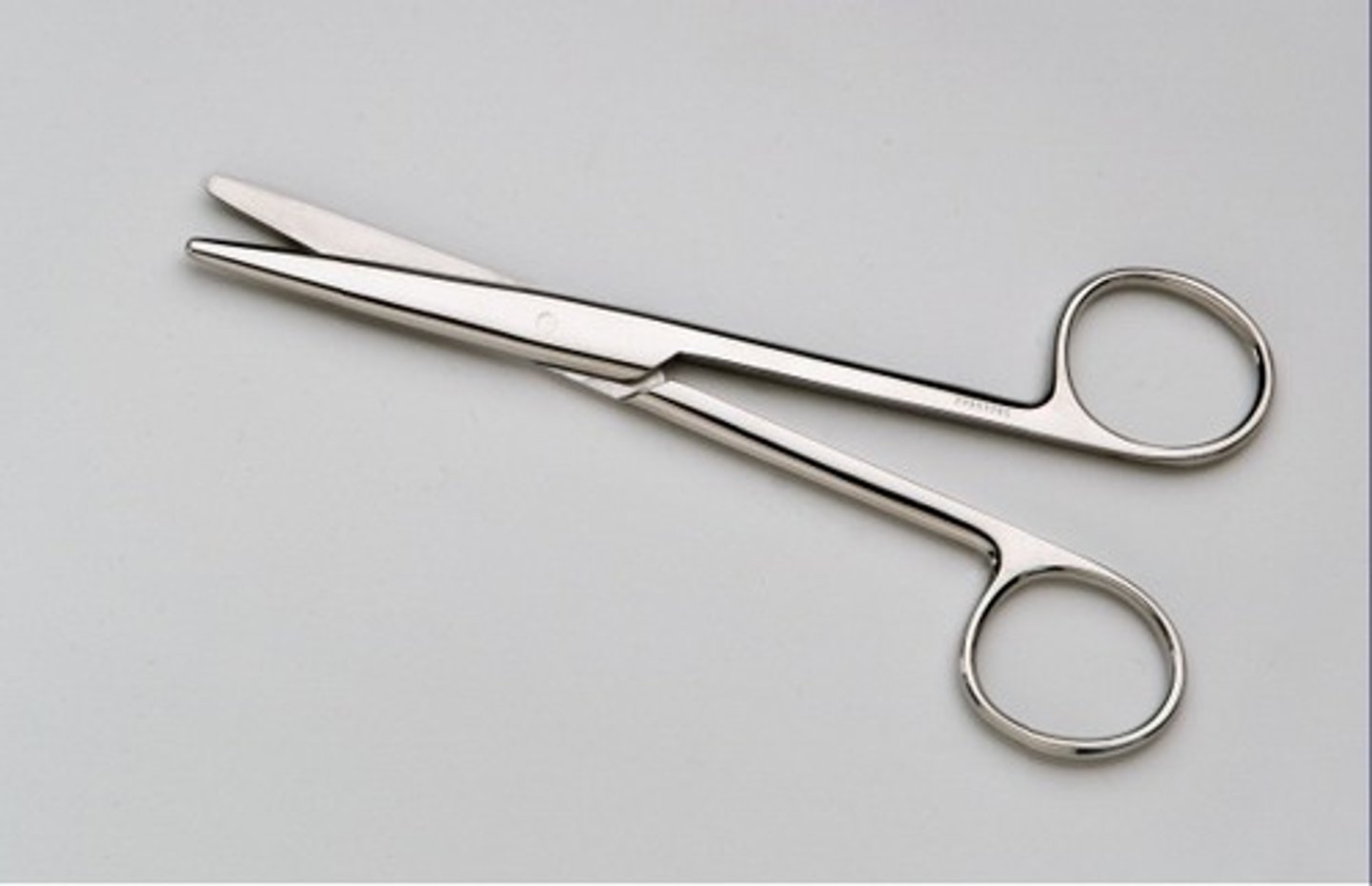
Curved mayo scissors
This surgical scissor has semi-blunt ends. Curved-Bladed Mayo Scissor styles allow deeper penetration into the wound than the type with straight blades. The curved style of Mayo scissor is used to cut thick tissues such as those found in the uterus, muscles, breast, and foot.
Short Metzenbaum scissor
The blades can be curved or straight, but the tips are always blunt. They are usually light, have a long handle, and have a slender midsection. This is used for cutting delicate soft tissues like bowel and the peritoneum.
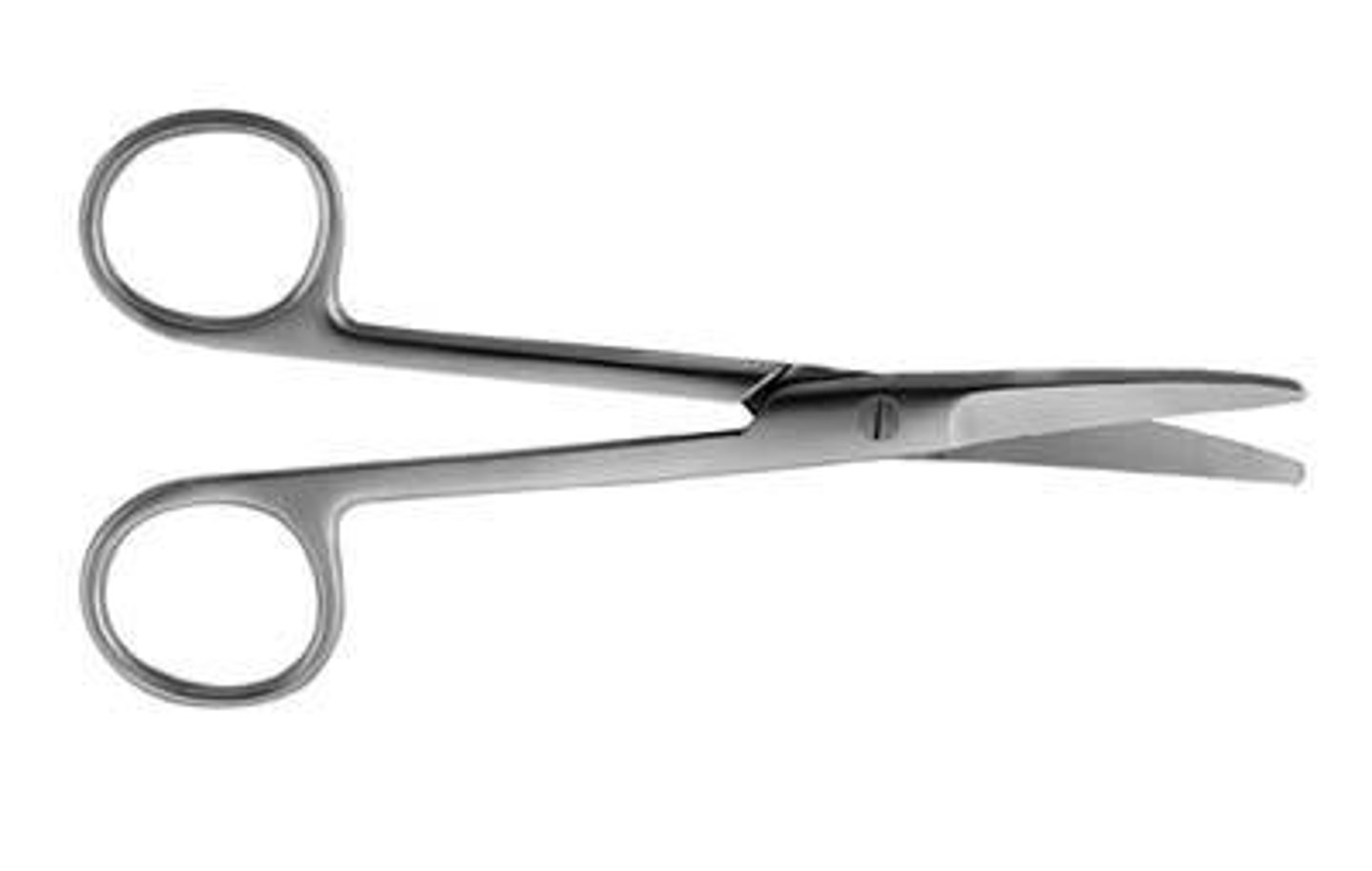
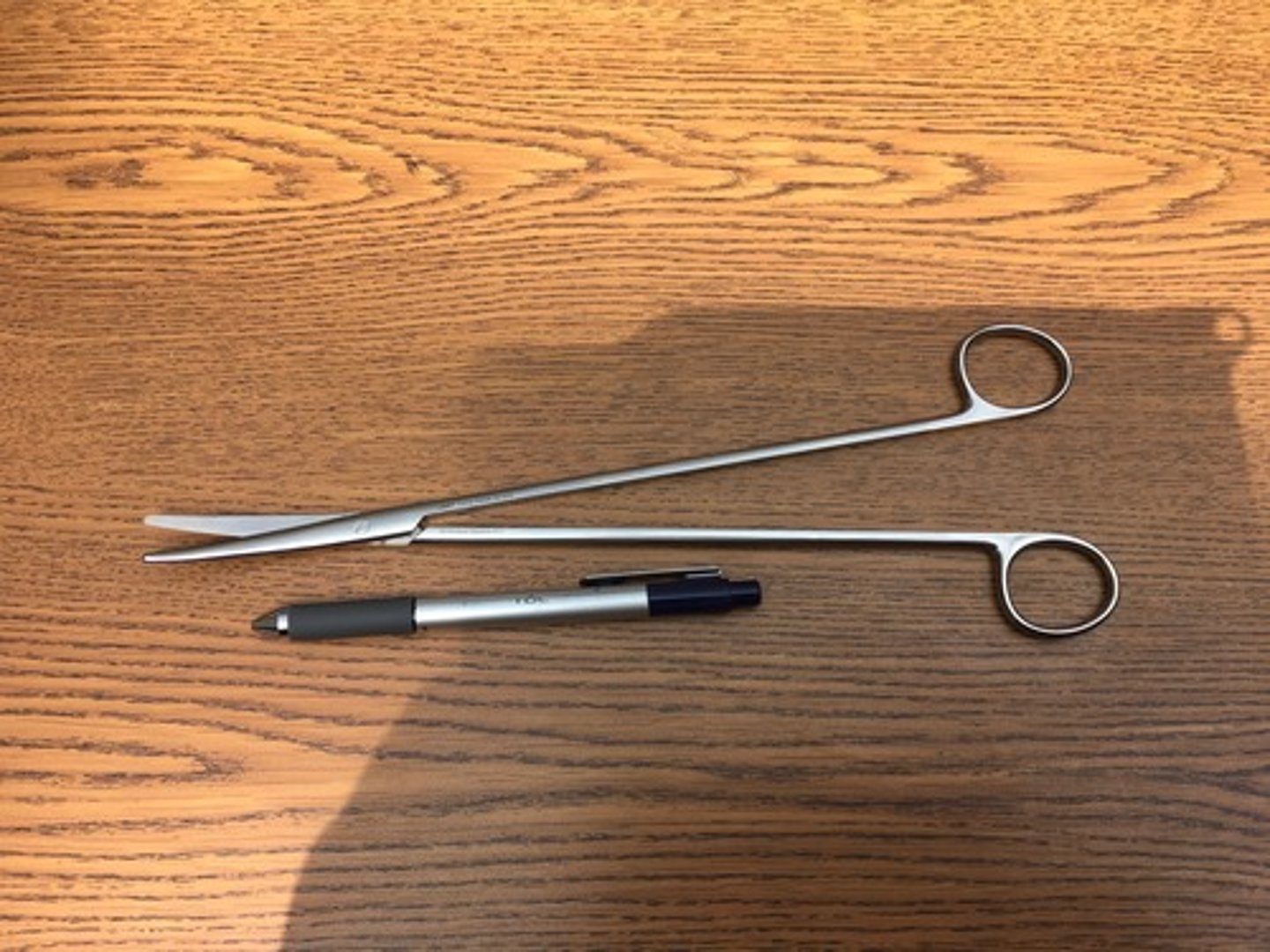
Long metzenbaum scissor
The blades can be curved or straight, but the tips are always blunt. They are usually light, have a long handle, and have a slender midsection. These scissors are often used for dissection of tissues
Basic purpose of needle holders
Needle holders are used in the process of closing skin and other tissues.
Purpose of short, medium, and long needle holders.
The shortest needle holders are used with small suture needles for skin closure and the medium and long needle holders are used for deeper tissues, often with larger suture needles.
Basic purpose of suction
Since it is of utmost importance to establish and maintain optimal visualization of the surgical field, suction tips are present in each set of instruments.
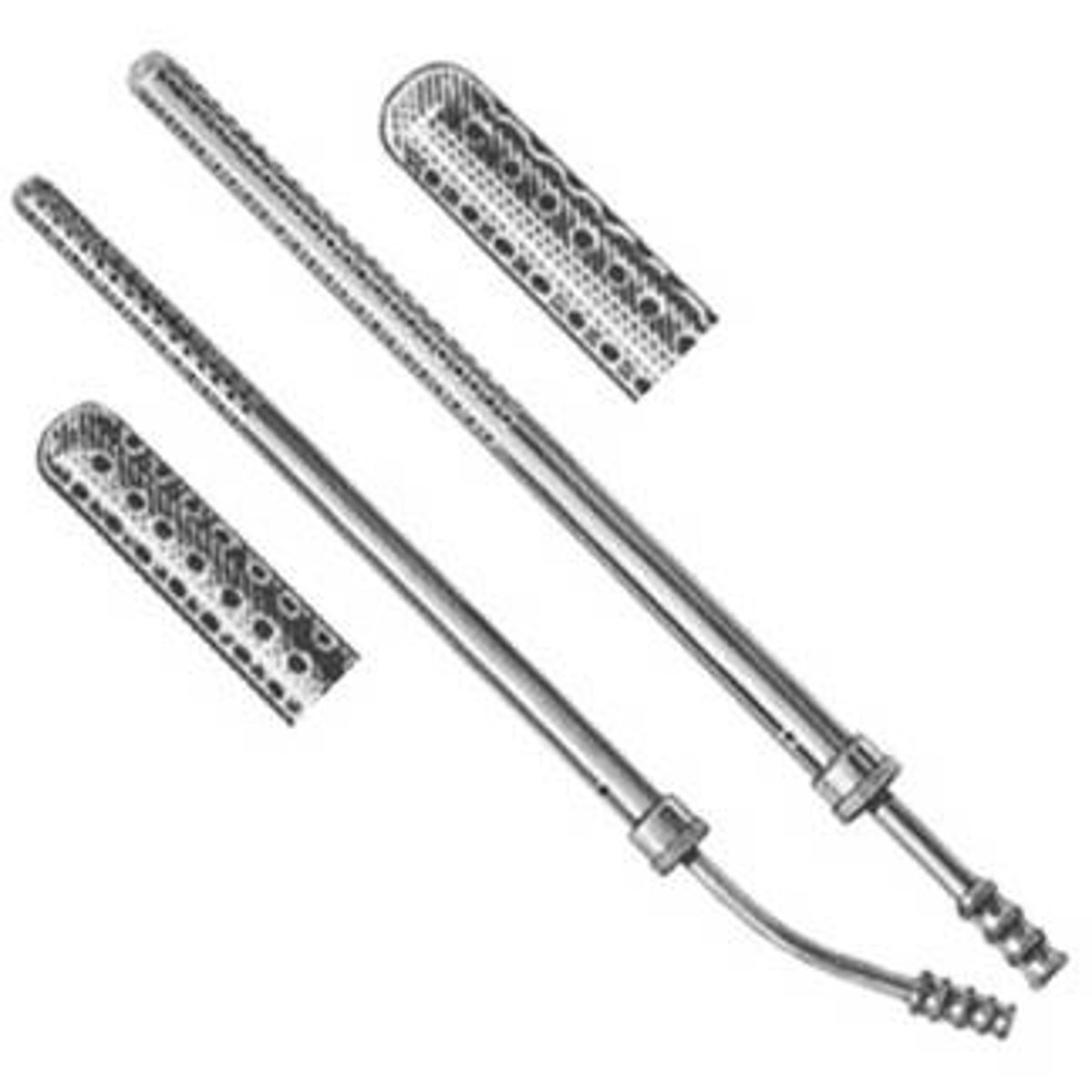
Poole Suction Tube
Designed with multiple holes in the end to avoid clogging on fat particles. This instrument is most commonly used during surgeries in the abdomen, when copious amounts of body fluid are present and irrigating the abdominal wound with saline.
Yankauer Suction Tube
A rigid hollow tube made of metal or disposable plastic with a curve at the distal end to facilitate the removal of thick pharyngeal secretion during oral pharyngeal suctioning. Can also be used in the abdomen depending on the surgeon's preference.
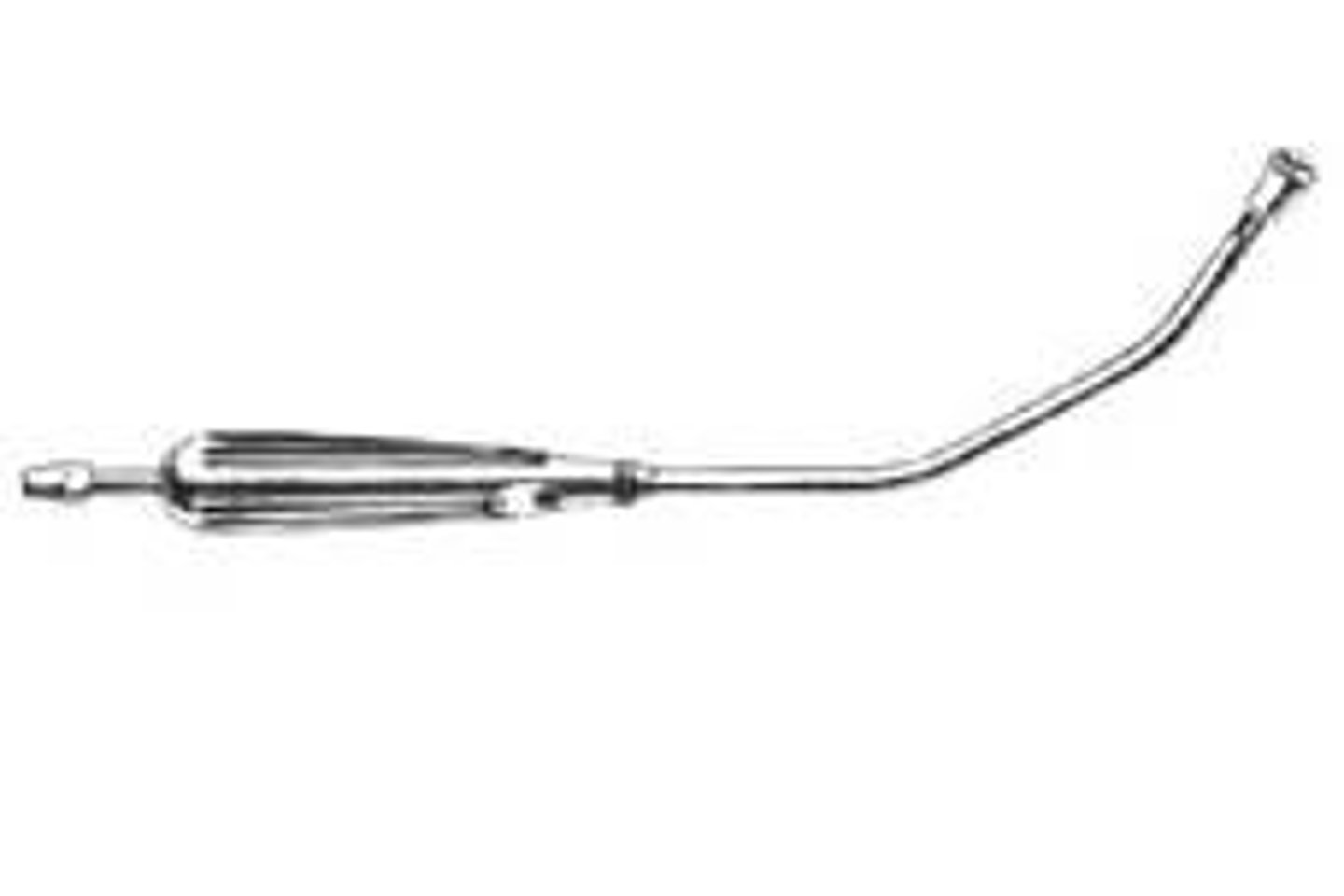
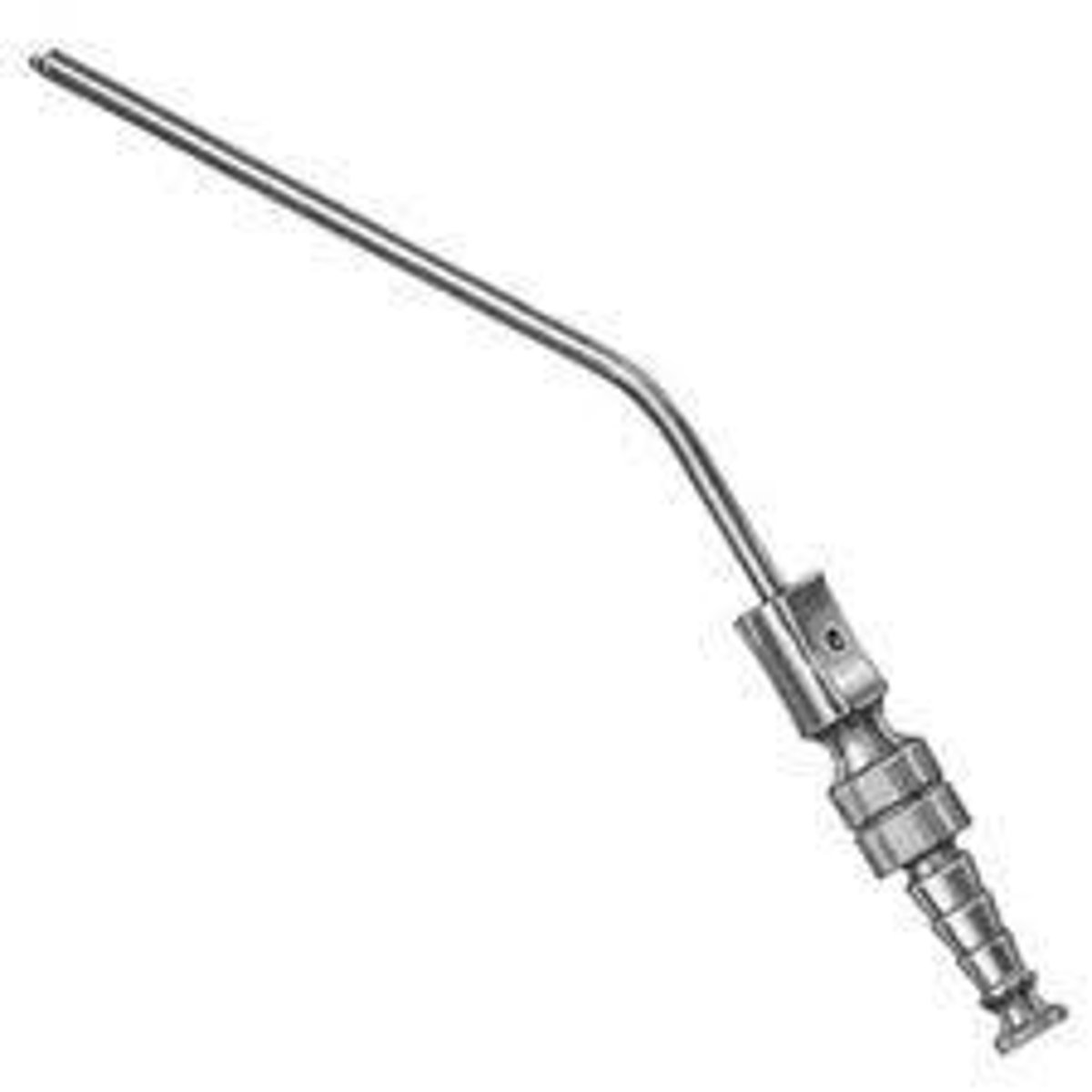
Frazier Suction Tube
An instrument for removing fluid or blood from a surgical site. It has compression hole near the handle with can be covered to modify the degree of suction. This instrument is most commonly used in neuro, orthropedic and ENT surgery.
Now onto knot tying
Oh my goodness
Why the frick is it important to be a knot tying master?
•Essential Skill in surgery/procedures
•Used in suturing, securing drains, central lines, etc
•Proper technique reduces complications
What complications?
Dehiscence, bleeding
Knot security equals
Friction + proper tension
What should you avoid?
Excessive tension, causes trauma to tissue
Square knot vs granny knot
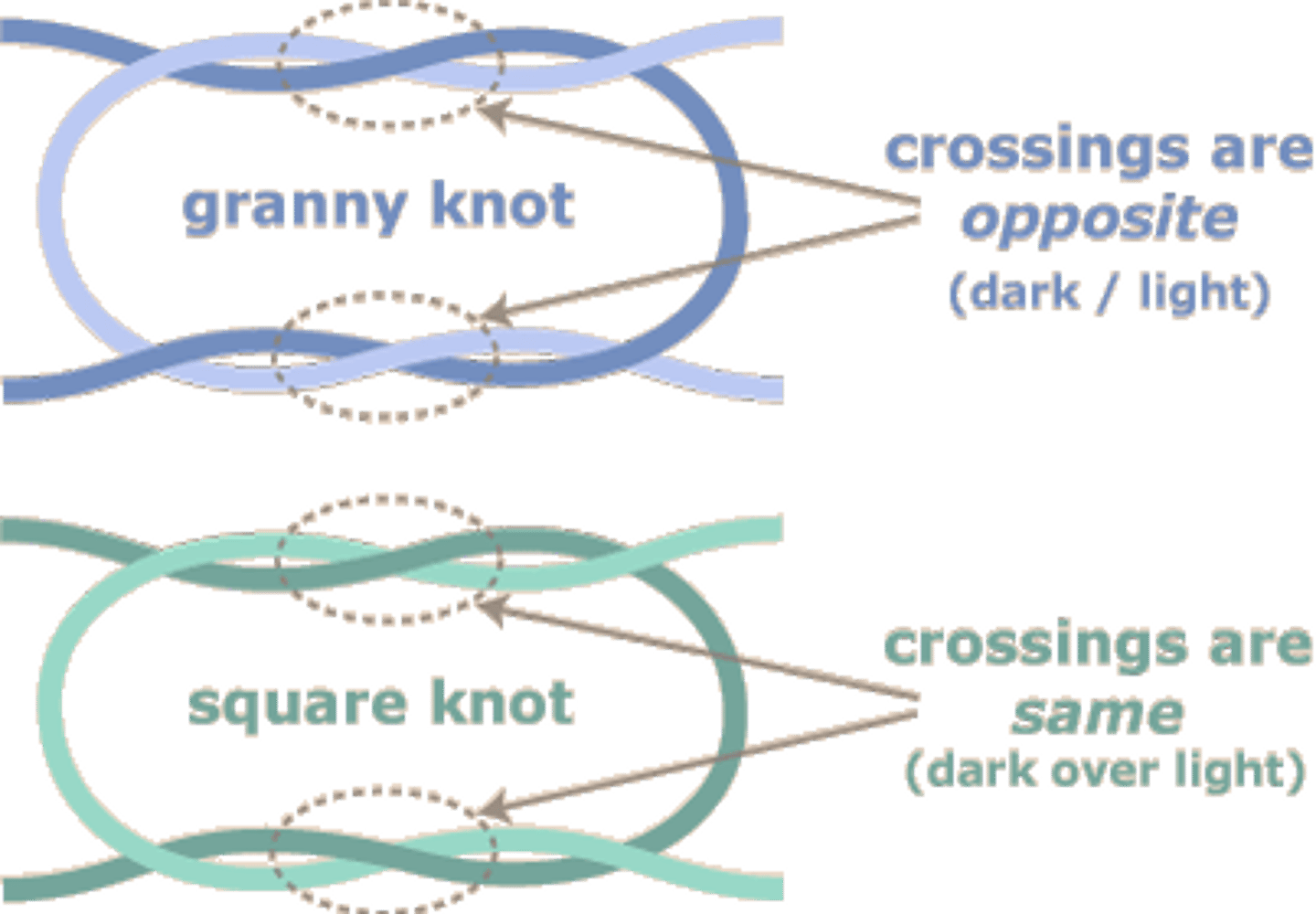
Most commonly used knot
Square knot
What do surgeon knots add?
Friction
Slip knots are used?
In deep cavities or drains
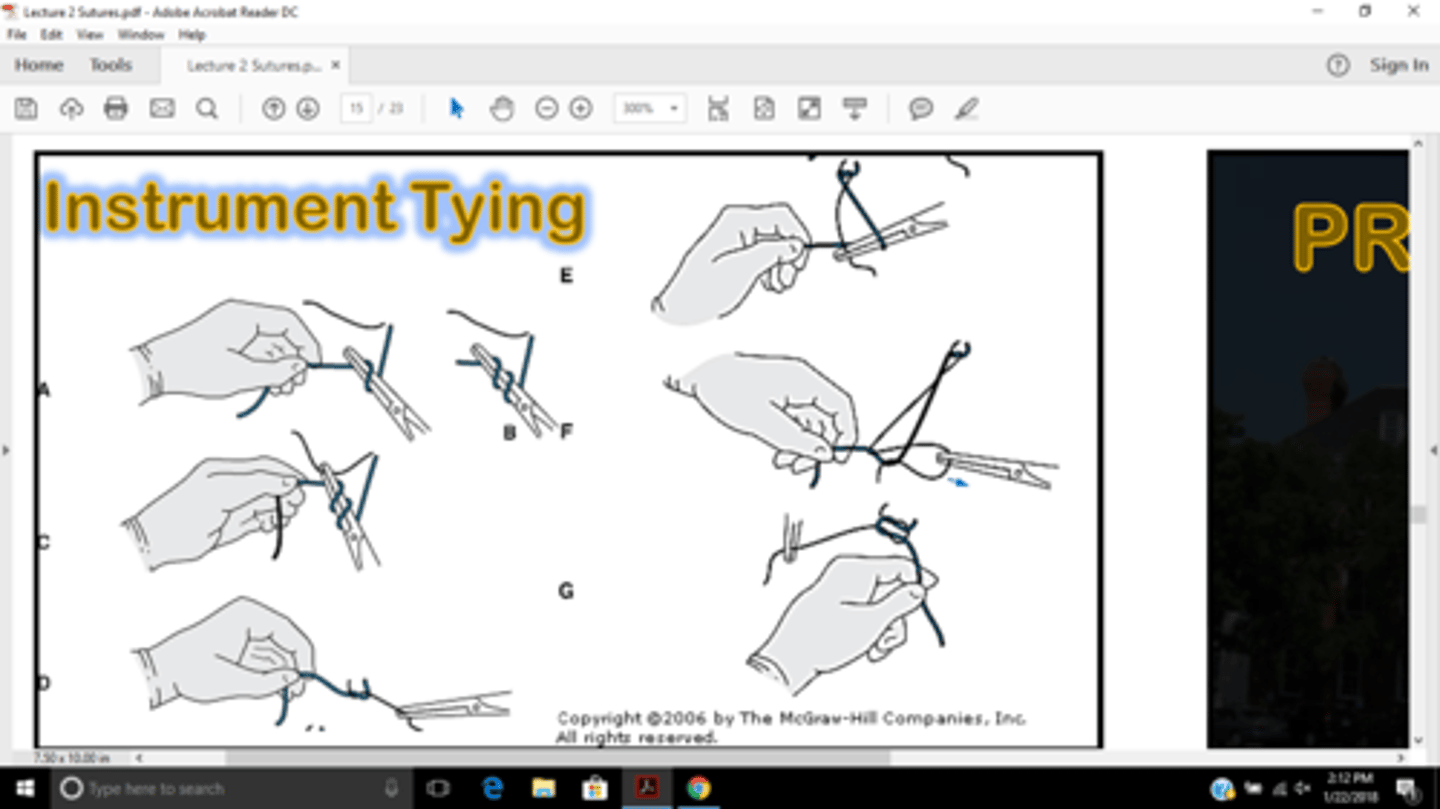
Instrument tying
Needle Driver Technique
Most common method for skin closure and minor procedures
Efficient and Precise
You have a 5 y/o with laceration who needs skin closure
Instrument technique
You have a 15 y/o with a deep wound in their arm
Hand technique
You are in a tight space
One hand
Your patient is bleeding from their wound profusely
Surgeon knot