Romantic paintings
 Call Kai
 Learn
Learn Practice Test
 Spaced Repetition
 Match
Match Flashcards
 Knowt Play
1/10

There's no tags or description
Looks like no tags are added yet.
Name | Mastery | Learn | Test | Matching | Spaced | Call with Kai |
|---|
No analytics yet
Send a link to your students to track their progress
11 Terms
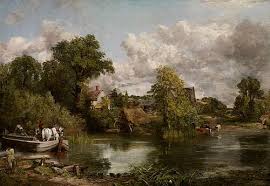
John Constable’s painting (The White Horse)(1819) shows a peaceful rural scene of a horse crossing a river. Romantic because it emphasizes nature, atmosphere, and everyday life.
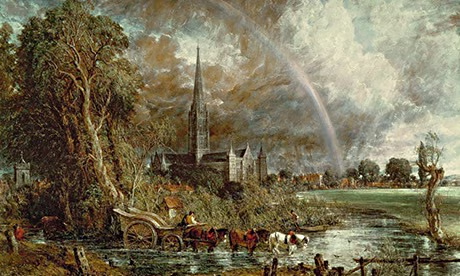
John Constable’s painting (Salisbury Cathedral from the Meadows)(1831) shows a cathedral in a stormy landscape. Romantic because it contrasts human creation with powerful, emotional nature.
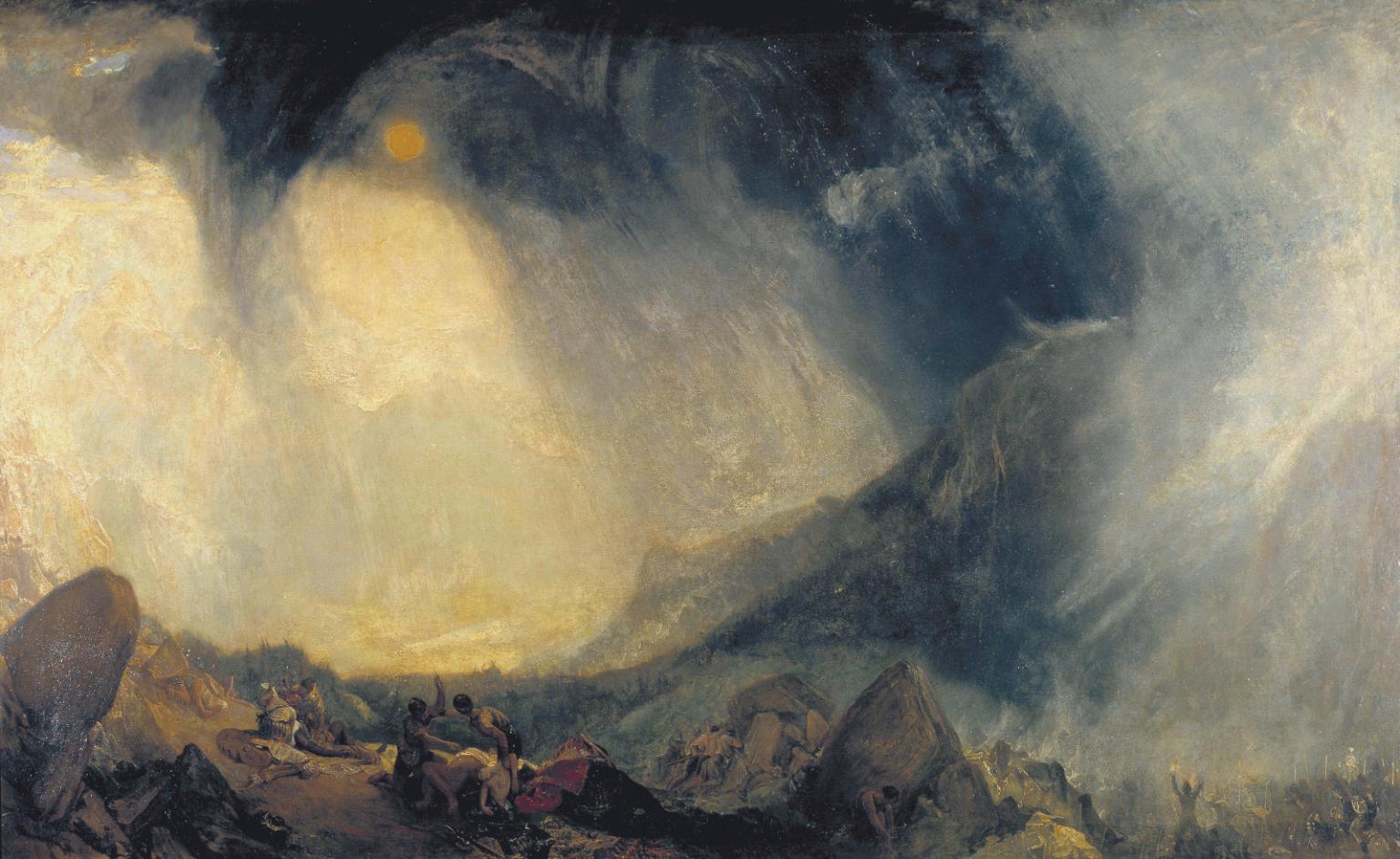
J.M.W. Turner’s painting (Snow Storm: Hannibal Crossing the Alps) (1812) shows Hannibal’s army trapped in a violent snowstorm. Romantic because nature is overwhelming and humans are powerless.
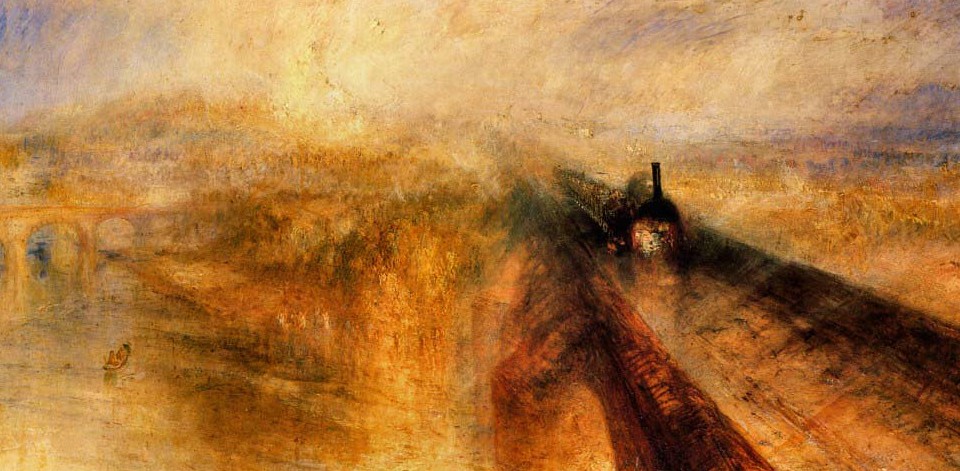
J.M.W. Turner’s painting (Rain, Steam and Speed) (1844) shows a fast-moving train in rain and mist. Romantic because it shows energy, motion, and the power of modern technology.
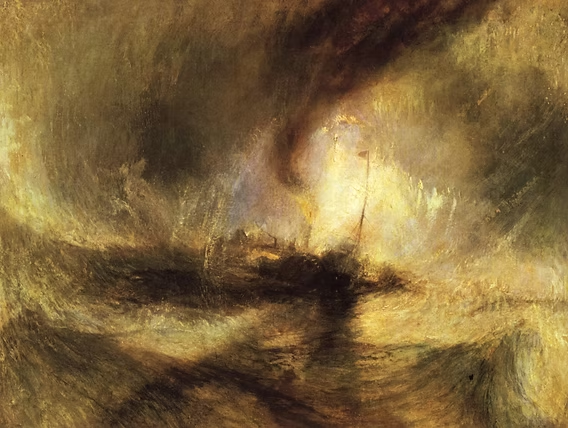
J.M.W. Turner’s painting (Snow Storm: Steam-Boat off a Harbour’s Mouth) (c. 1842) shows a ship struggling in a violent storm. Romantic because it emphasizes chaos, emotion, and nature’s power.
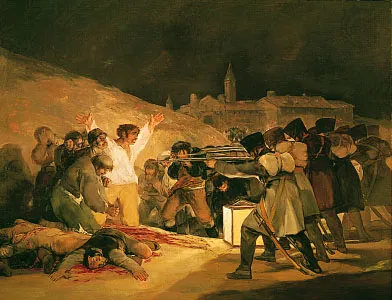
Francisco Goya’s painting (The Third of May 1808) (1814) shows the execution of Spanish civilians by French soldiers. Romantic because it shows emotion, suffering, and an anti-war message.
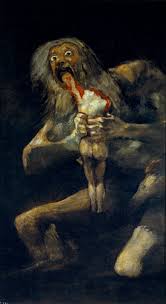
Francisco Goya’s painting (Saturn Devouring His Son) (1819–1823) shows a mythological figure eating his child. Romantic because it explores fear, madness, and dark human emotions.
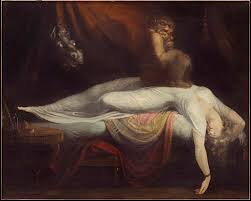
Henry Fuseli’s painting (The Nightmare) (1790) shows a sleeping woman with a demon on her chest. Romantic because it shows dreams, fear, and the supernatural.
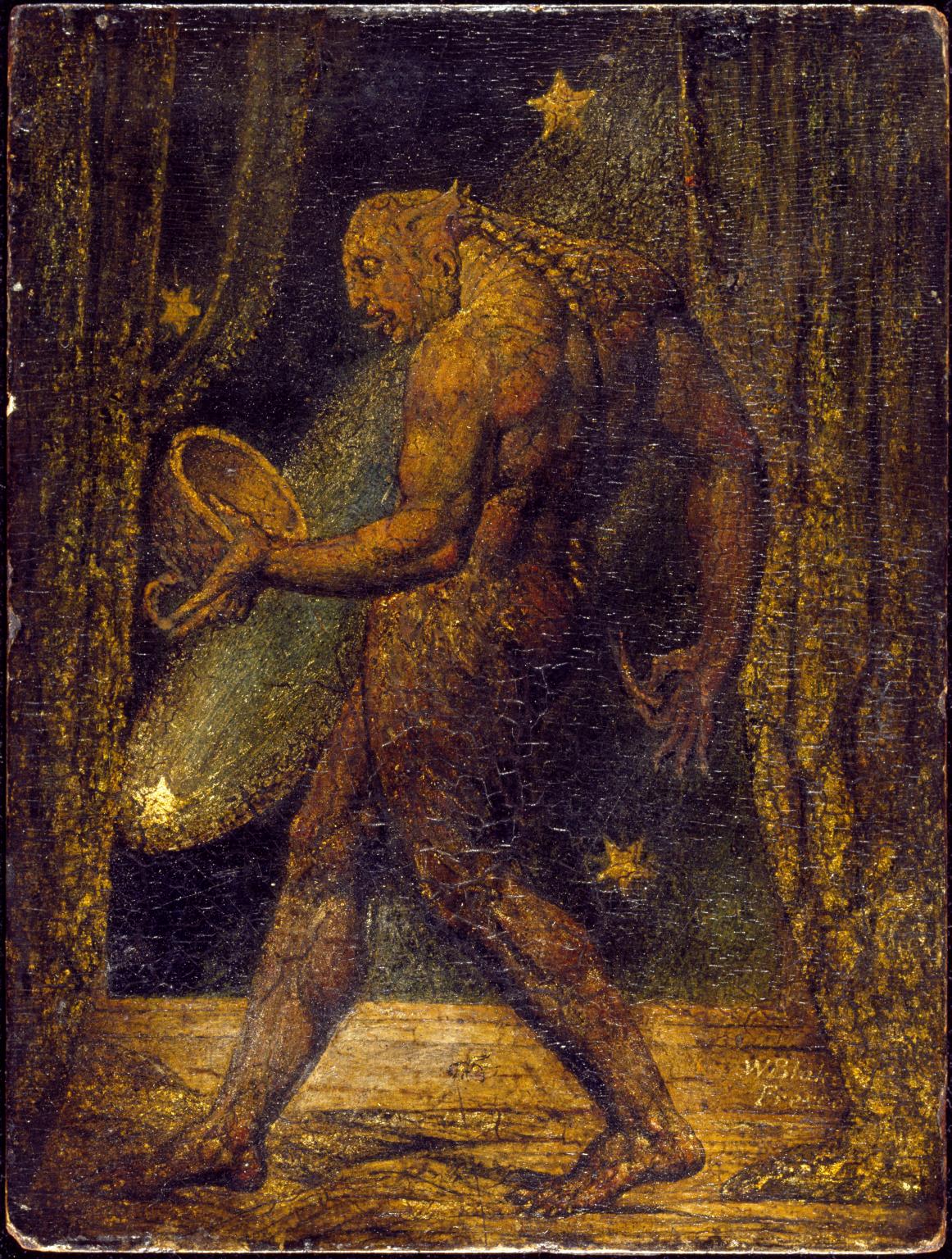
William Blake’s painting (The Ghost of a Flea) (1819) shows a visionary, symbolic creature. Romantic because it comes from imagination and spiritual vision.
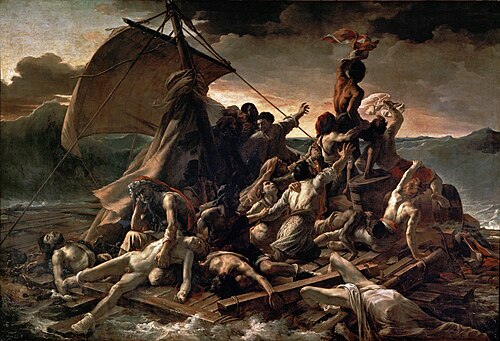
Théodore Géricault’s painting (The Raft of the Medusa) (1818–1819) shows shipwreck survivors signaling for help. Romantic because it shows human suffering, survival, and emotional intensity.
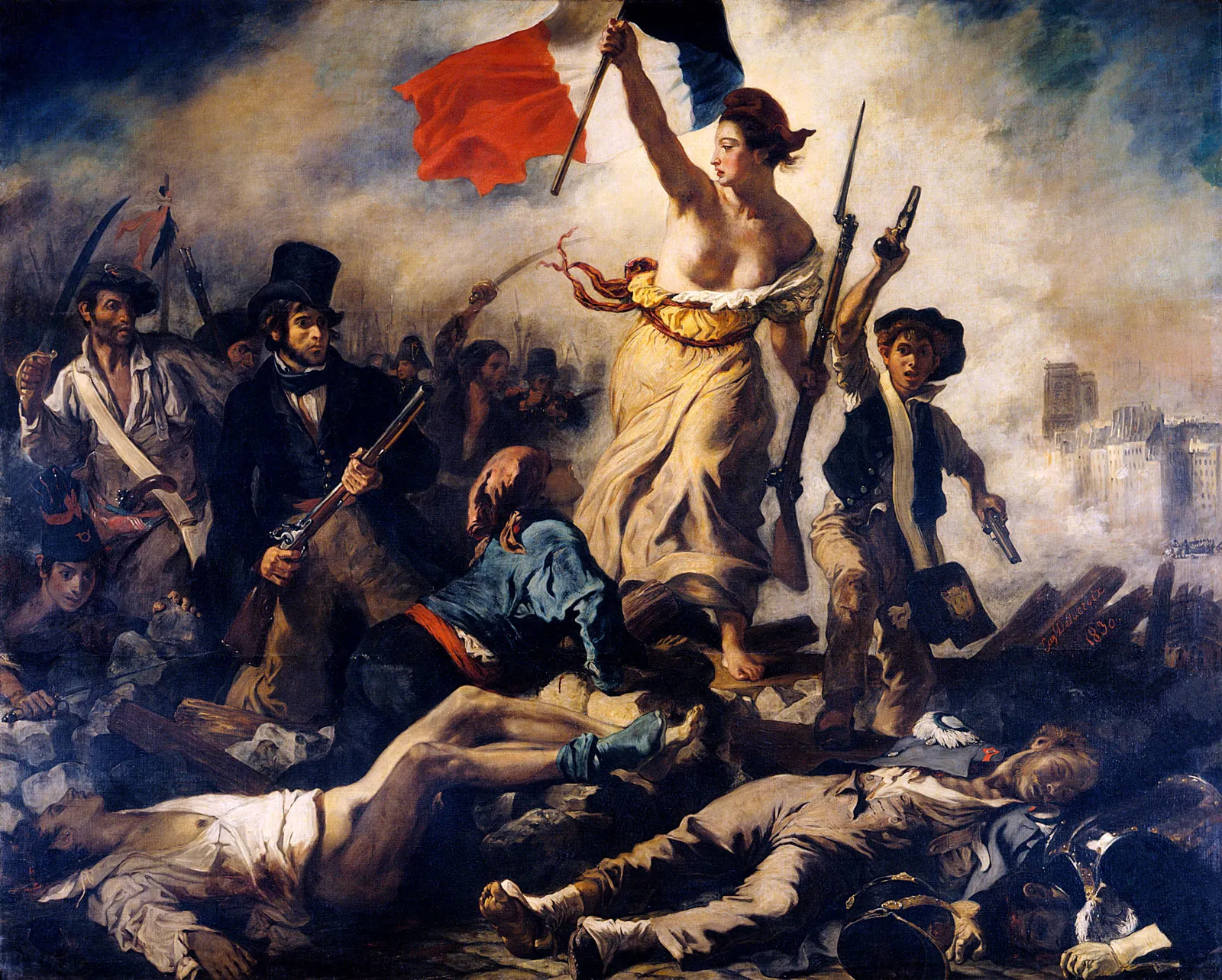
Eugène Delacroix’s painting (Liberty Leading the People) (1830–1831) shows Liberty leading a revolution in France. Represents freedom, unity, and political passion. Romantic because it is emotional, dramatic, and focused on revolution.