CCMA Body Systems and Organs (Chapters 1-15)
 Call Kai
 Learn
Learn Practice Test
 Spaced Repetition
 Match
Match Flashcards
 Knowt Play
1/570

There's no tags or description
Looks like no tags are added yet.
Name | Mastery | Learn | Test | Matching | Spaced | Call with Kai |
|---|
No analytics yet
Send a link to your students to track their progress
571 Terms
anatomical position
standard reference position used when describing the body
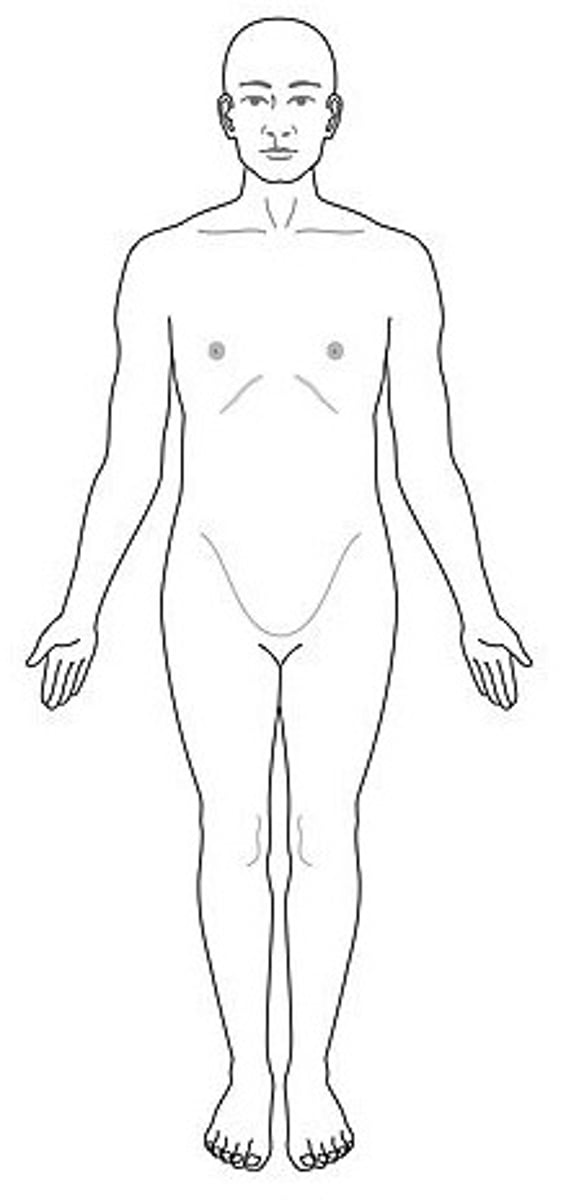
supine
lying flat on back, face upward
prone
lying flat on stomach, face downward
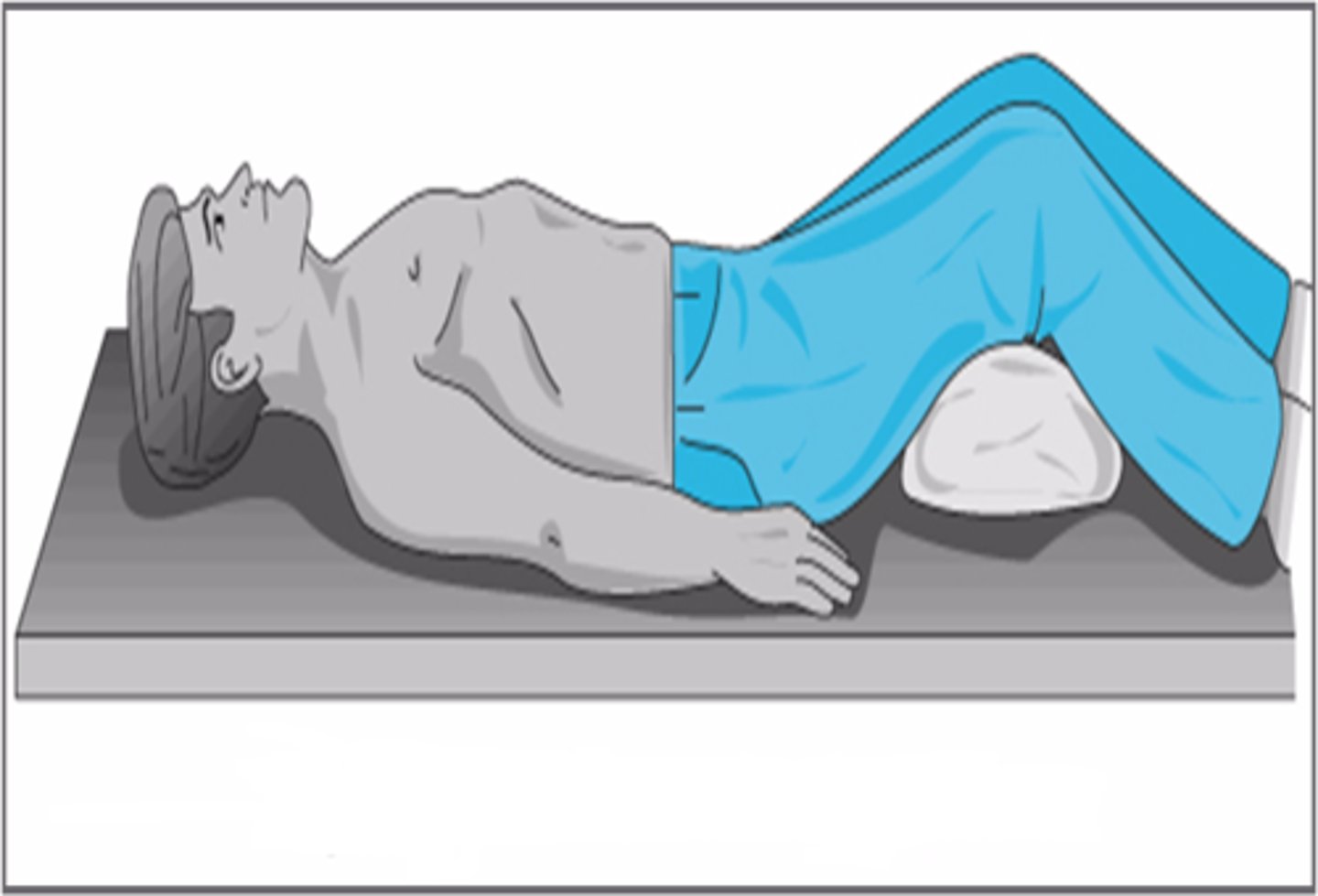
dorsal recumbant
lying on the back with knees bent and feet flat on the floor.
common for pelvic/urinary exams
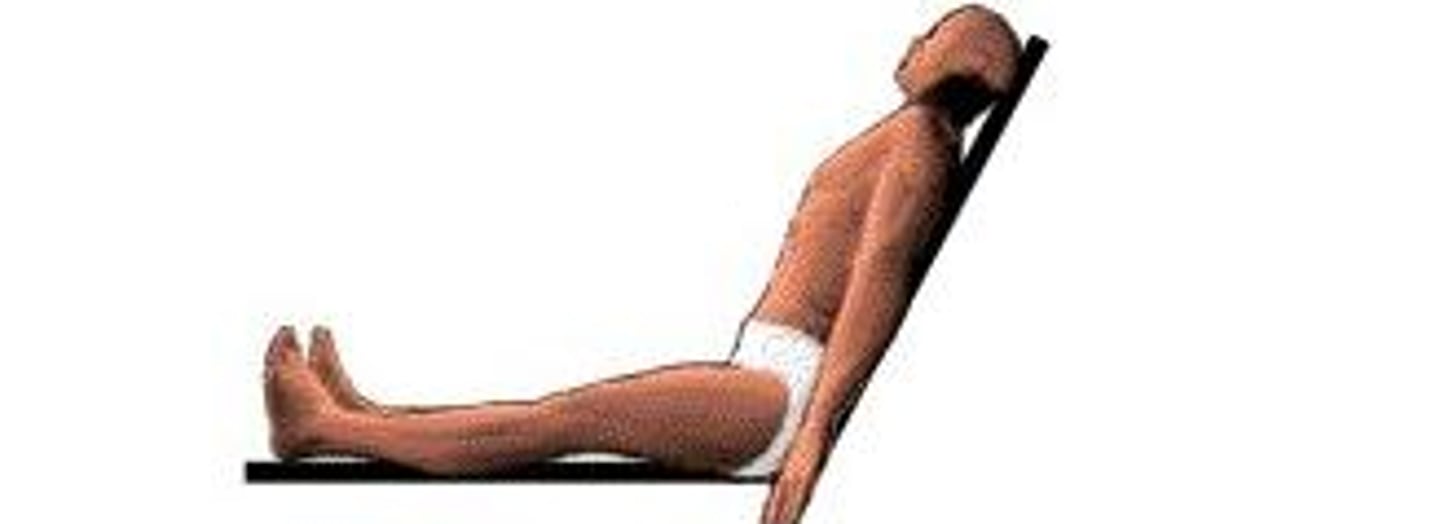
fowler position
sitting upright with back at a 90º angle
common for respiratory distress/post-surgical recovery
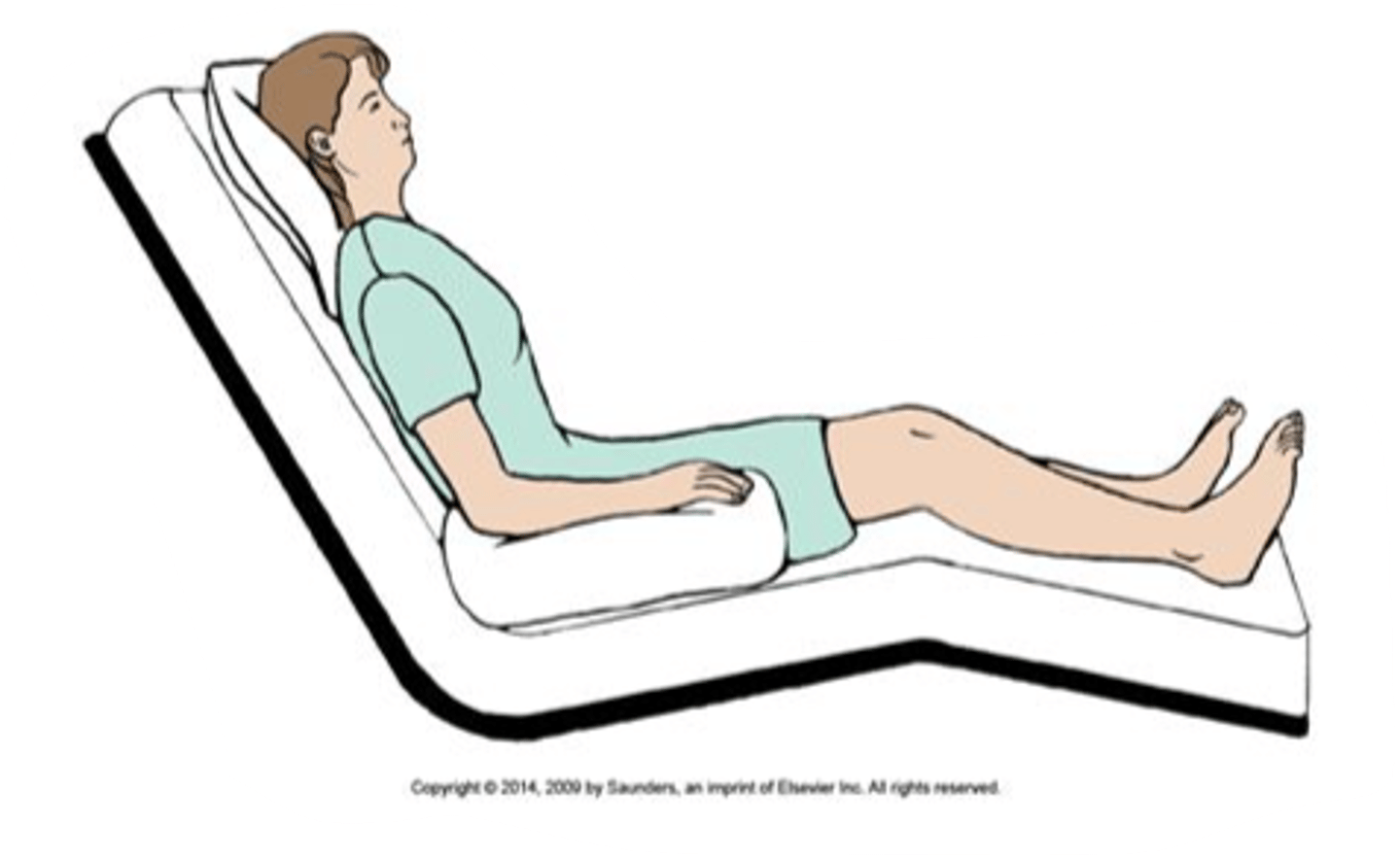
semi-fowler position
sitting with the back at about a 45° angle
common for comfort and easier breathing
dextrad
toward right side of the body
sinistrad
toward left side of the body
right upper quadrant (RUQ)
left upper quadrant (LUQ)
right lower quadrant (RLQ)
left lower quadrant (LLQ)
what are the four quadrants of the abdomen?
Right hypochondriac
Epigastric
Left hypochondriac
Right lumbar (flank)
Umbilical
Left lumbar (flank)
Right iliac (inguinal)
Hypogastric (pubic)
Left iliac (inguinal)
what are the 9 regions of the abdomen?
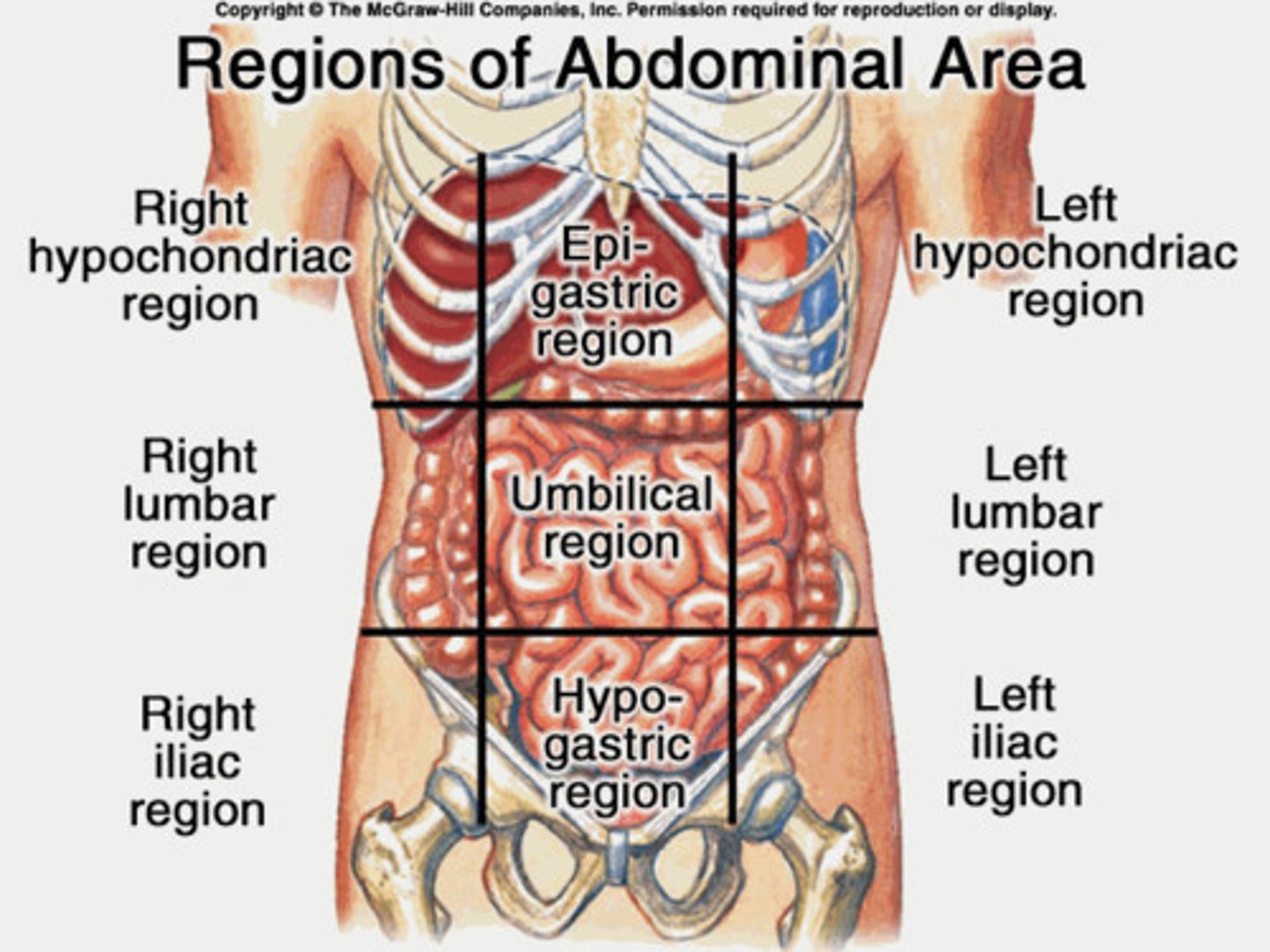
liver, gallbladder
what organs are in the right hypochondriac region of the abdomen?
stomach, pancreas
what organs are in the epigastric region of the abdomen?
spleen, part of stomach
what organs are in the left hypochondriac region of the abdomen?
ascending colon, right kidney
what organs are in the right lumbar (flank) region of the abdomen?
small intestine, transverse colon
what organs are in the umbilical region of the abdomen?
descending colon, left kidney
what organs are in the left lumbar (flank) region of the abdomen?
appendix, cecum
what organs are in the right iliac (inguinal) region of the abdomen?
bladder, reproductive organs
what organs are in the hypogastric (pubic) region of the abdomen?
sigmoid colon
what organs are in the left iliac (inguinal) region of the abdomen?
muscles
soft tissues that control movement in the body and keep it healthy
skeletal muscle
voluntary, striated
muscle attached to skeleton
cardiac muscle
involuntary, striated
muscle present in walls of the heart
smooth muscle
involuntary, unstriated
muscle present in walls of blood vessels
tendons
fibrous connective tissues that connect muscles to bones.
joints
where 2 bones meet
synovial and non-synovial
what are the 2 types of joints?
synovial joints
smooth moving joints, due to synovial fluid/articular cartilage cover
non-synovial joints
immovable joints due to fibrous cartilage cover
hinge joints
joints with movement restricted to one plane (ex. elbow and knee)
gliding joints
joints with two flat-surfaced bones which slide over each other and have limited movement (ex. foot/wrist)
ball and socket joints
joints that can rotate in circles and have a very high range of motion (ex. shoulder)
flexion, extension, hyperextension, abduction, adduction, and rotation
what are the angular movements of the joints?
circumduction, dorsiflexion, plantar flexion, eversion, inversion, pronation, and supination
what are the special movements of the joints?
osteoporosis
musculoskeletal disorder in which a decrease in calcium deposits and bone strength, resulting in weak/fragile bones
post-menopausal women
men over 50 with low testosterone
people with a family history of osteoporosis
people with anorexia nervosa
people with long term use of anti-seizure drugs, corticosteroids, and heparin
what groups are at risk for osteoporosis?
dietary: increased intake of calcium and vitamin D.
physical: performing weight-bearing exercises.
pharmacological: bisphosphonates (residronate and zoledronic acid) as well as hormone replacement therapy with estrogen
how is osteoporosis treated?
osteoarthritis
thinning and degeneration of cartilage, which exposes roughened surfaces of bone, causing bones to rub against each other. commonly affected joints are the fingers, spine, hips, knees, and feet.
analgesics, nonsteroidal anti-inflammatory drugs (NSAIDs), and intra-articular steroid injections.
in severe conditions, joint prosthesis may be necessary.
how is osteoarthritis treated?
osteomalacia
condition in which bone softens due to deficiency of calcium and vitamin D. decrease in calcium makes the bone flexible.
causes muscle weakness, bone tenderness, partial fractures, and malaise.
rickets
condition in which the bones of children are softened and weakened and may fracture easily, caused by deficiency of calcium and vitamin D
dietary interventions; increased intake of vitamin D, calcium, and phosphorus supplements.
how is osteomalacia treated?
scoliosis
abnormal curvature of the spine to the left or right, commonly seen in adolescents
in severe cases, may cause back pain and heart or lung problems.
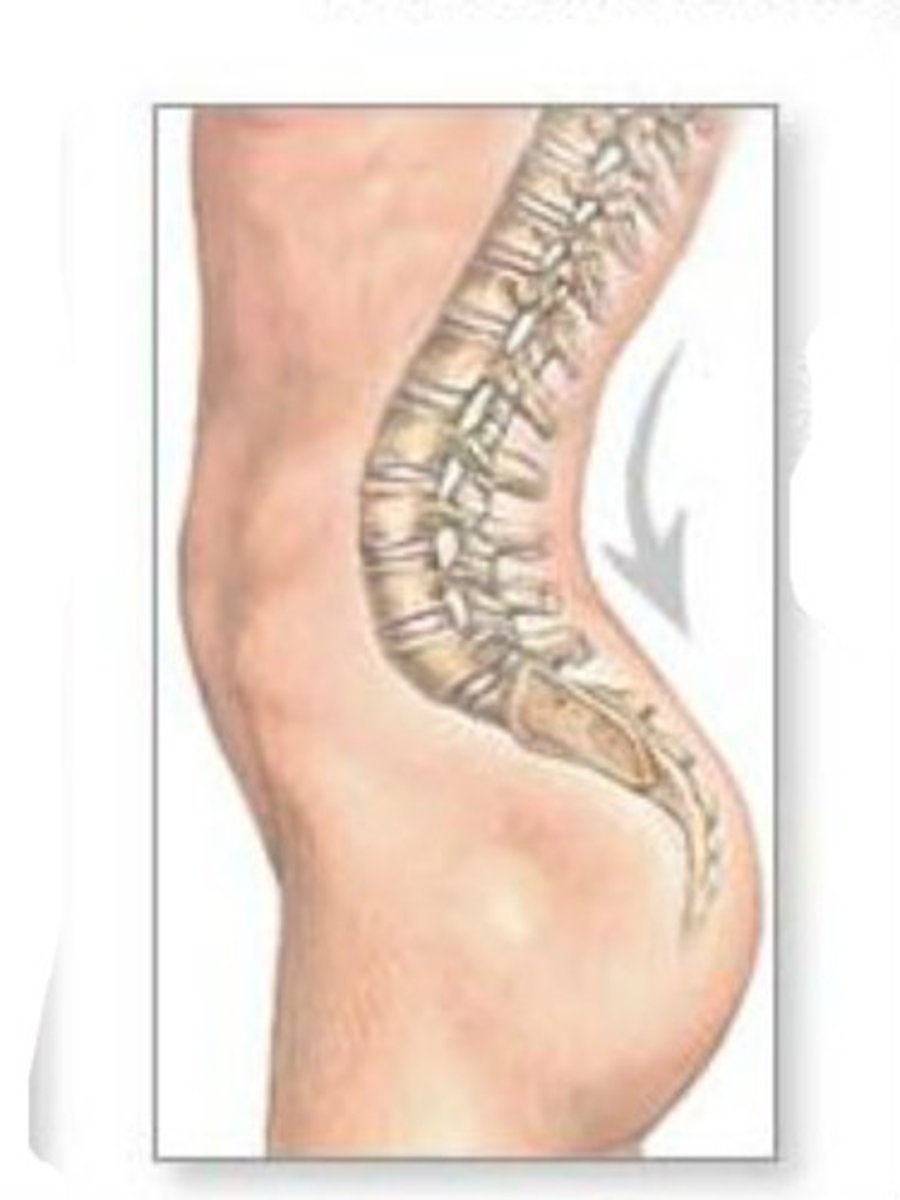
lordosis
abnormal curvature of the spine in which the lower back is more pronounced than the upper back (also called "swayback")
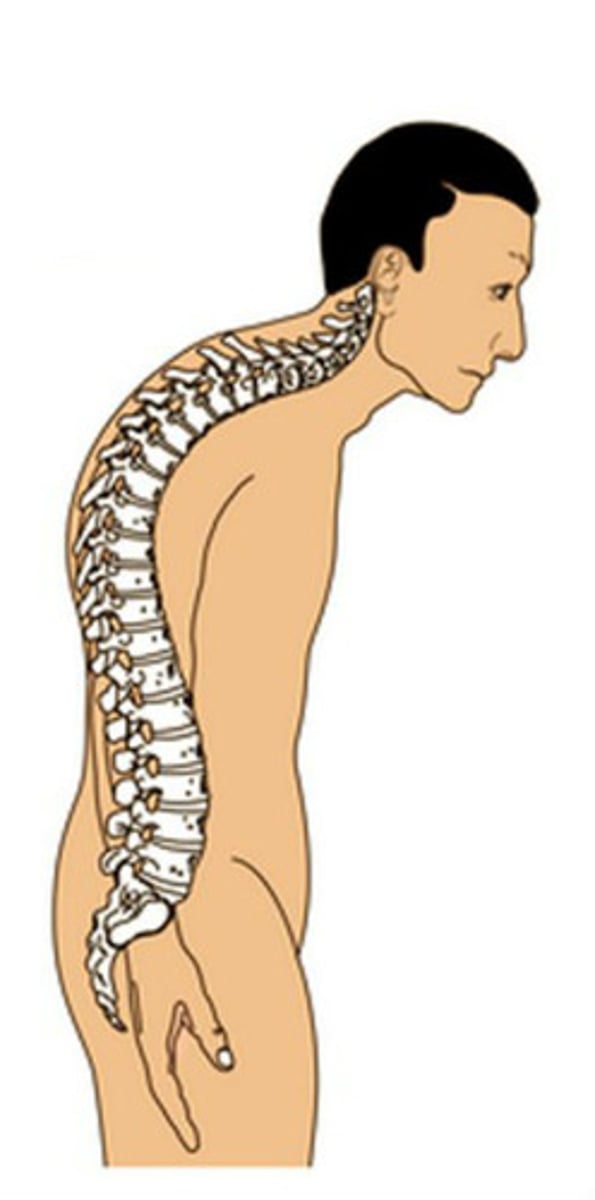
kyphosis
abnormal curvature of the spine in which the upper part of the back is more pronounced than the lower back (also called "hunchback")
herniated disc
protrusion of the soft nucleus of the intervertebral disk into the outer cartilaginous covering. caused by improper lifting, smoking, excessive body weight, and repetitive strenuous activities.
NSAIDs or analgesics for the pain
physical therapy
chiropractic adjustments
epidural steroid injections
how are herniated discs treated?
rheumatoid arthritis
chronic autoimmune inflammatory disorder which causes malaise, fever, weight loss, and morning stiffness of the affected joints.
NSAIDs
corticosteroids
disease-modifying antirheumatic drugs (DMARDs), such as methotrexate and leflunomide
biologics (etanercept and infliximab)
how is rheumatoid arthritis treated?
fibromyalgia
chronic condition of muscle pain and tenderness due to unknown causes
prescribed medications, such as pregabalin (Lyrica), milnacipran (Savella), zolpidem (Ambien), tramadol (Ultram), duloxetine (Cymbalta), and fluoxetine (Prozac)
how is fibromyalgia treated?
myasthenia gravis
autoimmune neuromuscular disease of the voluntary muscles that leads to profound muscular weakness.
mostly affects muscles that control the movement of the eyes and eyelids, facial expressions, and swallowing.
medications that inhibit acetylcholinesterase
surgical removal of the thymus gland (thymectomy)
how is myasthenia gravis treated?
bursitis
painful joints with reduced range of motion caused by overuse of the knee, shoulder, or elbow joints.
rest, NSAIDs, and corticosteroids
how is bursitis treated?
lupus
painful and swollen joints accompanied by fever, chest and muscle pains, and other manifestations that are associated with autoimmune dysfunction.
gout
metabolic disease that involves increased production or decreased elimination of uric acid. This is often seen in the lower extremities, especially the foot and the big toe.
kidney disease, alcohol consumption, obesity, untreated hypertension, and a family history of gout
what are risk factors for gout?
NSAIDs, colchicine, allopurinol, and probenecid
how is gout treated?
lyme disease
a tick-borne infection caused by Borrelia burgdorferi. The disease is manifested by flu-like symptoms and a "bull's-eye" lesion, called erythema migrans, that surrounds the area of the tick bite.
doxycycline, amoxicillin, and IV ceftriaxone
how is lyme disease treated?
strain
a condition resulting from damaging a muscle or tendon
sprain
an injury in which the ligaments holding bones together are stretched too far and tear
closed (simple) fracture
bone break that does not penetrate the skin
open (compound) fracture
broken bone that penetrates through the skin
longitudinal fracture
a fracture that runs parallel to the long axis of the bone
impacted fracture
fracture in which one bone fragment is pushed into another
communited fracture
bone is splintered or crushed into several pieces
pathologic fracture
a break in the bone due to weakening of the bones caused by a disease, such as osteoporosis
greenstick fracture
bending and incomplete break of a bone; most often seen in children
avulsion fracture
fracture caused by forceful contractions of a muscle against resistance
compression fracture
a break which occurs when the bone is pressed together on itself
typically seen in vertebrae
depression fracture
normally a skull fracture where a cranial bone is pushed inward
non-displaced fracture
occurs when a bone end remains in alignment, but other parts of the bone are fractured
integumentary system
system which consists of the skin, mucous membranes, hair, and nails
protection, sensory reception, temperature regulation, synthesis of vitamin D
what are the 4 functions of the skin?
epidermis (superficial)
dermis (deep)
what are the two layers of the skin?
hypodermis
subcutaneous tissue layer below the dermis, good for cushioning and heat insulation
skin lesions
physical changes in the skin that may be caused by exposure to irritants or localized infection.
primary lesions
lesions arising from previously normal skin
macule
papule
nodule
vesicle
bulla
pustule
tumor
plaque
wheal
types of primary lesions include
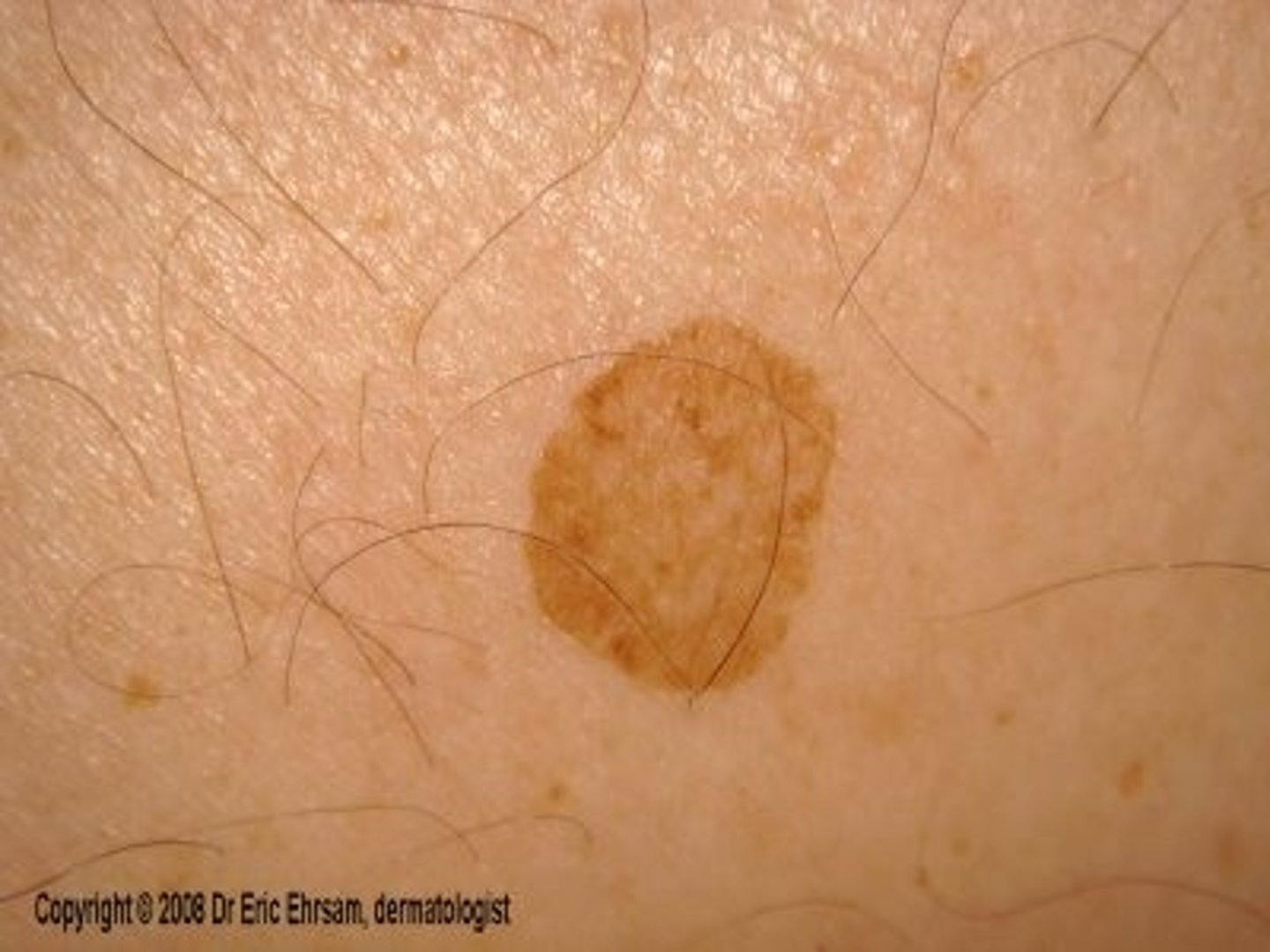
macule
a flat area of color change and a non-palpable skin lesion
ex. freckles
papule
a solid elevation of less than 1 cm in diameter and has distinct borders
ex. small, raised pimple
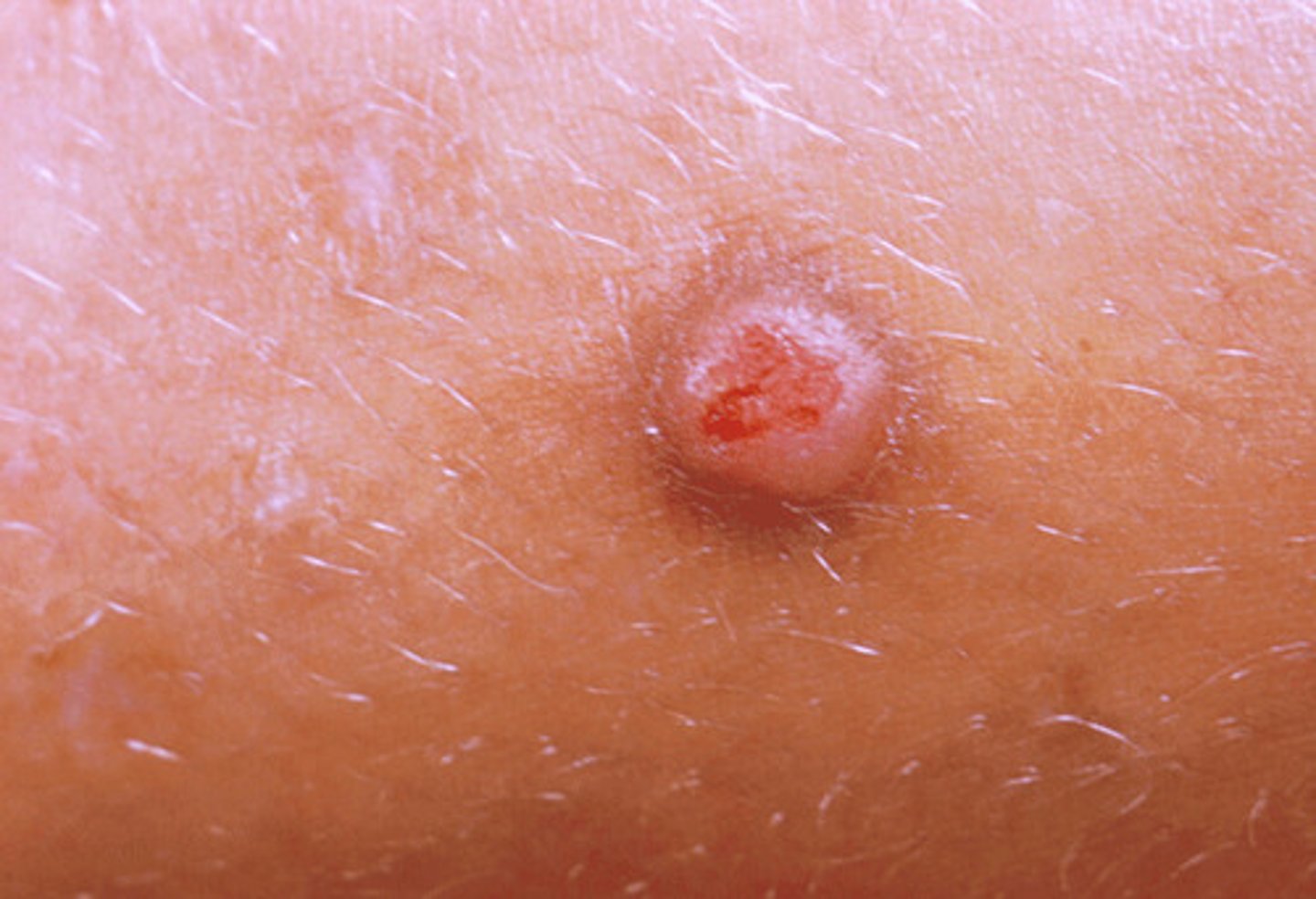
nodule
a firm and movable solid elevation, 0.5-1 cm in diameter, which extends deeper into the dermis than a papule.
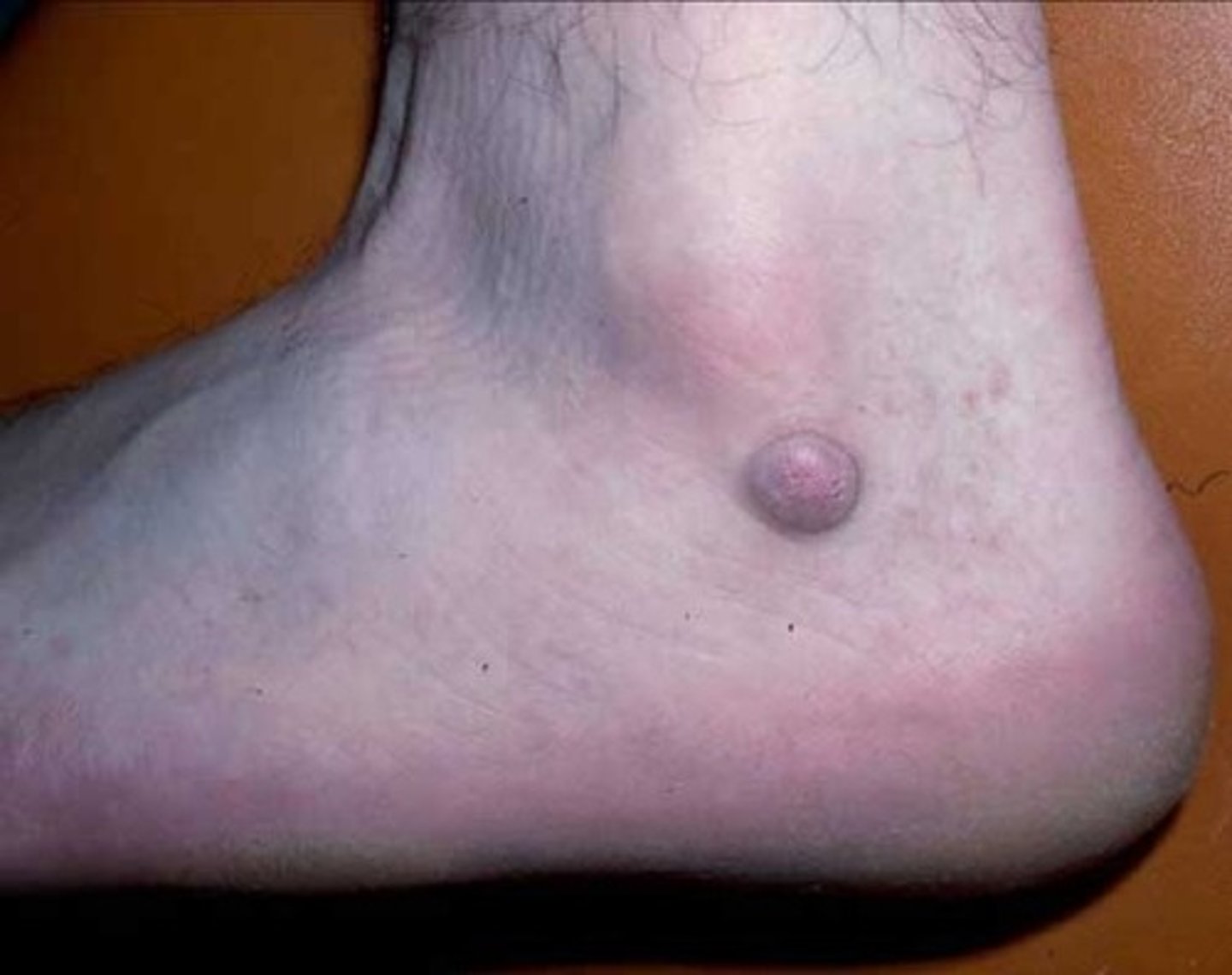
vesicle
a small, raised blister that contains clear fluid inside or under the epidermis
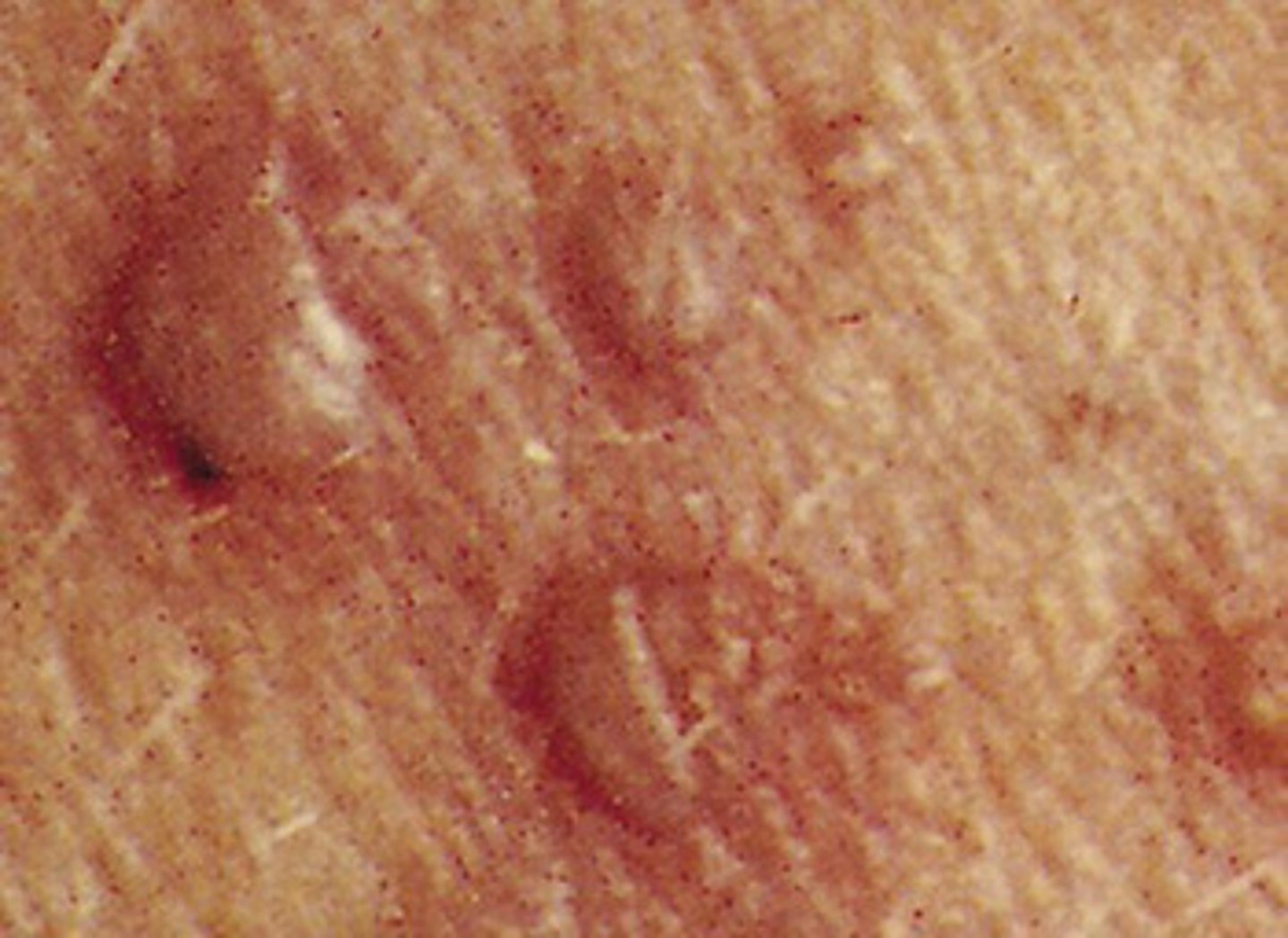
bulla
a large vesicle greater than 1 cm
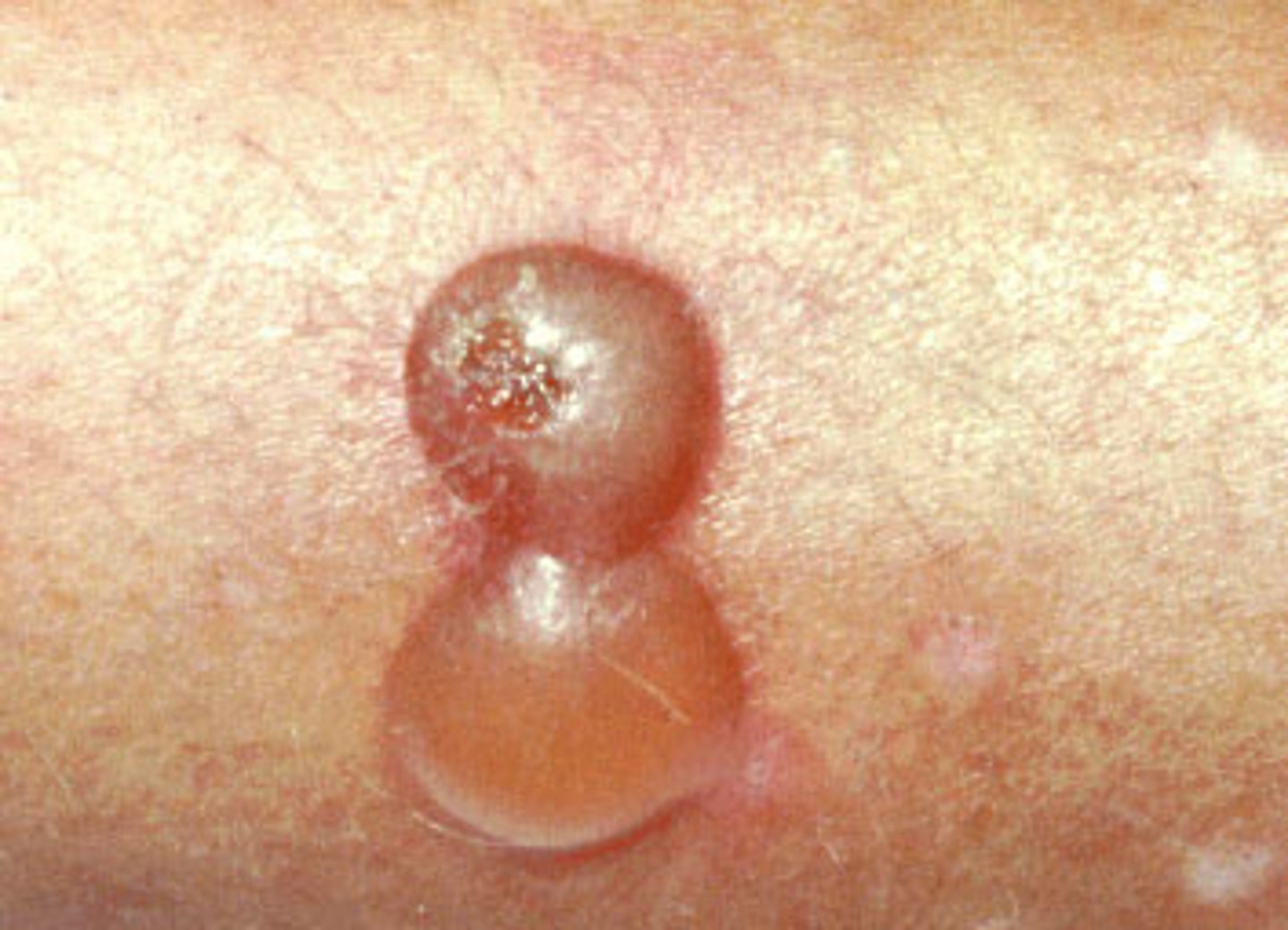
pustule
a vesicle with white cellular debris; it may be sterile or infected
ex. acne
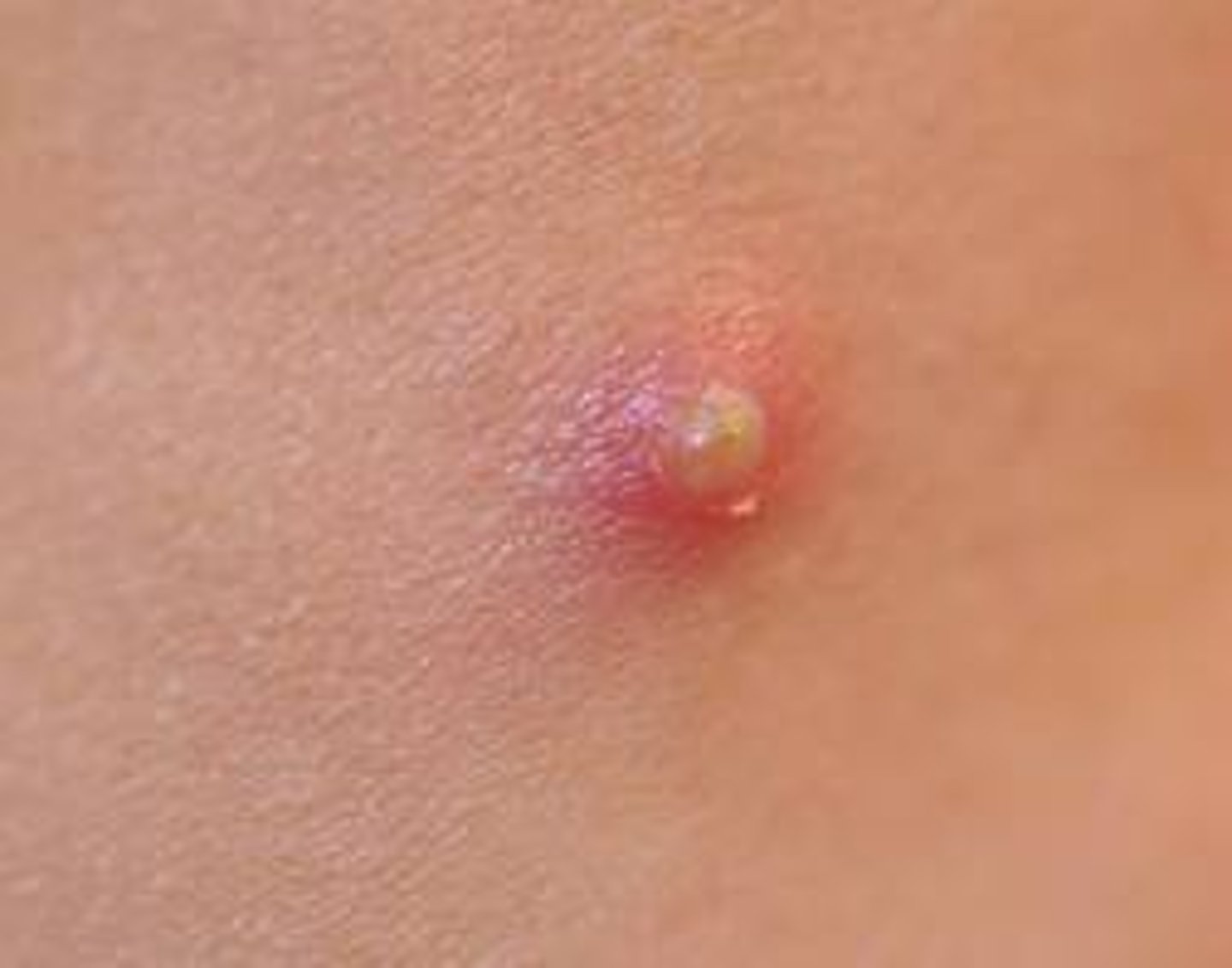
tumor
a large solid mass that may be benign or malignant. it is a large nodule and may be firm or soft
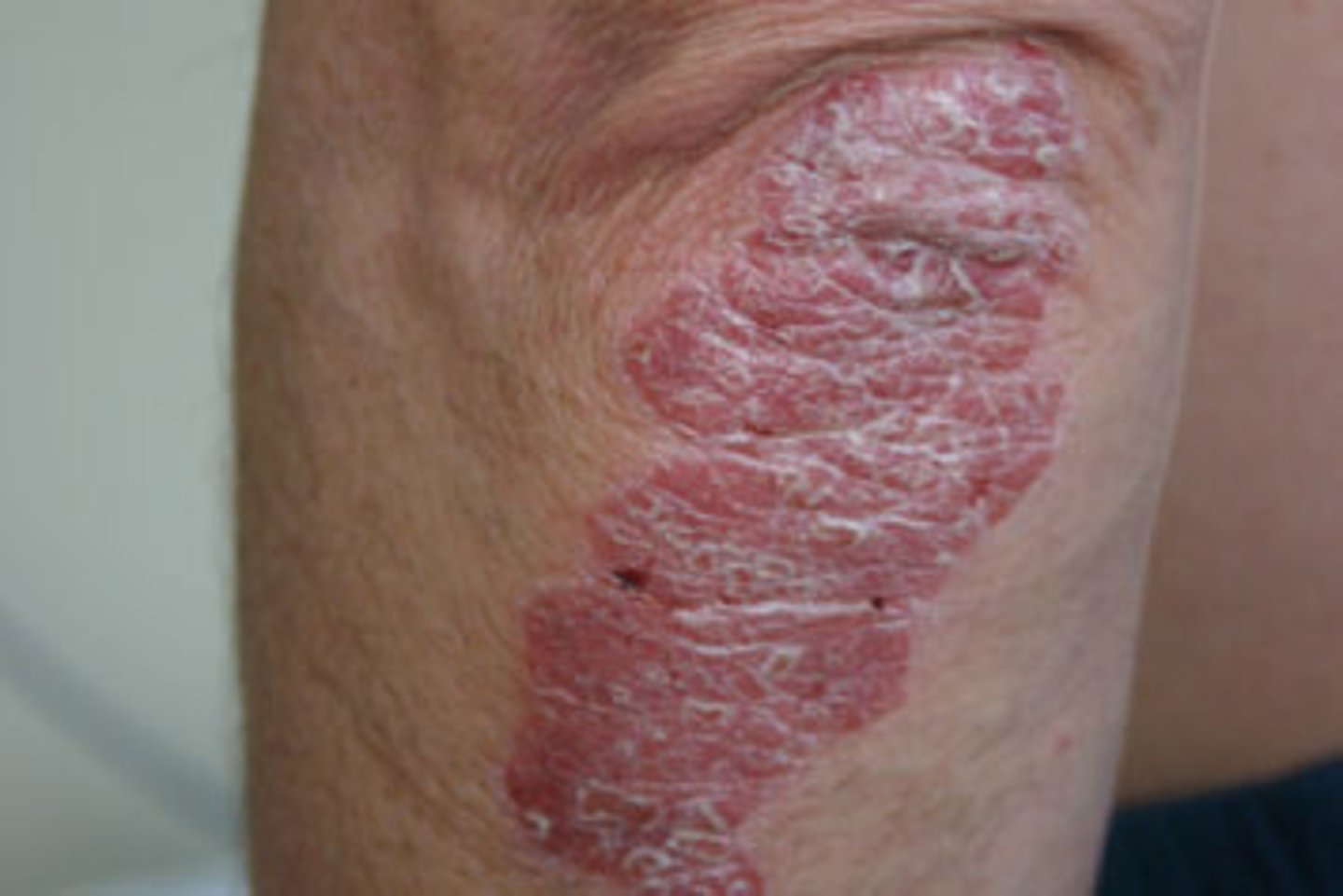
plaque
a solid, elevated, flat-top lesion with indistinct borders. It is found on the skin or mucous membrane
ex. psoriasis
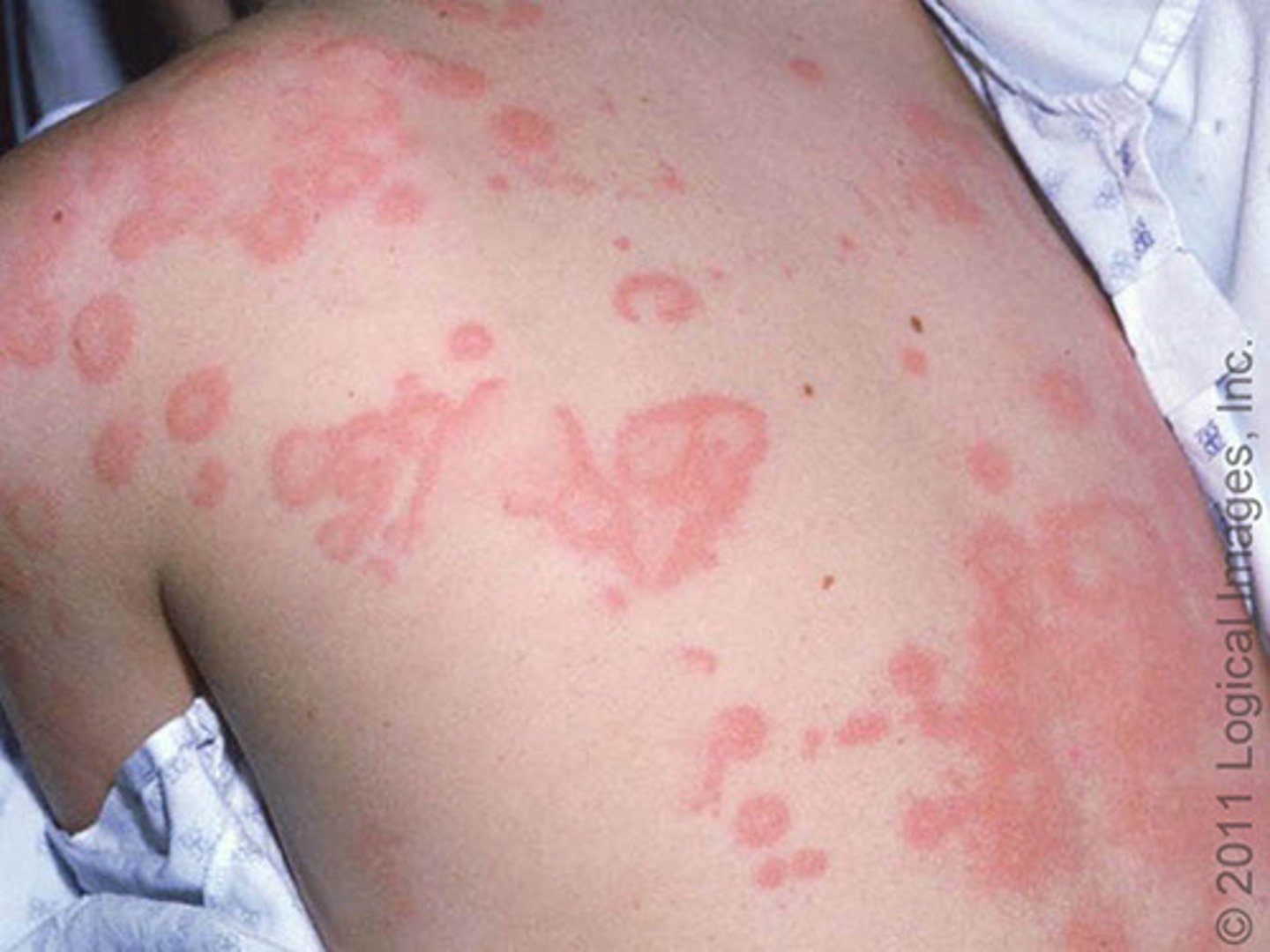
wheal
a transient (short-lived), raised, swollen lesion caused by fluid accumulation in the dermis. It is a palpable, red, circumscribed swelling.
can be caused by intradermal skin tests
secondary lesions
lesions evolves from primary lesions, often due to irritation/infection
scar tissue, fissure, ulceration, scales, atrophy, crusts
types of secondary lesions include
impetigo
highly contagious skin infection caused by streptococcus or staphylococcus aureus. Causes formation of crusty lesions and small vesicles around the nose and mouth (often be across the entire face). Honey-colored exudate is excreted from areas
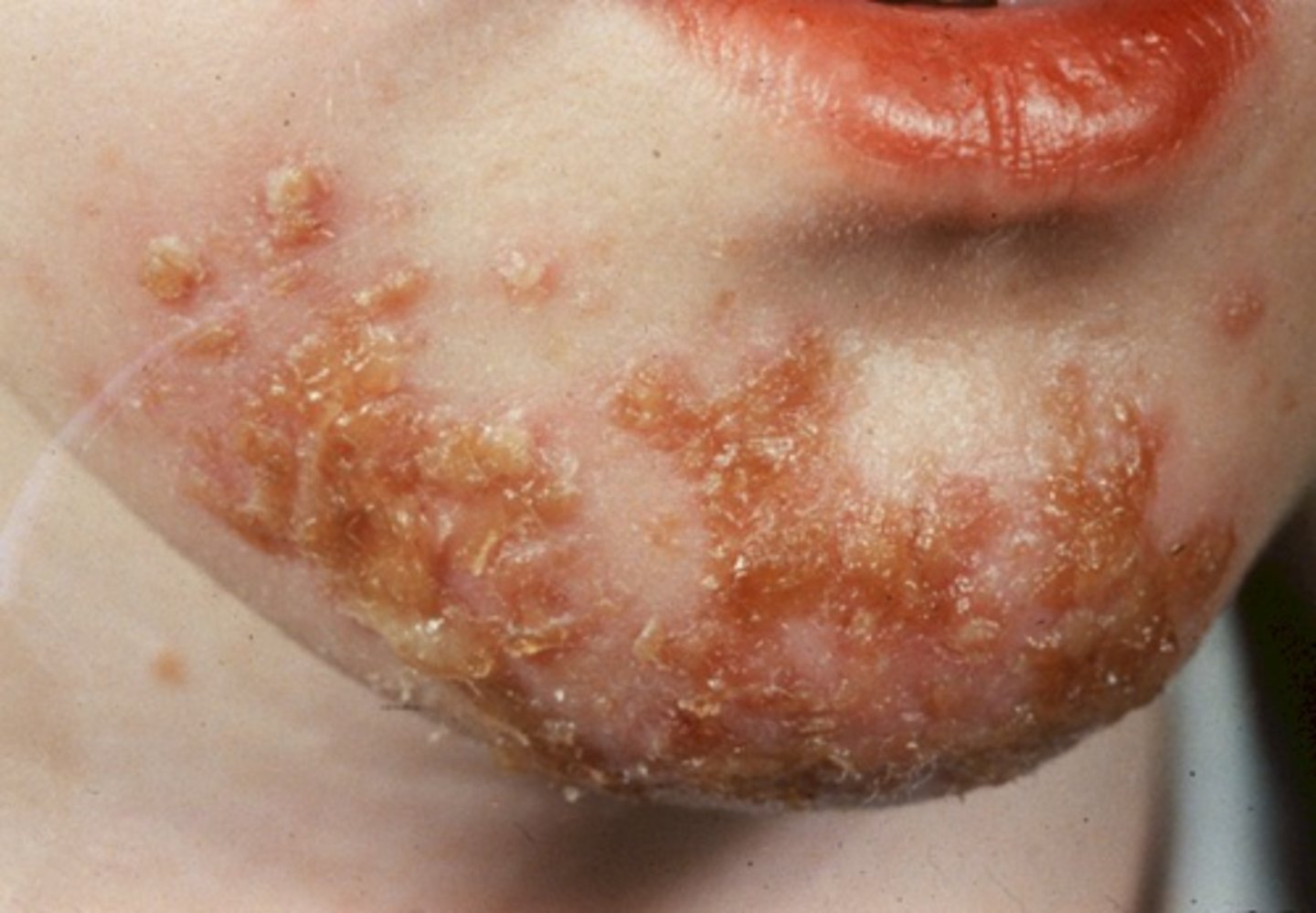
oral antibiotics, topical antibiotic cream
how is impetigo treated?
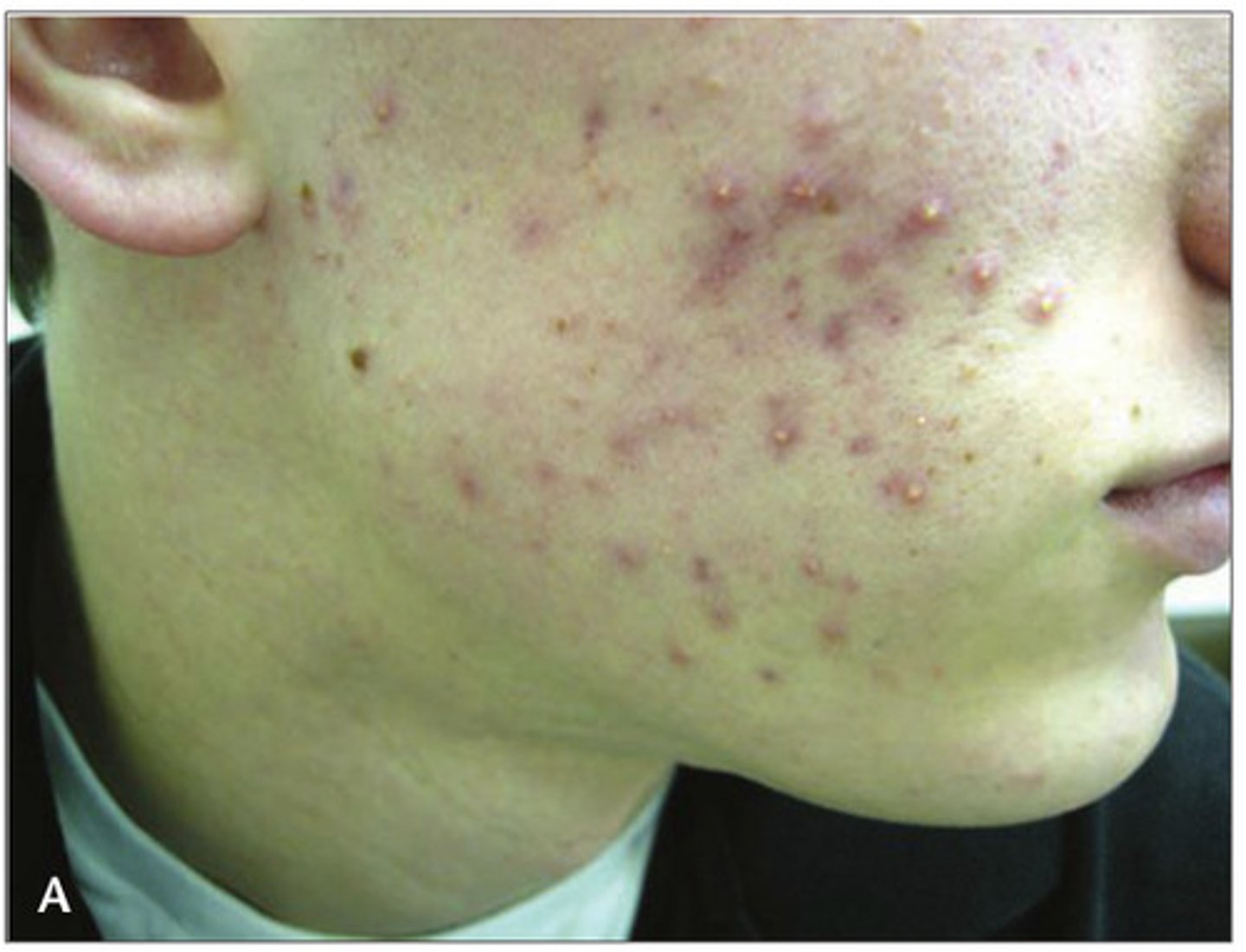
acne
skin infection which occurs when hair follicles are blocked with dead skin and oil from the skin. Causes formation of blackheads, pimples, pustules, or larger abscesses. Also affects sebaceous glands.
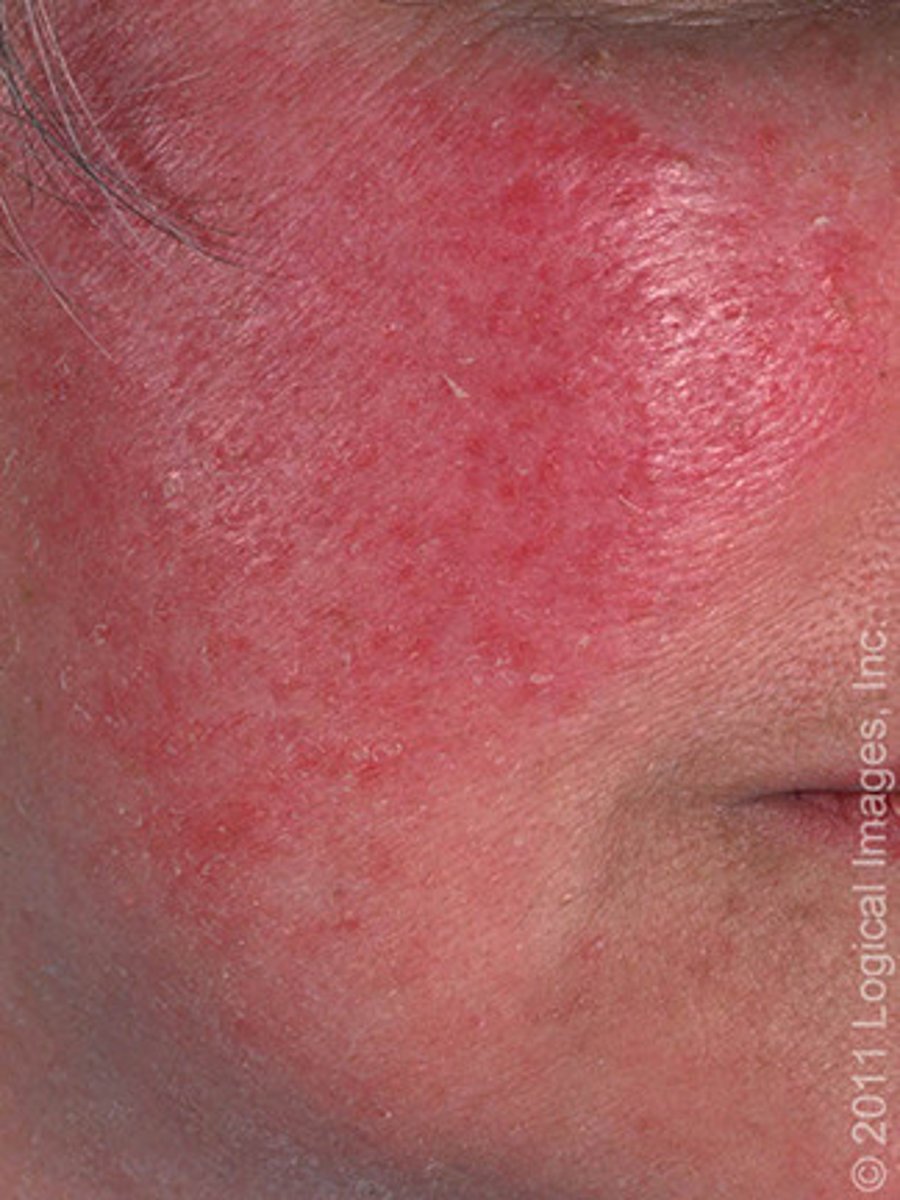
rosacea
skin infection that causes inflammation, pustule formation, and visible dilated blood vessels (telangiectasia) and facial redness. presents as frequently flushed skin on the face, particularly the nose, forehead, cheeks, and chin.
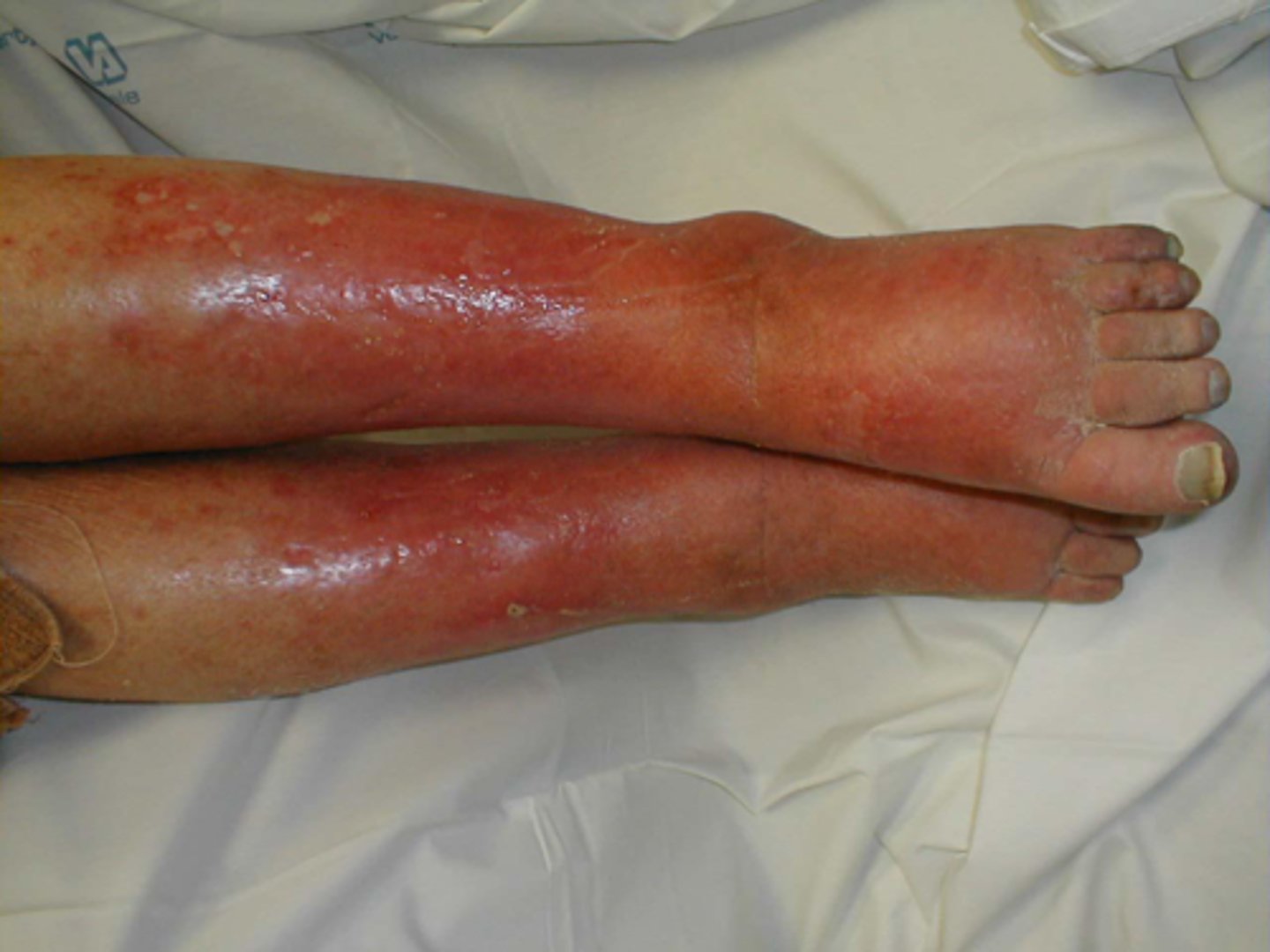
cellulitis
acute bacterial infection that involves the subcutaneous tissue and manifests as redness, tenderness, swelling, and warmth at the site. can progress from a small cut or any kind of skin injury, may require hospitalization
fungal infection
infections such as tinea pedis (athlete's foot), tinea cruris (jock itch), tinea corporis (ringworm), commonly cause by fungi that grow on keratinized tissues.
topical antifungal agents (such as clotrimazole (Lotrimin), ketoconazole (Nizoral), econazole, or nystatin (Mycostatin))
how are fungal infections treated?
warts
cold sores
shingles
viral skin infections include
scabies
pediculosis
parasitic skin infections include