Political Engagement
 Call Kai
 Learn
Learn Practice Test
 Spaced Repetition
 Match
Match Flashcards
 Knowt Play
1/10

There's no tags or description
Looks like no tags are added yet.
Name | Mastery | Learn | Test | Matching | Spaced | Call with Kai |
|---|
No analytics yet
Send a link to your students to track their progress
11 Terms
How has Canada changed in the World Happiness Rankings?
continued to fall, with social media as a contributing factor.
What is Canada’s ranking in the World Happiness Scale'?
ranked 25th overall in the 2026 World Happiness Report, but about 71st among people under 25.
What is people’s top federal priority in Canada?
cost of living
How do Canadian’s feel about the direction the country is going?
42% say right direction,
44% say wrong track
14% are unsure.
Does age predict political engagement?
age strongly predicts political engagement in Canada: older generations report higher interest in politics and generally higher voter turnout, while younger groups are more likely to be less interested and vote at lower rates.
What is the age effect v.s. the cohort effect?
whether engagement is because people get more engaged as they age (an age effect) or because today’s younger generations are consistently less engaged (a cohort effect).
What is political efficacy?
the feeling that one is able to have influence or impact on the political process.
What is external efficacy in Canada like?
younger cohorts, especially Gen Z, are more likely to agree with “People like me don’t have any say,” meaning lower external efficacy.
What is internal efficacy in Canada like?
younger cohorts are more likely to agree that politics is too complicated to understand, meaning lower internal efficacy.
What is overal political efficacy represented by age in Canada?
younger Canadians feel both less heard and less confident navigating politics than older generations.
Does social media help to tune people into politics or turn them off politics?
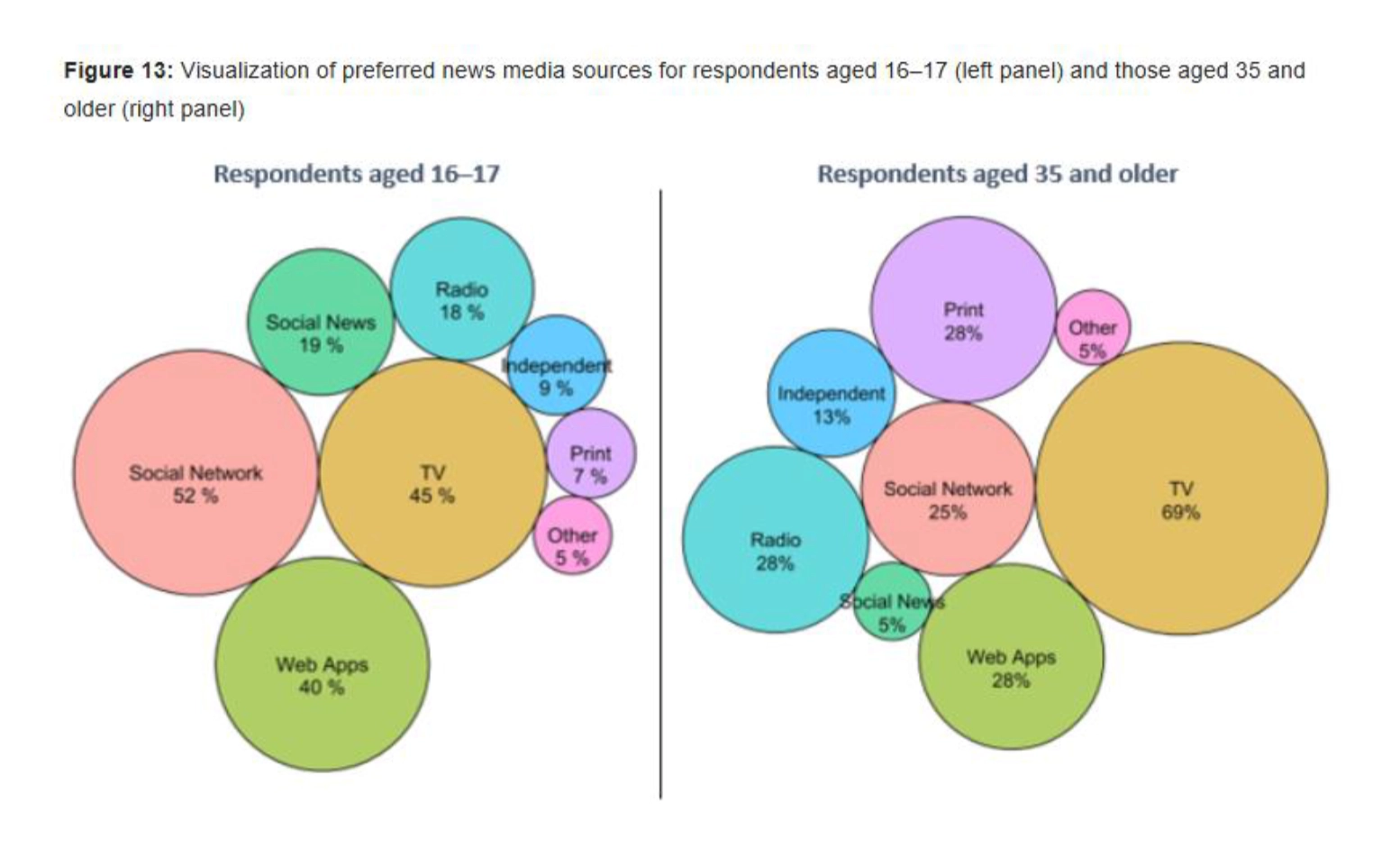
big age gap in news habits: teens (16–17) mostly get political news from social media and web apps, while people 35+ rely more on TV, radio, and print—raising whether social media draws people into politics or turns them off.