Lecture 7 The Dive Response
 Call Kai
 Learn
Learn Practice Test
 Spaced Repetition
 Match
Match Flashcards
 Knowt Play
1/19

There's no tags or description
Looks like no tags are added yet.
Name | Mastery | Learn | Test | Matching | Spaced | Call with Kai |
|---|
No analytics yet
Send a link to your students to track their progress
20 Terms
What does local or peripheral (external) cooling need?
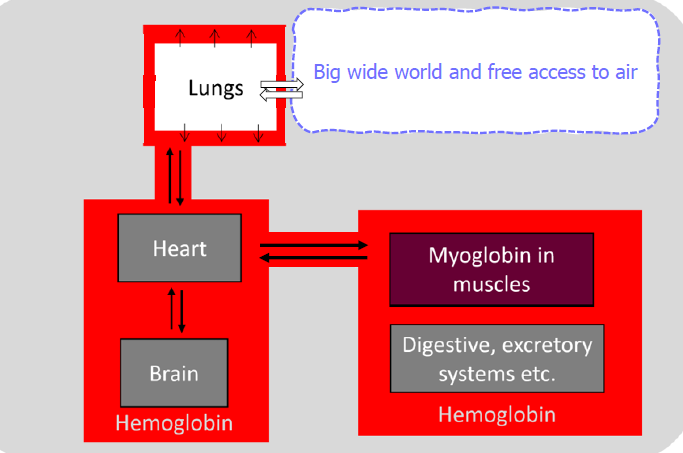
Shunting of blood and an appropriate response from the heart
What happens to aquatic animals when they submerge?
Dive response: Breathing ceases, heart rate slows, and blood flow to peripheral tissues is reduced
What protects an animal from immediate asphyxiation during forced submergence?
Sequesters blood oxygen for the brain and heart while allowing peripheral tissues to become anaerobic
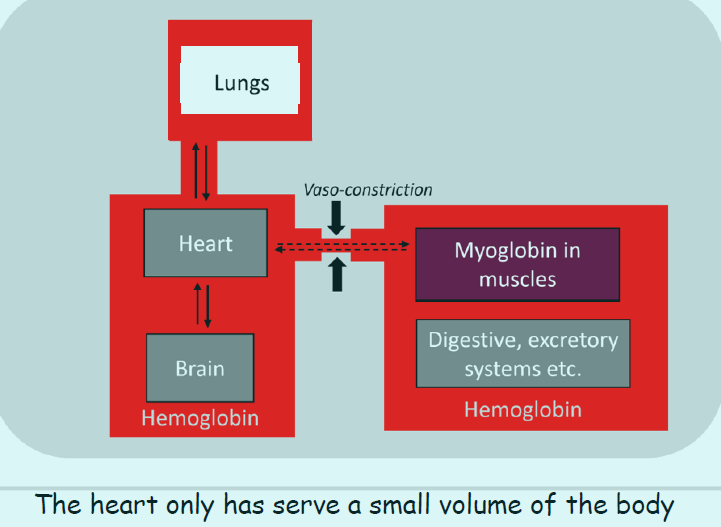
Decrease in peripheral blood is in direct conflict with the exercise response needed for muscle metabolism
Scholander’s forced dives
He held animals under, noted:
“Diving Response” consisted of 3 key physiological reflexes
apnea - cessation of breathing
bradycardia - slow heart rate
peripheral vasoconstriction - narrowing of blood vessels in extremities
Conclusion: during a dive, the animal turns itself into a heart-lung-brain machine
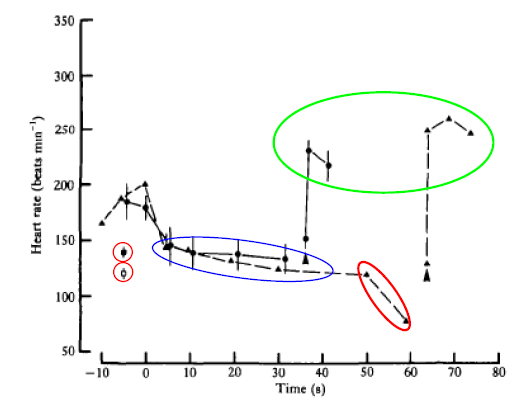
Do free diving penguins show bradycardia?
No, not normal diving, but involves tachycardia (fast) - tested in Humboldt
In some cases, they can - constant argument, no natural data, all forced
Why does bradycardia occur?
Blood doesn’t need to pump fast as it’s only going to the brain and lungs, not the rest of the body - beats fast uses more oxygen
Why tachycardia at the surface?
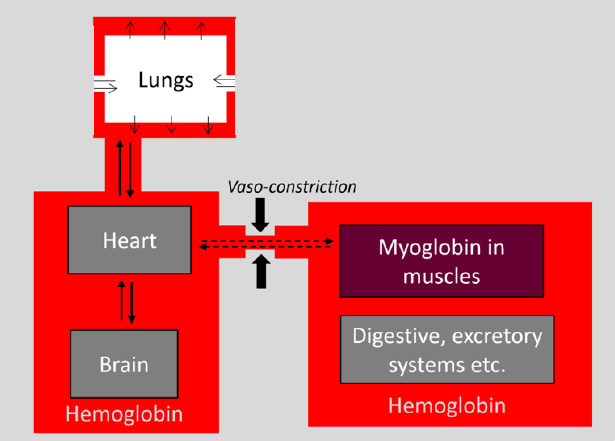
Heart rate goes up and beats hard and fast to reoxygenate the whole body
Oxygen has to go from the lungs to the rest of the body
Blue Whales
Use huge amounts of energy to feed
HR increases during lunge - step function
Dive response - heart rates down to 2 beats per minute
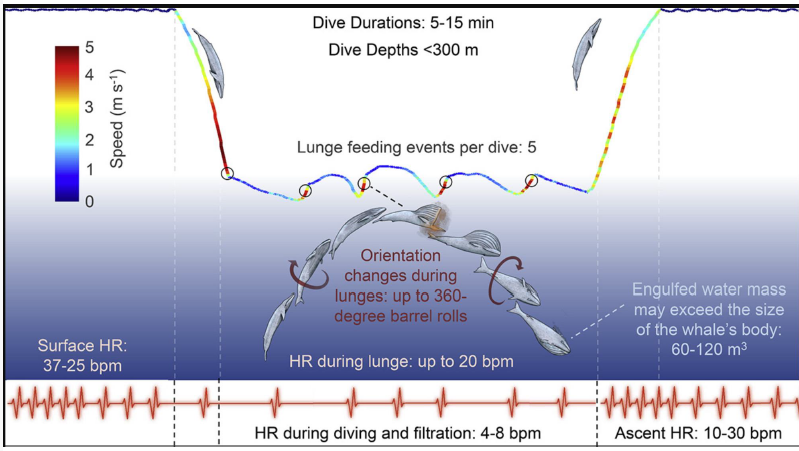
What does bradycardia depend on?
Dive duration, e.g. seals don’t use step function
Dalton’s law
Total pressure exerted is equal to the sum of the partial pressures of the individual gases
Going down the water column, as the water pressure increases, so does the pressure of the gases in the lungs
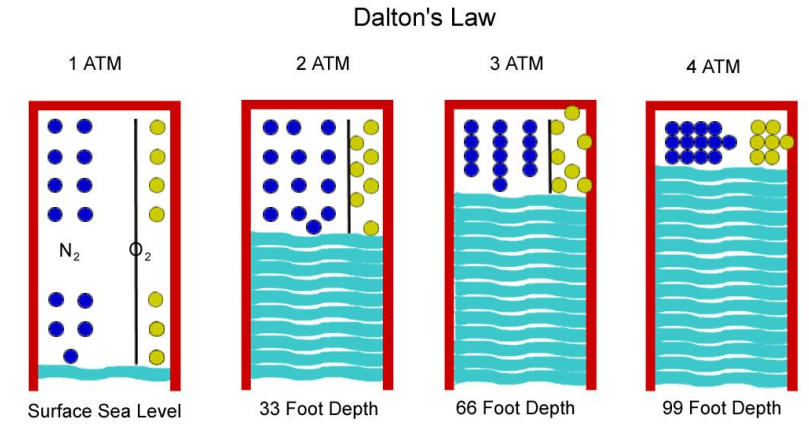
What happens to the body at higher pressure?
Makes gases move into the body tissues (equilibration), and be more soluble
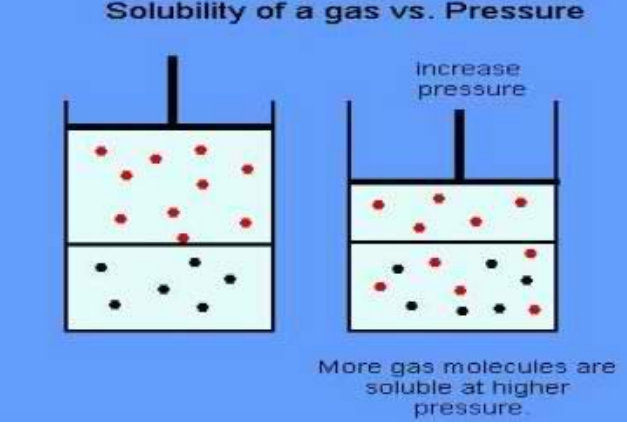
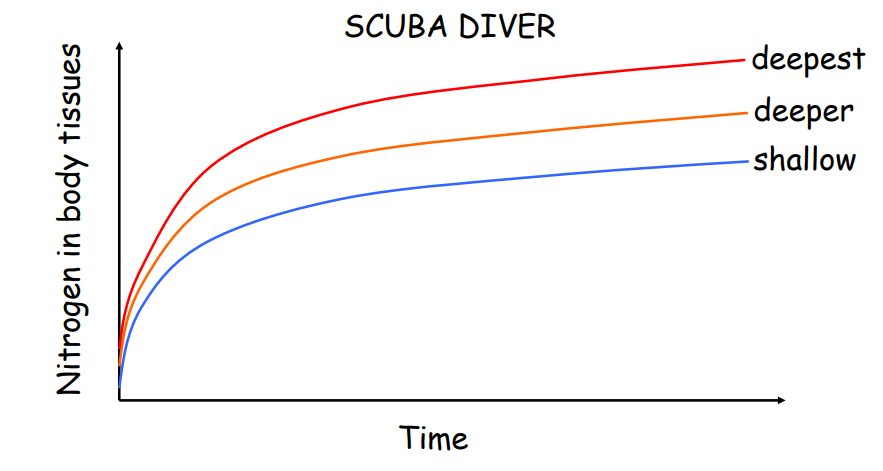
What happens the deeper you are?
More nitrogen in your body’s tissues, accumulates over time until equilibrium
Function of time and depth
Why can large amounts of nitrogen be problematic on the way back to the surface?
It expands out in bubbles to the rest of the body (Decompression Sickness, DCS)
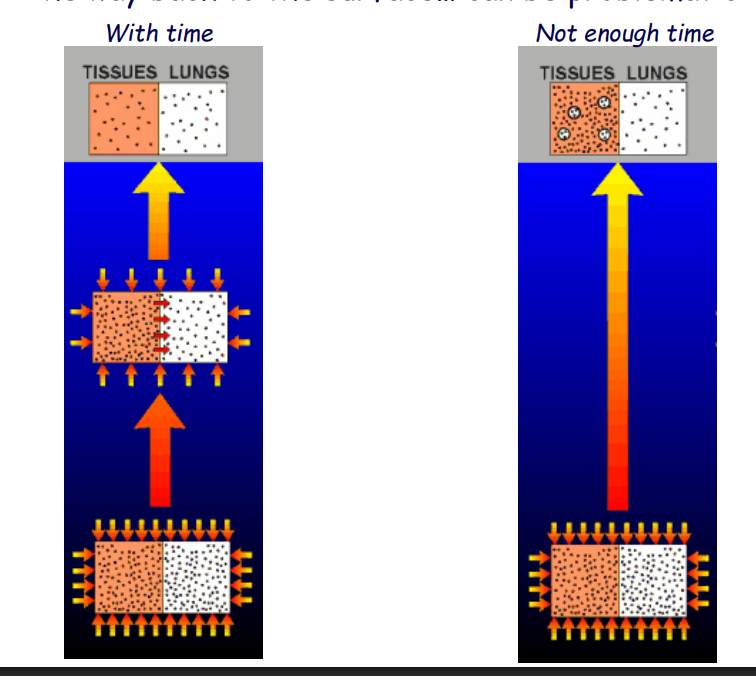
DSC/ the bends
Results from the formation of bubbles in the tissues or circulation as a result of inadequate elimination of inert gas after a dive
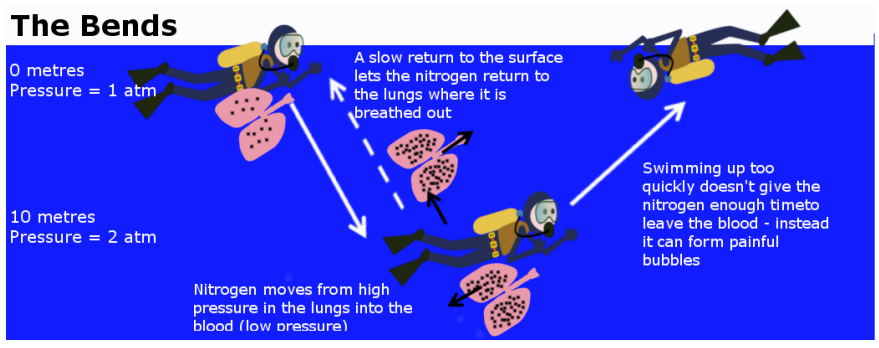
How do diving animals avoid the bends?
Only get it if your lungs are open to the rest of your body
Dive with little air in their lungs - exhale before descent
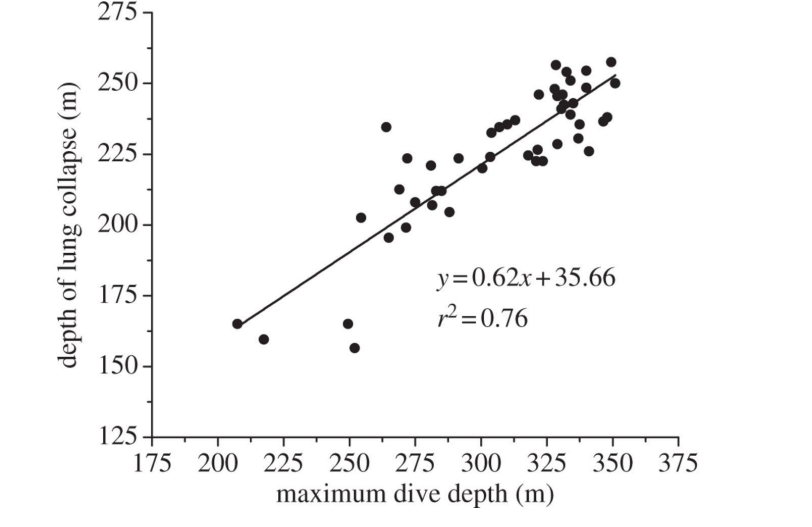
Collapsed lung - does not impart gases to the body
Chest-wall collapse seen in seals, deeper depth = deeper collapse
What’s the disadvantage of tracheal compression?
Delays alveolar collapse during deep diving
What do penguins do to prevent the bends?
Inhale
Good vaso-constriction, that has little to no leakage
Nitrogen only gets into a small amount of blood, so accumulates more slowly in the body tissues
Vasoconstriction opens at the surface and dilutes the nitrogen in the brain with the blood from the rest of the body, stopping buildup
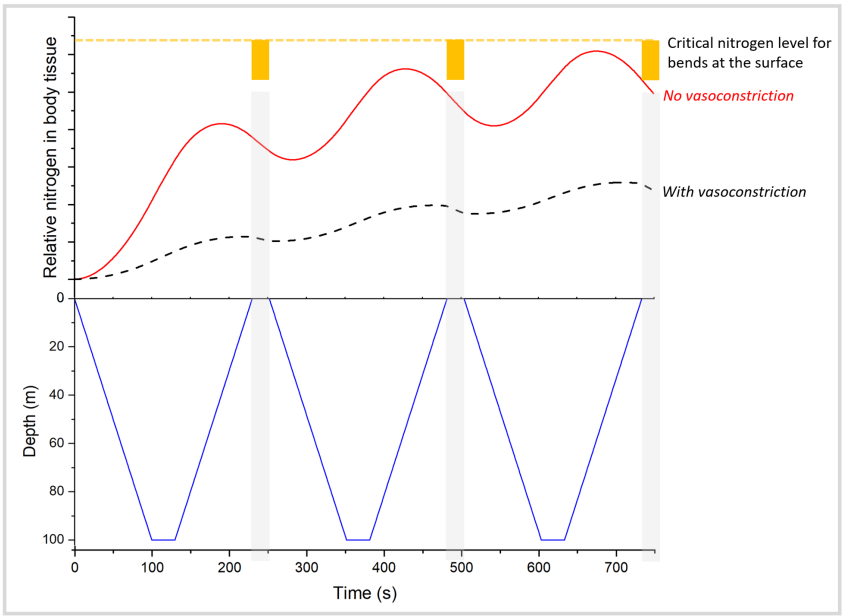
Another way diving animals avoid the bends?
Slow ascent
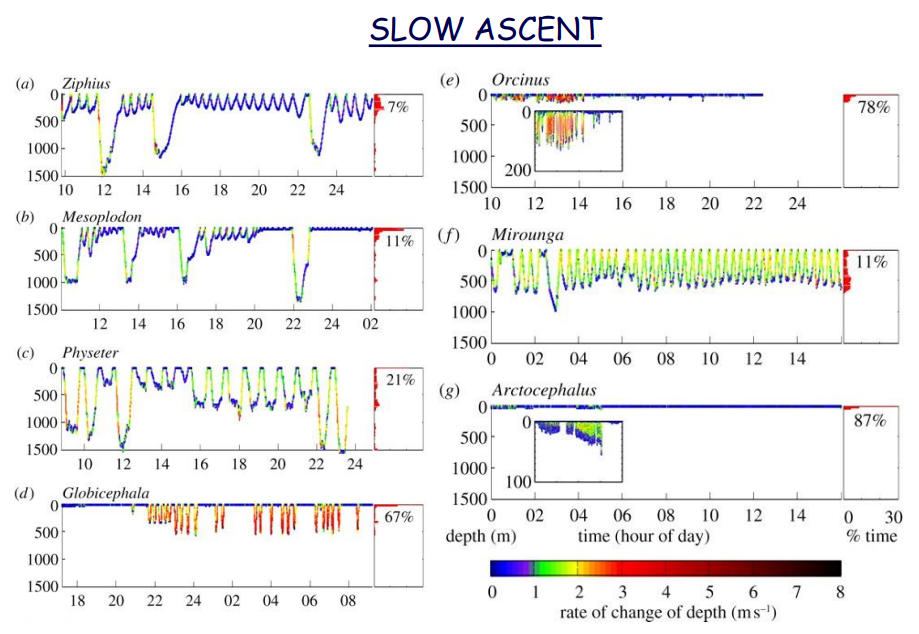
Methods used by animals to avoid the bends?
Lung collapse
Good vaso-constriction
Exhale - little air in lungs
Return to the surface slowly
Does it ever go wrong?
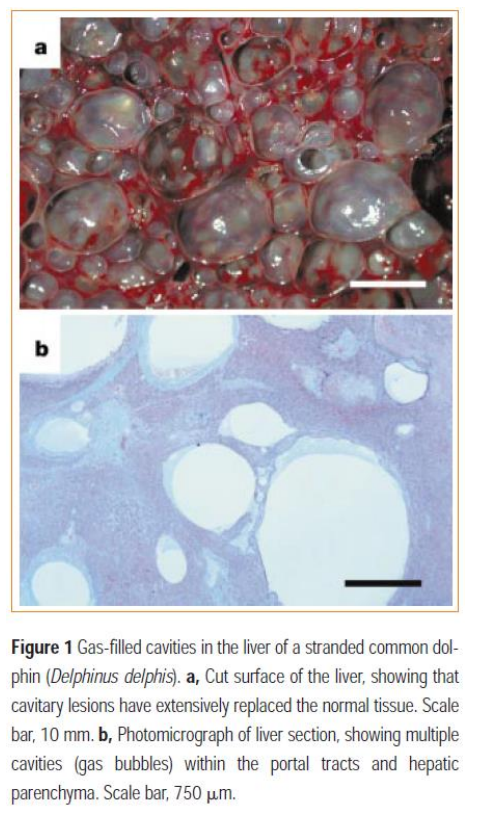
Yes - gas bubble lesions seen in stranded cetaceans
14 beaked whales in the Canary Islands near a naval exercise site (fear from sonar exposure) caused an accelerated ascent rate or a physical effect from the sonar