electrical engineering
 Call Kai
 Learn
Learn Practice Test
 Spaced Repetition
 Match
Match Flashcards
 Knowt Play
1/96

There's no tags or description
Looks like no tags are added yet.
Name | Mastery | Learn | Test | Matching | Spaced | Call with Kai |
|---|
No analytics yet
Send a link to your students to track their progress
97 Terms
how do you calculate sensitivity
change in output/change in input
how do you calculate signal to noise ratio
SNR=20lognoise−levelsignal−level
how does a strain guage work
physical change changes the resistance of the gauge
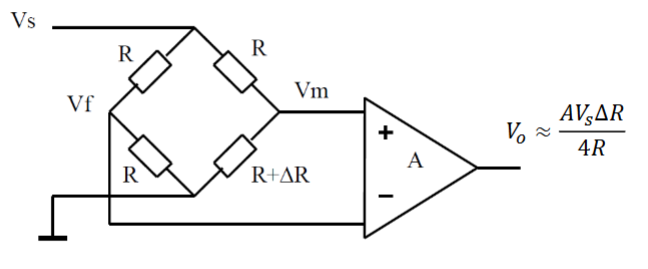
what is the output voltage for a wheatstone bridge
how do diodes function
one side needs to be more positive than the other to allow current to go through
in a wheatstone bridge, how do you relate input voltage to vf
Vf=Vs/2
how do you find Vm in a wheatstone bridge
Vm=VS⋅2R+ΔRR+ΔR
in a wheatstone bridge, how do you relate Vo to all the other voltages
Vo=A(Vm−Vf) where A is amplifier gain
what is the output of an op-amplifier equal to
Vo=A(V+-V-) [difference between positive terminal input and negative input terminal]
what is the equation for gain in an amplifier
A=ViVo
how do you find the voltage equations for amplifiers
remember what ideal means (voltages will be the same) then use KCL to derive voltage equations
what is impedance
Z=iV
how do you find output impedance
ground inputs and apply test voltage at output then use facts of circuit (ideal or not)
how do inverting ideal amplifiers work
top one is ground but node voltage must be equal to Vi, use kcl
how do we know there is an output voltage?
amplifier is powered thus has its own power source!
what is meant by an ideal op-amp
no current in circuit, Vp=Vn
how do you solve an ideal op-amp circuit problem
vp=vn, source can have different voltages on each side, sum all voltages to find resistance and currents, use KCL to find Vo
what is the gain of a differential amplifier
A=R1R2(V2−V1)
what is the common mode rejection ration equation
CMRR=20logAcAd
advantages of differential amplifier
high noise rejection, high CMRR
disadvantage of differential amplifier
low input impedance, difficult to adjust gain while maintaining resistor matching
advantage of instrumentation amplifier
amplify difference between two signals, high CMRR, high noise rejection, high input impedance, easy to change gain
disadvantage of instrumentation amplifier
more complex circuit thus more expensive
what is resolution
smallest change in input which is detectable
what is sensitivity
ratio of change in input to change in output
what is drift
gradual change in output due to external factor
advantage of wheatstone bridge
able to measure very small changes in resistance
what are the types of sensors
resistive, infrared, incremental optical encoder, ultrasonic, gyroscopes
what are signal conditioning circuits used for
amplify signals, rectify signals (ACDC), demodulate signals, filter signals
what are rectifiers
convert AC to DC signal. cannot use diode as they have significant voltage drop.
op-amp
difference between full-wave rectifier and half-wave rectifier
full-wave uses a half wave one and a summing one. half-wave only converts half of it, full wave converts all of it
what is a demodulator
used to extract original information (audio, video, digital data) from carrier wave at receiver. affected by signal amplitude and phase)
what is unique about demodulators
they use logarithmic op-amps rather than linear ones
what does low-pass filtering to in demodulators
get rid of high frequency components to find remaining dc components
what do filters do
allow to pass specific signal frequencies
low-pass filters
high-pass filters
2nd order butterworth low-pass filters
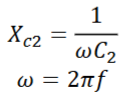
what is the reactance of a low pass filter capacitor
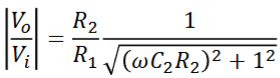
what is the relationship between voltages in a low-pass filter
what do low-pass and high-pass filters do respectively
low pass allows low frequencies to get through while high-pass allows frequencies above a certain amount
what magnitude is nano
1×10⁻⁹
what are the special cases for low pass filters
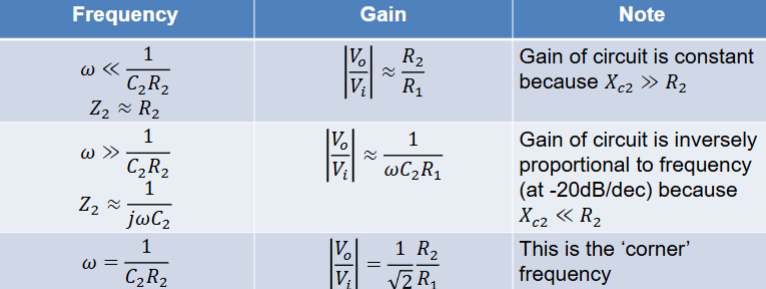
what are the special cases for high pass filters
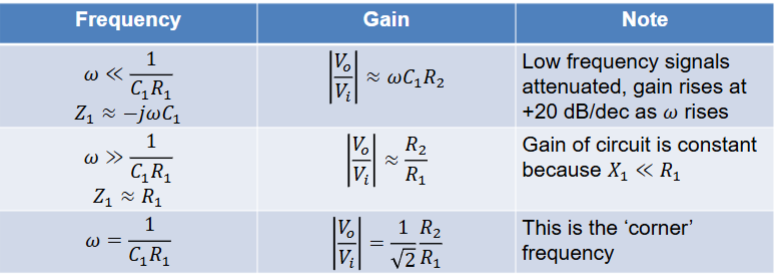
what is the limitation for high-pass filters
there is a bandwidth limit which will limit the gain at high frequencies
what is the cutoff frequency for a butterworth low-pass filter
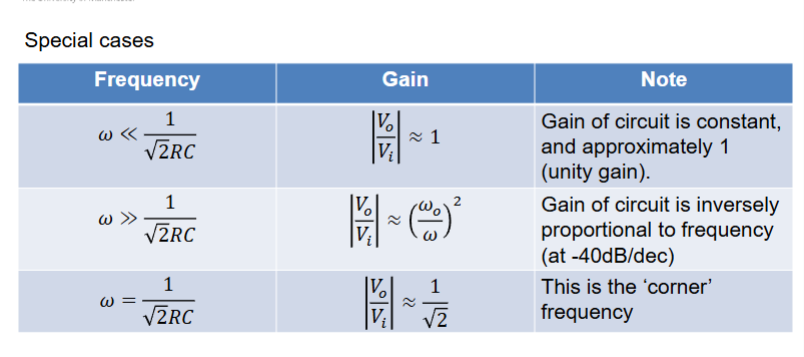
ωo=2πfo=2RC1
what are the special cases for a butterworth low pass filter
what are signal conditioning circuits used for
amplify signals, rectify signals (AC to DC), demodulate signals (extract useful waveforms), filter signals (remove unwanted frequency)
what is the best sensor circuit practice
sensor output—>amplify—>filter
why do we amplify a signal before filtering
to maximise signal-to-noise ration (SNR) and minimise the noise of the system
noise added by filter and op-amps become less significant
what are pros and cons of butterworth compared to simple
better frequency removal but more expensive
what is a signal capture
converting analogue signal into digital signal
what output comes after wheatstone bridge + amplifiers
analogue signal
what does the signal capture process look like
MUX=multiplexers, SH=sample and hold, ADC=analogue to digital converter
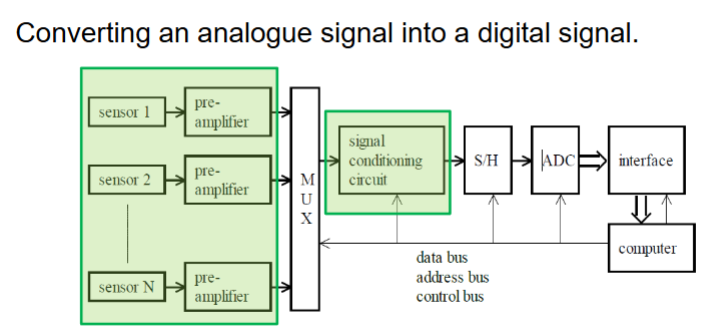
what are multiplexers
set of switches use to select one from several analogue signals
what are the two types of multiplexer switches
FET CMOS, Reed relay
what is a FET CMOS switch
semiconductor switch that can be controlled with signal. electric field with current flow. cheap and simple but causes voltage drop, leakage, etc.
what is a reed relay
EM switch composed of two metals. when energised, em field from coil forces blades to close. low impedance and leakages but short lifespan
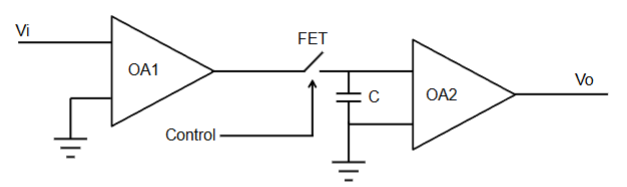
what is sample and hold? (S/H)
Analogue circuit made up of operational amplifiers used to hold a stable voltage Vo for time. when fet closed, c charged and then switch is opened
what is a digital signal
info stored in binary. Can be unipolar (positive values), bipolar (negative and positive with the negative sign being a 1 i.e. 11=-1), two complementaries (negative and positive values with sign represented by single bit), and binary-coded (each 4 bits represents a decimal number)
what is unipolar binary
16-bits can contain 216 values, from 0 to 65,535
in two’s compliment, -32768 to 32768
what is an ADC
converts analogue to digital,
RC Charge, Flash, Successive Approximation, Ramp Compare, Dual Slope
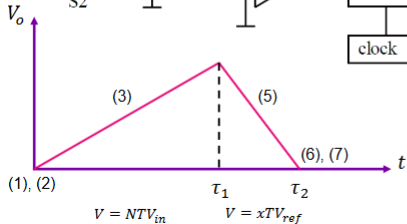
what is operational procedure of Dual Slope ADC
1) clear counter
2) Close S1, open S2, C is charged by input voltage and counting starts
3) Intergrate for a fixed time
4) Open S1 close S2, start discharge C
5) de-integrate for a fixed time
6) stop when Vo=0
7) read count
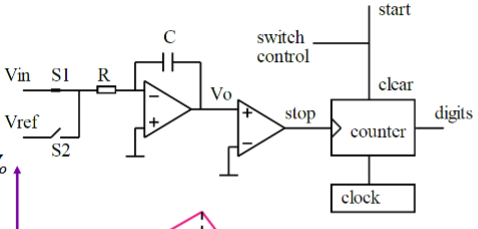
what is the digital count equation for dual slope
x=N\frac{V_{\imaginaryI n}}{V_{ref}} where N = fixed number of counts during integration time (during charge)
what are the features of a Dual Slope ADC
accuracy determined by Vref and integration time, fixed ramp up time, fixed ramp down rate, slow, good for slow varying signals
what is a successive approximation
compare input signal to a signal generated by digital to analogue converter, tries bits from MSB to LSB. if too large, set back to 0, otherwise, keep 1
what is a dac
converts digital signal into analogue signal
current in each branch is fixed, positions of switches determine whether current runs through Rf
what is the relationship between Vo and D in DAC
Vo=−Vref2ND where D is digital value and N is number of bits
what is quantisation error
error in ADC/DAC as quantised in time and amplitude so signal measured wont be the same as original
max error in best case scenario is +-1/2 LSB
how to you calculate quantisation error
error=2NVrange⋅0.5
how do you find the reactance of a circuit
X=2πfl where f is frequency and l is inductance
what is the impedance equation
Z2=R2+X2
how do you calculate current from impedance
I=ZV
how do you calculate reactance from a capacitor
X=2πfC1
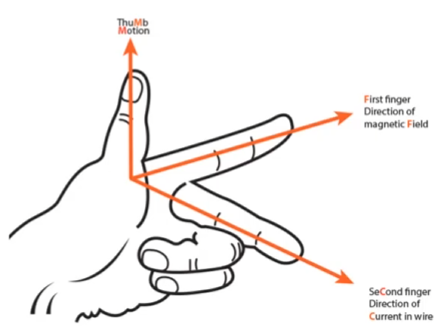
how do we find direction of magnetic field
right hand curl rule
how to we find direction of force on wire
left-hand rule for motors, right-hand rule for generators
what does a brushed DC motor look like
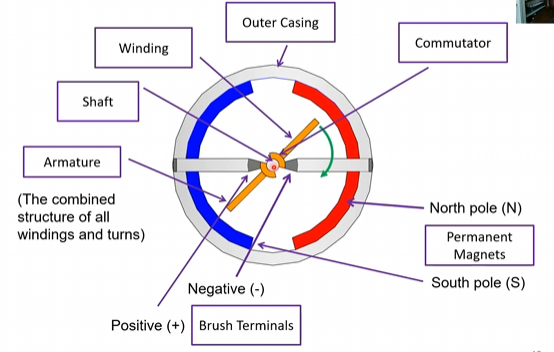
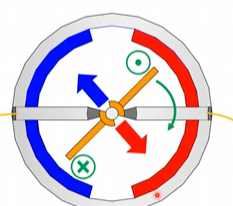
what do the dots and x represent on the diagram
dot is current out of page towards you, x is current into page away from you (think of an arrow)
what are the magnet poles
south blue, north red
what is force equal to in a brushed DC motor
F = BIl where B magnetic field, I current, and L length of conductor
what is a torque constant of motor
Kt, involves Bld
what is torque for a machine
τ=KTI
how do you find back EMF of motor
W=2Bldω
can also give constant for Bld
what is stall torque and no load speed respectively
stall torque when omega 0, no load speed when torque is 0
what happens when we decrease voltage in motor1
pushes graph down but still in linear fashion
what is main disadvantage of brushed motor
brushes need to be replaced as they wear down
where are we likely to find DC machines
small low cost things, electric vehicles, rc cars, fans
what are the 3 tests for dc motor
stalled motor 1, rotating motor, stalled motor 2
what does the first motor test do
clamp down to prevent rotation and plot v against I, gradient is R, y intercept is Vb
what does second motor test do
fixed voltage load motor up. plot emf against omega, gradient is KE
what does the third motor test do
range of voltage and increase load until stall, plot again
what is power equation including torque
P=τ⋅ω
what does a brushless DC machine look like
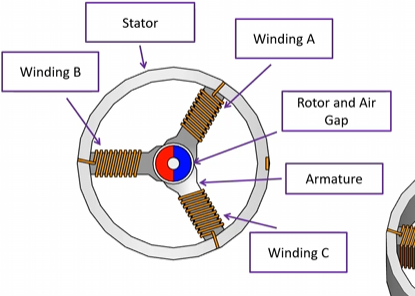
what are brushless dc machines usually found in
electric vehicles, automation, consumer electronics
what is a wound field equivalent
using coils instead of metals to generate the magnetic fields
what are the comparisons between brushed and brushless dc machiens
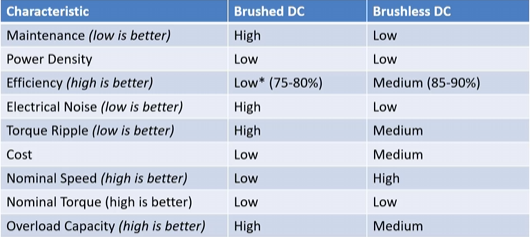
what is the difference between DC machines and Permanent Magnet machines
PMSMs are driven using sinusoidal waveforms
comparison of PMSM and Brushless DC
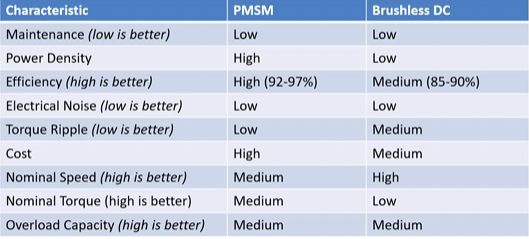
difference between PMSM to induction motor
instead of pm or winding, usually have cage and short circuit so it is one block
what is the synchronous speed
ωs=pω where p is pole pair number