L4: Use of high temperature in preservation
 Call Kai
 Learn
Learn Practice Test
 Spaced Repetition
 Match
Match Flashcards
 Knowt Play
1/23

There's no tags or description
Looks like no tags are added yet.
Name | Mastery | Learn | Test | Matching | Spaced | Call with Kai |
|---|
No analytics yet
Send a link to your students to track their progress
24 Terms
What are 4 examples of uses of high temperature in preservation?
•Blanching 2-5 min @ 100°C
•Pasteurisation (70-100°C)
•Canning (121°C)
•Ultra High Temperature (UHT) (>132°C)
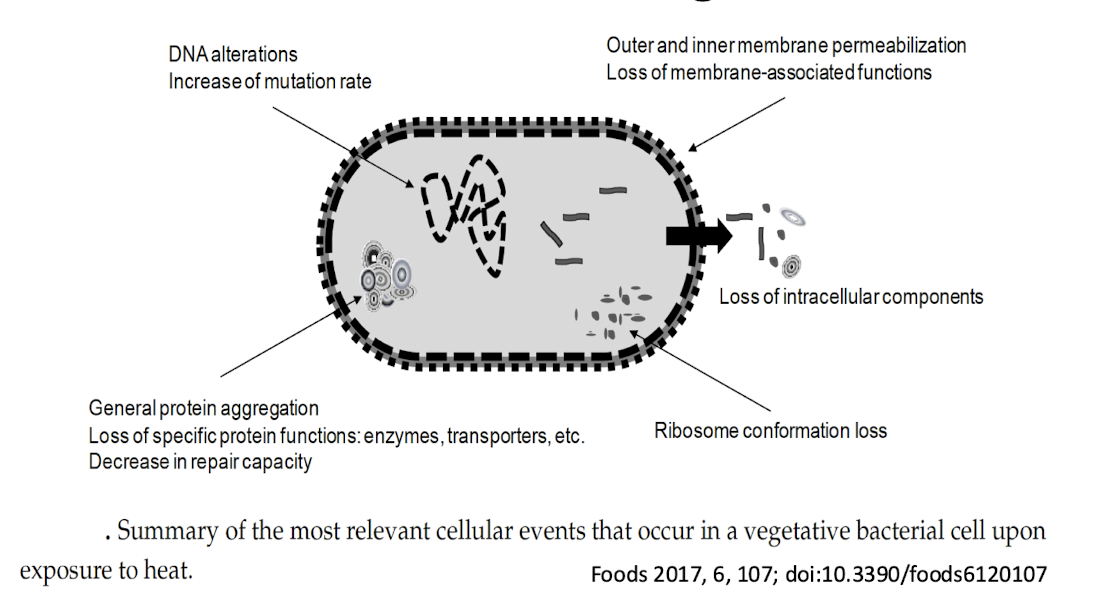
What is the target of using heat to target m/os?
Target stability of macromolecules
• Ribosomes
• Nucleic acid
• Enzymes
• Proteins
• Membrane damage
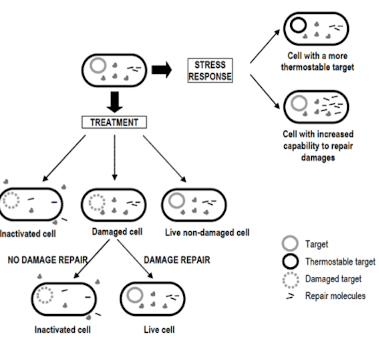
How do microbes respond to heat (shock)?
Heat shock proteins (HSPs which assist in:
Correct folding of proteins
Repair of damaged proteins + elimination of proteins
Thermostabilisation of membrane i.e. protein that responds well to hear
Modify membrane:
Through fatty acid and protein files to adjust fluidity i.e. altering ratios
=> Same/similar permeability at different temperatures
Passive mechanisms
Spores
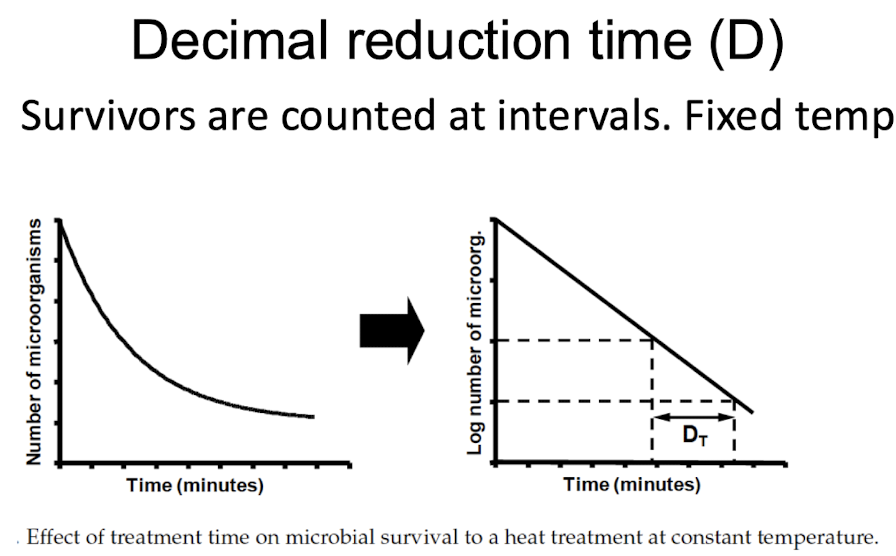
What is meant by the rate of M/O destruction? (D values?)
The time needed for a one log cycle reduction in a microbial population or to reduce a microbial population by 90% in a given environment.
e.g. B. stearothermophilus D100 = 50h
Survivors are counted at intervals
Measured under specific conditions of temperature and pressure.
This rate helps assess the effectiveness of sterilization processes.
What can the D-value depend on between microbial populations?
Factors such as type of microorganism, temperature, pH, moisture content, and presence of protective substances can influence the D-value for microbial populations.
What is the significance of D121 ?
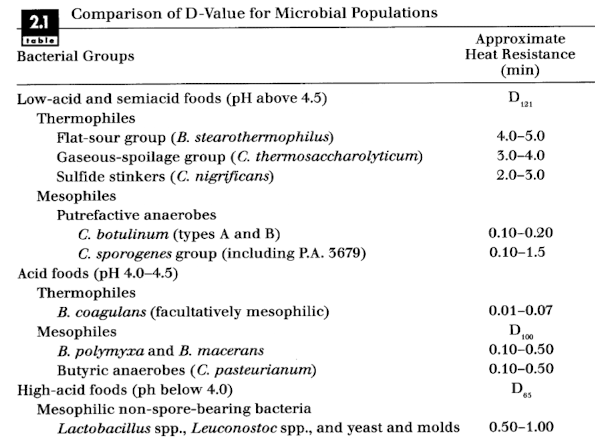
It indicates the time required at 121°C to achieve a one log reduction in a microbial population (temperature of autoclave)
e.g. in low-acid foods where the pH is above 4.5, thermophiles like B. stearothermophilus which cause flat-sour spoilage in cans have a D121 of around 4-5 mins
Whereas mesophilic non-sporeforming bacteria like Lactobacillus spp. have much lower heat resistance with an approx D121 of around 1 min
What is meant by thermal death time?
• Relative resistance of a m/o @ different temperatures
• Allows for the determination of the effect of different temperatures.
What is a Z value?
Change in Temp which changes D value by a log factor
• D + Z are required for calculating heat processes.
• Each m/o has its own values.
What are D/ DT values dependent on?
Dependent on the matrix they are in and the specific characteristics of the microorganisms. i.e. if they produce spores, vegetative cells, or different species.
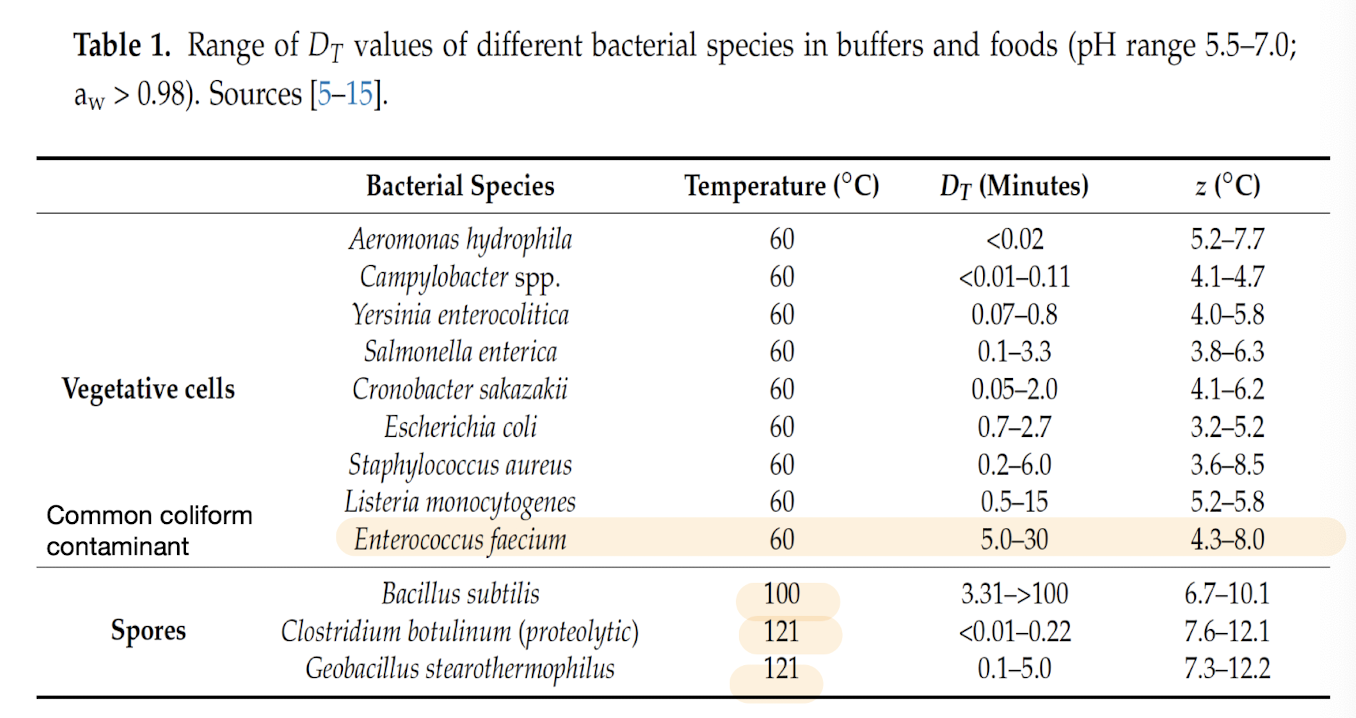
What are the 4 major factors affecting m/o heat resistance?
Growth medium, its pH
No. of M/Os present initially
Previous history of cell
Type of m/o
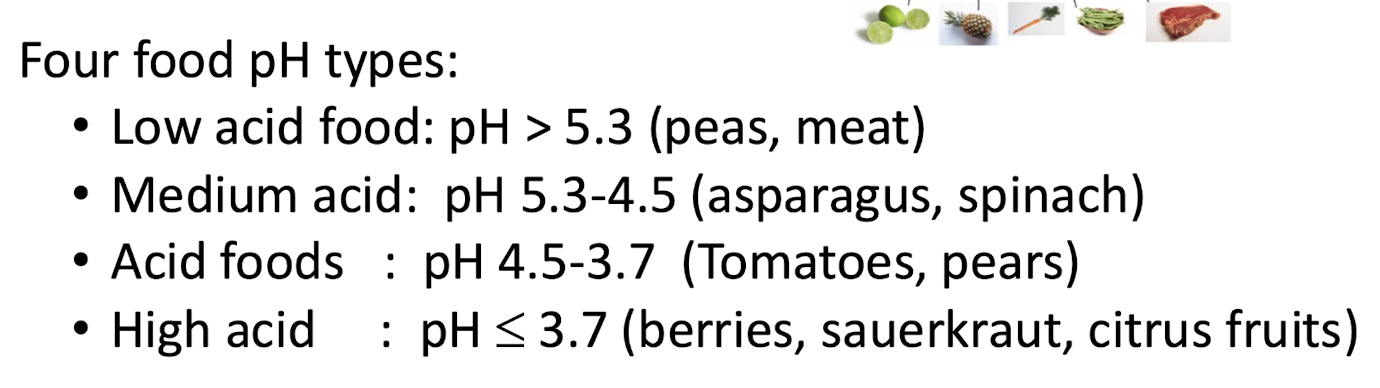
How is the pH of the growth medium a factor that affects a m/os heat resistance?
• @ pH 7.0, cells/ spores = more resistant
• Acidity - more effective HT
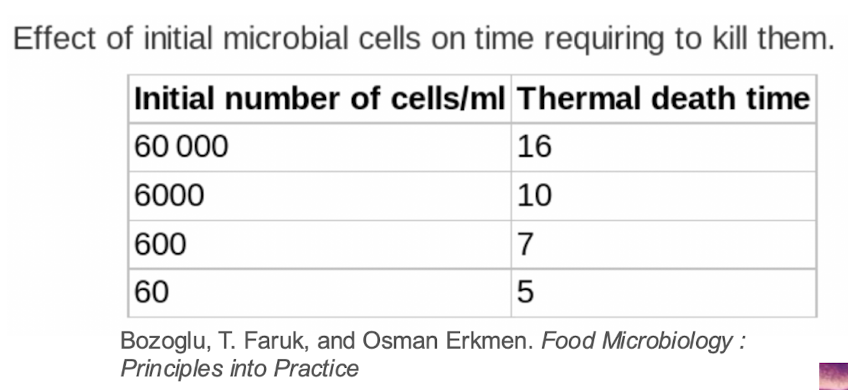
Why is the no. of M/Os present initially in the media a factor affecting heat resistance?
Larger no. of M/O need a higher temperature for a longer period to kill them.
Issues where m/os ability to produce protective effects like biofilms, certain advantageous compounds released by dead cells, to aid resistance of surviving cells
Lower no. take much less time with heat to kill
Why is the type of M/O a factor affecting heat resistance?
Yeast: killed by: 60°C for 10-15 min
Mould: killed by: 60°C for 5-10 min (but sclerotia difficult to destroy-can survive a limited time @ 90-100°C)
Bacteria: varies but vegetative cells are less resistant than spores.
When should pasteurisation be used?
Mild technique and is used when:
• Product could be damaged (milk)
• Aim is to kill pathogens
• Spoilage m/o affecting the product is not very heat resistant
• Additional preservation will be used (chilling)
What are the 3 main types of pasteurisation?
HTST: High Temperature Short Time i.e. for supermarket milk it is treated at 71.7ºC for 15 secs
LTH: Lower Temperature Holding for supermarket milk it is treated at 62.8ºC for 30 mins
UHT: Ultra High Temperature, where milk is heated to 135-150ºC for a few seconds to achieve long shelf life without refrigeration.
How can the efficiency of pasteurisation be investigated?
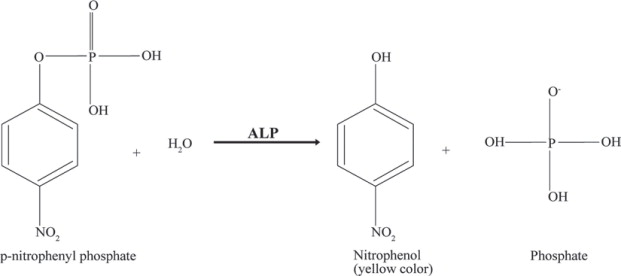
Using the phosphatase test: Used to determine the efficiency of the pasteurisation process as it is based on the property of the heat-labile enzyme present in raw milk which gets inactivated by heat treatment such as pasteurisation, where it assesses the enzyme’s ability to free the colourless compound p-nitrophenol (p-NP) from the yellow-coloured anion, p-nitrophenylphosphate (p-NPP)
What piece of equipment is used in the phosphatase test to assess pasteurisation?
A Lovibond Comparator is used to measure the increase in the amount of yellow colour produced based on the enzymatic cleavage of phosphate from p-NPP by phosphatase
What are methods of using high temp in the preservation of alternative milks? e.g. oat milk
• Pasteurisation
• Thermisation
• Ultra-High-Temperature
What foods involve heating to 100ºC to help preservation?
Boiling of a liquid food product
Blanching of vegetables which involves brief heating at 100ºC to inactivate enzymes and microorganisms.
Which preservation method uses heating above 100ºC?
UHT - involves heating at 137.8ºC for 2 seconds to achieve sterilization and extend shelf life without refrigeration.
The UHT process is divided into several stages: pre-heat, high-heating, cooling, homogenization, and sterile or aseptic packaging.
Aseptic packaging e.g. Tetra Pak, can help prolong shelf life for ~3-6 months
Used for products like whipping cream, coffee cream, milk, juice etc
Can be indirect and involves heating the product followed by rapid cooling to preserve taste and nutrition.
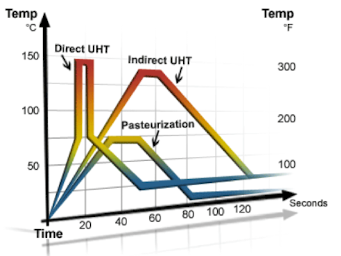
What is the difference between direct and indirect UHT?
The difference between direct UHT and indirect UHT can be summed up by the graph:
From the 80°C starting point in both cases, indirect UHT has a slower climb up to the UHT with a longer decline.
With direct UHT, you instantly heat to the UHT to sterilise the product with a short holding time and then use flash cooling.
In contrast, heating and cooling in indirect UHT take much longer with a higher overall heat load → higher cost + energy use
In the case of plant-based drinks:
Therefore the risk of affecting the colour, taste and impairing the delicate quality of plant-based drinks increases with indirect UHT.
Plant-based products are more sensitive to colour change compared to milk, so more heat means more colour change → thus direct UHT is preferred for preserving plant-based milks while minimizing quality degradation.
What are some issues with UHT as a form of food preservation?
Enzyme stability is affected which can lead to changes in flavor and nutritional value. Additionally, some sensitive nutrients may degrade due to the prolonged heat exposure.
Certain sporeformers e.g. Bacillus sporothermodurans & Geobacillus stearothermophilus can survive the UHT process, potentially leading to spoilage once the package is opened.
High temperatures may alter the texture of some foods, impacting consumer acceptance.
How does UHT affect the food profile of spoilage organisms that grow?
Shifts from a diverse population of vegetative bacteria and bacterial spores (pre-UHT) to commercial sterility (post-UHT), inactivating all pathogenic bacteria, coliforms, and most spores.
The only remaining microbial risk is rarely from heat-resistant spores such as Bacillus sporothermodurans
How is canning related to using hipreservation