instruments
 Call Kai
 Learn
Learn Practice Test
 Spaced Repetition
 Match
Match Flashcards
 Knowt Play
1/23

There's no tags or description
Looks like no tags are added yet.
Name | Mastery | Learn | Test | Matching | Spaced | Call with Kai |
|---|
No analytics yet
Send a link to your students to track their progress
24 Terms
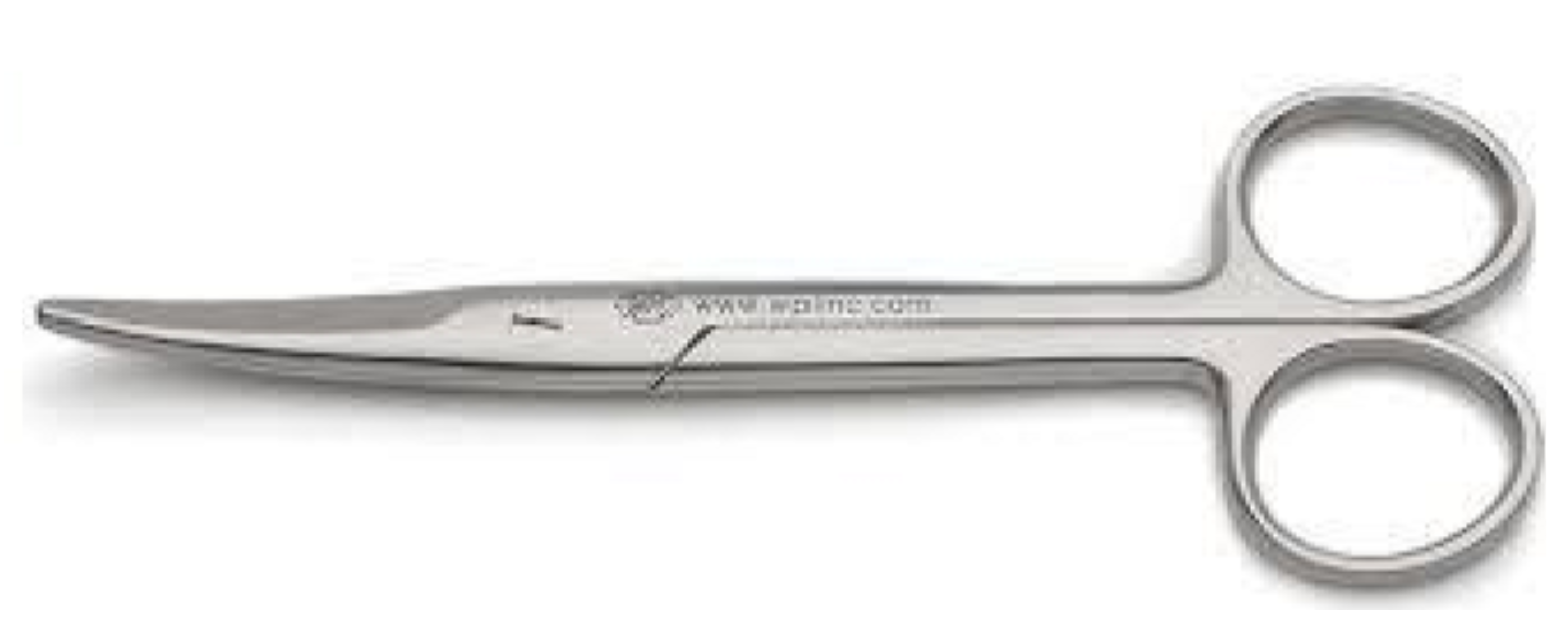
Mayo dissecting scissors
Cutting large muscle masses, cartilage, and non delicate tissues
Straight or curved
Can look similar to Metzenbaum but is more heavy duty so shaft is much thicker

Metzenbaum dissecting scissors
Cutting delicate surgical dissection
Thin delicate blades
Long thin shaft
Straight or curved
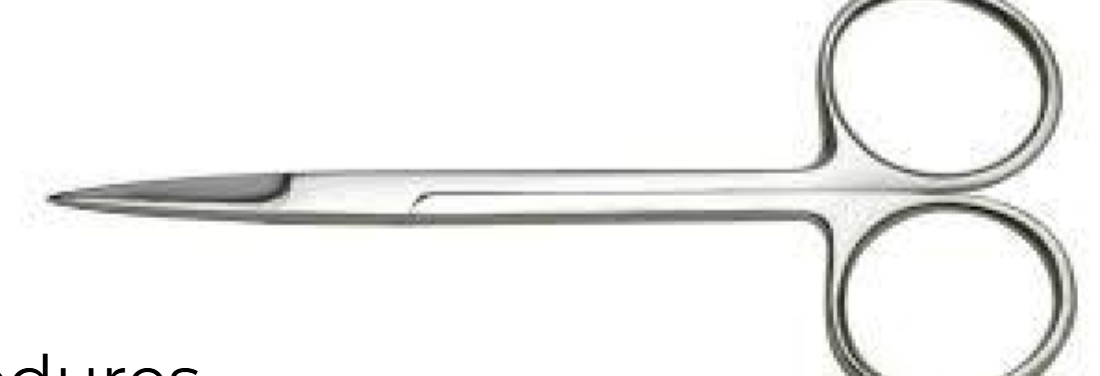
Iris scissors
Always very tiny
Used for eye procedures
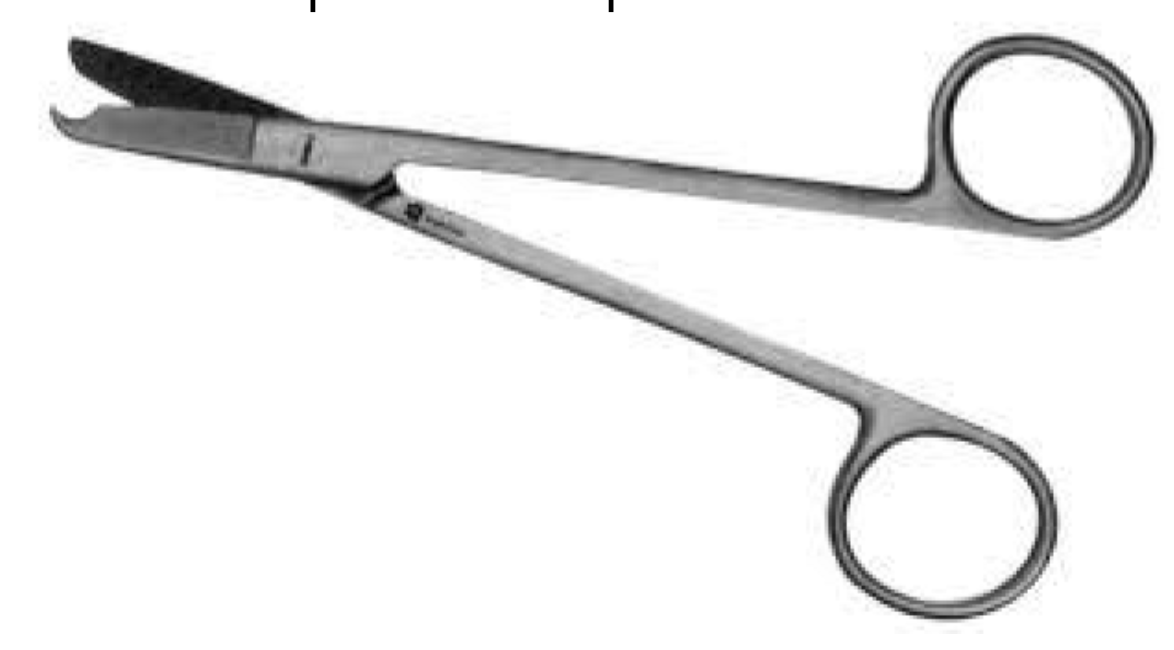
Suture removal scissors
Blade with hook shape to help remove suture
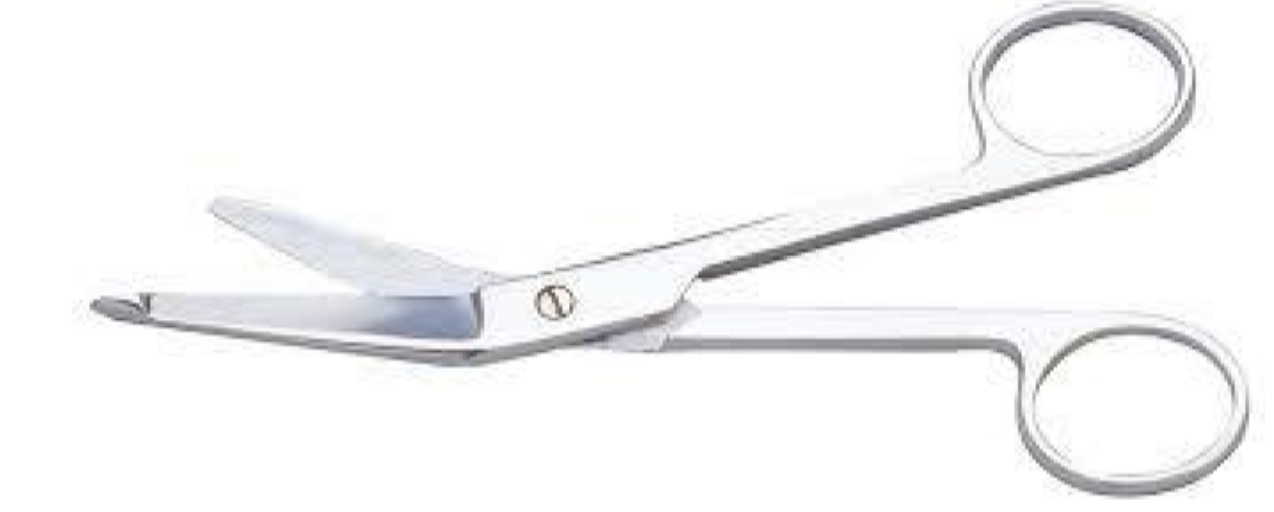
Lister bandage scissors
Used for cutting bandages
Angled blade helps get in/under the bandage
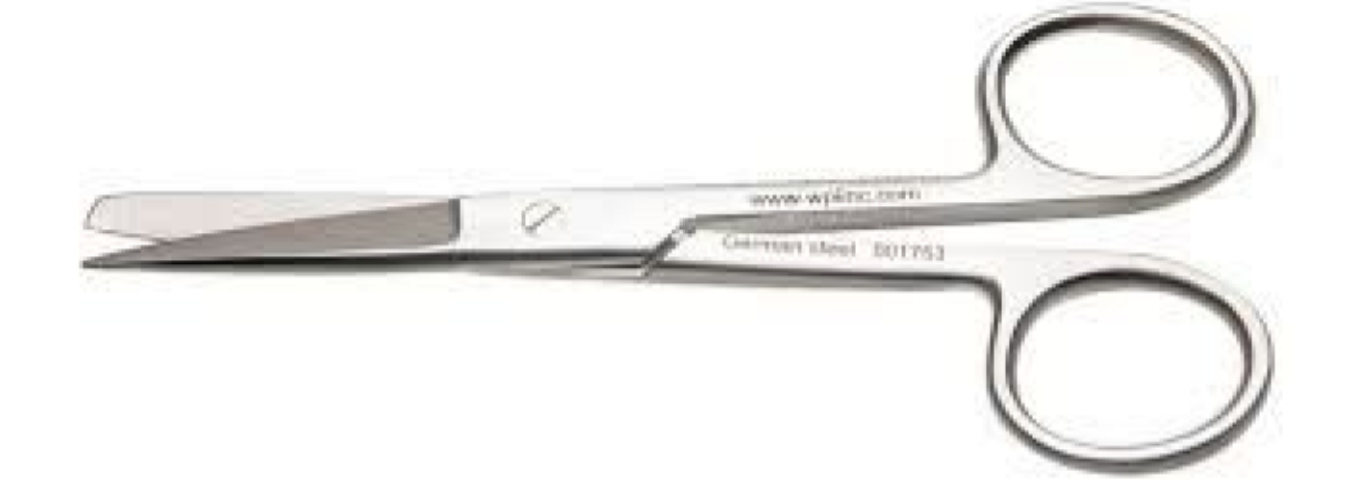
Operating scissors
Only cut inanimate objects
Sharp/Sharp, Blunt/Blunt, or Sharp/Blunt
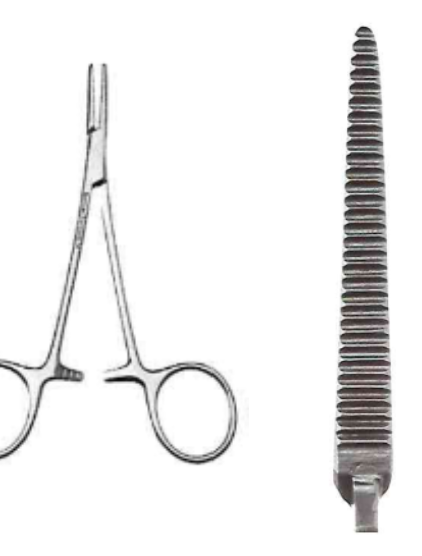
Halstead mosquito hemostatic forceps
Used to clamp small vessels
Small jaws
Fine horizontal serrations extending the entire length of jaw
Straight or curved
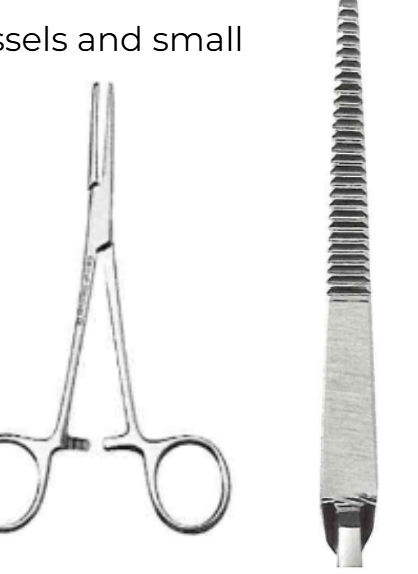
Kelly hemostatic forceps
Larger than mosquito, horizontal serrations are wider and only extend half way down the jaw
Kelly’s don’t go all the way
Clamp medium sized vessels and small tissue masses
Straight or curved
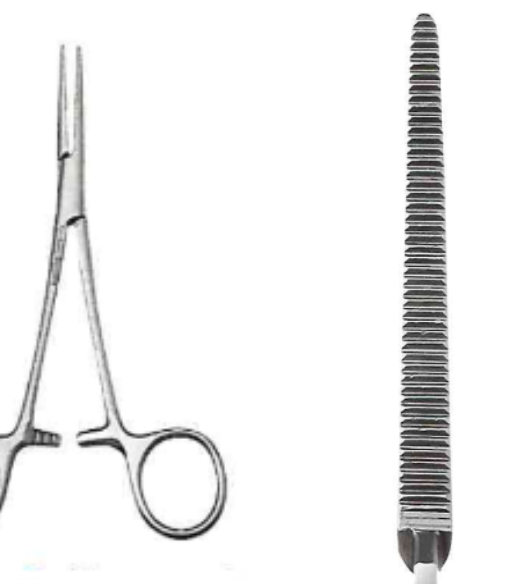
Crile hemostatic forceps
Horizontal serrations that extend the entire length of jaw
Exactly like the mosquito but larger
Straight or curved
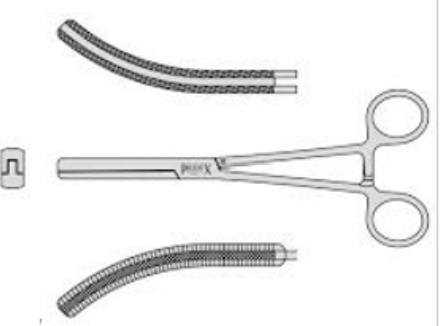
Ferguson angiotribe hemostatic forceps
Extremely strong forceps, Very traumatic, crushing jaw
Crushing jaw that has one raised jaw and one recessed jaw (they fit into one another)
Clamp vessels and tissues that will not need to be viable in the body
Curved or straight
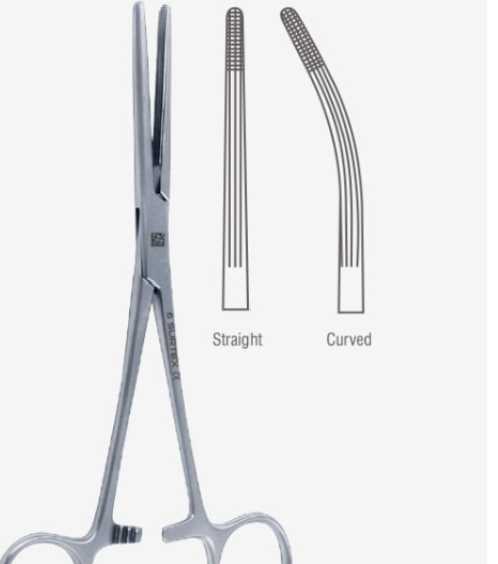
Rochester-Carmalt hemostatic forceps
Horizontal and vertical serrations near tip (tip looks like checkerboard)
Large instrument, jaw approx. 3.5 inches total
Used for large vessel and large tissue masses
Straight or curved
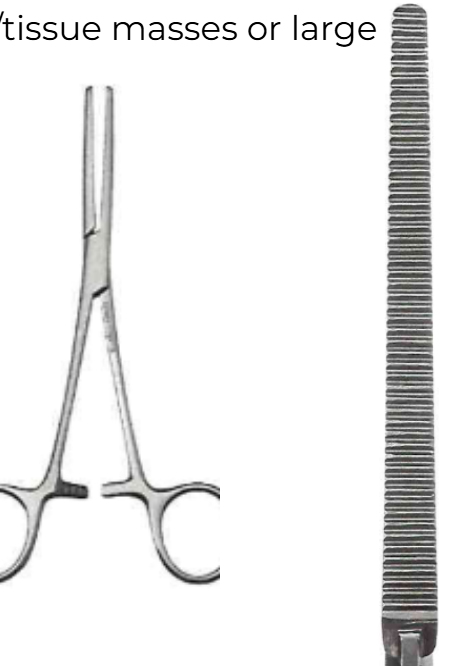
Rochester-Pean hemostatic forceps
Horizontal serrations down entire length of jaw
Just like Crile but larger/longer jaw
Used for large muscle/tissue masses or large vessels
Curved or straight
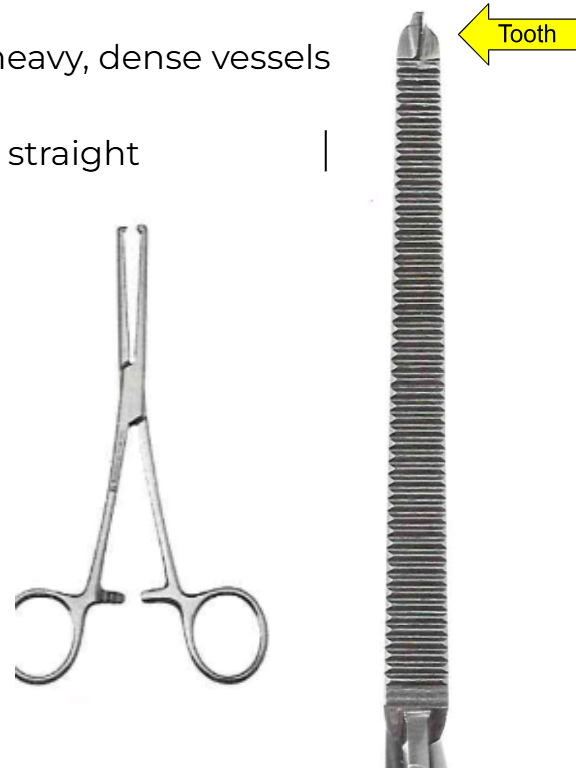
Rochester-Ochsner hemostatic forceps
tip has a 1x2 teeth configuration (one on top, two on bottom)
Aggressively grasp medium to large tissue
Occlude heavy, dense vessels
Curved or straight
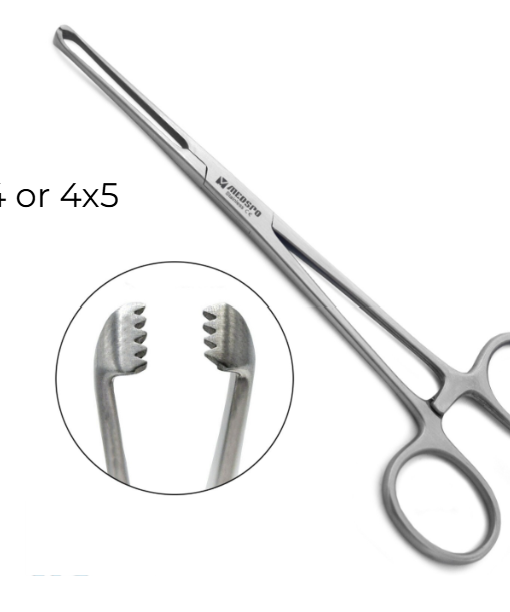
Allis tissue forceps
Neither hemostat nor a thumb tissue forceps
Intended for grasping tissue, grasp tissues or mass
Is fairly traumatic
Tip with teeth 3x4 or 4x5
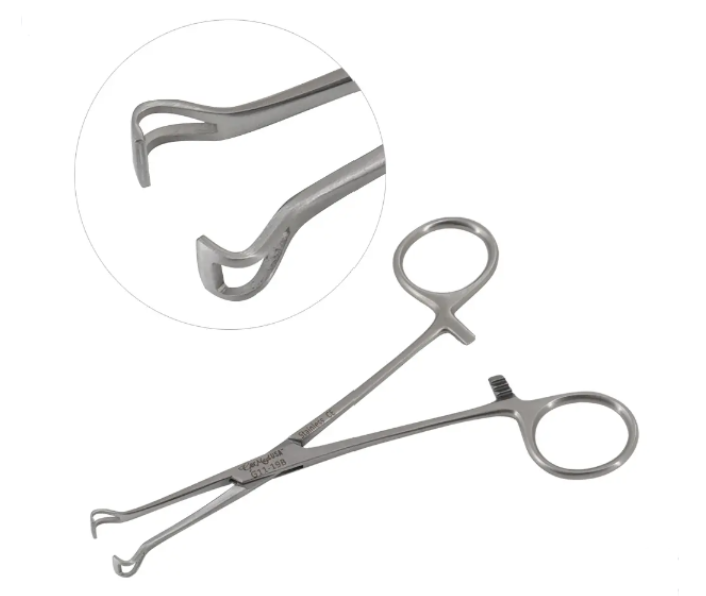
Babcock tissue forceps
Similar to the allis but considerably less traumatic
Smooth grasping surface and less stiff design
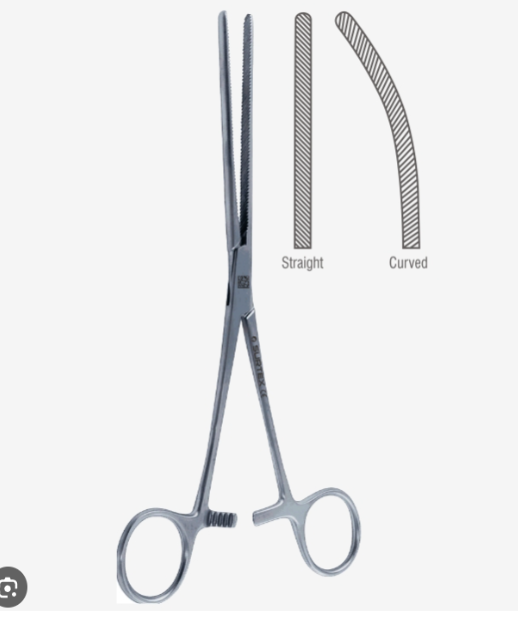
Doyen intestinal tissue forceps
Flexible, atraumatic jaws allow them to safely clamp viable portions of bowel and other delicate tissues
Straight or curved
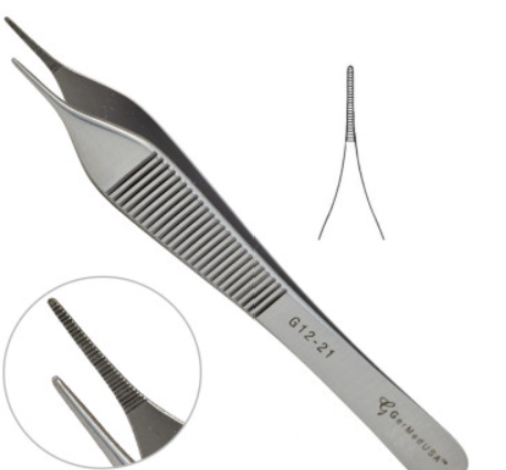
Adson dressing thumb tissue forceps
No teeth
Flat atraumatic serration
Aid in placing and removing dressing on wounds
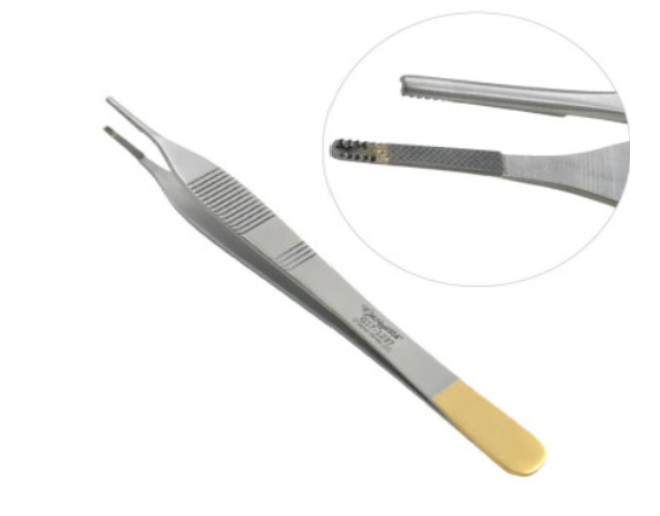
Adson-Brown thumb tissue forceps
Two parallel rows of nine shallow teeth on both tips
Found in most general instrument packs
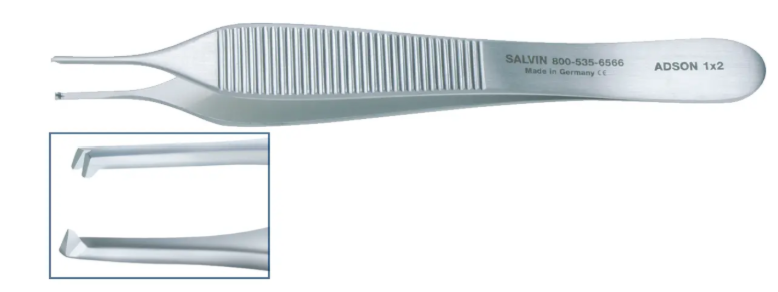
Adson 1×2 thumb tissue forceps
One tooth on one tip and two teeth on the other
Can be traumatic
Used to firmly grasp tissue
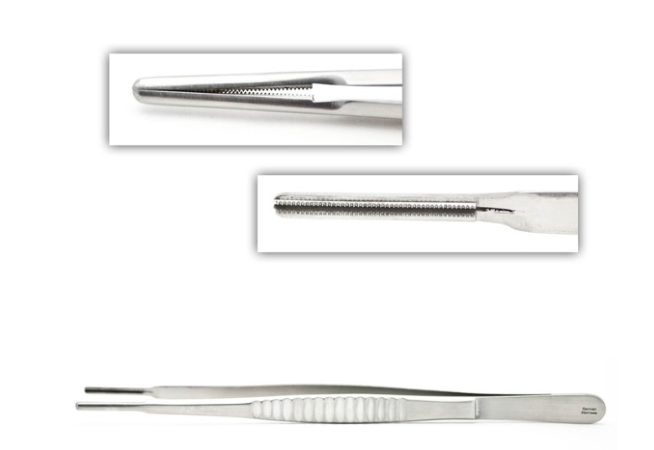
DeBakey thoracic thumb tissue forceps
Atraumatic, used on delicate tissue
thoracic, vascular or neurologic procedures
No teeth, instead has a ridge or groove

Russian thumb tissue forceps
very traumatic, bulky tip
Used on skin tissue being removed from the animal
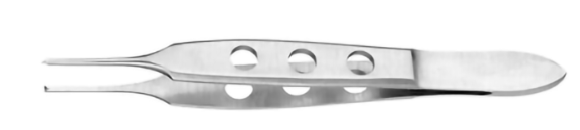
Iris thumb tissue forceps
Very tiny
Used for delicate ophthalmic procedures