adult health II exam #5 - endocrine
 Call Kai
 Learn
Learn Practice Test
 Spaced Repetition
 Match
Match Flashcards
 Knowt Play
1/19

There's no tags or description
Looks like no tags are added yet.
Name | Mastery | Learn | Test | Matching | Spaced | Call with Kai |
|---|
No analytics yet
Send a link to your students to track their progress
20 Terms
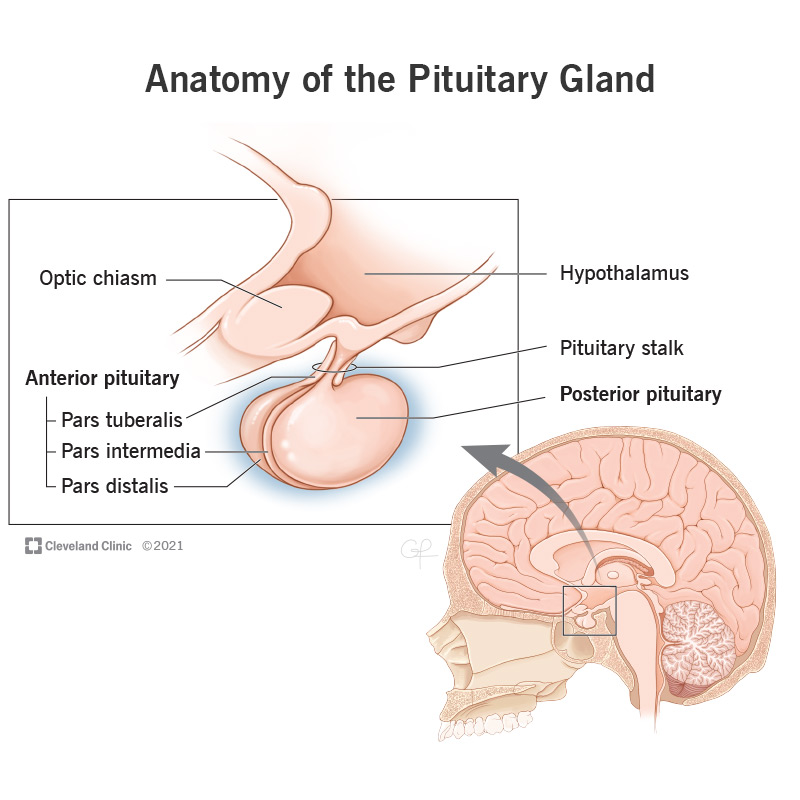
anterior pituitary
it synthesizes and secretes hormones that regulate growth, metabolism, stress, and reproduction—often by telling other glands what to do
a few hormones the AP makes include:
growth hormone
FSH (follicle stimulating hormone)
TSH (thyroid stimulating hormone)
LH (lutenizing hormone)
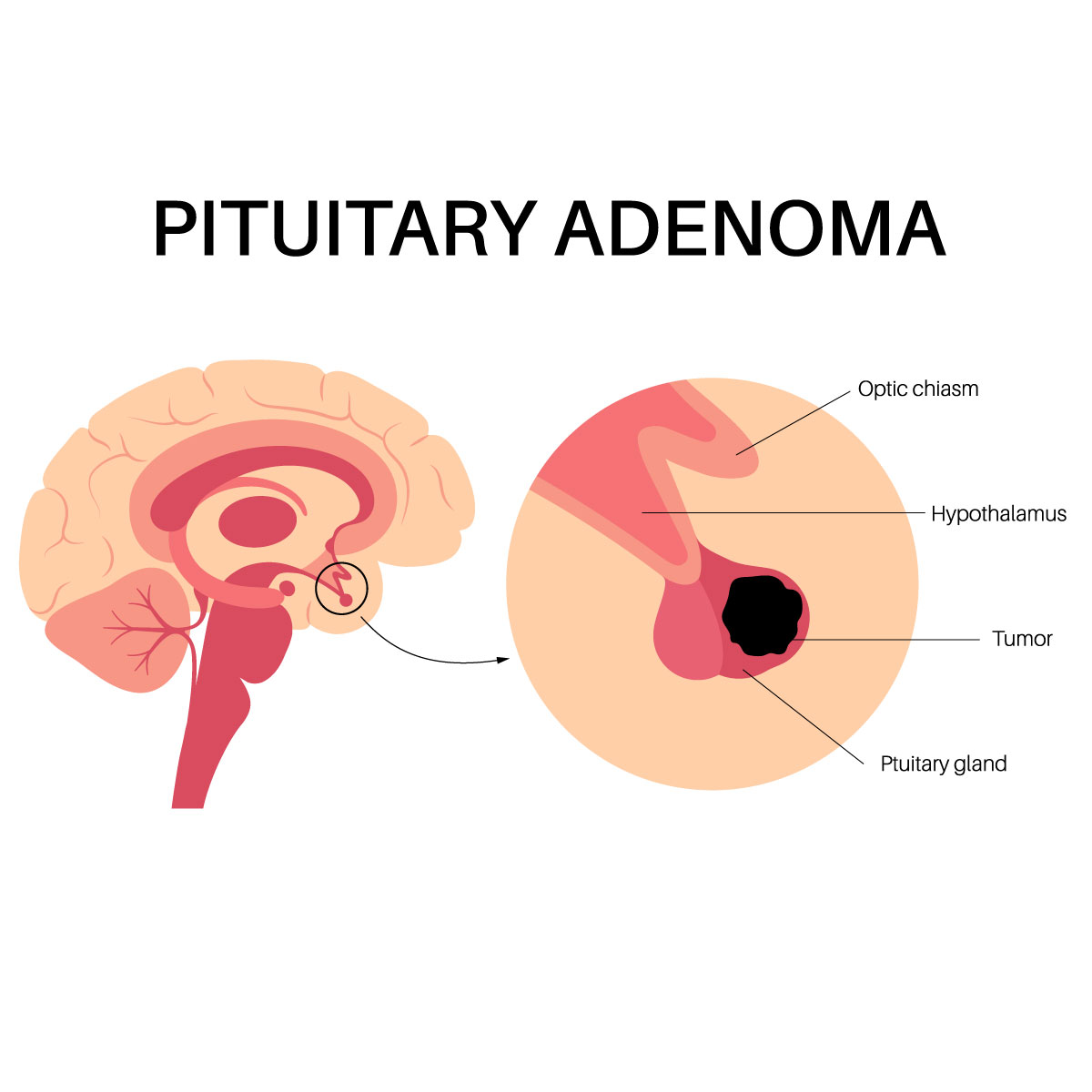
pituitary adenoma (definition, S/E, comps, and tx)
a benign (noncancerous) tumor that develops in the pituitary gland, most often in the anterior pituitary. this tumor causes the pituitary to create and secrete too many hormones.
S/E: joint pain, cardiovascular disease
comps: decreased lifespan by 5-10 years
treatment: octreotide (medication that inhibits hormone release) and/or surgery to remove the tumor
pituitary hypofunction (definition, comps, tx)
a rare disease of the anterior pituitary that causes decreased production of LH, GH, and FSH.
comps: organ failure
tx: surgery, radiation, and life-long hormone replacement
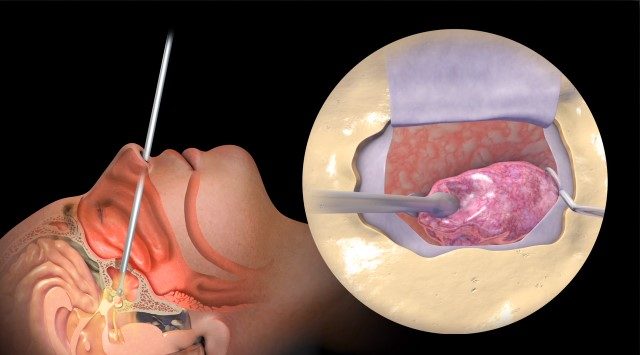
one of your patients just came back from surgery to repair pituitary hypofunction. to do this, the pituitary gland was removed.
what comps should the nurse assess for post-op?
hematoma (could compress the optic nerve and increase ICP! if this occurs, the patient will complain of vision changes!)
CSF leaks
epistaxis
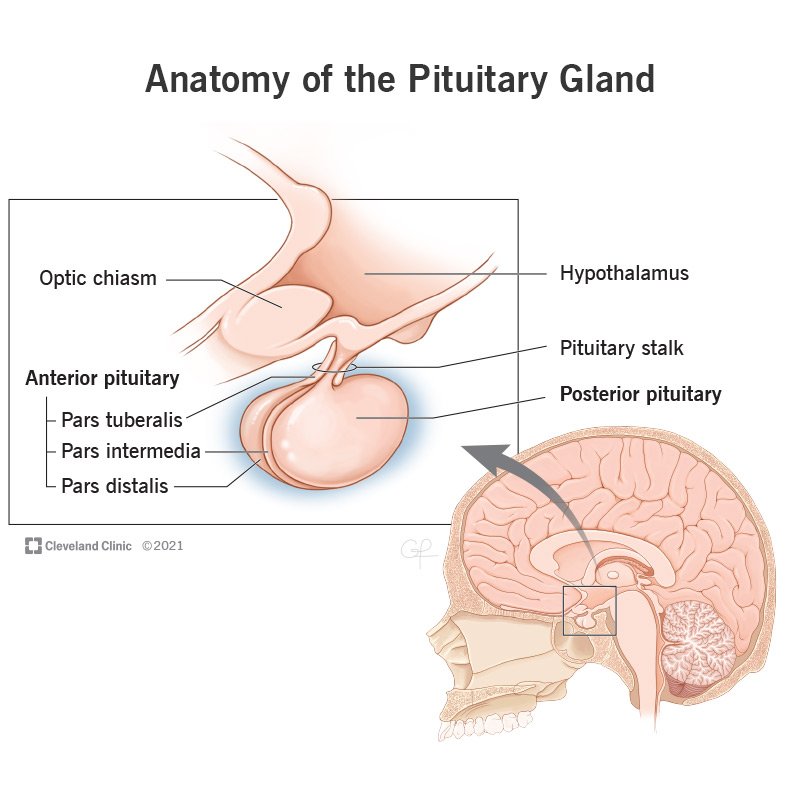
what does the posterior pituitary do?
this part of the pituitary does NOT produce hormones; however, it secretes ADH and oxytocin and stores other hormones until needed.
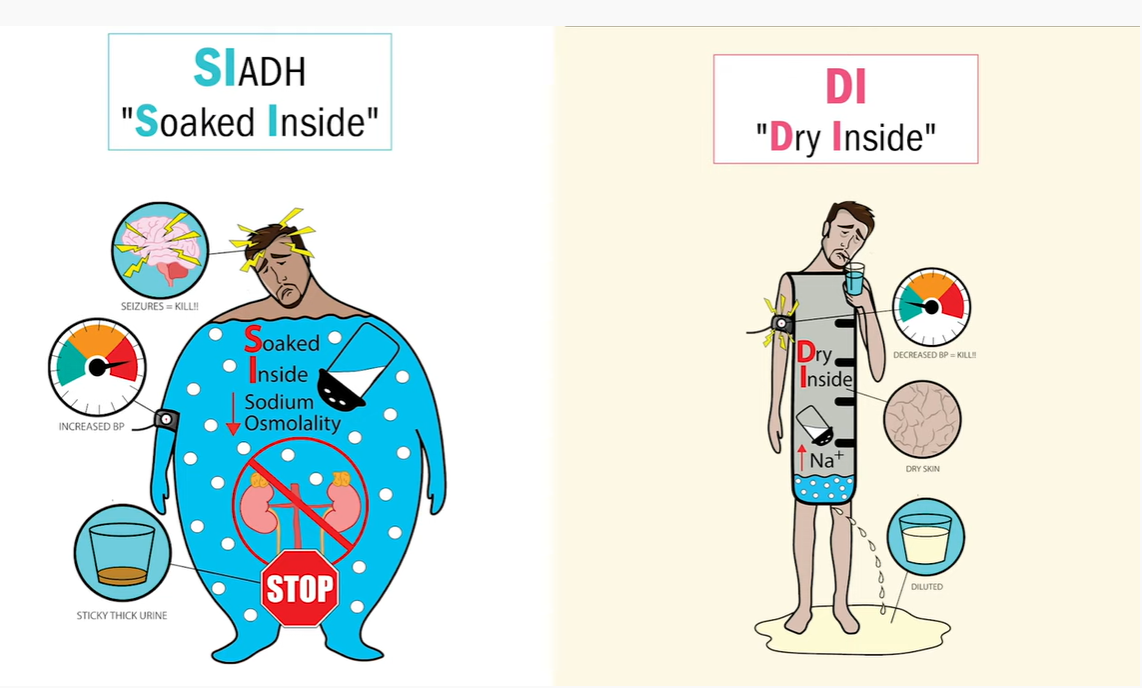
syndrome of inappropriate ADH (SIADH) (definition)
a condition where the body releases too much ADH, leading to water retention and dilution of sodium in the blood (hyponatremia)

what is the MAIN complication of SIADH? what can you do to prevent further patient harm in this scenario?
hyponatremia!! this causes neurological changes, such as confusion, seizures, coma, irritability, and balance issues
interventions:
seizure precautions
fall precautions
strict I&Os and DWs
administration of hypertonic solution administered SLOWLY to prevent shock
diuretics if Na+ is AT LEAST 125 or lower
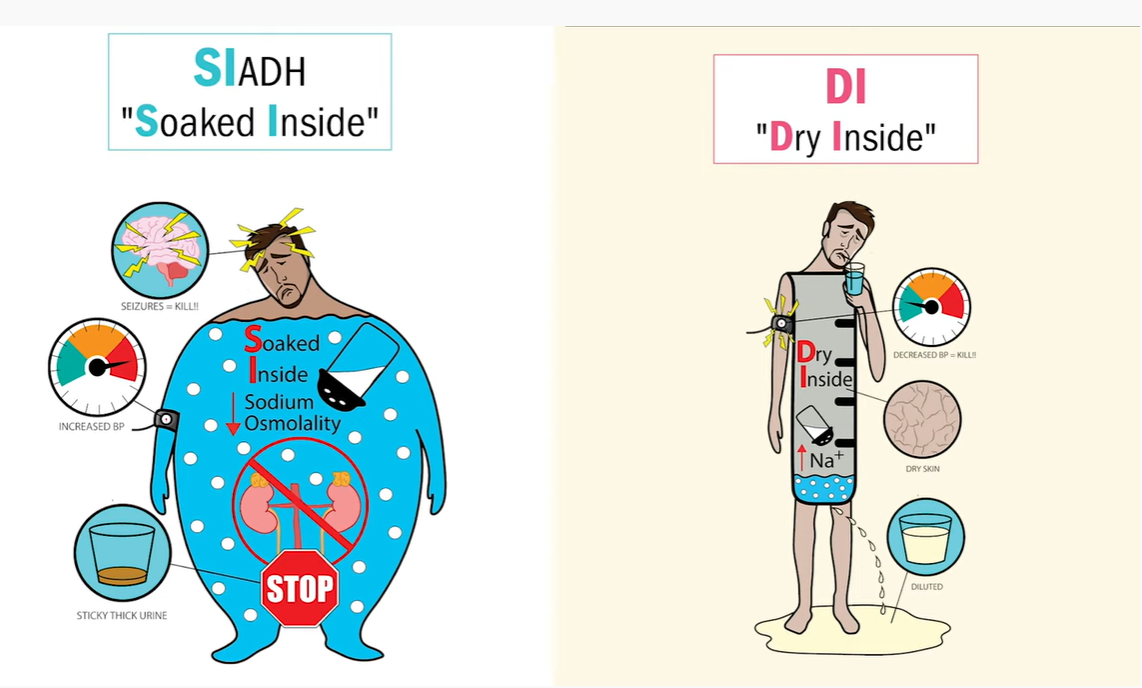
diabetes insipidus (caused by posterior pituitary issues) (definition, S/S)
diabetes insipidus (type 1) caused by inadequate ADH production and secretion due to a brain tumor compressing on PP or a TBI
S/S: polydipsia, polyuria, polyphagia are the main S/S
what is the treatment for DI caused by pituitary issues? (3)
fluids!!!!! these patients are severly dehydrated
hormone therapy → usually vasopressin (medication form of ADH)
try to fix the initial issue that caused the PP to act up
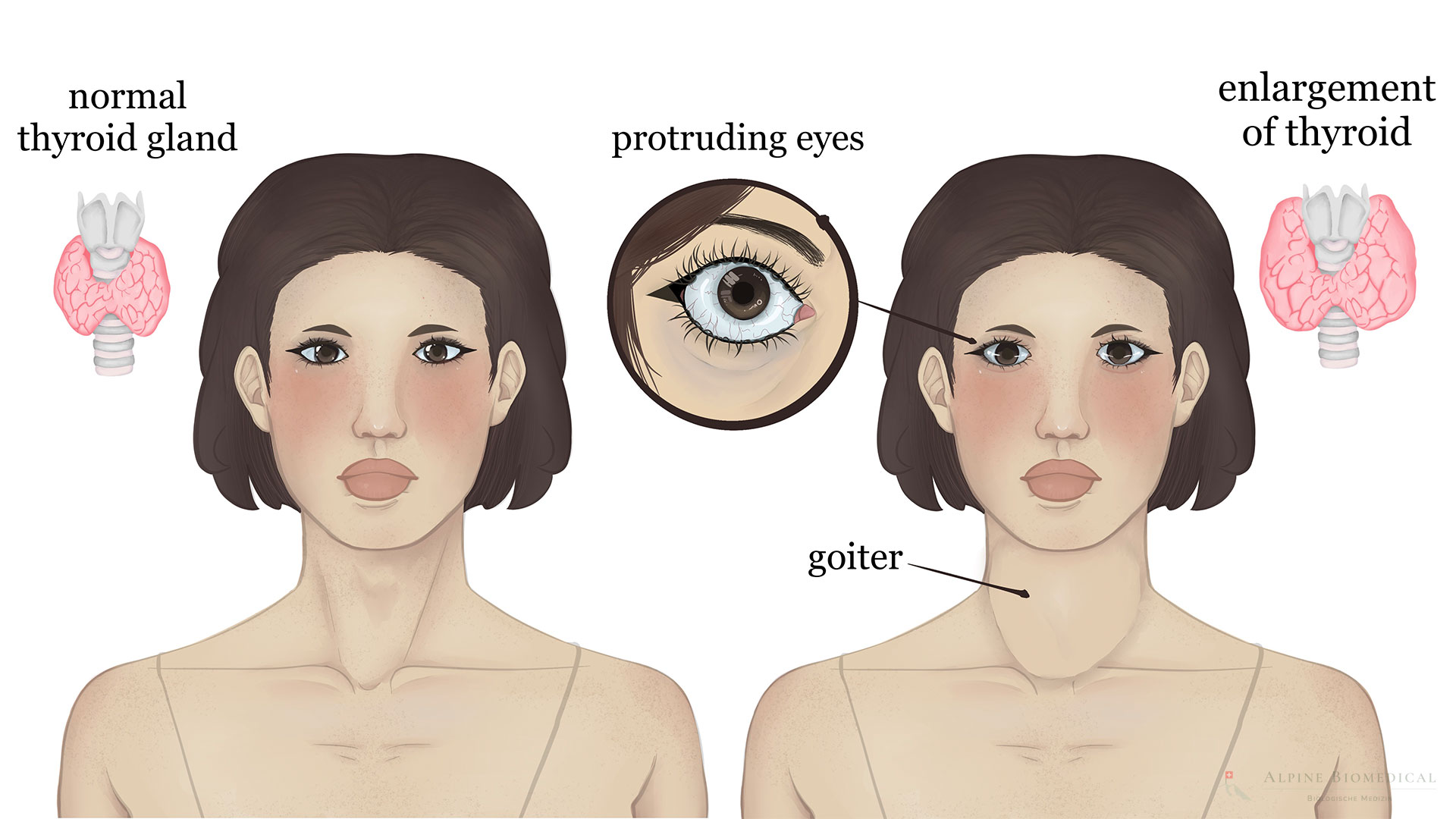
graves disease (definition, S/S)
an autoimmune disorder that attacks the thyroid gland, causing it to become hyperactive → leads to hyperthyroidism
S/S:
tachy
wt loss
agitation
goiter formation
enlarged eyes
what is the #1 most common cause of hyperthyroidism?
graves disease
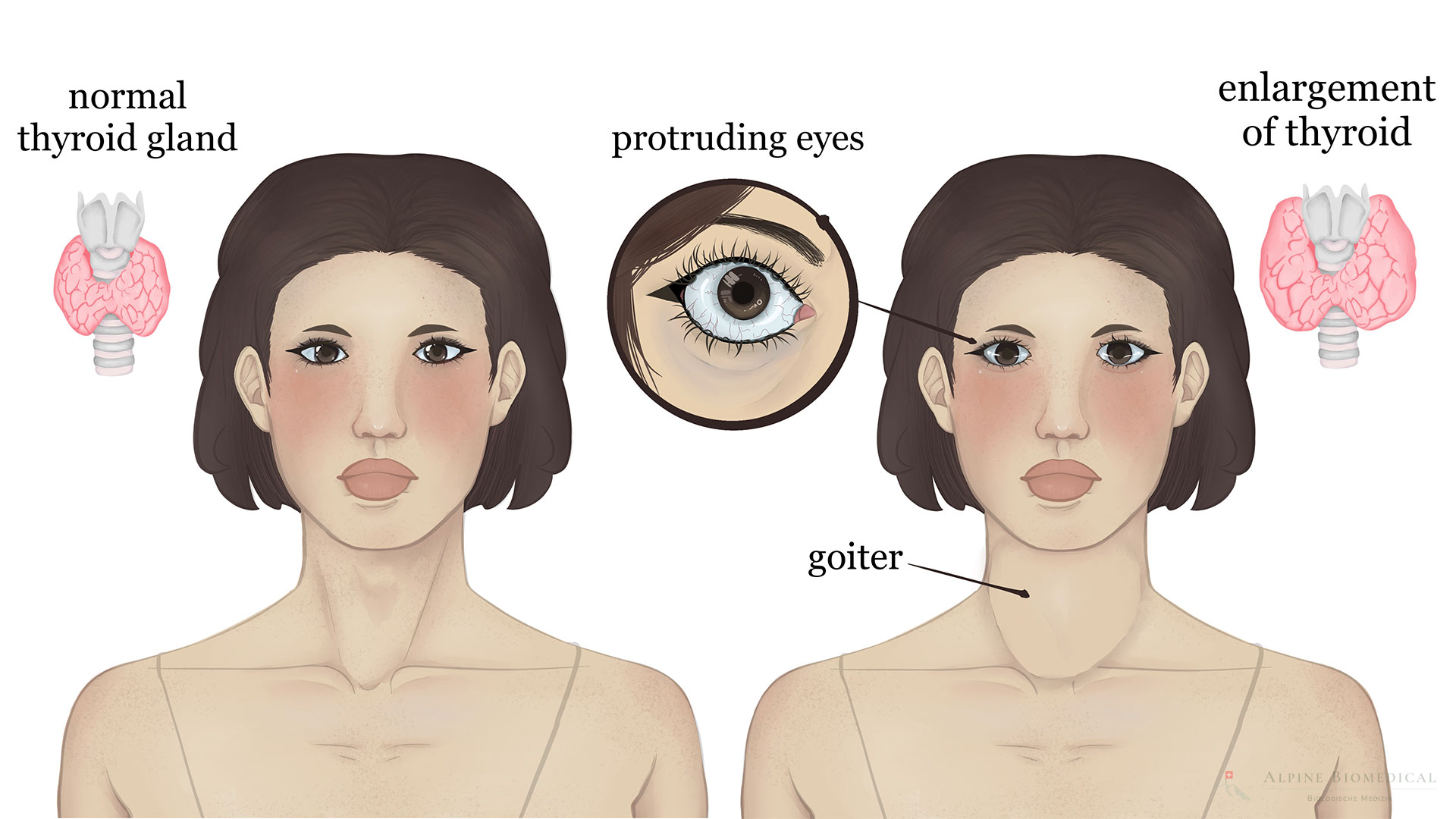
hyperthyroidism (definition, S/S, treatment)
a condition where the thyroid gland produces too much thyroid hormone (T3 and T4), which speeds up the body’s metabolism
S/S: tachy, wt loss, agitation, goiter formation, enlarged eyes
treatment: antithyroid meds, beta blockers to decrease HR, and radioactive iodine therapy
what is the #1 complication of hyperthyroidism?
thyroid storm! this is a medical emergency!
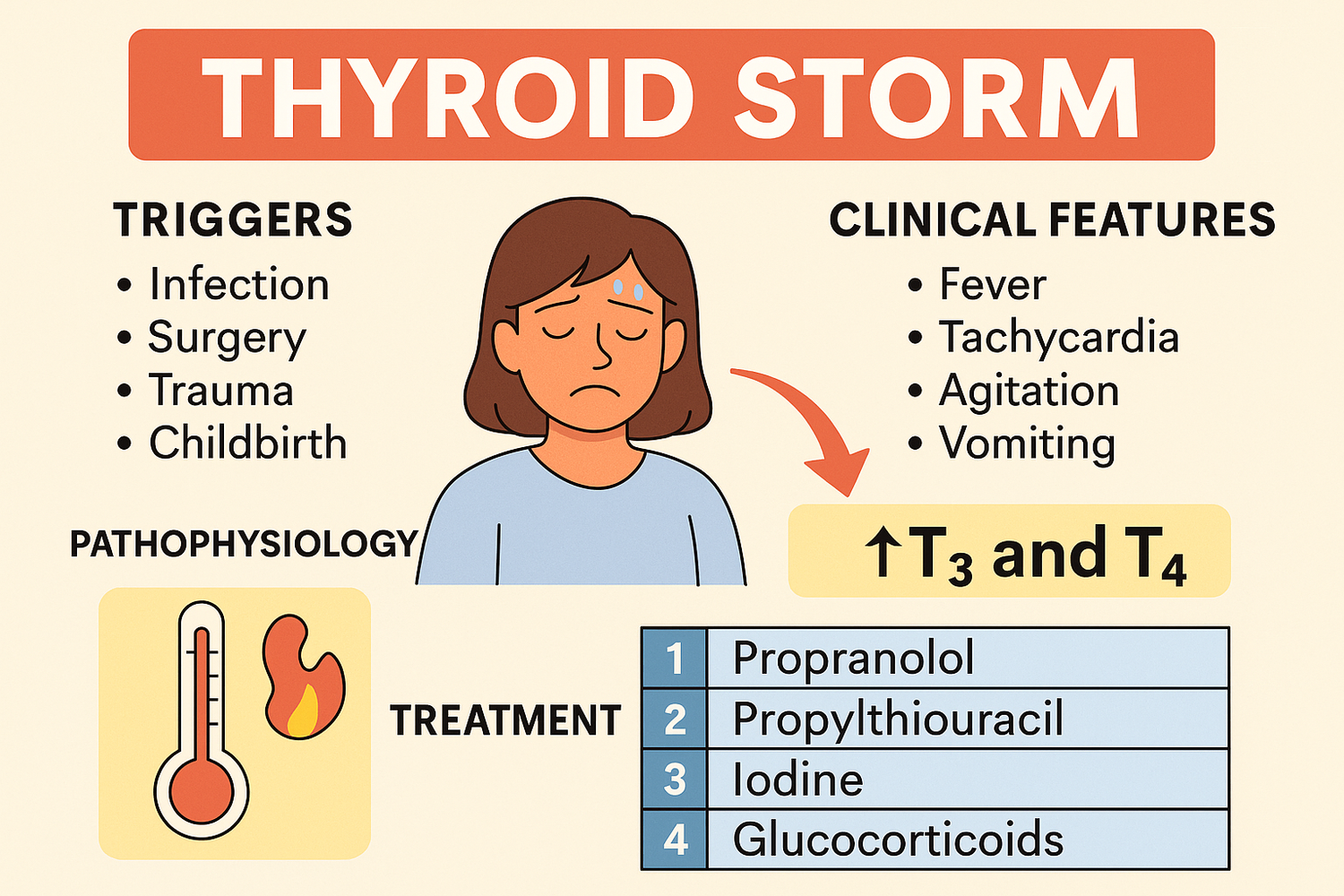
thyroid storm (definition, S/S, treatment)
a rare, life-threatening complication of untreated or poorly controlled hyperthyroidism. It occurs when the thyroid gland suddenly releases excessive amounts of thyroid hormones (like a major bolus!!), causing extreme metabolic acceleration.
S/S: severe tachy, HF, delirium (thyroid toxicosis), seizures, hyperthermia, coma
treatment:
meds to decrease thyroid function
ICU treatment, strict monitoring
manage S/S (cool the patient down, IVF, BBs to lower HR, antipyretics to stop fever)
seizure precautions
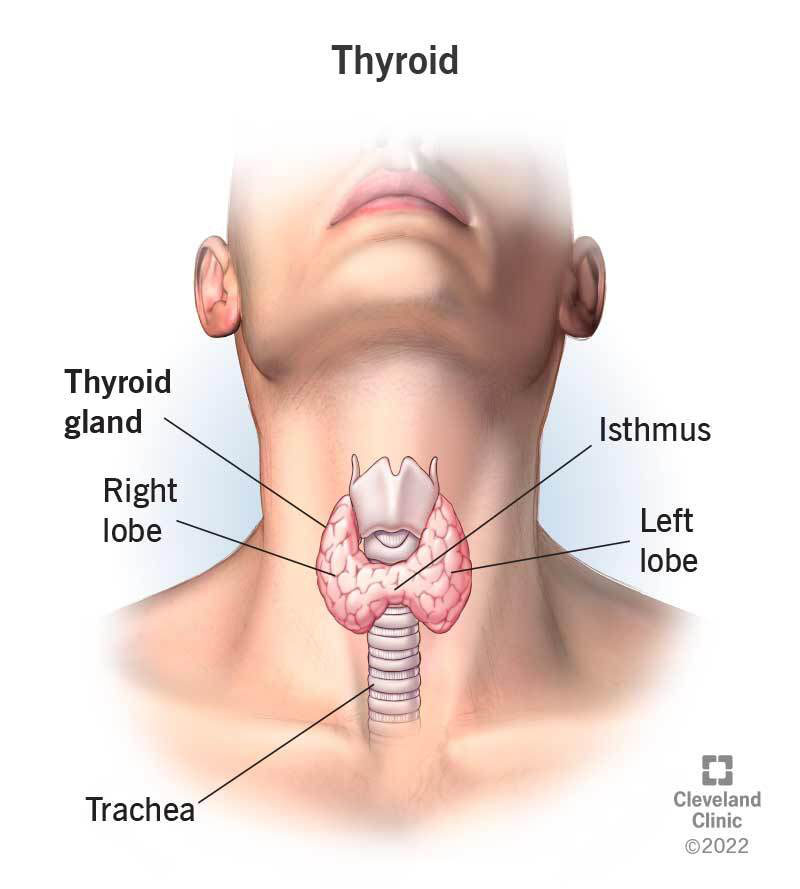
thyroiditis (definition, main concern, treatment)
the inflammation of the thyroid
can compress the trachea, which obstructs the airway
treatment: NSAIDs to reduce inflammation, abx, and corticosteroids
your patient needed their thyroid removed because of uncontrolled hyperthyroidism. what is the nurse most concerned about after surgery? what are some precautions you can have in place?
AIRWAY ISSUES → the thyroid is sitting on top of the thyroid, so issues can severely impact the airway!!
interventions;
set up suction and keep it ready
tracheostomy tray at bedside
your patient who just had a thyroidectomy was doing okay, but now they’re experiencing stridor, hoarseness, and they’re clearing their throat often.
should you be concerned?
yes — the thyroid is becoming inflamed and is obstructing the airway. keep the patient on oxygen, call the provider, and continue monitoring.
the parathyroid gland is underneath the thyroid. how can you tell the parathyroid is struggling?
low calcium levels in the blood
(the parathyroid regulates these levels)
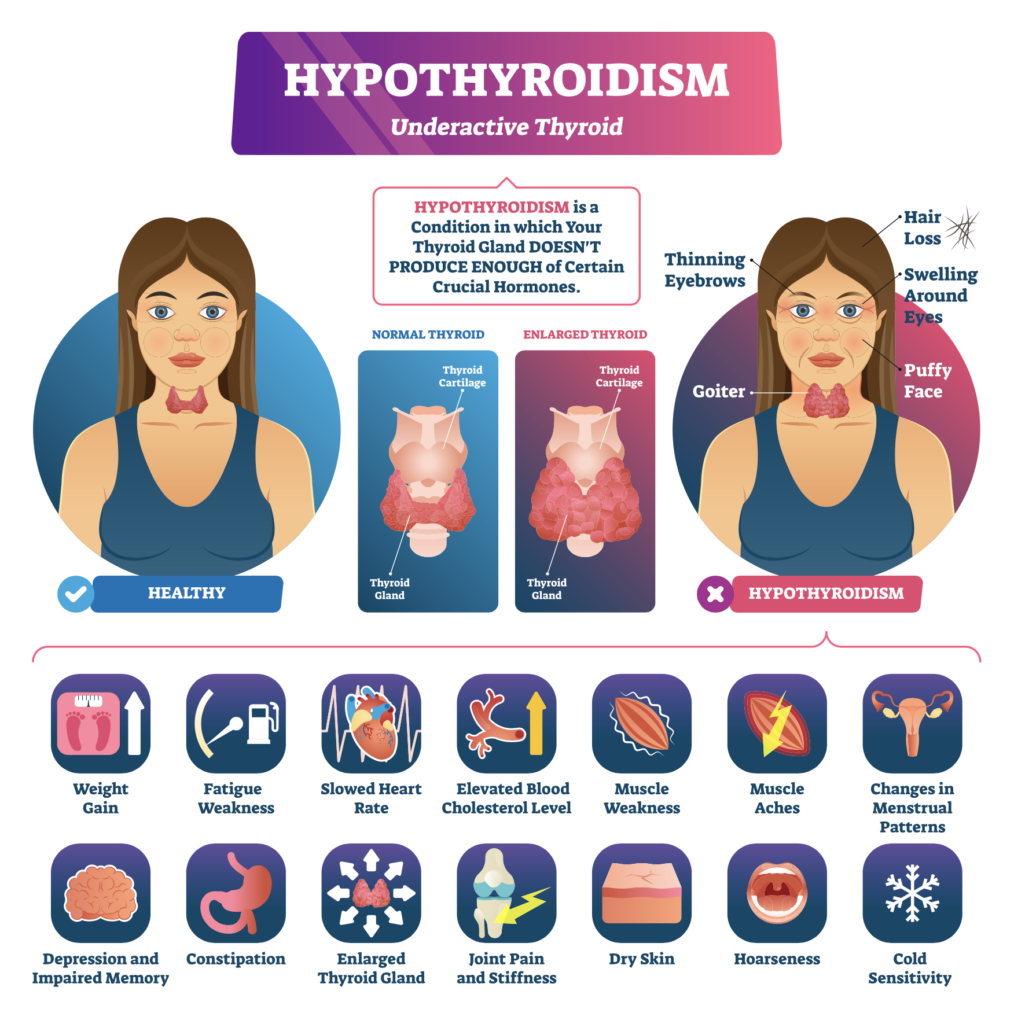
hypothyroidism (definition, S/S, treatment)
a decrease in hormone production — T3 and T4 — causing decreased metabolism.
S/S: lethargy, wt gain, slow speech, mental sluggishness/brain fog, depression
treatment: lifetime T3/T4 supplement medication such as levothyroxine
what does HIGH TSH levels signify?
what does LOW TSH levels signify?
high TSH = signifies the thyroid is the problem, because the thyroid is producing and secreting too much when stimulated by the brain/PP
low TSH = signifies the brain or pituitary gland is the issue, because the thyroid needs to be stimulated to begin producing TSH