Physiology lecture 29
 Call Kai
 Learn
Learn Practice Test
 Spaced Repetition
 Match
Match Flashcards
 Knowt Play
1/23

Earn XP
Description and Tags
Digestion & absorption in the small intestine
Name | Mastery | Learn | Test | Matching | Spaced | Call with Kai |
|---|
No analytics yet
Send a link to your students to track their progress
24 Terms
Synopsis
Structure and function of the small intestine
Carbohydrate digestion & absorption
Protein digestion & absorption
Fat (lipid) digestion & absorption
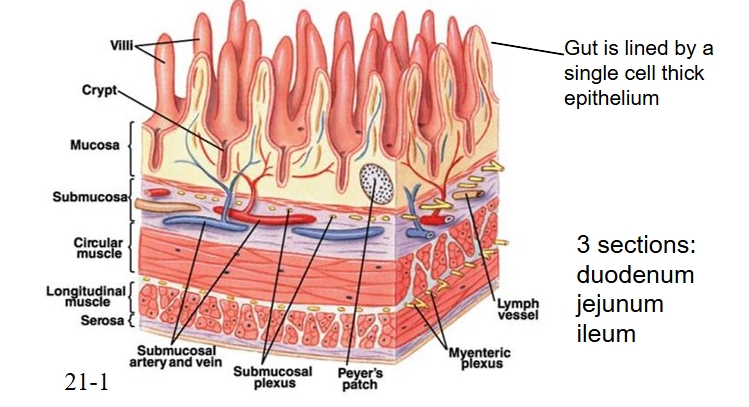
Microanatomy of small intestine
Intestinal surface area is enhanced by finger-like villi and crypts
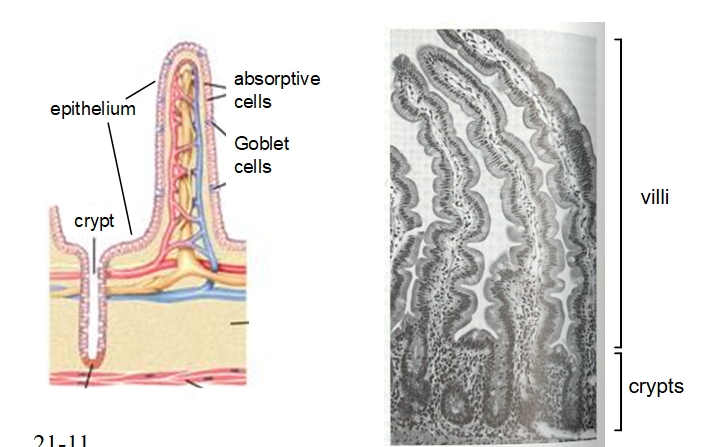
villi and crypts
crypts important for secretions - also have stem cells at bottom
have good blood supply and lymph to allow absorption
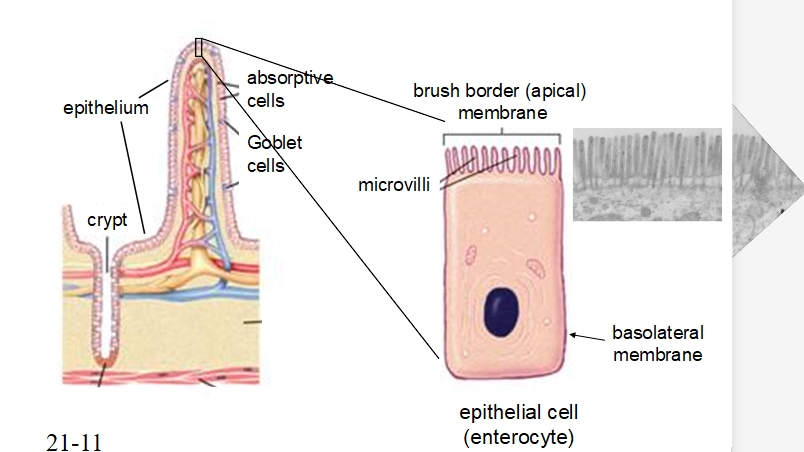
microvilli and epithelial cells
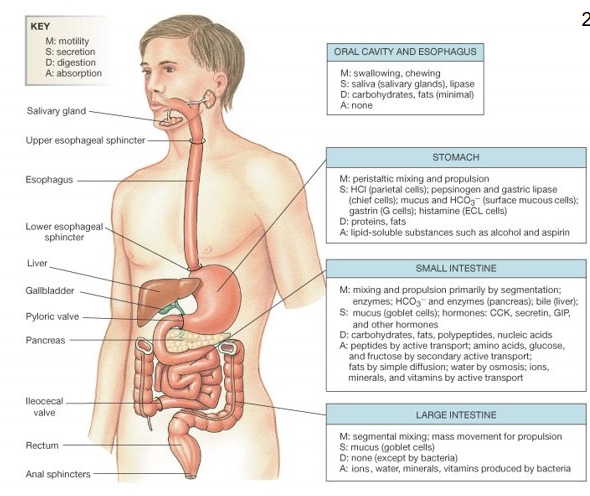
Functions of the small intestine
Digestion - Luminal, membrane and cytosolic
Nutrient absorption e.g. carbohydrates, proteins, fats, vitamins, iron
Drug absorption
Electrolyte absorption - NaCl
Water absorption ~7 litres/ day
Secretion - Fluid, NaCl, through Crypts
Key points in carbohydrate digestion and absorption
Carbohydrate in diet mainly polysaccharides
Carbohydrate only absorbed as monosaccharides
Luminal digestion of starch-type polysaccharides - Amylases
Membrane digestion by disaccharidases - Maltase, sucrase-isomaltase, lactase
Absorption of monosaccharides in the small intestine
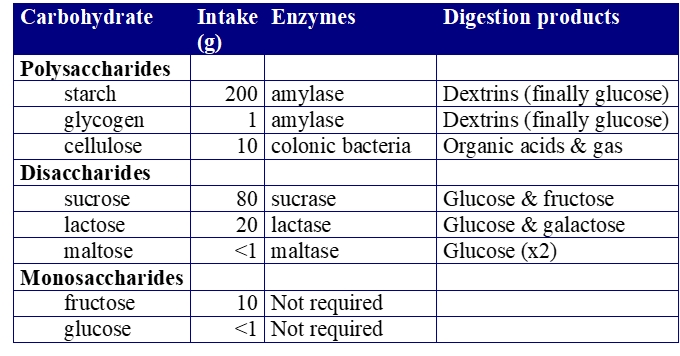
Average daily carbohydrate intake in England
starch most abundant in diet
cellulose - from plants - fermented by colonic bacteria to allow SCFA production and gas production
Sucrose most abundant disaccharide
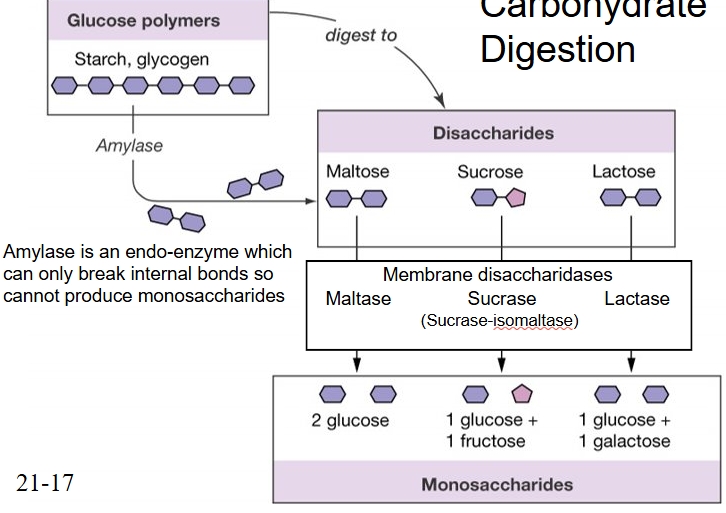
Carbohydrate Digestion
amylase - endo enzyme - cannot break end bonds so is only a disaccharidase
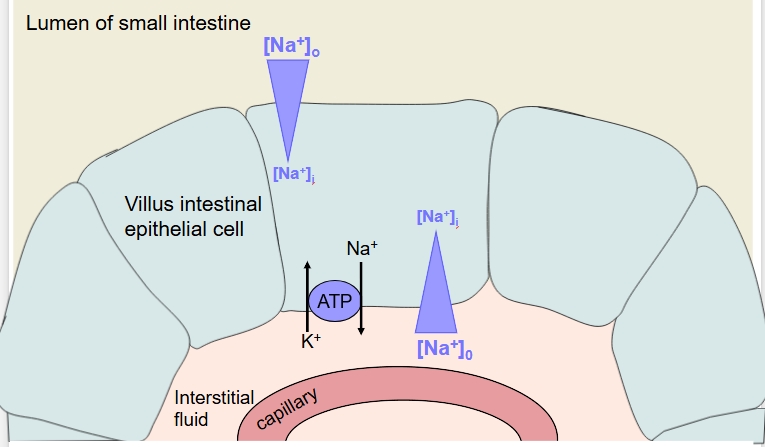
Absorption of Monosaccharides - Na+
via conc gradients in particular sodium can allow for carb absorption
Absorption of Monosaccharides
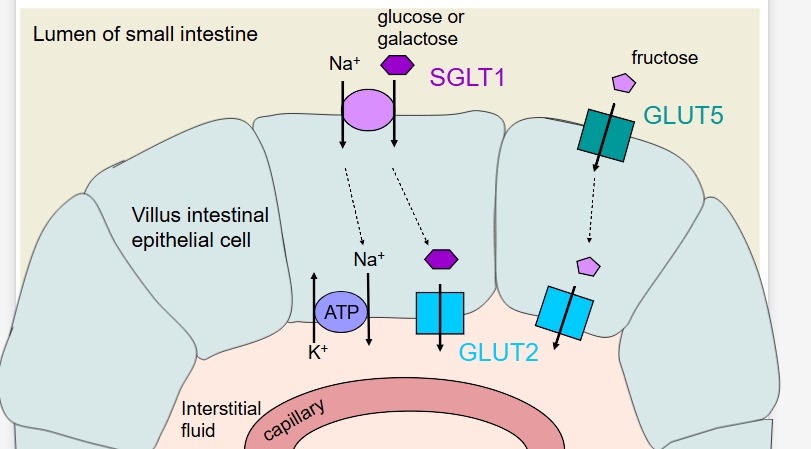
Only monosaccharides absorbed
Apical Membrane:
SGLT1 (glucose, galactose) - Na+ coupled, secondary active transport
GLUT5 (fructose) - Facilitated diffusion
Basolateral membrane - GLUT2 (Facilitated diffusion)
Movement of sodium at apical membrane and Na+K+ pump at BL membrane allow for transport of monosaccharides
Key points in protein digestion and absorption
Digestion of proteins
Luminal digestion by gastric and pancreatic proteases
Membrane digestion by brush-border peptidases
Cytosolic digestion within epithelium of small peptides
Absorption in small intestine
Amino acids
Peptides
Intact protein absorbed in antigenic quantities(especially in neonate) but nutritionally unimportant - influence in immune system
Protein digestion
Gastric pepsin - start of protein digestion (Luminal)
10-20% digestion
Endopeptidase
Pancreatic peptidases (luminal)
e.g. trypsin
Endopeptidases and exopeptidases
Short peptides (2-6 AAs) and free amino acids (~30%)
Membrane and cytosolic peptidases
Endo, exo or dipeptidases
Many different types
Free amino acids
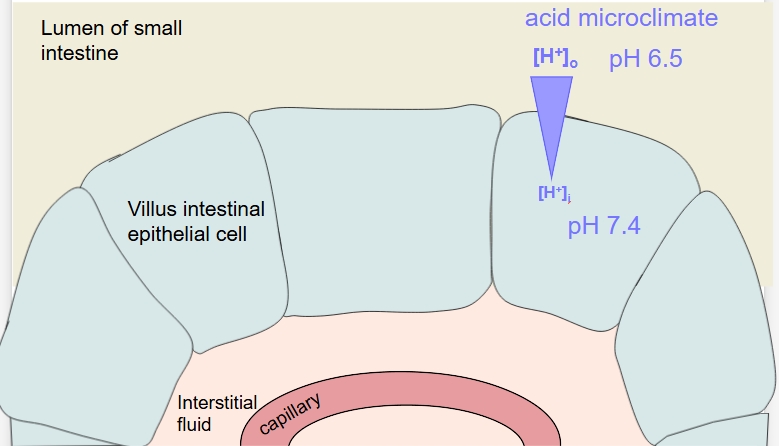
Absorption of peptides & amino acids - microclimate
secondary AT allows for protein absorption - using H+ ions
Absorption of peptides & amino acids
peptide absorption
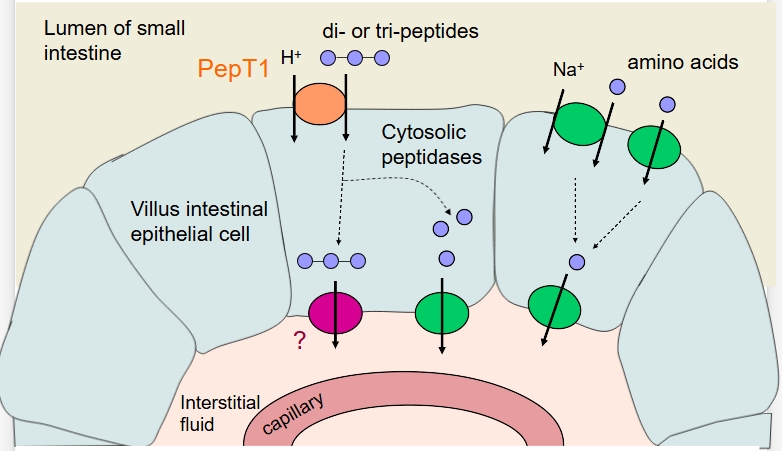
Utilises acid microclimate
H+-coupled di/tripeptide transport (H+ gradient maintained by NHE3 a sodium/H+ exchanger.)
Approx. 50% of protein absorption
Followed by cytosolic peptide digestion or export by unknown basolateral transporter (different from PepT1)
Peptide carrier also important for drugs -
Angiotensin-converting enzyme (ACE) inhibitors
b-lactam antibiotics
Prodrugs (Val-acyclovir)
? = unknown transporters - but must be present to exchange AAs and absorb them into body
Amino acid absorption
Numerous types of amino acid transporters
Neutral, cationic, anionic
Overlapping specificity
Apical Membrane
Mainly coupled to ion uptake (e.g. Na+)
Secondary active transport
Accumulation within epithelial cells
Basolateral Membrane
Mainly facilitated diffusion
Key points in fat (lipid) digestion & absorption
Low water solubility
Solubilisation - by Bile salts
Digestion - then Pancreatic lipase
Absorption - Passive
Re-esterification of fatty acids - Maintains gradient for absorption
Transport to blood - Chylomicrons via lymph system
Dietary lipids
Triglycerides (majority of dietary lipids)
Triesters of glycerol and long-chain fatty acids (C16, C18) [triglycerides]
Phospholipids
substitute 1 fatty acid chain with phospho-ester of organic base(e.g. choline gives lecithin)
Short chain fatty acids
minor – dairy
also some formed from colonic bacteria
![<ul><li><p class="Paragraph WhiteSpaceCollapse SCXP172835771 BCX8" style="text-align: left;"><span style="line-height: 0px;"><strong>Triglycerides (majority of dietary lipids)</strong></span></p></li><li><p class="Paragraph WhiteSpaceCollapse SCXP172835771 BCX8" style="text-align: left;"><span style="line-height: 0px;">Triesters of glycerol and long-chain fatty acids (C16, C18) [triglycerides]</span></p></li></ul><p class="Paragraph WhiteSpaceCollapse SCXP172835771 BCX8" style="text-align: left;"><span style="line-height: 0px;"></span></p><ul><li><p class="Paragraph WhiteSpaceCollapse SCXP172835771 BCX8" style="text-align: left;"><span style="line-height: 0px;"><strong>Phospholipids</strong></span></p></li><li><p class="Paragraph WhiteSpaceCollapse SCXP172835771 BCX8" style="text-align: left;"><span style="line-height: 0px;">substitute 1 fatty acid chain with phospho-ester of organic base(e.g. choline gives lecithin)</span></p></li><li><p class="Paragraph WhiteSpaceCollapse SCXP172835771 BCX8" style="text-align: left;"><span style="line-height: 0px;"></span></p></li><li><p class="Paragraph WhiteSpaceCollapse SCXP172835771 BCX8" style="text-align: left;"><span style="line-height: 0px;"><strong>Short chain fatty acids </strong></span></p></li><li><p class="Paragraph WhiteSpaceCollapse SCXP172835771 BCX8" style="text-align: left;"><span style="line-height: 0px;">minor – dairy</span></p></li><li><p class="Paragraph WhiteSpaceCollapse SCXP172835771 BCX8" style="text-align: left;"><span style="line-height: 0px;">also some formed from colonic bacteria</span></p></li></ul><p></p>](https://assets.knowt.com/user-attachments/ba609e46-6d6f-45a0-b25e-5cf0b117199c.jpg)
lipid digestion and absorption
stage 1 lipid digestion
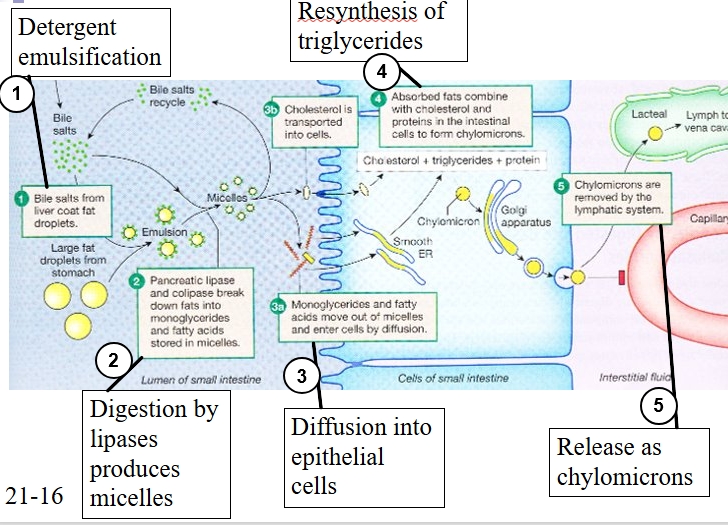
Emulsification (Stage 1)
Begins with chewing, grinding and mixing of food
Fat droplets, 1microm - gives enzymes enough substrate for digestion
Increases oil-water interface area
Stabilised by bile salts & phospholipids
stage 2 LD
Digestion (Stage 2)
Gastric (15%) and pancreatic lipases - Work at oil-water interface
Co-lipase - Prevents inhibition of lipases by bile acids
Triglycerides to 2 fatty acids & a monoglyceride
ALLI - weight loss drug that inhibits pancreatic lipase (is a derivative of lipstatin) - less lipid digestion so likely to experience diarrhoea and bacteria in colon use this and release lots of gas
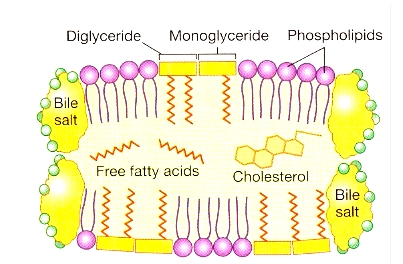
Micelles
Polymolecular aggregates, 5nm
Monoglyceride, fatty acids & bile salts
Cholesterol & fat-soluble vitamins (A, D, E, K)
Close approximation to enterocyte microvilli for absorption
following stages
Diffusion down gradient (Stage 3)
Driven by re-esterification of fatty acids to triglycerides within epithelial cells (Stage 4)
Released across basolateral membrane as chylomicrons (<1microm) (Stage 5)
Enter blood via lymph system
Fat soluble vitamins (A, D, E, K) follow same route of absorption
LOs
Describe the processes involved in the digestion of fats, carbohydrates and protein
Give an account of the absorption mechanisms for fats, carbohydrate and protein digestion products