Trig Test
 Call Kai
 Learn
Learn Practice Test
 Spaced Repetition
 Match
Match Flashcards
 Knowt Play
1/15

There's no tags or description
Looks like no tags are added yet.
Name | Mastery | Learn | Test | Matching | Spaced | Call with Kai |
|---|
No analytics yet
Send a link to your students to track their progress
16 Terms
Sine
Opposite/Hypotenuse
Cosine
Adjacent/Hypotenuse
Tangent
Opposite/Adjacent
Secant
Reciprocal of Cosine, or Hypotenuse/Adjacent.
Cosecant
Reciprocal of Sine, or Hypotenuse/Opposite.
Cotangent
Reciprocal of Tangent, or Adjacent/Opposite.
How to find cotangent value of an angle using the unit circle
Cotangent = cosine (x-coordinate)/sine (y-coordinate) from the point on the unit circle corresponding to the angle.
How to find cosecant value of an angle using the unit circle
Cosecant = 1/sine (y-coordinate) from the point on the unit circle corresponding to the angle.
How to find secant value of an angle using the unit circle
Secant = 1/cosine (x-coordinate) from the point on the unit circle corresponding to the angle.
How to find tangent value of an angle using the unit circle
Tangent = sine (y-coordinate)/cosine (x-coordinate) from the point on the unit circle corresponding to the angle.
How to find a reference angle
A reference angle is the acute angle formed by the terminal side of an angle in standard position and the x-axis. It is always measured as a positive angle between 0 and 90 degrees.
What functions look like for amp and period
y = A · sin(Bθ) or y = A · cos(Bθ):
y = A · sin(Bθ) or y = A · cos(Bθ): How to find amplitude
|A| absolute value of A, the number in front
y = A · sin(Bθ) or y = A · cos(Bθ): How to find period
2π/B — it's how long it takes the wave to complete one full cycle.
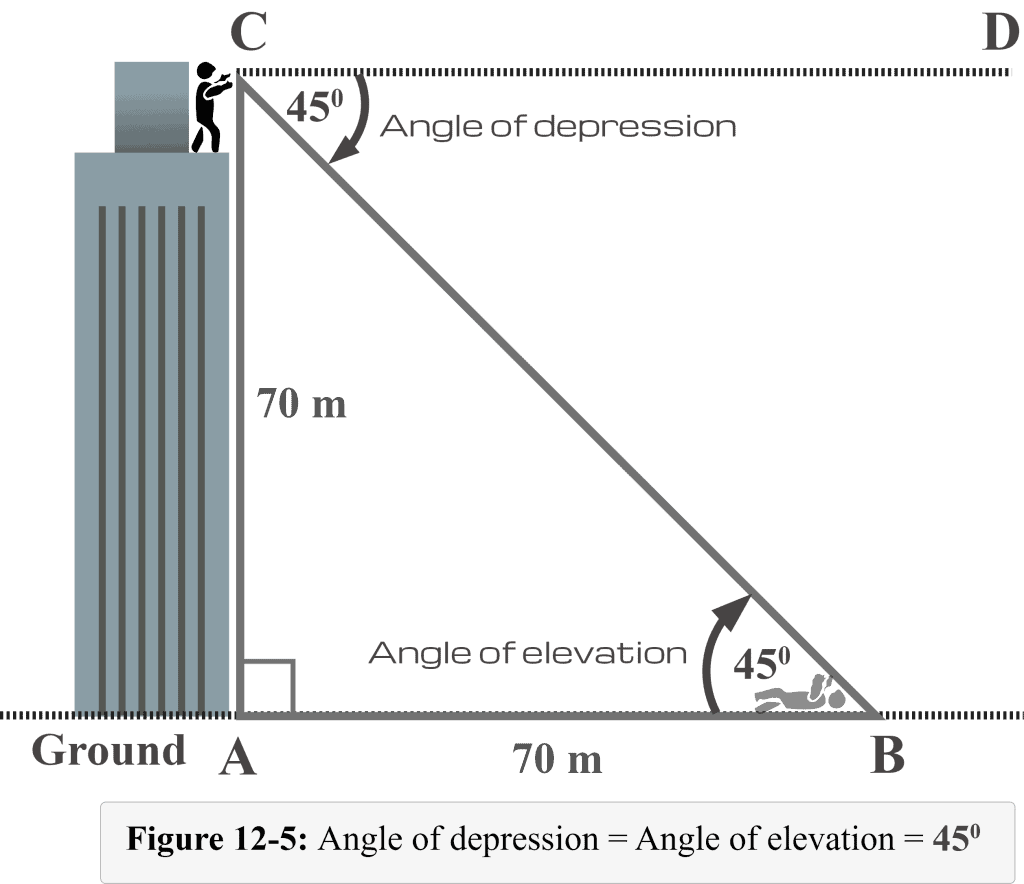
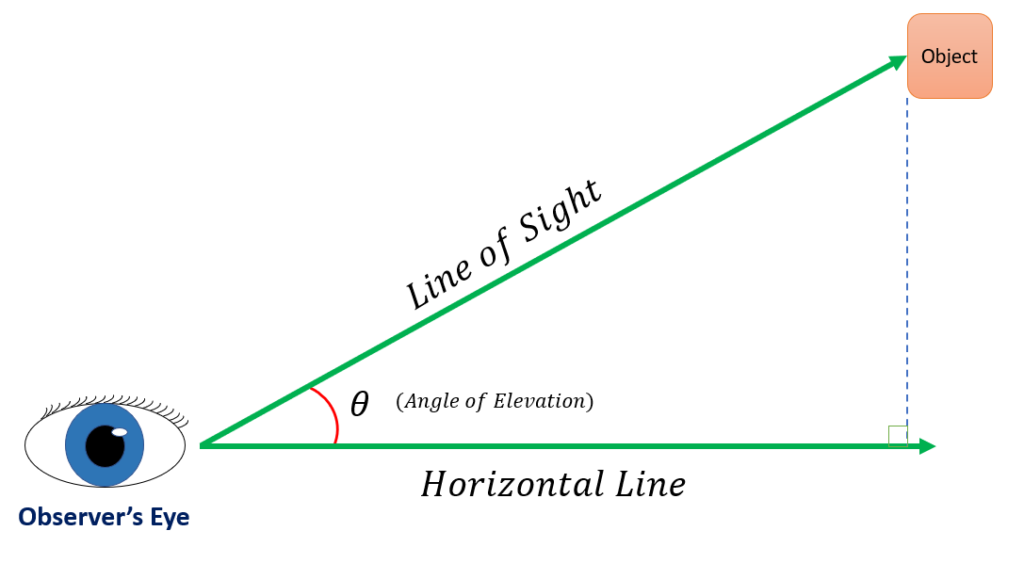
How do you draw an angle of elevation?
To draw an angle of elevation, start from a horizontal line representing the observer's line of sight and measure the angle upwards from this line to the point of interest.
How do you draw an angle of depression?
To draw an angle of depression, start from a horizontal line representing the observer's line of sight and measure the angle downwards from this line to the point of interest.