Biology unit 7 and 8
 Call Kai
 Learn
Learn Practice Test
 Spaced Repetition
 Match
Match Flashcards
 Knowt Play
1/106

There's no tags or description
Looks like no tags are added yet.
Name | Mastery | Learn | Test | Matching | Spaced | Call with Kai |
|---|
No analytics yet
Send a link to your students to track their progress
107 Terms
Balanced Diet
Consists of all the food groups in the correct proportions
Carbohydrate Function
Source of Energy
Protien function
Growth and repair
Lipid function
Insulation and energy storage
Fibre function
Provides bulk (roughage) for the intestine to push food through
Vitamins function
needed in small quantities to mantain health
Water function
Needed for chemical reactions to take place in cells
Mineral function
needed in small quantities to mantain health
Vitamin C function
Form an essential part of collagen protien which makes up skin hair gums and bones
Vitamin D function
Helps the body absorb calcium which is needed for Strong bones and teeth
Calcium function
Needed for strong teeth and bones and involved in blood clotting
Iron function
Needed to make haemoglobin, pigment in red blood cells which transports oxygen
Carbohydrates sources
Bread, cereal, pasta, rice, potatoes
Protien sources
Meat, fish, eggs, pulses, nuts
Lipids Sources
Butter, oil, nuts
Dietary Fibre sources
Vegetables, whole grains
Vitamins sources
Fruits and vegetables
Minerals sources
Fruits and vegetables, meats, dairy products
Water sources
water, juice, milk, fruit and vegetables
Vitamin C sources
Citrus fruits, strawberries, green vegetables
Vitamin D sources
Oily fish, eggs, liver, dairy products, sunlight
Calcium sources
Milk, cheese, eggs
Iron sources
Red meat, liver, leafy green vegetables - spinach
Scurvy Causes
Vitamin C deficiency, lack of vitamin C in body for over 3 months
Rickets causes
Severe vitamin D deficiency
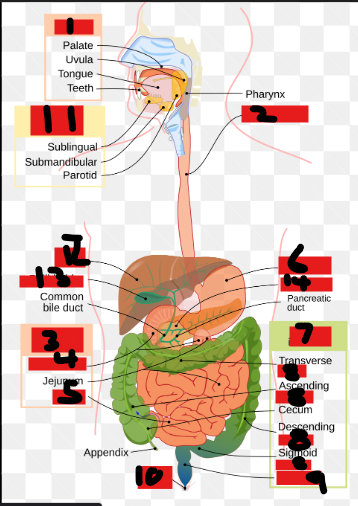
""
1)Mouth,
2)Oesophagus
3)Small Intestine
4)Duodenum
5)Ileum
6)Stomach
7)Large Instestine
8) Colon
9)Rectum
10)Anus
11)Salivary Gland
12) Liver
13)Gallbladder
14)Pancreas
Alimentary Canal
Organs in digestion through which food directly passes through
Ingestion
The taking in of substances, e.g food and drink, into the body
Digestion
The break down of food
Absorbtion
The movement of nutrients from the intestines into the blood
Assimilation
Uptake and use of nutrients by cells
Egestion
The removal of undigested food from the body as faeces
Mouth Function
Ingests food and teeth break it down into smaller pieces during mechanical digestion
Salivary Glands function
Secretes saliva into the mouth, enzyme amylase in saliva begins to digest starch into maltose, saliva lubricates food for easy swallowing
Oesophagus Function
Tube which connests mouth to stomach, Contractions force food downwards
Stomach function
churning of muscular stomach walls continues process of mechanical digestion, protease enzymes begin protein digestion, hydrochloric acid provides suitable pH for the enzymes and also destroys any pathogens in food
Liver Functions
Produces Bile which aids in digestion of fats and nuetralises stomach acids as it exits stomach
Gall Bladder Function
Bile is stored here before being released into duodenum via the bile duct
Pancreas Function
Amylase, Protease and lipase enzymes are produced here before being released into the duodenum
Duodenum function
Food enters the small intestine from the stomach here, acidic stomach contents are nuetralised by bile and become slightly alkaline, enzymes complete chemical digestion here
Ileum function
food and water are absorbed into the blood via villi in the lining of the ileum, part of the small intestine
Colon function
Remaining water is absorbed from food into the blood, solid waste left behind in the colon makes faeces
Rectum Function
stores faeces before egestion
Anus Function
Faeces leaves the body via anus, this is egestion
Physical Digestion
Breakdown of food into smaller pieces without chemical change to the food molecule
How does physical digestion help digestion overall
It increases the surface area of food for the action of enzymes in chemical digestion
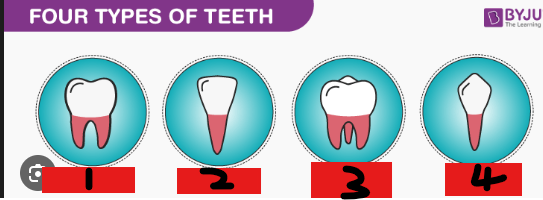
""
1)premolars
2)incisors
3)molars
4)canine
Enamel
Hard outer layer that protects the teeth
Dentine
Layer beneath the enamel which protects the nerves
Pulp
Soft internal tissue of tooth that contains nerve and blood vessels
Cement
Hard layer around the root that helps anchor it within the jaw
Where are teeth embedded?
In the bones and gums
Describe the structure of teeth
They have enamel…,dentine….,pulp….,nerves, blood vessels and cement…., the teeth is embedded in bone and gums
Function of incisors
bitting and cutting
Function of Canines
tearing, holding and biting
Function of molars/ premolars
ridges to chew and grind food
How does the stomach do physical digestion
Do stomach Churning: muscles contract to physically squeeze and mix the food with the strong digestive juices present
Functions of BILE
Alkali so it nuetralises HydroChloric coming from stomach as enzymes in small intestine have higher optimum pH than Stomach
Emulsification: breaks down larger droplets of fat into smaller ones, larger surface area allows lipase to chemically break down the lipid into fatty acids and glycerol quicker
How does Bile do physical digestion (name)
Emulsififcation
Chemical Digestion
Breakdown of large insoluable molecules into small soluble molecules
What is the role of chemical digestion in producing small soluble molecules which can be absorbed
Large insoluble molecules are unable to be absorbed through the wall of the small intestine
Small soluble molecules made from chemical digestion can easilly be absorbed into the surrounding capilleries
Amylase Function
breaks down starch to simple reducing sugars
Protease Function
Breaks down protien to amino acids
Lipase Function
Breaks down fats and oils to fatty acids and glycerol
Where is amylase secreted?
Salivary Gland and Pancreas
Where is Protease Secreted
Stomach and Pancreas
Where is Lipase Secreted
Pancreas
Where does Amylase Acts
Mouth and duodenum
Where does Protease act? (specific)
Stomach and duodenum
Where does Lipase act
Duodenum
Function of Hydrochloric Acid in Stomach
Kill harmful micro-organisms in food as it denatures the enzyes in their cells
Ensure conditions remain in optimum pH (very low) for its enzymes to ensure optimum enzyme activity eg Pepsin has optimum pH of 2
Describe the digestion of starch in the digestive system
Amylase breaks down starch to Maltose,
Maltase breaks down Maltose to glucose on the lining of the epithelium lining on the small intestine
Describe the digestion of protien
Pepsin breaks down protien in the acidic conditions of the stomach
Tryspin breaks down protien in the alkaline conditions of small intestine
How does Bile make food coming from the stomach suitable
Bile is an alkali mixture that nuetralises the acidic mixture of food and gastric juices entering the duodenum from the stomach to provide a suitable pH for enzyme action
Where are nutrients absorbed?
Small intestine
Where is water absorbed in the digestive system
Mostly small intestine but some is also from the colon
Explain the significance of Villi and Microvilli of increasing surface area in the small intestine
Massively increase Surface area, Allowing absorbtion to take place faster and more efficiently,
Structure of Villus
one cell thick wall- fast absorbtion, microvilli on surface- further increase surface area, finger like projections
Role of Capilleries in Villi
Transport glucose and amino acids away from small intestine in the blood
Lacteal role in Villi
Run through the center of the villi to transport fatty acids and glycerol away from the small intestine in the lymph
Function on Xylem
Transport water and mineral ions and support the plant
Function of Phloem
Transport Sucrose and Amino Acids
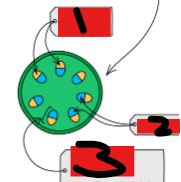
""
1) Phloem
2) Xylem
3) Vascular Bundle
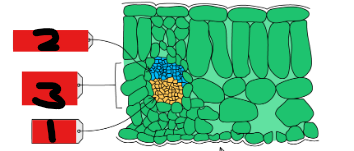
""
1)Phloem
2)Xylem
3)Vascular Bundle
Adaptations of Xylem
Thick walls with lignin
No cell content
Cells joint end to end with no cross walls to form a long continuous tube
How does having thick walls made of lignin help the xylem perform its function?
Helps support the plant
How does having no cell content help the xylem perform its function?
Allows free passage of water
How does cells joint end to end with no cross walls to form a long continuous tube help the xylem perform its function?
Allows free passage of water
""
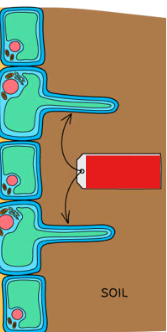
Root hair cell
Function of Root hair cells
Absorb water and minerals from the soil through osmosis
How does water reach the mesophyll cells? (pathway)
Root hair cells, Root cortex cells, Xylem, Mesophyll cells
Plan an experiment to test the pathway of water in plants using a dye
Place a plant stem into a beaker of water that has had a stain added to it
Leave for a few hours until the leaves of the plant turn the same colour as the dyed water- This shows that the dye has travelled all the way up the xylem
Cut a cross section of the stem and view the position of the coloured dye, which will correspond with the location of the xylem vessels
Transpiration
The loss of water vapour from leaves
How does transpiration happen
Water evaporates from the surface of the mesophyll cells into the air spaces then diffuses out of the leaves through the stomata as water vapour
How does temperature effect transpiration and why?
Increases the rate of transpiration as particles have higher kinetic energy so transpiration occurs at a faster rate as water molecules evaporate and diffuse at a faster rate
How does humidity effect transpiration and why?
Decreases transpiration as when the air is saturated with water molecules the concentration gradient is lower so less diffusion out so less water is lost
How does wind speed effect transpiration and why?
Increases transpiration as high wind speed moves the water molecules arround the leaf which have recently transpired so there is a higher concentration gradient increasing water loss
Why does wilting happen
If more water evaporates away from the leaf then gained in the soil wilting will happen
How does wilting happen
Plant cells lose water so lose turgidity so the strength of the cell walls can no longer support the plant and it starts to collapse
How does water move up in xylem
Water moves upward in the xylem due to transpiration pull that draws up a column of water molecules held togethor by forces of attraction between water molecules