Photosynthesis and Metabolic Diversity: Light Reactions, Carbon Fixation, and Organism Types
 Call Kai
 Learn
Learn Practice Test
 Spaced Repetition
 Match
Match Flashcards
 Knowt Play
1/23

There's no tags or description
Looks like no tags are added yet.
Name | Mastery | Learn | Test | Matching | Spaced | Call with Kai |
|---|
No analytics yet
Send a link to your students to track their progress
24 Terms
What are the two main types of reactions in photosynthesis?
Light-dependent reactions and light-independent reactions.
What is the main purpose of light-dependent reactions?
To convert light energy into chemical energy (ATP and NADPH).
What do light-independent reactions use to produce sugar?
ATP and NADPH are used to reduce CO2 to sugar via the Calvin-Benson cycle.
What is the difference between oxygenic and anoxygenic photosynthesis?
Oxygenic photosynthesis produces O2 (e.g., plants, algae), while anoxygenic does not (e.g., purple sulfur bacteria).
What organisms perform oxygenic photosynthesis?
Plants, algae, and cyanobacteria.
What organisms perform anoxygenic photosynthesis?
Purple sulfur bacteria and green sulfur bacteria.
What is photophosphorylation?
The process of generating ATP from light energy during photosynthesis.
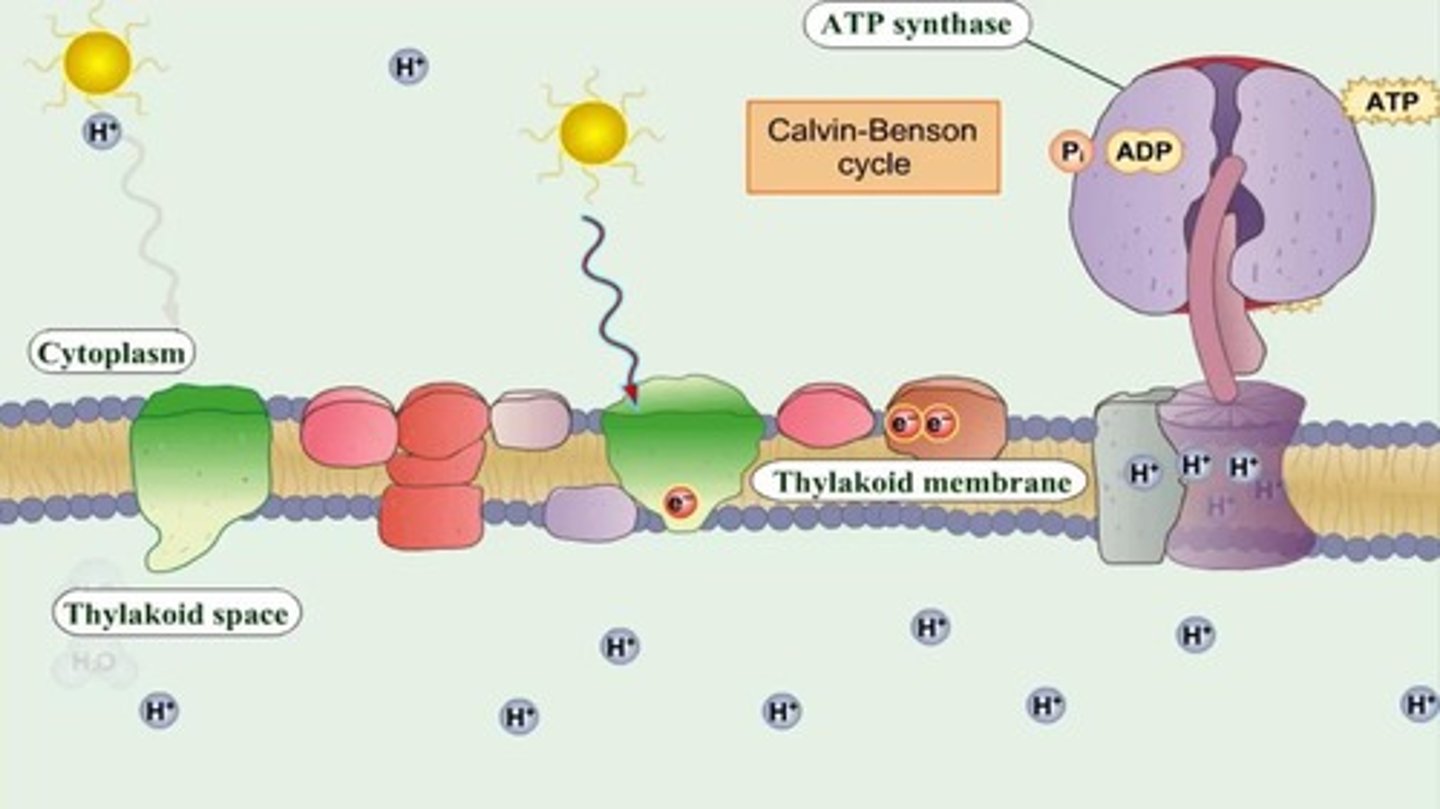
What is the Calvin-Benson cycle?
A series of biochemical reactions that fix CO2 into sugar using ATP and NADPH.
What are phototrophs?
Organisms that use light energy to drive ATP production.
What are photoautotrophs?
Organisms that use light energy to fix CO2 into sugar.
What distinguishes photoheterotrophs from photoautotrophs?
Photoheterotrophs use organic compounds as carbon sources, while photoautotrophs use CO2.
What are chemoautotrophs?
Organisms that obtain energy from inorganic chemicals and use CO2 as a carbon source.
What are chemoheterotrophs?
Organisms that obtain energy and carbon from organic chemicals.
What is the role of chlorophyll in photosynthesis?
Chlorophyll captures light energy needed for photosynthesis.
Where does photosynthesis occur in eukaryotic cells?
In the thylakoids of chloroplasts.
What is the significance of ATP in cellular energy production?
ATP serves as the primary energy currency of the cell.
How do photoautotrophs differ in oxygen production?
Oxygenic photoautotrophs produce O2, while anoxygenic photoautotrophs do not.
What is the energy source for chemoautotrophs?
Inorganic chemicals.
What types of organisms are included in chemoheterotrophs?
Animals, protozoa, fungi, and bacteria.
What is the primary carbon source for photoautotrophs?
CO2.
What is the environmental requirement for photoautotrophs?
They require aerobic or anaerobic environments depending on the type.
What is the main difference between cyclic and noncyclic photophosphorylation?
Cyclic photophosphorylation recycles electrons, while noncyclic generates NADPH and ATP.
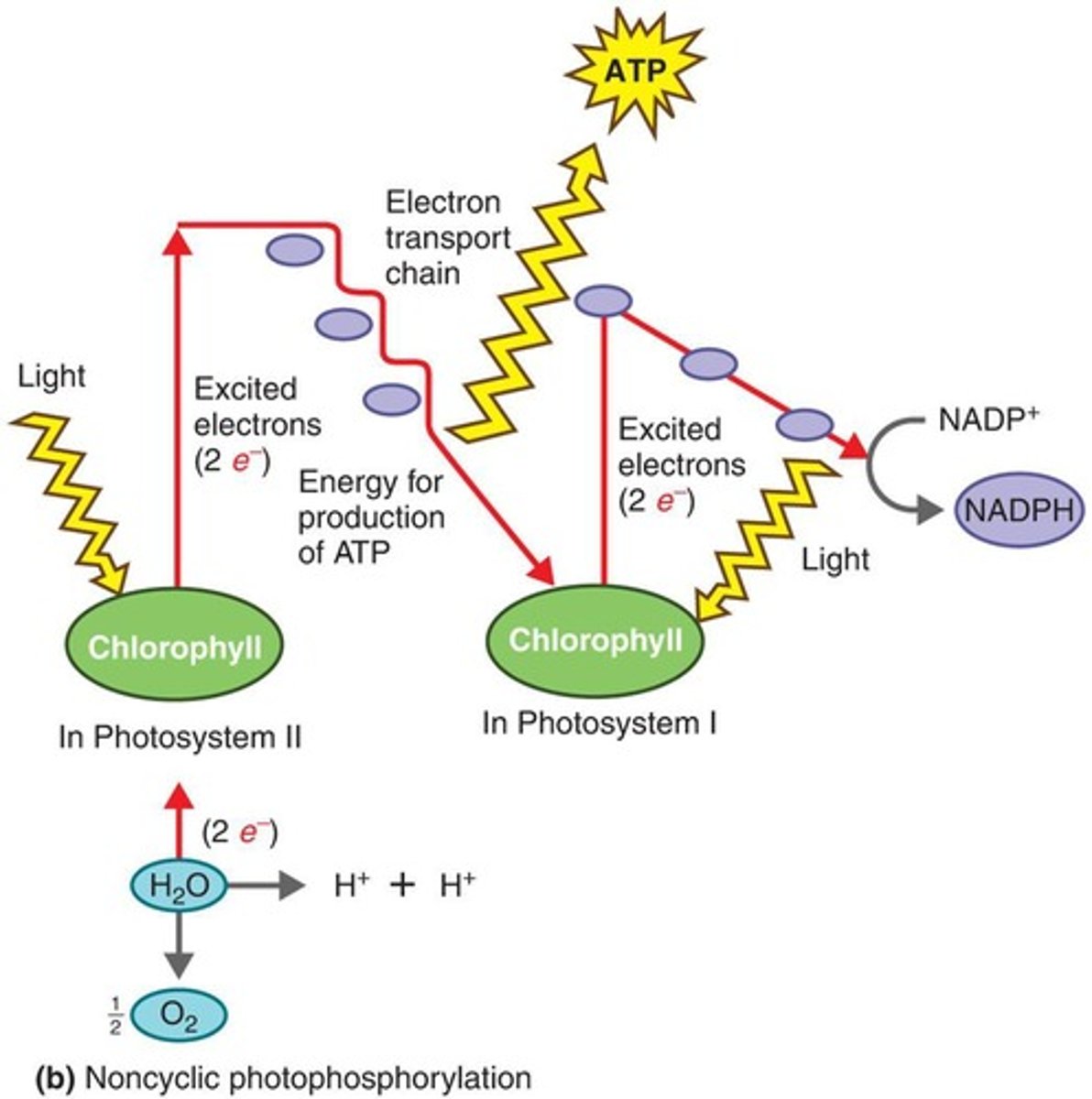
What is the role of NADPH in photosynthesis?
NADPH provides reducing power for the Calvin-Benson cycle.
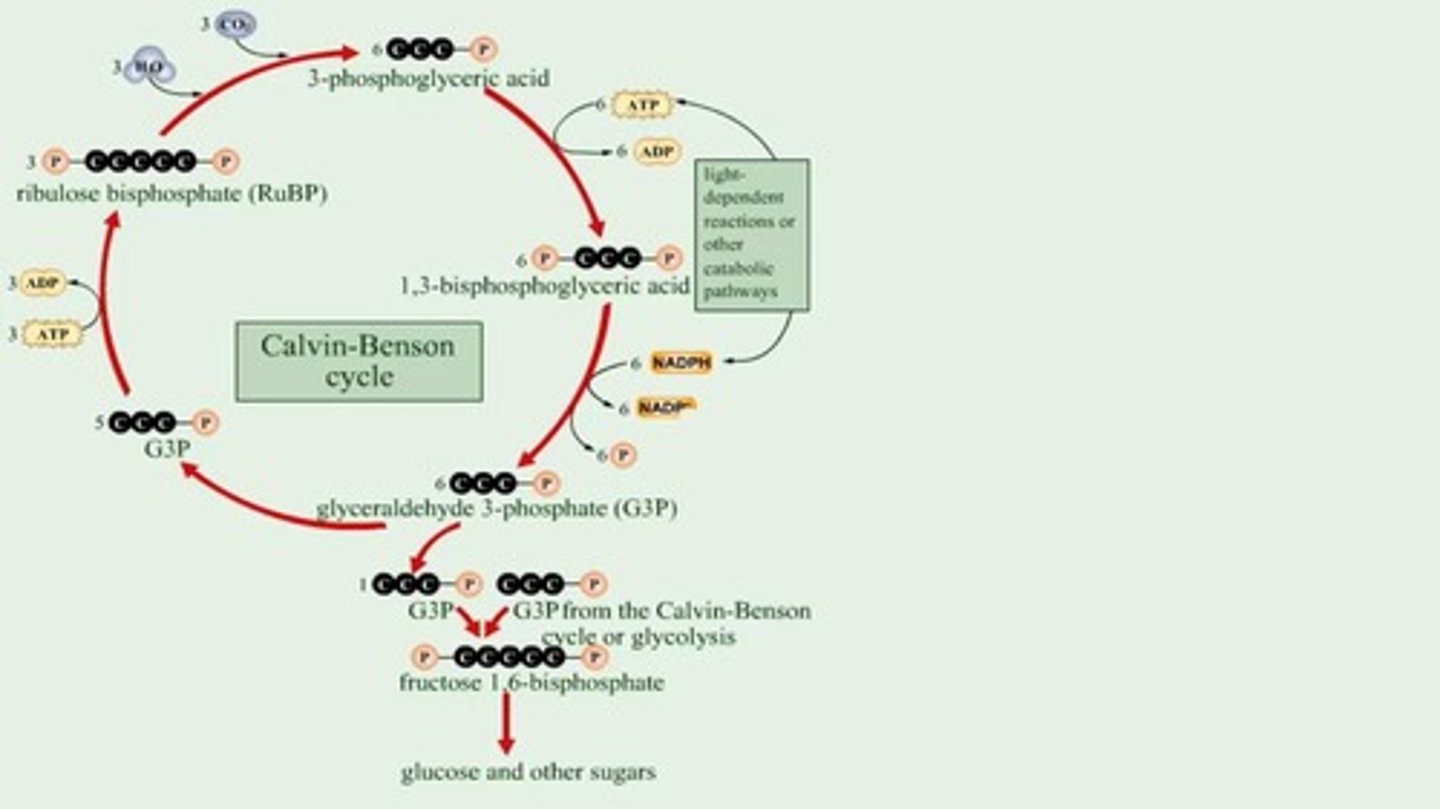
What is the significance of the light-independent reactions?
They utilize ATP and NADPH to convert CO2 into glucose.