Module 9 - Novel Entities
 Call Kai
 Learn
Learn Practice Test
 Spaced Repetition
 Match
Match Flashcards
 Knowt Play
1/45

There's no tags or description
Looks like no tags are added yet.
Name | Mastery | Learn | Test | Matching | Spaced | Call with Kai |
|---|
No analytics yet
Send a link to your students to track their progress
46 Terms
What is a 'novel entity'?
New substances, new forms of existing substances, and modified life forms that have the potential for unwanted geophysical and/or biological effects.
What are the three criteria for a pollutant to be considered a planetary boundary for novel entities?
1. The pollution must be irreversible or very difficult to reverse. 2. The disruptive effect is only detectable at a global scale. 3. The pollution must disrupt Earth system processes.
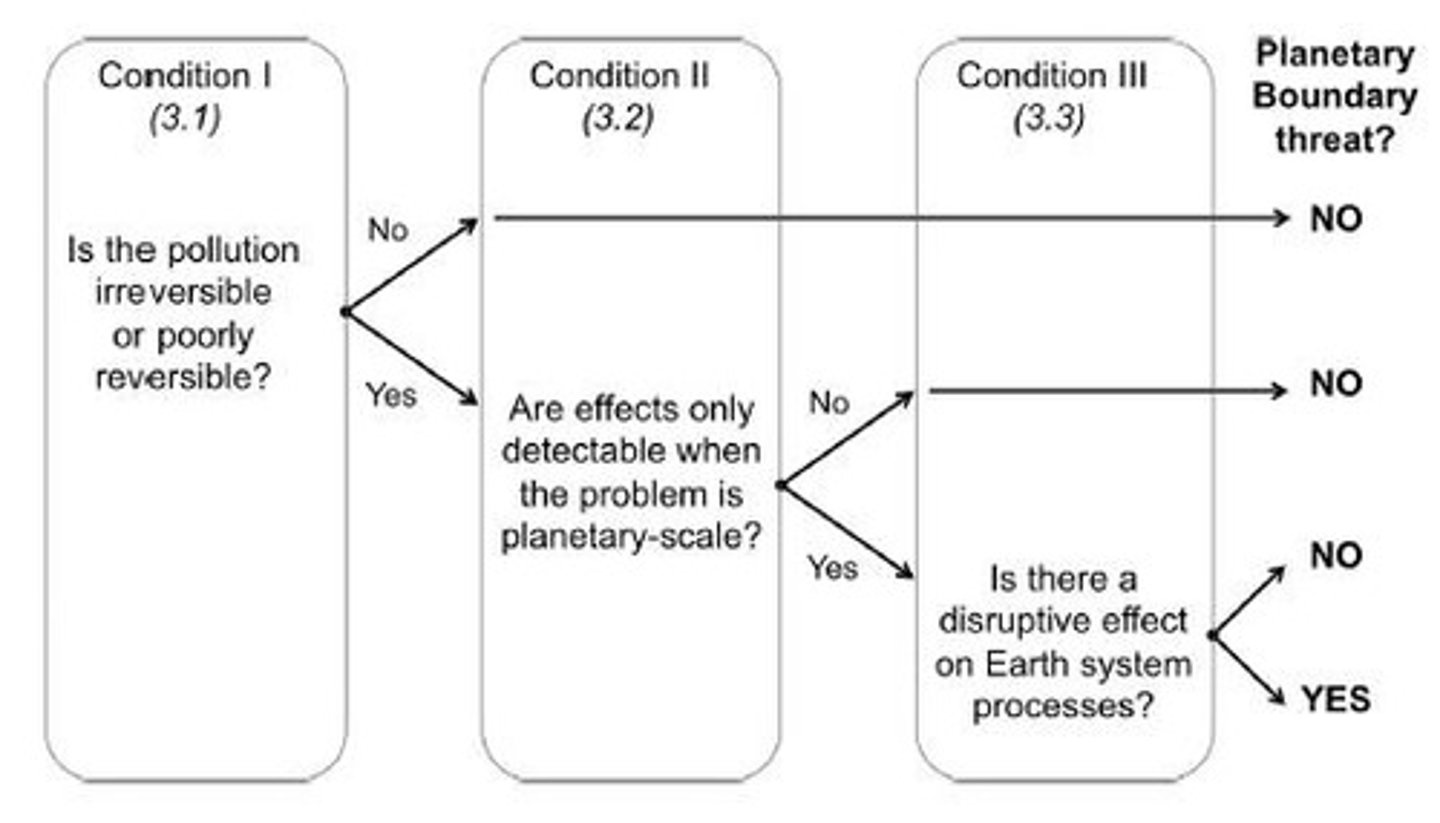
Why have comprehensive planetary boundaries not yet been defined for novel entities?
There is still ongoing research and debate regarding the impacts and assessments of various novel entities.
How does plastic pollution meet the criteria for a planetary boundary?
Plastic pollution is widespread, difficult to reverse, and disrupts Earth system processes.
What is the estimated amount of plastic waste entering the ocean each year?
Approximately 8 million metric tonnes.
What percentage of plastics produced have not been recycled?
Estimated 90%.
What is the 'Great Pacific Garbage Patch'?
The largest floating island of plastic in the ocean, with a significant portion originating from marine sources.
What are the scenarios under which the disruptive effects of pollution are only detectable at a global scale?
1. Contaminant concentrations are nearly homogeneous globally. 2. Effects are rapidly distributed. 3. Effects are observable only at a global scale. 4. There is a time delay between exposure and effects.
What are the direct effects of marine plastic pollution on organisms?
Direct harm to organisms, indirect effects as a vector for other pollutants, and systemic effects across ecosystems.
How does marine plastic pollution link to climate change?
Microplastics ingested by copepods affect carbon storage, and sunlight accelerates plastic breakdown, releasing methane.
What is the significance of the ratio between predicted environmental concentration and predicted no effect concentration (PEC/PNEC)?
A ratio of 1 indicates that the planetary boundary has likely been crossed.
What are some immediate high-impact priorities for addressing plastic pollution?
1. Development of effective waste management infrastructure. 2. Cease plastic trade without sufficient waste management investment. 3. Strict legislation on fishing and waste management.
What is the main source of marine plastic pollution?
Coastal areas in countries with mismanaged waste.
What are some solutions to the plastic pollution problem?
Solutions should address the entire life cycle of plastics, including policy changes and consumer choices.
What percentage of chemicals manufactured today have not been assessed for environmental threats?
At least 80%.
What are the impacts of plastic pollution on Earth system processes?
It alters food webs, habitats, and biogeochemical flows.
What is the role of scientists in collecting data about plastic pollution?
Scientists collect data to understand the extent and effects of plastic pollution on the environment.
What is the relationship between plastic pollution and biosphere integrity?
Plastic pollution disrupts ecosystems, which is a key component of biosphere integrity.
What is the significance of plastics as a geologic marker of the Anthropocene?
Plastics are ubiquitous and indicate significant human impact on the planet.
What is the importance of understanding the global picture of plastic pollution?
It helps to develop high-impact, systemic solutions rather than small-scale, low-impact measures.
What has happened to the use of materials in the last forty years according to the United Nations Environmental Program?
The use of materials has tripled.
What is the most visible pollutant in the ocean?
Plastic.
What percentage of plastics produced are derived from virgin fossil stocks?
Over 90%.
How much plastic ends up in the ocean each year?
More than 8.8 million tons.
What is the estimated percentage of plastic that is recycled worldwide?
Only nine percent.
What are microplastics?
Small plastic particulates below 5mm in size.
What are primary microplastics?
Plastics directly released into the environment in the form of small particulates.
What are secondary microplastics?
Microplastics that originate from the degradation of larger plastic items.
What is 'ghost gear'?
Lost fishing nets and lines that kill marine life.
What is the estimated degradation time for fishing lines?
600 years.
What is the estimated degradation time for plastic bottles?
450 years.
What is the largest industry contributing to plastic production?
Packaging, accounting for 42%.
What are the three criteria for a pollutant to be designated a planetary boundary?
Irreversibility, global scale detectability, and disruption of Earth system processes.
What is the Great Pacific Garbage Patch?
The largest floating island of plastic in the ocean.
What proportion of ocean plastics is estimated to come from marine sources?
20-30%, with the Great Pacific Garbage Patch having more than 52% from marine sources.
What is the suggested planetary boundary for novel entities?
The ratio between predicted environmental concentration versus a predicted no effect concentration (PEC/PNEC) = 1.
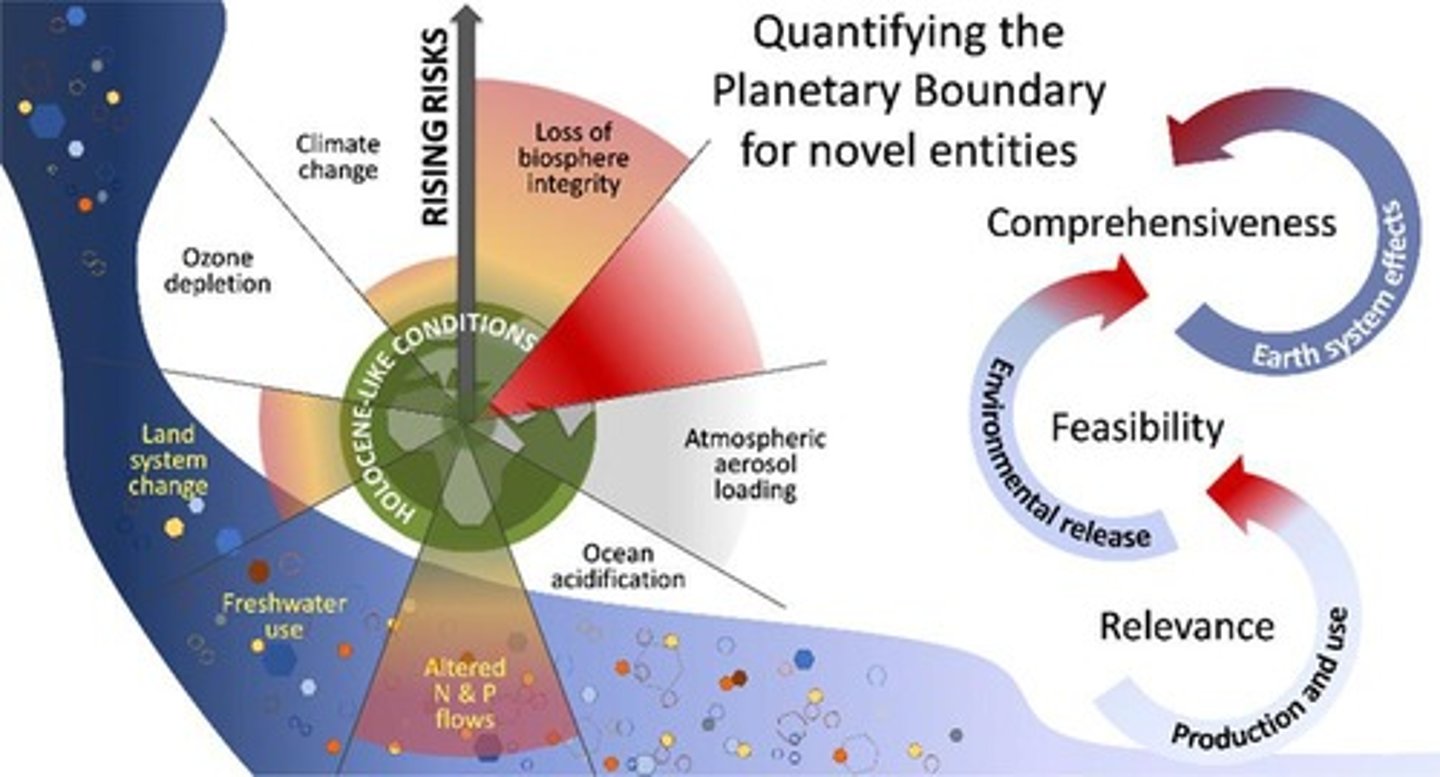
What are some immediate high-impact priorities to address plastic pollution?
Develop effective waste management infrastructure and cease plastic trade without sufficient investment in waste management.
What is the impact of microplastics on ecosystems?
They disrupt ecosystems and food chains.
What is the estimated percentage of plastic packaging material value lost to the economy?
95%.
What is the impact of sunlight on plastics in the ocean?
It accelerates disintegration, releasing methane, a powerful greenhouse gas.
What is the role of plastics in climate change?
They interfere with carbon storage and ice formation in Arctic waters.
What is the significance of the 2022 paper regarding novel entities?
It proposed control variables for assessing the impact of novel entities on Earth processes.
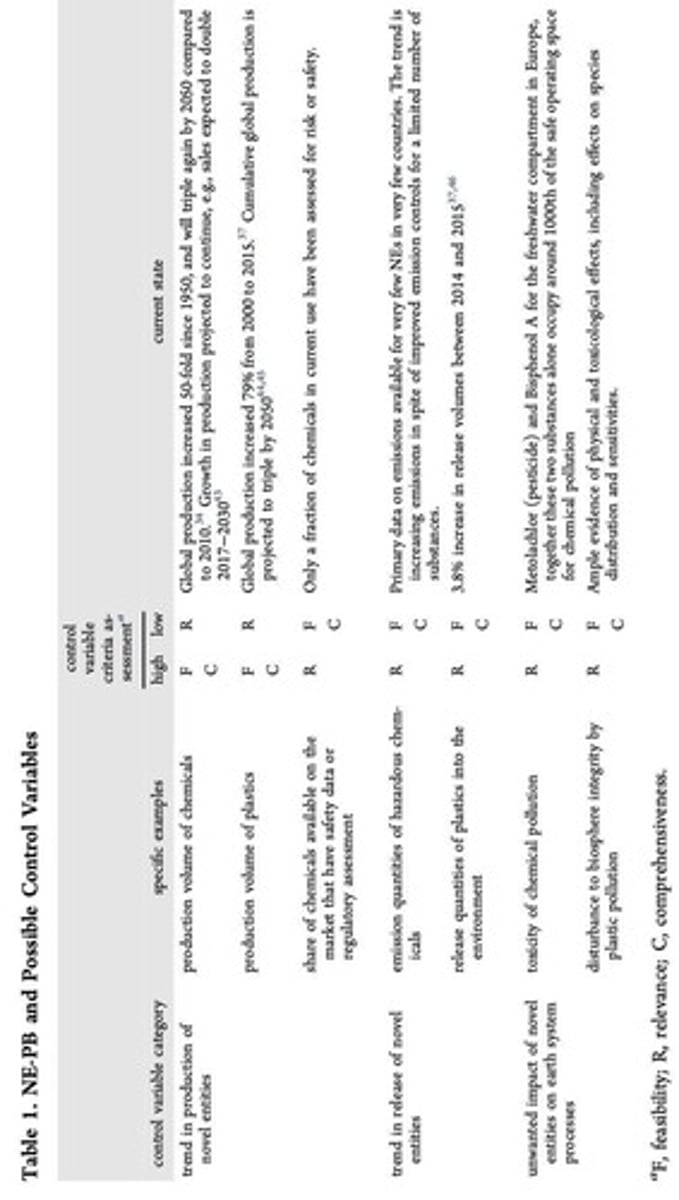
What percentage of global plastic production is left in dumps or the environment?
60%.
What is the relationship between plastic pollution and biodiversity?
Plastic pollution impacts biodiversity loss and ocean acidification.
What is the expected trend for plastic production over the next 20 years?
Plastic production is expected to double.
What are the main sources of microplastics?
Tyres, synthetic textiles, marine coatings, and personal care products.