Colour, depth, motion
 Call Kai
 Learn
Learn Practice Test
 Spaced Repetition
 Match
Match Flashcards
 Knowt Play
1/84

There's no tags or description
Looks like no tags are added yet.
Name | Mastery | Learn | Test | Matching | Spaced | Call with Kai |
|---|
No analytics yet
Send a link to your students to track their progress
85 Terms
What are three proposed functions of colour vision?
Frugivory, sexual signalling, and social signalling
How may colour vision help frugivory?
it helps distinguish ripe fruit from foliage
How may colour vision assist sexual signalling?
It helps detect colour-based mate cues
How is colour vision involved in social signalling?
Detecting emotional changes like blushing and anger
What is the difference between trichromats and dichromats?
Trichromats have three cone types; dichromats have two
What type of information does vision rely on?
Fluctuations in electromagnetic radiation
What is the relationship between wavelength and frequency?
They are inversely related
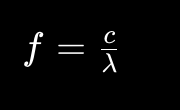
What part of electromagnetic radiation can humans see?
A limited visible spectrum
Why is the visible spectrum important biologically?
It overlaps with the peak intensity of sunlight reaching Earth
What determines visible light colour physically?
Wavelength
Is perceived colour soley determined by wavelength?
No
What is colour psychologically?
A percept produced by visible electromagnetic radiation
Why is colour considered a perceptual construct?
Because colour is created by the brain, not directly “in” wavelengths
Who proposed trichromatic theory?
Helmholtz
What did Helmholtz’s colour matching experiments show?
At least three wavelengths are needed to match colours
What condition must the three wavelengths satisfy in colour matching?
One wavelength cannot be recreated by mixing the other two
What physiological evidence supports trichromatic theory?
Three con types in the retina
What are the three cone types sensitive to?
Long, medium, and short wavelengths
Why is it misleading to call cones “red, green, blue” cones?
They respond to wavelengths, not perceptual colours themselves
What broader issue does colour naming connect to?
Language and colour perception
Who proposed opponent processing theory?
Hering
Why was trichromatic theory insufficient on its own?
It could not easily explain colour aftereffects or colour blindness patterns
What are the two opponent colour channels?
Red-green and blue-yellow
What additional channel did Hering propose?
A monochrome light-dark channel
Why don’t people typically have “reddish-green” perception?
Because colours are processed opponently
How does opponent processing explain afterimages?
Fatigue in one channel causes the other colour to dominate
Where does trichromatic processing occur?
Retina/ cones
Where do opponent processes occur?
LGN and later visual pathways
Why is depth perception important?
For reaching, grasping, catching, avoiding danger, and interacting with the world
What is surprising about depth perception?
A 3D world is perceived from 2D retinal images
What are the “four Fs” mentioned in relation to depth perception?
Flight, flight, food and reproduction
What is convergence?
Eye movements inward when focusing on nearby objects
How can accommodation provide depth information?
Lens focusing requires muscle changes that provide distance feedback
What limitation affects convergence and accommodation theories?
They only provide one depth estimate at a time
What is binocular overlap?
Overlapping visual fields from both eyes
What is stereoscopic vision/ stereopsis?
The ability to perceive depth and 3D structure by merging slightly different images from each eye
Why do predators tend to have forward-facing eyes?
Better stereoscopic depth perception
Why do prey animals often have side-facing eyes?
Wider panoramic vision for threat detection
What trade-off exists in eye placement?
Depth perception vs panoramic field of view
What is binocular disparity?
Differences between left and right eye images
Why can stereopsis not occur in the retina or LGN?
Left and right eye pathways remain separate there
What is the earliest cortical area where stereopsis could occur?
V1
Do V1 disparity signals automatically create depth perception?
No
What did Cumming & Parker (1997,2000) argue?
V1 signals disparity but not depth itself?
Which brain regions may create conscious depth perception?
Dorsal/parietal areas, possibly V2
Is stereopsis alone always useful?
No, it is limited without other cues
What did Smith & Scott-Samuel (1998) find about stereopsis alone?
Poor sensitivity to motion defined purely by stereopsis
What did Morgan’s blackberry-picking example show?
People with one eye patched had more cuts but picked similar amounts
What task is stereopsis especially useful for?
Fine manipulation like threading needles
Approximately what percentage of people have moderate-to-poor stereopsis?
32%
Why are two eyes more sensitive than one?
Better signal-to-noise ratio
What unusual function may two eyes provide according to Changizi & Shimojo (2008)?
Seeing through foreground clutter
What evolutionary explanation may account for two eyes
Bilateral symmetry
What is accommodation?
Lens focusing from different distance
What is occlusion?
One object blocking another
Why is occlusion a strong depth cue?
Blocked objects are perceived as father away
What limitation existed in medieval art?
Weal use of depth cues besides occlusion
What major advance did Renaissance art introduce?
Linear perspective
What is linear perspective?
Parallel lines appear to converge with distance
What are texture gradients?
Textures becoming denser/ smaller with distance
What is “height in image’ as a cue?
Objects higher relative to the horizon often appear father away
What is motion parallax?
Nearby objects move faster across the retina than distant ones during movement
In motion parallax, how do nearby objects appear to move?
Faster and opposite the observer’s movement
What is aerial perspective?
Distance objects appear bluish/ hazy because blue light scatters
Can the “light from above” assumption be altered?
Yes, through haptic learning
According to Sun & Perona (1998) is assumed lighting exactly vertical?
No, slightly offset
What happens when cast shadows are removed from moving objects?
Motion interpretation changes dramatically
What is forced perspective?
Manipulating viewpoint to distort perceived size/ depth
Why does forced perspective only work from certain viewpoints?
The illusion depends on precise geometric alignment
What is the Ames room illusion?
A distorted room appearing normal from one viewpoint
What do impossible figures demonstrate?
Limits and assumptions of visual interpretation
What is Sugihara famous for?
Building physical objects that appear impossible from specific viewpoints
What happens when Sugihara objects rotate?
Perception suddenly flips into the real structure
Why is motion perception important?
Important things and threats move
Why is change fundamental to consciousness?
Without change, time perception loses meanining
How can motion be detected neurally?
By delaying one signal and comparing it with another
What condition makes a motion detector neuron fire?
Simultaneous arrival of delated and direct inputs
What is motion opponency?
Comparing neurons tuned to opposite motion directions
Why is motion opponency useful?
It sharpens direction signals
What does microstimulation of MT do?
Alters motion perception
What did Tootell et al (1995) link V5 to?
Motion aftereffects
What is the aperture problem?
Local motion signals are ambiguous within limited receptive fields
What is optic flow?
Global movement patterns across the visual field during movement
Which brain areas process optic flow?
MST, V6, VIP and related dorsal areas
What is vection?
Illusory self-motion caused by visual movement