1.Pre-historic period
 Call Kai
 Learn
Learn Practice Test
 Spaced Repetition
 Match
Match Flashcards
 Knowt Play
1/30

There's no tags or description
Looks like no tags are added yet.
Name | Mastery | Learn | Test | Matching | Spaced | Call with Kai |
|---|
No analytics yet
Send a link to your students to track their progress
31 Terms
paleolithic
30k-10k BC. OLD STONE AGE; homo sapiens or cro-magnon man. food and fertility were primary concerns; they though in an abstract way
flint
chipped stones; were tools for writing
mousterian
what sub period of the paleolithic era used pigments for bodily ornamentation?
aurignacian
cave paintings were first done around what sub period of paleolithic era?
magdalenian
last of hunter-gatherers; engravings of animals on bone
animistic
magic or rituals
glacial age
people were NOMADIC HUNTERS AND GATHERERS
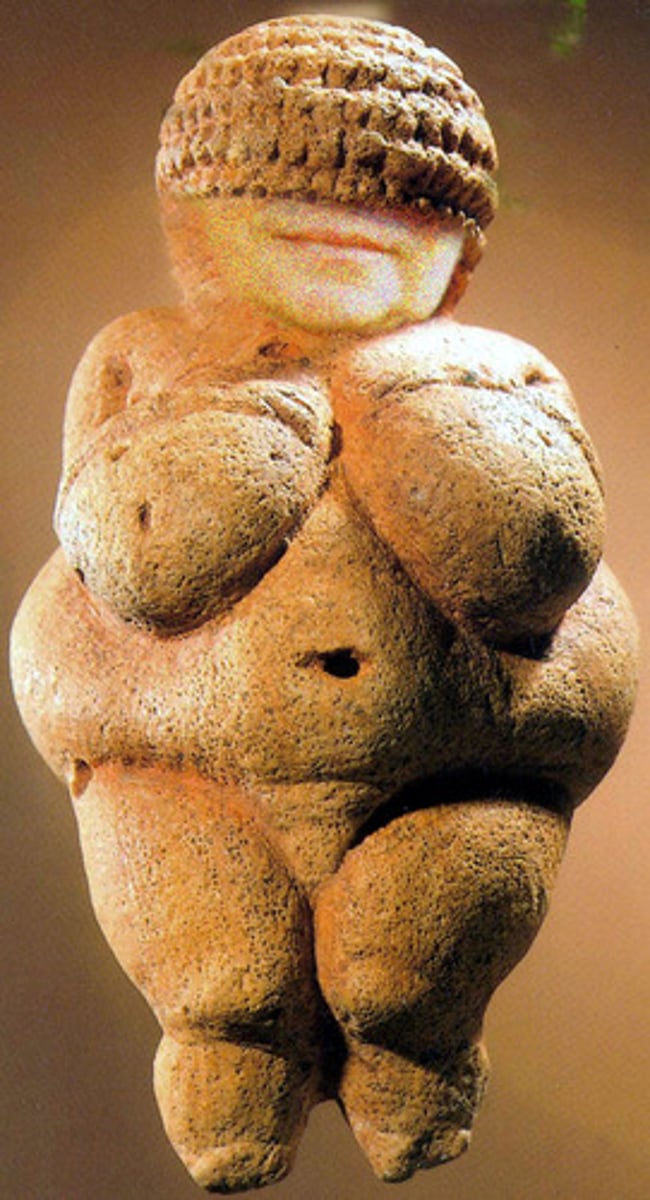
venus of willendorf
votive sculpture found in austria; about 4 1/2" tall. made of limestone. subject is a FEMALE OF A CHILD-BEARING BUILT; w/c meant she has life sustaining qualities
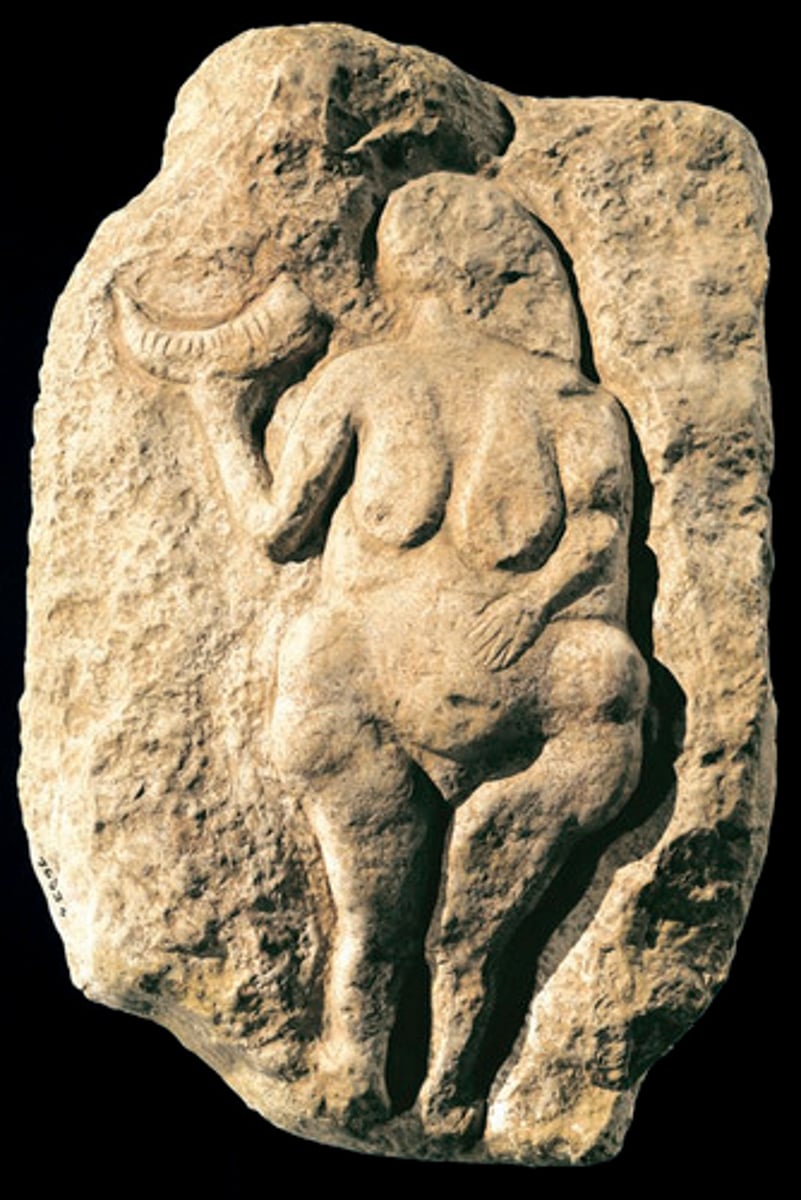
venus of laussel
a stone carving of a woman HOLDING AN ANIMAL SCORN where cornucopia came from. the scorn symbolized power over nature
votive sculpture
SMALL SCULPTURES usually made of bone, ivory, clay and stine. made either 'in the round' or relief style
cornucopia
symbol of FERTILITY and ABUNDANCE
mesolithic age
10k-8k BC. MIDDLE STONE AGE with very few contribution. saw BEGINNINGS OF SETTLED COMMUNITIES and FARMING. age where BOW and ARROW was invented. produced POTTERY for food storage and started to DOMESTICATE animals. glacial ice and certain food disappeared
pottery
made in a HAND-MOLDED and COILED way. it became a standard prod in neolithic age
sgraffito
incisions in pottery
rock paintings
similar to the paleolithic cave paintings only these were moved to OUTDOORS and VERTICAL CLIFFS. subjects were usually human objects in highly stylized stick figures
neolithic age
7k-3k BC. NEW STONE AGE. permanent settings began. VILLAGES started to develop. the use of MUD BRICKS to construct their houses. AGRICULTURE also started in this age
pottery
made of kilning; used mostly for FOOD STORAGE. was painted and decorated
vessels
used for STORAGE AND COOKING in the neolithic age
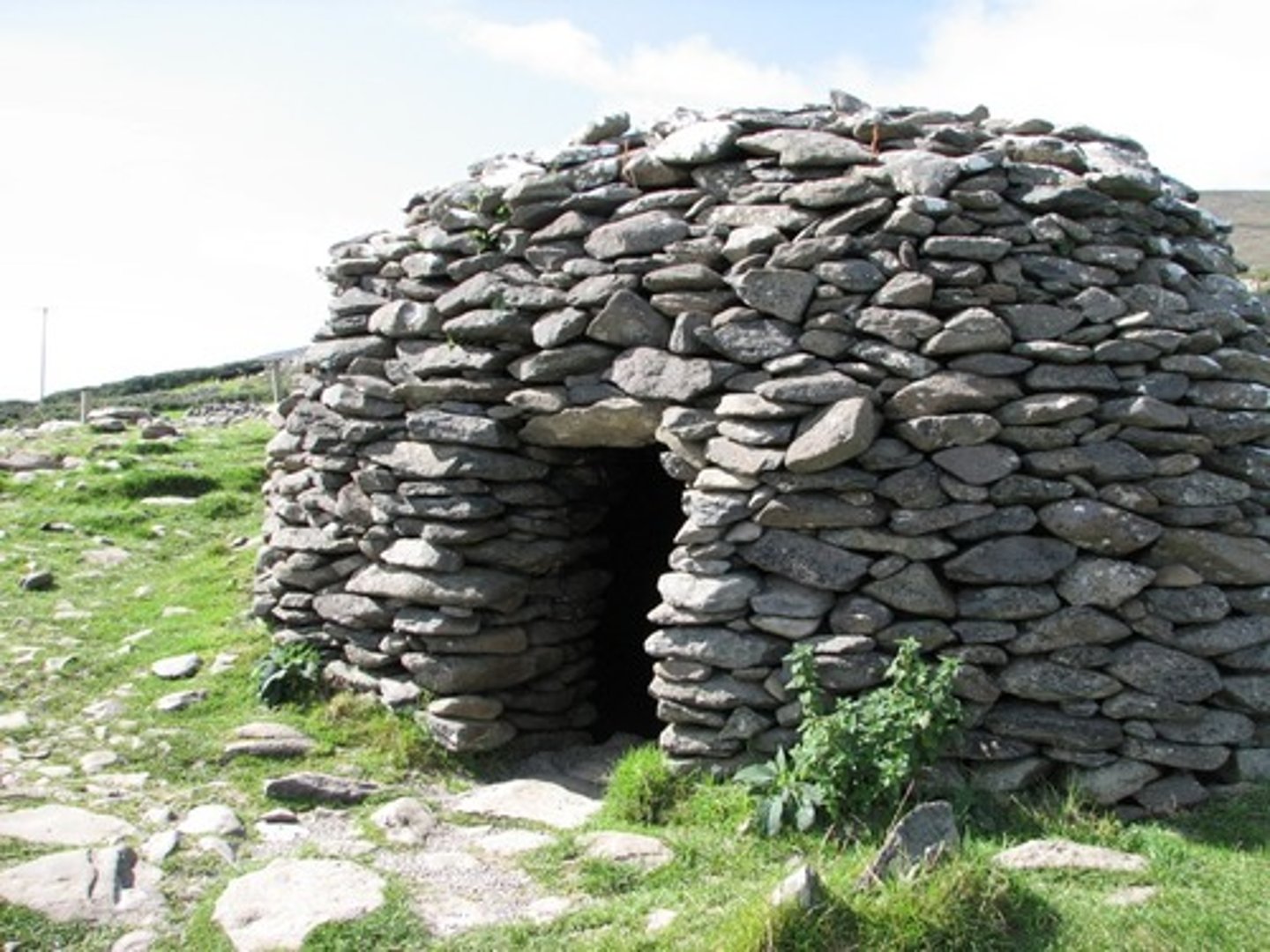
beehive hut
tribe dwellings that can be found in ireland and scotland. made from a CIRCLE OF STONES TOPPED WITH A DOMED ROOF
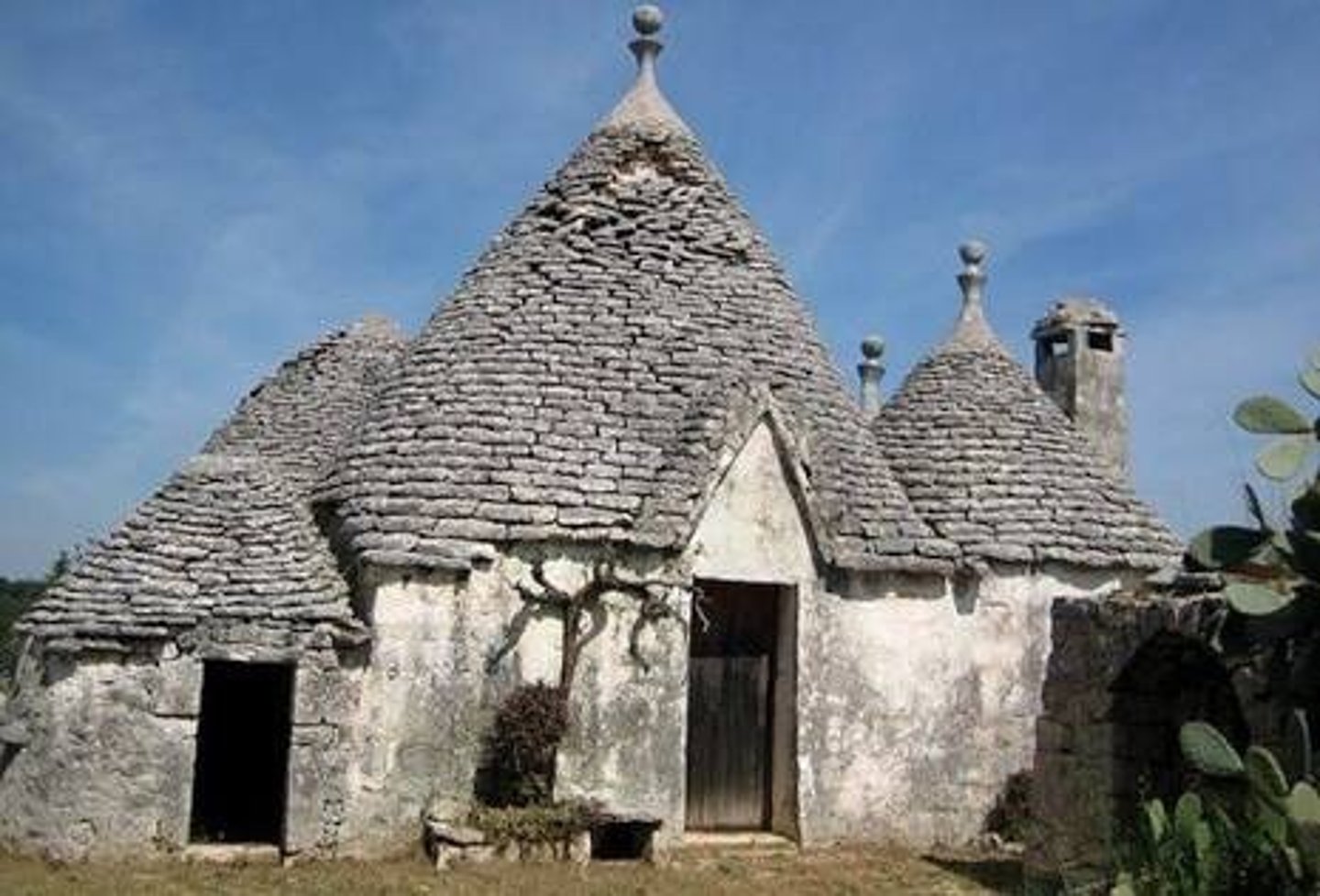
trullo
CONICAL, STONE ROOFED dwelling; unique to the region of puglia in southeastern italy. DRY WALLED, rough size, sheltered with CORBELLED ROOF
dabbing
meaning dry, ROUGHLY PLASTERED WALLS
megalith
LARGE STONE; used to construct a structure/monument. can be alone or combined with other stones; assembled without a mortar
menhir
large, SINGLE UPRIGHT STANDING STONE; symbol of FERTILITY. the stone is associated with an erected penis penetrating the ground associated with female, hence called mother earth
dolmens
FREE STANDING CHAMBER/standing stones covered by capstones as lid; used for BURIAL and covered by mounds
orthostat
upright slab forming part of a structure. it sometimes found forming the entrance to a chamber tomb
chromlech
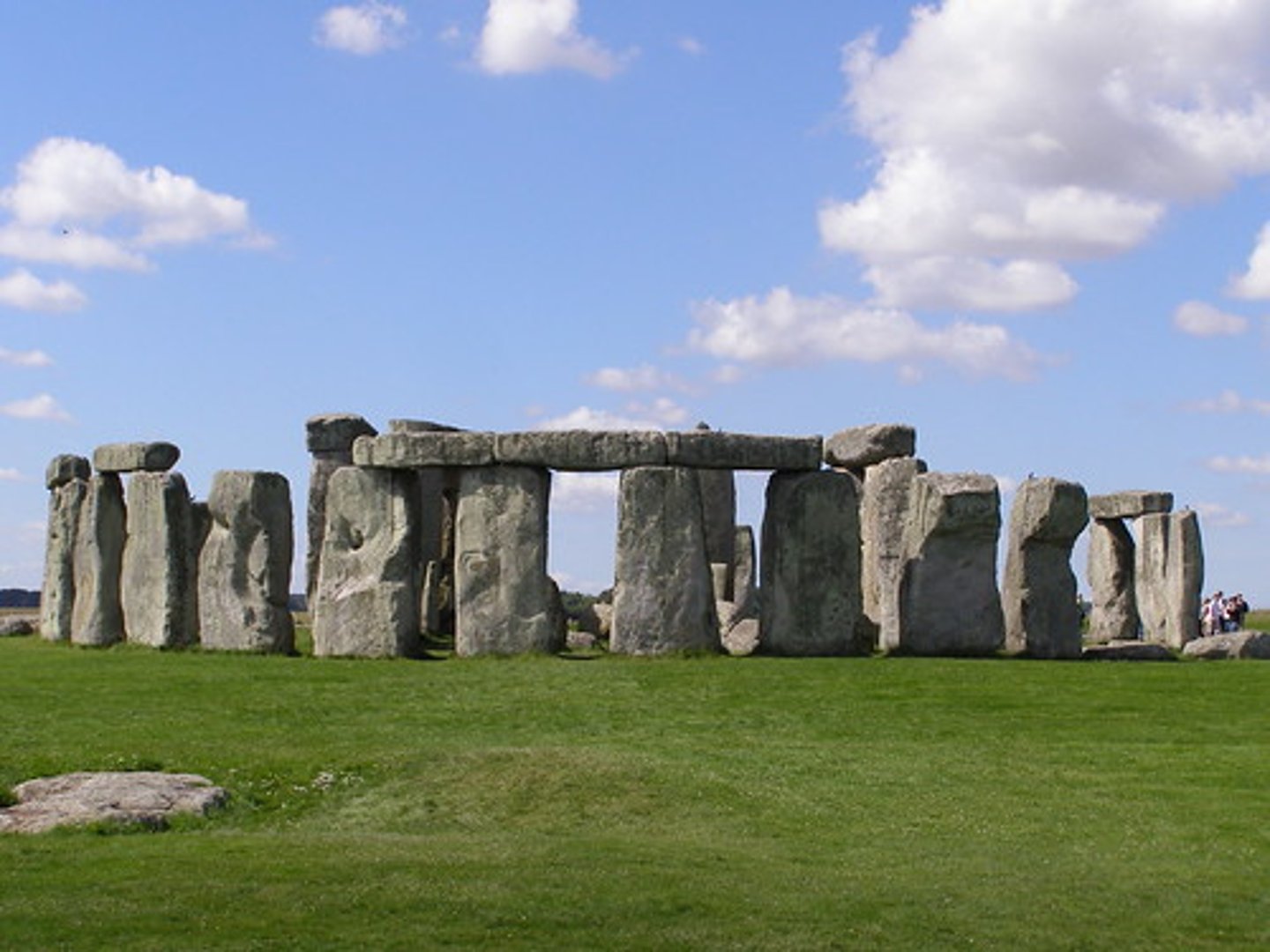
MENHIR GROUPED TOGETHER to form CIRCLES/SEMI CIRCLE. an example is the STONE HENGE. aka STONE CIRCLE
stone henge
prehistoric monument in Wiltshire, England. said to be built as calendar for the cycle of planting and harvesting
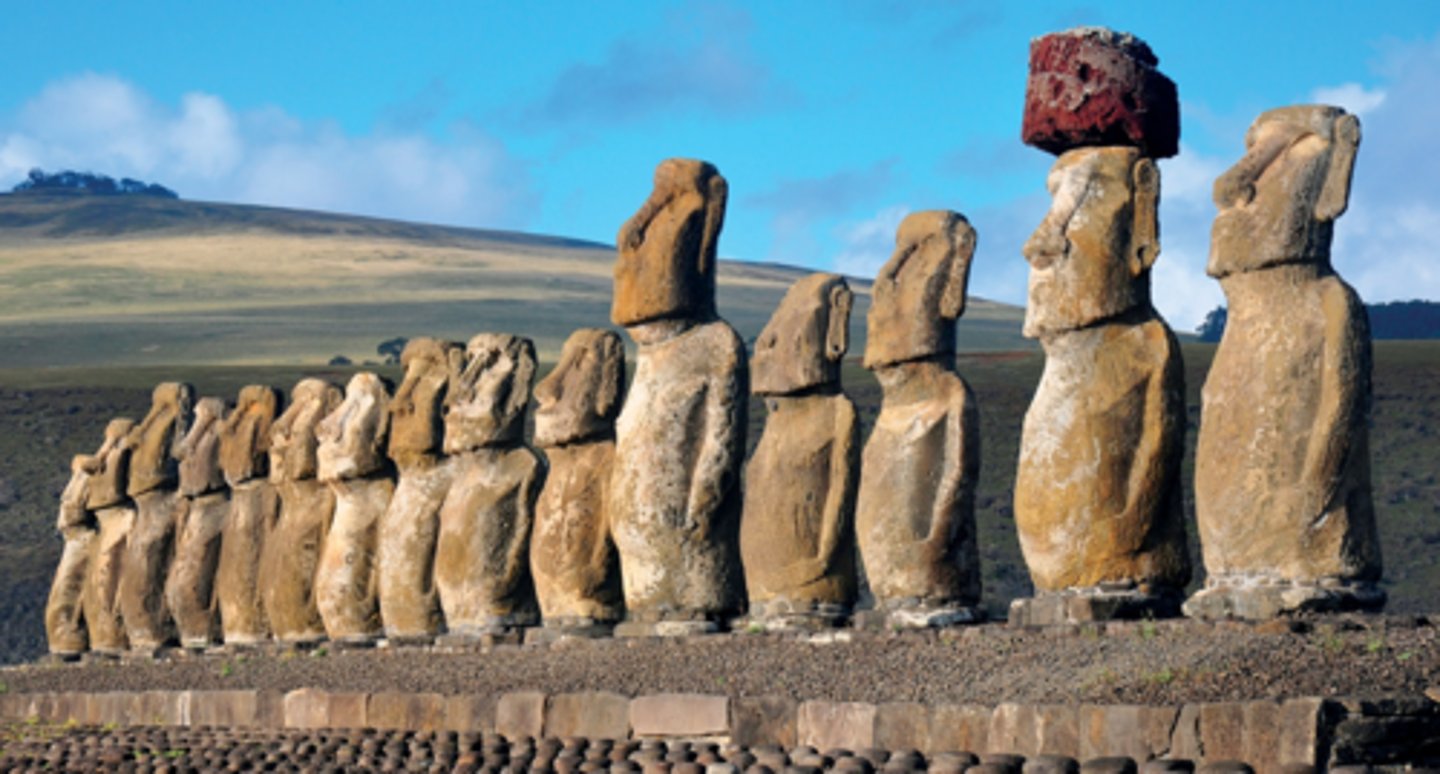
stone row
linear arrangement of stones or upright parallel standing stones
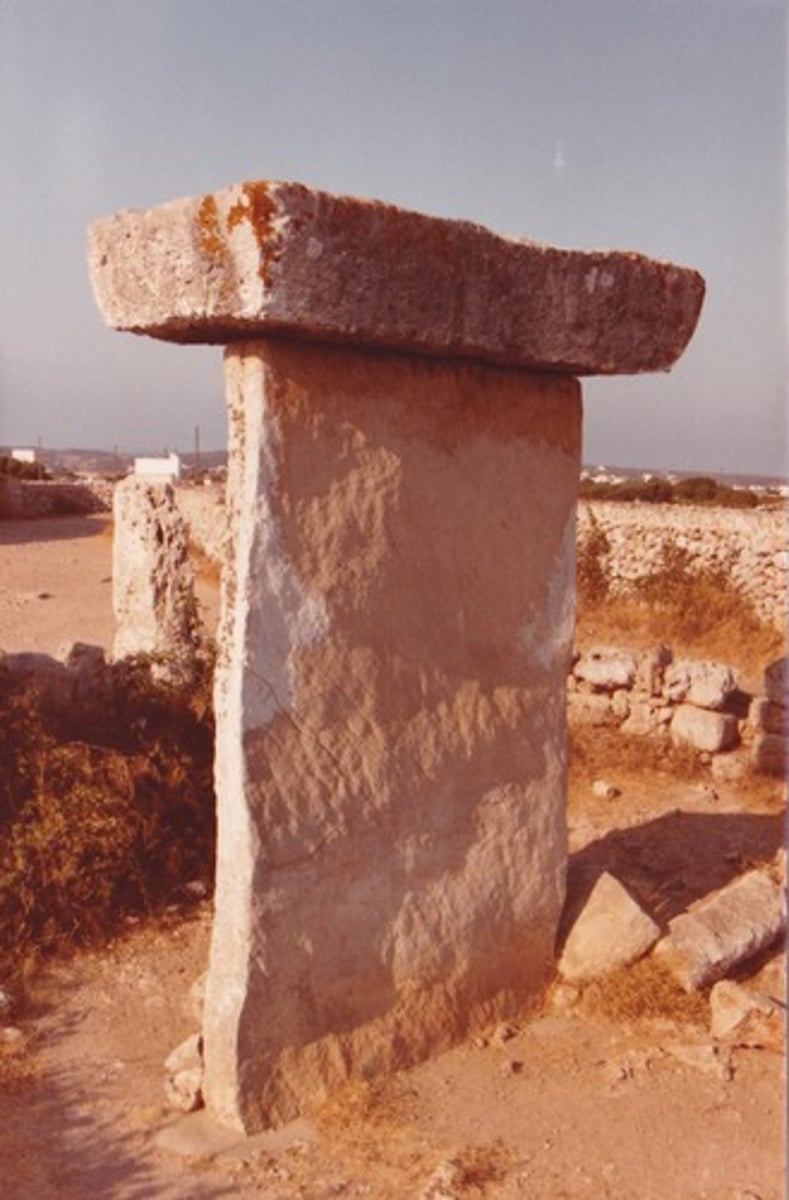
taula
straight, standing stone topped with another. it forms a T SHAPE
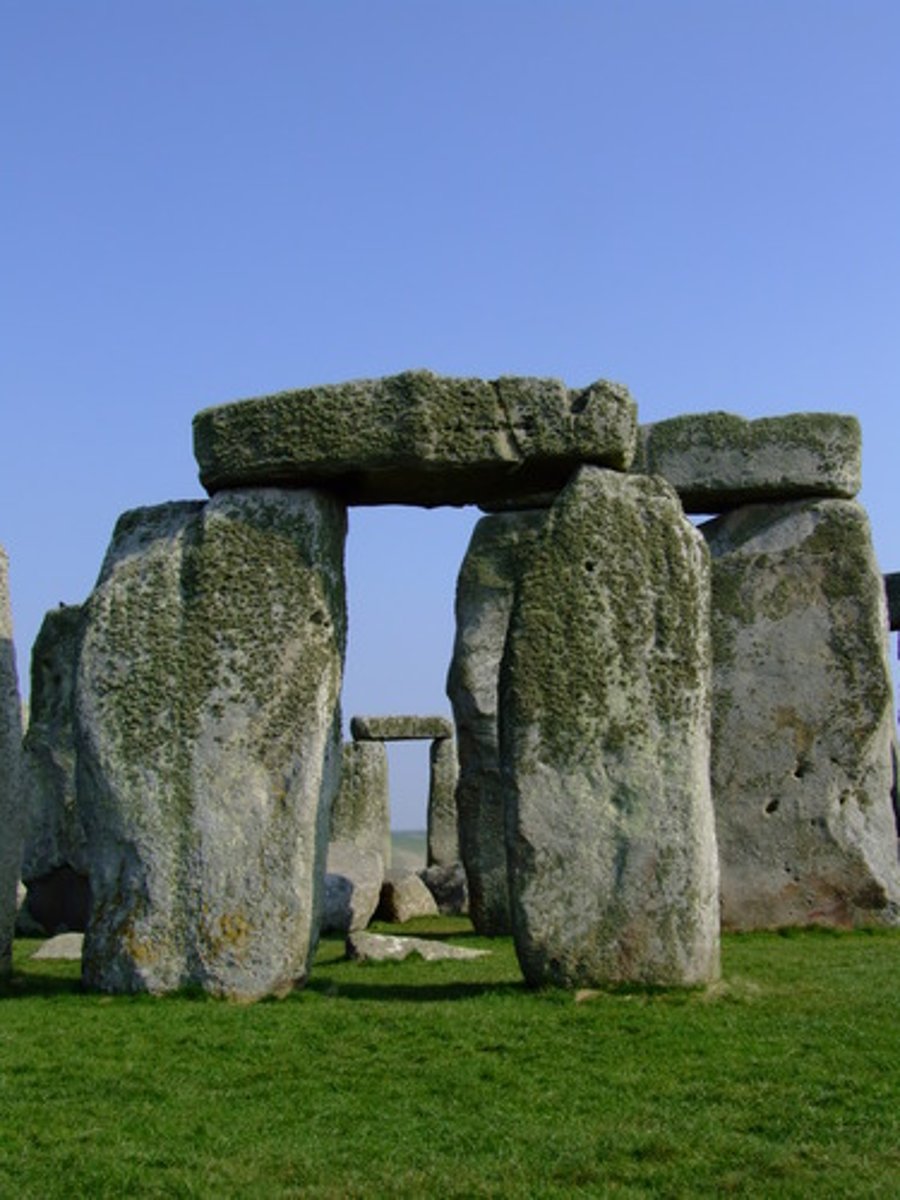
trilithon
2 parallel upright stones with a horizontal stone placed on top; earliest post and lintel construction; eg stonehenge
bronze age
age where copper and tin and semi precious stone were used. saw advance in pottery