ENTO 210: Module 4 Exam
 Call Kai
 Learn
Learn Practice Test
 Spaced Repetition
 Match
Match Flashcards
 Knowt Play
1/42

There's no tags or description
Looks like no tags are added yet.
Name | Mastery | Learn | Test | Matching | Spaced | Call with Kai |
|---|
No analytics yet
Send a link to your students to track their progress
43 Terms
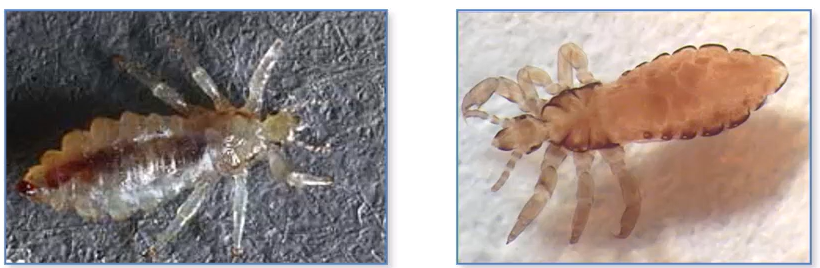
What is this?
Body lice (Pediculus humanus) or Head Lice (Pediculus capitis) —> Morphologically very similar
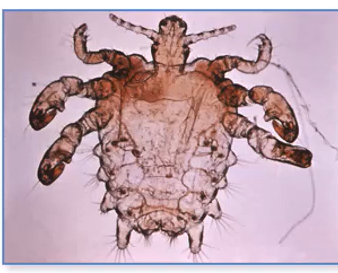
What is this?
Pubic lice (Pthiris pubis)
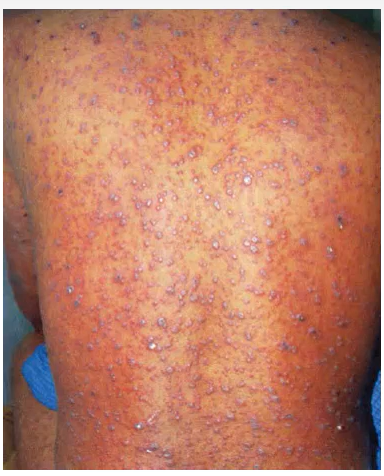
What is going on?
Vagabond’s disease, parasitic melanoderma, hobo disease —> Disease Pediculus corporis, which is caused by the vector Pediculus humanus
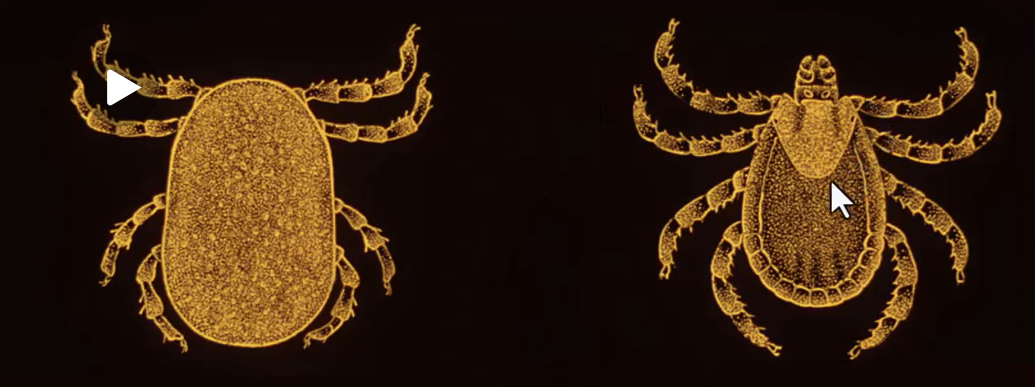
What is this?
A tick:
Argasidae (left) and Ixodidade (right)
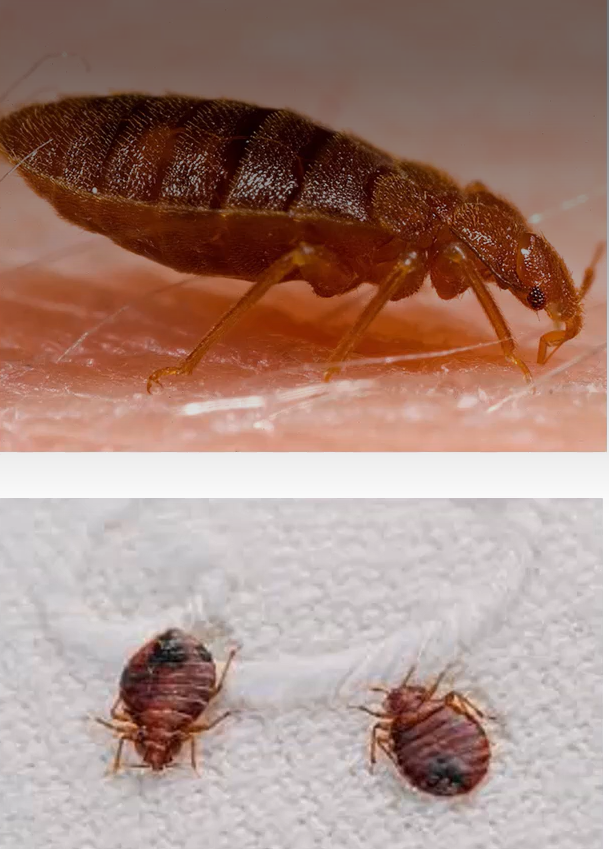
What is this?
Bedbug
Cimex lectularis
Cimex hemipterus
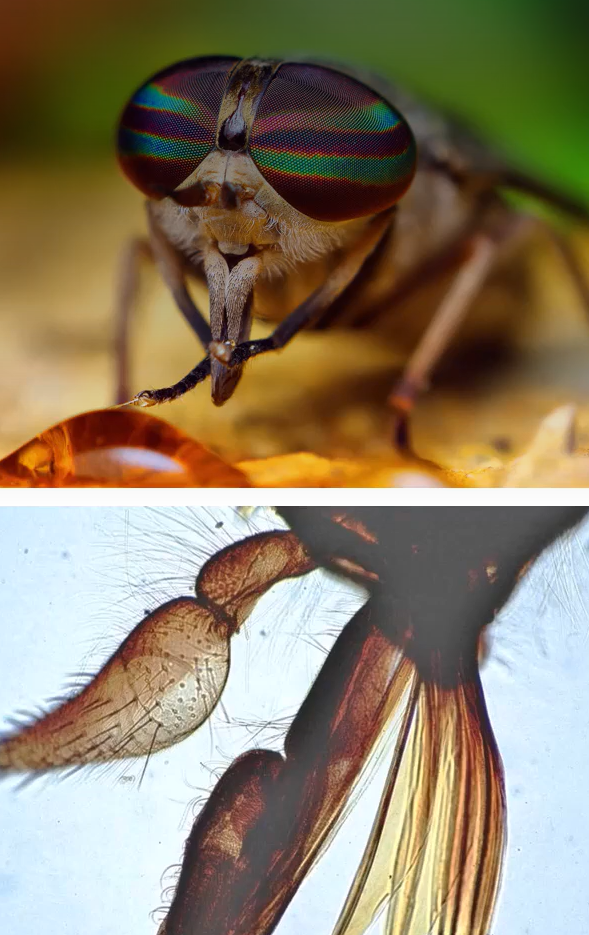
What is this?
Tabanidae
Horse Fly
Humans can be considered which of the following for the epidemic typhus disease cycle?
Reservoir hosts
Susceptible hosts
Where are you most likely to be bitten by Lutzomyia spp. and infected with Leishmania?
South America
A patient presents with a distended abdomen, an ulcerated lesion, and bloodwork that shows evidence of liver damage. With what disease is your patient most likely presenting clinical illness?
Visceral leishmaniasis
This status is awarded to certain medications and their associated companies to encourage development of drugs for rare or underrepresented disease cycles, and allows for perks such as tax incentives, patent protection, exclusive marketing rights, and additional funding
Orphan Drug Status
Outbreaks of louse-borne pathogens are often associated with what conditions?
Overcrowding
Poor hygiene
Warfare
Living in poverty does not affect an individual's exposure to diseases and vectors.
False
Which of the following lice species is of greatest concern to public health?
Pediculus humanus
Which of the following are disease cycles that are directly associated with a pathogen?
Epidemic typhus
Louse-borne relapsing fever
Trench fever
What is a significant risk factor for developing visceral leishmaniasis after cutaneous leishmaniasis?
Malnutrition
Which of the following conditions is not associated with a pathogen?
red meat allergy
tick paralysis
Bee Venom Therapy is often a self-administered treatment for patients suffering from
Lyme disease
Rhipicephalus sanguineus (family: Ixodidae)
Rocky Mountain Spotted Fever
Ornithodoros hermsi (family: Argasidae)
Tick-borne relapsing fever
Amblyomma americanum (family: Ixodidae)
Red meat allergy
Ixodes pacificus (family: Ixodidae)
Lyme disease
You find a tick that displays a three host life cycle and produces cement when feeding. In which of the following disease cycles is this tick least likely to be a vector?
Tick-borne relapsing fever
The amplifying host for Borrelia burgdorferi is
white footed mice
You discover a novel vector tick species and observe the adult female laying several batches of eggs throughout her life. To what family does this species most likely belong? Spell it correctly and ensure you use the appropriate punctuation/capitalization for taxonomic family names.
Argasidae
A patient in California presents with joint pain, a bull’s eye rash, and significant muscle pain. Which arthropod is most likely to have fed on your patient?
Ixodes pacificus
Cochliomyia hominivorax was successfully eradicated in the 1960s using what method?
sterile insect technique
One of the greatest hurdles in implementing maggot debridement therapy is
emotional and psychosomatic issues for the patient
The infestation of living tissue by fly larvae is called
myiasis
The best way to get rid of a chigger infestation on your body is to cover the wound with clear nail polish so that it suffocates the chigger inside (T/F)
False
Scrub typhus
Trombicula spp., the chigger mite
Tungiasis
Tunga penetrans, the chigoe flea
Epidemic typhus
Pediculus humanus, the body louse
Murine typhus
Xenopsylla cheopsis, the oriental rat flea
Plague
Xenopsylla cheopsis, the oriental rat flea
The world's leading cause of preventable infectious blindness is
Trachoma
The best way to control the guinea worm disease cycle is by
creating a source of clean drinking water
Bubonic plague affects
lymph nodes
Septicemic plague affects
bloodstream
Pneumonic plague
pulmonary system
Conditions of Overcrowding
Unhoused camps
Schools
Prisons
Trenches
Many areas of unplanned urbanization
Controlling fly population
Proper sanitation
Removal of contaminated food
Screening doors, windows, trash containers
UV light traps w/ electrocution
Selective use of insecticides
Reduce breeding grounds
Human pubic louse is more commonly related to gorilla lice than they are to human head or body lice
True
Louse life cycle
Wingless
Immature development
All immatures called nymphs
Eggs are called nits, glued to hair of host
Have air holes to allow oxygen in egg
Sensitive to changes in temperatures
Algal mortis: Cooling of body
Lice will abandon remains due to sensitivity of temperature
Lice will move to anyone around the body