Liminology Final-Readings
 Call Kai
 Learn
Learn Practice Test
 Spaced Repetition
 Match
Match Flashcards
 Knowt Play
1/10

There's no tags or description
Looks like no tags are added yet.
Name | Mastery | Learn | Test | Matching | Spaced | Call with Kai |
|---|
No analytics yet
Send a link to your students to track their progress
11 Terms
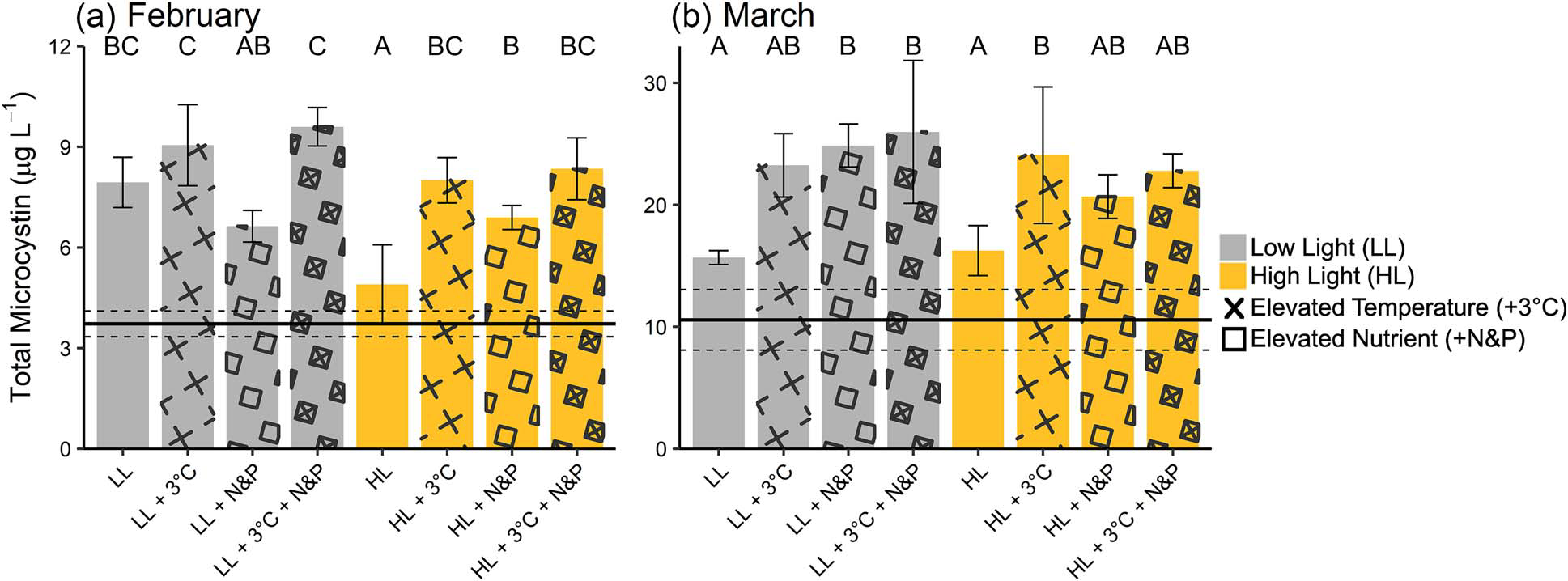
What is the title, journal, year published, and author of this article
Influence of light, temperature, and nutrients on microcystin concentration during a winter cyanobacteria-dominated bloom
Journal of Plankton Research
2025
Isabelle M. Andersen et al.
Give a summary of the article by Isabelle M. Andersen et al.
This article tested the affects of temperature, light and nutrients on mycrocystin population. Their hypothesis was that with increase in all three there would be an increase in mycrocystin. They conducted the experiment by holding two seperate experiments one in february and one in march. The experiment in febrary has a lower TN, TP, and light than in March but was exposed to more light. It was found that when TN was lower than TP along with low light there would be more nutrient load.
limitation was assuming planktothrix was the primary microcystin producing genus
What is the title, journal, and year of articles covered in case study 4 regarding Lake Apopka
Bachman
The restoration of Lake Apopka in relation to alternative stable states
Journal Hydrobiologia
1999
Schleske
Abrupt Biological Response to Hydrologic and Land-use Changes in Lake Apopka, FL
AMBIO A Journal of the Human Environment
2005
Give a summary of Bachman case
Lake apoka in FL clarity had seen a change for what seemed to be unknown reason. In this study they found that following a hurrican the shallow lake fell victim to fluid mud and extreme removal of macrophytes. This lead to the collaspe of the ecosystem and an increase in shad due to decrease in bass. The found solution was to implement wave barries in the lake to prevent further mixing and to allow for macrophyte population to reestablish.
Give a summary of Schelske case
In this case study they examined the notion of prior settlement of phosphorous loads before the 1947 hurricane in Lake Apopka. It was found that after the construction of levees in the marsh along the canal between Lake Apopka and Beuclair that prior were prevented allowing for inflow of nutrients from newly formed agricultural businesses. The hurricane event only influenced the mixing of the already present nutrient load in the lake that allowed for phytoplankton that was dominant at the bottom of the lake to become present in the water column and block incoming light from macrophyte populations.
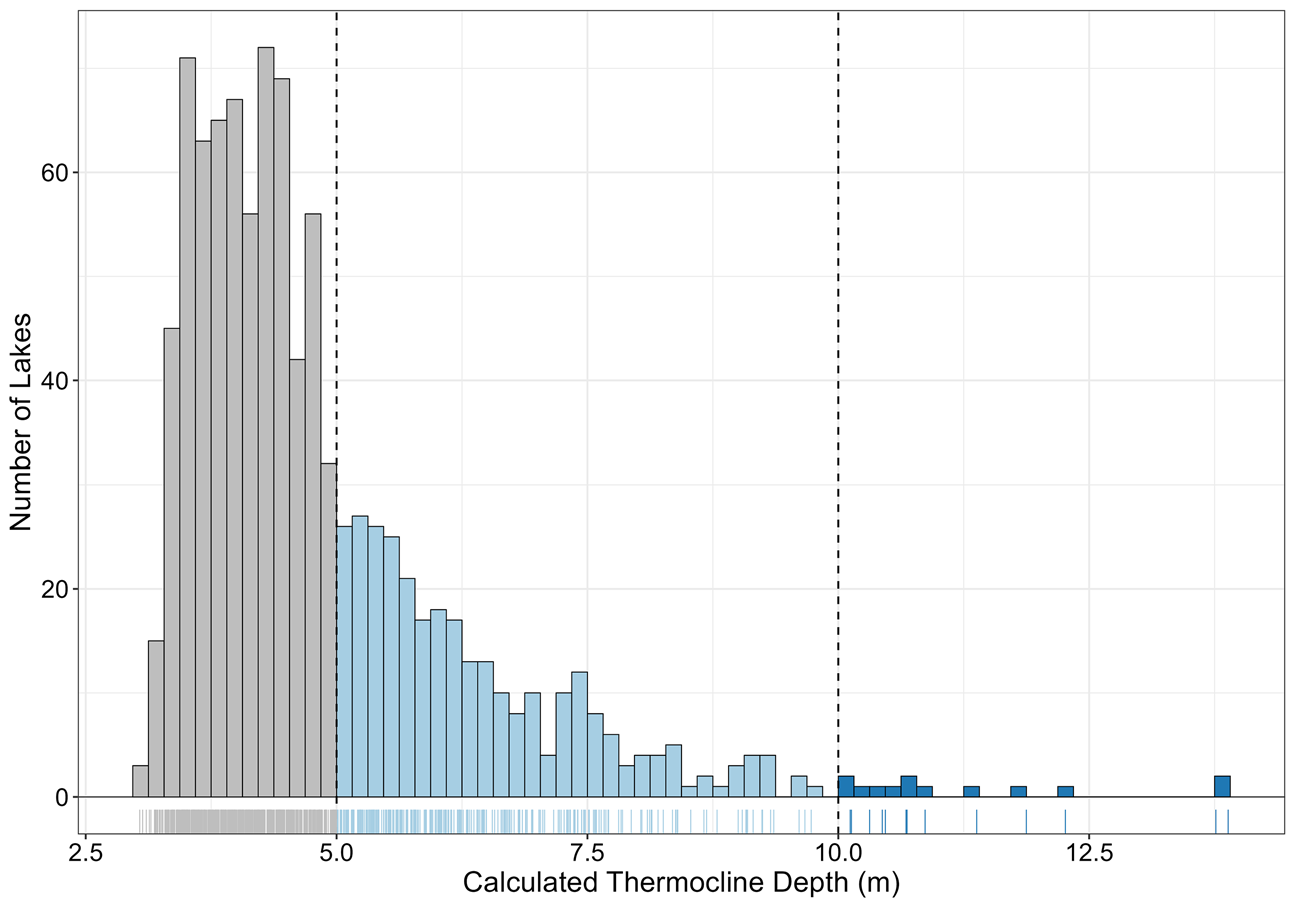
What is the Journal, Title, year, and aurthor of this article
David A. Ortiz et al
Jouranl Lake and Reservoir Management
Wake boats and lakes: physical, ecological, and policy implications
2026
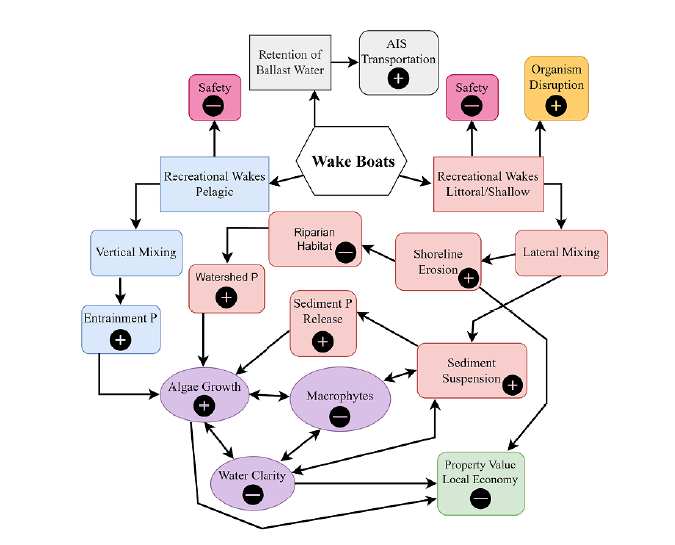
Give a summary of Article quiz 4
Discussed the factors at play in terms of effect of wake boats on lakes. Determined that while there is little research done of the topic, the overall conflict is that wake boats have a poweful motor that can penetrate the hypolimnion and cause resurfacing of settlment. Furthermore, these powerful motors can impact lake sediment and remove habitats for juvenile fish and birds. Due to the lake mixing they can also result in unwanted algal blooms.
policies are scattered but Virginia is the strictest with notion of one lake per year unless permitted otherwise
What was the title, year, and journal of the Brooks and Dodson Case study
Predation, body size, and composition of plankton
Science
1965
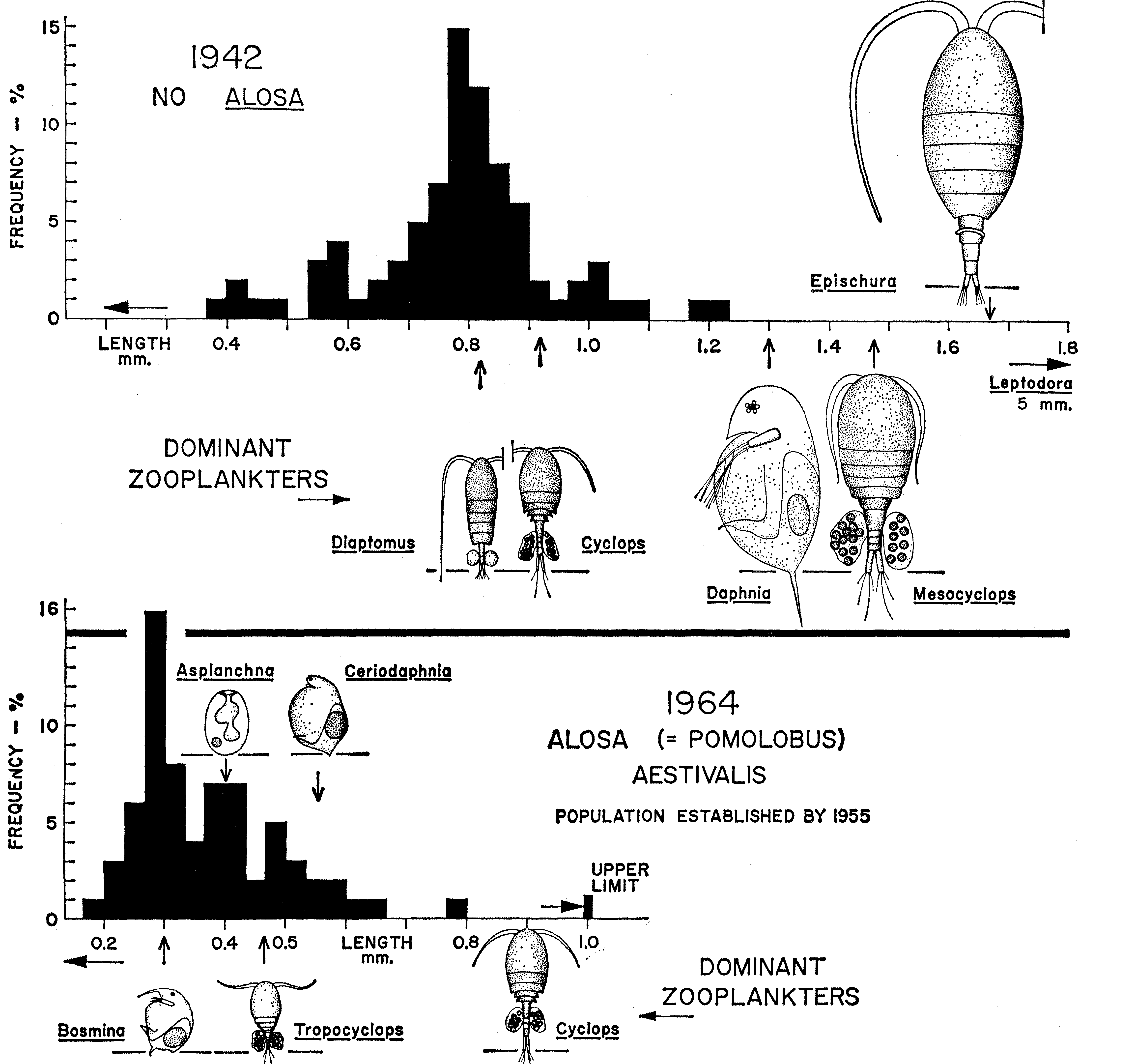
What is the summary of the findings for the Brooks and Dodson case
Found that by implementing planktivorous Alewife into the Lake, this decreased the amount of large zooplankton due to size selection for more energy. The decrease in larger zooplankton allowed the smaller zooplankton that were previously being outcompeted to flourish in the system. When remoing the alewife, the larger zooplankton would then again be able to outcompete and decrease the smaller zooplankton’s population; however, when predation was medial, both populations would be able to coexhist on equal grounds.
What is the title, year, and journal of the Belfiore case study
Zooplankton as an alternative method for controlling phytoplankton in catfish pond aquaculture
ScienceDirect
2021
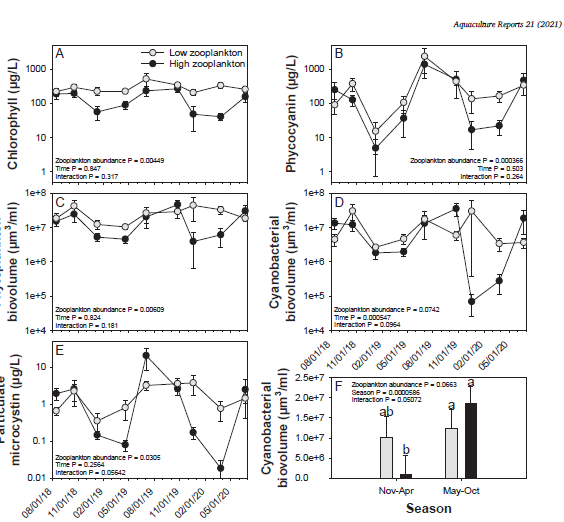
What is the summary of the finding in the Belfiore Case Study
The purpose of this study was to determine if large bodied zooplankton could be effective in controlling phytoplankton populations therefore eliminating harmful algal blooms by removing zooplantivorous fish. It was found in the study following the testing of nine ponds. that ponds with higher zooplanton biomass had less phytoplanton and cyanobacteria biovolume. They also noted that while TN and TP levels were increased as an offset of inability to recycle nutrients in higher zooplankton ponds that it was not statistically different overall.