Vision 2
 Call Kai
 Learn
Learn Practice Test
 Spaced Repetition
 Match
Match Flashcards
 Knowt Play
1/13

There's no tags or description
Looks like no tags are added yet.
Name | Mastery | Learn | Test | Matching | Spaced | Call with Kai |
|---|
No analytics yet
Send a link to your students to track their progress
14 Terms
Binocular Disparity
• Your two eyes are separated by ~6cm. Each gets a slightly different view of the world
• The brain computes the difference between these two views
Ocular Dominance
• Most V1 neurons respond to input from both eyes — but with a preference for one (This preference = ocular dominance)
Fusiform Face Area (FFA)
region in the IT Cortex that responds preferentially to faces over objects, scenes, or other categories
Monocular Deprivation
(eg. sowing one eye shut); alter ocular dominance; no affects on the retina and
Amblyphobia
visual defects caused by misaligned eyes
Treated by covering the healthy eye for several hours a day
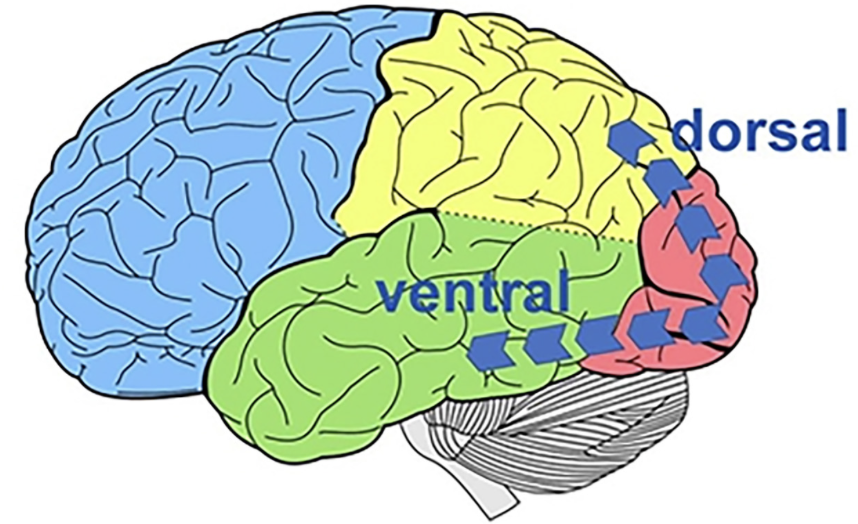
Dorsal Stream
Projects through the parietal lobe to represent motion and location
“where” pathway
V1 → Parietal Cortex
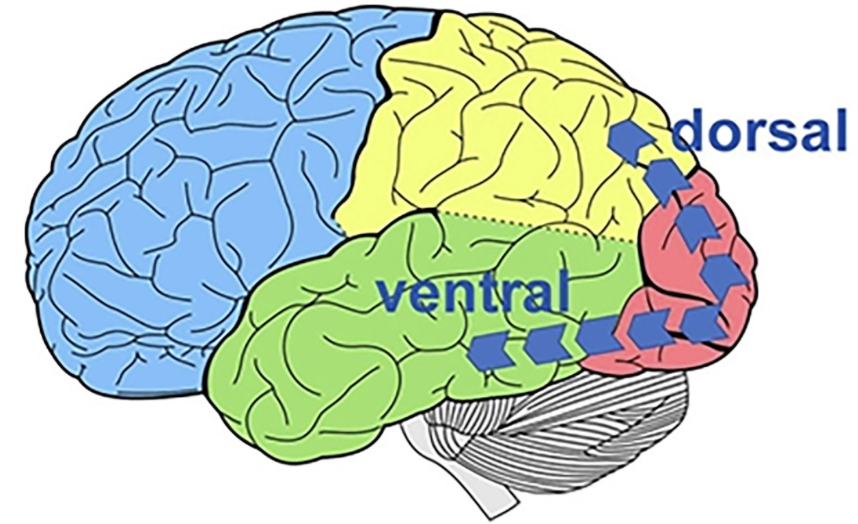
Ventral Stream
Projects through the temporal lobe to represent form (color, shape) and object/face recognition
“what” pathway
V1 → Inferotemporal Cortex
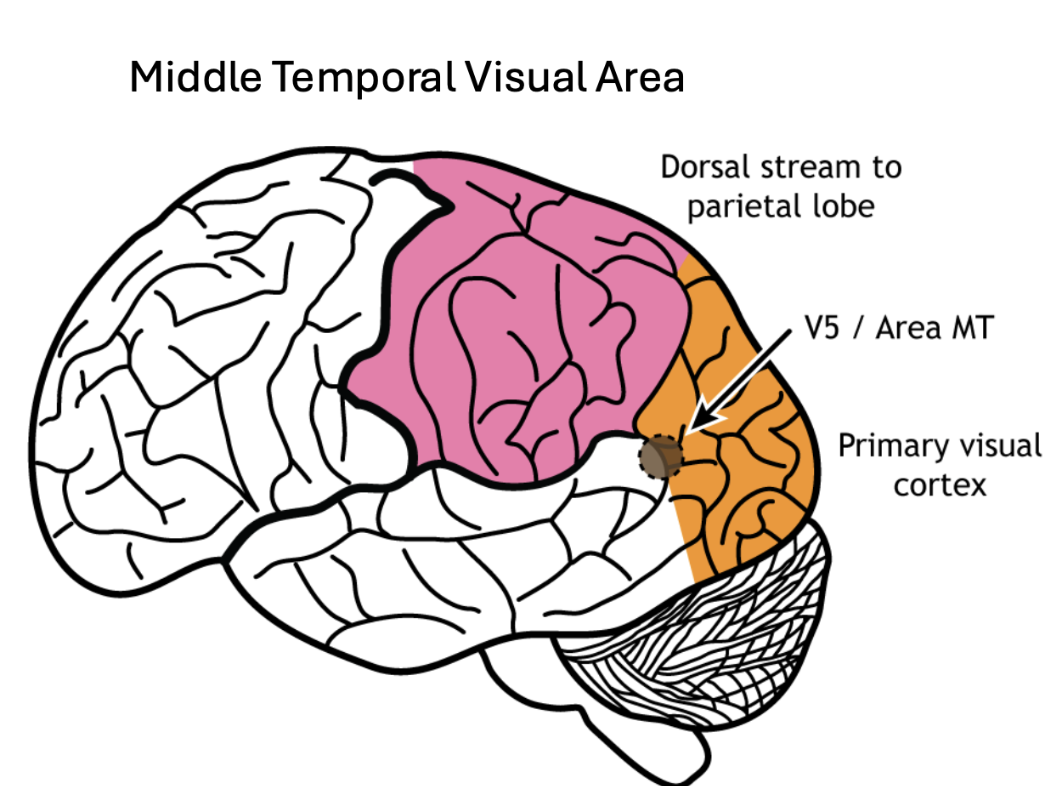
Area MT/V5
Neurons respond directly to the direction and speed of motion; recieves input from V1 and direct subcortical routes
important for survival: predators, prey, social signals, catching objects
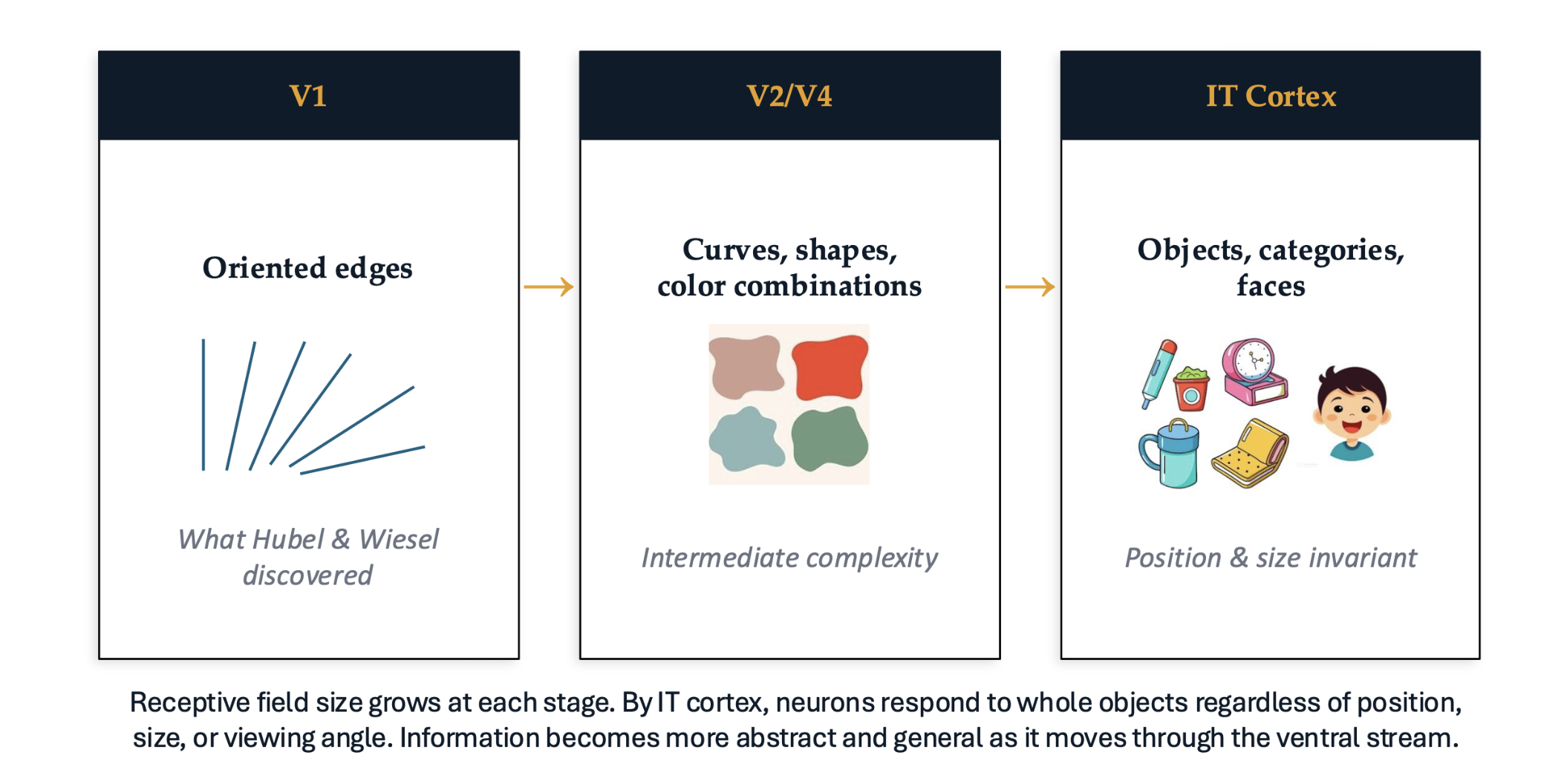
Building Complexity from Features
Visual Form Agnosia
cannot perceive the shape or orientation of objects despite normal vision acuity
Fusiform Face Area (FFA)
region in the IT cortex that responds preferentially to faces over objects, scenes, or other categories
Prospagnosia
inability to recognize faces (despite normal visual acuity)
Super-recognizers
enhanced face recognition; scouted for police/detective teams
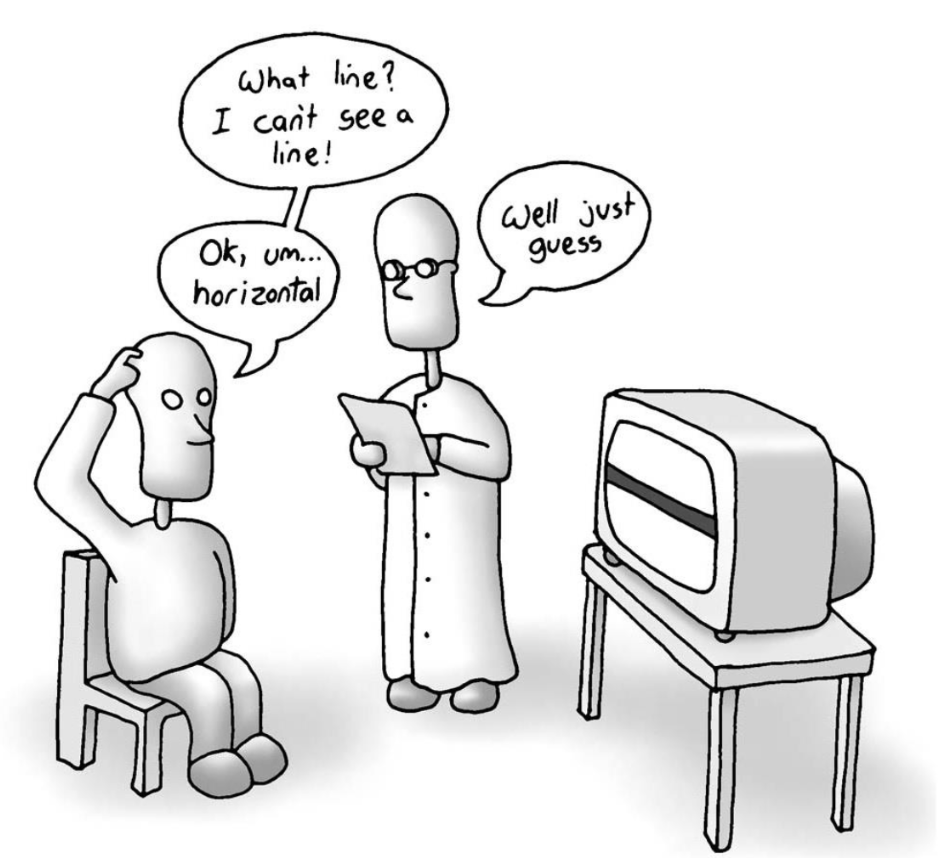
Blindsight
can navigate around obstacles in blind field, but dney having seen them