30. NHP OHSP - Occupational Health and Safety in the Care and Use of Nonhuman Primates
 Call Kai
 Learn
Learn Practice Test
 Spaced Repetition
 Match
Match Flashcards
 Knowt Play
1/109

There's no tags or description
Looks like no tags are added yet.
Name | Mastery | Learn | Test | Matching | Spaced | Call with Kai |
|---|
No analytics yet
Send a link to your students to track their progress
110 Terms
Common AAALAC findings in relation to hazards
not based on hazard identification/risk assessment
failure to include general hazards
inadequate training
not covering all at risk personnel
disconnected IACUC and safety personnel
This person has the following responsibilities - understand, support development and implementation of policies, communicate importance, ensure suitable funding, designate staff, identify office or individual that will manage it
Senior official responsibilties
This program is responsible for radiation and chemical safety, waste management, and monitoring of the OHSP
Environmental Health and Safety
What external organizations will review the OHSP
OSHA, OLAW, AAALAC
General behaviors of prosimians in relation to occupational health and safety
Tarsiers and lemurs
Most removed taxonomically from humans
No published report of dz transmission from prosiminans to humans
Not aggressive
Inquisitive – may leap onto people to investigate – be prepared for this behavior
General behaviors of NWM in relation to occupational health and safety
Central and south America
Callitrichids and Cebids
In general – not aggressive and will not respond aggressive to direct eye contact
Vigorously resist restraint
General behaviors of Callitrichids in relation to occupational health and safety
Claws on most digits
Arboreal
Highly territorial
Well developed visual, olfactory, and auditory – LONG memories
Threatening behavior – arching of back, full body piloerection, stiff legged walk, chest display, swaying from side to side
Hand raised – become very aggressive to people when reaching puberty
Procumbent incisors (marmosets) and long canine teeth (tamarins) – bite wounds
General behaviors of Cebids (squirrel monkeys, capuchins, owl monkeys) in relation to occupational health and safety
excellent dexterity – escape cages
Bite in self defense
Climb onto person – may bite when pushed away or frightened
May defend person it likes from other people
General behaviors of OWM (Cercopithines) in relation to occupational health and safety
(carcopithines) – macaques, baboons, mandrills, mangabeys, African greens
Social animals – human removing infant – aggressive response
Strong, skilled manipulation – animals escape from enclosures
Macaques – visual capabilities, visual signals
Mild threats – direct eye contact, jerky arm movement – response aggressively
To mitigate – train to cooperate
General behaviors of OWM (Apes) in relation to occupational health and safety
Strong, highly developed cognitive abilities, can recognize themselves in mirror
Do not trust unfamiliar people
Enclosures should not allow them to reach out and grab people
Can trains for cooperations w/ food
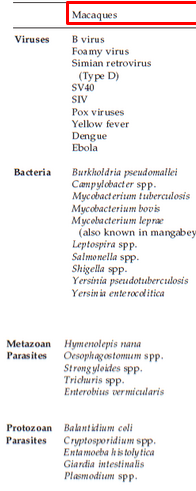
Common infectious agents of Macaques
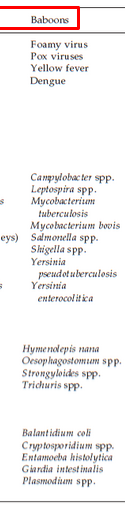
Common infectious hazards of baboons
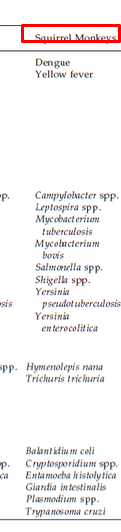
Common infectious hazards of squirrel monkeys
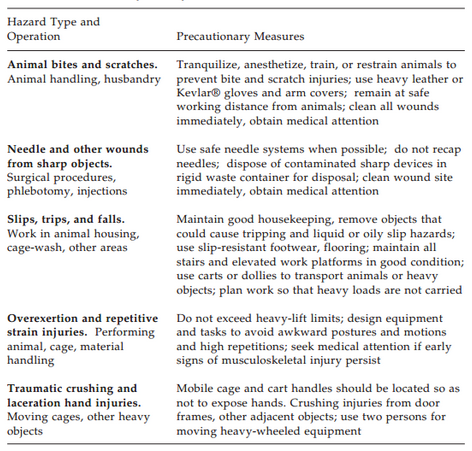
Precautionary measures that can be taken for animal bites, needle stick, slips, overexertion, traumatic crushing and laceration
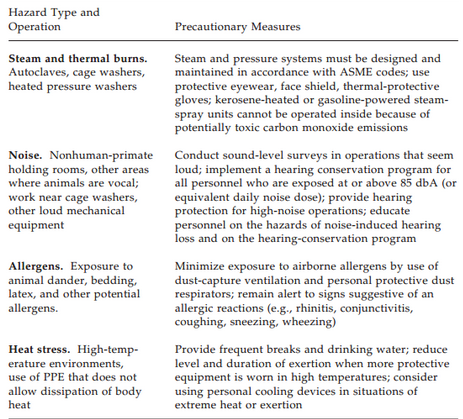
Precautionary measures that can be taken for thermal burns, noise ,allergens, heat stress
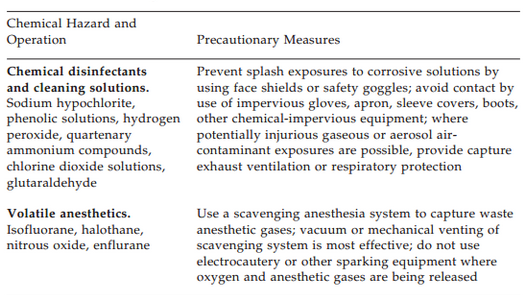
Precautionary measures that can be taken for chemical disinfectants and cleaning solutions, volatile anesthetics
change in amount, intensity, or duration of exposure is associated with a change in the risk of the outcome
dose response relationship
based on observation, experience, published reports, professional judgement (review worker injury and exposure logs)
qualitative process of hazard assessment
Quantitative level of a hazard and probability of adverse response
Single-event exposures usually of primary concern (agents), though cumulative-dose effects relevant for chemical toxicants
Threshold and non-threshold models of risk for various health conditions
Dose response assessment
Estimates the exposures or contact between a hazard and a person
Take into account numerous modes of possible contact (splashes, bites, aerosols)
Determine extent of contact, along with job duties and use of PPE
Must include evaluation of experience and skill levels of people at risk for exposure
Under-reporting of occupational injuries and exposures is common
Exposure assessment
Combine the dose-response relationship and exposure assessment to describe the risk to subject persons
Need knowledge of risks, principles of safety, appreciation of workflow, and knowledge of regulations
Initially focus on greatest hazards
Put into quantitative terms when possible
Determine incidence rates (person work days)
Understand uncertainties involved
Risk estimation and characterization
How is the ABSL level of a study determined at a primate facility? Who has ultimate authority?
-collaboration between study director/PI, IACUC, BSO, primate center director
Senior institutional official
What is the most common physical hazard in primate centers? What has lowest incidence? Where are the most common site for bite injuries? Who is most likely to report an injury and who has the highest overall injury rates?
scratches and bites
cut and mucous membrane exposure
fingers and thumbs
full time employees
veterinary residents
At primate centers one new B virus infection is reported every ____. What has been the most influental in reducing risk?
60 years
PPE used, improved lab procedures, increased post exposure wound disinfecting efficiency
There is an increased likelihood of injury with ____
increasing years of experience
What act created OSHA and NIOSH?
Occupational Safety and Health Act of 1970
What CFR handles bloodborne pathogens?
OSHA Standard 29 CFR Part 1910
What vaccines is required when handling blood, organs, or tissues from experimental NHPs?
Hepatitis B vaccine
Limit of exposure to formaldehyde time weighted average (TWA) and short term
0.75ppm and 2.0ppm
Federal facilities must establish and maintain ____ program similar to OSHA
OHS
Inspectors of OHS program for federal facility must be ___ or ____ to recognize hazards and suggest general abatement procedures. All federal agency work places must be inspected ____.
safety/occupational health specialicist or enough training or experience
annually
Responsibility for oversight of federal OHS programs are assigned to the _____ which functions as a mini OSHA
Office of Federal agency Program (OFAP)
Federal research facilities must comply with same ___ standards. It’s inspected by ___ rather than OSHA and are not subject to _____ penalties.
OSHA
OFAP
monetary
What policy requires that institutes receiving federal funding must have OHS program as part of overall animal care and use program.
PHS policy
This important documents includes OHS guidelines related to hazard identification and risk assessment personnel training, personal hygiene, facilities/procedures/monitoring, personal protection, medical evaluation, and preventative medicine
the guide
What CFR - prevent introduction, transmission, and spread of communicable diseases for foreign countries into the states
42 CFR 71
What CFR - specifically addresses importation of live NHPs, restricts activity to registered importers
42 CFR 71:53
Who is responsible for preventing the importation and spread of zoonotic illness capable of causing serious outbreak of communicable dz in humans (like marburg/ebola, monkey pox, yellow fever, TB)
Division of Global Migration and Quarantine in the National Center for Infectious Diseases at the Centers for Disease control and prevention
All imported NHPs have a mandatory ___ quarantine
31d
NHP importers must register with the ___, certify that NHPs will only be used for science, education, or exhibition
CDC
Who has regulatory authority over importation of human or NHP material that is produced in tissue culture or is a potential or actual zoonotic pathogen
National Center for Import and Export (NCIE) of USDA and APHIS
Who has jurisdiction over all human and NHP material
USPHS (US Public Health Service)
Who provides regulations regarding transportation of hazardous materials which includes infected live animals or tissues
US Department of Transportation (DOT)
Private, non-profit organization that administers & coordinates the US voluntary standardization & conformity assessment systems
ANSI - American National Standards Institute
ANSI Standard for “Emergency Eyewash & Shower Equipment”
Z358.1-1998
ANSI Standard for Occupational and Educational Eye and Face Protection
Z87.1-1989
largest voluntary standards development organizations in the world
Mission- be foremost developer & provider of voluntary consensus standards, related technical info, & services having internationally recognized quality & applicability that promote public health & safety, & the overall quality of life, contribute to reliability of materials, products, systems, & services, & facilitate national, regional, & international commerce
ASTM International - American Society for Testing and Materials
ATSM is most known for providing what standards?
fluid resistance and permeability standards in PPE clothing
“advances worker health & safety through education & the development & dissemination of scientific & technical knowledge”
American Conference of Governmental Industrial Hygienists (ACGIH)
ACGIH provides resources on what?
Threshold limit values (TLVs) and Biological Exposure Indices (BEIs)
Provides live animal regulations for transporting live animals by commercial airlines
IATA - International Air Transport Association
To be effective risk management must have 2 elements
specific OHSP plan
AND appropriate safety culture and working environment
It is or is not essential that each institution have a full time occupational health professional on staff
not essential
What can an institution do if a full time Oc Health professional is not on staff?
establish relationship with professional who can provide necessary expertise for plan development and operation
It is recommended that “personnel who work w/ NHPs should wear ____ & other protective garments & equipment appropriate for circumstances & species involved” (NRC)
face shields
What PPE should be mandatory for individuals working w/ macaques (CDC)
protective eyewear and face protection
What PPE is highly recommended for working with other OWM and apes
eyewear and face protection
What health surveillence is usually conducted on individuals working in NHP facility?
health screening for wearing respiratores rated by NIOSH
vaccines
serum banking
tuberculosis testing
Per the occupational and health administration blood born pathogens standards vaccinations must be offered to personnel working with experimental pathogenic agents such as ____
hepatitis B virus
How often should IACUC and OH professional review OHS plan?
semiannually
What two laws require that staff are provided training?
Health Research Extension Act of 1985 (required compliance with PHS for PHS-funded research)
Food Security Act of 1985 (amended AWA)
Who is ultimately responsible for determining qualifications of facility employees, contract staff, support-services staff, program inspectors, and visitors
facility director
Who are responsible for verification of the qualifications of research assistants, collaborators, and guests?
PIs
How should training be presented to ensure maximum efficiency
only 7 major concepts or less per training session
each major concept should be presented 3 times
5 principles of adult learning
Principle of Readiness
Principle of Association
Principle of Involvement
Principle of Repetition
Principle of Reinforcement
OSHA requires that training records be kept for _____
3 years
First aid for skin exposures or mucous membrane exposure to NHP
skin exposure - flushing & scrubbing with detergent and water for 15 minutes
mucous membrane exposure - eyes flushed for 15m at eyewash station
CDC recommend that occupational exposures to SIV & hybrid strains of HIV-SIV be managed according to ____
PHS postexposure prophylaxis guidelines for HIV
Guidelines recommend that lab animal workers be vaccinated for ___ if they handle cultures or animals contaminated or infected w/ vaccinia virus, recombinant-vaccinia virus vectored vaccines, or other orthopoxviruses that infect humans (e.g. monkeypox & cowpox)
vaccinia
When is the B virus post exposure prophylaxis recommended, considered, and not recommended
Recommended:
Skin exposure with loss of skin integrity or mucosal exposure to high-risk source
Inadequately cleaned skin exposure with loss of skin integrity or mucosal exposure
Head, neck, or torso laceration
Depp puncture bite
Needle stick associated with tissue or fluid from CNS
Lesions suspicious for B virus on animal’s eyelids or mucosa
Puncture or laceration after exposure to an object likely to be contaminated with fluid from oral or genital lesions, CNS tissues, or tissues known to contain virus
Post-cleaning culture positive for B virus
Immunocompromised status
Considered:
Mucosal or eye splash even if adequately cleaned
Laceration with loss of skin integrity
Needle stick with blood from ill/immunocompromised macaque
Puncture or laceration after exposure to an object contaminated with body fluid
Potentially infected cell culture
Not recommended
Exposed skin is intact
NHP other than macaque
What is the agent that is recommended for post exposure prophylaxis?
Valcyclovir (acyclovir also possible, but val is what is recommended)
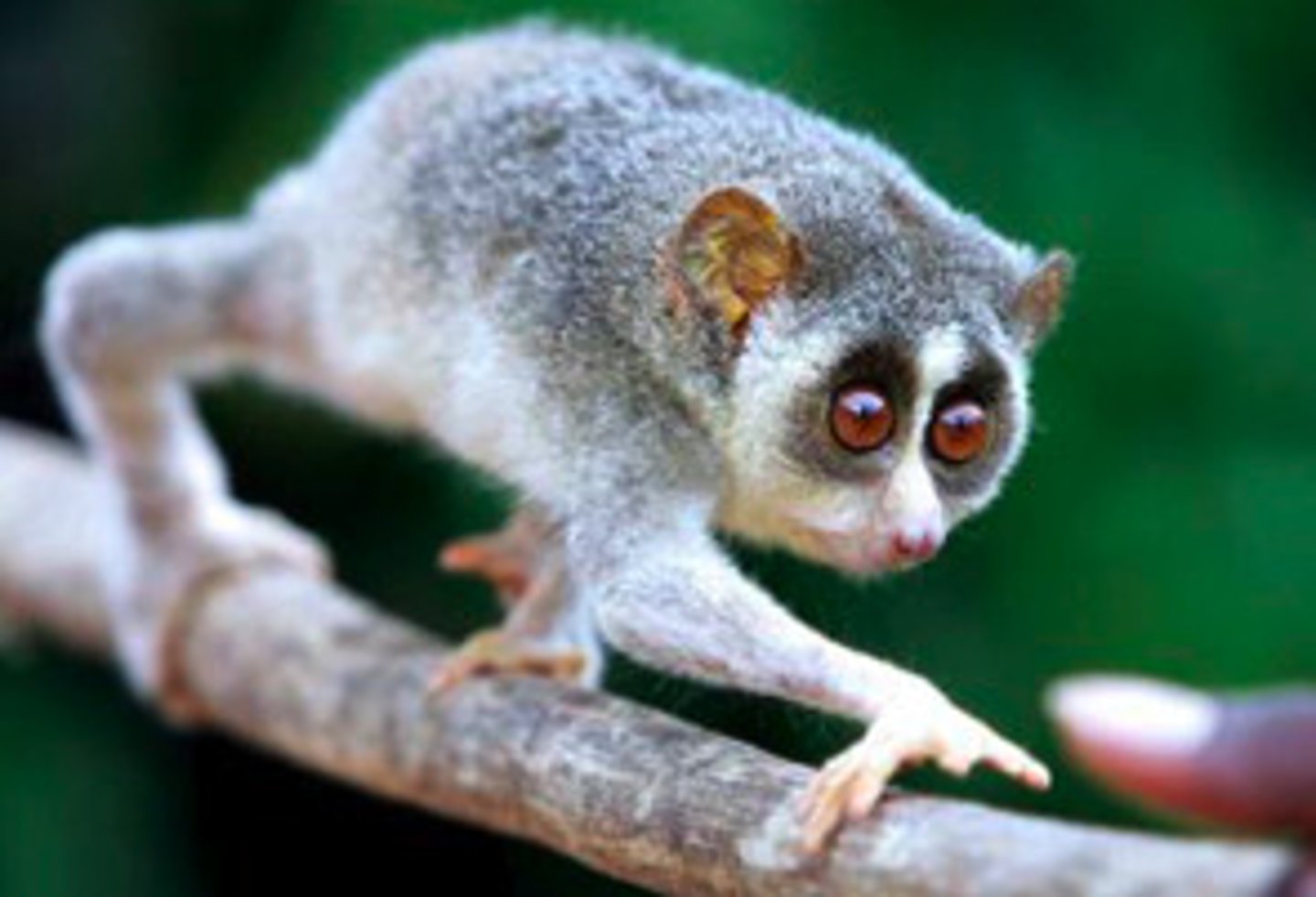
What is the occupational safety risk associate with a Slow Loris (Nycticebus)?
Bite is a "poisonous" mix of saliva and glandular secretions
(Really causes more of an allergic reaction than being an actual poison/venom)
B virus, Macacine herpesvirus 1, alphaherpesvirus
most significant infectious occupational health hazard in the conduct of NHP research
-Naturally only in macaques
-Human exposures: bites/scratches, splashes, needle stick injuries, but viability not expected to be prolonged (<24hrs in most cases)
-Latency mostly in trigeminal & lumbosacral sensory ganglia (Incubation period (humans), ~2-3wks)
Dx: serology, virus isolation, & PCR
Simian Immunodeficiency Virus
Lentivirus
-Natural reservoirs - mangabeys, guenons, mandrills & chimps
-Infections: splashes onto mm, open cuts/abrasions, & needle stick
-Experimental studies typically conducted under ASBL 2 or 2/3 conditions ( 2 facilities w/ 3 practices & procedures), post exposure prophylaxis involves antiretroviral agents
Simian Foamy Virus
Spumaviruses
Found frequently in cell cultures
Presumed transmission via saliva & bites
-Usually involves macaques, baboons, guenons and chimps, but some species specific isolates have been found in squirrel monkeys and spider monkeys
Ebola, Marburg, Filoviruses
Imported macaques (Ebola-R)
Ebola transmission: droplets & body fluid fomites, filoviruses form infectious aerosols
-Marburg - contact with infected tissues
-Marburg incubation in NHP 4-16d; incubation period for humans unknown
Pox Viruses
-Monkeypox - vesicular exanthema leads to pox-like lesions** human to human
-Yaba virus & tanapox - multiple papules or masses on skin; monkey to human
-Molluscum contagiosum - umbilicated papules that can persist for up to 2 years; monkey to human
Yellow Fever
Yellow fever virus (flavivirus) - African Old World primates & New World primates
-Bite of infective mosquitoes
-Clinical signs: mild or absent in African species but New Worlds show high mortality
Human - accidental exposure with needle sticks
Dengue
Dengue fever viruses
Mosquitoes
Human cases from NHP not documented - possible sharps
-Both NHPs & humans competent reservoir hosts
-Infective mosquitoes Aedes aegypti & Ae. albopictus
Lymphocytic Choriomeningitis Virus
Marmosets & tamarins have succumbed to callitrichid hepatitis after feeding on infected mice ("pinkies")
Transmission b/w callitrichids not demonstrated
Transmitted to humans presumably from oral & respiratory exposure through urine, saliva, or feces
Incubation ~8-13d, biphasic febrile illness, second phase - meningitis or encephalitis, possible fetal teratogen
Hepatitis A
Only chimps have been implicated in transmission to humans
Fecal-oral route
No evidence of human disease associated with simian hepatitis A
Hepatitis B
Can occur in great apes
No cases of transmission to humans documented (NHP origin)
Vaccines for public are required of OSHA for individuals in research on this agent
Tuberculosis
Mycobacterium tuberculosis & M. bovis
Old World are more susceptible than new world
Transmission: Aerosols, fomites, & fecal-oral route
Remember concurrent measles infection can cause false neg TB test
Pseudotuberculosis
Yersinia enterocolitica or Y. pseudotuberculosis
Birds & rodents thought to be primary reservoir
Fecal-oral route
Shigellosis
Contact with infected humans (S. flexneri)
Fecal-oral route
Humans, can cause arthropathy (Reiter's syndrome) esp. with HLA-B27 genetic background
Salmonella
Probably acquired by NHPs in captivity from exposure to infected humans; unlikely to transferred back to humans
Fecal-oral route
Campylobacteriosis
C. jejuni & C. coli
Fecal-oral
Often acquired in captivity but can be transferred back to humans
Melioidosis (Burkholderia pseudomallei)
macaques, chimps w/ nonspecific C/S- supp lesions (pulmonary, cerebrospinal, & SC tissues)
Ingestion or inhalation or via breaks in skin
Humans - vary from asymptomatic to pneumonia & septicemia
Leprosy
M. leprae (Macaques, mangabeys, & chimps)
Months to years following exposure before C/S in humans
Suspect: inhalation transmission
Armadillo scientific name: Dasypus novemcinctus
NHP Protozoal Parasites that post hazard to human
Amoebiasis (Entamoeba histolytica)
Balantidiasis (Balantidium coli)
Cryptosporidiosis (C. parvum)
Giardia (G. intestinalis)
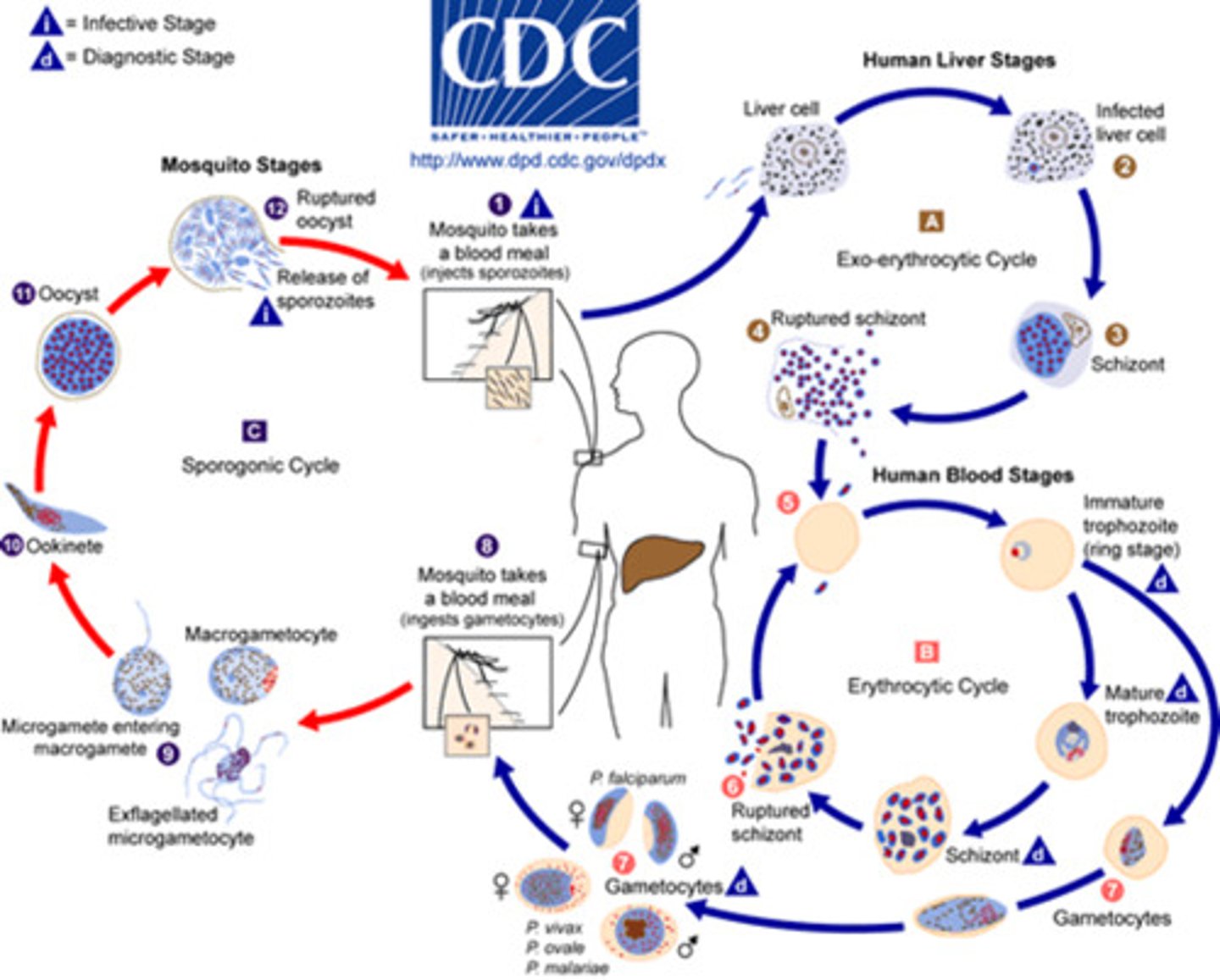
Malaria
Plasmodium cynomolgi, P. knowlesi, P. inui, & P. simium
Accidental exposure through penetrating injuries from needles & other sharps, mosquito bite (Macaques, baboons, squirrel monkeys, mangabeys)
Trypanosomiasis
T. cruzi
New World species - lifelong infections
Accidental exposure through mm, non-intact skin, or penetrating injuries
Propagated among monkeys via trauma, blood-to-blood exposure, saliva, sexual activity & transplacentally
Myocarditis most common C/S
Hymenolepsiasis
H. nana (Rodentolepsis nana)
Direct & indirect life cycle
Fecal-oral; Most asymptomatic, but catarrhal enteritis, diarrhea, & abdominal signs reported
polar filament in egg
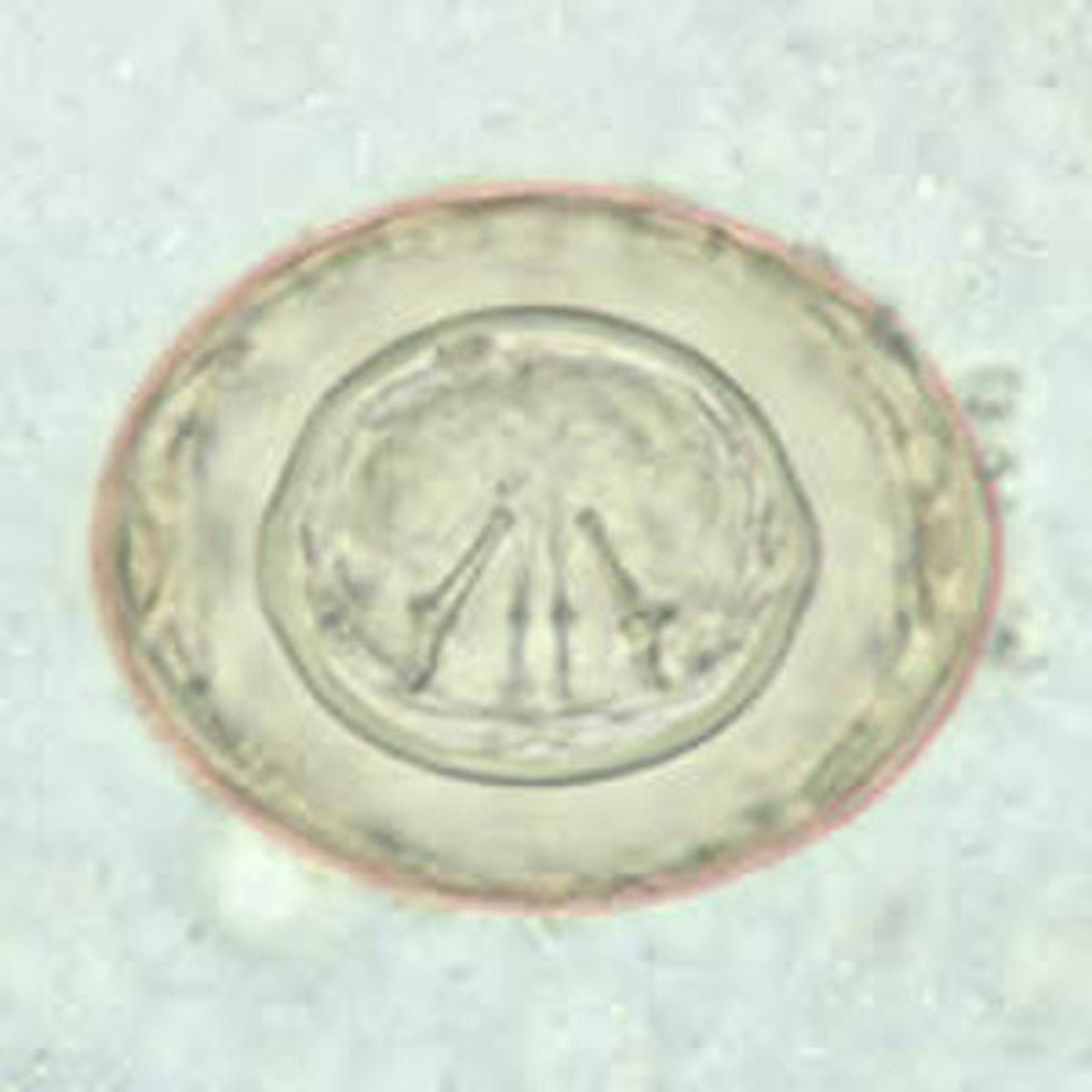
Oxyuriasis - pinworm
Enterobius vermicularis
Old World
Contaminated soil, passed between species in either direction
Fecal-oral
Strongylodiasis
Strongyloides fullerbornie - Old World
S. stercorales - Apes
Fecal-oral
Direct skin penetration for larval stages
Trichuriasis
NW & OW & great apes
Fecal-oral, but req's 10-14d of incubation in warm, moist soil to become infective
typically asymptomatic; severe infections can cause anorexia, diarrhea, enteritis, and occasionally death.
Which of the following diseases is quite debilitating in New World primates but rather mild in Old World species where the disease in endemic?
a. Yellow Fever
b. Hepatitis A
c. Measles
d. LCMV
e.Monkeypox
a. Yellow Fever
Insects of the genus Aedes are primarily responsible for naturally transmitting which of the following microorganisms?
a. Plasmodium knowlesi
b. West Nile Virus
c. Dengue
d. Trypanosoma cruzi
e. Kyasanur Forest disease
Answer: c. Dengue
A - Anopheles mosquito
B - Culex mosquito
C - Aedes
D - Reduviid bug
E. - Hard ticks (Hemaphysalis spinigera)
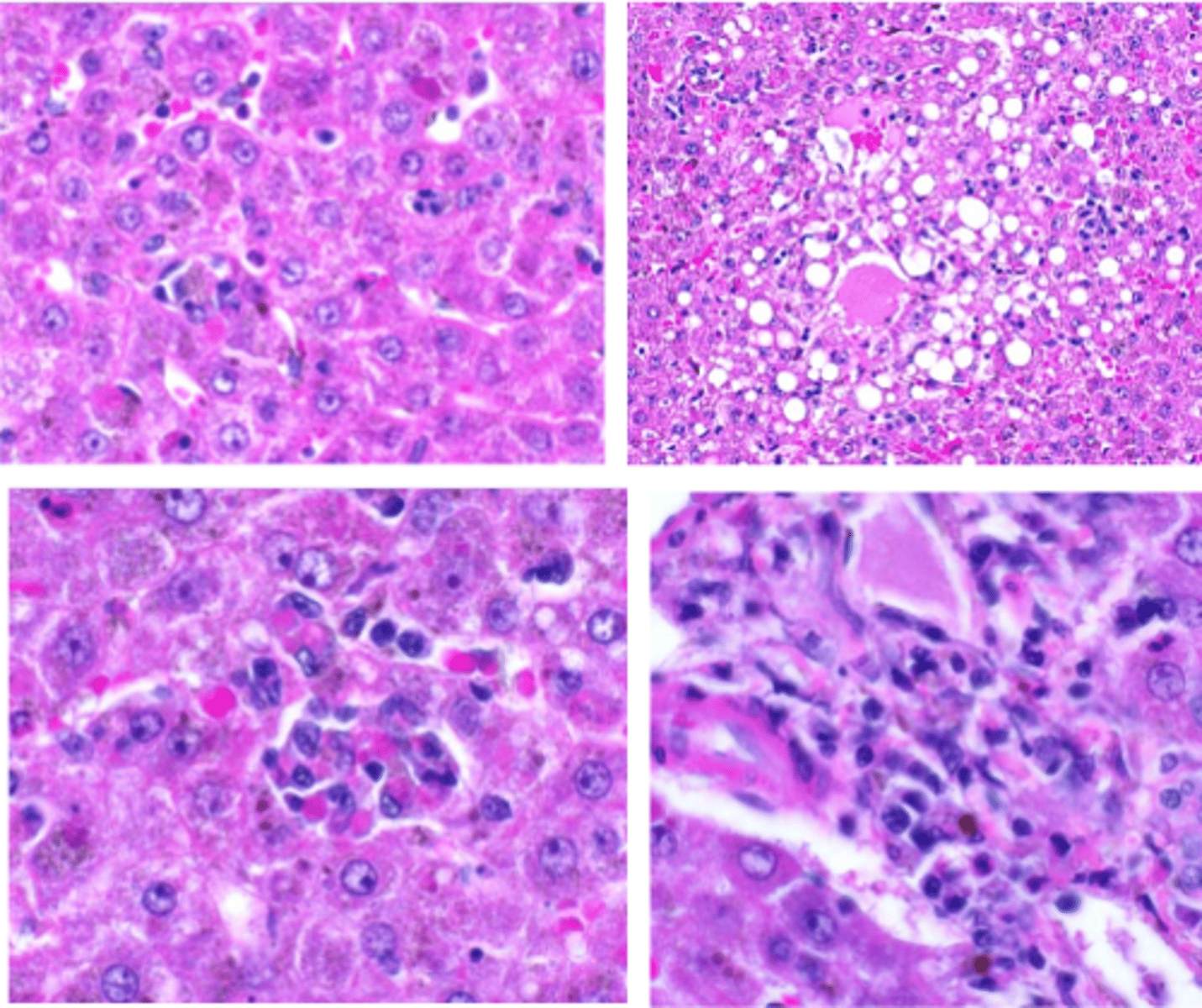
The liver pathology seen along with the Callitrichid is most likely due to what disease?
a. Helicobacter pylori
b. No pathology - normal for age and species
c. Idiopathic hemochromatosis
d. Lymphocytic choriomeningitis virus
d. Lymphocytic choriomeningitis virus. (Disease is Callitrichid hepatitis)
Although variable, what is the typical incubation period prior to the onset of clinical signs of Macacine herpesvirus 1 in humans?
a. 2-3 weeks
b. 5-7 weeks
c. 10-12 weeks
d. 16-18 weeks
e. 10-12 months
a. 2-3 weeks