Biology 30 AP - Cell Division
 Call Kai
 Learn
Learn Practice Test
 Spaced Repetition
 Match
Match Flashcards
 Knowt Play
1/81

There's no tags or description
Looks like no tags are added yet.
Name | Mastery | Learn | Test | Matching | Spaced | Call with Kai |
|---|
No analytics yet
Send a link to your students to track their progress
82 Terms
Why do cells divide?
growth/differentiation: mitosis enables organisms to grow from a single-celled zygote into a mature organism that might contain hundreds of trillions of specialized cells
maintenance: new cells produced to replace worn out/dead cells
repair: can regenerate damaged tissues (finger cut = new skin)
some organisms can regenerate entire body parts
Asexual reproduction
no new combination of cellular material occurs
all new cells contain same DNA as original cell
occurs in all somatic (body) cells, unicellular organisms, and simple multicellular organisms (budding, runners)
Chromosomes
small
sausage-like
may be found as individual chromatids (late stage of cell division) or as paired chromatids (sisters) connected at the centromere
all the DNA in a cell constitutes the cell’s genome
Homologous pairs (chromosomes)
all somatic cells contain homologous pairs of chromosomes
one from mother’s egg (maternal)
one from father’s sperm (paternal)
humans: 23 pairs (46 chromosomes total)
each homologous pair is similar in shape and length and is responsible for the same types of characteristics
Chromatin
long, thin threadlike material
present in this state during interphase
Sister chromatids
connected at the centromere
identical exact copies of each other
Stages of the cell cycle
interphase (G1, S, & G2)
mitosis
cytokinesis
continuous (does not start and/or stop) → different cells may cycle at different pace
Interphase
growth stage
90% of cell cycle
consists of G1, S, & G2
G1
cell growth (organelle replication)
“first gap”
DNA = 46 single strands of unreplicated chromatin
S - ynthesis
“synthesis” phase
DNA replicated
46 single → 46 double strands of chromatin
G2
growth stage
“second gap”
rebuild energy reserves
preparation for division
Mitosis
division of genetic material and nucleus
in somatic (body) cells
all cells produced are IDENTICAL in genetic makeup to the original cells
(particularly important that the chromosome # does not change)
Cytokinesis
division of the cytoplasm and organelles
Differentiation
unique appearance and functionality found is due to difference in the way that content is expressed
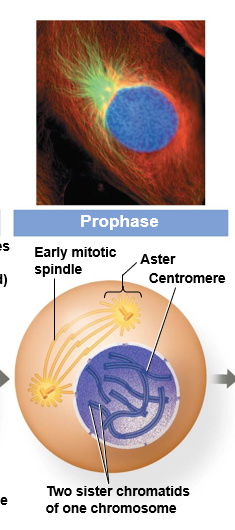
Prophase
contents of the nucleus become visible
DNA strands shorten and thicken
chromatin → chromosomes
centrioles (organelles during cell division) separate and move to opposite poles of cell
spindle fibres start to appear
nuclear envelope and nucleolus disappear
Metaphase
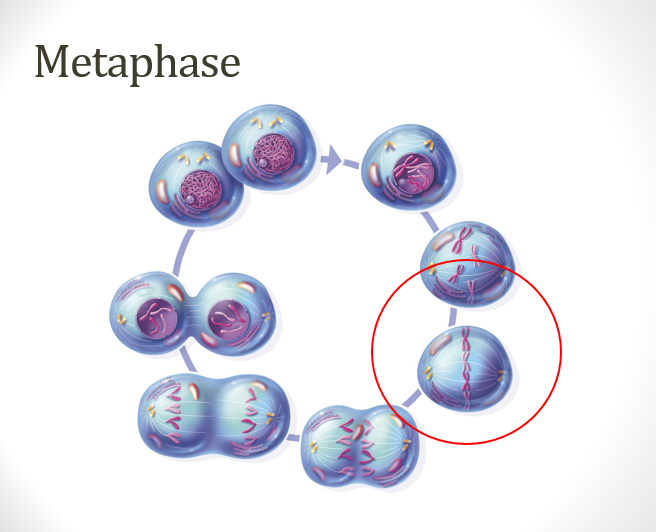
chromosomes move to center of cell
centromeres on align on equator
spindle fibres attach to the centromeres
Anaphase
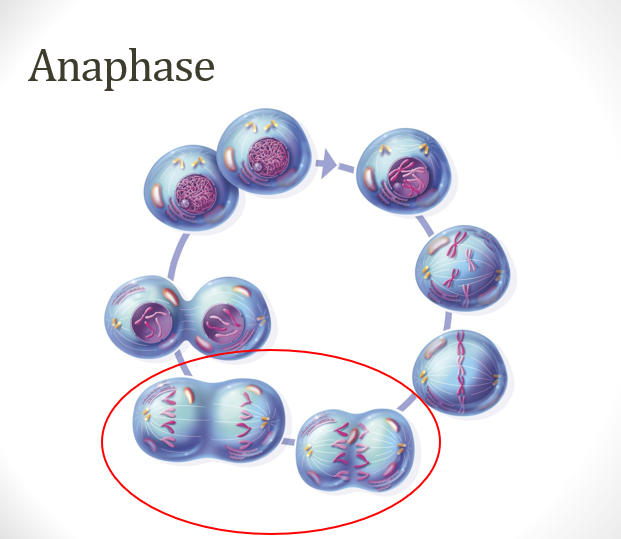
chromatids separate at centromeres
chromatids move to opposite poles of cell
same number of single-copy chromosomes should be at each pole
Telophase
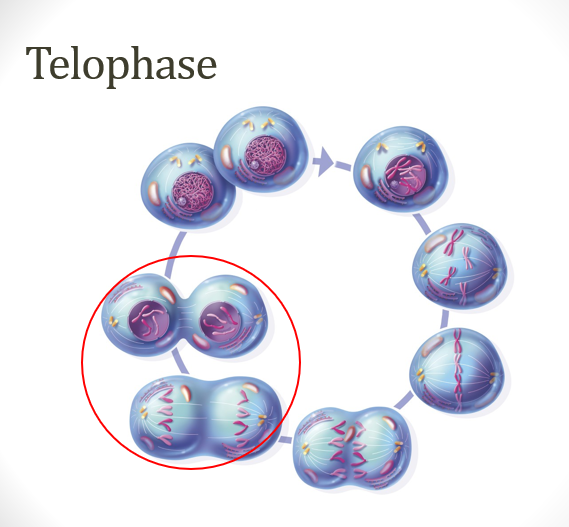
chromosomes at opposite ends of cell
chromosomes un-condense to form chromatin
nuclear envelope and nucleolus reappears
Cytokinesis
cytoplasm division → cell membrane pinches in to form two distinct daughter cells
plants: cell plate forms first which separates two cells by forming cell wall
animals: cell membrane pinches in at the cleavage furrow
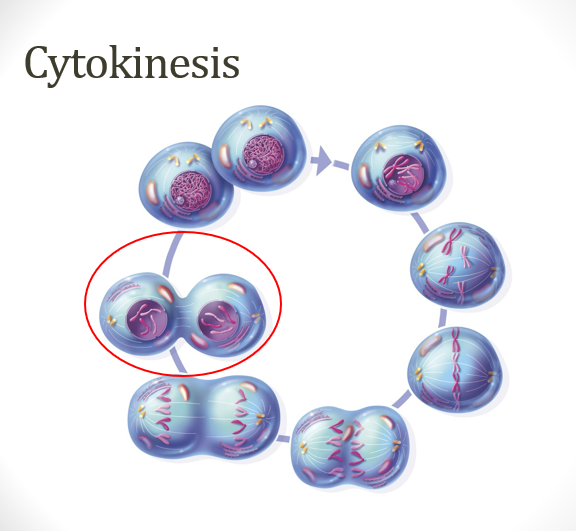
Steps of mitosis
Prophase
Metaphase
Anaphase
Telophase
Cytokinesis
PMAT
Somatic (body) cells
DNA from maternal and paternal sides combined
diploid = 2n
e.g. humans have 23 diff. chromosomes → 2(n) = 2(23) = 46
Gametes
sperm or eggs
hold half the DNA from somatic cells from which they came
haploid = n
e.g. humans have 23 different chromosomes → n=23
How is gender determined
last “pair” of chromosomes (#23) determines gender (sex chromosomes)
homologous pair → XX → female
XY = male
Zygote
ovum fertilized by sperm
original number of chromosomes (46 = 2n) restored
What does the life cycle alternate between?
haploid and diploid
Meiosis
creates gametes
reduces chromosome number from 2n → n by copying chromosomes once but dividing twice
First division (meiosis I)
separates homologous chromosomes
Second division (meiosis II)
separates sister chromatids
Prophase I
same as mitosis
chromatin → chromosomes
centrioles move to opposite poles
spindle fibres appear
nuclear envelope and nucleolus disappears
homologous chromosomes pair up side by side (synapsis) by corresponding genes → tetrad (4 chromatids)
homologous chromosomes overlap and occasionally break and exchange identical sized segments → crossing over = more genetic variation
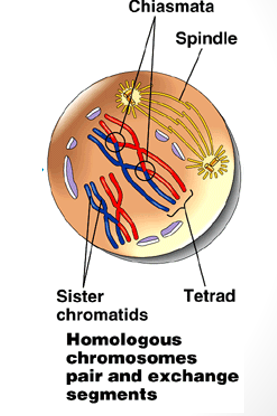
Chiasmata
location of crossing over
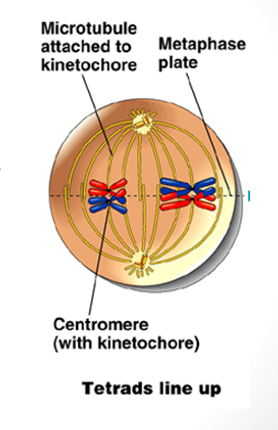
Metaphase I
homologous pairs move to center → centromeres on either side of equator
spindle fibres attach to centromeres only on exposed sides
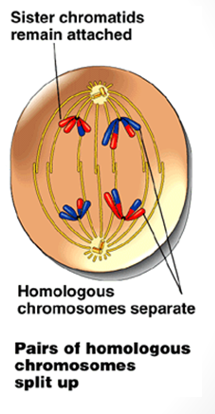
Anaphase I
homologous pairs separate (not sister chromatids) at the centromere
chromosomes move to opposite poles = segregation
23 double chromosomes at each pole (sister chromatids remain intact)
Telophase 1
chromosomes at opposite poles
do not uncoil to form chromatin
nuclear envelope occasionally reappears (in some cells)
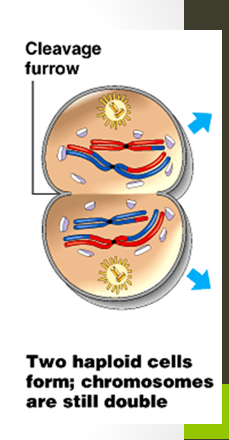
Step 5 of first division (meiosis I)
cytokinesis
Prophase II
centrioles move to opposite poles
new spindle fibres form
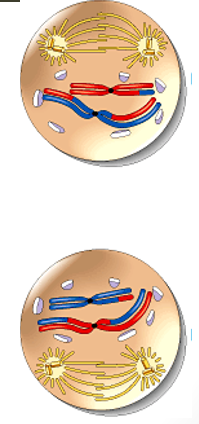
Metaphase II
cell moves directly to metaphase → no DNA replication & no formal organization of nucelus
chromosomes move to center
centromeres align on equator
spindle fibres attach to centromeres
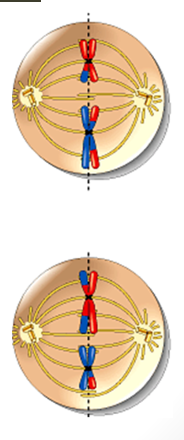
Anaphase II
spindle fibres shorten → chromatids separate at centromeres
chromatids move to opposite poles
23 single stranded chromosomes/chromatids at each pole
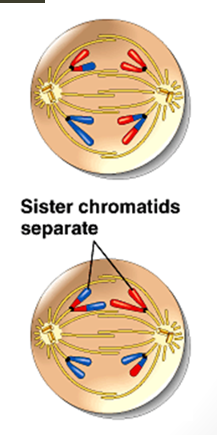
Telophase II
chromosomes at opposite ends un-condense to form chromatin
nuclear envelope reappears
Step 10 of second division (meiosis II)
cytokinesis
Gametogenesis
formation of ova & sperm follow the process of meiosis
specialization depends on function
Sperm specialization
movement (little cytoplasm)
lots of cell division
produce 4 small sperm
determine gender of the child
Egg specialization
nourish the zygote
only one ovum is produced per oocyte → the other 3 polar bodies sacrifice their cytoplasm (and other organelles) to produce one large egg
Why are mules sterile?
cannot form gametes
no homologous pairs to synapse during prophase I (horse 2n = 64, donkey 2n = 62, mule 2n = 63
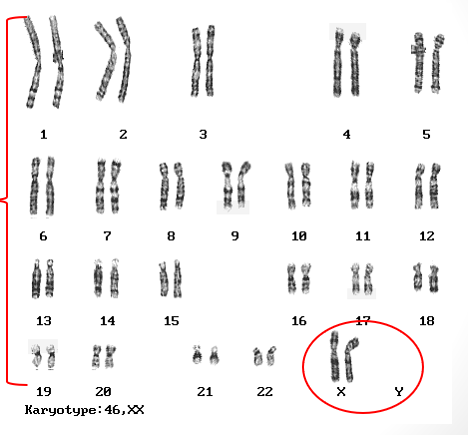
Karyotyping
method of identifying chromosomes
pictures of chromosomes are taken as the cells undergoes mitosis → picture is enlarged
individual chromosomes are cut up
What are chromosomes matched up on?
size (largest to smallest)
centromere position
g-banding
Nondisjunction
chromosomes don’t separate properly during anaphase I or II
one daughter cell produced during separation will be lacking information, one will have too much
occurs quite often among humans
impact so severe to zygote that miscarriage occurs very early
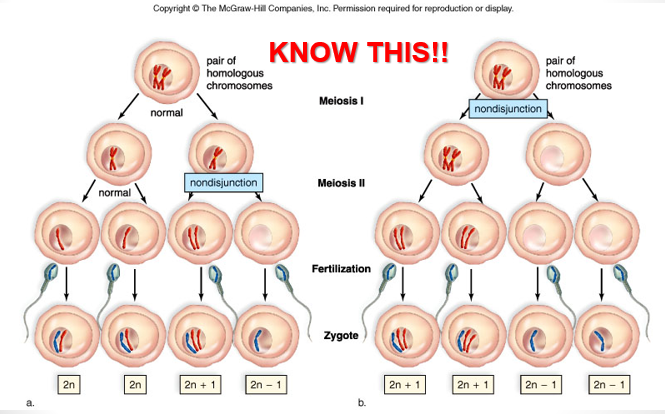
Trisomy
one too many chromosomes
one pair will be a triplet
Monosomy
one too few chromosomes
one pair will be a singlet
Syndrome
set of traits if baby survives nondisjunction
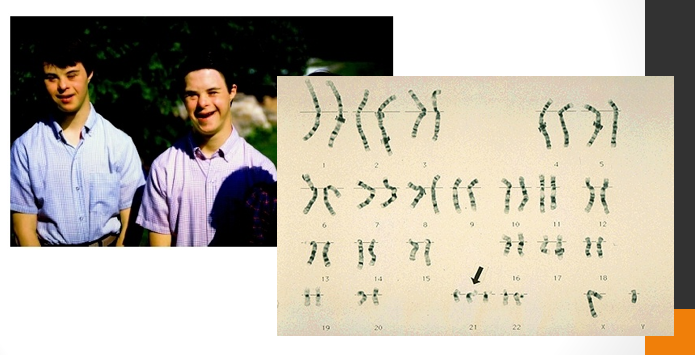
Down’s Syndrome
trisomy 21
most commonly known
common facial features
short stature & short fingers and toes
large tongue - speech difficult
mental disability
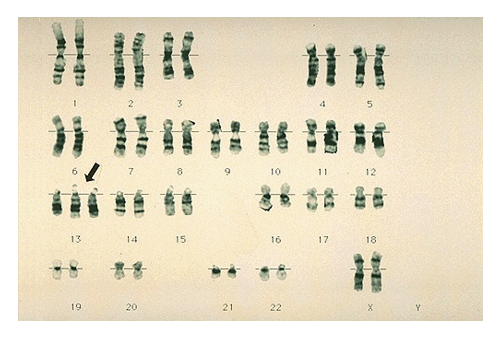
Patau’s Syndrome
trisomy 13
most fetuses die before term
5% live to age 3
45% die within first month
serious eye, brain, and circulatory defects, malformations, kidney/heart defects
Edward’s Syndrome
trisomy 18
only 10% survive past one year
all die early in infancy with many complications
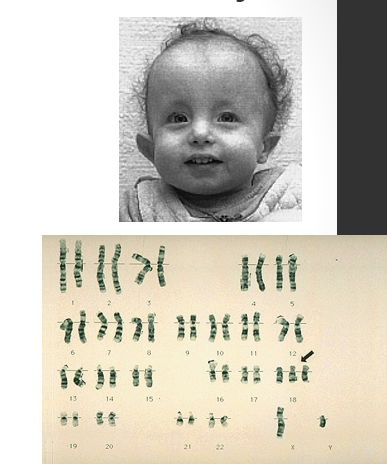
What is special about trisomy 21, 13, and 18?
only known trisonomic autosomal genetic disorders that result in surviving offspring
Nondisjunction of the sex chromosomes
can be fatal
most survive just fine
Klinefelter’s Syndrome
XXY
tall, sterile males
female characteristics
normal intelligence
Jacob’s Syndrome
XYY
super male
somewhat taller than average
slightly below normal intelligence
extra testosterone
Super female
XXX
normal intelligence
fertile
no physical problems
each increasing X = lesser intelligence
Turner’s Syndrome
only surviving monosomy
XO
live normal lives but do not mature sexually at puberty = sterile
short stature
short broad neck
broad chest
Polyploidy
nondisjunction desired characteristic in development of large luscious fruit
big strawberries = 4n or 6n
estimated 30-80% of living plant species are polyploidy
Cloning
process in which identical offspring are formed from a single cell or tissue (clone = cutting)
all cells are identical (some small variations due to mutations are expected)
used in some plants and animals for reproduction
Asexual reproductive strategies
binary fission
budding
sporulation
regeneration
vegetative propagation
embryo splitting
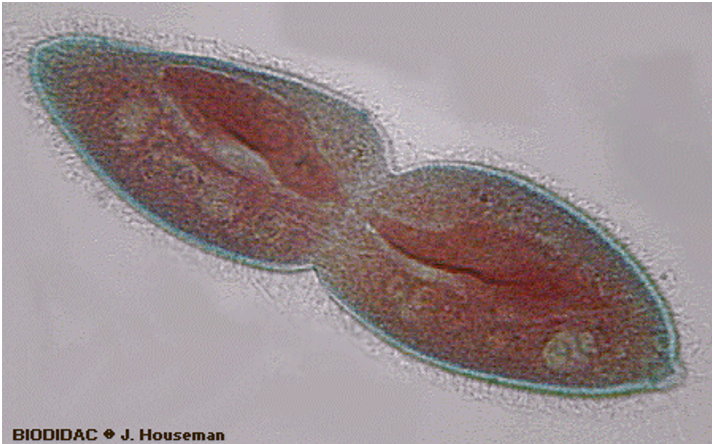
Binary fission
equal division of the cytoplasm and nucleus of an organism resulting in two new organisms
e.g. ameba, paramecium, euglena
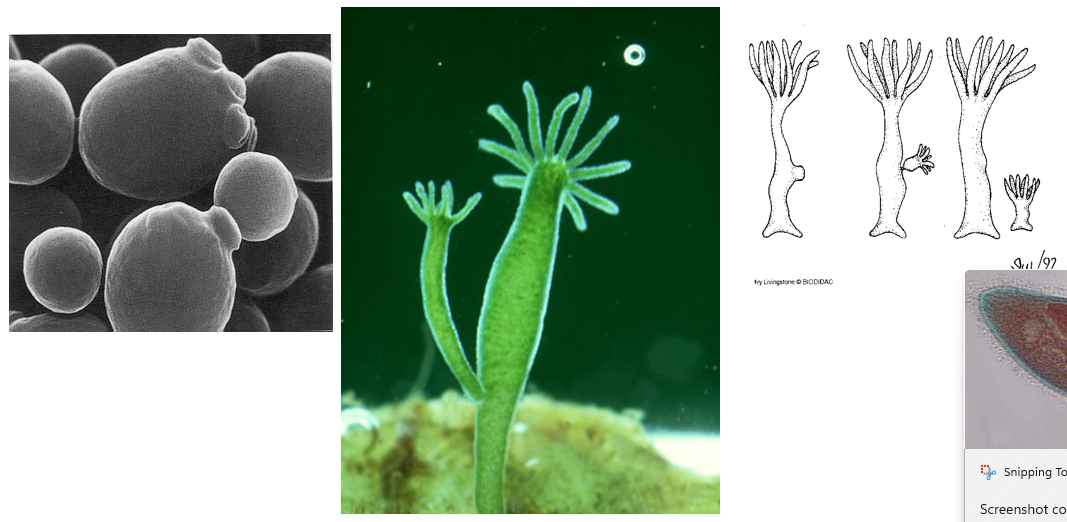
Budding
nucleus of an organism’s cell divides equally but the cytoplasm divides unequally
new cells formed may live as individuals or as colonies
e.g. yeast, hydra
Sporulation
production of spores
e.g. molds
Spores
single, specialized cells released from the parent
enclosed in a protective case and develop when environmental conditions are favourable
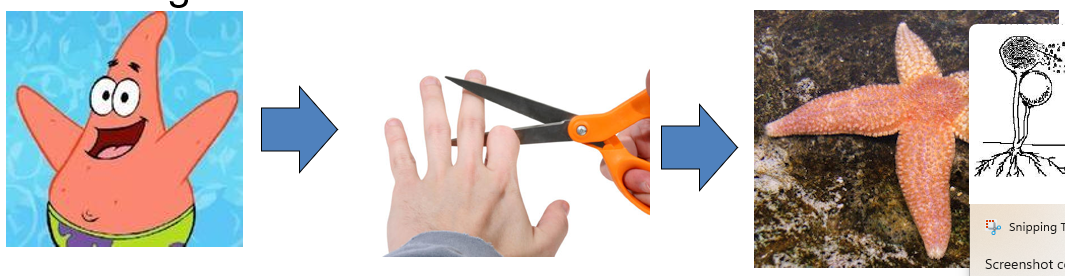
Regeneration
development of entire new organism from part of an original organism
e.g. starfish: one ray and part of central body can develop into an entire new organism OR restoration fo lost body parts
Vegetative propagation
regeneration in plants
complete new plants develop from part of the original plant
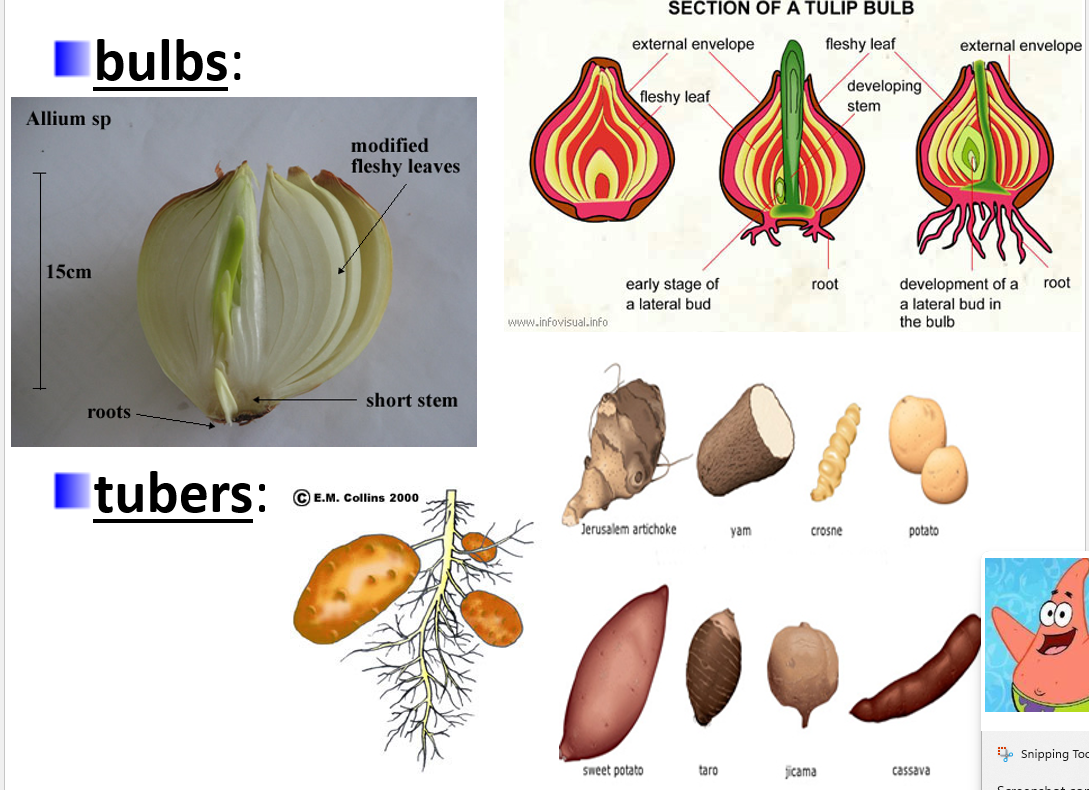
Bulbs
natural
enlarged underground stems surrounded by leaves & containing stored food
e.g. onions, tulips
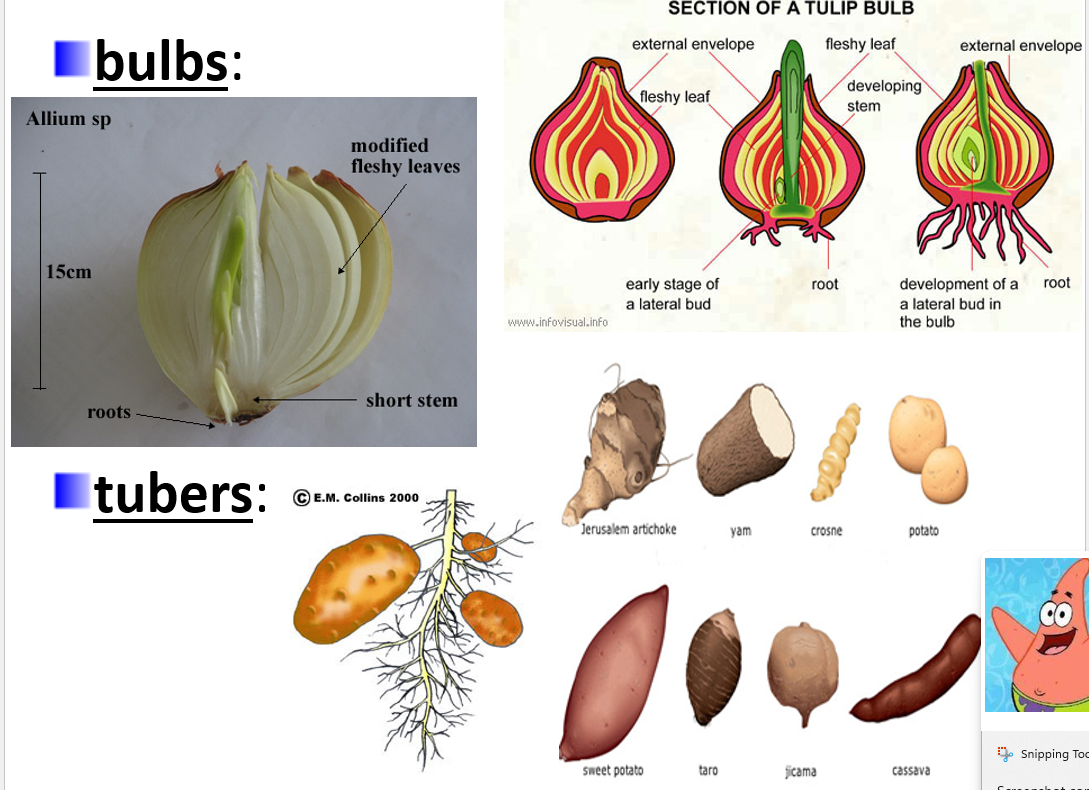
Tubers
natural
enlarged underground stem with buds or “eyes” that contain stored food
new plants develop from the bud
e.g. potato
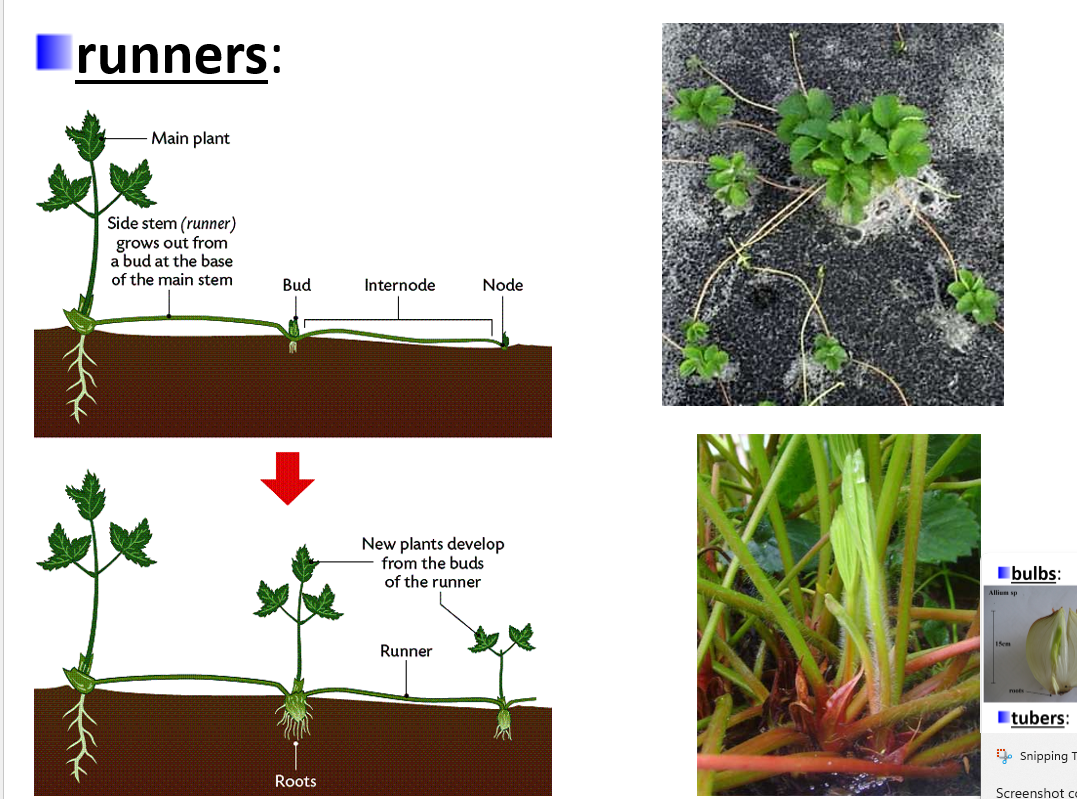
Runners
natural
stems that grow along the ground
at intervals, roots form and penetrate the soil and new plants develop at these points
e.g. strawberries
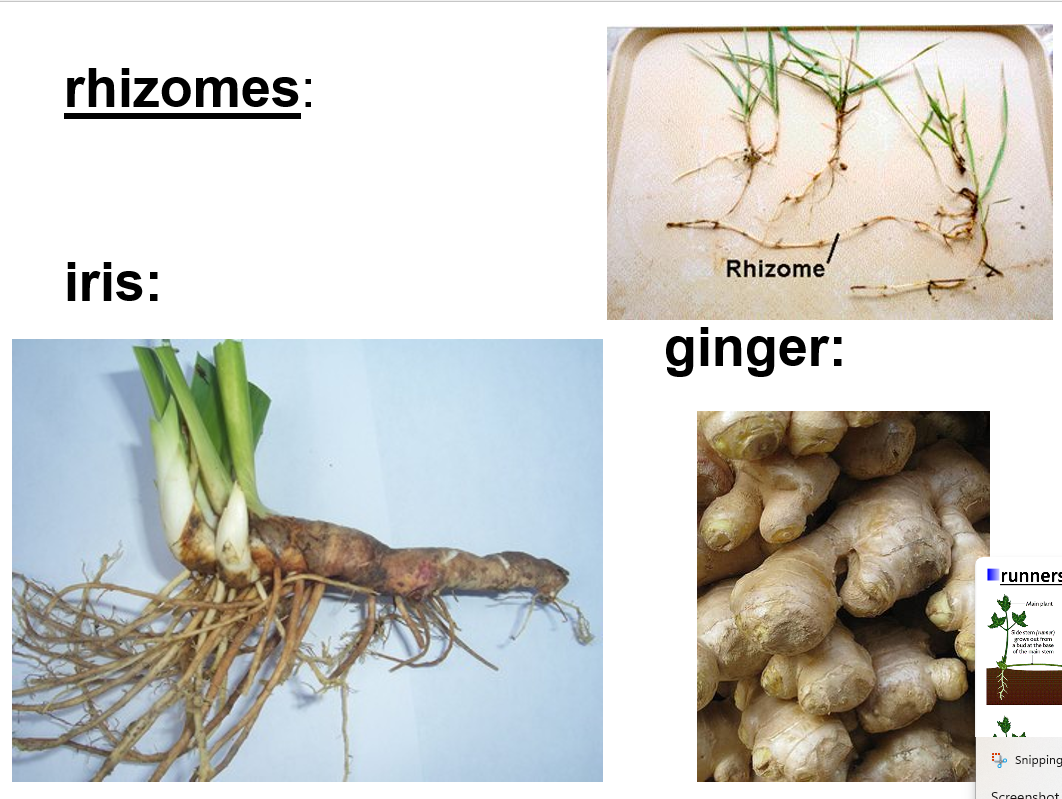
Rhizomes
natural
underground stems from which new plants develop at intervals
e.g. quackgrass
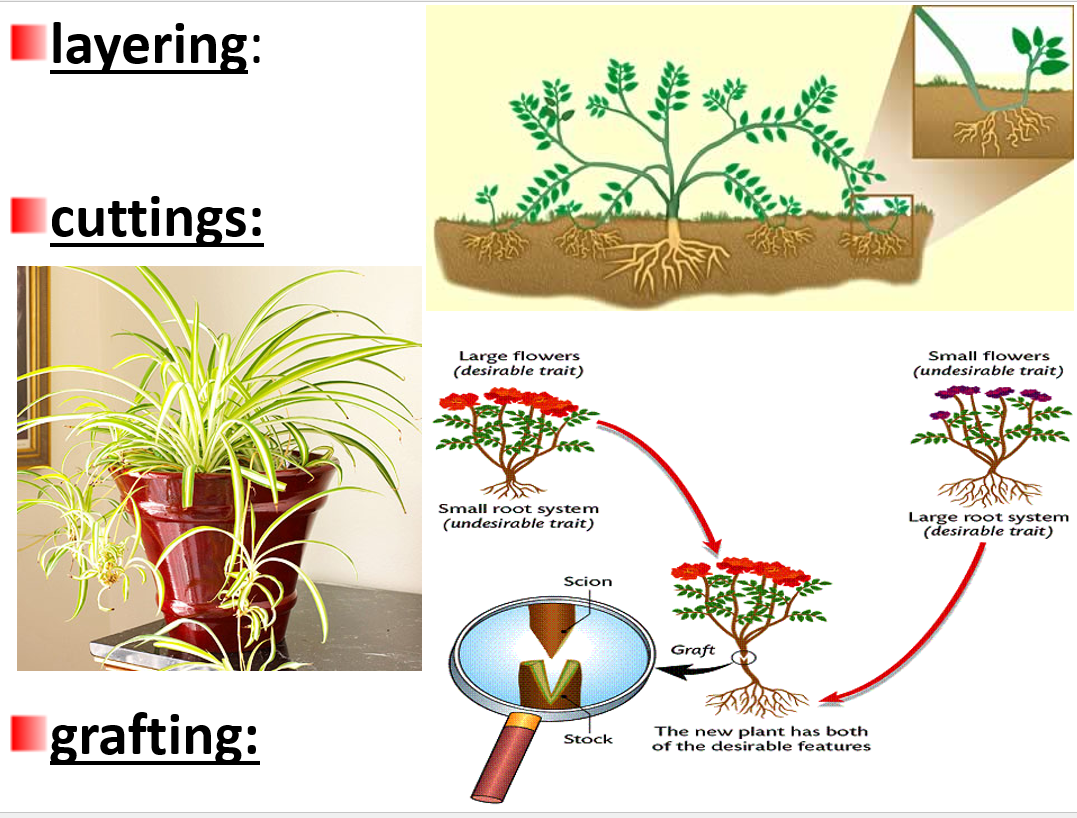
Layering
occurs when part of an old plant is bent and covered with soil
a new plant develops from the covered plant
e.g. blackberry
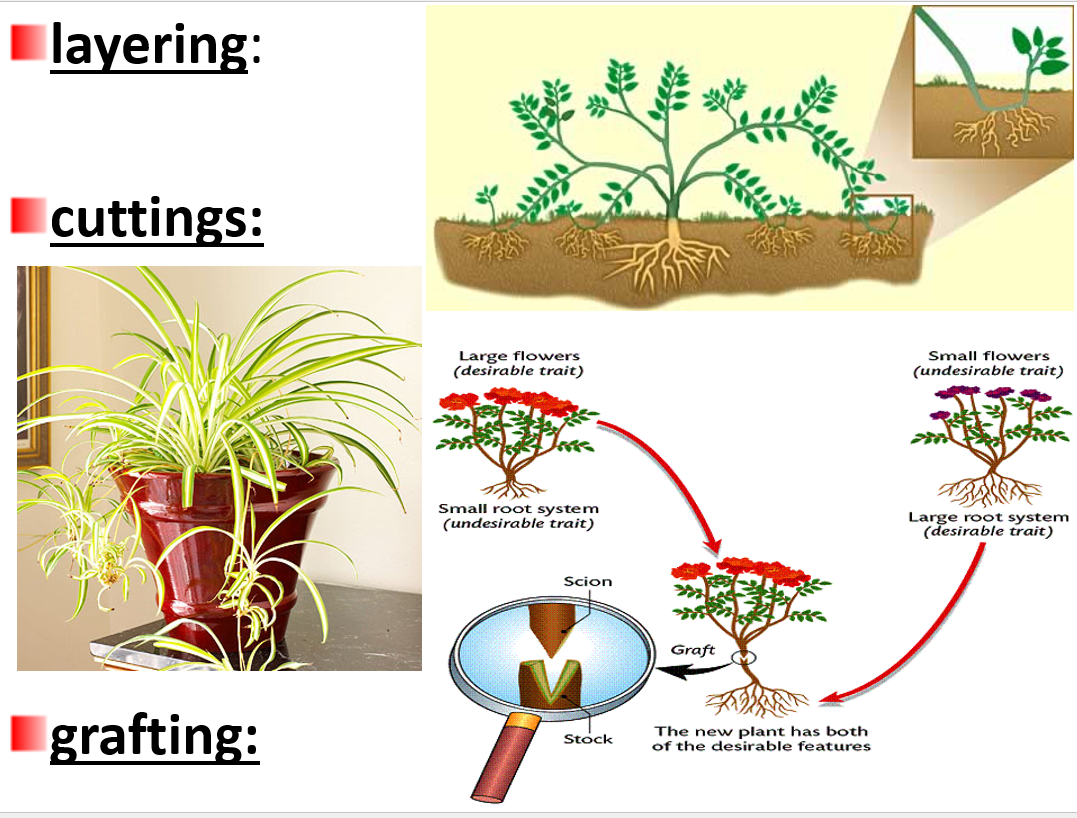
Cutting (slips)
piece of plant is placed in moist soil or water and complete plant develops
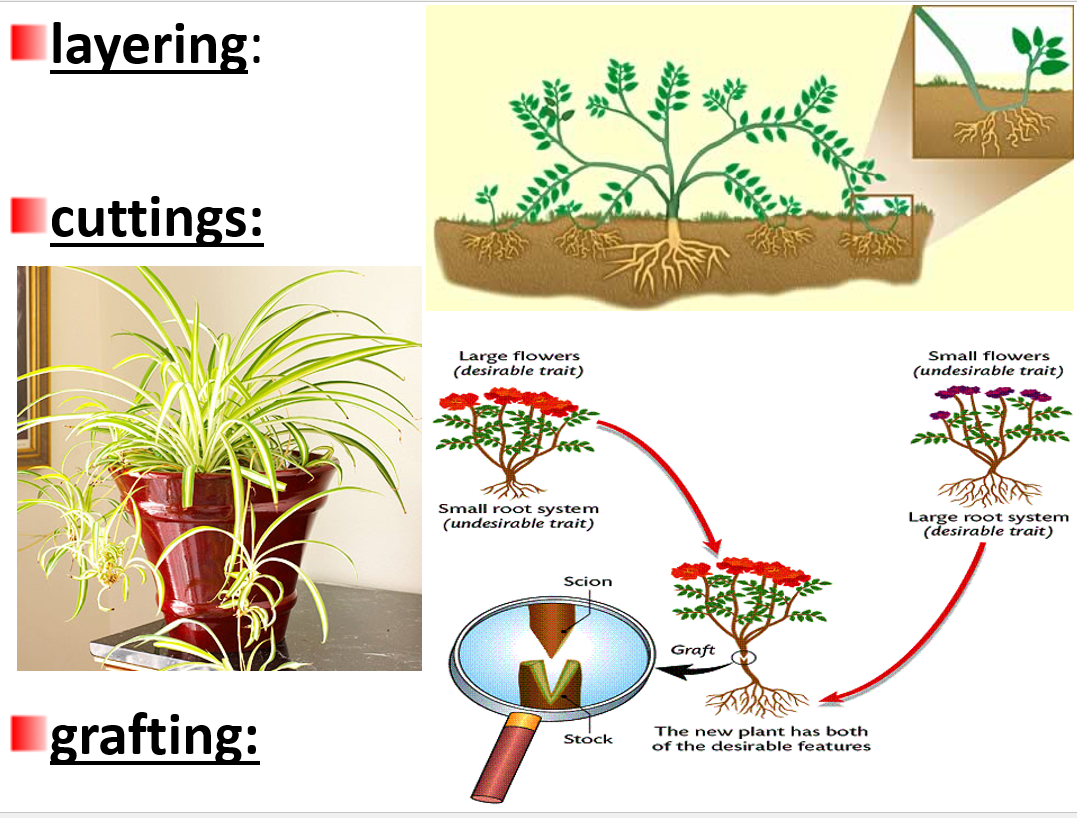
Grafting
stem of one plant to be propagated is attached to cut end of another growing plant
Cancer
uncontrolled cell growth → too much life = mitosis
abnormal growth (unlike normal controlled growth replacing dying and dead cells) without the signals of the body directing growth
lost the ability to differentiate and carry out cell processes
prevention focuses on elimination of carcinogenic/mutagenic substances (tobacco, diet, sun)
“Fast-forward” cell cycle
cancer cells show growth more rapid than fetal growth outside of the human body
Metastasis
spreading of cancer cells through the body
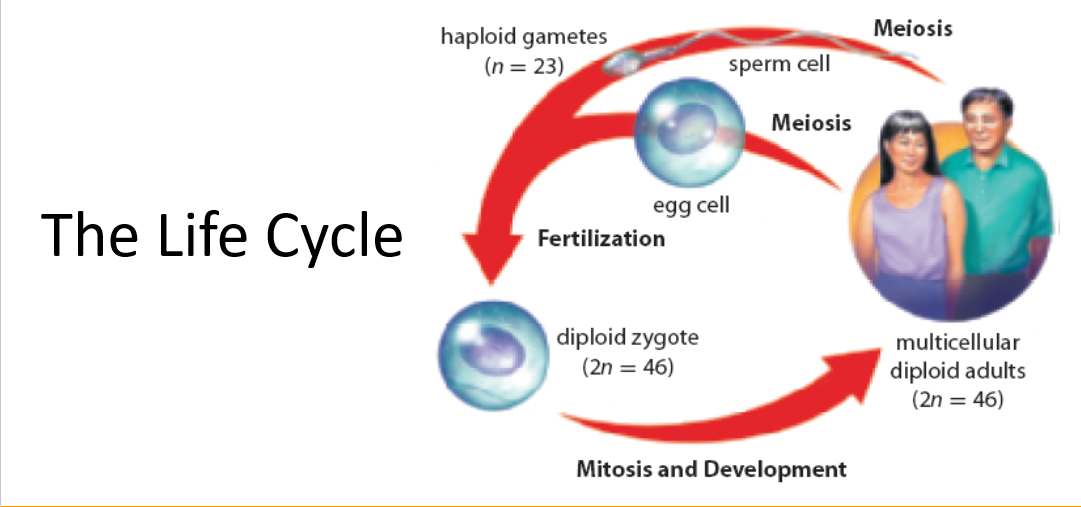
Life cycle
based on regular pattern of meiosis and mitosis
alternation of generation refers to the alternation of diploid and haploid generations
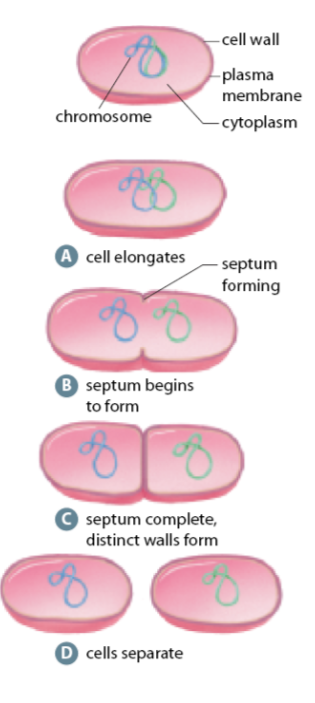
Binary fission (expanded)
bacteria and other prokaryotes - single, circular chromosome and no nucleus
replicates via binary fission
favourable conditions = exponential division rate (huge populations in little time)
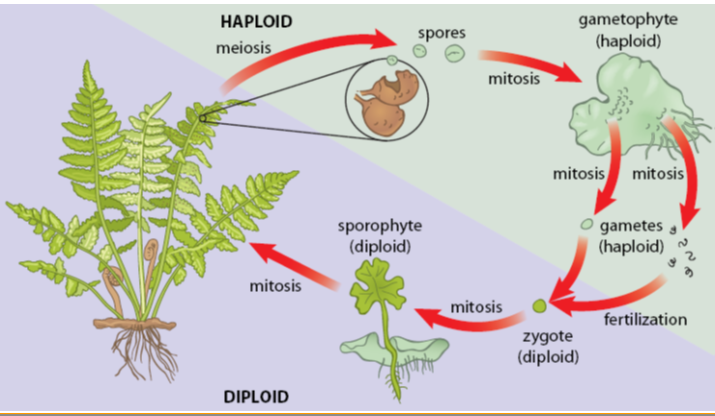
Life cycle of a fern
diploid generation of a plant = sporophyte (spore-making body)
meiosis → sporophyte produces a haploid spore → grows into a plant body called gametophyte (gamete-making body)
gametophytes = produce male and female gametes → fuse to make a sporophyte
Advantages of sexual reproduction
offers population a way to adapt to changing environment
competition among siblings may be reduced if genetically diverse
increases variation
Advantages of asexual reproduction
proceeds quickly and does not require second organism
less energy
maximizes the chance that individuals will survive