L5-Cell cycle+mitosis+ cancer
 Call Kai
 Learn
Learn Practice Test
 Spaced Repetition
 Match
Match Flashcards
 Knowt Play
1/20

There's no tags or description
Looks like no tags are added yet.
Name | Mastery | Learn | Test | Matching | Spaced | Call with Kai |
|---|
No analytics yet
Send a link to your students to track their progress
21 Terms
Cells in multicellular organisms undergo a regular cycle of division separated by periods of cell growth. This is known as the…1? and it can be divided into 3 stages which are .
Cell cycle
1.Interphase. 2.Nuclear division 3Cytokinesis
Cell cycle- interphase:
The cell spends the …1? of its time in this stage. Often referred to as the 'resting stage' since no cell division takes place.
During this stage there are 3 main events:
G1: Growth stage: Proteins …2? and the cell grows
S1: Synthesis: DNA/Chromosomes …3?
G2: Growth stage 2: …4? form
and the cell grows
1.majority. 2.increase. 3.duplicate. 4.organelles
Cell Cycle - Nuclear division
This stage sees the …1? divide into either
2 - mitosis (more info to come)
Or
4 - meiosis
Nucleus
Cell Cycle - Cytokinesis This is the final stage and always follows nuclear division. During cytokinesis the cytoplasm and the 1…? divide to produce
2 new cells (mitosis) or
4 new cells (meiosis)
1.cell membrane
The length of the cell cycle varies between organisms and even between the cell types.
Typically how long does it take for mammalian cells to complete the cell cycle and what percentage of that time is spent in the interphase stage?
Typically, mammalian cells takes about 24hrs to complete a cell cycle, of which 90% is spent in interphase
Nuclear division can take place by either mitosis or meiosis. What do these produce?
Mitosis - produces two genetically identical daughter cells that have the same number of chromosomes as the parent cell.(46)
• Meiosis - produces four genetically different daughter cells, each with half the number of chromosomes of the parent cell. (Covered later in the course)
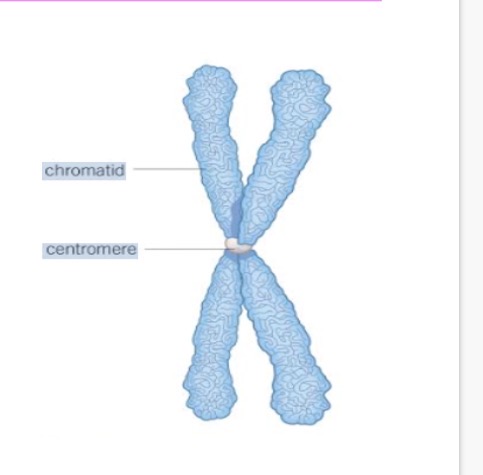
Chromosomes are tightly coiled protein bound …1?DNA found inside the nucleus.
•They are made of two chromatids joint in the middle by a …2?
(We will cover these in more detail later in the course!)
1.liner. 2.centromere
Mitosis:
Upon cell division, each daughter cell has the exact copy of …1? of the parent cell, except in the rare event of a …2?
Mitosis always follows a period where the cell is not dividing known as …3?. During interphase the DNA is replicated and each copy is joint at the centromere.
4.Mitosis can be divided into 4 stages which are…(Pmat)
1.DNA. 2.mutation 3.interphase
4.prophase, metaphase, anaphase, telophase
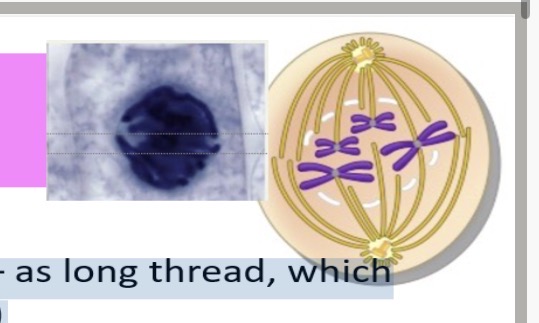
1.Mitosis - Prophase:
Chromosomes become visible - as a long thread, and then …1? (shorten and thicken).
Centrioles move to the …2? (opposite ends of the cell) and Spindle fibres develop from the …3?
The nucleolus …4? and the nuclear envelope breaks down, leaving the chromosomes free in the …5?.
1.condenses 2.poles. 3.centrioles 4.disappears. 5.cytoplasm
Mitosis - Metaphase:
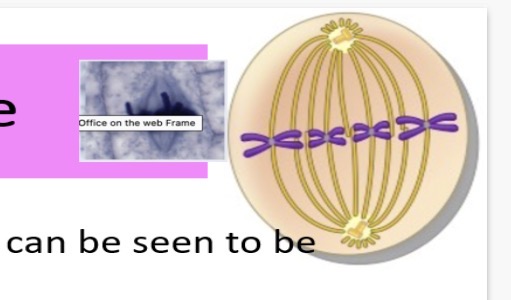
By metaphase the chromosomes can be seen to be made up from …1? chromatids.
Each chromatid is an exact …2? of the other And the chromatids are joint by a centromere.
The …3? from the poles are attached to the centromeres And Chromosomes are pulled along the spindle apparatus(microtubules) and arrange themselves across the …4?
Two 2.copy. 3.microtubules(spindle fibers). 4.equator
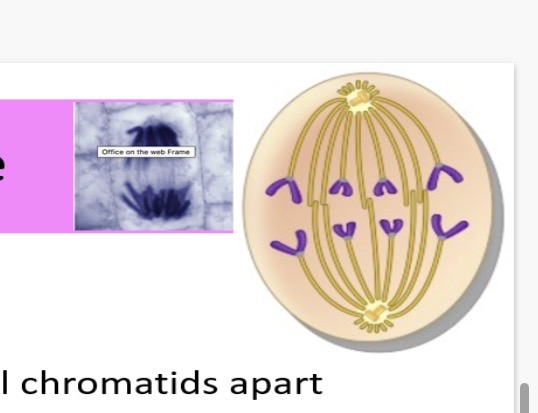
Mitosis - Anaphase
Centromeres divide into …1?
Spindle fibers pull the individual chromatids apart and Chromatids move rapidly to …2? poles of the cell,
they are now called chromosomes. (The energy for this is provided by mitochondria which surround the spindle fibers.)
1.two. 2.opposite
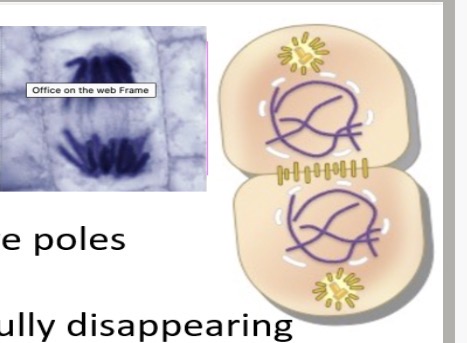
Mitosis - Telophase:
Chromosomes reach their respective poles and They become longer and …1?, fully disappearing altogether.
Spindle fibers disintegrate and the nuclear envelope and nucleolus …2? And Then, the cytoplasm and cell membrane divide in a process call …3?
1.thinner. 2.reform. 3.cytokinesis
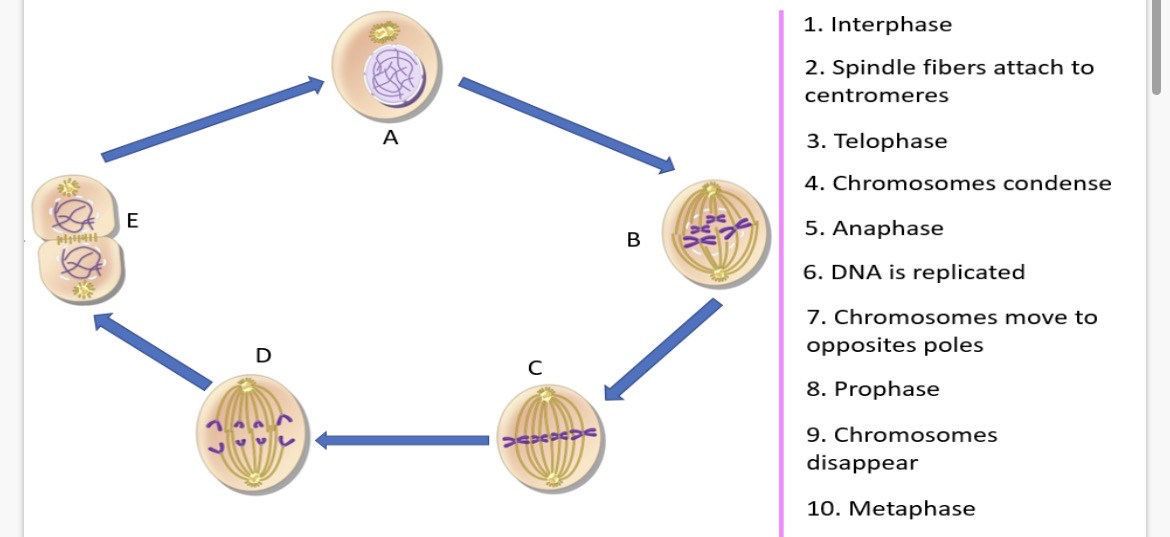
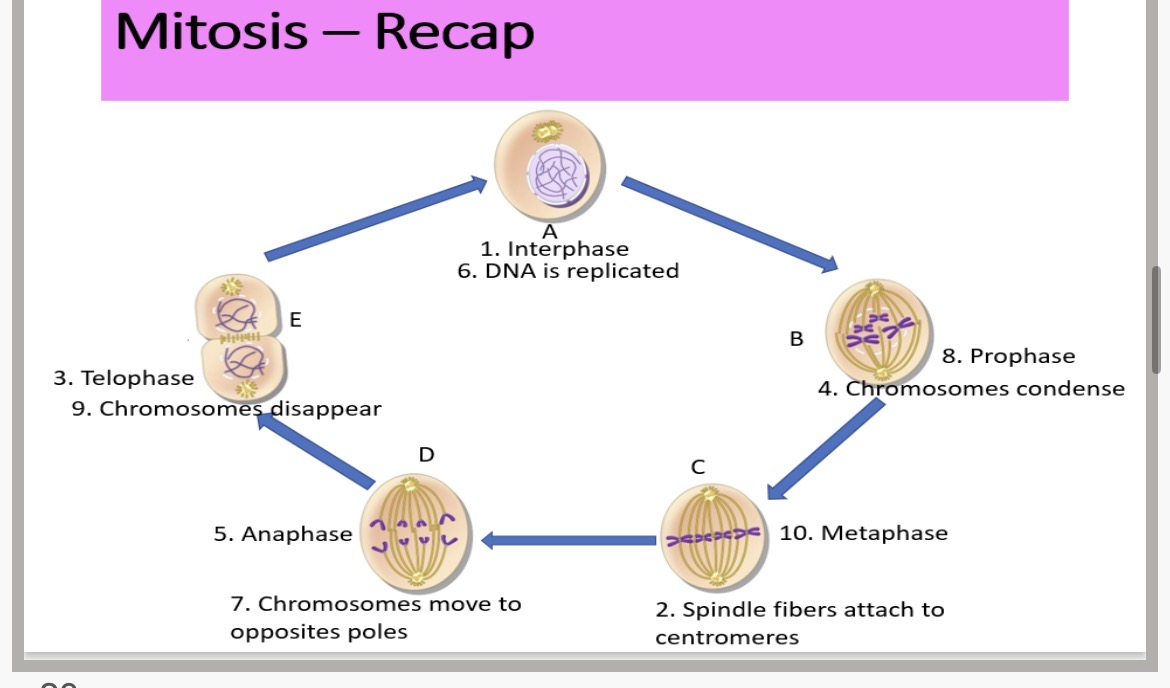
Complete the task:
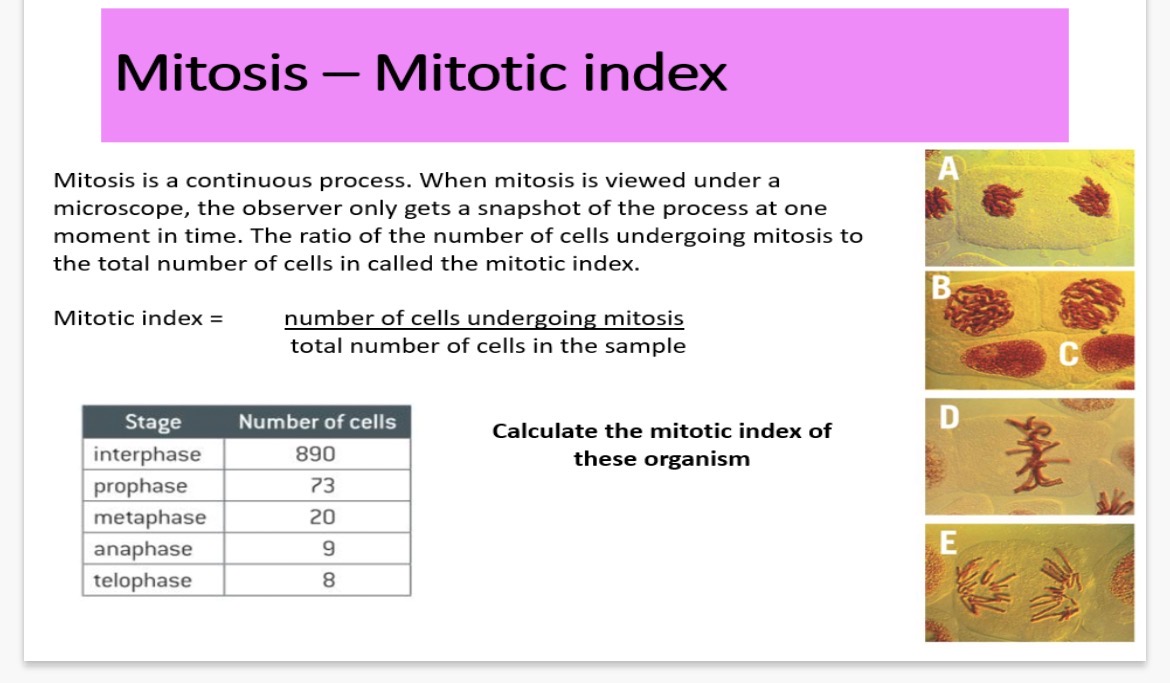
Read the information and answer the question:
73+20+9+8=110 number of cells in mitosis
110+890=1,000 Total Cells in sample
110/1000=0.11
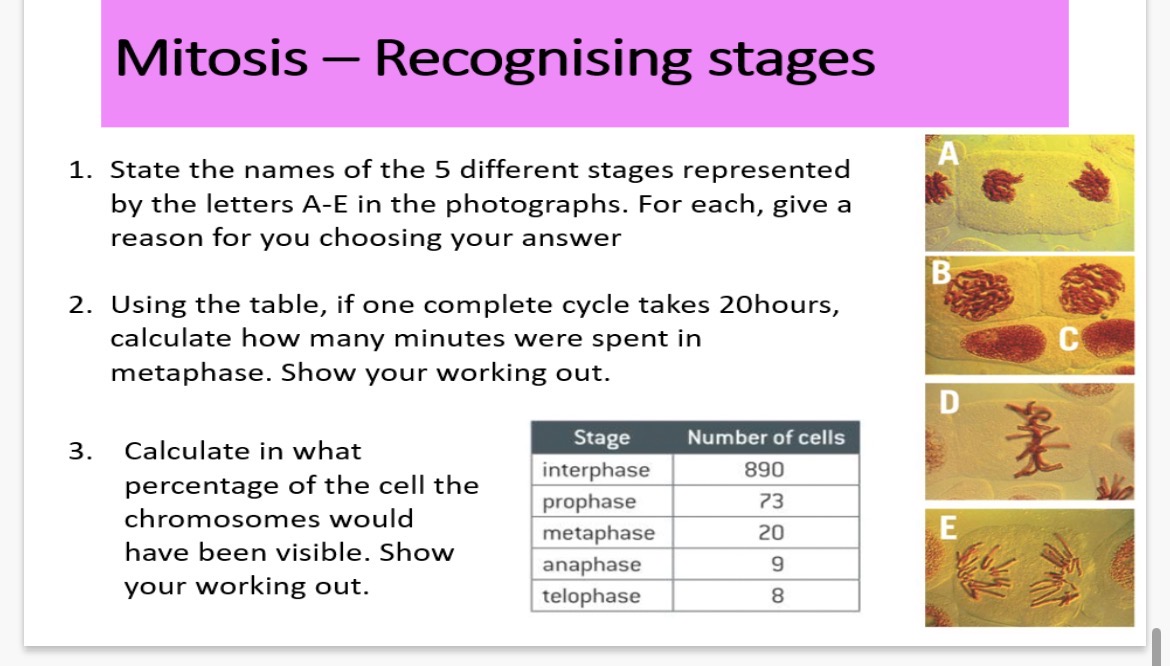
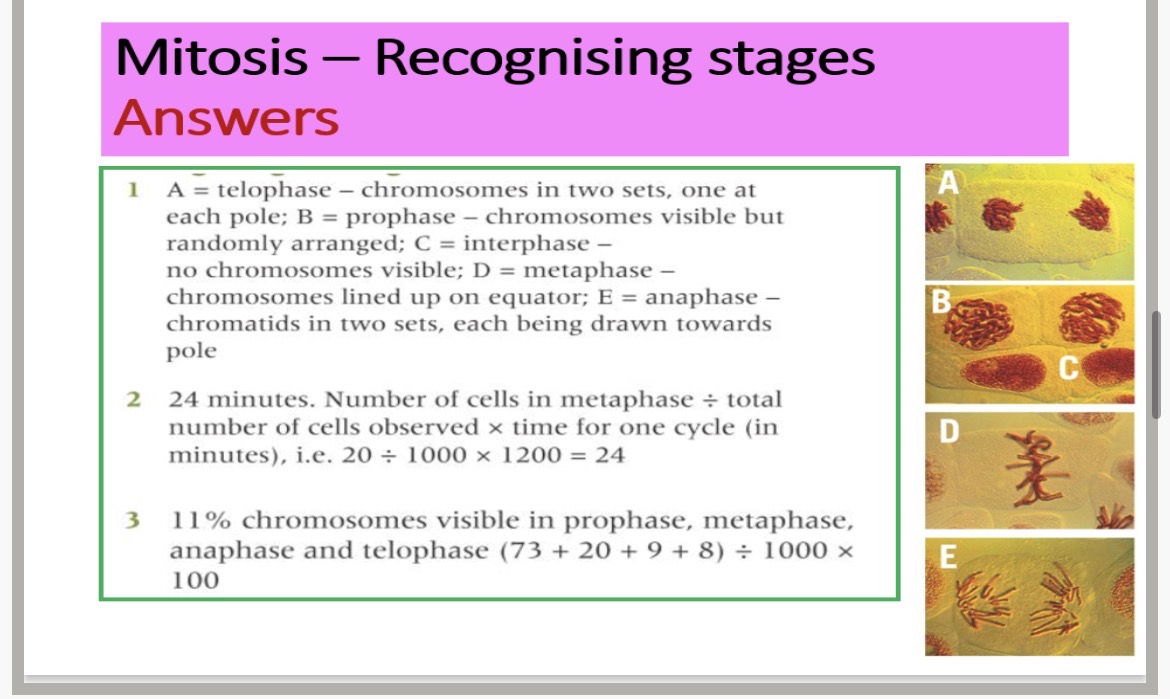
Answer the following questions:
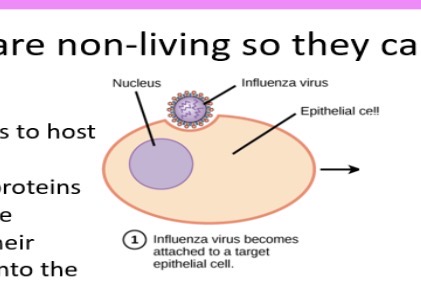
Cell division - Virus:
Viruses are non-living so they cannot undergo cell division.
1. Viruses …1? proteins attach to complementary receptors on host cells surface membrane.
2. They inject their nucleic acid into the host …2?.
3. The nucleic acid provides the …3? for the host cells ribosomes and enzymes to start producing viral proteins and nucleic acids.
4. These are then assembled into new …4?
1.proteins. 2.cell. 3.instructions. 4. Virus particles
Cancer and the control of Mitosis:
(Cancer is a group of diseases (approx. 200) caused by a growth disorder of cells.)
1.Cancer is a result of…
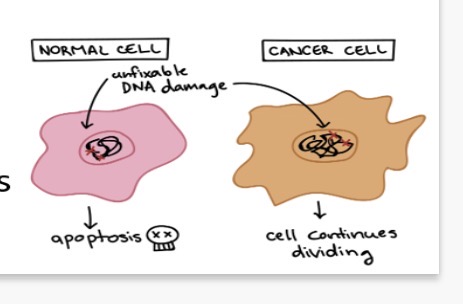
Usually if there is an irregularity in the DNA (a mutation) the cell regulation system causes …2? (Controlled cell death) but not here!
As a consequence, a group of abnormal cells (a …3?) develops and constantly expands in size. Tumours can develop in any organ of the body.
damage to the genes that regulate mitosis and the cell cycle which leads to uncontrolled growth and division of cells
2.apoptosis. 3.tumour
The role of mitosis is to either:
• …1? the size of the tissue during development (growth)
• …2? dead and worn-out cells (repair)
The rate of mitosis is controlled by two types of genes, a mutation in either of these will result in uncontrolled mitosis
These mutant cells are structurally and functionally different to the normal cells. Most mutated cells are …3? (apoptosis) by regulation markers but if they survive they are capable of dividing, forming clones of themselves and resulting in a …4?.
Increase 2.replace. 3.killed. 4.tumour
Cancer - The types:
Malignant tumours- • Grow rapidly • Less compact(can spread around the body)• More likely to be life-threatening
Benign tumours- • Grow slower • More compact • Less likely to be life-threatening
Treatment:
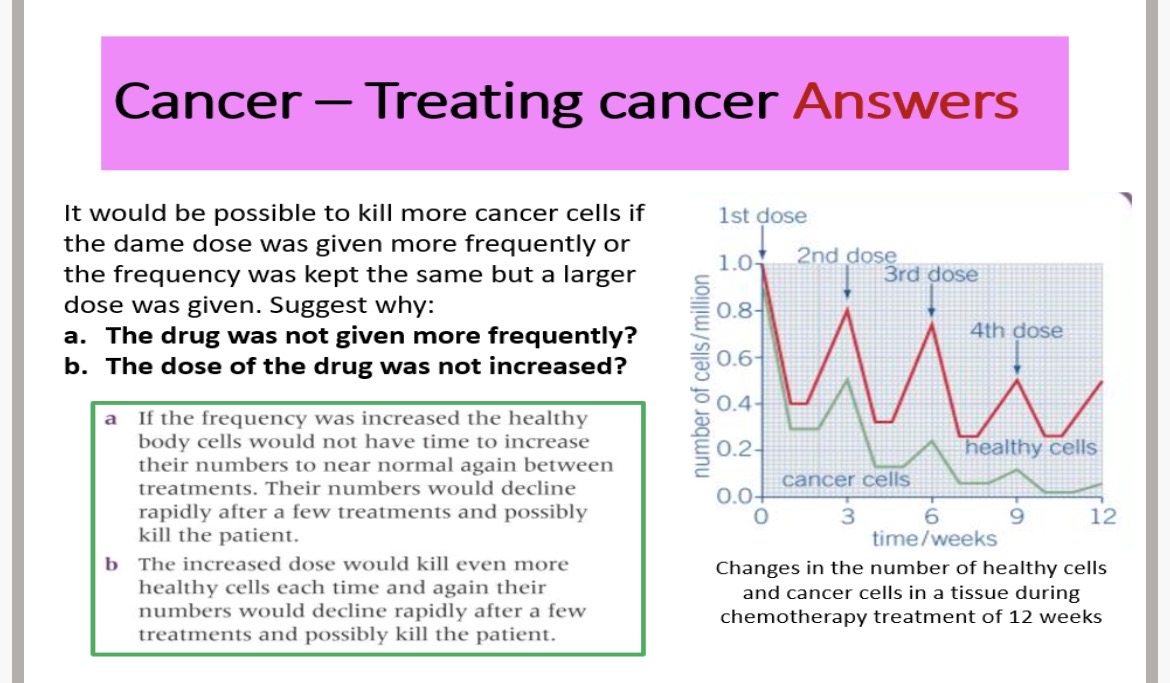
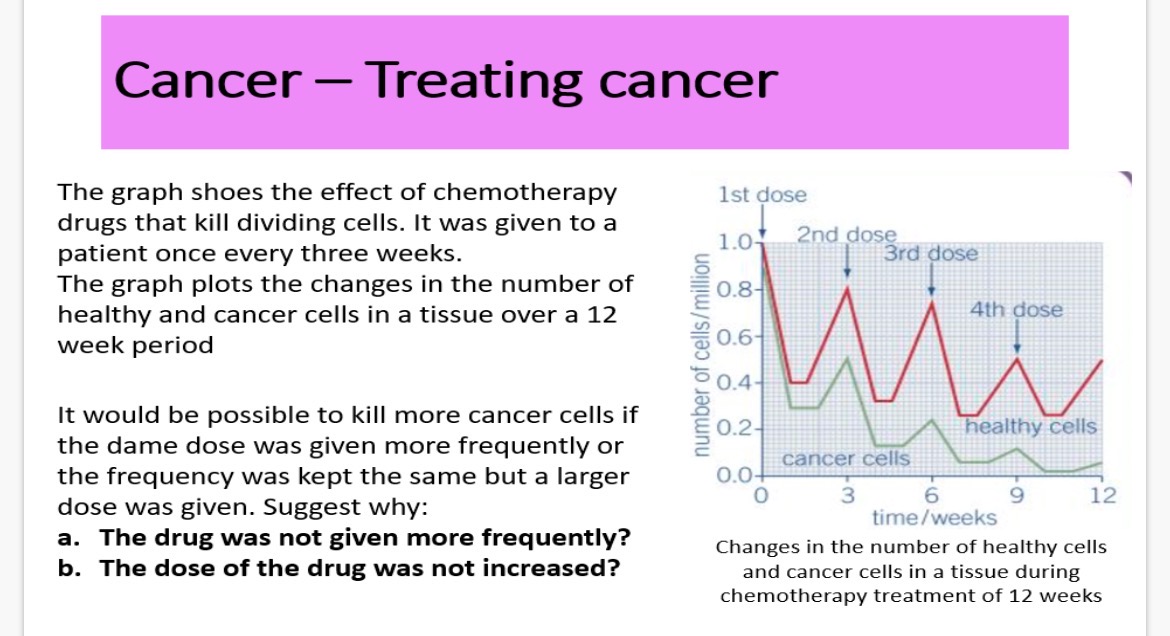
Treatments of cancer involve killing dividing cells by …1? a part of the cell cycle. This disrupts the cell cycle and cell division so growth stops. Drugs used to treat cancer (chemotherapy) disrupt the cell cycle by:
• Preventing DNA from …2? • Inhibiting the metaphase stage by …3? with spindle formation
1.blocking. 2.replicating. 3.interfering
What is the major problem of drugs that disrupt the cell cycle?
They also disrupt the cell cycle of normal cells! The drugs target cell division, and cancerous cells have a rapid rate of cell division compared to normal cells so are targeted more frequently and damaged to a greater degree.
Those normal body cells, such as hair-producing cells, also divide rapidly, so are vulnerable to damage. Hence hair loss associated with chemotherapy
Read the information and answer the questions.