ANTH3100: Chapter 6 - Anchient Human Forms
 Call Kai
 Learn
Learn Practice Test
 Spaced Repetition
 Match
Match Flashcards
 Knowt Play
1/41

There's no tags or description
Looks like no tags are added yet.
Name | Mastery | Learn | Test | Matching | Spaced | Call with Kai | Chat |
|---|
No analytics yet
Send a link to your students to track their progress
42 Terms
What is Taphonomy?
The study of what happens to an organism's remains after death
What is Petrification?
Skeletal remains absorb surrounding minerals that eventually replace the organism's inorganic tissues
What is Radiocarbon Dating?
Primary technique for estimating antiquity from Pleistocene through the present
What are the 4 Dating Techniques? How do they work?
1) Tephrostratigraphy
- Dating of Pyroclastic Layers of Volcanic Ash
2) Biostatigraphy
- Relative Age Based on Fossil Location/Assemblages
3) Paleomagnetism
- Using Rocks to Determine Direction and Intensity of Earth's Mangetic Field
4) Obsidian Hydration
- Measuring Water in Obsidian Tools for Abs Dating
What Caused the O-S Extinction Event (445MYA)?
Global Warming Related to Volcanism and Anoxia
What Caused the Late Devonian Extinction Event (372-359MYA)?
Kellwasser Event (372) - Destroyed Coral Reefs and Marine Life
Hangenberg Event (359) - Wiped Out Most Other Fish and Ammonoids
What Caused the P-T Extinction Event (252MYA)?
Volcanoes and Excess CO2 in the Atmosphere
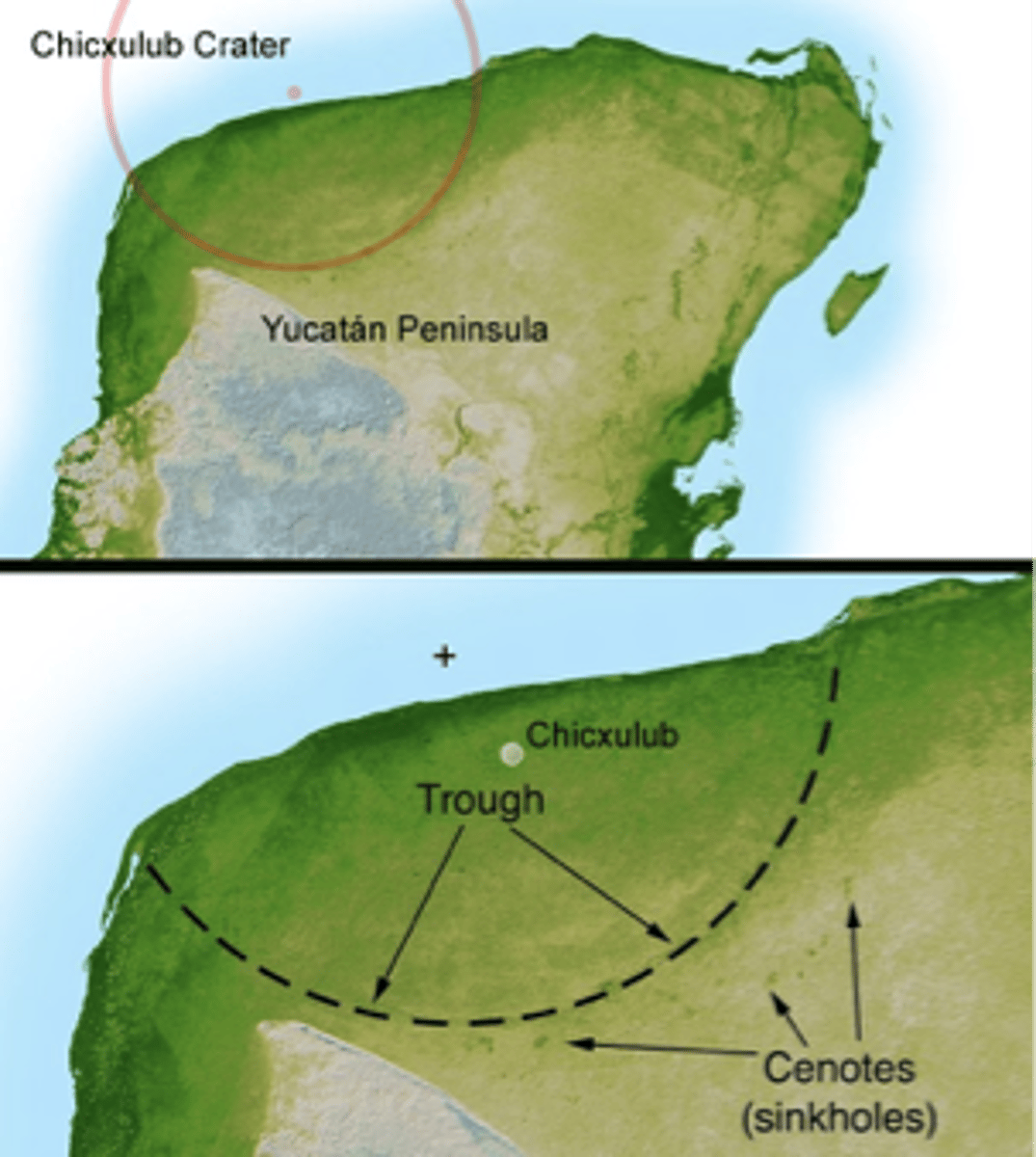
What Caused the K-T Extinction Event (66MYA)?
Asteroid and Global Heating
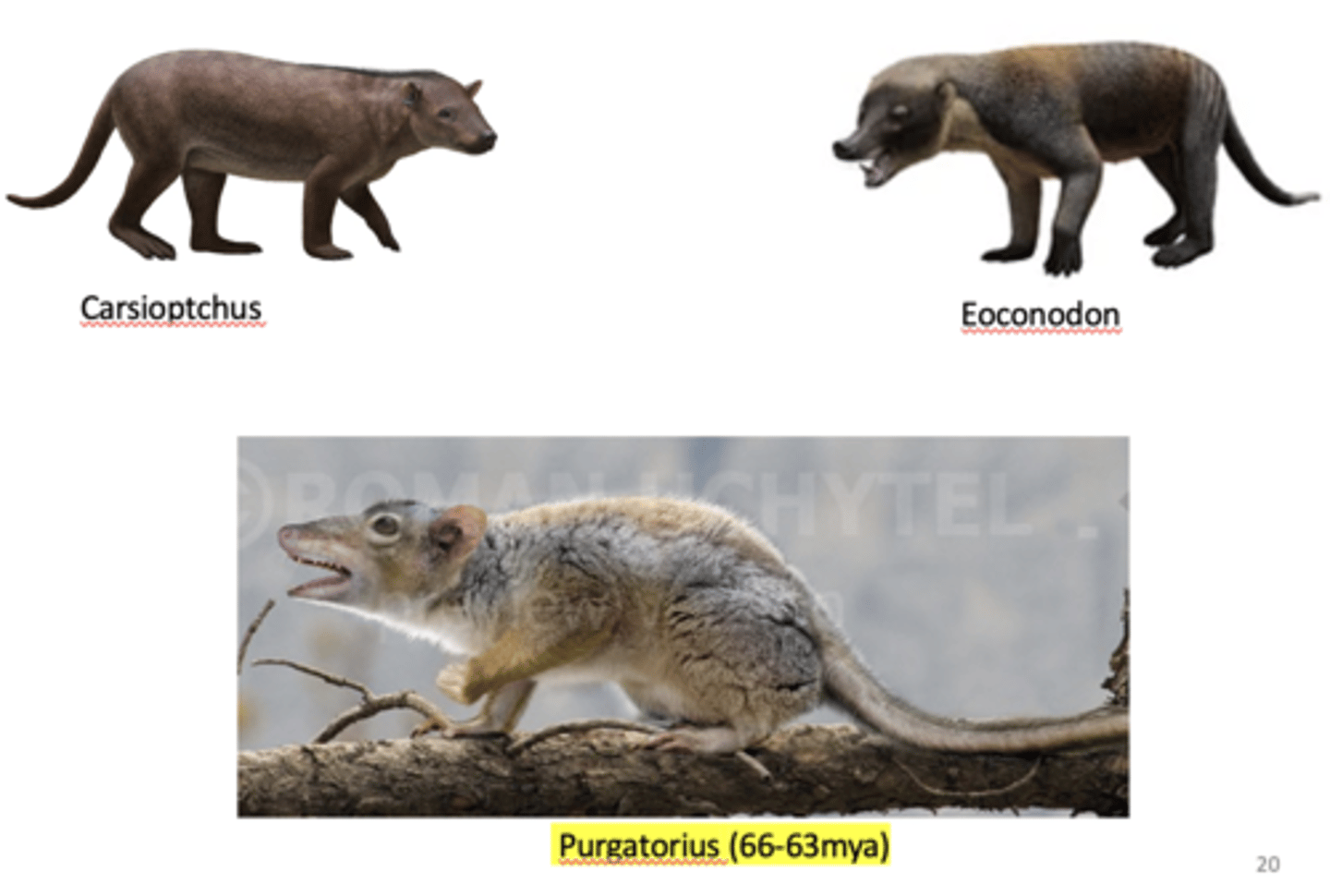
What Early Mammals Survived After the K-T Extinction Event?
1) Carsioptchus
2) Eoconodon
3) Purgatorius (66-63mya)
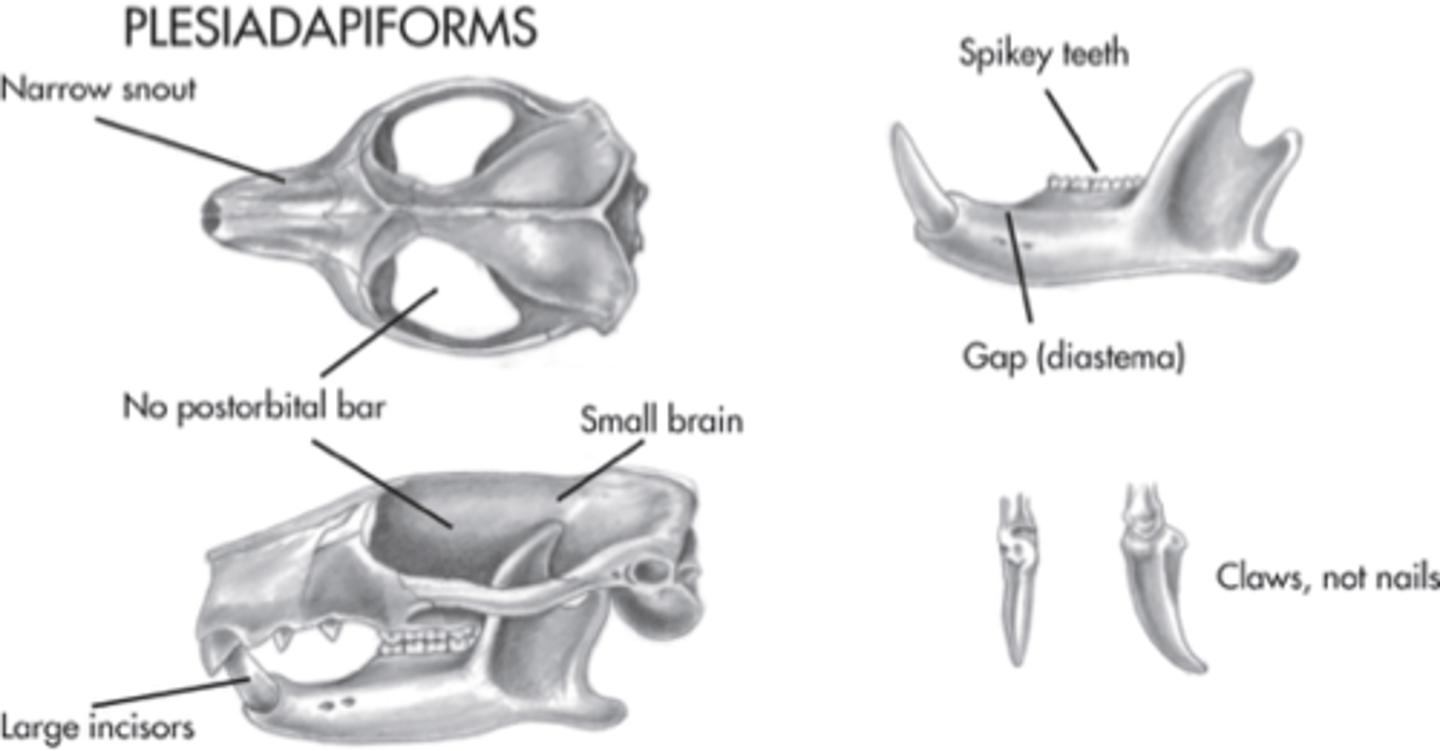
What changes occurred in the Paleocene related to the Origin of the Primates?
- Small Brains
- Prognathic Face
- No Postorbital Bar
- Diastema (Tooth Spacing
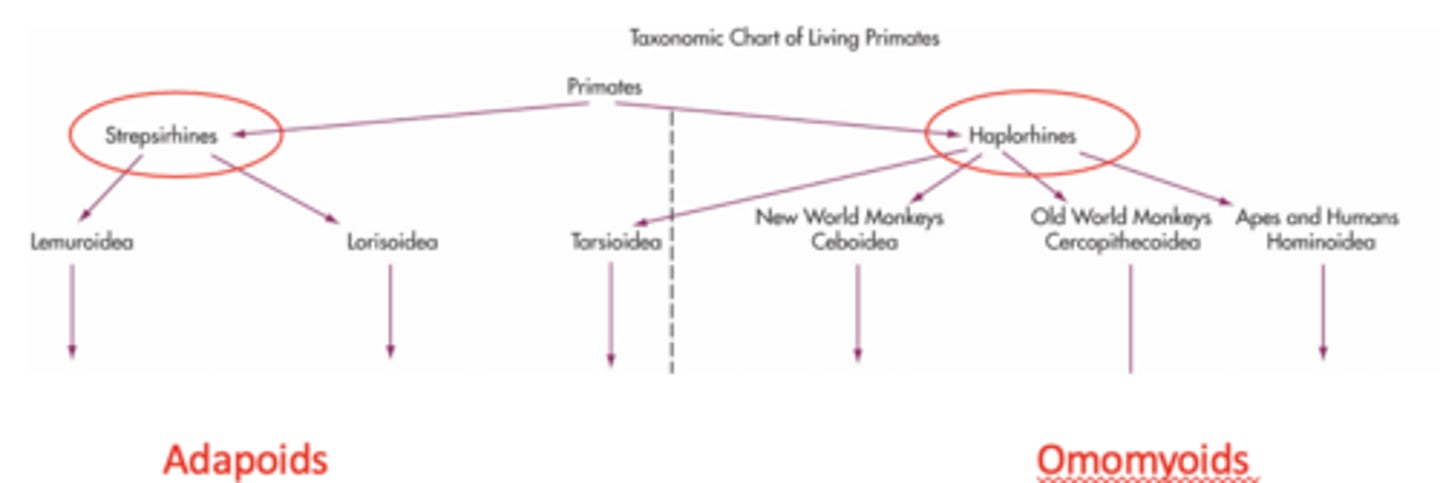
First True Primates:
Adapoids and Omomyoids
Strepsirrhine Ancestors
- Small to Medium-Sized
- 3.5 oz to 15 lbs
- Slow-Moving Arboreal Quadrupeds
- Diurnal
- Diet of Fruit and Leaves
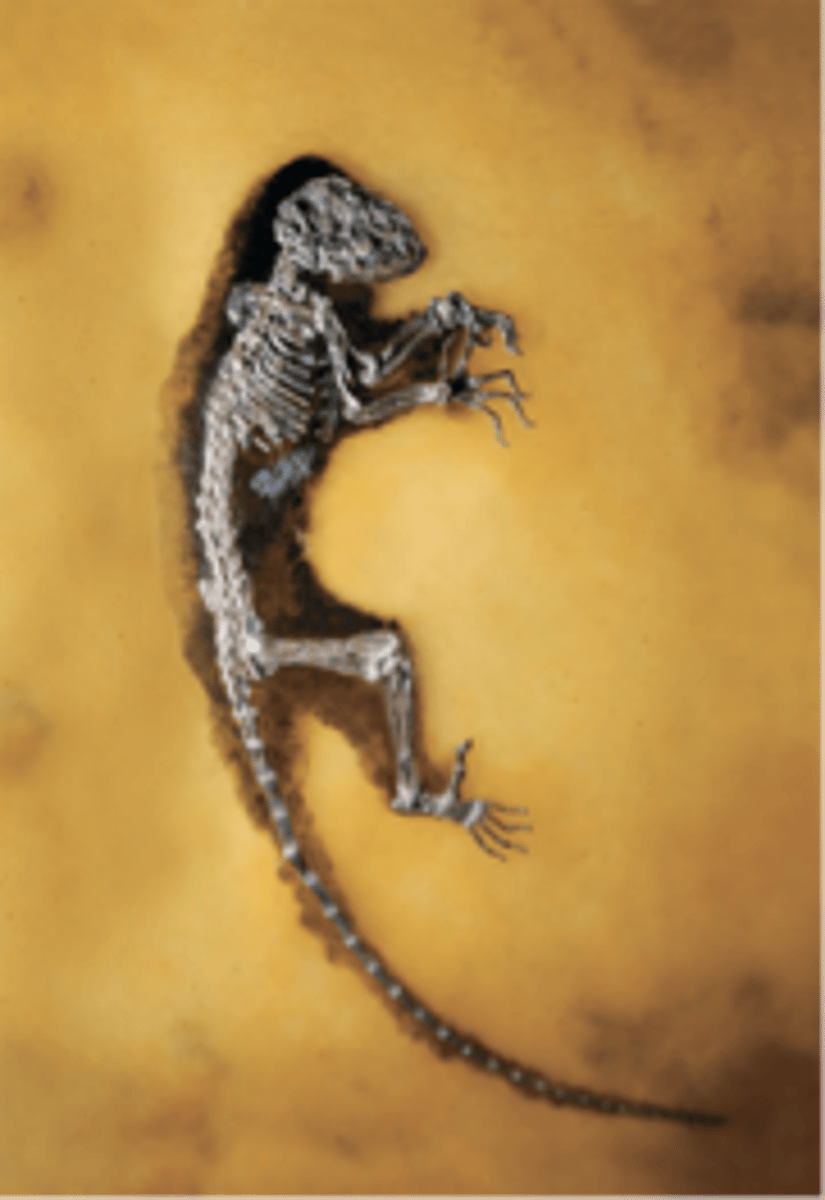
Haplorrhine Ancestors
- 1 oz to 5 lbs
- Diets of Insects and Fruit
- Nocturnal (Large Eye Orbits)
- Arboreal Quadrupeds
What Favored the Origin of Anthropoids?
- Eye Orbit and Mandible Changes Allowed for Chewing Tougher Foods and Better Eye Protection
- Increase in Body Size due to Better Diets
- Stereoscopic Vision
- More Leaf-Based Diets
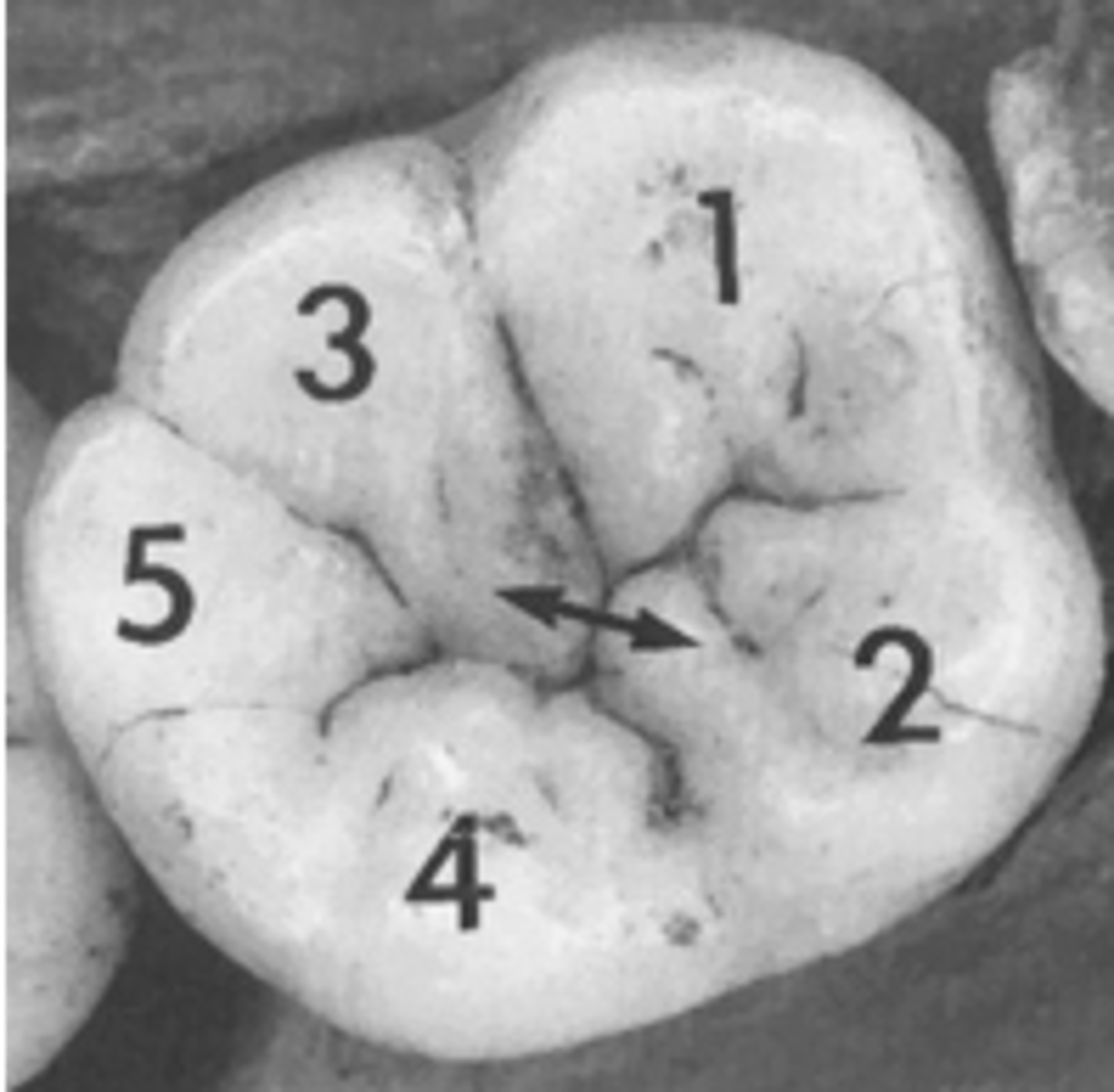
What is something all early apes possessed?
Y-5 molar patterns
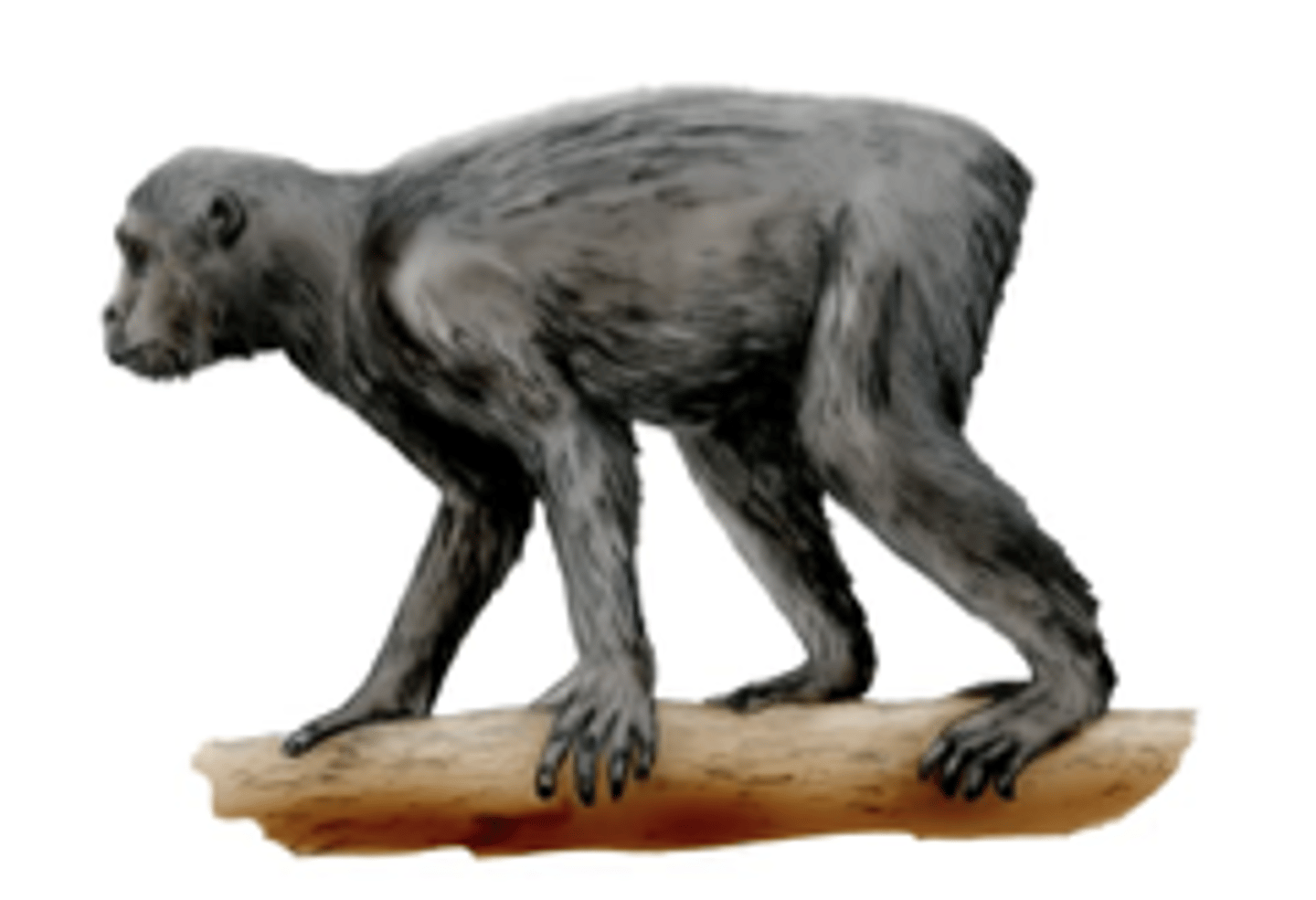
Earliest Apes: Early Miocene: Proconsul
- 21 to 14 mya
- Arboreal Quadraped
- Lacking Tail
- Larger Brain to Body Size
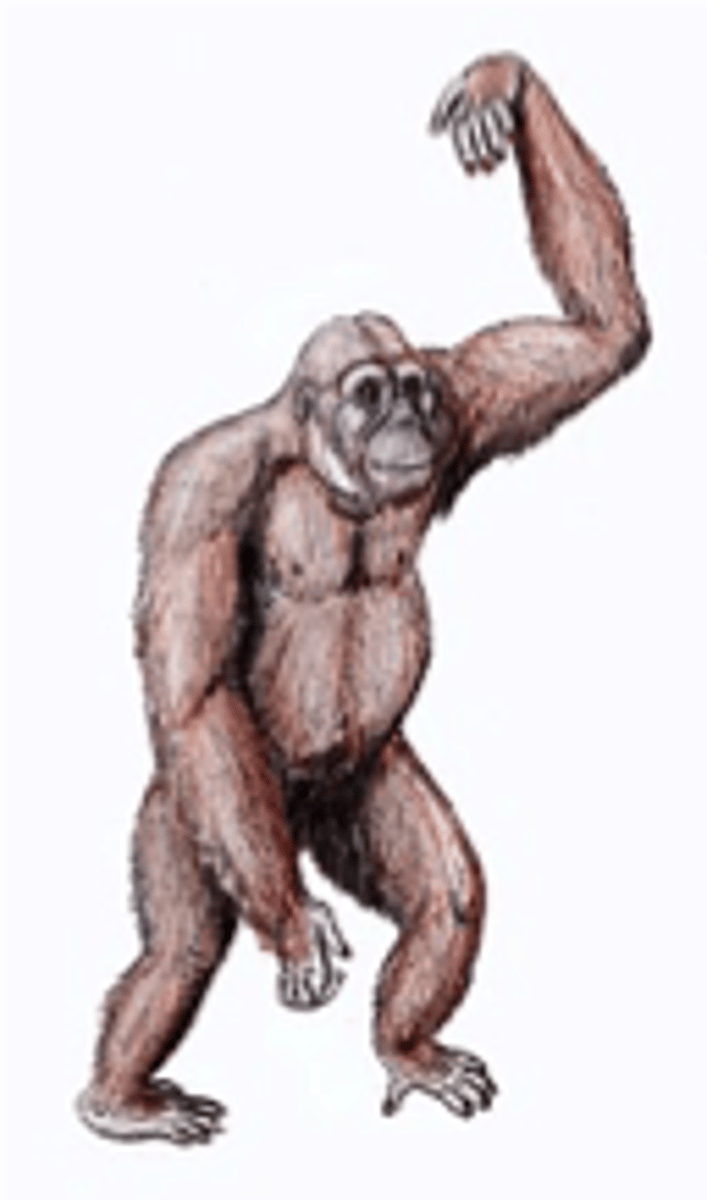
Earliest Apes: Early Miocene: Dryopithecus
- 12.5 mya to 11.1 mya
- Primative Anatomy like Proconsul and Gibbons
- 100 lbs
- Europe
- Some suspensory, also some quadraped
Earliest Apes: Early Miocene: Sivapithecus
- 12.2 mya
- Found in India and Nepal
- Similar in Size to Modern Orangutan
- Spent a lot of time on the ground foraging for seeds, not just living in trees
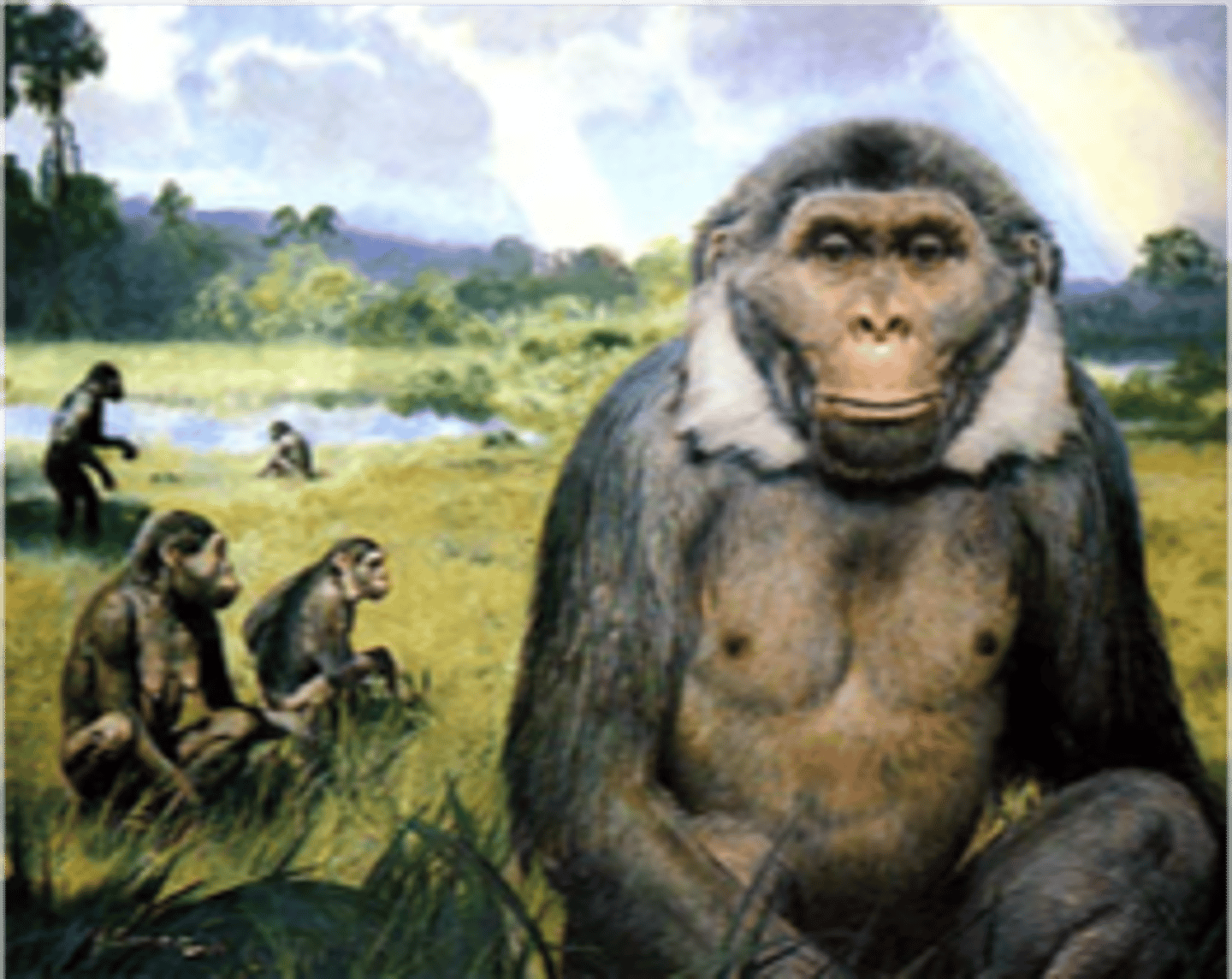
Earliest Apes: Early Miocene: Oreopithecus
- Found in Italy
- Measurements of the semicircular ear canals suggest that the size falls in the range of great apes
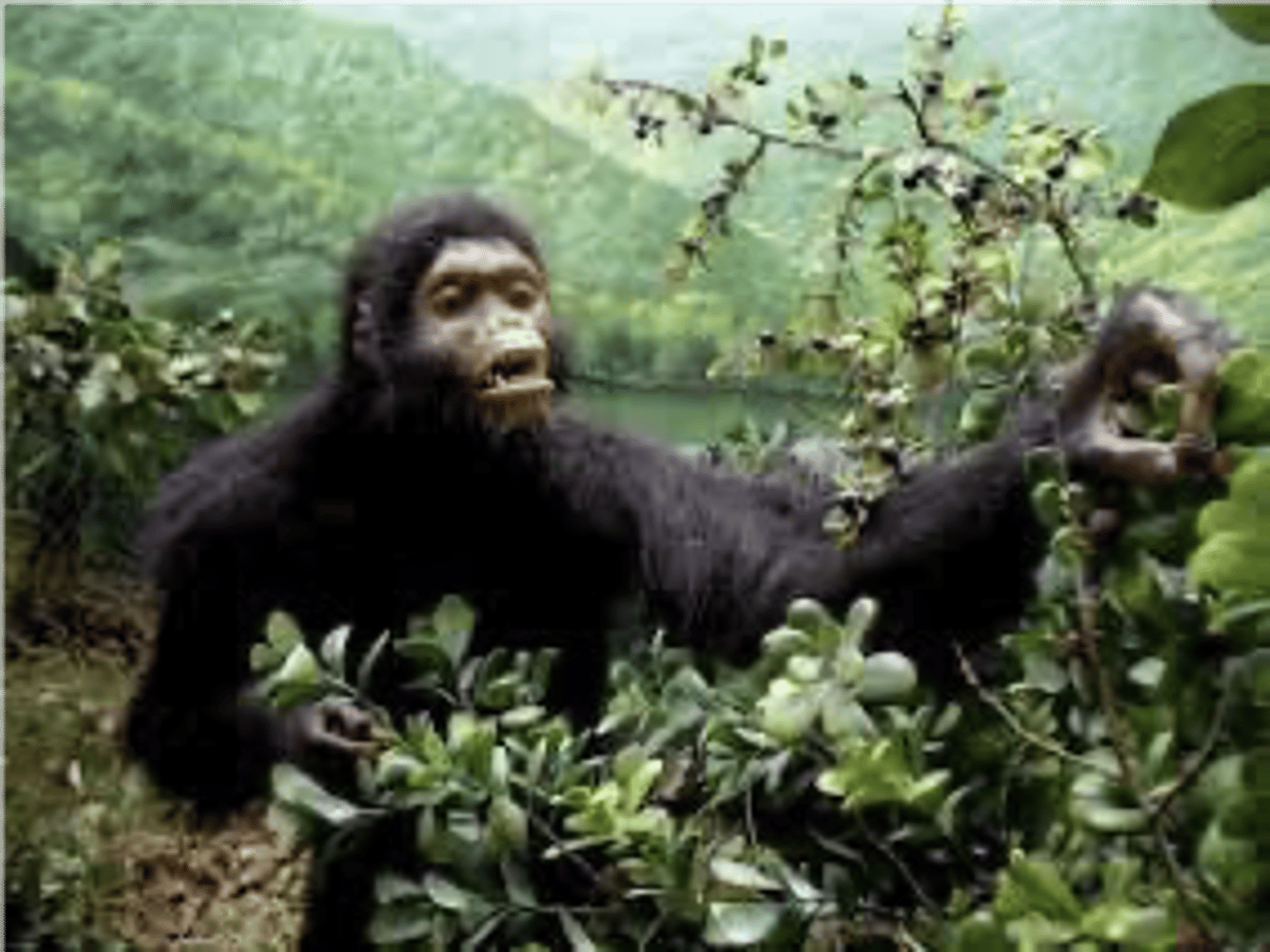
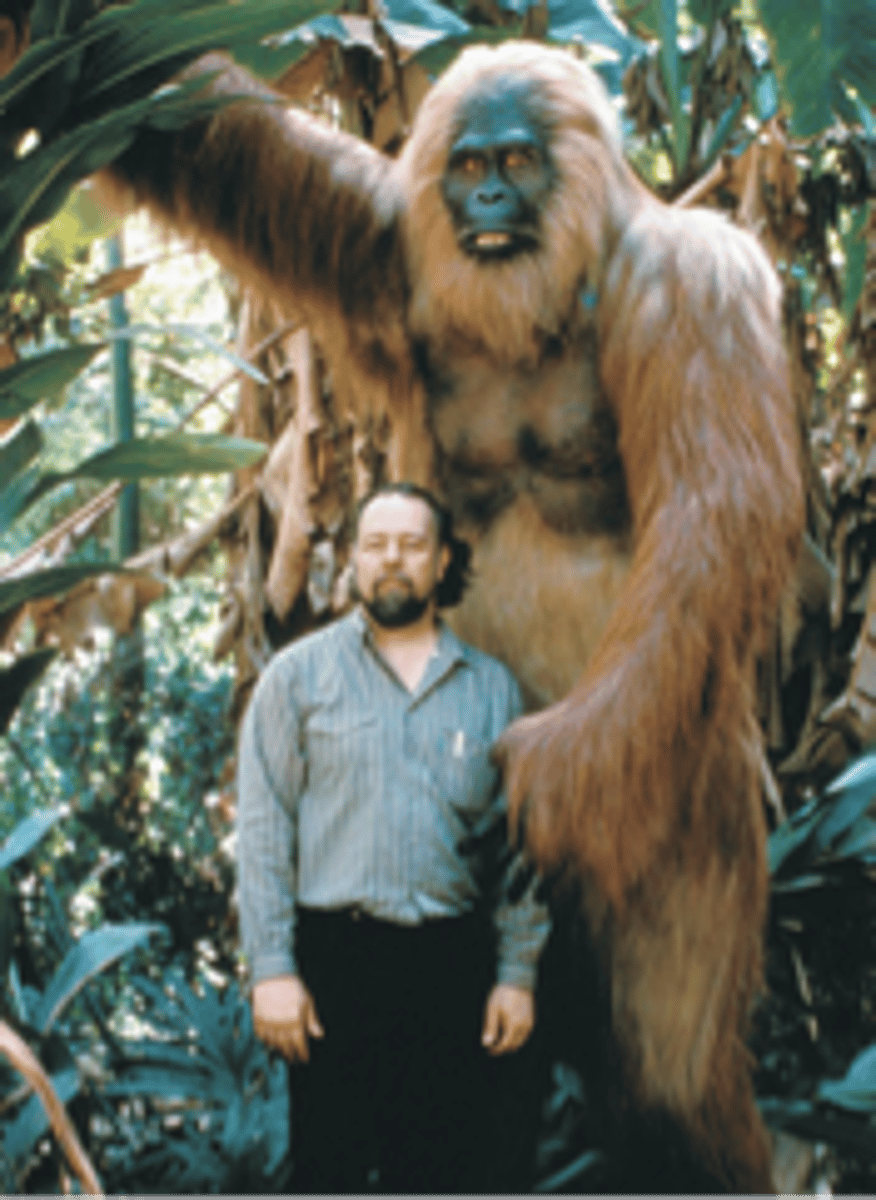
Earliest Apes: Early Miocene: Gigantopithecus
- Largest primate that ever lived
- 400 to 700 lbs
Bipedal Hypotheses: Schlepp
Food Transportationm Carrying of Offspring
Bipedal Hypotheses: Peek A Boo
Standing Up Over Savannah's Grasses
Bipedal Hypotheses: Trench Coat
Phalic Exhibition in Males to Attract Females
Bipedal Hypotheses: Hot to Trot
A Way to Lose Heat When Exposed in the Open Savannah
Heterodont
Tooth array in which different teeth have different forms and functions
- HOMININ CHARACTERISTIC
Homodont
Having teeth that are uniform in form, shape, and function.
- HOMININ CHARACTERISTIC
Prognathism
Lower Jaw Protrusion
- HOMININ CHARACTERISTIC
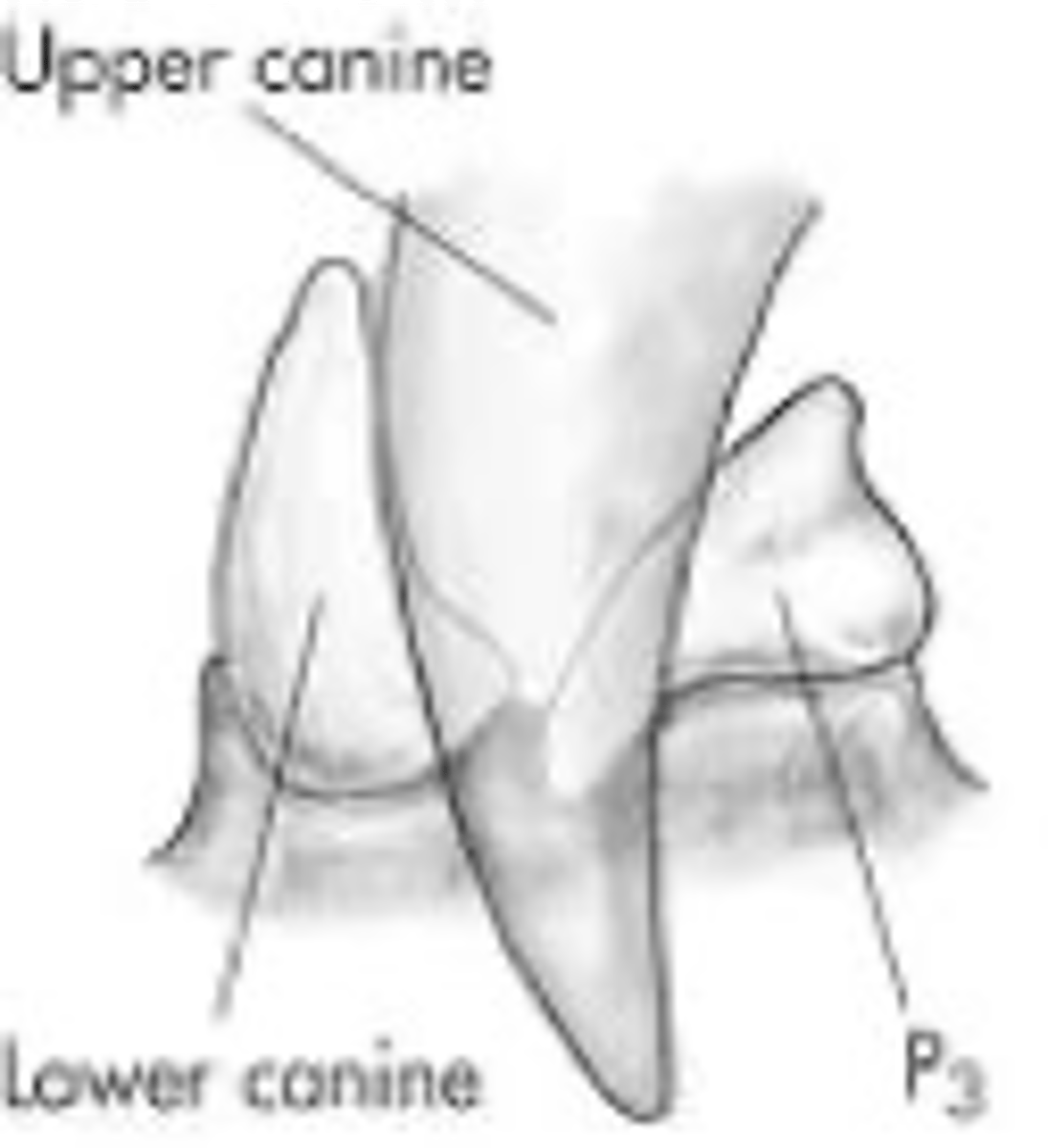
CP3 Honing Complex
Combination of canine and first premolar teeth that form a self-sharpening apparatus
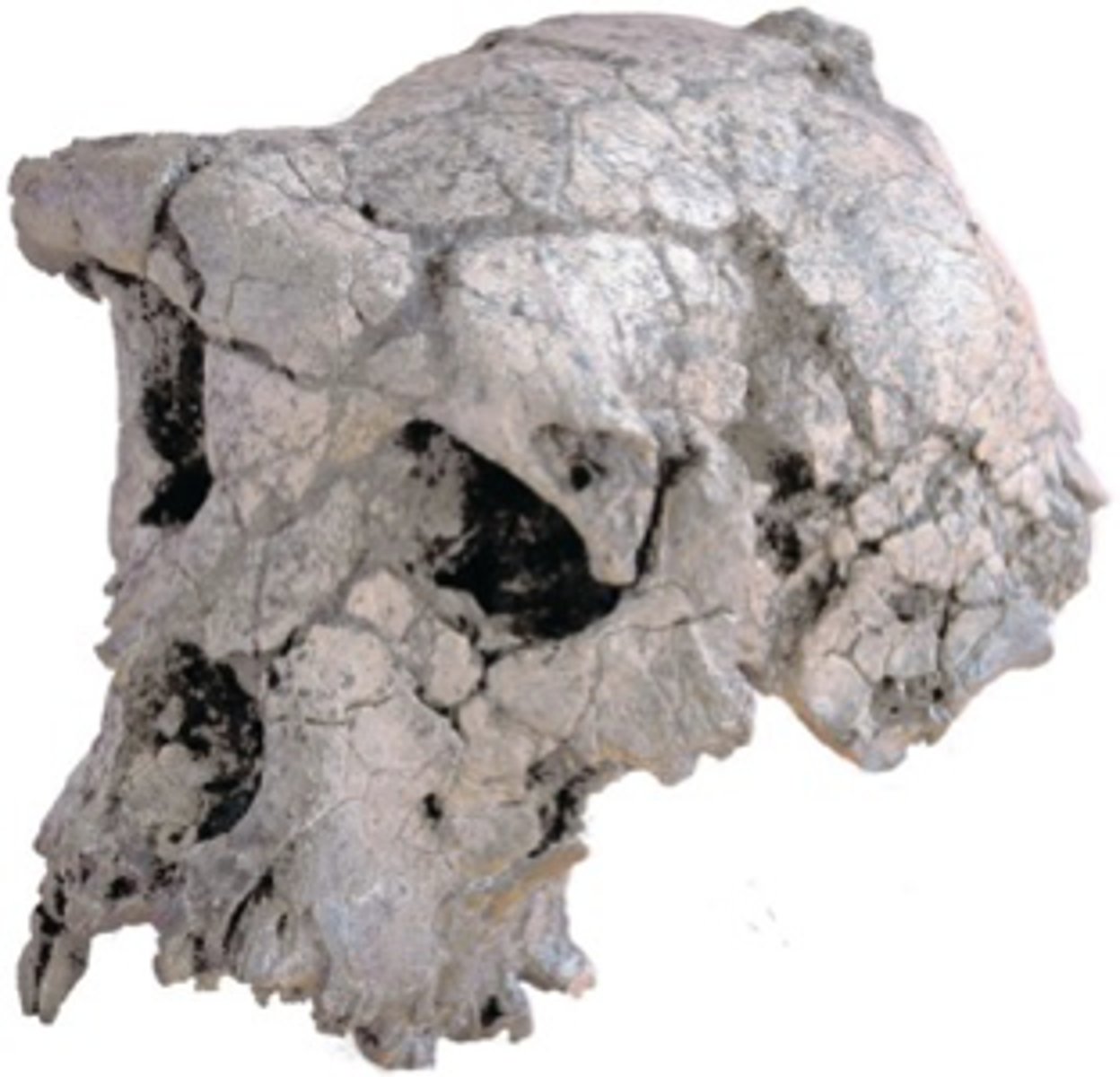
Features of Sahelanthropus Tchadensis (7.0-6.0 MYA)
- Less Prognathic Face
- Smaller Canines
- Thin Enamel
- Anterior Formane Magnum
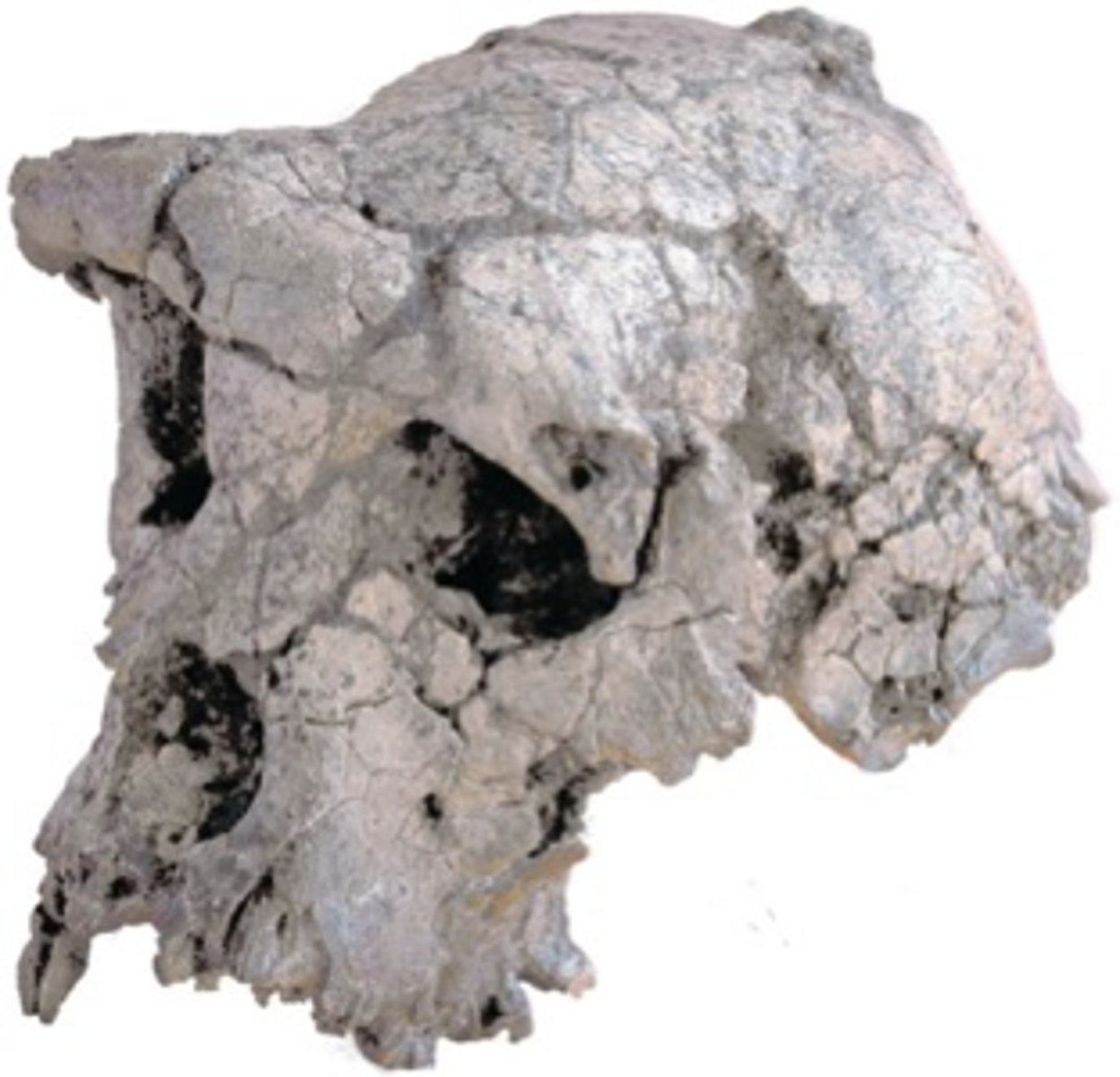
Why is Sahelanthropus Tchadensis (7.0-6.0 MYA) so hotly debated?
The skull of Sahelanthropus Tchadensis is argued to be the earliest of the hominins and one of only two known species from Western Africa.
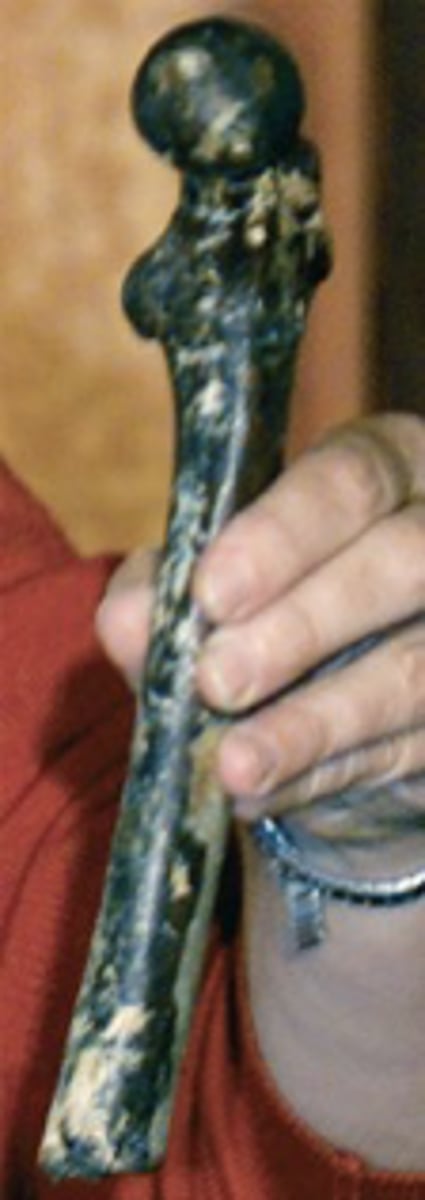
Features of Orrorin Tugenensis (6.0 MYA)
- Thick Enamel
- Small Teeth
- Large Upper Canines
- MAY BE OLDEST OF HOMININS
What did Selection Pressures and the Divergence of Monkeys and Apes cause?
- Evolution of Branchiation
- Knuckle-walking developed in African Apes
- Dental Evidence: A Dietary Shift with Apes Eating More Fruits
T or F. Walking Upright was Extremely RARE
True
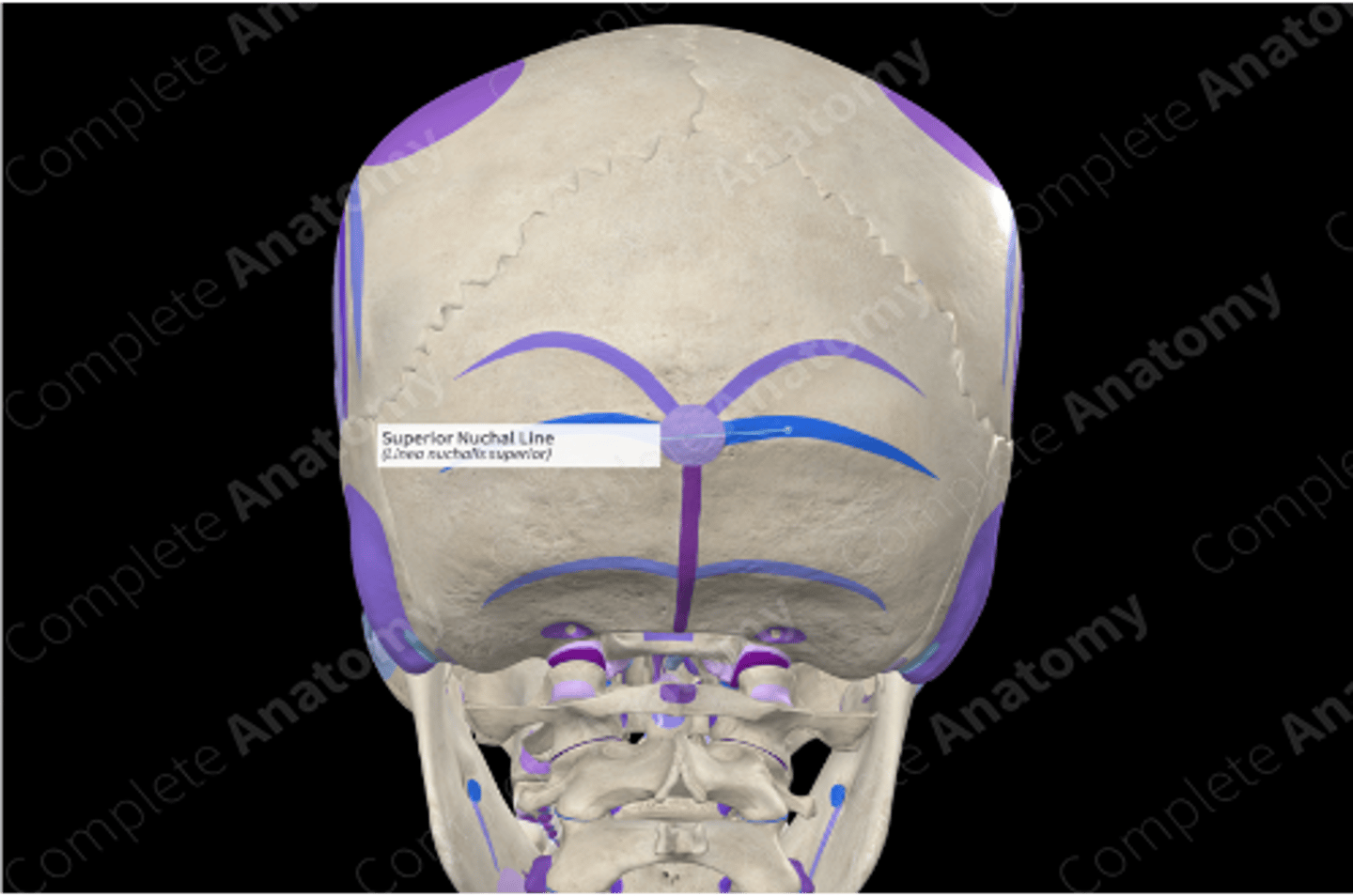
Anatomical Changes in Vertebral Column and Skull Include:
1) Vertebrae: S-Shaped Spine, Rather Than C-Shaped Spine of Quadrupeds
2) Foramen Magnum
3) Nuchal Plane: Horizontal Flat Region on Back of Skull
Bipedal Hypotheses: Tag Along
Following Herds of Herbivores During Migration
Bipedal Hypotheses: Two Feet Are Better Than Four
Bipedalism is Favorable Energetically for Long Treks
What region did Australopithecus anamensis (4.2-3.9 MYA) live in?
Lived in forested region
- ALSO HAD PRIMITIVE DENTITION
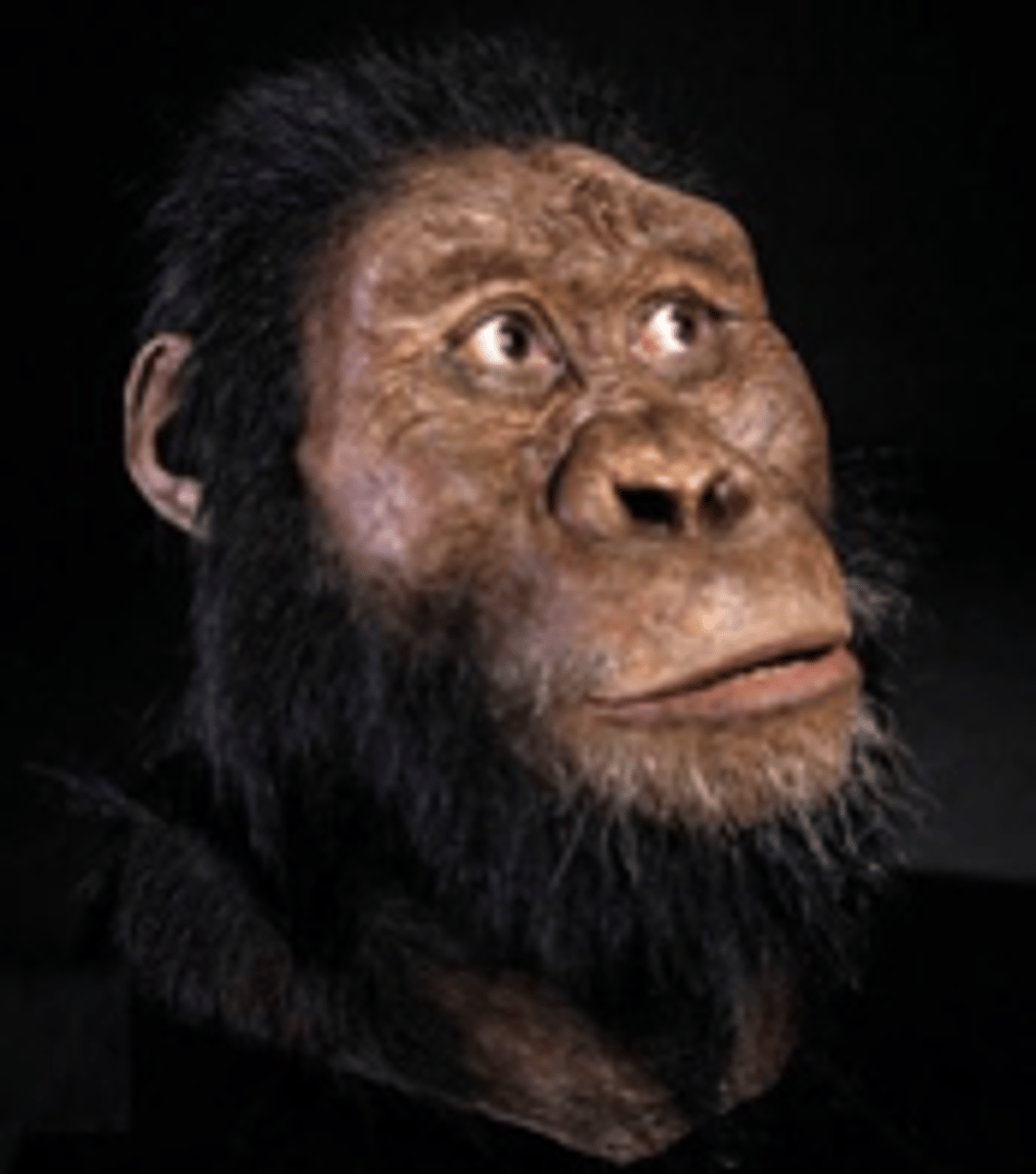
Features of Australopithecus affarensis (3.9-2.9 MYA)
- Short, broad pelvis
- Tilted femurs
- Sagittal Crest
- Likely lived in groups
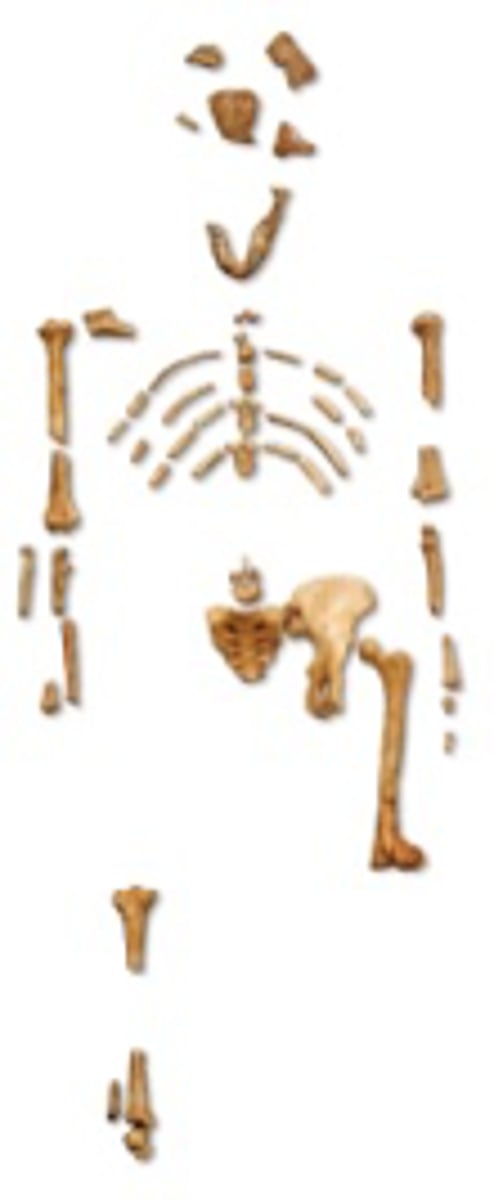
Features of Australopithecus deyiremeda (3.5-3.3 MYA)
- A dextrous big toe
- Prognathic jaw
THINK: "Medias"
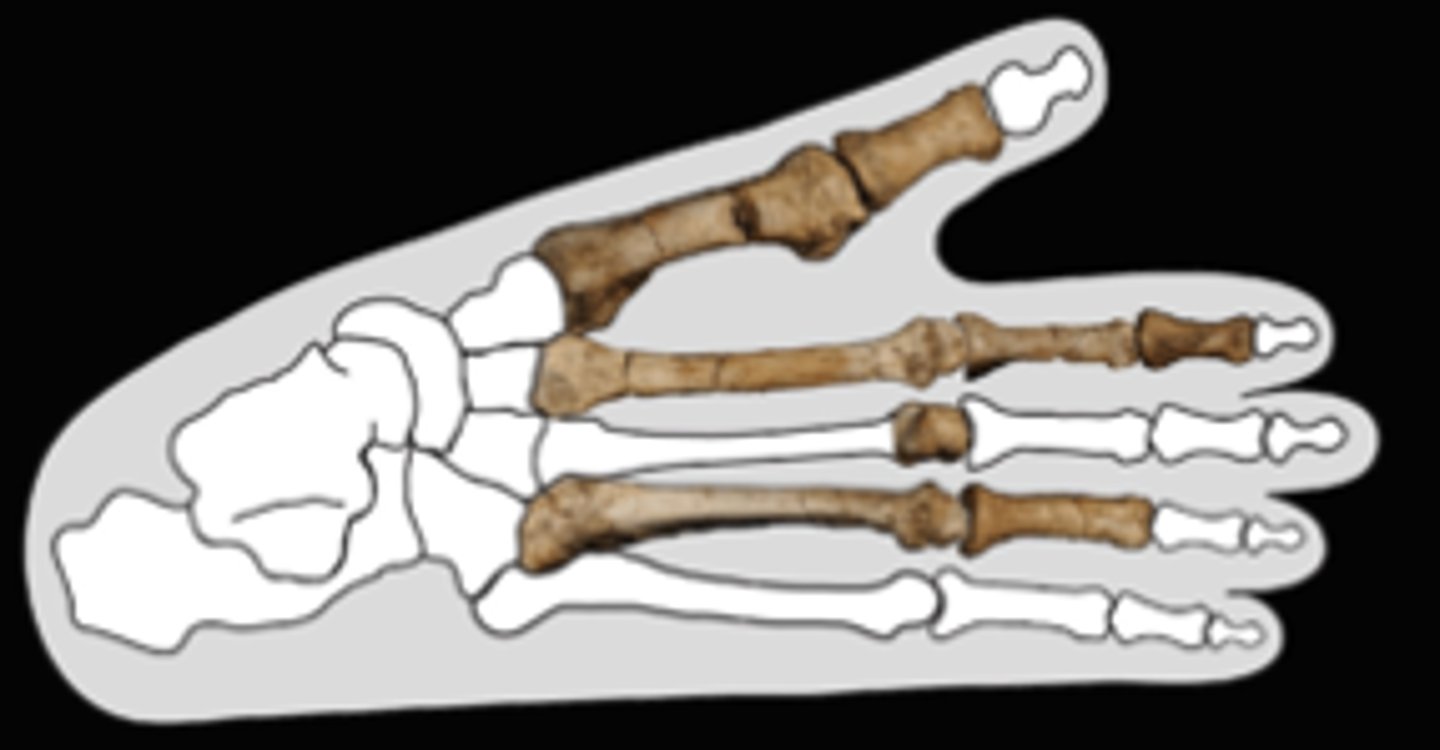
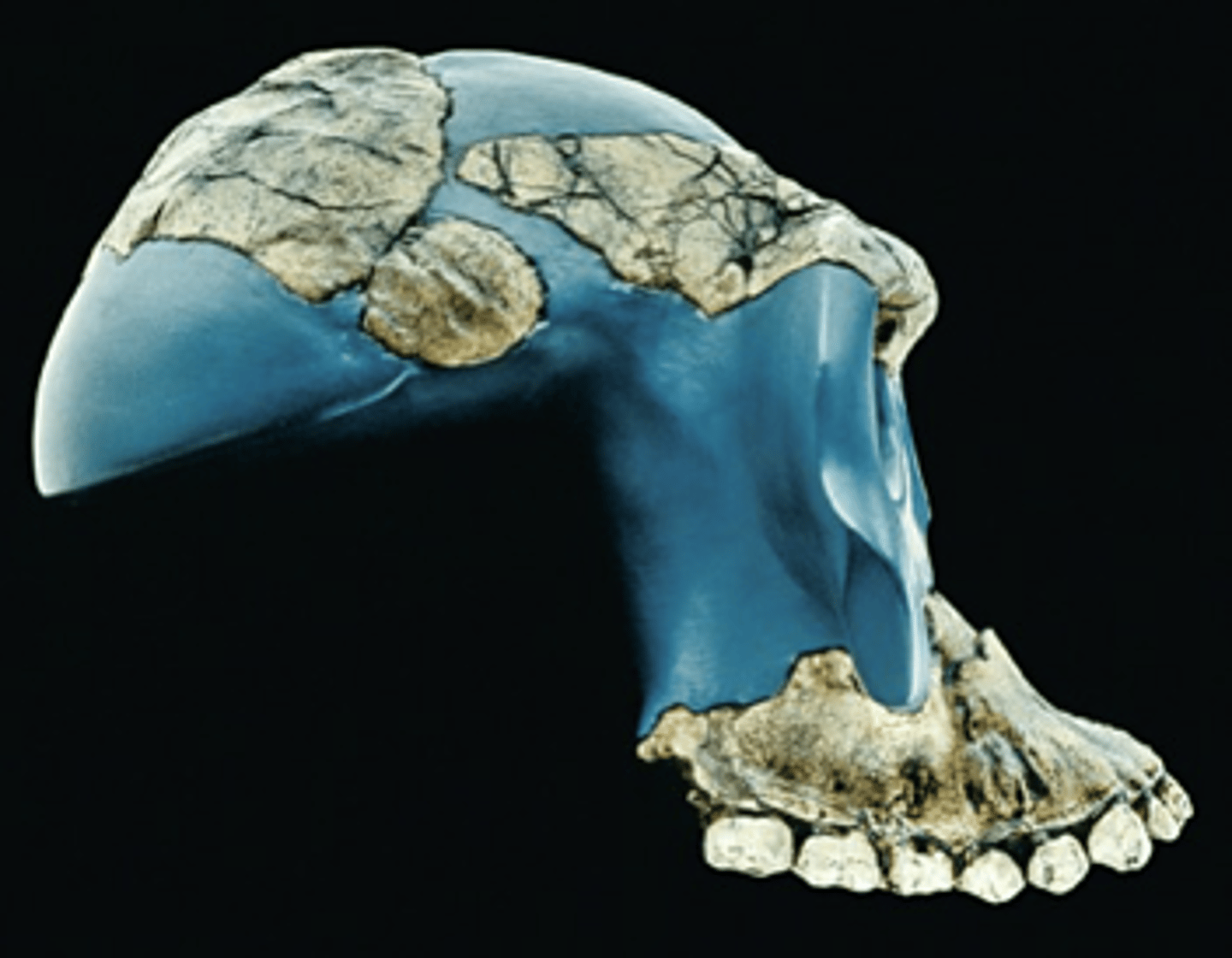
Features of Australopithecus Africanus (3.5-<2.0 MYA)
- Slight brain increase
- Rounded vault
- No crests
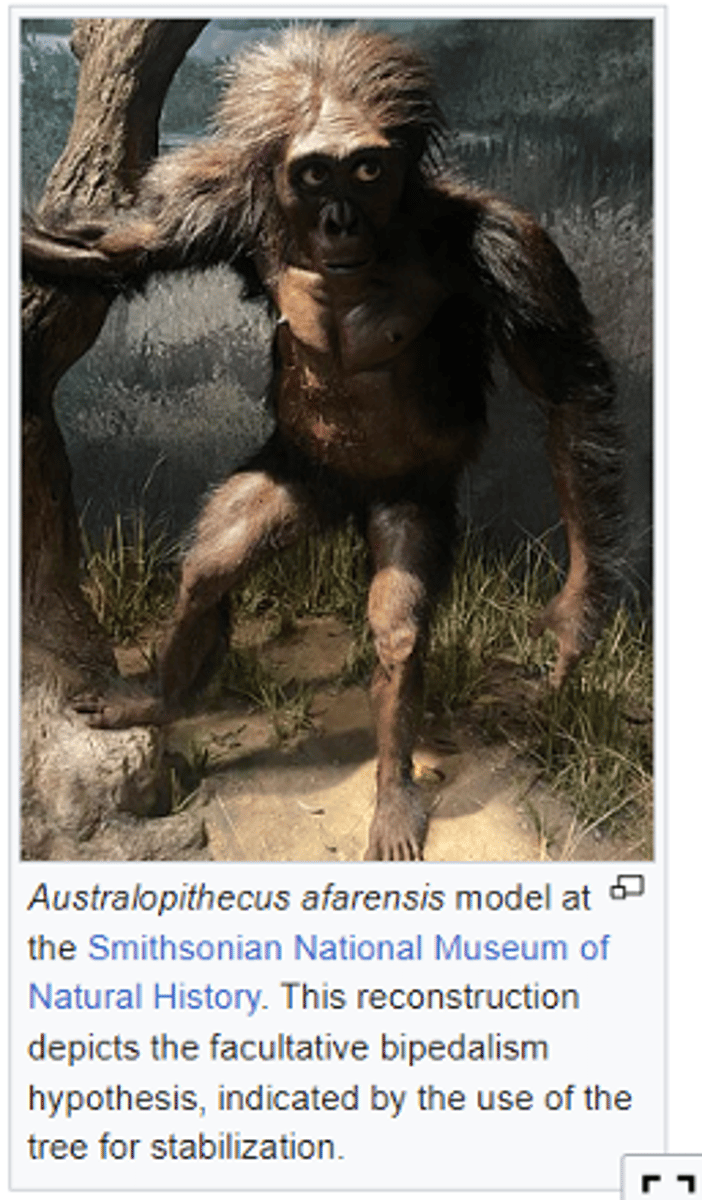
Features of Australopithecus garhi (2.5 MYA)
- Small brain, Prognathic face
Still learning (36)
You've started learning these terms. Keep it up!