patho final winter 26
 Call Kai
 Learn
Learn Practice Test
 Spaced Repetition
 Match
Match Flashcards
 Knowt Play
1/367

There's no tags or description
Looks like no tags are added yet.
Name | Mastery | Learn | Test | Matching | Spaced | Call with Kai |
|---|
No analytics yet
Send a link to your students to track their progress
368 Terms
what is cancer
uncontrolled growth of abnormal cells in the body
malignant meaning
cancerous cells
what is the composition of cancerous cells
less well differentiated
have lost the ability to control cell proliferation and differentiation into mature cells
what is oncology
the study of tumours and their treatment
includes non-malignant
what is the most common cancer in men
prostate
what is the most common cancer in women
breast
what cancer has the leading cause of death
lung (1/2)
colorectal and breast
what are the 5 phases in the cell cycle
G zero, G1, S (synthesis), G2, M (mitosis)
what is the complete cell cycle
cell duplicates content and divides into 2 identical daughter cells
what occurs during the synthesis phase
DNA synthesized and chromosomes are replicated
what happens during the mitosis phase
cell divides and 2 daughter cells are formed
what happens during the G phase
cell is metabolically active or growing enzymes or proteins in preparation for DNA synthesis or mitotic division
what is G zero
dormancy state
what is cell proliferation
cells duplicating and increasing in number
what is cell differentiation
process by which proliferating cells become specialized
what are the 3 categories of cell differentiation and proliferation
cells that never or rarely divide (nerve, skeletal, cardiac)
cells that continue to proliferate and then die, particularly in areas that have high cell turnover (ex. GI tract, skin, and blood cells → progenitor cells)
Stem cells which can enter the cell cycle and produce progenitor cells when required
what is allogenic stem cell transplant
receive donors stem cells
what is autologous stem cell transplant
receive own stem cells
done after diseased bone marrow is destroyed via chemo and radiation
how do cancer cell complete the cell cycle more quickly
reduce G1
less likely to enter G zero
what are checkpoints during the cell cycle
series of processes and proteins that help regulate cell damage and repair including apoptosis
G1-S checkpoint: monitors if DNA in chromosomes is damaged by radiation or chemicals
Ex. G2-M checkpoint (most important): prevents entry into mitosis if DNA replication is not complete
what is carcinogenesis
the process by which normal cells are transformed into cancer cells
what causes carcinogenesis
mutation of the genetic material of normal cells, which upsets the normal balance between proliferation and cell death
how many cell divisions can cancerous cells undergo
infinite
what are the 3 stages of carcinogenesis
initiation, promotion, progression
what is initiation in carcinogenesis
Exposure of cells to carcinogenic agent that makes susceptible to malignant transformation
what are agents in initiation of carcinogenesis
Agents produce irreversible changes in genome of cell
chemical, physical, biological
what is the promotion phase of carcinogenesis
Dysplasia: unregulated and accelerated growth of the mutated cells
Indicative of an early neoplastic process
what is the progression phase of carcinogenesis
The process whereby tumor cells acquire malignant changes and autonomous growth tendencies that promote invasiveness and metastatic capabilities
what is carcinoma in situ
“cancer in place” → represents transformation of neoplastic lesion to one in which cells undergo essentially no maturation, and this may be considered cancer like
abnormal cells are found only in their original location—the epithelium—and have not spread to surrounding tissues
Remains localized and no invasion of basement membrane
what is invasive carcinoma
cancer has invaded beyond basement membrane and has potential to metastasize or spread to other parts of body
what are the 4 bases of dna
adenine, thymine, cytosine, guanine
what are proto-oncogenes
encourage cell division
Mutated: activated and become oncogenes (stimulate excessive division)
what are tumor suppressor genes
inhibit cell division
Mutated: inactivate genes, eliminating critical inhibition of cell division that normally prevents excessive growth
what do proto-oncogenes and tumor suppressor genes do together
coordinate regulated growth that normally ensures that each tissue and organ in body maintains size and structure that meets body’s needs
how do oncogenes cause cancer
instructing cells to make proteins or “go signals” that stimulate excessive cell growth and division
Results in growth signaling pathway to become hyperactive
More active pathway= faster growth and division
Cancer cell may contain one or more oncogenes
not inherited
how do tumour suppressor genes cause cancer
When not functioning correctly cells with DNA damage continue to divide and can accumulate further DNA damage that eventually leads cell to grow and divide in uncontrolled fashion
inherited (two copies - from each parent)
what is the dna repair system
instructs cell to repair damaged DNA in virtually every cell
what happens over time as cells are being attacked by chemicals and carcinogens
Results in mutations in many different ways
Single base (simplest), more than one base
Large segments of DNA repeated, deleted, or moved
Errors during replication
*usually corrected by DNA repair system but if system is mutated subsequent mutations occur and become a permanent feature
what is xeroderma pigmentosum
inherited defect in a DNA repair system
Result: cannot repair DNA damage that normally occurs when skin cells are exposed to sunlight so exhibit abnormally high incidence of skin cancer
what is mismatch repair
DNA polymerase copies both strands of DNA (top and bottom= Watson and Crick)
Sometimes DNA polymerase incorporates the wrong nucleotide (A and C + T and G)
what are repair proteins
MSH2, MSH6, MLH1, PMS2
These recruit another enzymes called EXO1 (exonuclease that chops off the mutant strand) and then allows DNA polymerase to come by and synthesize the correct strand to fix and make normal
what is apoptosis
Balances generation of new cells via division and death
old cells become damaged over time and are eliminated
how does tumor suppressor genes impact apoptosis
tumor suppressor genes can stimulate cells with damage DNA to commit cell suicide
Tumor suppressor p53: in normal cells that have DNA damage initiates cell suicide that prevent genetic damage from growing out of control
Abnormalities cause damaged cells to continue to grow and divide
Found in over 50% of human cancers (lung, colorectal, breast)
Most frequently mutated gene in human cancer
what is the first and last defence against cancer
immune system
what are NK cells
target tumors and cancer cells to kill them
what is metastasis
The spread of cancer from its original location to other parts of the body
how does metastasis occur
1: malignant cells can directly invade or extend into adjacent organs or sites
2: individual cancer cells move away from primary tumor and enter blood or lymph circulation then travel and get stuck in capillary bed os distant organ or site, then grow until they burst through capillary wall
what are the most common sites of metastasis
lungs, bones, liver
what is angiogenesis
process of forming new blood vessels
Growth of new network of blood vessels is required for cancer metastasis
how does cancer promote angiogenesis
when tumor becomes large enough to need increased nutrients and oxygen supply, hypoxia triggers tumor and surrounding environment to release signals that result in growth of blood vessels towards and into the tumor
what is tumor angiogenesis
the proliferation of a network of blood vessels that penetrates into cancerous growths, supplying nutrients and oxygen and removing waste products
what are angiogenesis inhibitors
One class of angiogenesis inhibitors: molecules directly inhibit growth of endothelial cells
Endostatin: naturally occurring protein known to inhibit tumor growth in animals
Thalidomine: has ability to prevent endothelial cells from forming new blood vessels
Second group: molecules that interfere with steps in the angiogenesis signaling cascade
Bevacizumab (avastin): proven to delay tumor growth and extend lives of patients
Interferon-alpha: naturally occurring protein that inhibits production of growth factors from starting the angiogenesis signaling cascade
what are the characteristics of cancer cells
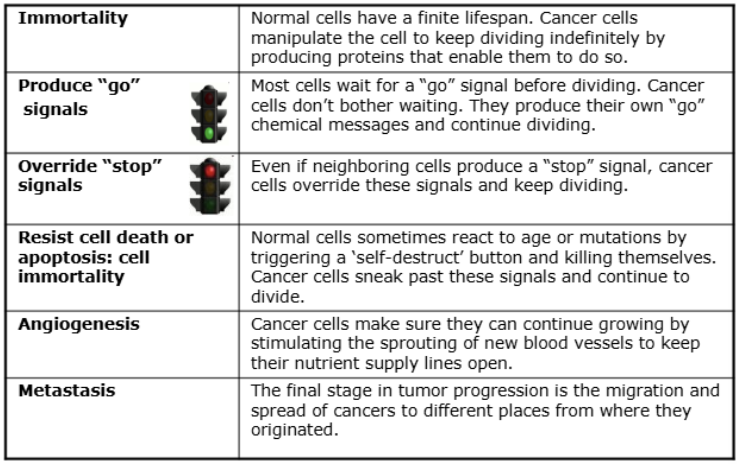
what is the etiology of cancer
5-10% inherited (so not considered inherited illness)
Identify at risk individuals
DNA testing
Family history
BRCA1 or BRCA2 mutations
Potentially life saving interventions aimed to reducing risk
Ex. tamoxifen for breast cancer, colonoscopy for colon cancer, risk reducing salpino-oophorectomy for ovarian cancer
what are BRCA1 and BRCA2 mutations
Women who have these susceptibility genes have 80% chance of developing breast cancer by the age of 65
Not having genes does not exempt you from risk (can be due to genetic changes)
how is age a cancer risk factor
more time available to accumulate mutations
Leading risk factor for developing cancer: advanced aging
how to screen for cancer regarding age
PSA (prostate specific antigen) testing
Fecal immunochemical test
colonoscopy
mammogram
clinical breast exam
pap smear
who are at high risk of prostate cancer
black men
family history
what is prostate specific testing criteria
Prostate cancer rarely screened before 40 and risk doubles each decade after 40
Canadian Cancer Society recommends men at average risk of prostate cancer consider PSA from age 50]high risk : age 45
what is fecal immunological test (FIT) criteria
Beginning at age 50 both men and women at average risk should have stool testing every 2 years
Test uses antibodies to detect presence of blood in stool which can indicate polyps (pre cancerous lesion) or colorectal cancer
colonoscopy criteria
Those at increased risk for colorectal cancer should be screened every 5 years or every 10 years beginning at 50
OR 10 years earlier than the age at which a first degree relative was diagnosed with colorectal cancer
Every 5 years if relative was diagnosed before 60
Every 10 years if diagnosed after age 60
mammogram criteria
Average risk 50-74: every 3 years
High risk 30-69: annually with both mammography and MRI
who is considered high risk for a mammogram
person with a known gene mutation that increases risk for breast cancer,
first degree relative of someone with a gene mutation,
is assessed as having a 25% or greater lifetime risk of breast cancer based on personal family history,
has had radiation therapy of the chest to treat another cancer or condition
clinical breast exam criteria
physical exam of breasts conducted by physician to check for signs of cancer
pap smear criteria
Sexually active women should have to screen for cervical cancer from age of 21 every 1-3 years depending on previous results
what are environmental carcinogens
UV light
From natural sunlight, sunlamps, or tanning beds
Can lead to melanoma and other forms of skin cancer
Radiation
Via Hiroshima or ionizing radiation (CT scans)
Chemical
Benzene, asbestos, smoke
Bacteria
Helicobacter pylori bacteria causes stomach ulcers and leads to stomach cancer
Viruses
Cervical cancer, liver cancer, some lymphomas, leukemias, sarcomas
Ex. HPV causes cervical cancer
Ex. Epstein Barr virus → Burkitt's Lymphoma
Ex. Hepatitis B → liver cancer
Ex. HIV → Kaposi’s sarcoma
what are lifestyle risk factors for cancer
alcoholic drinks
tobacco
obesity
⅓ breast cancer from failure to limit adult weight gain
Link between obesity and cancer of gallbladder, ovaries, pancreas
diet
(poor or high in fat) Increased risk of colon, uterus, and prostate cancer
hormones
stress + sleep deprivation
how are hormones a risk factor for cancer
Menopausal hormone therapy (estrogen) increases risk of breast cancer, heart attack, stroke, blood clots
Fluctuating hormone levels are related to cancers such as breast and uterine cancer
what is neoplastic
abnormal growth of new tissue
what is tumour
used interchangeably with neoplastic growth
Benign: non cancerous tumor
Malignant: cancerous tumor cell growth
what is neoplastic nomenclature
way of describing tumor growth that is benign or malignant
what are characteristics of benign tumours
Well differentiated
Slow growing
May even regress eventually
Look like tissues from which they arise
localized
encapsulated
can interfere with vital functions
Pressure on tissues, blood vessels, or nerves, however, usually do not cause death unless interfere with vital functions because of location
Some benign are known for ability to cause alterations in body function by abnormally producing hormones
what is suffix oma meaning
tumor growth or mass
added to tissue type
lymphoma or lymphosarcoma
what are epithelial gland tissue benign tumours called
adenoma
thyroid adenoma characteristics
The typical single node separates it from a multinodal goiter
Most do not cause symptoms (known as warm or cold adenomas)
Symptoms: hyperthyroidism: excessive sweating, nervousness, agitation, rapid heart rate, weight loss, fatigue (if show symptoms known as hot adenomas)
pituitary adenomas characteristics
From epithelial tissue of pituitary gland
Can cause too much prolactin secretion which can trigger breast milk production in non lactating females and males and amenorrhea
May also produce excess growth hormone after the growth plates have closed causing acromegaly (enlargement of the “acrals” or small bones and enlargement of soft tissue
fibroadenomas characteristics
Made of fibrous and glandular tissue in the breast
May consider biopsy because presents same as breast cancer
Differs from breast cancer because easy to move with clearly defined edges
colon adenomas characteristics
On surface of colon (called a polyp) ← how colorectal cancer begins
2 most common types of intestinal polyps: adenomas and hyperplastic polyps
Develop when there are errors in the way cells grow and repair the lining of the colon
what are connective tissue benign tumours called
fibromas
lipoma
osteoma
fibromas characteristics
skin tags
Increase in frequency with age
More common is obese persons possibly due to skin irritation and rubbing of skin folds
Skin tags like bumps that bleed, grow, or display multiple colours can require biopsy to exclude other causes like skin cancer
lipoma characteristics
Made of connective adipose tissue
Most common form of soft tissue tumor
Soft to touch, usually moveable, and are generally painless
Vary largely in size
More common in adults 40-60 but can be in children too
osteoma characteristics
New piece of bone usually growing on another piece of bone, typically the skull
Most common benign neoplasm of the nose and paranasal sinuses
Larger ones may cause facial pain, headache, infection
what are muscle tissue benign tumours called
leiomyoma
rhabdomyoma
leiomyoma characteristics
Uterine muscle (aka uterine fibroids)
common over 30
cause may be related to estrogen
Fibroids will grow as long as woman is menstruating
Symptoms: abdominal fullness, gas, constipation, bleeding between periods, increase in urinary frequency, heavy menstrual bleeding or menorrhagia, menstrual periods lasting longer than normal, pelvic cramping/pain with periods, sensation of fullness or pressure in the abdomen
rhabdomyoma characteristics
Tumor of striated muscle
Most commonly associated with tongue and heart but also other locations
what are neural tissue benign tumours called
neuroma
glioma
meningioma
neuroma characteristics
Tumor of nerve tissue
Can be applied to any swelling of a nerve
glioma characteristics
Starts in brain or spine
Arises from glial cells
Most common site: brain
meningioma characteristics
Tumor of meninges (layer of tissue covering brain and spinal cord)
Compress adjacent brain tissues with growth
Symptoms: related to compression of brain tissue which can also affect cranial nerves and blood vessels
Growth can extend into bones and head and face and produce visible changes
Some of these tumors can cause disabilities and may sometimes be life threatening
endothelial tissues benign tumours names
hemangioma
lymphangioma
hemangioma characteristics
Tumor of the cells that line blood vessels
Connected to circulatory system and filled with blood
On surface of skin: look like ripe strawberry
Under skin: bluish swelling
Sometimes grow in internal organs like liver or larynx
Sometimes present as flat red or pink area
Most common childhood tumor (around 10% of caucasians)
lymphangioma characteristics
Malformations or cell growth of lymphatic system
Can occur at any age and may involve any part of the body
90% occur in children less than 2 years old and involve head and neck
Usually treated for cosmetic reasons only
malignant tumour characteristics
Less well differentiated/anaplasia (lost control of differentiation in cancerous tissues)
Do not resemble originating tissues
Rapid, disorganized growth patterns
Not encapsulated: invade local tissues, organs or blood vessels
Rob normal tissues of essential nutrients
Release enzymes , toxins, and hormones called cytokines that destroy normal tissue
Metastasize through blood and lymph
Add suffix “carcinoma” or “sarcoma” to the tissue type
poorly differentiated meaning
poorly resembles the cell that it arose from
Undifferentiated: malignant cells are immature, embryonic in nature and there is no resemblance to the cell from which they arose
epithelial gland malignant tumour characteristics
tissue that covers and lines the body
*most common cancer
Squamous cell carcinoma (surface epithelial)
Skin and lining of esophagus and rectum
Adenocarcinoma (internal body organ)
Adenomatous cells
Ex. pancreas, lung
connective tissue malignant tumour characteristics
supporting tissue of the body (bones, cartilage, tendons, fibrous tissue that supports organs)
*cancers are called sarcomas
2 types: bones sarcomas and soft tissue sarcoma
Fibrosarcoma
Liposarcoma
Osteosarcoma
Lymphosarcoma
muscle tissue malignant tumour locations
smooth muscle: found in internal organs like stomach, intestines, blood vessel, uterus (causes contractions) ← involuntary
Skeletal muscle: sometimes called striated because stripes can be seen inside the cells under the microscope, allows us to voluntarily move
leiomyosarcoma, rhabdomyosacrocoma
leiomyosarcoma characteristics
Malignant tumors of smooth muscle
Can grow almost anywhere in body
Often in retroperitoneum (back of abdominal cavity), internal organs, and blood vessels
Less in deep soft tissues of legs or arms
rhabdomyosarcoma characteristics
Malignant tumors of skeletal or striated muscle
Common in arms or legs but can also begin in head and neck area and in reproductive and urinary organs like vagina or bladder
Children affected more than adult