The Integumentary System
 Call Kai
 Learn
Learn Practice Test
 Spaced Repetition
 Match
Match Flashcards
 Knowt Play
1/30

There's no tags or description
Looks like no tags are added yet.
Name | Mastery | Learn | Test | Matching | Spaced | Call with Kai |
|---|
No analytics yet
Send a link to your students to track their progress
31 Terms
1. List the various functions of the integumentary system
Protection, thermoregulation, sensation, excretion, defense, water retention, blood reservoir, absorption, social/nonverbal communication
a. Superficial epidermis
The outermost layer. Has no blood vessels. Made of layered cells that produce keratin, die, and shed. Main job is protection.
b. Underlying dermis
The layer beneath the epidermis. Contains blood vessels, nerves, hair follicles, and glands. Provides strength, sensation, and temperature regulation.
3. Describe the hypodermis structure and function (superficial fascia or subcutaneous layer)
The hypodermis is a layer of loose connective tissue and fat beneath the dermis that stores energy, insulates, cushions, and anchors the skin to underlying muscle and bone.
a. What tissue types is it made up of?
b. Is it part of the skin?
It is made up of loose connective tissue and adipose tissue (fat). No.
Keratinocytes
The most abundant cell in the epidermis. They produce keratin
Melanocytes
Cells that produce melanin, the pigment responsible for skin, hair, and eye color
Dendritic (Langerhans) cells
Immune cells that patrol the epidermis and detect foreign invaders
Tactile discs (Merkel cells)
Sensory cells found in the deepest layer of the epidermis. Light pressure and temperature
Tactile corpuscle
Light pressure and temperature
Lamellar corpuscles
Deep pressure
Identify the 4-5 distinct layers of the epidermis and name their characteristic features (note that the stratum lucidum is found only in thick skin and that the tissue type of the epidermis is keratinized stratified squamous epithelium)
a. Stratum basale
b. Stratum spinosumm
c. Stratum granulosum
d. Stratum lucidum
e. Stratum corneum
Papillary layer:
has dermal papillae, Meissner’s corpuscles, etc.
Reticular layer
has sweat and sebaceous glands, Pacinian corpuscles, hair follicle, etc.
a. Sebaceous sweat gland and duct
Location: Found in the dermis, attached to hair follicles
Mode of secretion: Holocrine
Function: Produces sebum (oil) to lubricate and waterproof the skin and hair, and inhibits bacterial growth
b. Eccrine sweat gland and duct
Location: Found in the dermis throughout almost the entire body surface, most abundant on palms, soles, and forehead. Duct opens directly onto the skin surface as a pore
Mode of secretion: Merocrine
Function: Produces watery sweat to cool the body through evaporation
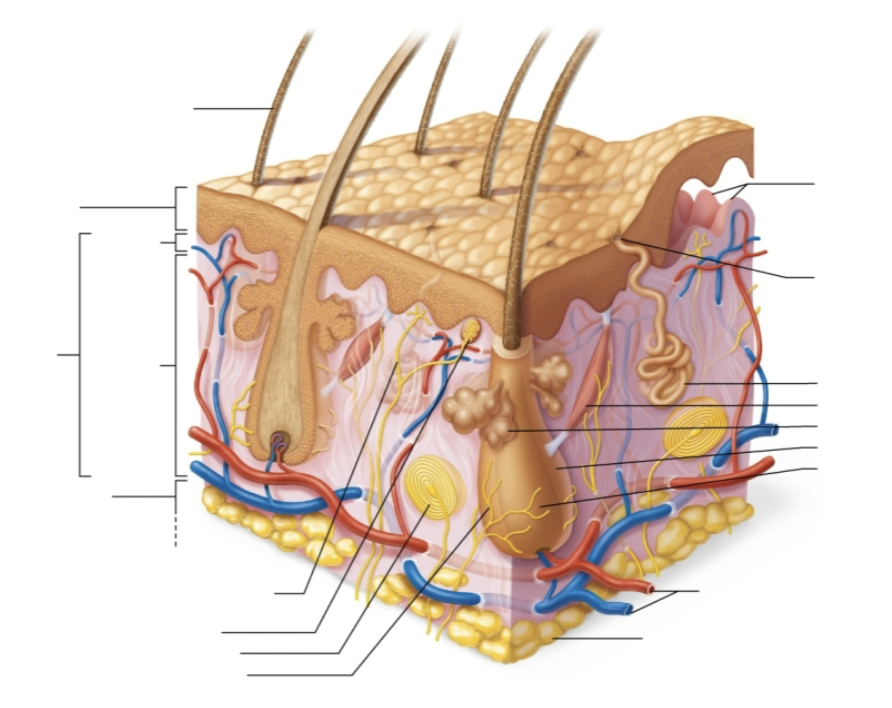
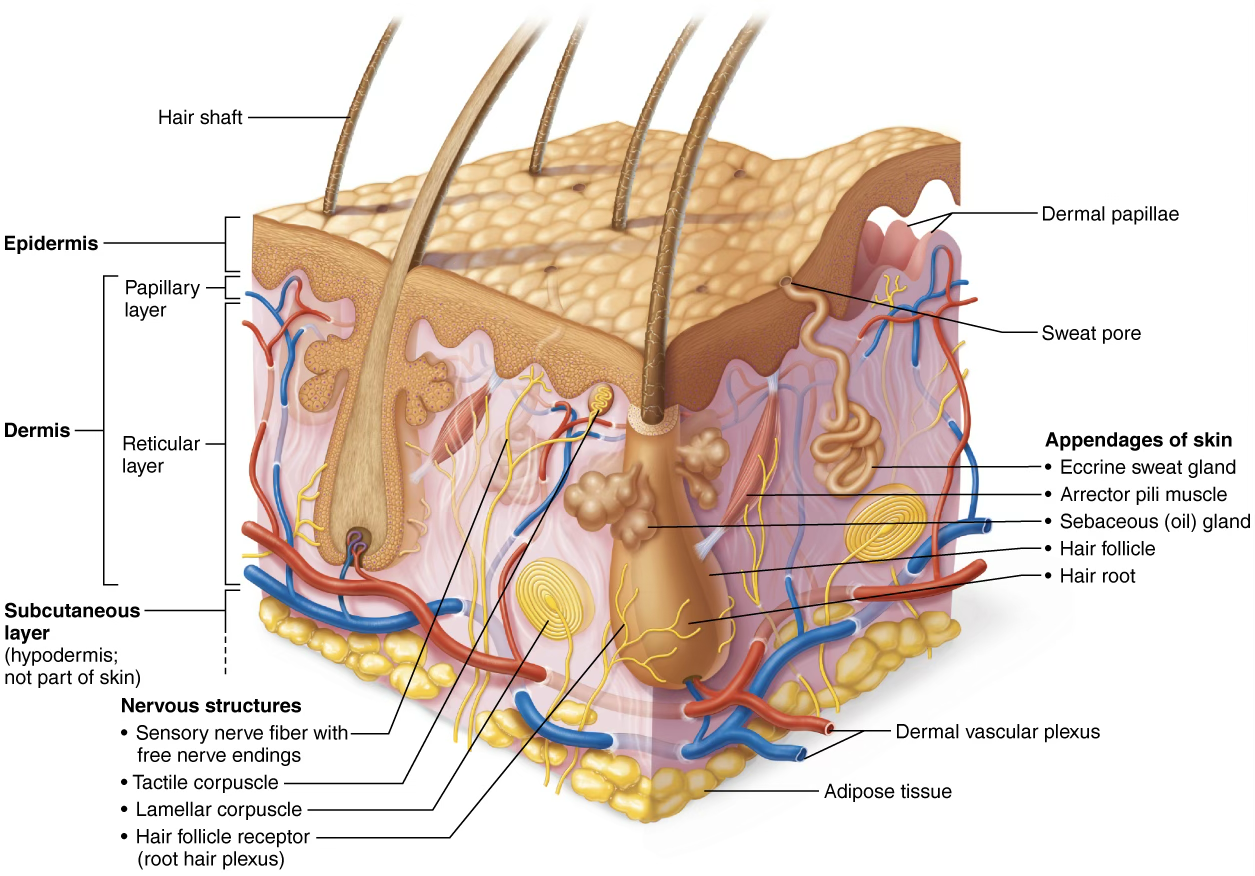
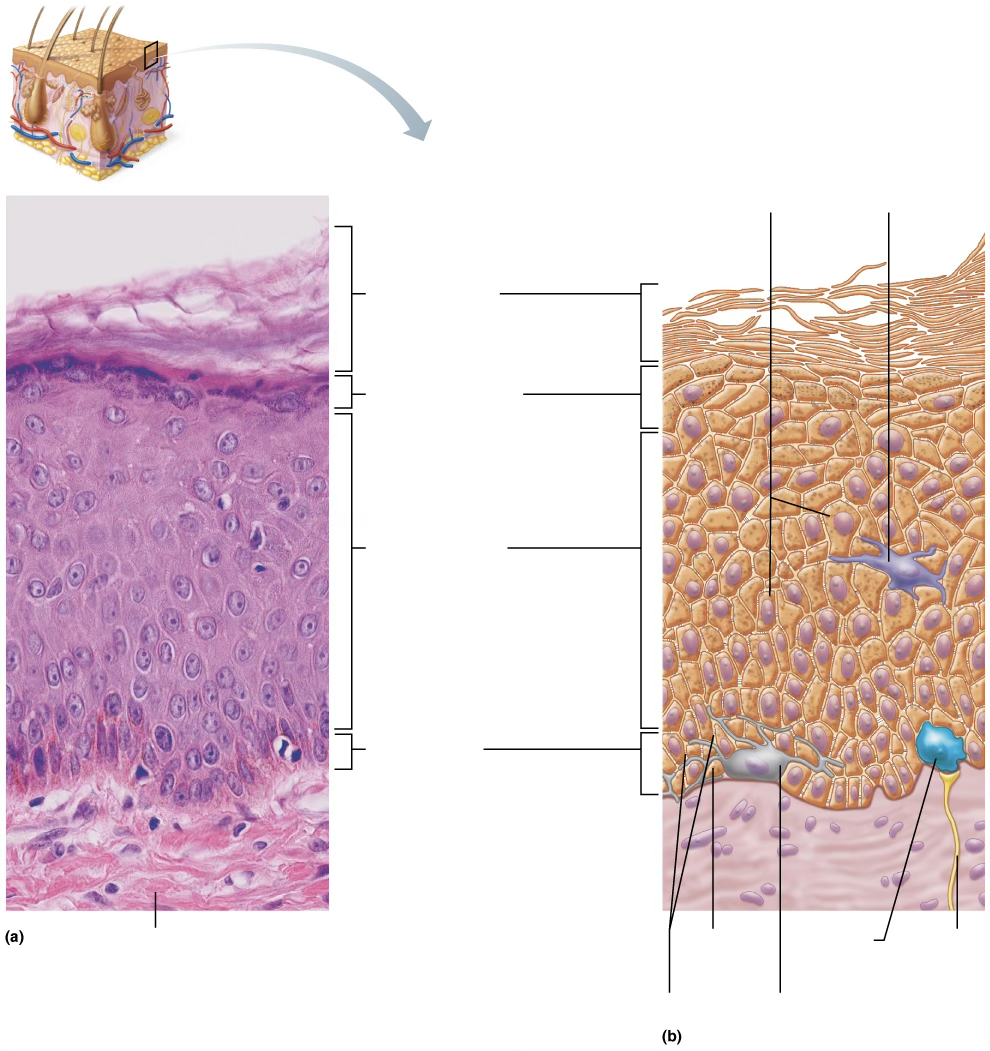
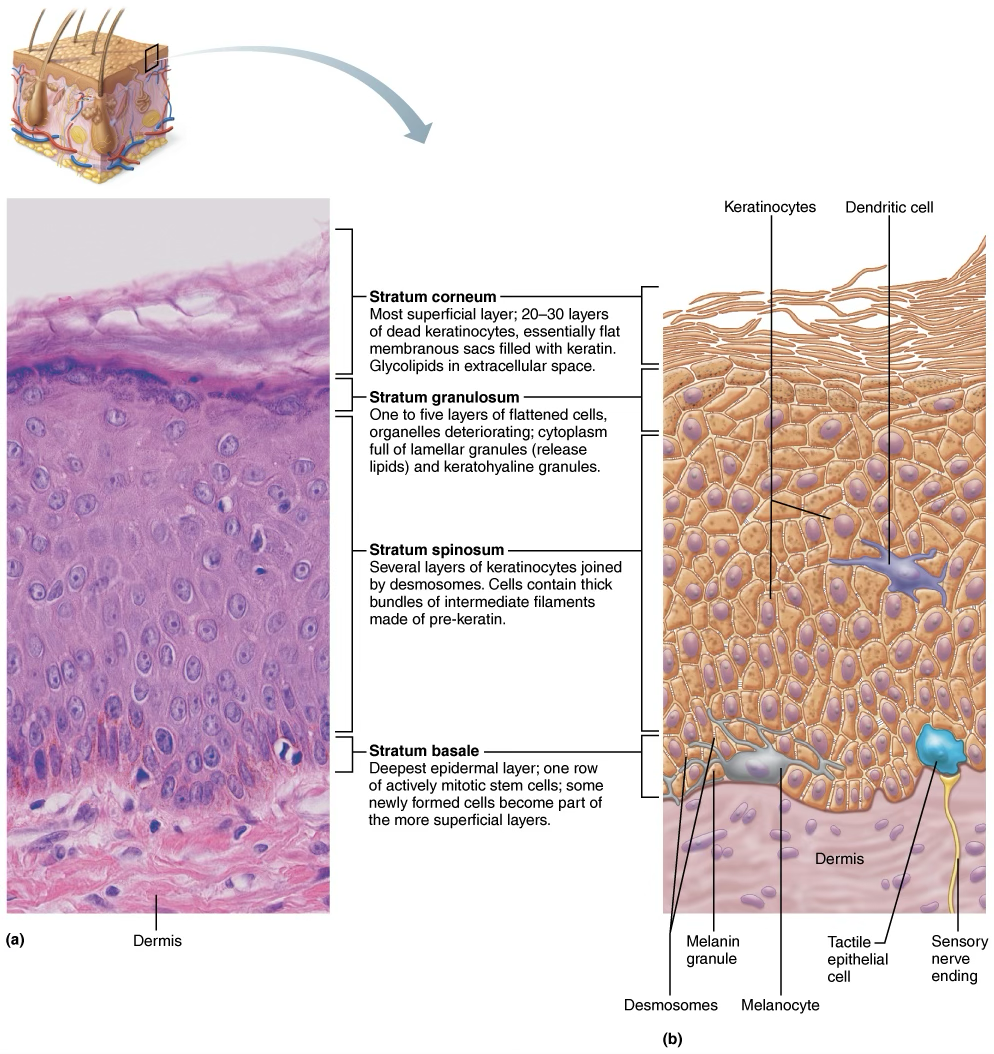
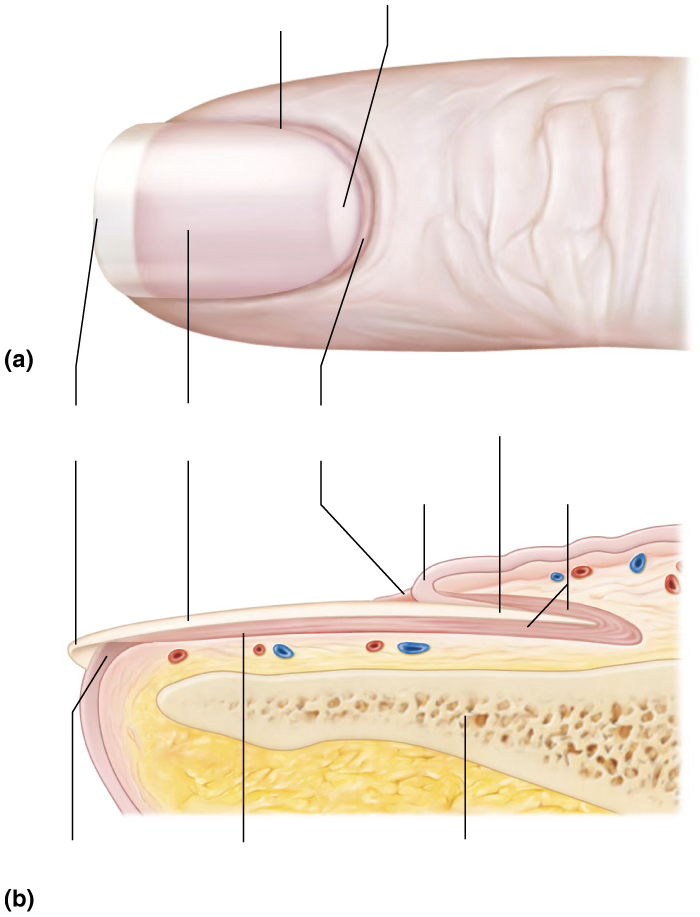
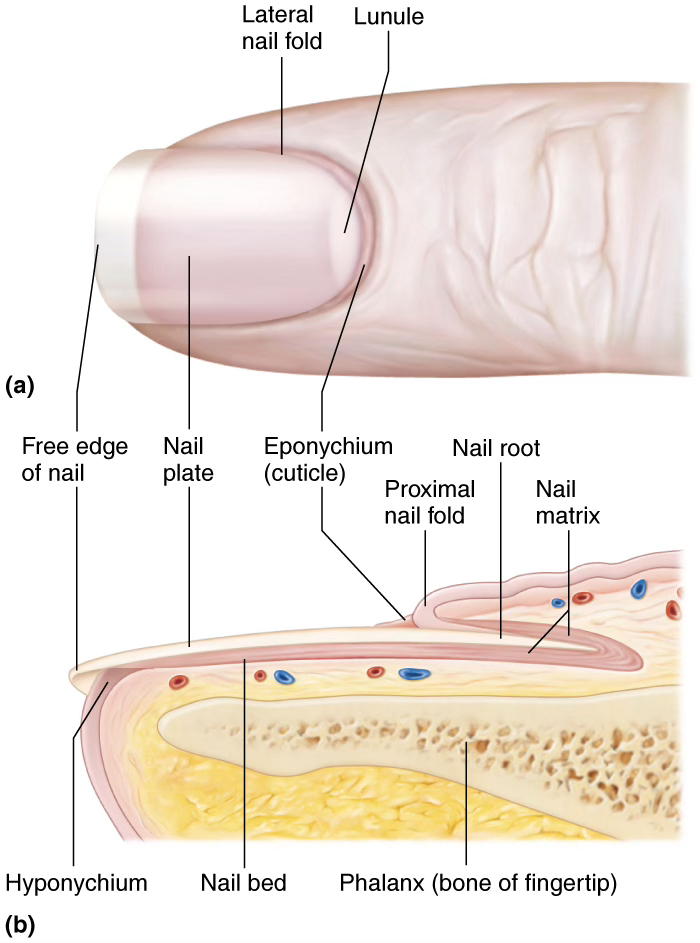
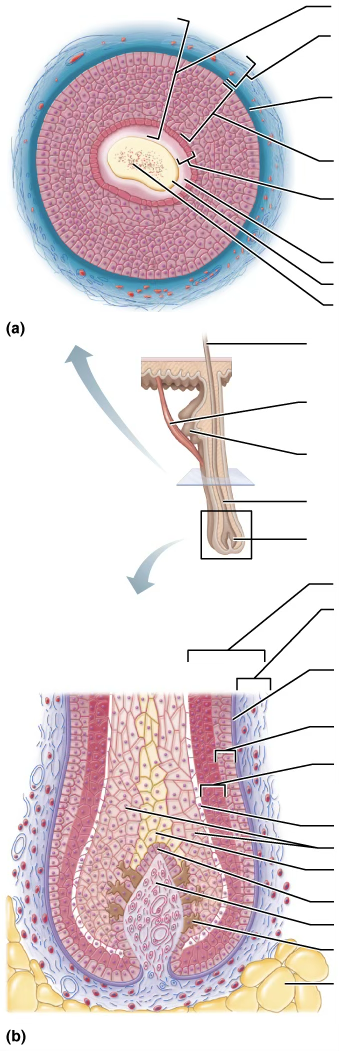
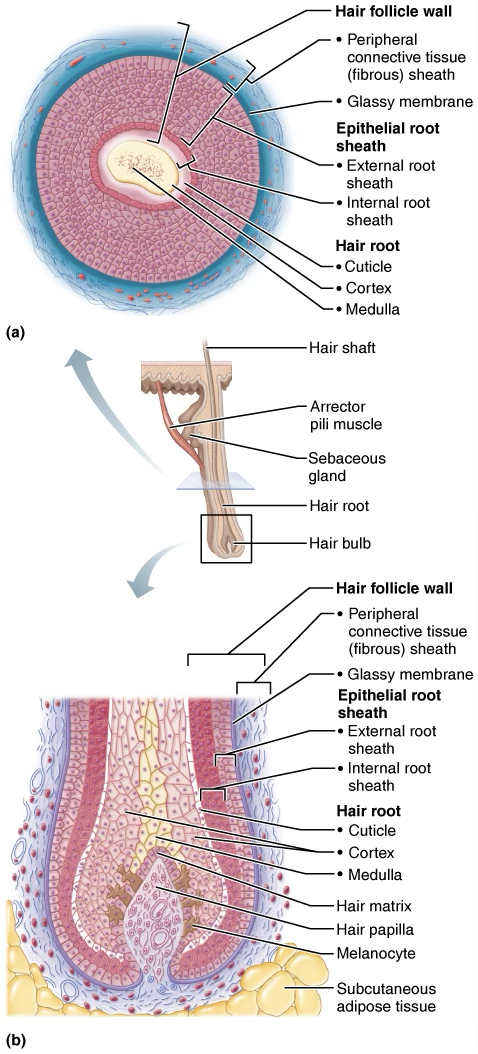
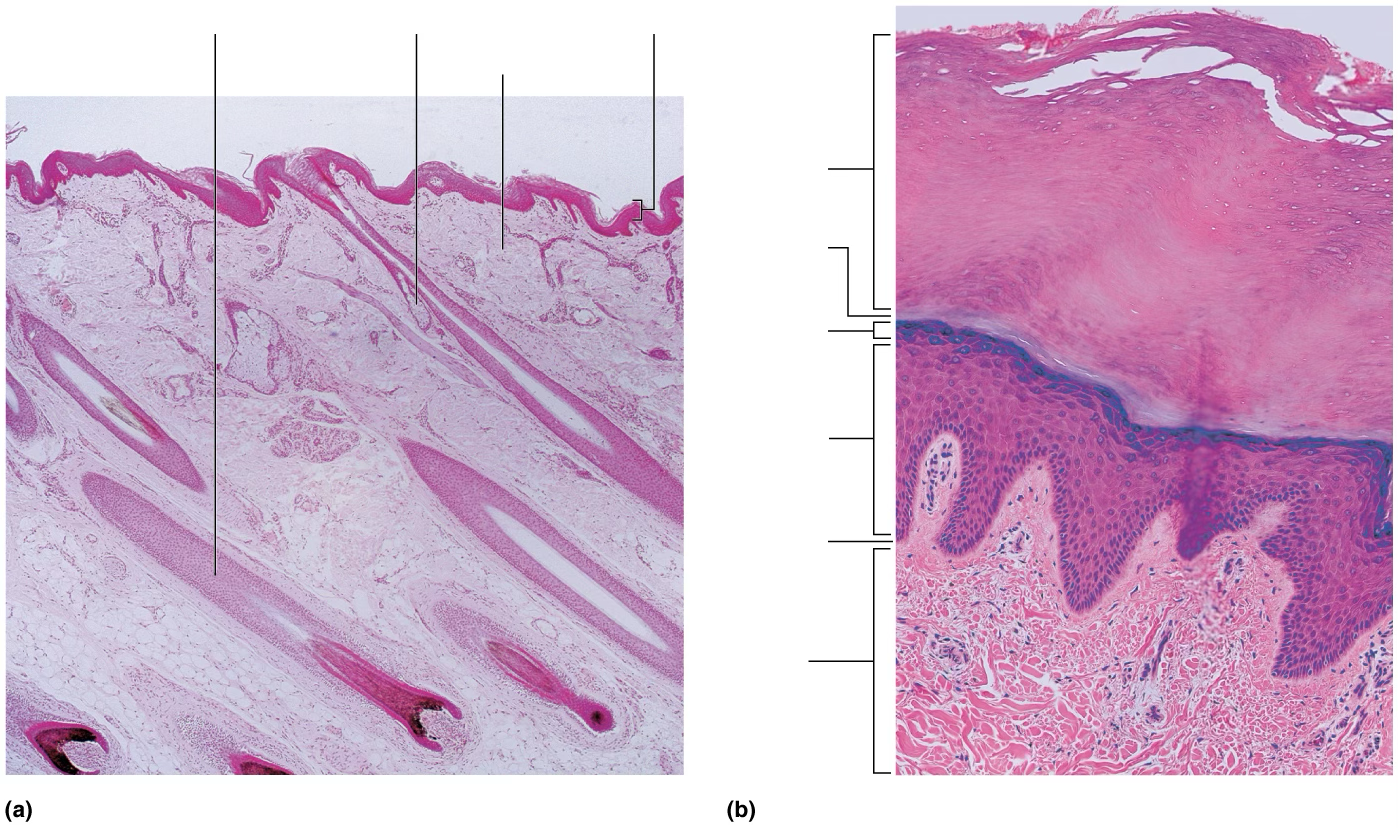
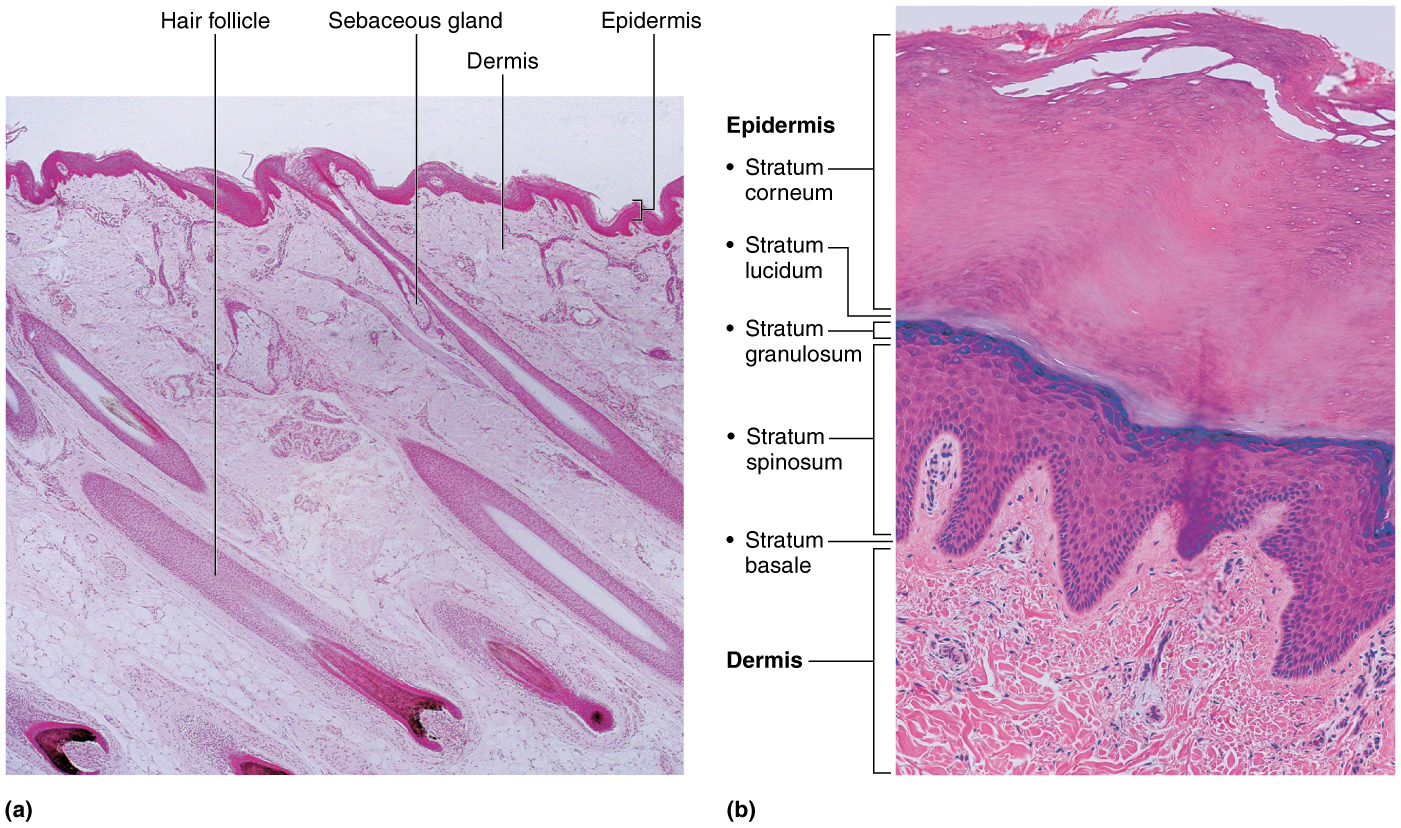
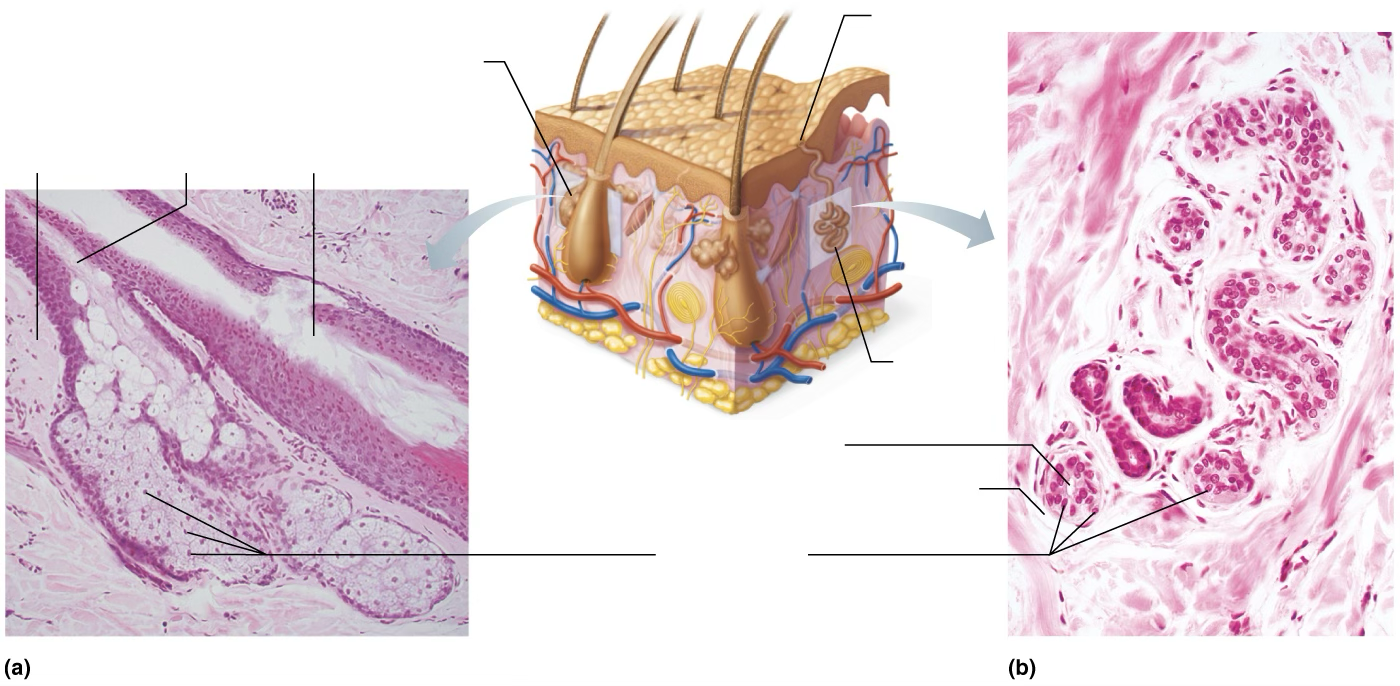
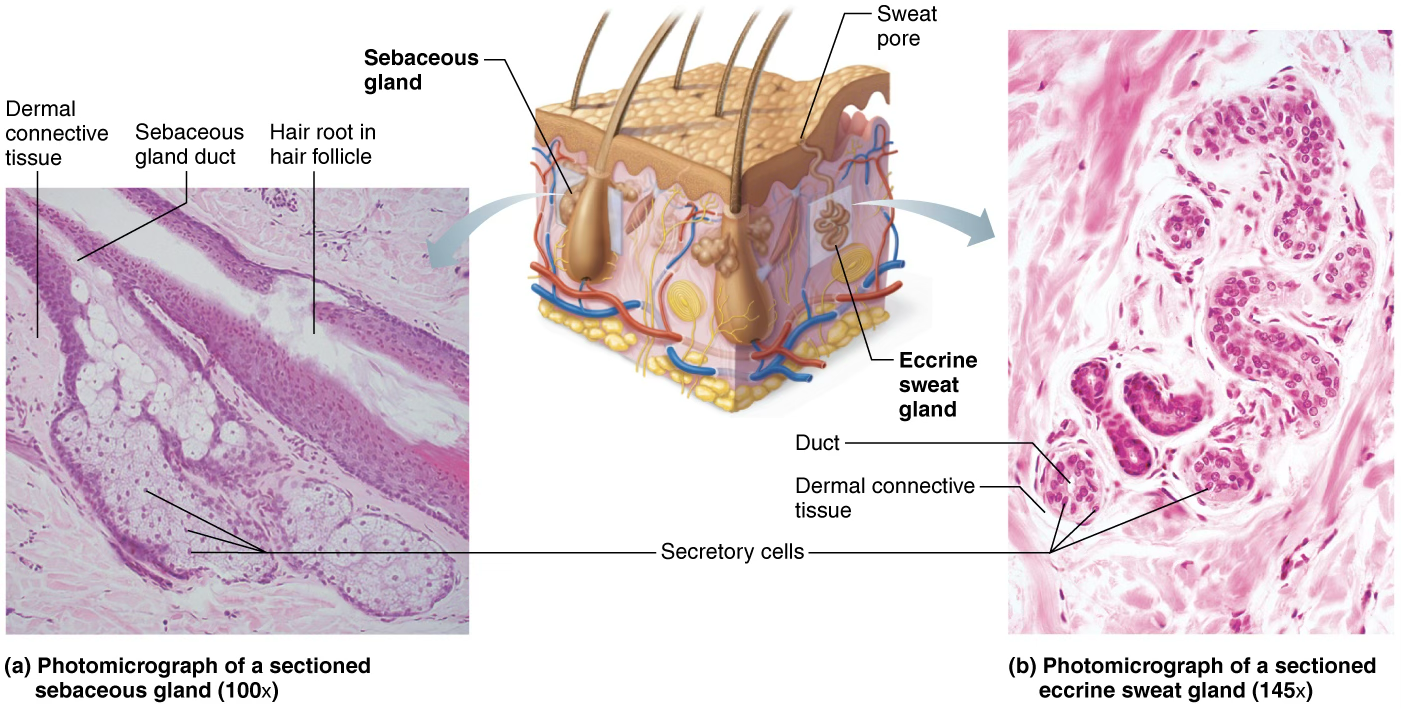
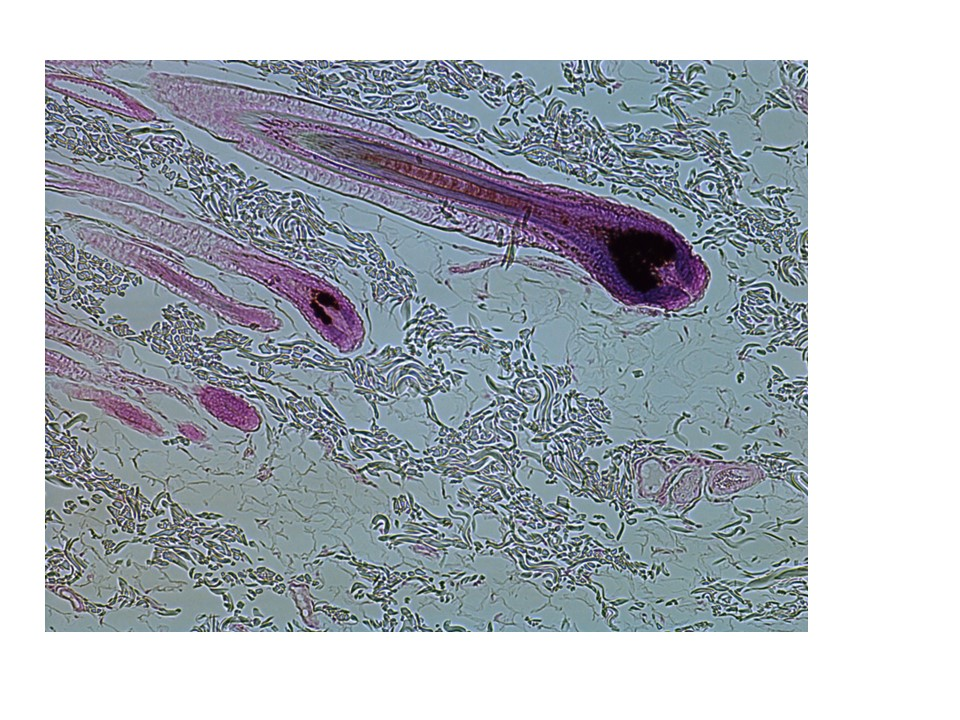
dermis with hair follicles
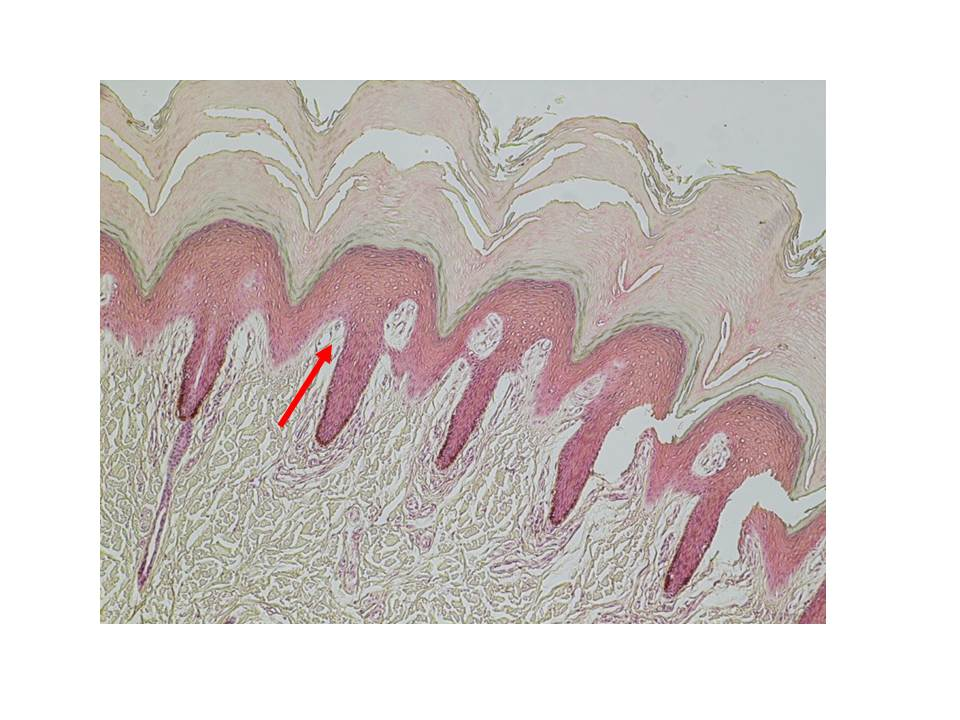
papillary layer
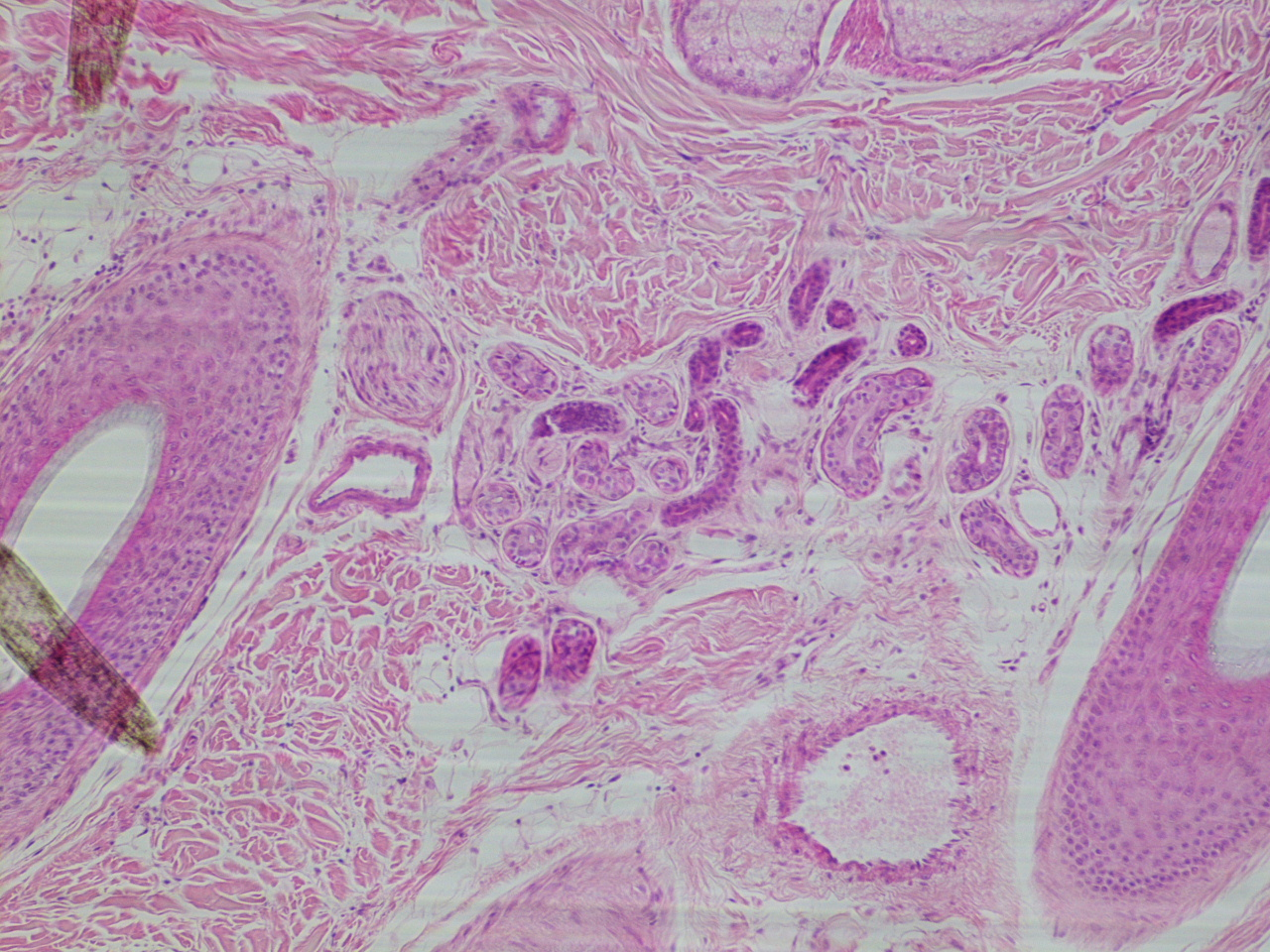
eccrine sweat
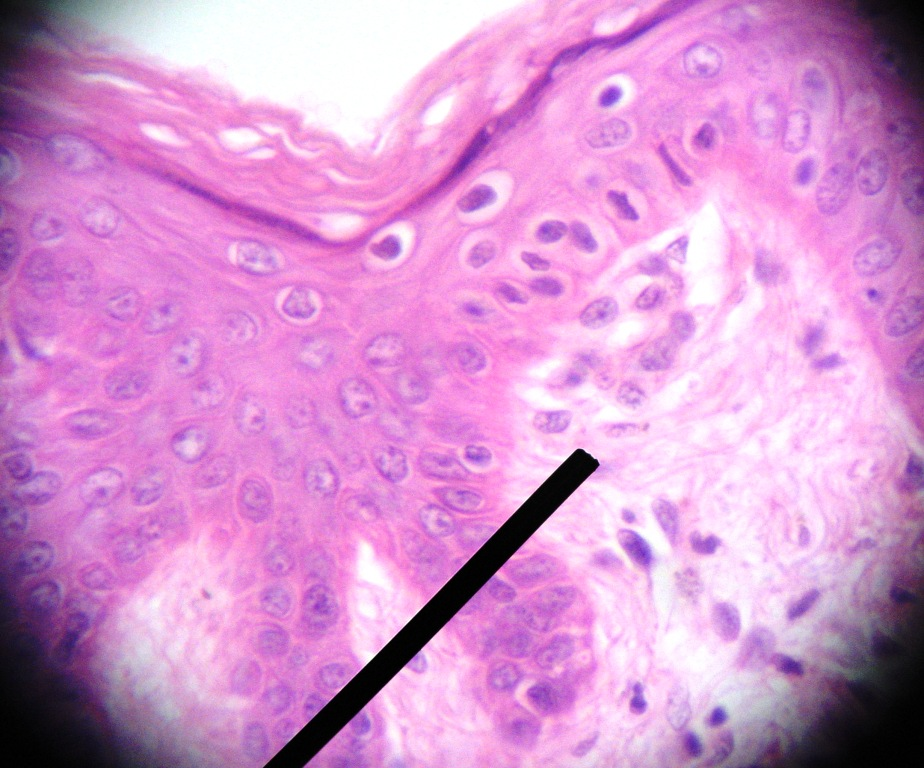
layers of epidermis and papillary layer of dermis
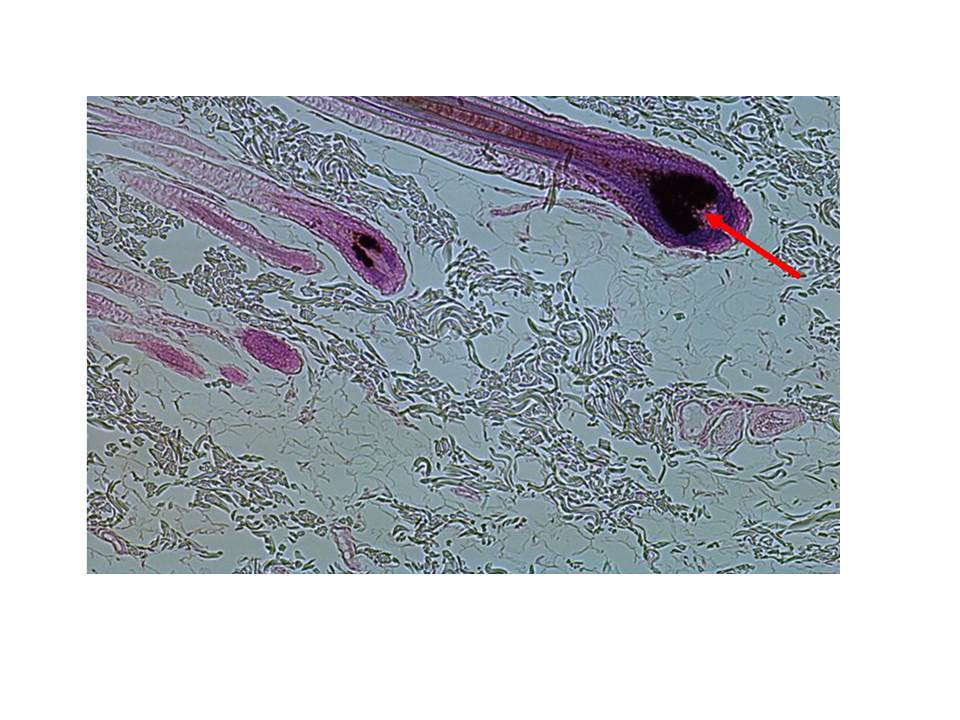
Hair papilla
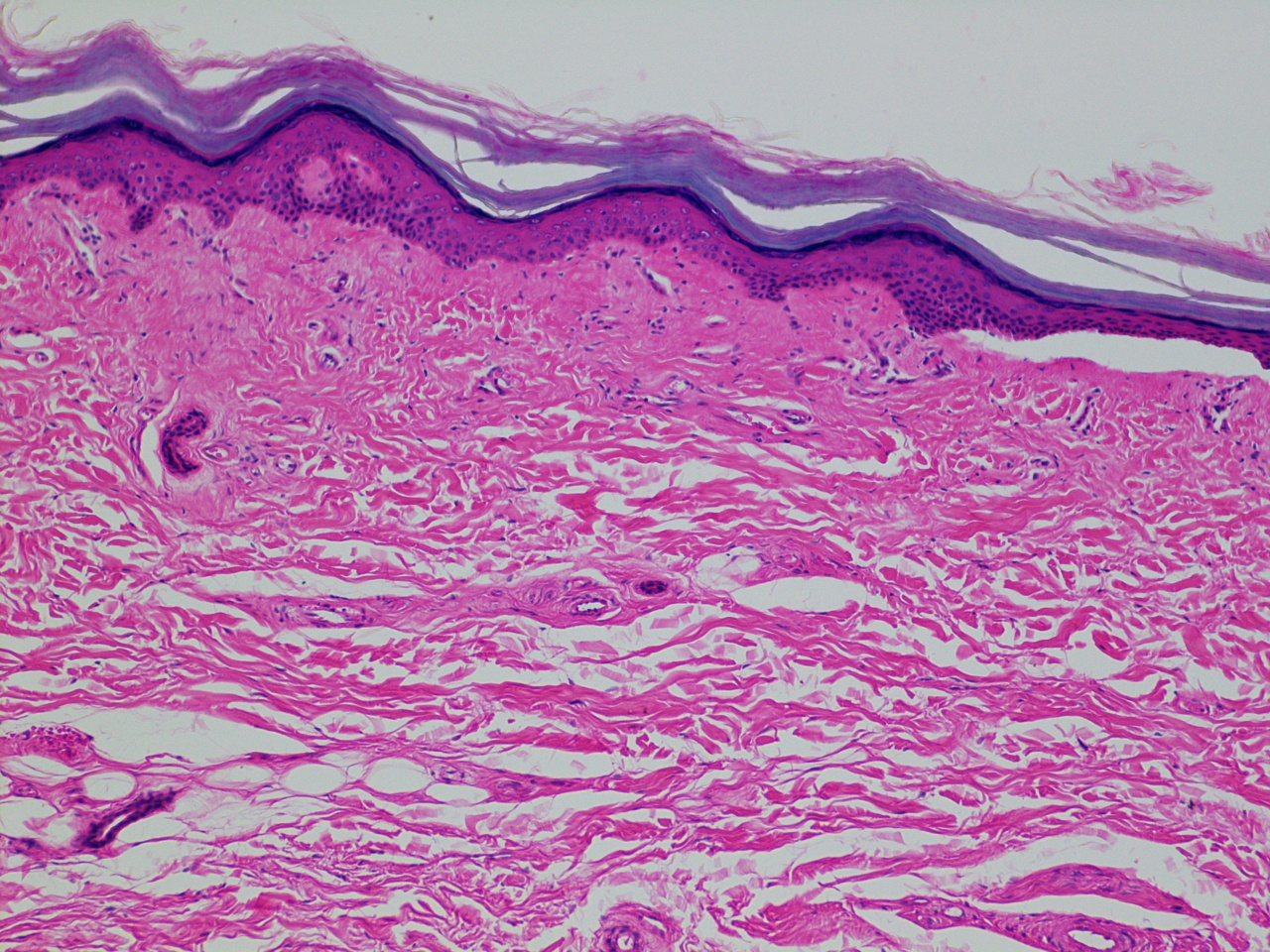
skin layers
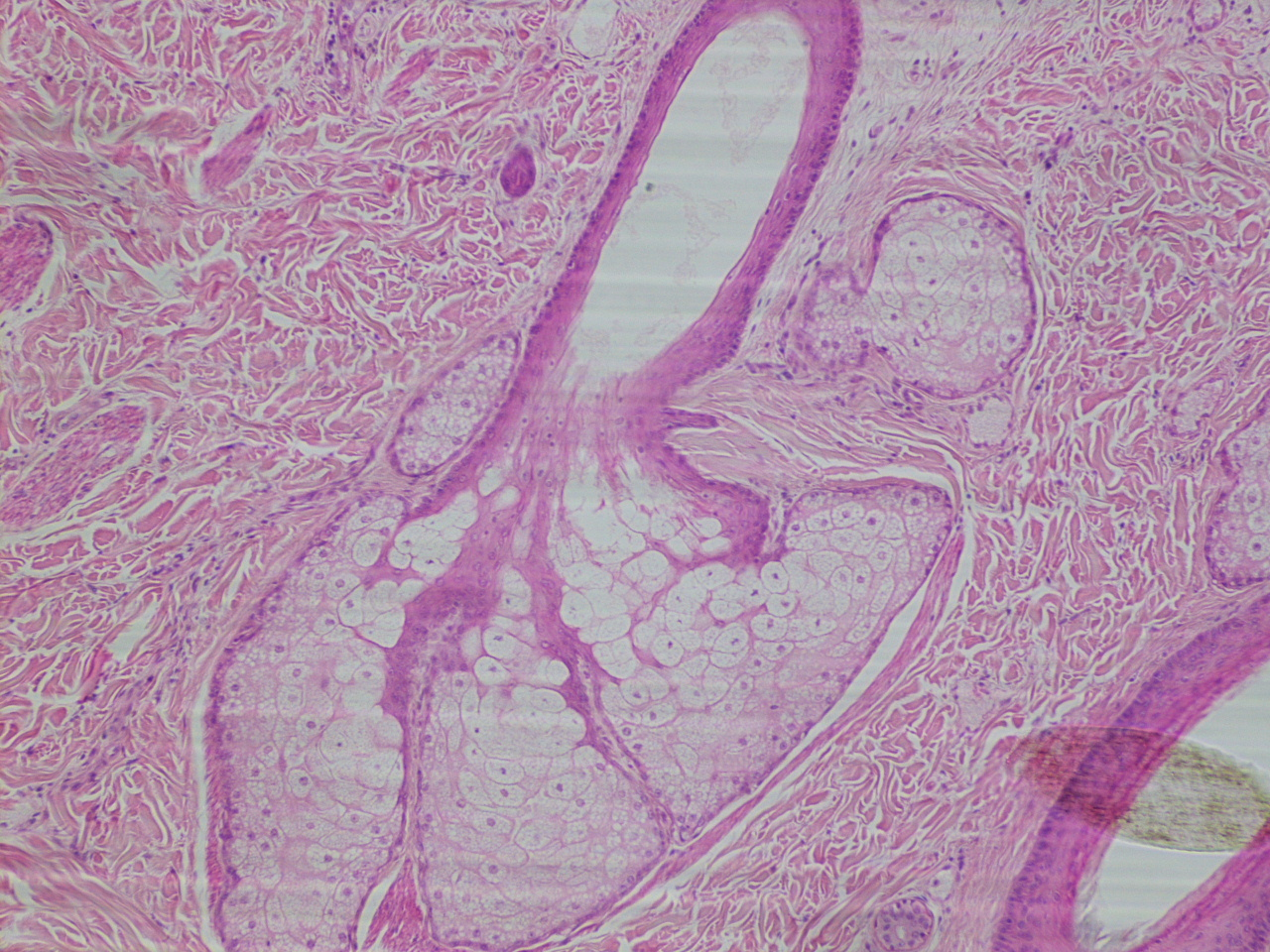
sebaceous
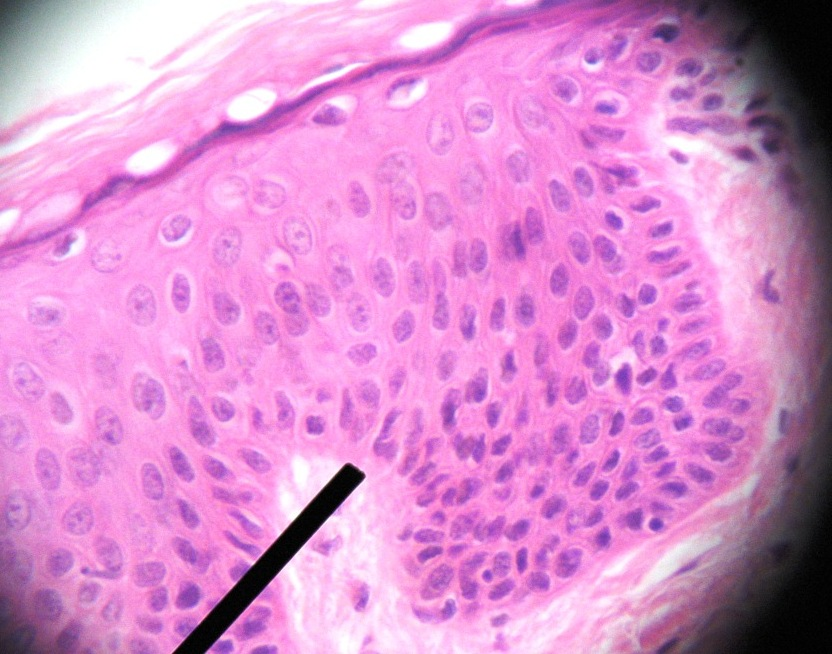
stratum basale
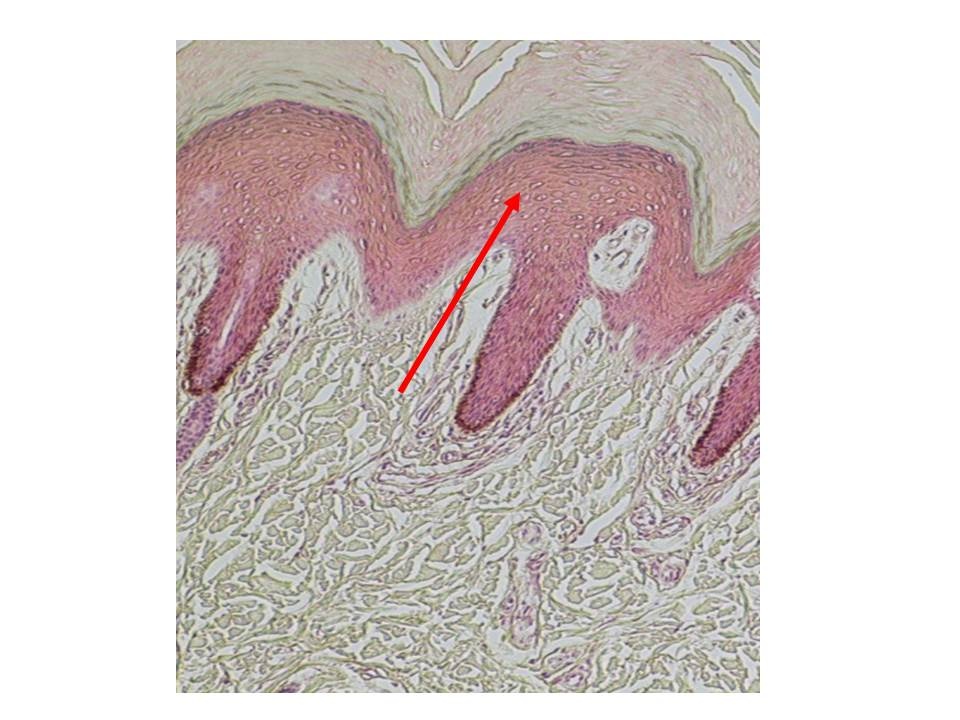
stratum granulosum