Chapter 10 - Fiscal Policy, Economic Growth, and Productivity
0.0(0)
Studied by 1 person Note
 Call Kai
 Learn
 Practice Test
 Spaced Repetition
 Match
 Flashcards
 Knowt Play
Card Sorting
1/33

34 Terms
1
New cards
Fiscal policy
Deliberate changes in government spending and net tax collection to affect economic output, unemployment, and the price level. Typically designed to manipulate AD to “fix” the economy.
2
New cards
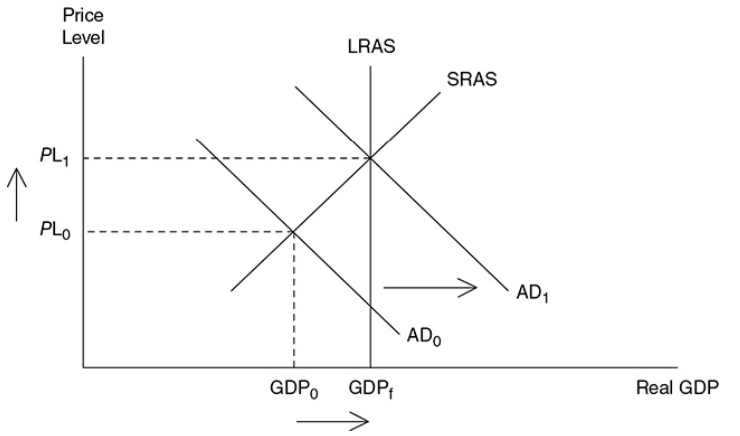
Expansionary fiscal policy
Real GDP is low and unemployement is high when the economy suffers a recession
3
New cards
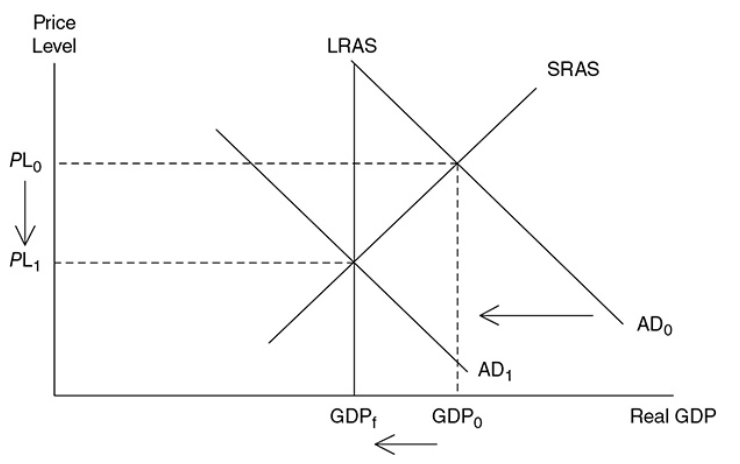
When the economy operates beyond full employement, inflation becomes a problem, so the government might need to contract the economy
Contractionary fiscal policy
4
New cards
Sticky prices
If price levels do not change, especially downward, with changes in AD, then prices are thought of as sticky or inflexible
5
New cards
Budget deficit
Exists when government spending exceeds the revenue collected from taxes
6
New cards
Budget surplus
Exists when the revenue collected from taxes exceeds government spending
7
New cards
Annual budget deficit
Occurs when, in a year, the government spends more than what is collected in tax revenue. To pay for this, the goverment borrows funds.
8
New cards
National debt
When budget deficits are an annual occurence in a country. It’s an accumulation of the borrowing needed to cover annual deficits.
9
New cards
Ways to finance the deficit in expansionary policy
Borrowing
Creating money
Creating money
10
New cards
Borrowing
When the government borrows in the form of Treasury bonds, it increases the demand for loanable funds. This increases the real rate of interest and reduces the quantity of funds available for private investment opportunities. If the goal is to expand the macroeconomy, the expansion is slowed down by increasing interest rates.
11
New cards
Creating money
This can avoid getting higher interest rates, but it increases the risk of inflation which can decrease the effectiveness of expansionary fiscal policy
12
New cards
Ways to finance the deficit in contractionary policy
Pay down debt
Do nothing
Do nothing
13
New cards
Pay down debt
If the government pays down debt and retires bonds ahead schedule, the demand for loanable funds increases lowering interest rates. These stimulate investment and consumption countering the contractionary policy and decreasing the downward effects on the price level.
14
New cards
Do nothing
Not allowing the borrowed funds to be recirculated through the economy causes the anti-inflationary policy to be more effective
15
New cards
Automatic stabilizers
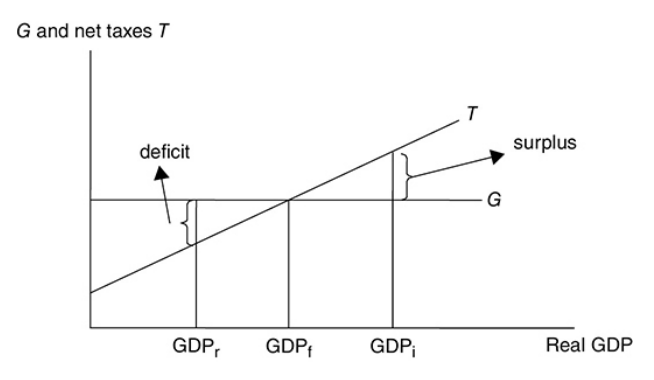
Mechanisms built into the tax system that automatically regulate, or stabilize, the macroeconomy as it moves through the business cycle by changing net taxes collected by the government.
They increase a deficit during a recession and increase a budget surplus during inflation.
They increase a deficit during a recession and increase a budget surplus during inflation.
16
New cards
Relationship betwee net taxes and GDP
Net taxes increase and decrease with GDP
17
New cards
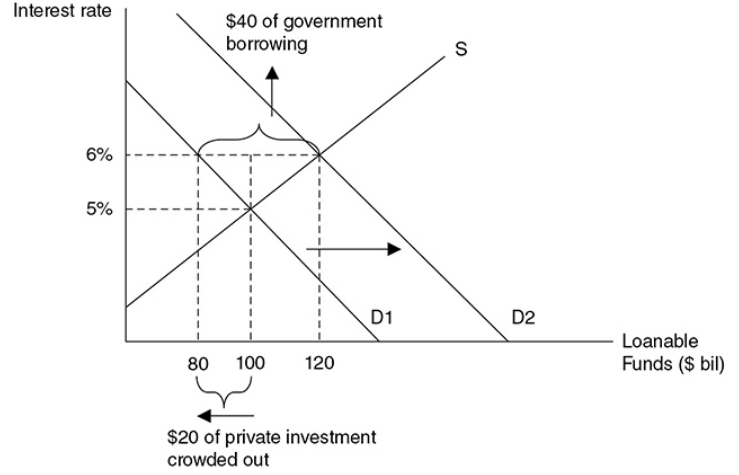
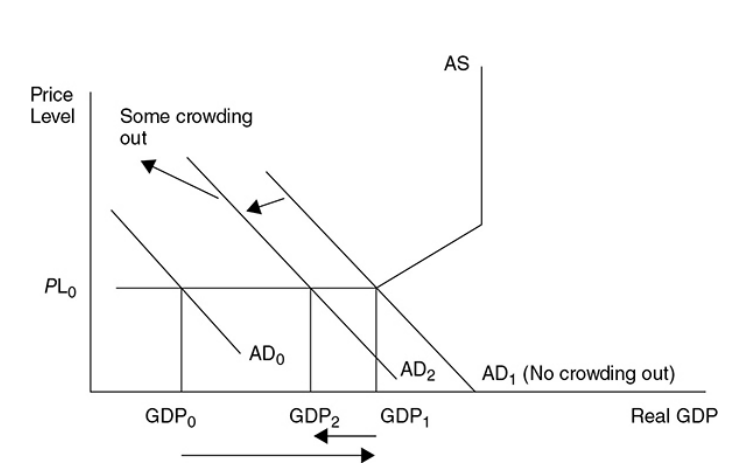
Crowding-out effect
When the government borrows funds to cover a deficit, the interest rate increases and households and firms are crowded out of the market for loanable funds
18
New cards
"Crowding in"
When a budget surplus is the result of the contractionary policy and government debt is retired, the demand for loanable fund decreases, interest rates fall and private investment increases
19
New cards
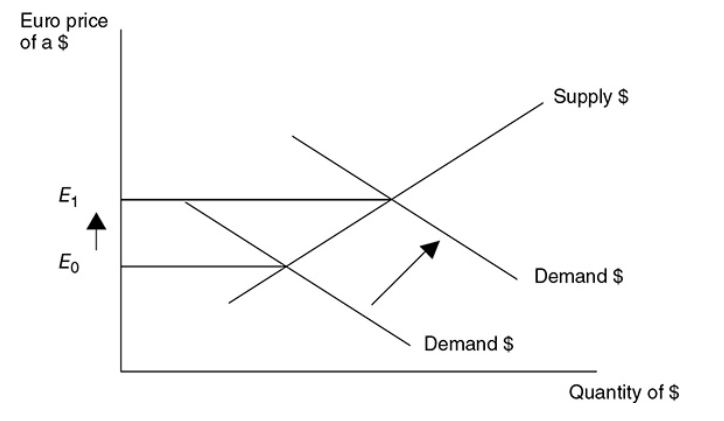
Net export effect
A rising interest rate increases foreign demand for U.S. dollars. The dollar then appreciates in value, causing net exports from the United States to fall. Falling net exports decreases AD, which lessens the impact of the expansionary fiscal policy. This is a variation of crowding out.
20
New cards
Expansionary fiscal policy is less effective if
* Government borrowing crowds out private investment with higher interest rates
* Net exports fall because of an appreciating dollar
* Net exports fall because of an appreciating dollar
21
New cards
Productivity
The quantity of output that can be produced per worker in a given amount of time
22
New cards
Determinants of productivity
* Stock of physical capital
* Human capital
* Natural resources
* Nonrenewable resources
* Renewable resources
* Technology
* Human capital
* Natural resources
* Nonrenewable resources
* Renewable resources
* Technology
23
New cards
Stock of physical capital
When the quantity of physical capital in an economy is increased, in many cases, the capital helps increase the quantity of more capital
24
New cards
Human capital
The amount of knowledge and skills that labor can apply to the work that they do and the general level of health that the labor force enjoys
25
New cards
Natural resources
Productive resources provided by nature
26
New cards
Nonrenewable resources
Natural resources that cannot replenish themselves
27
New cards
Renewable resources
Natural resources that can replenish themselves if they are not overharvested
28
New cards
Technology
A nations knowledge of how to produce goods in the best possible way
29
New cards
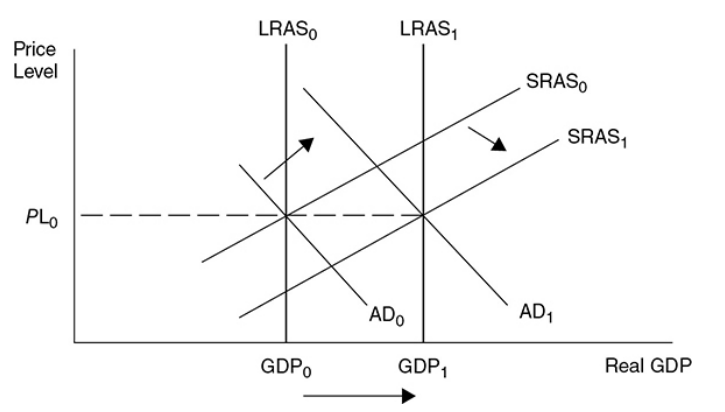
Supply-side fiscal policy
Fiscal policy centered on tax reductions targeted to AS so that real GDP increases with very little inflation
30
New cards
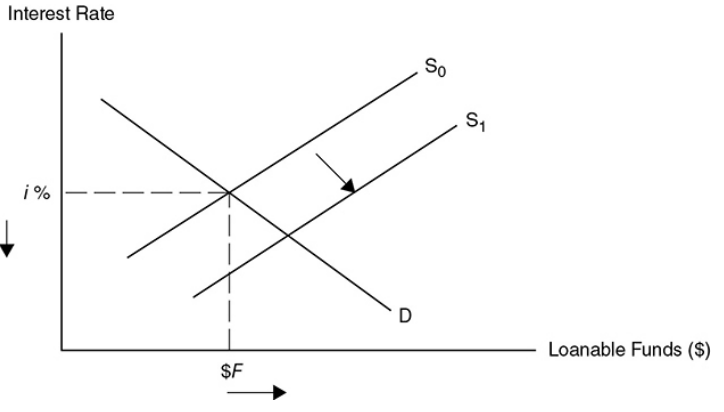
Investment tax credit
A reduction in taxes for firms that invest in new capital like a factory or piece of equipment
31
New cards
What does lower income taxes create
They create disposable income for households, increasing the consumption and savings of these which allows for an increase in the productivity capacity of the country because of the capital stock accumulated. This increases the long-run AS curve.
Tax incentives to increase savings can also increase AD.
Tax incentives to increase savings can also increase AD.
32
New cards
How lower taxes can increase AS and AD
By productivity incentives and risk-taking
33
New cards
Productivity incentives
Lower taxes mean workers take more of their pay home, which might prompt wage earners to work harder, take less time off, and be more productive
34
New cards
Risk-taking
Lowering the tax rate on profits increases the expected rate of return and encourages more investment