Chapter 10 - Fiscal Policy, Economic Growth, and Productivity
10.1 Expansionary and Contractionary Fiscal Policy
Expansionary Fiscal Policy
- Fiscal policy - Deliberate changes in government spending and net tax collection to affect economic output, unemployment, and the price level. Fiscal policy is typically designed to manipulate AD to “fix” the economy.
- Expansionary fiscal policy - Real GDP is low and unemployment is high when the economy suffers a recession. In the AD and AS model, there’s a recessionary equilibrium located below full employment.
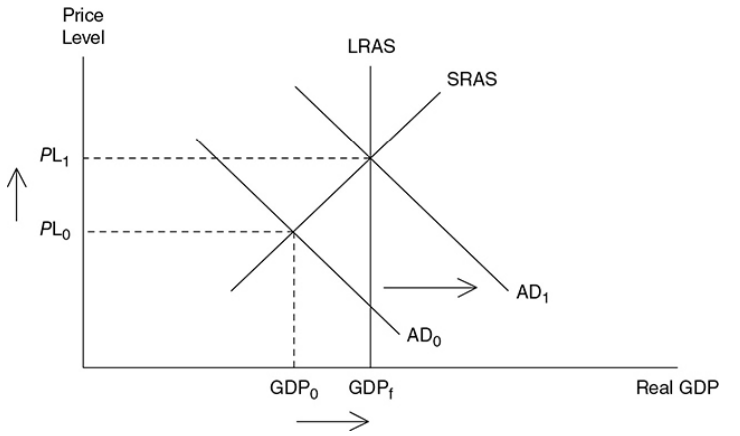
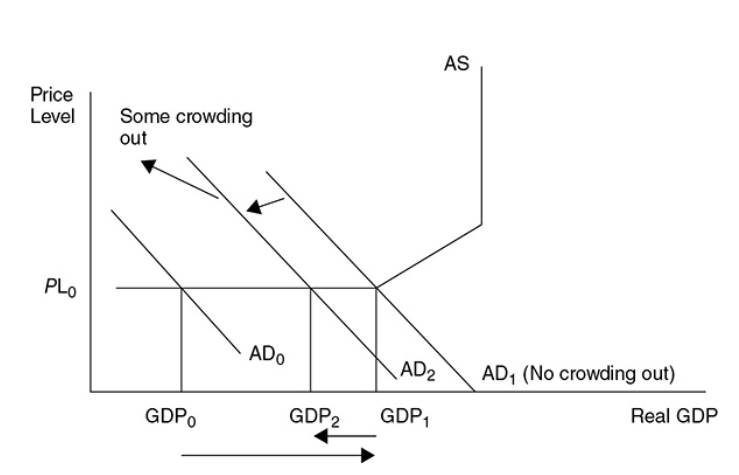
- If the government increases the spending or lowers net taxes, the AD curve increases. , than an increase in government spending.
- To resume, expansionary fiscal policy is the increases in government spending or lower net taxes meant to shift AD to the right.
Contractionary Fiscal Policy
- Contractionary fiscal policy - When the economy operates beyond full employment, inflation becomes a problem, so the government might need to contract the economy. This inflationary equilibrium is beyond full employment. It can be done by decreasing government spending or increasing net taxes, opposite to expansionary fiscal policy.
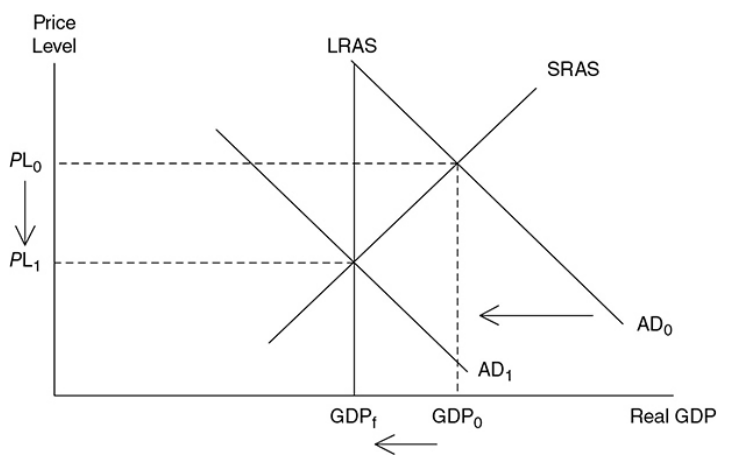
- To resume, contractionary fiscal policy decreases government spending or increases net taxes to shift AD to the left.
- Sticky prices - If price levels do not change, especially downward, with changes in AD, then prices are thought of as sticky or inflexible. Keynesians believe the price level does not usually fall with contractionary policy.
- On the other hand, Classical school economists believe that the long-run economy adjusts naturally to full employment, so they see the AS curve vertical. , as seen in the last graph.
Deficits and Surpluses
- Budget deficit - Exists when government spending exceeds the revenue collected from taxes.
- Budget surplus - Exists when the revenue collected from taxes exceeds government spending.
- Annual budget deficit- Occurs when, in a year, the government spends more than what is collected in tax revenue. To pay for this, the goverment borrows funds.
- National debt - When budget deficits are an annual occurence in a country. It’s an accumulation of the borrowing needed to cover annual deficits.
Expansionary Policy
- Here budget deficits are less likely, but there are two ways to finance the decifit that may occur:
- Borrowing - When the government borrows in the form of Treasury bonds, it increases the demand for loanable funds. This increases the real rate of interest and reduces the quantity of funds available for private investment opportunities. If the goal is to expand the macroeconomy, the expansion is slowed down by increasing interest rates. (Crowding out effect, next section).
- Creating money - This can avoid getting higher interest rates, but it increases the risk of inflation which can decrease the effectiveness of expansionary fiscal policy.
Contractionary Policy
- In this case, the government spends less or collects more tax revenue creating the possibility for a budget surplus to occur. The effectiveness on the contractionary policy depends on what’s done with the surplus.
- Pay down debt - If the government pays down debt and retires bonds ahead schedule, the demand for loanable funds increases lowering interest rates. These stimulate investment and consumption countering the contractionary policy and decreasing the downward effects on the price level.
- Do nothing - Not allowing the borrowed funds to be recirculated through the economy causes the anti-inflationary policy to be more effective.
Automatic Stabilizers
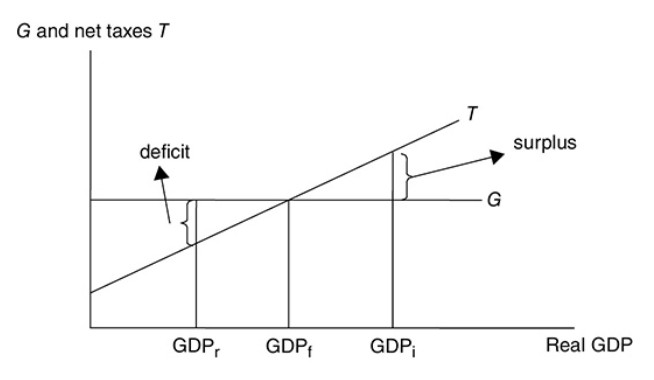
- Automatic stabilizers - Mechanisms built into the tax system that automatically regulate, or stabilize, the macroeconomy as it moves through the business cycle by changing net taxes collected by the government. These stabilizers increase a deficit during a recessionary period and increase a budget surplus during an inflationary period, without any discretionary change on the part of the government.
Progressive Taxes and Transfers
- When GDP is increasing, a larger percentage of income is taken as income tax since more households and firms are falling into higher tax brackets. This slows down the consumption of households and firms and since a strong economy reduced the need of transfer payments for unemployment insurance, nex taxes increase with GDP.
- When GDP is falling, households and firms are in lower tax brackets decreasing the percentage of income tax received. This provides more consumption than at a higher tax rate and since a weak economy increases the need of transfer payments, net taxes decrease with GDP.
- Automatic stabilizers lessen, but do not eliminate, the business cycle swings.
- Automatic stabilizers lead to deficits during recession and surpluses during economic growth.
10.2 Difficulties of Fiscal Policy
Crowding Out
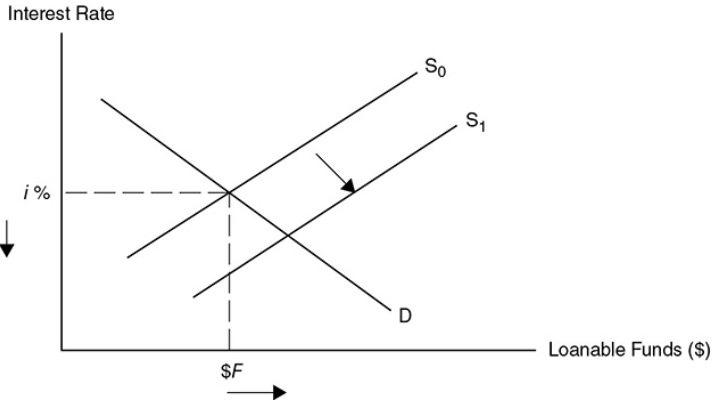
- Crowding-out effect - When the government borrows funds to cover a deficit, the interest rate increases and households and firms are crowded out of the market for loanable funds. The resulting decrease in C and I dampens the effect of expansionary fiscal policy.
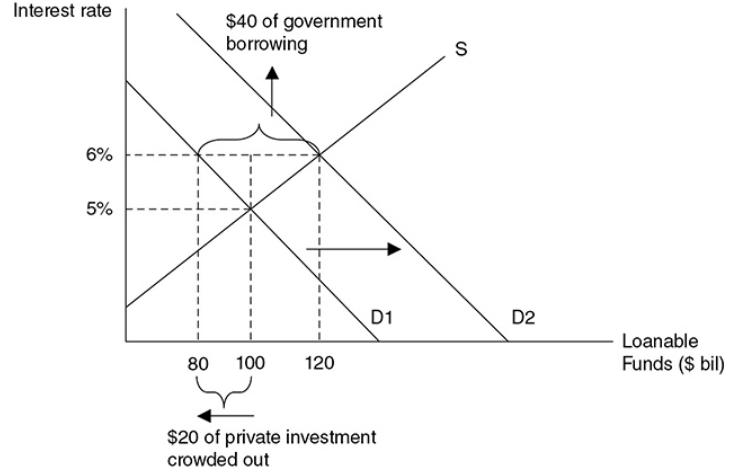
- ^^Ex. →^^ Suppose that government fiscal policy creates a $40 billion budget deficit. To cover the deficit, the government must borrow $40 billion in the market for loanable funds. The new demand curve (D2) is the original demand curve laying $40 billion to the right of D1. The new market equilibrium interest rate is 6%, and $120 billion is saved and invested. But remember that of this $120 billion, $40 billion is due to borrowing by the government. That leaves $80 billion in private borrowing and investment. So the government budget deficit caused private borrowing and investment to fall from $100 billion to $80 billion, and that is where we see the crowding out of $20 billion in private investment.
- “Crowding in“ - When a budget surplus is the result of the contractionary policy and government debt is retired, the demand for loanable fund decreases, interest rates fall and private investment increases.
- TIP - It doesn’t matter if your textbook treats crowding out as a leftward shift in supply of, or as a rightward shift in demand for, loanable funds. As long as you can see (or show) the impact of government budget deficits as a higher interest rate and lower private investment, you will score highly on those exam questions.
Net Export Effect
- Net export effect - A rising interest rate increases foreign demand for U.S. dollars. The dollar then appreciates in value, causing net exports from the United States to fall. Falling net exports decreases AD, which lessens the impact of the expansionary fiscal policy. This is a variation of crowding out.
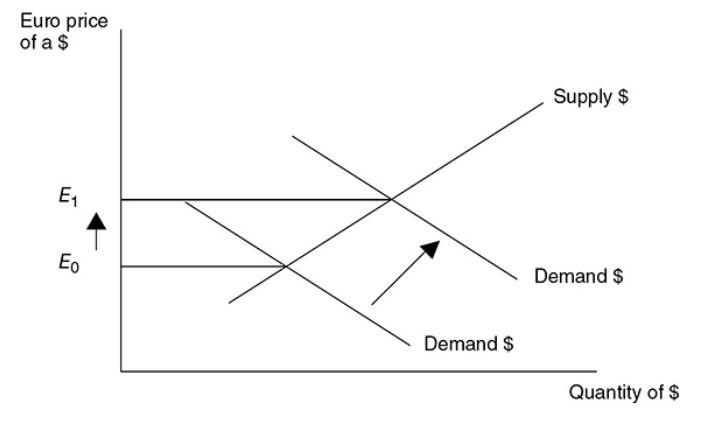
- Falling net exports decreases AD, which decreases the impact of the expansionary fiscal policy.
- If the government uses contractionary fiscal policy to fight inflation and interest rates falls, the demand for dollars falls, increasing net exports. This increase decreases the effectiveness of the contractionary policy.
- Expansionary fiscal policy is less effective if government borrowing crowds out private investment with higher interest rates.
- Expansionary fiscal policy is less effective if net exports fall because of an appreciating dollar.
- These effects also work in the opposite direction, making contractionary fiscal policy less effective when interest rates fall.
State and Local Policies
- When the economy is in a recession, tax revenues are low and deficits are more likely to occur. To balance the budget, a combination of higher taxes and less spending is needed and this only worsens the recession.
- During economy expansion, tax revenues are high and surpluses occur. Balancing the budget here requires lower taxes or higher levels of spending, which continues the expansion and risks higher inflation rates.
- The thing is many state and local governments are required by law to balance their budgets. During recessions, the tax revenue collected falls and elected officials are required to increase taxes. Meaning that, while the federal government is cutting taxes to increase disposable income and promote economic growth, the state and local governments are increasing taxes to make up for the shortfalls caused by the recession.
10.3 Economic Growth and Productivity
Production Possibilities
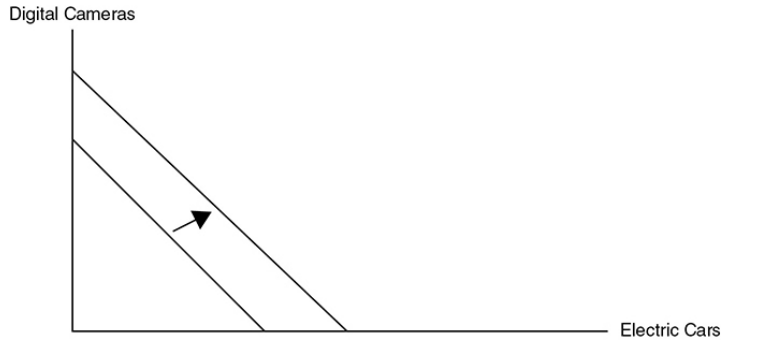
- This graph shows that the country’s production possibilities in electric cars and digital cameras grows over time if
- The quantity of economic resources increases,
- The quality of those resources improves.
- The nation’s technology improves.
Productivity
- Productivity - The quantity of output that can be produced per worker in a given amount of time.
- If the labor force of a country produces more output per worker from one year to the next, productivity has increased and the PCC shifted outwards.
Determinants of Productivity
- All of these require an investment, funds that come from savings. Firms invest in physical capital and individuals invest in human capital. Countries invest in natural resources and entrepeneurs invest in technology.
- Stock of physical capital - When the quantity of physical capital in an economy is increased, in many cases, the capital helps increase the quantity of more capital.
- Human capital - The amount of knowledge and skills that labor can apply to the work that they do and the general level of health that the labor force enjoys.
- Natural resources - Productive resources provided by nature.
- Nonrenewable resources - Natural resources that cannot replenish themselves. Coal is a good example.
- Renewable resources - Natural resources that can replenish themselves if they are not overharvested. Lobster is a good example.
- Technology - A nation’s knowledge of how to produce goods in the best possible way.
Supply-Side Policies
- Supply-side fiscal policy - Fiscal policy centered on tax reductions targeted to AS so that real GDP increases with very little inflation.
- The main justification is that lower taxes on individuals and firms increase incentives to work, save, invest, and take risks.
Saving and Investment
- Investment tax credit - A reduction in taxes for firms that invest in new capital like a factory or piece of equipment.
- Lower income taxes create disposable income for households, increasing both consumption and savings from households and the profitability of investment for firms. This allows for an increase in the productivity capacity of the country because more capital stock is accumulated. As well, this increases the long-run AS curve. Tax incentives to increase savings and investment are likely to increase AD.
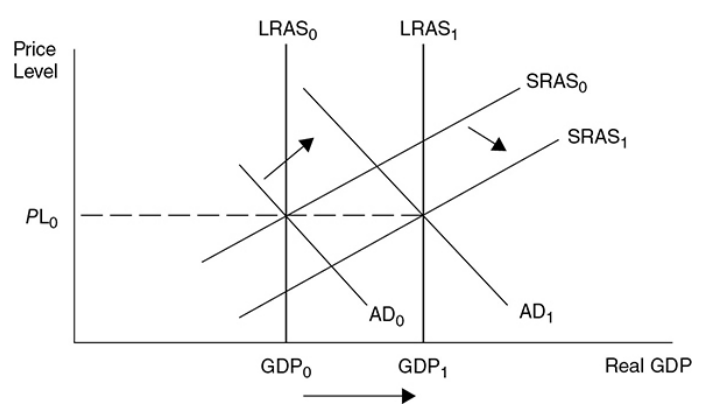
How lower taxes can increase AS and AD
- Productivity incentives - Lower taxes mean workers take more of their pay home, which might prompt wage earners to work harder, take less time off, and be more productive.
- Risk-taking - Lowering the tax rate on profits increases the expected rate of return and encourages more investment.