Ammonia Reference Ranges / Methods
 Call Kai
 Learn
Learn Practice Test
 Spaced Repetition
 Match
Match Flashcards
 Knowt Play
1/5

There's no tags or description
Looks like no tags are added yet.
Name | Mastery | Learn | Test | Matching | Spaced | Call with Kai |
|---|
No analytics yet
Send a link to your students to track their progress
6 Terms
Plasma Ammonia Concentrations
___ | |
Adults | 15 - 45µg/dL |
Neonates | 40 - 90µg/dL |
Premature Infants | 90 - 150µg/dL |
15 - 45µg/dL
Plasma Ammonia Concentrations | |
Adults | |
Neonates | 40 - 90µg/dL |
Premature Infants | 90 - 150µg/dL |
40 - 90µg/dL
Plasma Ammonia Concentrations | |
Adults | 15 - 45µg/dL |
Neonates | |
Premature Infants | 90 - 150µg/dL |
90 - 150µg/dL
Plasma Ammonia Concentrations | |
Adults | 15 - 45µg/dL |
Neonates | 40 - 90µg/dL |
Premature Infants | |
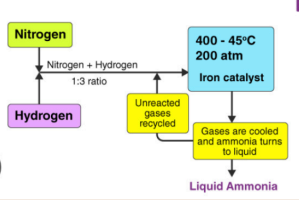
Chemical Method - Haber-Bosch
Produced by the German chemist Fritz Haber in the 20th century to develop high-pressure devices and catalysts to carry out the process on a laboratory scale.
The atmospheric nitrogen (N2) is converted to ammonia (NH3) by reacting it with hydrogen (H2)
Enzymatic Method - Glutamate dehydrogenase
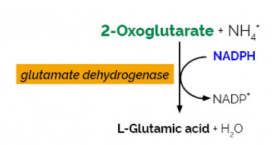
Measures decrease in absorbance of NADPH or NADH at 340 nm as it is oxidized during the conversion of 2-oxoglutarate and ammonia into glutamic acid.
Used for diagnosing conditions like (Reye's syndrome or hepatic encephalopathy).