anth 196l lab 6
 Call Kai
 Learn
Learn Practice Test
 Spaced Repetition
 Match
Match Flashcards
 Knowt Play
1/16

Earn XP
Description and Tags
*did not turn in- take answers with a grain of salt*
Name | Mastery | Learn | Test | Matching | Spaced | Call with Kai |
|---|
No analytics yet
Send a link to your students to track their progress
17 Terms
conditions necessary for evolution
variation, inheritance, selective pressures
what conditions was Dr. Jablonski sure about
sure about variation and heritability
humans have a visible range of skin color- from different types of melanin
investigating the origins of this variation
Dr. J’s hypothesis
as humans evolved, we lost hair on our bodies, which increased melanin to protect from UV rays
if this is correct, we will see more melanin in populations that have more sun (more pigmented skin)
populations that experience less sun will less pigmented skin
patterns of UV radiation variability across the globe
closer you get to the equator, more UV rays
further you get, less UV rays
more UV rays at higher elevation
data that Dr.J would expect to find
confirms Dr. J’s hypothesis
general curve is that the further a population gets from the equator- the lighter their skin is
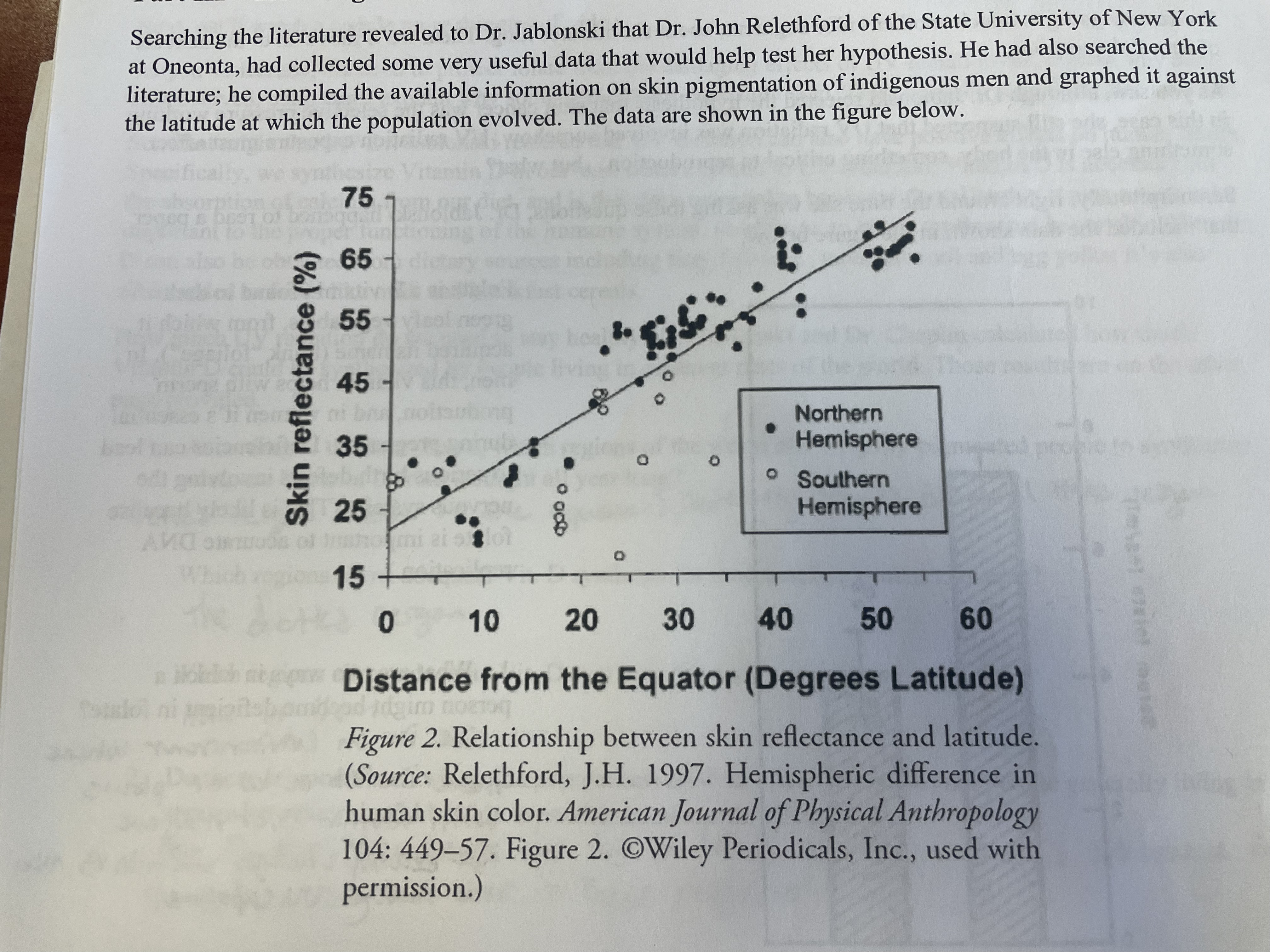
propose a mechanism that UV radiation might pose as a selective pressure on humans leading to evolution of darker skin
risk of skin cancer or other diseases caused by UV radiation (disproven)
higher visibility if sunburned
why would Dr. J be suspicious of the hypothesis that UV radiation is linked to skin melanomas?
cancer happens usually at a later stage in life, after people have reproduced-genes for cancer are therefore not passed on
doesn’t affect natural selection
what are two ways that a person can become deficient in folate
living in an environment where there is not a lot of plants with vitamin B
not eating enough vitamin B
too much UV exposure
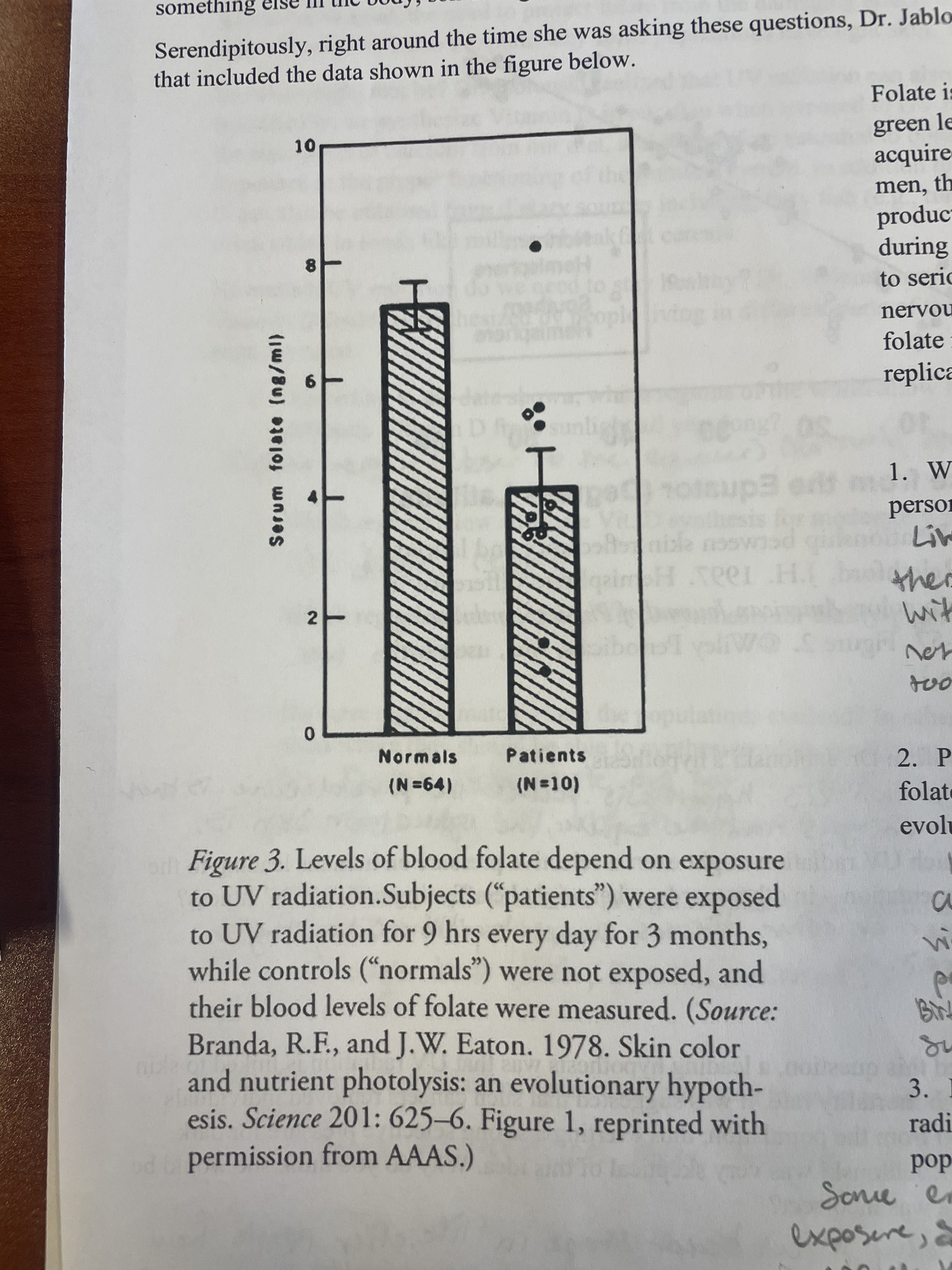
propose a mechanism by which folate might have selected for the evolution of darker skin color
higher melanin protects against deficiency in vitamin B and folate by protecting from UV exposure
birth definancies can affect reproductive success
why aren’t all human populations heavily pigmented
some environments have less UV exposure
UV doesn’t affect them as much
which regions of the world allow lightly pigmented people to synthesize adequate vitamin D from sunlight all year long
closer to the equator and middle regions (dotted and small diagonal lines)
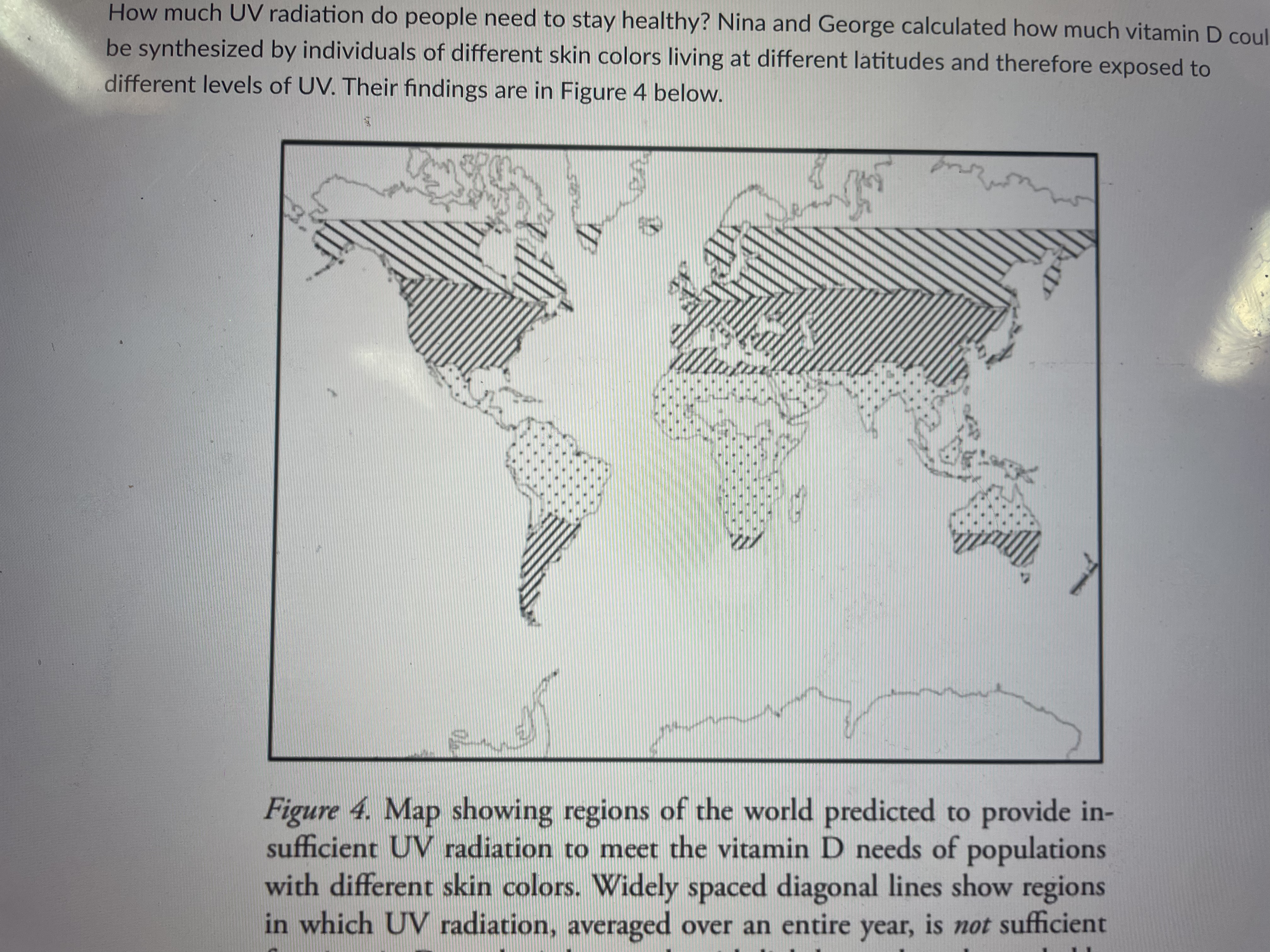
what regions allow adequate vitamin D synthesis for moderately pigmented people
the dotted region
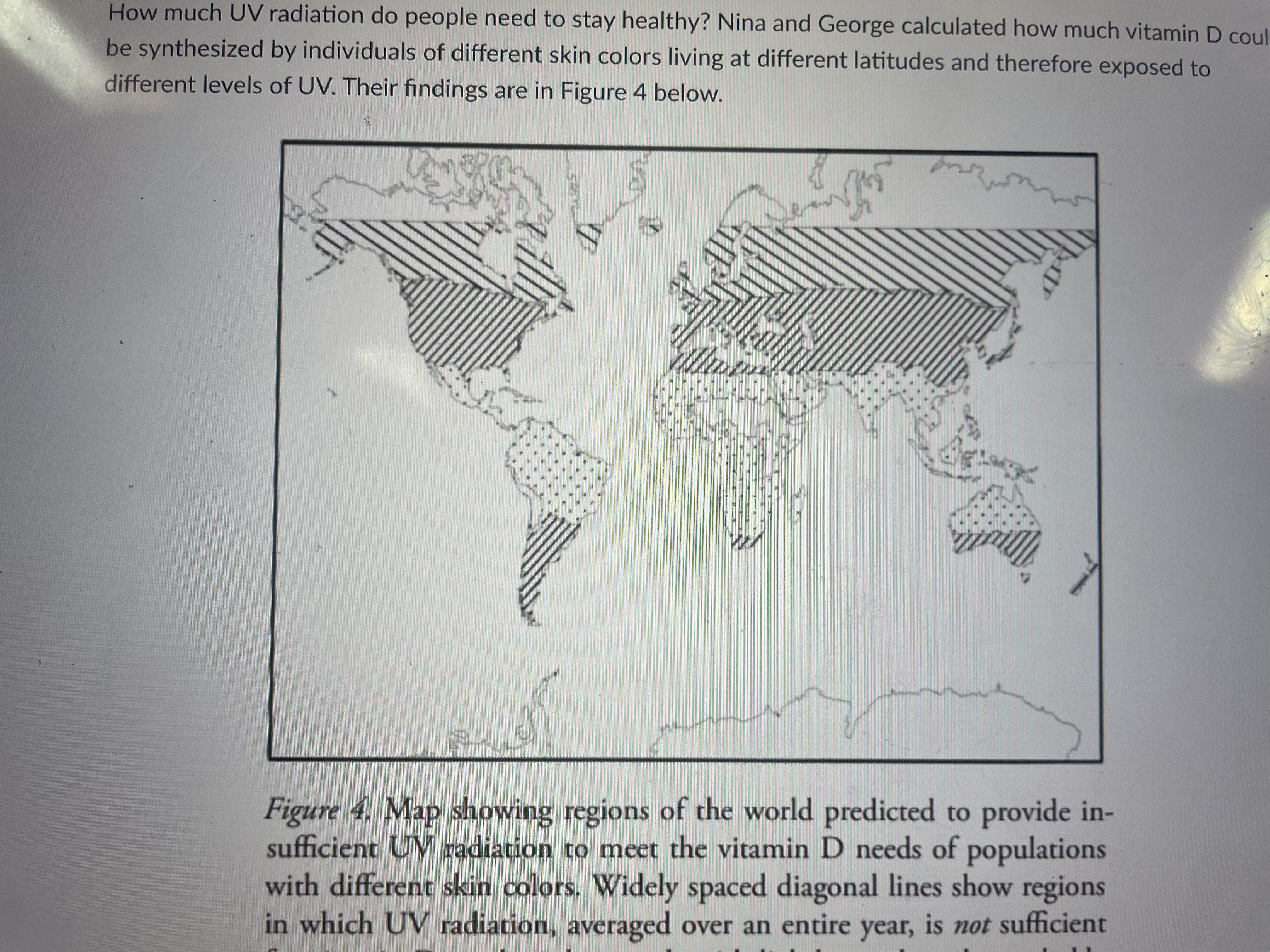
what regions allow for adequate vitamin D synthesis for darkly pigmented people
none of them
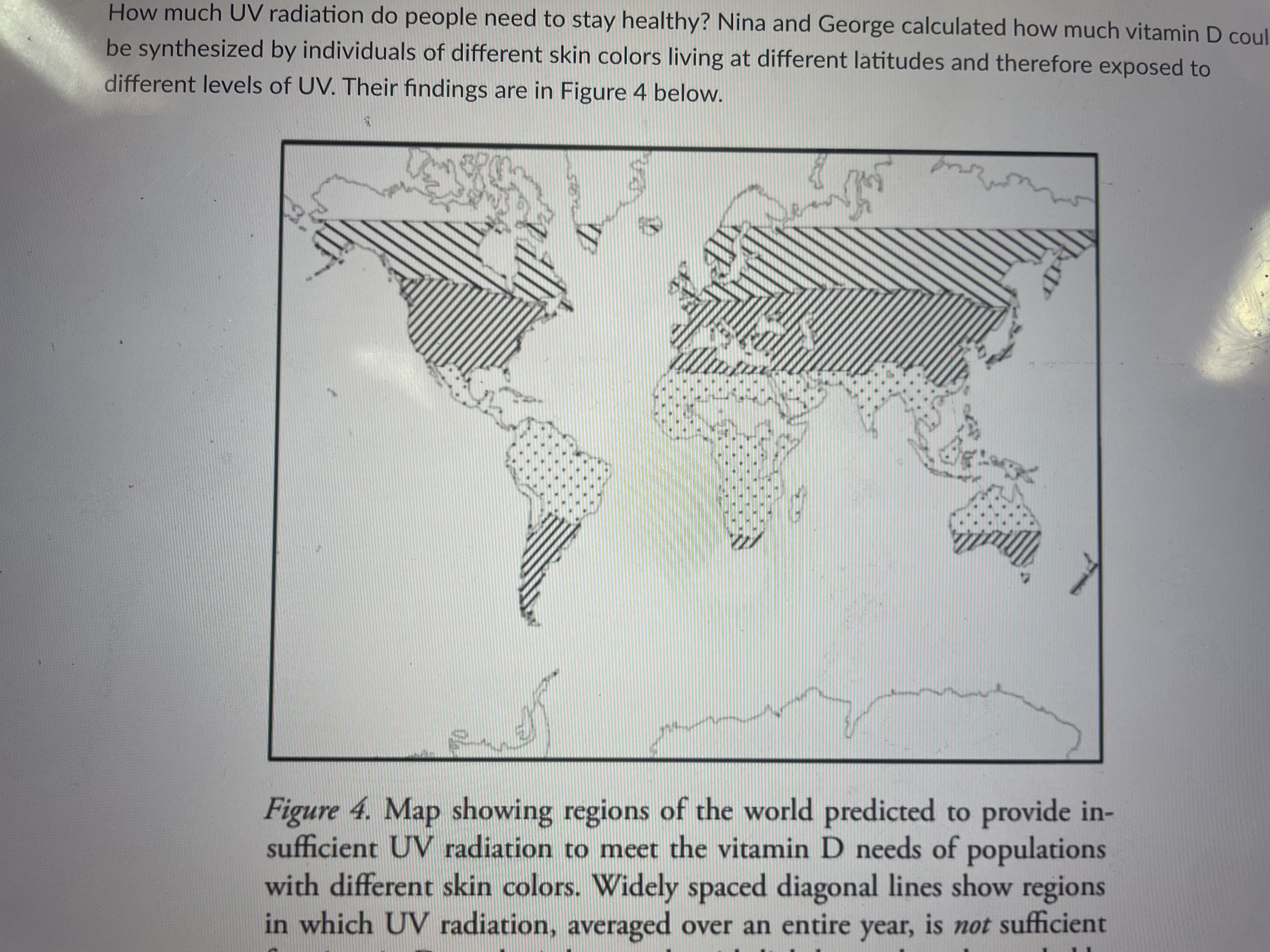
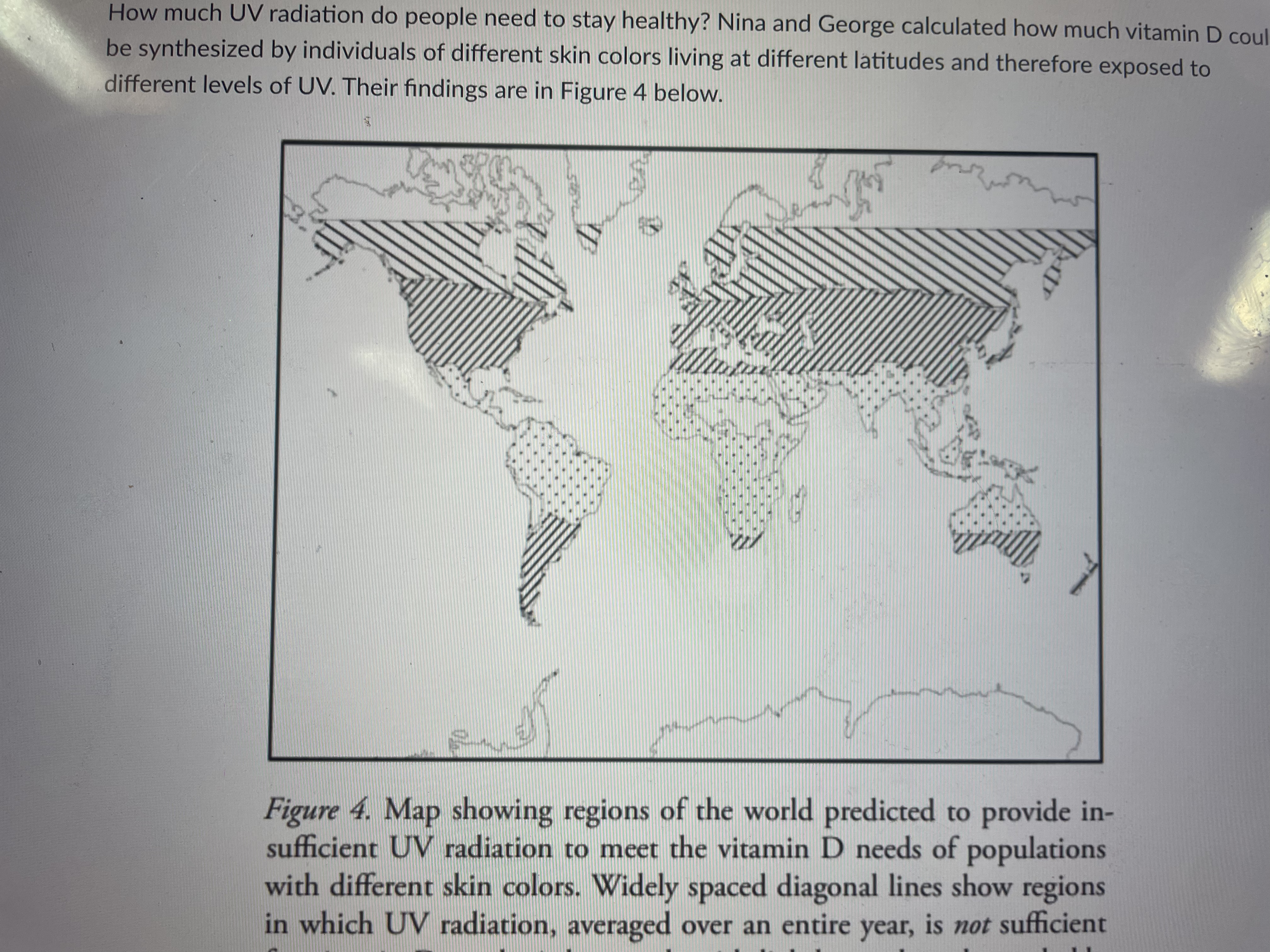
do these regions match where people evolved
are people living in areas where they should be able to synthesize vitamin D
no
dark skinned people do have a region that is adequate for them, but they still live in all of these regions
what allows people to survive in regions of the world that do not allow for synthesizing
diet
fish, animal proteins, vitamin d plants
why are all populations darker than predicted in order to achieve optimal levels of vitamin D from sunlight
need to produce more folate to get more UV
why are women usually less pigmented than men
increased need for higher amounts of vitamin D when pregnant and breastfeeding
trying to maximize UV absorption