Paint and soil analysis
 Call Kai
 Learn
Learn Practice Test
 Spaced Repetition
 Match
Match Flashcards
 Knowt Play
1/49

There's no tags or description
Looks like no tags are added yet.
Name | Mastery | Learn | Test | Matching | Spaced | Call with Kai |
|---|
No analytics yet
Send a link to your students to track their progress
50 Terms
Paint
This evidence is a powerful forensic tool, especially in forensic hit-and-run evidence.
Layered structure → unique to each source
Chemical composition → helps identify origin
Can link suspects, vehicles, and crime scenes
Each tiny fragment can provide strong associative evidence
Binder
Holds paint together and helps it stick to surface
Pigment
Provides the color and opacity of paint. Adds durability (e.g. corrosion resistance.
Solvent
Keeps paint liquid for application. Evaporates as paint dries.
Additives
Improves performance (control drying, flow, and UV stability) for paint.
Brushing
A manual paint application for small areas and detail work.
Rollers
A paint application for large, flat surfaces. Has fast coverage.
Spraying
A paint application for smooth, even coating. Good for complex shapes.
Dipping
A full immersion paint application for complete, uniform coverage.
Electrodeposition
A paint application that uses an electrical current for a durable, uniform coating (automotive).
True
True or false
Each paint layer serves a specific function and together they create a unique fingerprint.
Paint collection
Document:
Photograph evidence in place
Record location & context
Use proper tools:
Clean tweezers or scalpel
Avoid contamination
Preserve layer structure
Collection sufficient sample:
Gather enough material
Keep layers intact
Package seperately:
Use rigid containers
Prevent damage or mixing
Color, texture, layer sequence, thickness, decorative elements, pigment analysis, defects
Label the paint parameters:
_____: Visual & instrumental comparison
_______: Surface finish & application patterns
_____ ________: Order of layers (substrate → topcoat)
_________: Individual & total layer thickness
________ ________: Metallic flakes, special pigments
______ _______: Particle size, shape, distribution
_______: Unique imperfections (individualizing features)
Pyrolysis GC
This analysis method is useful for determining binder composition in paint.
IR spectroscopy
This analysis method is useful for determining chemical identification of paint.
Microscopy
This analysis method is a visual screening which examines color, texture, and layer structure of paint.
SEM-EDS
This analysis method is useful for determining elemental composition and analyzes pigments & additives in paint.
Ford Model Pyrogram
This pyrogram shows characteristic peak patterns unique to Ford’s acrylic enamel formulation, with distinct thermal decomposition products.
Chrysler Model Pyrogram
This pyrogram displays peak distribution, demonstrating how manufacturers use proprietary binder formulations that can be distinguished forensically.
Paint collection
Documentation:
Photograph in place (with scale)
Record location & context
Rigid packaging:
Use pillboxes or vials
Prevent crushing, smearing, or contamination
Keep questioned vs known apart
Precise labeling:
Include case #, date, and location
Add collector & description
Cross section
What is this type of paint cut?

Thin peel
What is this type of paint cut?
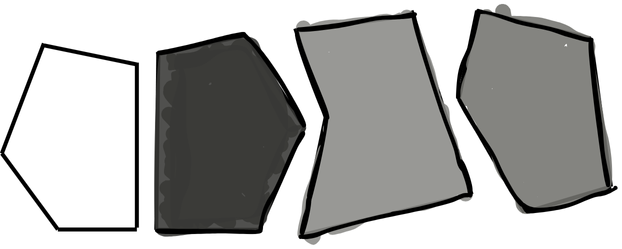
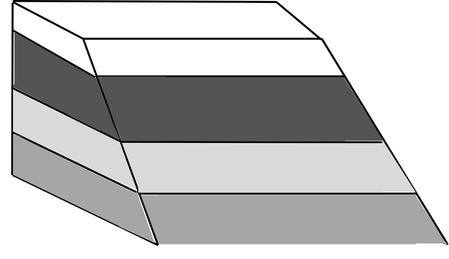
Wedge Cut
What is this type of paint cut?
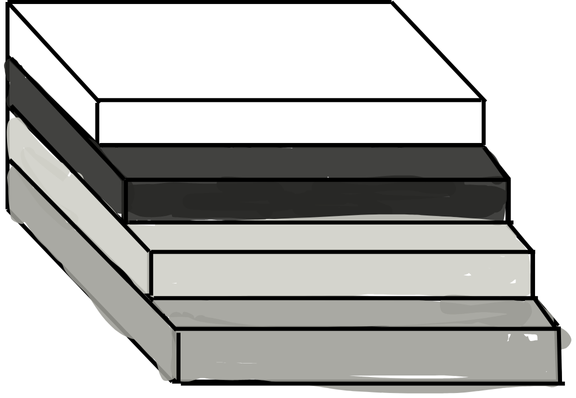
Stair step
What is this type of paint cut?
Electrocoat, primer, basecoat, clearcoat
Label the different type of automotive paint types…
__________:
Applied directly to metal
Provides corrosion resistance
______:
Smooths surface imperfections
Prepared for color layers
________:
Provides color & special effects
Contains pigments (metallic flakes)
_________:
Transparent top layer
Adds gloss, UV protection, and scratch resistance
Alkyd resins, acrylic polymers, epoxy resins, polyurethanes
Label the different type of paint binders…
_____ ______:
Common in household paints
Traditional oil-based polymers
_______ ________:
Common in modern automotive paints
Good color retention & weather resistance
_____ ______:
Used in industrial/marine coatings
Strong adhesion & chemical resistance
_____________:
High-performance coatings
Durable, abrasion-resistant (often clearcoats_
Inorganic pigments
These pigments provide opacity & stability. Examples include titanium dioxide (white), iron oxides (yellow, brown), and chromium oxides (green).
Organic pigments
These pigments provide bright, vibrant colors. Examples include azo dyes, phthalocyanines (blue/green), quinacridones (red/violet).
Plasticizers, UV stabilizers, flow agents, anti-settling agents
Label the functional additives (paint)…
_________: flexibility
__ _________: prevent degradation
____ ______: smoother application
____-_______ _____: keep pigments mixed
Issues in paint interpretation
Environmental weathering:
Sunlight, moisture, pollutants alter paint
Causes fading, chalking, oxidation
Must compare aged vs fresh samples carefully
Repair and repaint complexity:
Adds non-original layers
May not match factory finish
Can complication or help comparison
Contamination concerns:
Dirt, oil, rust can obscure color/layers
May interfere with analysis
Cleaning must preserve original structure
Paint data query (PDQ)
This database contains over 70,000 automotive paint samples, helping investigators narrow vehicle possibilites based on layer structure and composition.
Soil
This evidence is common at crime scenes and easily transferred between people, objects, and locations. It can be distinguished by color, texture, and composition. Even simple side-by-side comparison can differentiate from different locations. Provides valuable trace evidence linking suspects to scenes.
Points of comparison for soil
Minerals (type and abundance)
Organic material (plant remains, microbes)
Grain size and texture
Color & layering
Artificial debris (glass, fibers, pollutants)
Sandy, clay, silt, loam
Label the soil types…
_____ soil:
Large particles, gritty texture
High drainage, low nutrient retention
____ soil:
Very fine particles, smooth texture
Poor drainage, high nutrient retention
____ soil:
Medium particles, smooth feel
Moderate drainage, fertile
____ soils:
Mix of sand, silt, and clay
Balanced properties (ideal soil)
Granular
This soil structure…
Small rounded pieces
Common at surface
Good for plant growth
High permeability
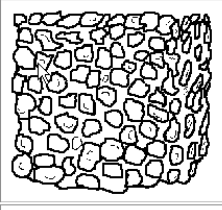
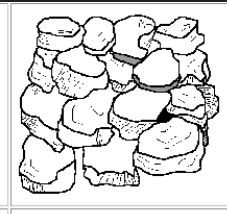
Blocky
This soil structure…
Irregular blocks
Found in subsoil
Moderate drainage
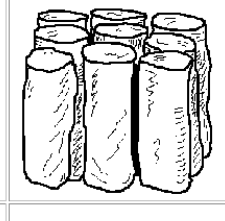
Prismatic
This soil structure…
Vertical columns
Clay-rich soils
Water moves slowly
Moderate permeability
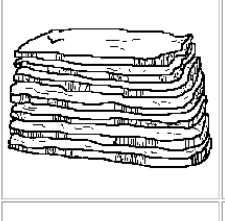
Platy
This soil structure…
Thin, flat layers
Compacted soils
Poor water movement
NIST guidelines for soil analysis
Documentation:
Record how & where soil was collected
Maintain chain of custody
Analysis protocols:
Use standardized methods & instruments
Examples: microscopy, chemical tests
Comparison standards:
Compare to known/reference samples
Use statistics to support conclusions
Inorganic minerals
This part of soil gives it its structure. Ex… sand, quartz, feldspar
Organic matter
This part of soil affects colors & nutrients. Ex… decaying plants & animals
Microorganisms
This part of soil can link it to a location. Ex… bacteria, fungi
Human (anthropogenic) debris
This part of soil contains strong forensic clues. Ex… glass, paint, fibers
Soil reference samples
Collect from multiple locations
Include the exact site + surrounding area (~100ft)
Used for comparison late
DO NOT remove soil from items
Package items as is
Munsell Color System
This is a standardized way to describe soil color. It removes subjective descriptions “brownish”.
Hue:
Red, yellow, brown
EX: 10YR, 5R
Value:
How light or dark?
Scale: 0=black → 10=white
Chroma:
How intense?
Dull → bright color
Low = grayish, high = vivid
Stereomicroscopy (soil)
10-50x magnification
Examines color differences, particle size, and visible debris (glass, paint)
Polarized light microscopy (PLM) (soil)
100-400x magnification
Identified minerals
Sees optical properties
Moisture content
Affects color, clumping, and weight. Must be standardized (drying methods). Can show recent environmental exposure and helps preserve transfer evidence.
pH measurement
Acidic: 3-4
Neutral: 7
Basic: 8-9
Reflects environment & geology
Helps link soil to a specific location
Natural factors, human activity
What changes soil over time?
______ _______:
Weathering & erosion
Wind, water, temperature
Changes soil composition naturally
_____ ________:
Farming, landscaping
Construction
Adds or disturbs materials