Kinetic and Equilibrium
 Call Kai
 Learn
Learn Practice Test
 Spaced Repetition
 Match
Match Flashcards
 Knowt Play
1/29

There's no tags or description
Looks like no tags are added yet.
Name | Mastery | Learn | Test | Matching | Spaced | Call with Kai |
|---|
No analytics yet
Send a link to your students to track their progress
30 Terms
Rate determining step
A rate-limiting step (or rate-determining step) is the slowest step in a multi-step reaction mechanism, process, or metabolic pathway that dictates the overall speed of the entire sequence.
Collision theory model
Reaction rate is determined by:
How frequently the reactant molecules collide
The orientation of the colliding molecules
Their energy
Increase reactant concentration
More collisions
Increase temp
Faster reaction
Activation energy
The lower the activation energy the faster the reaction rate
Catalysts can lower activation energy
Average Reaction rate
The greater concentrations of reactants means faster reaction rate
Higher temperature of reaction mixture, the faster the reaction rate
Reaction rate can be characterized by changes in reactants or products over time. In the generic reaction aA → bB, the reaction rate = –(1/r) Δ[r]/Δt*c = (1/p )Δ[p]/Δt*c
coefficients on bottom
p=product
r=reactant
Arrhenius equation
No need to memorize
k=Ae^-(Ea/RT)
k=rate constant
bigger k=faster
Want lower Ea and faster temp
Rate determing step
Slowest
Smaller K
Biggest Ea for RDS
Rate law instantaneous
Rate law of RDS/slowest step=for overall reaction!
rate law=k[reactants]^r
r=coefficients
For slowest step!
What impacts reaction rate
Ignore solids!
Intermediates
Products of individual steps that then get consumed to produce final product
Catalysts
In reactants in a slower step sometimes RDS and then get regenerated as a product later
Reaction order and rate law
Rate data:
Can use rate data when do not have individual steps
First order reactants conc. and rate change proportional. A doubled, k doubled
0th order no matter reactants conc. rate change does not change. B double, k same
Everything else tends to be second order C doubles and then rate does something different (squared).
Rate law=k[A]^1[C]²
Use coefficients and add them together for overall=2+1 =3
0: rate=k M/S
1: rate=k[A] 1/S
2: rate=k[A]² 1/MS
3: 1/M²S
4: 1/M³S
Can find k or rate constant using data
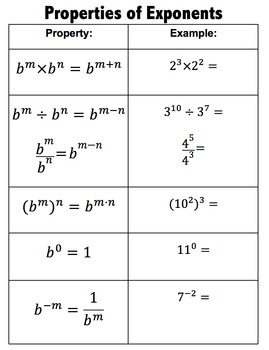
Exponent rules
Thermo vs kinetic
Delta G has no impact on rate of reaction kinetic part
Thermodynamic and kinetic factors do not impact one another
Equilibrium expression
Keq=Products/reactants
Or Kc=[products]/[reactants]
Exponents=coefficients
IGNORE SOLIDS
Can do partial pressures if gases involved
![<p>Keq=Products/reactants</p><p>Or Kc=[products]/[reactants]</p><p>Exponents=coefficients</p><p>IGNORE SOLIDS</p><p>Can do partial pressures if gases involved</p>](https://assets.knowt.com/user-attachments/a69197a2-9012-4c21-ac96-cb42265a0223.png)
Q and K
If reaction not at equilibrium then use Q instead of K
Products/reactants
Q=Keq
At equilibrium
Q<Keq
Excess reactant, less than supposed to be
Reaction proceeds in the forward direction to produce more PRODUCTS Q increase and gets closer to Keq
Q>Keq
Excess product, greater than supposed to be
Reaction proceeds in the reverse direction to produce more REACTANTS Q lowers to get closer to Keq
K and Q throughout
K stays the same throughout, the overall ratio
Q changes
Only temp can change Keq
Le Chatliers Principle
If you add more reactant to a system that is at equilibrium the system will react favoring the forward reaction in order to consume reactant and return to equilibrium
Minimize stressors
Volume changes impact partial pressures, adding inert gas to a flexible/movable container:
Decrease in volume, less space, shift towards less moles of gas
Increase in volume, more space, shift to more moles of gas
Increasing pressure favors side with FEWER moles of gas
Thermo and equlibrium
deltaG=deltaG’+RTlnQ
When at equilibrium: delta G=0
deltaG’=-RTlnKeq
Keq and deltaG’
deltaG’<0 spontaneous exergonic, products favored at equilibrium Keq>1
deltaG’=0, Keq=1 products and reactants are present in equal amounts at equilibirum
deltaG’>0 Keq<1 reactants favored at equilibrium
Endothermic: Treat heat as a reactant
Exothermic: Treat as a product. Temp goes up, products increase shift to left more reactants
K now diff because of temps
Hyperventilation example
Lose tons of CO2, shift to left less H2CO3=less [H^+] blood pH increases becomes less acidic
Rateforward=Rreverse
Kf/Kr=Keq
Equilibrium constants
Bigger K= more favored
Reverse/flip equilibrium inverts (reciprocal) of equilibrium constant
Solubility product/constant=Ksp
Ca3(PO4)2 (s)—3Ca²+ + 2PO43-
-S +3S +2S
Ksp=Do think about solids
Ksp=[Ca2+]³[PO43-]²
No in terms of molar solubility (S)
Ksp=[3S]³[2S]²
Qsp and Ksp comparisons
Ksp=Qsp fully saturated
Ksp>Qsp more salt can be dissolved, Qsp can get bigger
Ksp<Qsp excess salt will precipitate
(Solubility Product Constant Ksp) represents the maximum equilibrium ion concentration for a saturated solution at a specific temperature.
Ksp at equilibrium fully saturated
Qsp don’t have to be at equilbrium
Adding a common ion…
Decerases solubility
CaCO3(s)—Ca²++CO32-
In solution of CaCl2, Ca²+ increases shift towards solid so decrease solubility
Phase solubility rules
Solubility of solids in liquids increases with increasing temps
Solubility of gases in liquids decrease with increasing temps
Solubility of gases in liquids increase with increasing pressure
Increase temp less soluble O2 (gas) decreases
Soluble salts
All group I: Li, Na, K, Rb, Cs, and NH4+
NO3-, ClO4- and C2H3O2-
Insoluble
Silver Ag, lead Pb, and mercury, Hg