respiratory system learning objectives
 Call Kai
 Learn
Learn Practice Test
 Spaced Repetition
 Match
Match Flashcards
 Knowt Play
1/62

There's no tags or description
Looks like no tags are added yet.
Name | Mastery | Learn | Test | Matching | Spaced | Call with Kai |
|---|
No analytics yet
Send a link to your students to track their progress
63 Terms
general functions of respiratory system
brings oxygen into body
expels carbon dioxide
produces vocal sounds
helps w/ sense of smell
helps regulate blood pH
why is oxygen required at cellular level ?
used for ATP production
upper respiratory tract
nose(septum, palate)
upper respiratory tract
nasal cavity(superior, inferior, nasal conchae)
upper respiratory tract
sinuses
upper respiratory tract
pharynx
upper respiratory tract
larynx
lower respiratory tract
trachea
lower respiratory tract
bronchial tree
lower respiratory tract
lungs
how does the nose and nasal cavity filter incoming air ?
the nose hair prevents large particles from entering and the sticky mucus secreted by mucous membrane traps dust and small particles
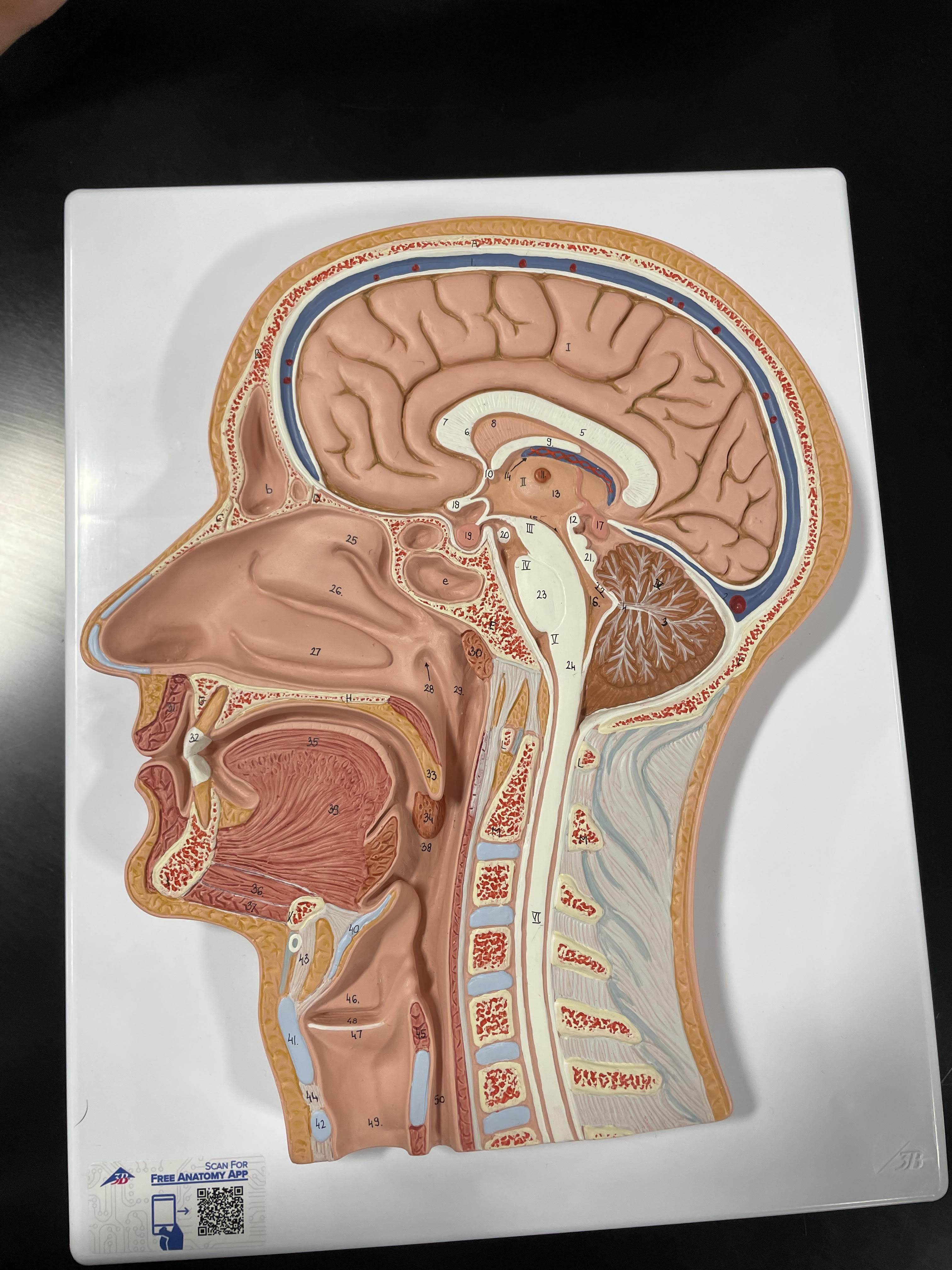
b
frontal sinus
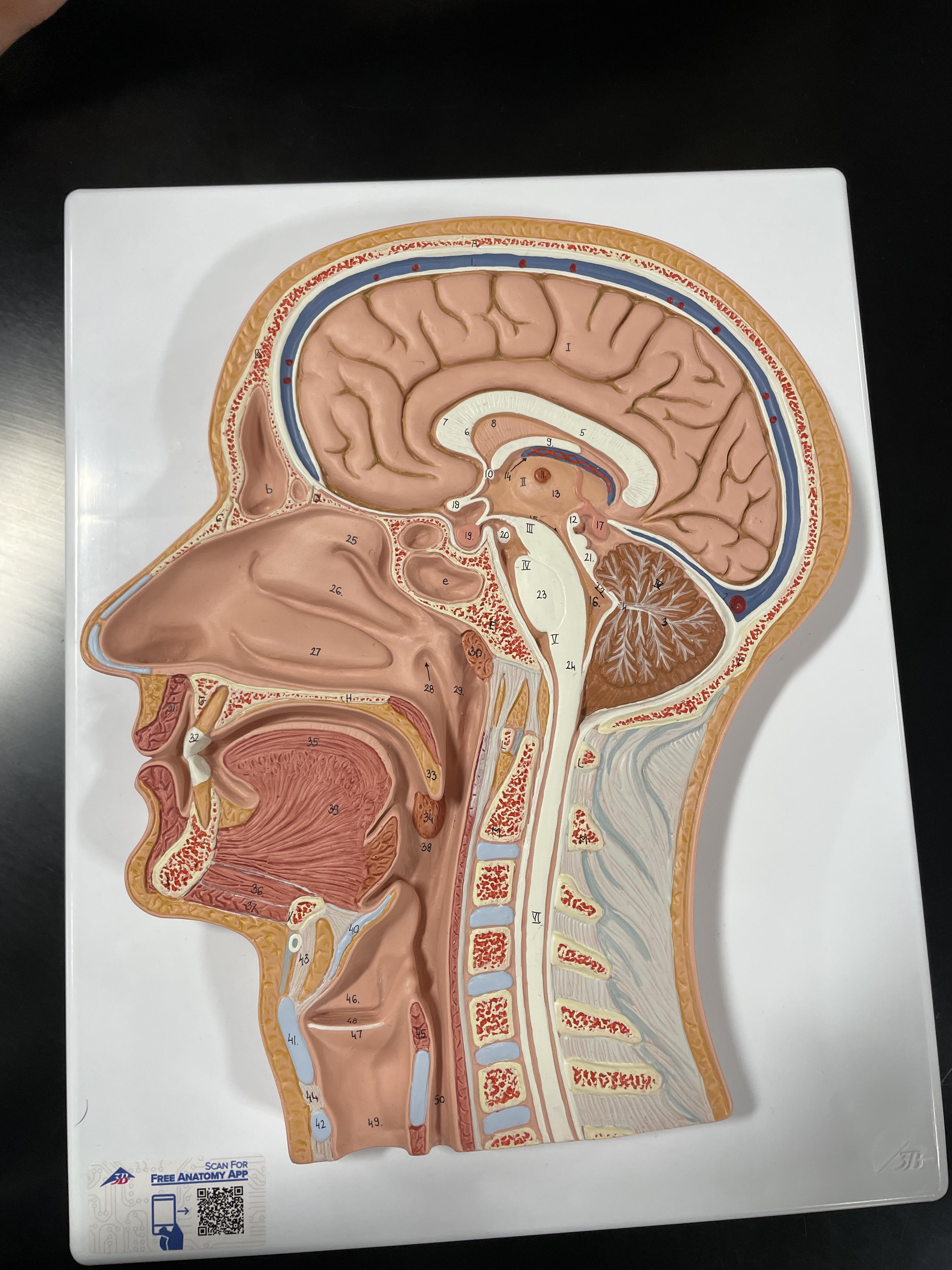
e
sphenoidal sinus
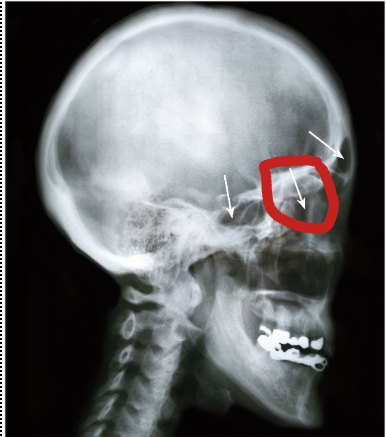
ethmoid sinus
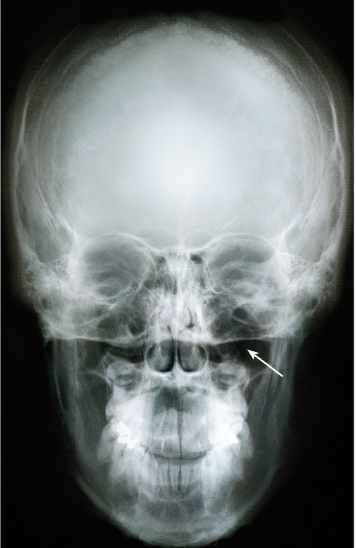
maxillary sinus
how does a sinus headache occur?
inflamed and swollen mucous membrane blocking mucus secretions from draining
where is the nasopharynx posterior to?
nasal cavity
ventilation
movement of air from outside the body into bronchial tree and alveoli followed by the reversal
external respiration
allows gas exchange in lungs between alveoli and blood
internal respiration
gas transport in blood and exchange with body cells
cellular respiration
process of ATP production in mitochondria, which uses oxygen to help produce energy and gives off carbon dioxide
nose function
air entering and leaving nasal cavity
nasal septum function
seperates the nasal cavity into 2 parts
nasal conchae functions
create turbulance
support mucus membrane
increase mucous membrane surface area
sinus function
reduces weight of skull
produces voice sound
pharynx function
passageway for food moving from oral cavity to the esophagus and air passing from nasal cavity to larynx
larynx function
passageway for air moving in and out of trachea and prevents foreign object from entering the trachea
trachea function
lined with ciliated mucous membrane with goblet cells that cleans incoming air and moves entrapped particles to the pharynx
bronchial tree function
carries air b/w the trachea and alveoli of the lungs
lungs function
site of gas exchange b/w the air in the alveoli and the blood in the pulmonary circuit
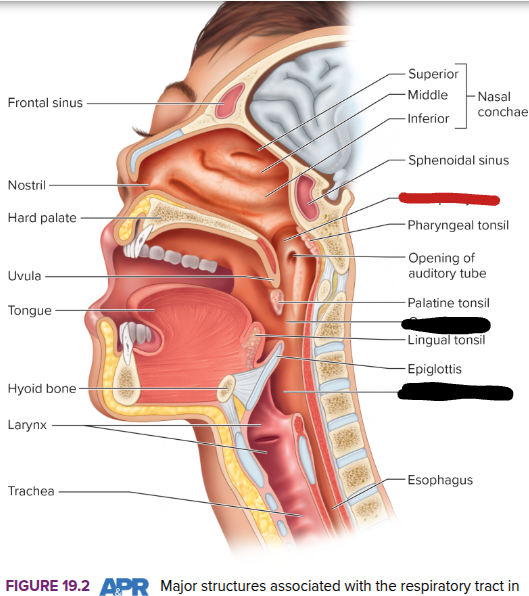
commincates with nasal cavity and provides a passageway for air during breathing
nasopharynx
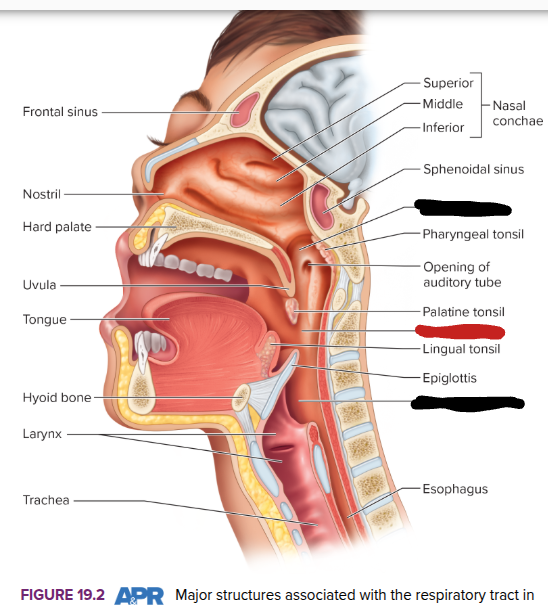
passageway for food moving downward from mouth and air moving to and from nasal cavity
oropharynx
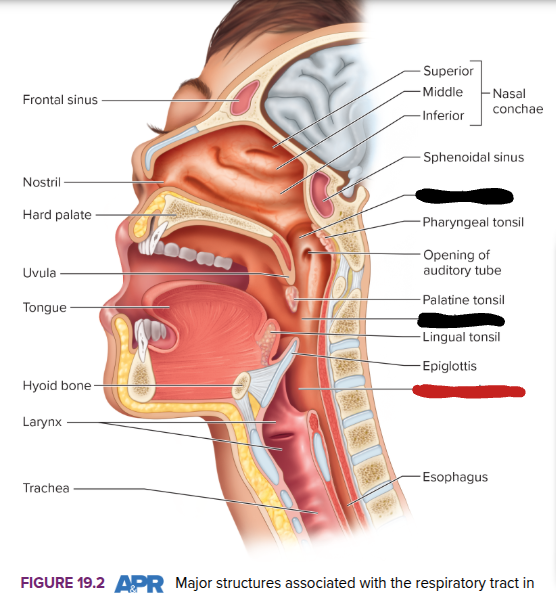
contnuous with esophagus and larynx
laryngopharynx
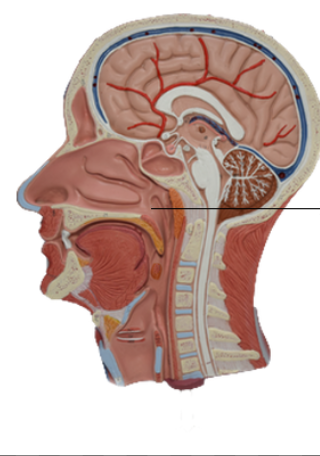
connects pharynx with middle ears
auditory eustachian tube
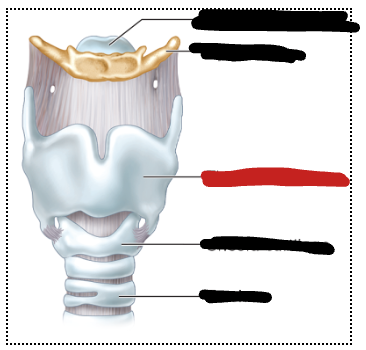
shieldlike structure that is in front of the neck aka adam’s apple
thyroid cartilage
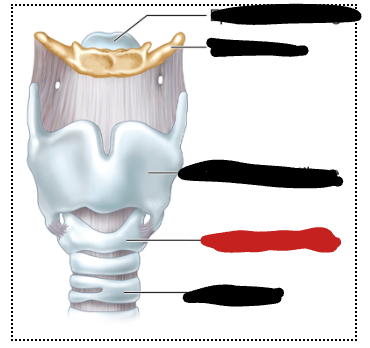
ringlike cartilage marking end of larynx
cricoid cartilage
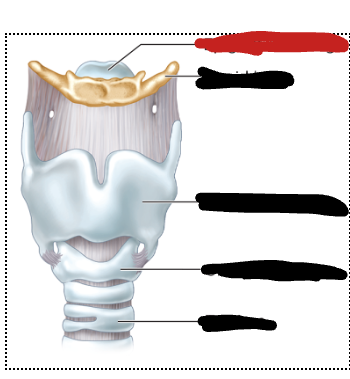
only laryngeal cartilage that is elastic, part of epiglottis which prevents food from entering the airway tubes
epiglottic cartilage
how do vocal cord produce sound?
a force of air passing over the vocal cords
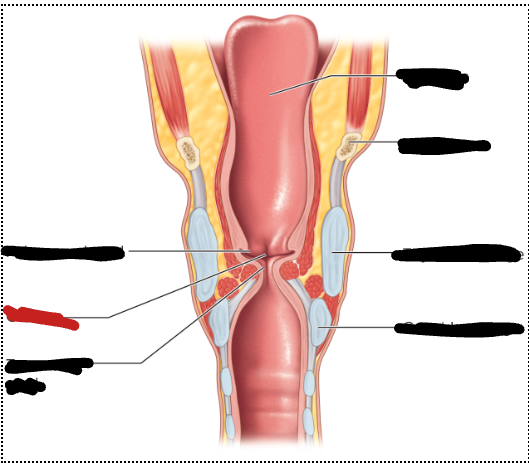
glottis
why is edema of the vocal cords dangerous?
vocal cords swell from fluid accumulation and creates trouble breathing, lost voice
trachea
flexible cylindrical tube about 2.5 cm in diameter and 12.5 cm in length
c shaped cartilages
prevent trachea from collapsing and blocking the airway
difference b/w left and right main bronchus
two bronchi on the left and three bronchi on the right
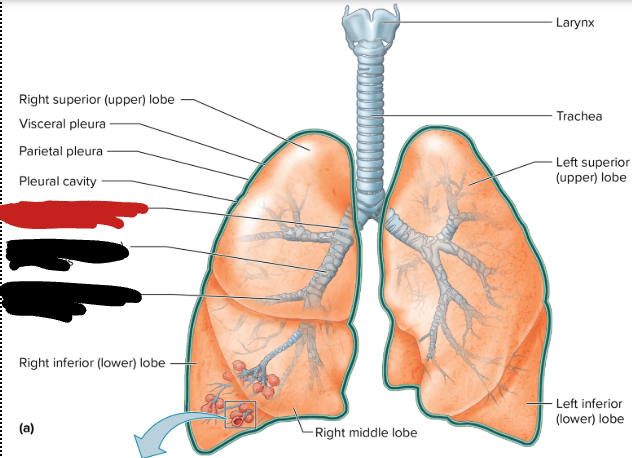
primary bronchus
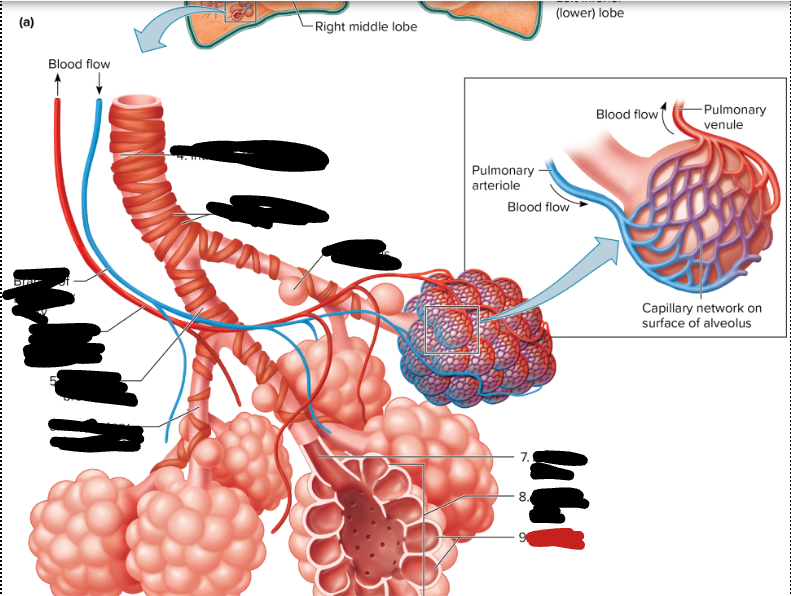
alveoli
lung location
thoracic cavity suspended by a bronchus and some large blood vessels
hilium
depression where blood vessels, nerves, and other structures enter an organ
visceral pleura
inner layer of serous membrane attached to surface of lung
parietal pleura
outer layer of serous membrane that lines thoracic cavity
pleural cavity
potential space b/w visceral and parietal pleura
serous fluid
lubricates the adjacent pleural surfaces, reducing friction as they move against one another during breathing
what substance makes of the lung?
connective tissue and alveoli
what’s the difference b/w the left and right lung
right lung is larger and has three parts
left lung is divided into two
boyle’s gas law
pressure and volume of gases are inversely proportional
tidal volume
500 mL - volume of air moved in or out of the lungs during a respiratory cycle
inspiratory reserve volume
3,000 mL - maximum additional volume of air that can be inhaled at the end of a resting inspiration
expiratory reserve volume
1,100 mL maximum additional volume of air that can be exhaled at the end of a resting expiration
residual volume
1,200 mL volume of air that remains in the lungs even after a maximal expiratory effort
vital capacity
4,600 mL maximum volume of air that can be exhaled after taking the deepest breath possible (VC = TV + IRV + ERV)
total lung capacity
5,800 mL total volume of air that the lungs can hold (TLC = VC + RV
respiratory center location
medulla and pons
respiratory membrane
gas exchange b/w alveolar air and the blood occurs through this membrane which consists of alveolar wall and blood capillary wall
respiratory mucosa
ciliated mucous membrane primarily consisting of pseudostratified columnar