Units 5, 6, 9 & 10 equation sheet
 Call Kai
 Learn
Learn Practice Test
 Spaced Repetition
 Match
Match Flashcards
 Knowt Play
1/21

There's no tags or description
Looks like no tags are added yet.
Name | Mastery | Learn | Test | Matching | Spaced | Call with Kai |
|---|
No analytics yet
Send a link to your students to track their progress
22 Terms

What is this equation?
internal energy is proportional to kelvins/temperature
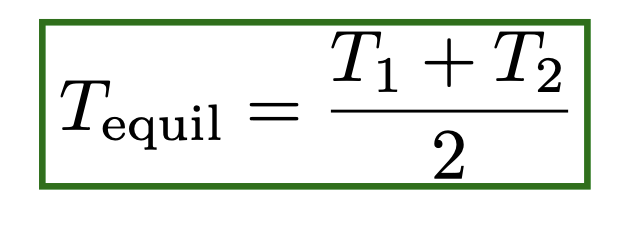
What is this equation?
Equilibrium temperature equation
2 objects at different temperatures that are put together will eventually reach the same temperature
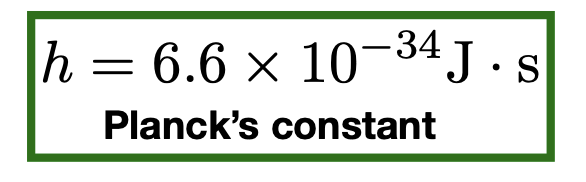
What is this equal to?
Planck’s Constant (a very small number!)
Named after Max Planck
Energy of quantum equation
energy of quantum = hf
h = planck’s constant
f = frequency
tells us that energy is proportional to frequency & limits the number of high frequency states
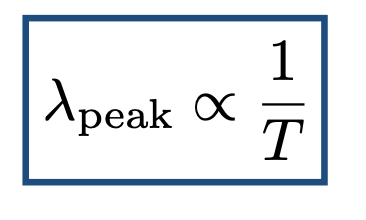
What is this equation?
Wien’s Law
Hotter objects glow at smaller wavelengths (and higher frequencies)
T = temperature
peak wavelength is inversely proportional to temperature
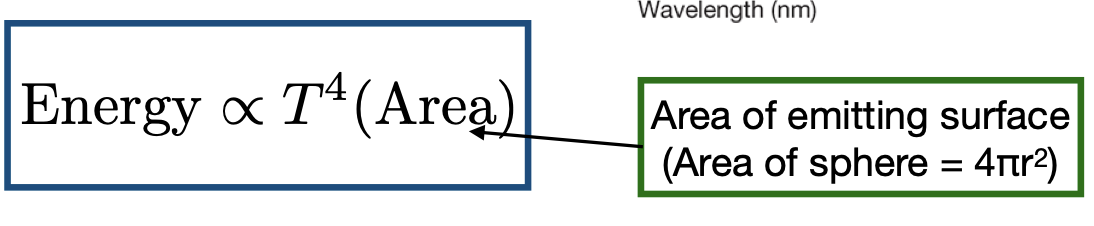
What is this equation?
Stefan-Boltzmann Law
A hotter object rapidly increases its radiated energy
total energy of a blackbody is proportional to temperature to the fourth power (area of emitting surface)

What is this equation?
The temperature of the sun is 5800 Kelvins
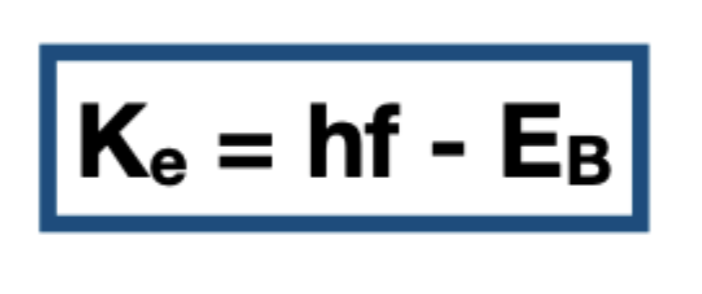
What is this equation?
Ke = kinetic energy of electrons (which determines current)
hf = amount of energy transmitted (Planck’s constant x frequency)
Eb = binding energy aka work function
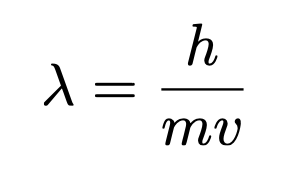
What is this equation?
λ = de Broglie’s wavelength for a massive particle
h = planck’s constant
mv = momentum (mass)(velocity)
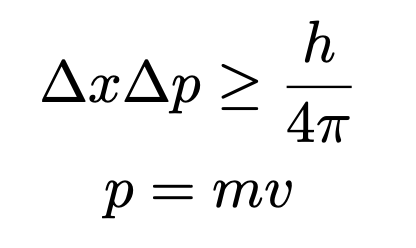
What is this equation?
Heisenberg Uncertainty Principal
Δ𝑥Δp = product of uncertainties (change in position x change in momentum)
h = planck’s constant
p = momentum
m= mass
v = velocity
Δ𝑥Δp has a fundamental limit because Planck's constant > 0
How to use Heisenberg Uncertainty Principal to find uncertainty of a protons velocity?
use algebra to rework Heisenberg Uncertainty Principal
(shown how on lecture week 6, slide 49)
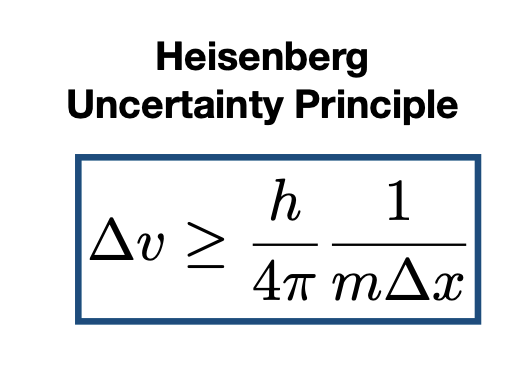
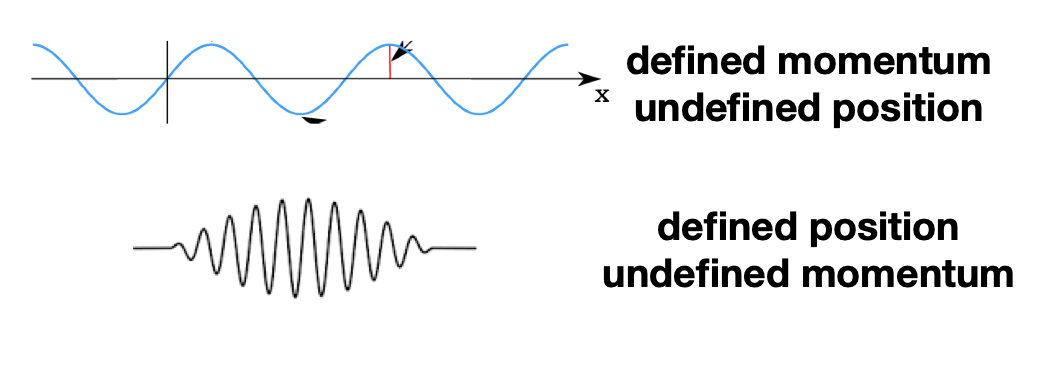
Image of Heisenberg Uncertainty Principal
above image: has a more defined wavelength, which means it has more defined momentum (and thus undefined position)
below image: this is a wave packet - you have to combine a lot of different waves with different momentum to achieve this
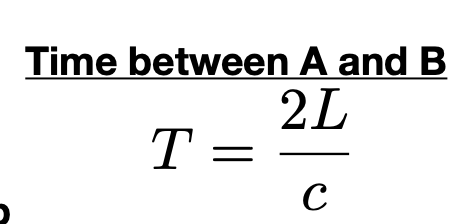
What is this equation?
Time between 2 events (event A and event B) measured from someone AT REST
T = time measured from someone at rest
2L = both distances that the light travels (distance to an object and distance back)
c = velocity = speed of light
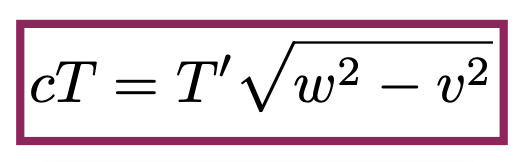
What is this equation?
time measured from someone in our frame?
c = speed of light
T = time measured from someone on train/moving
T’ = time measured from someone on the ground
w = speed of light in your frame
v = velocity
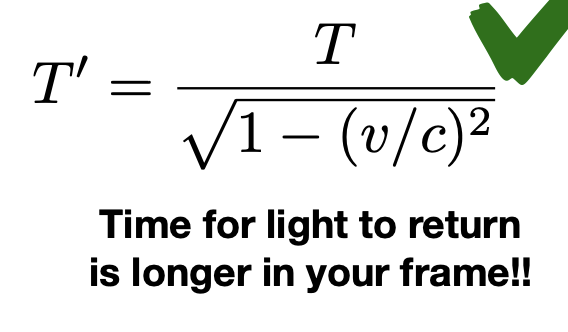
What is this equation?
this is a result of special relativity, which is a result of time dilation
the speed of light is equal in both frames
w (speed of light in your frame) = c (speed of light)
shows that the time for light to return is longer in your frame?
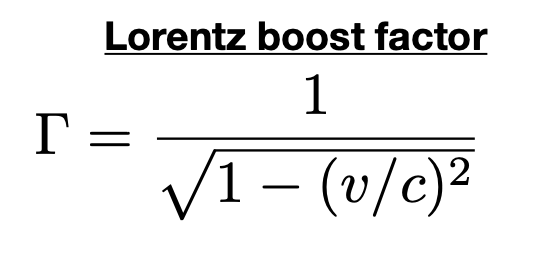
What is this equation?
Lorentz Boost Factor equation
𝛾 = gamma
(v/c) = relative velocity/speed of light

What is this equation?
use when question is asking for time/how long something lasts in your frame
T’ = time in your frame
𝛾 = gamma
T = time in the frame moving with respect to you (the proper time)
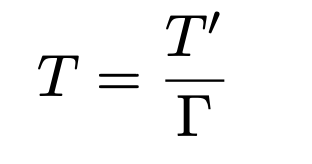
What is this equation?
algebraic rewriting of equation above —> shows the muon’s clock runs differently than ours?
T’ = time in your frame
𝛾 = gamma
T = time in the frame moving with respect to you
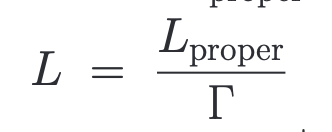
What is this equation?
length contraction equation
Use to find the length of something in the earths frame
L = length in the earths frame
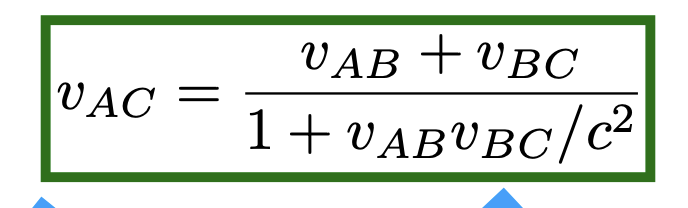
What is this equation?
Relativistic Velocity Addition Equation
what we use with special relativity instead of Galilean velocity addition
if the object turns around, we change the addition sign in the numerator to a subtraction sign (week 9, slide 36)
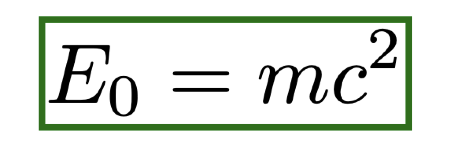
What do you use this equation to find?
the Rest Energy of an object
energy = mass(speed of light)²
if asking to find time in a rest frame, what are we solving for?
asking for the Proper Time (T’)
To solve for Proper Time —> Tproper = T’/r