Ch. 13 Neural Histology
 Call Kai
 Learn
Learn Practice Test
 Spaced Repetition
 Match
Match Flashcards
 Knowt Play
1/47

There's no tags or description
Looks like no tags are added yet.
Name | Mastery | Learn | Test | Matching | Spaced | Call with Kai |
|---|
No analytics yet
Send a link to your students to track their progress
48 Terms
Neuron
Organ of nervous system containing a nucleus, cell body, axon, dendrites, and axon hillock
Subdivided into Pseudounipolar, Bupolar, and Multipolar
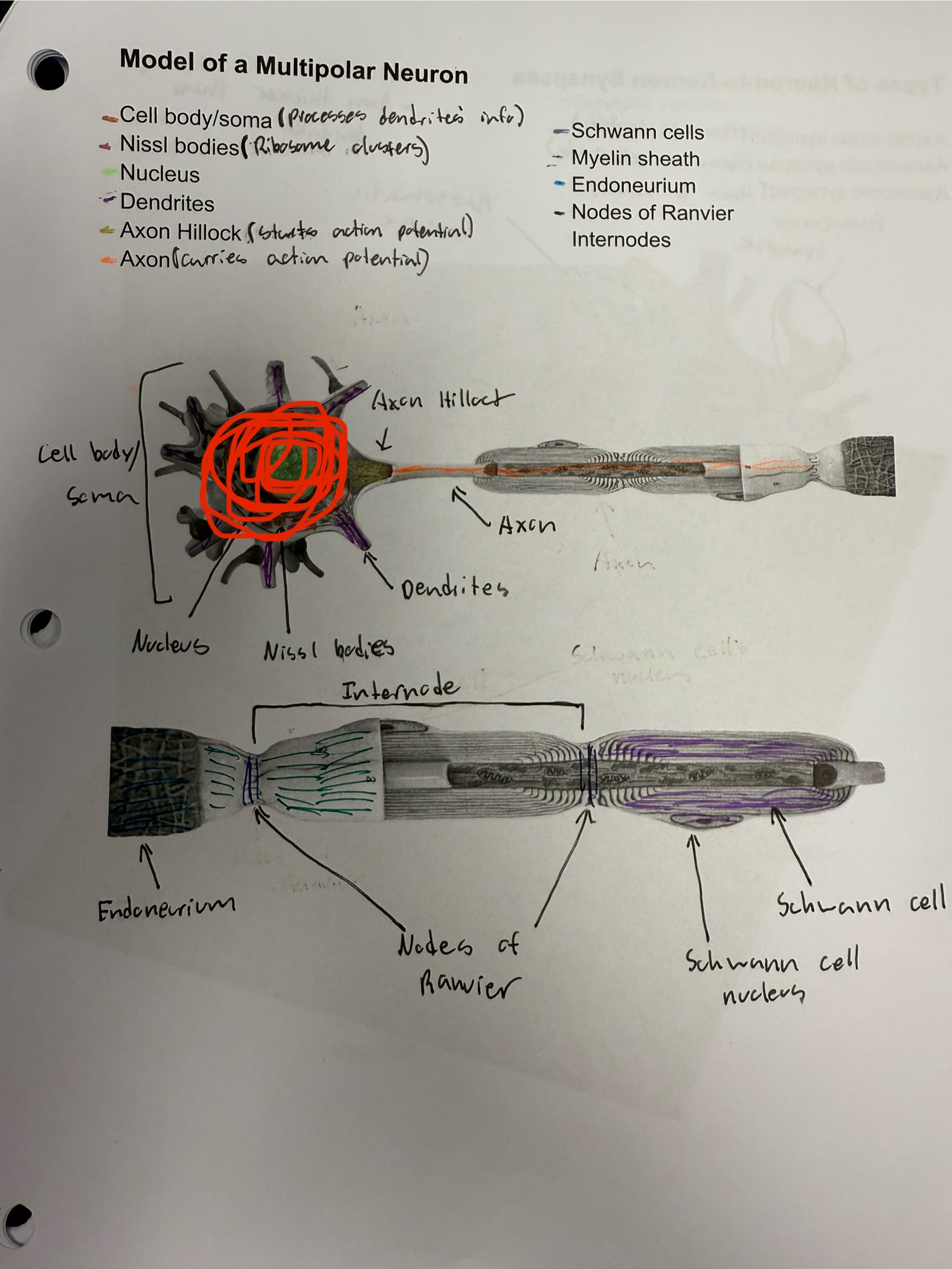
Cell Body / Soma
Body of a neuron, contains nucleus
Processes information from dendrites, creates localized impulse if needed
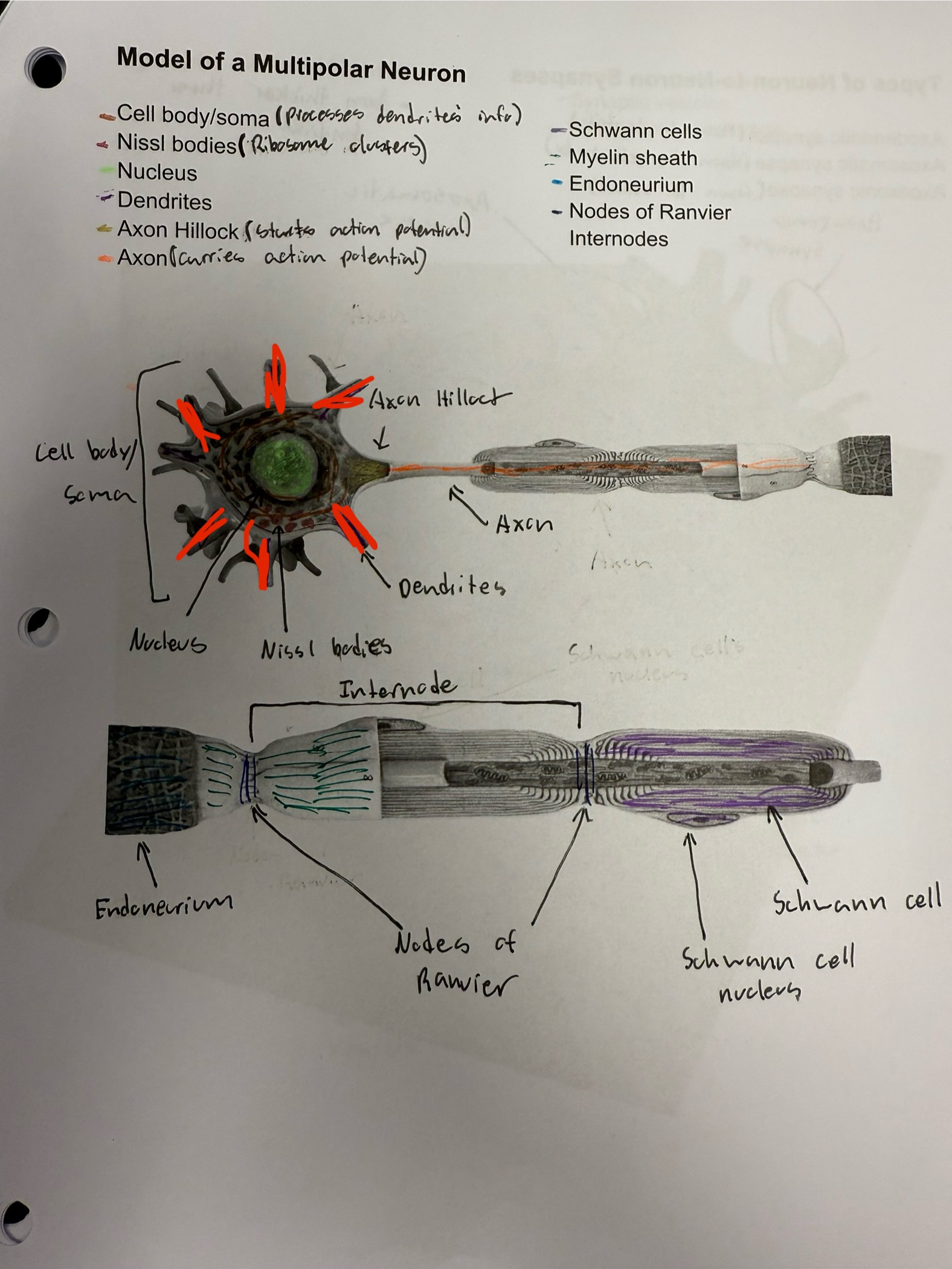
Dendrites
Tail like branching protruden from end of cell body
Transmit information to cell body
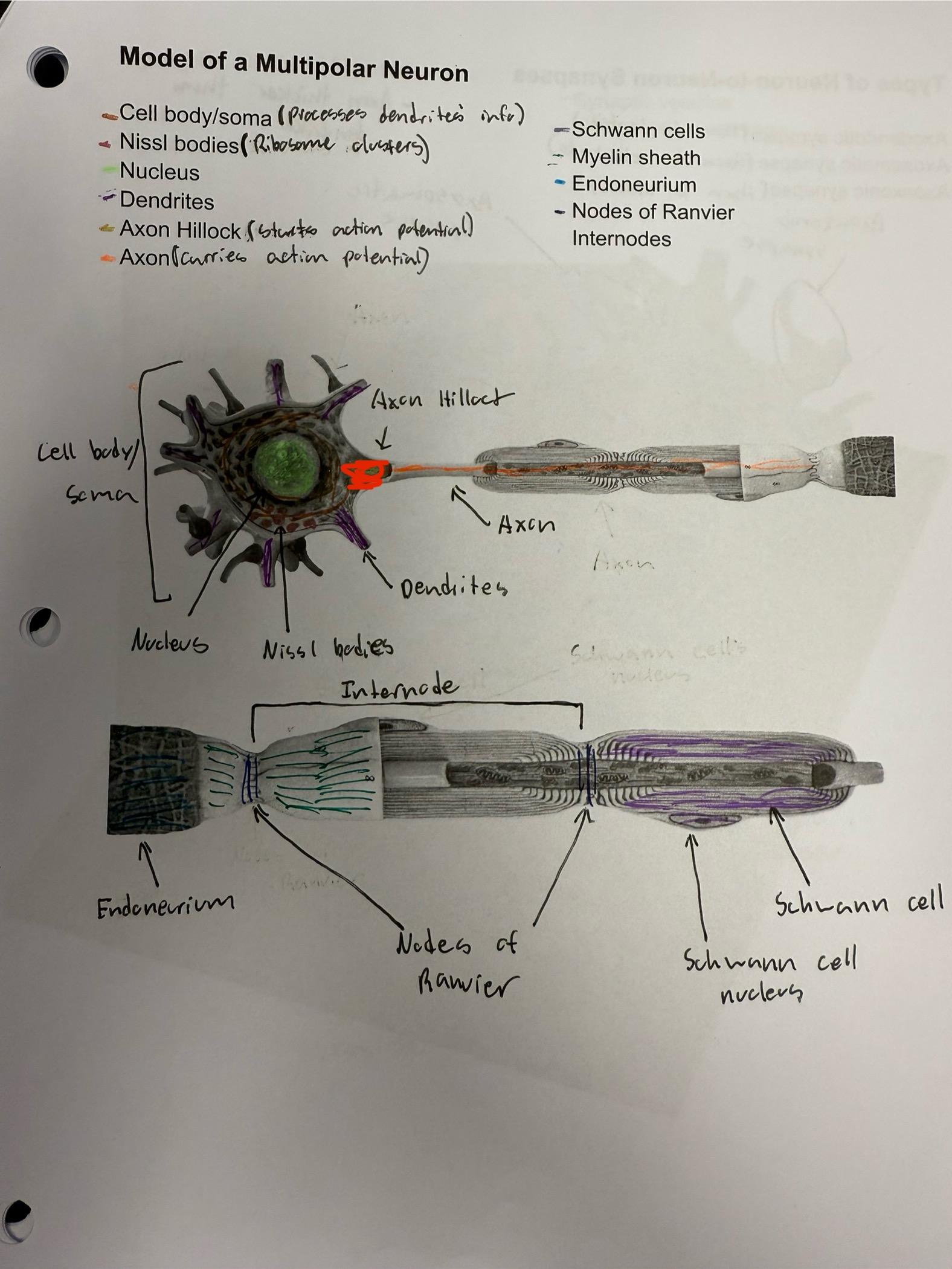
Axon Hillock
Part of axon closest to cell body
Makes decision to if an impulse needs to be sent or not
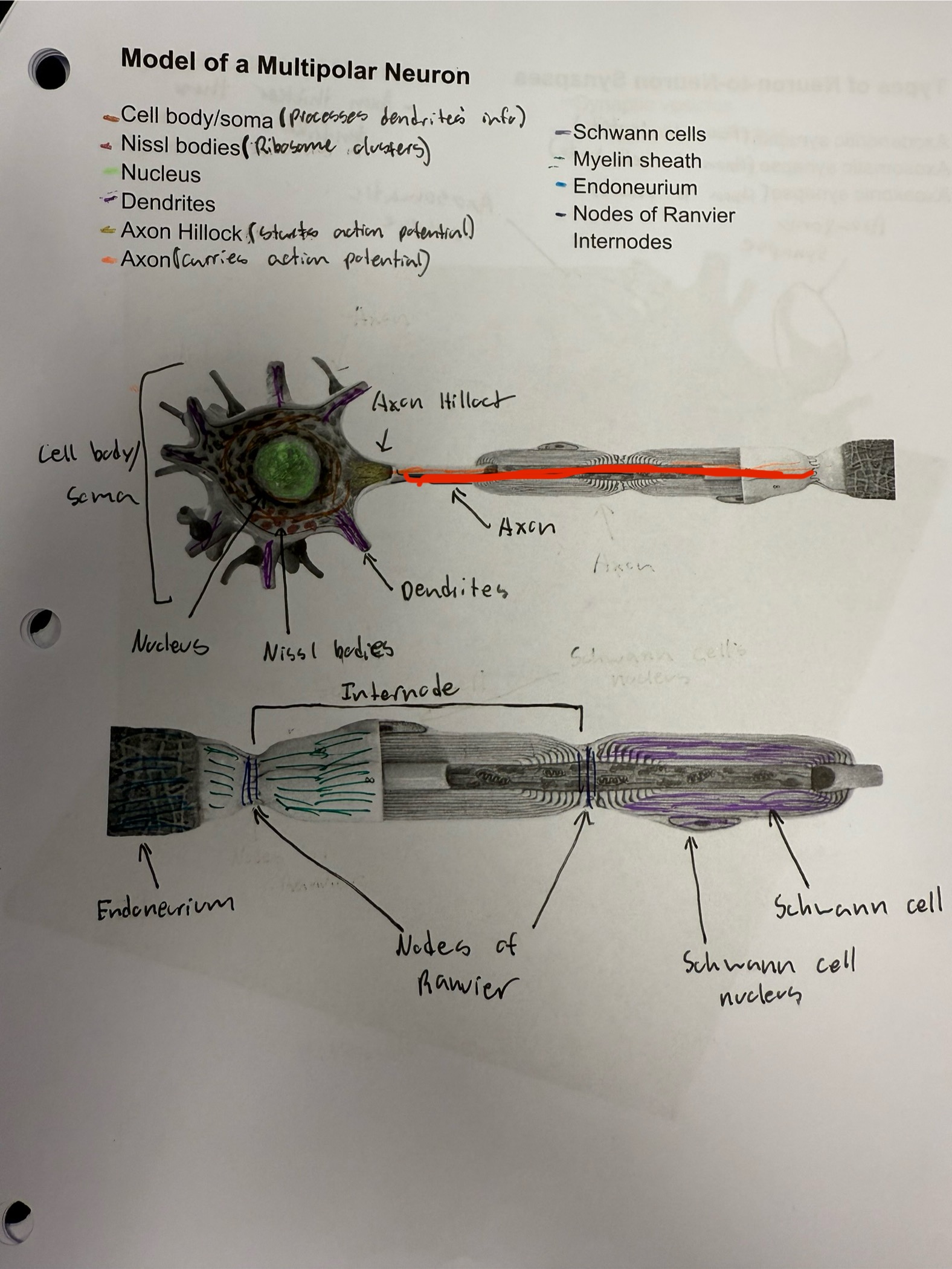
Axon
Tail like protrugen from cell body
Transmits action potential away from cell body
Produces ATP
Glia cell
Any supporting cell of the nervous system
Supports the neurons
Outnumber neurons 50 to 1
Divides with mitosis
Brain cancer caused by these cells
Axon collateral
Axon type that branches off the main axon
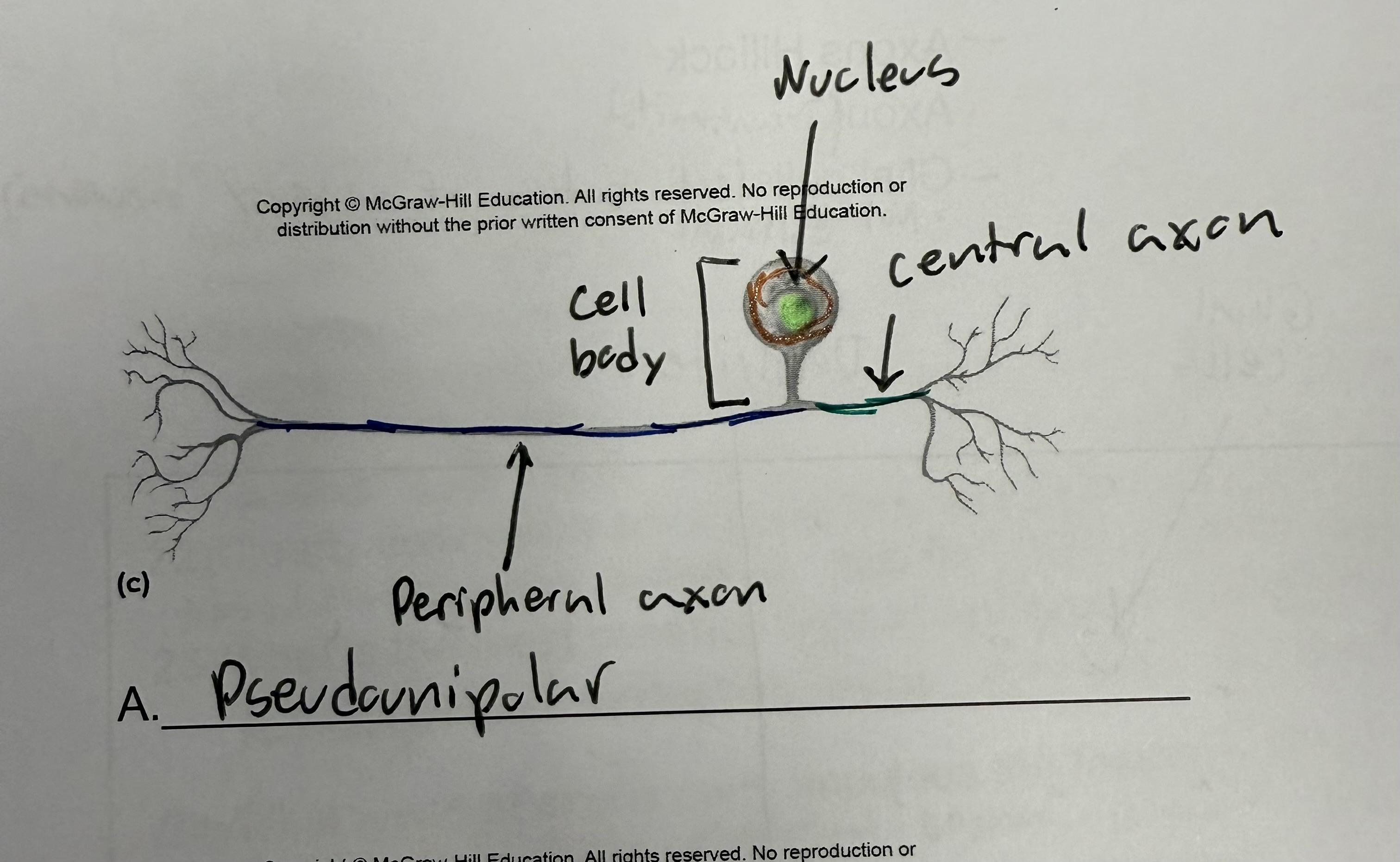
Central axon
Axon type that brings information into CNS from cell body
Pseudounipolar neuron
Neuron type that appears to be on straight axon with dendrites on both sides and cell body somewhere in the middle
Appears to only be one axon but is really two
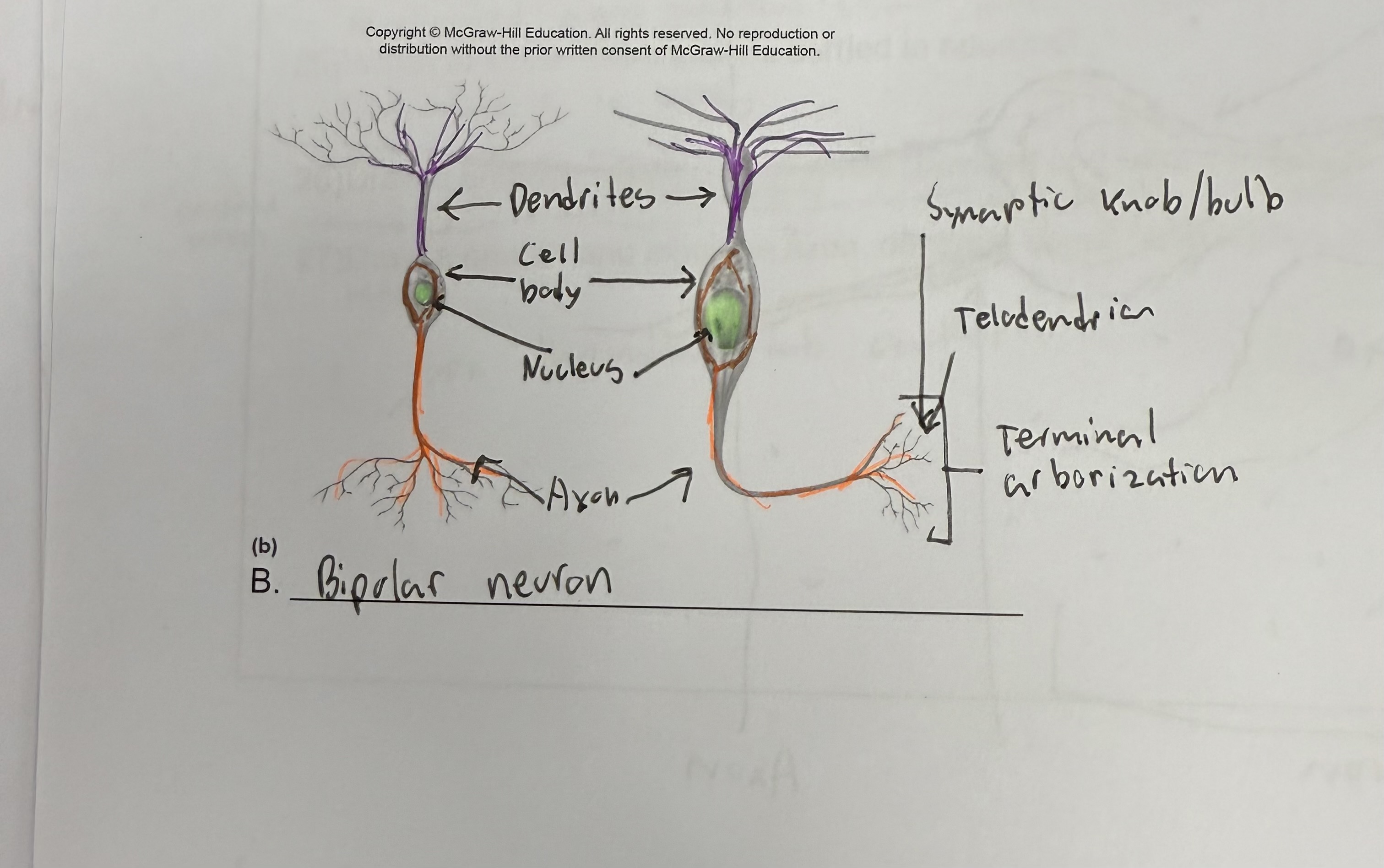
Bipolar neuron
Type of neuron that clearly has two axons
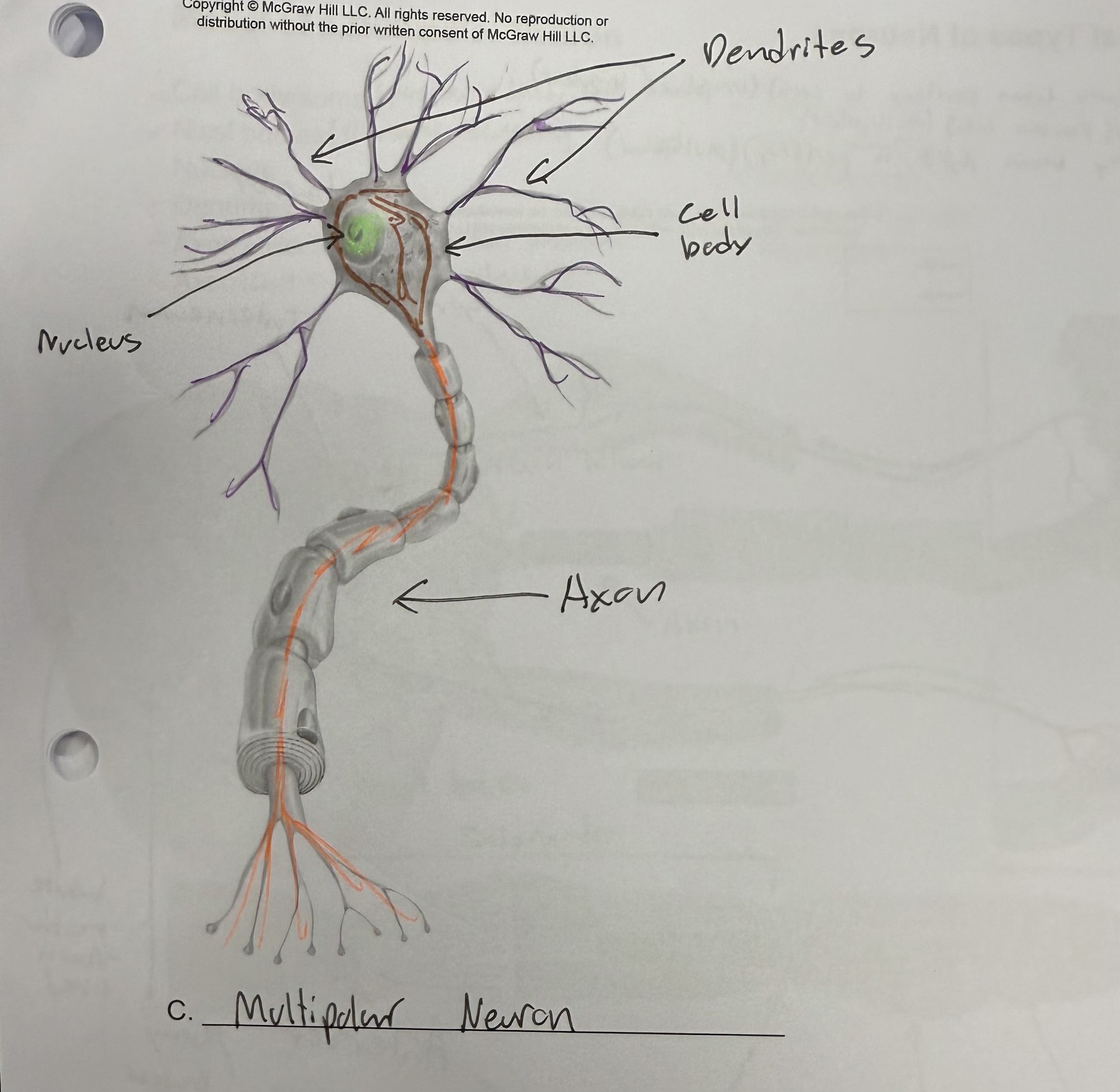
Multipolar neuron
Neuron with multiple axons that attach to the cell body
Sensory / Afferant neuron
Neuron that cell body exists in posterior root ganglion with axons reaching to spinal cord and the PNS
Transmit senses from PNS to CNS
Mostly unipolar, few bipolar
Facilitates motor coordination
Location: retina, olfactory epithelium, spiral ganglia
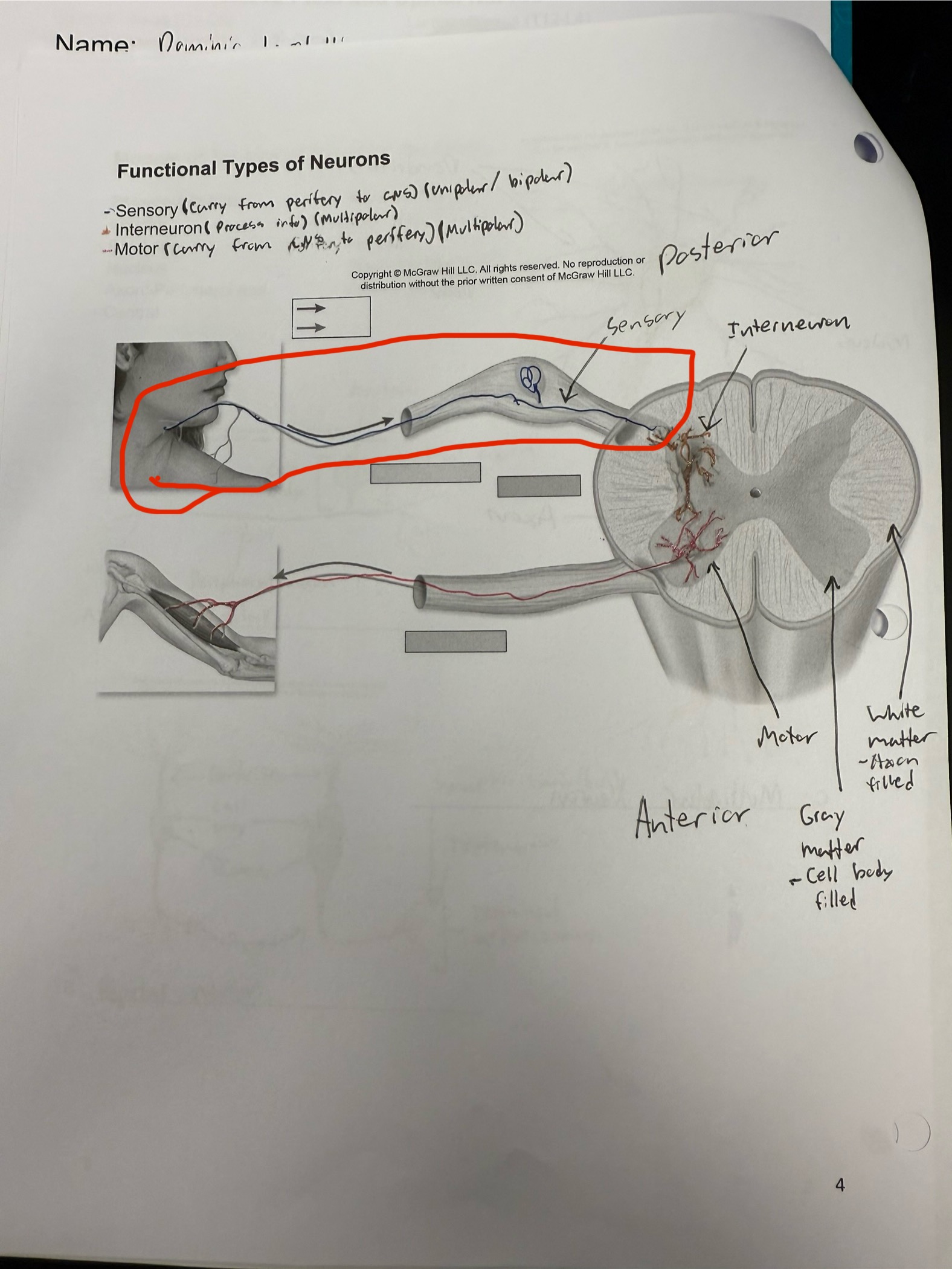
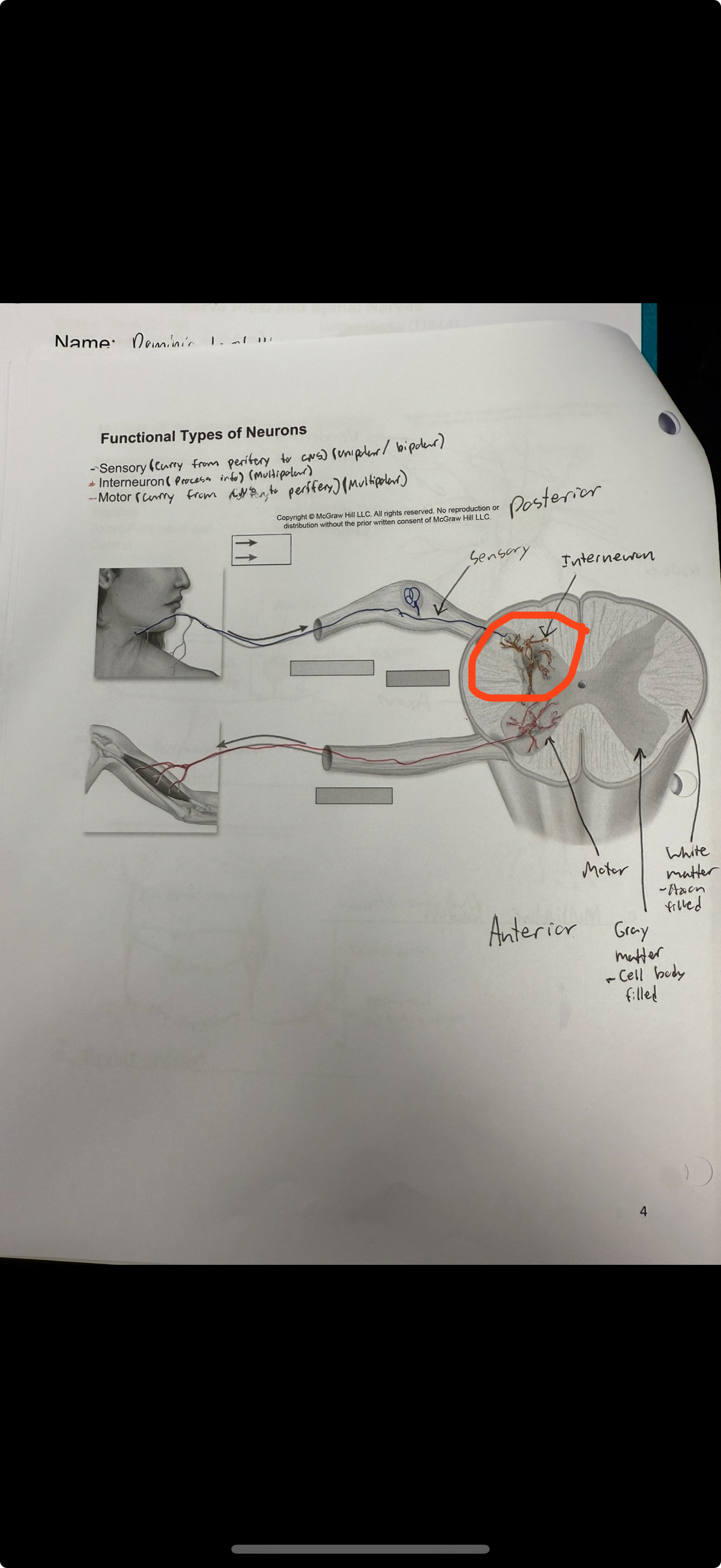
Interneuron
Neuron that lives completely within the CNS, 99% of nerves
Acts as decision maker between motor and sensory neuron
Receives, processes, stores information
Mostly multipolar neurons
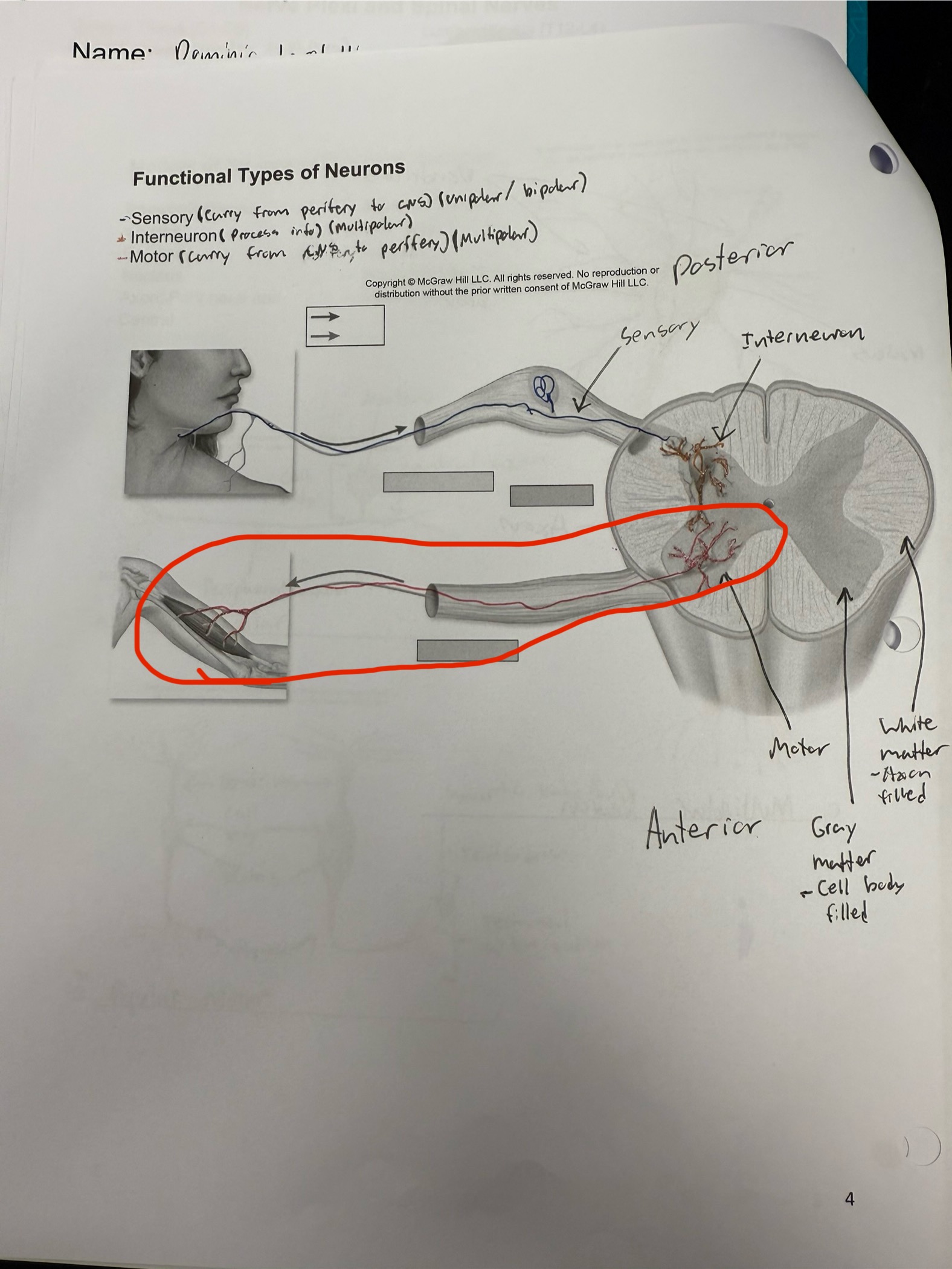
Motor / efferent neuron
Neuron that’s body is in anterior horn sends an axon out to the PNC
Sends motor impolses in response to stimuli
Mostly motor neurons
Travel as cranial and spinal nerves
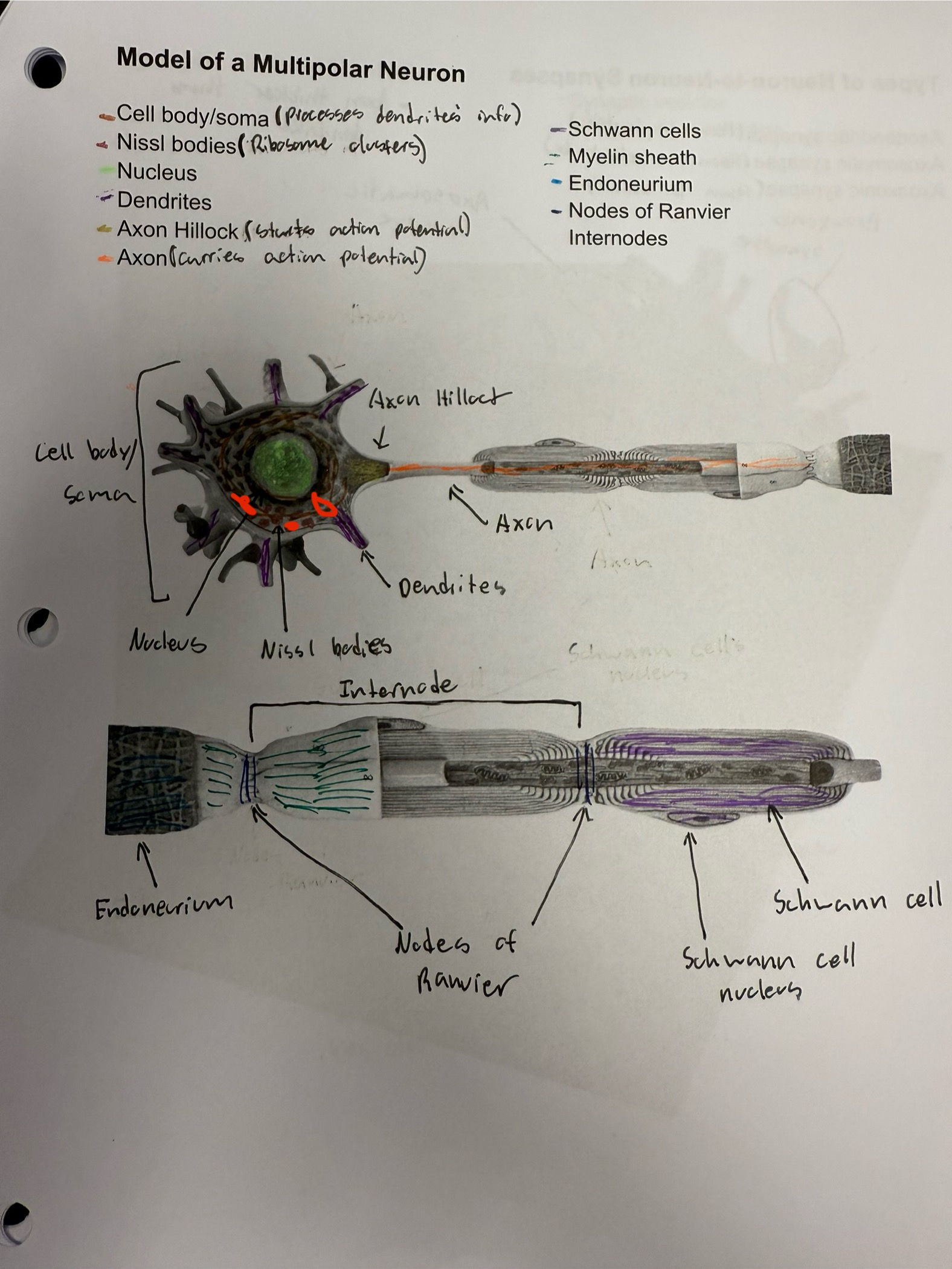
Nissl Bodies
Rough ER and Ribosome structures in cell body of neuron only
Proteins synthesis site for neuron
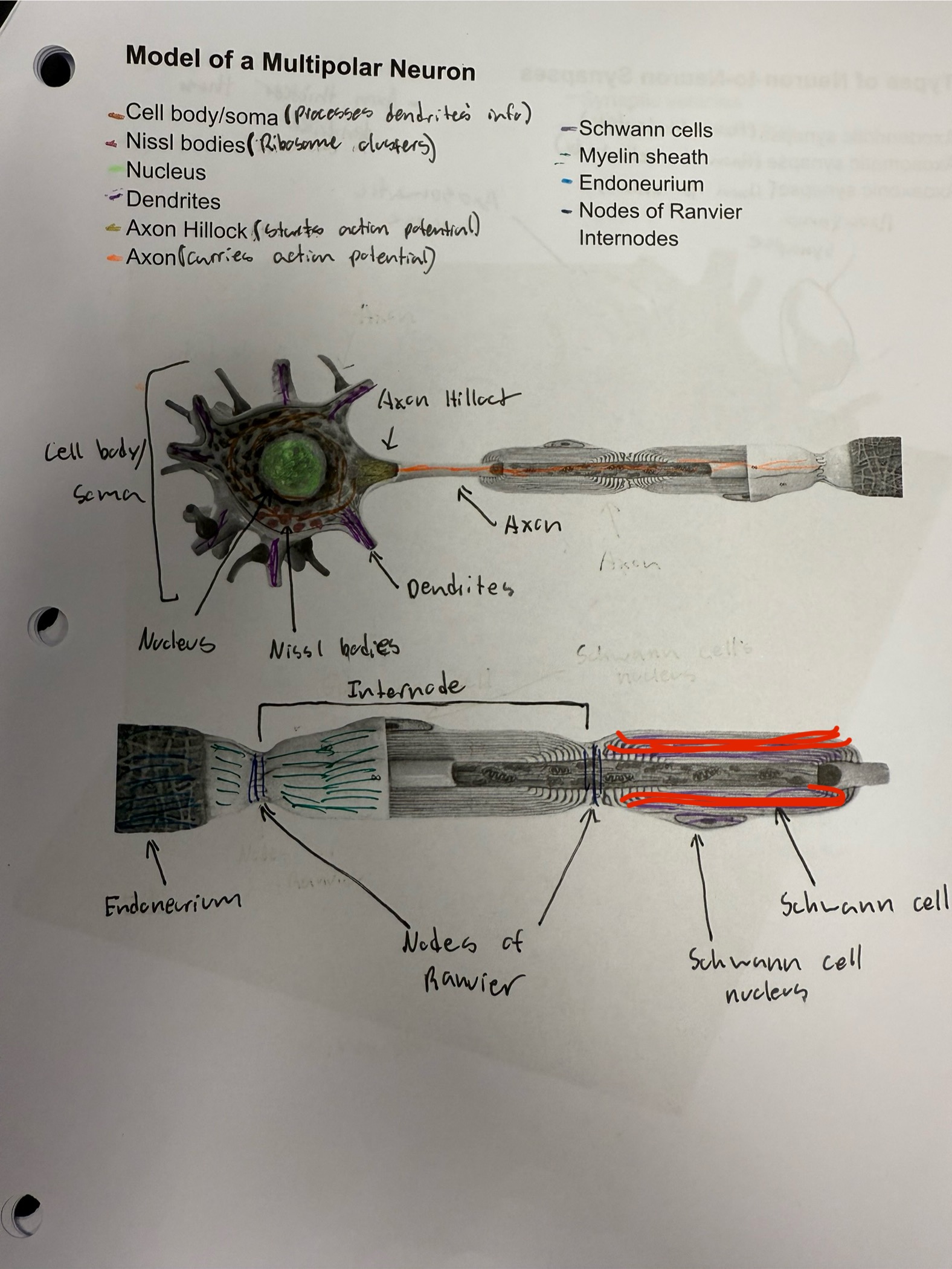
Myelin sheath
Myelin that surrounds axon of neuron
Allows electrical impolses to move faster through axon
Endoneurium
Connective tissue that surrounds never fibers
Protects them from damage
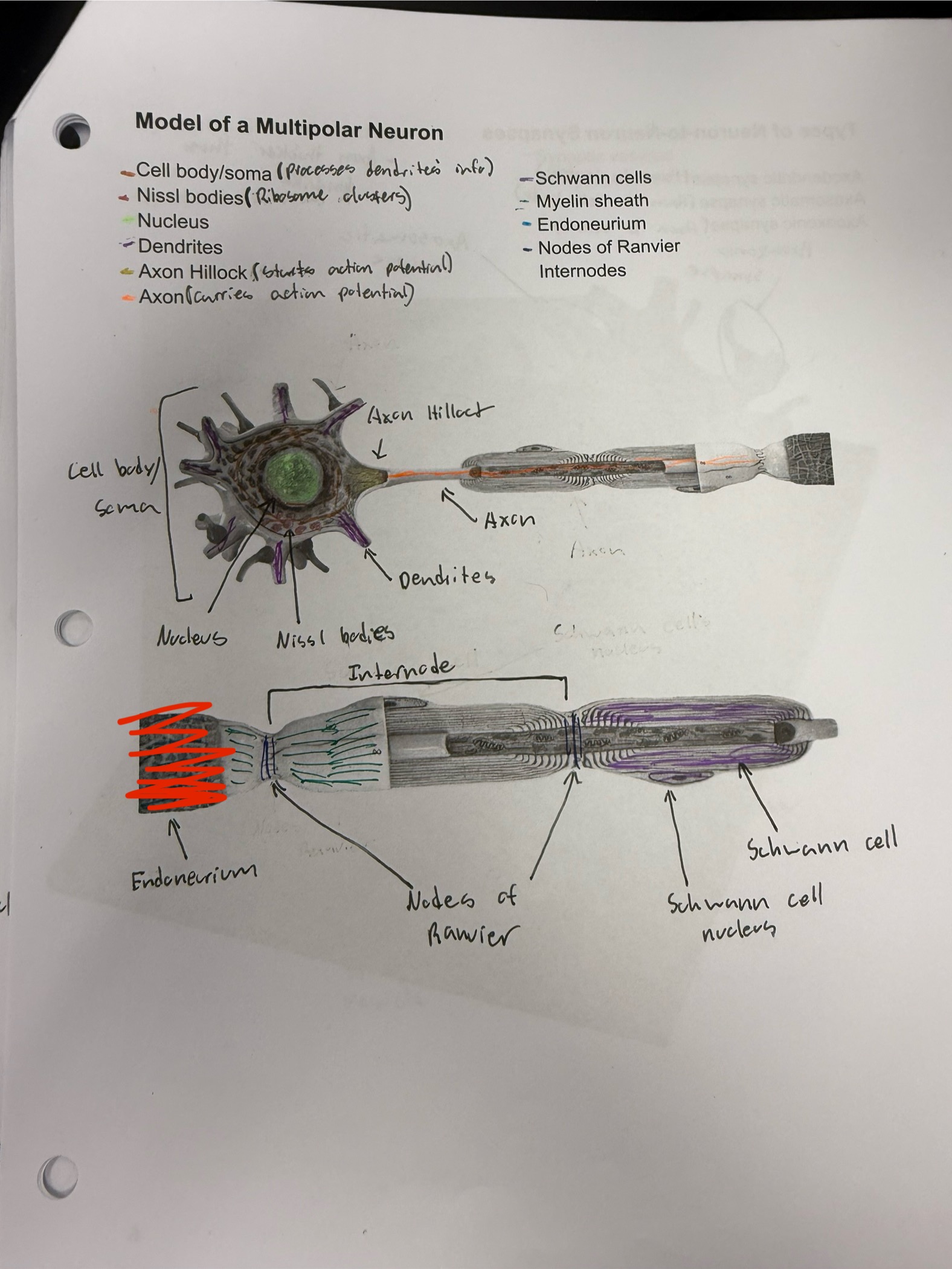
Nodes of Ranvier
Spaces between Schwann cells
Contains high amounts of voltage-gate sodium channels
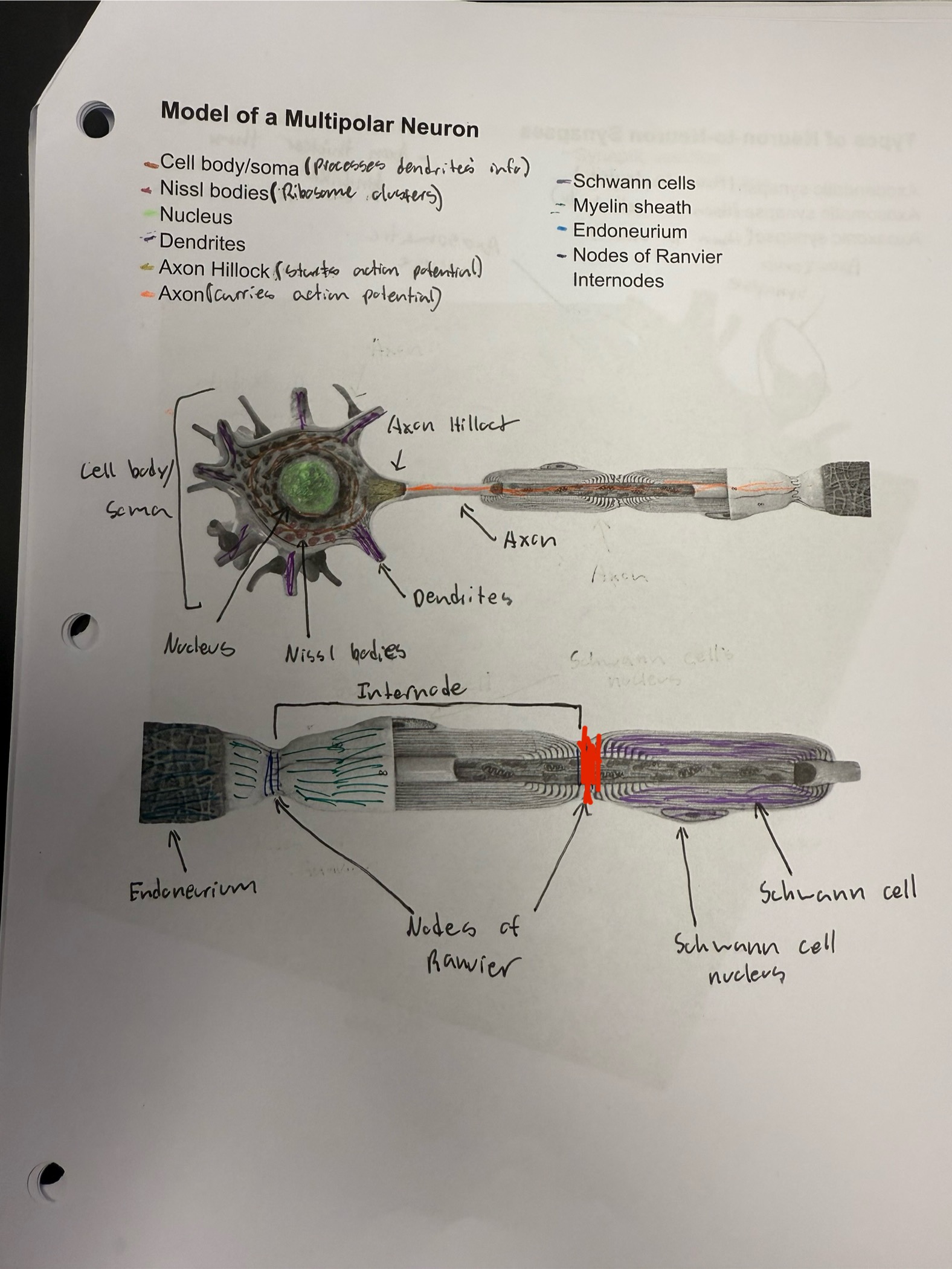
Internode
Myelin sheath protrudens superficial to axon, surrounding it
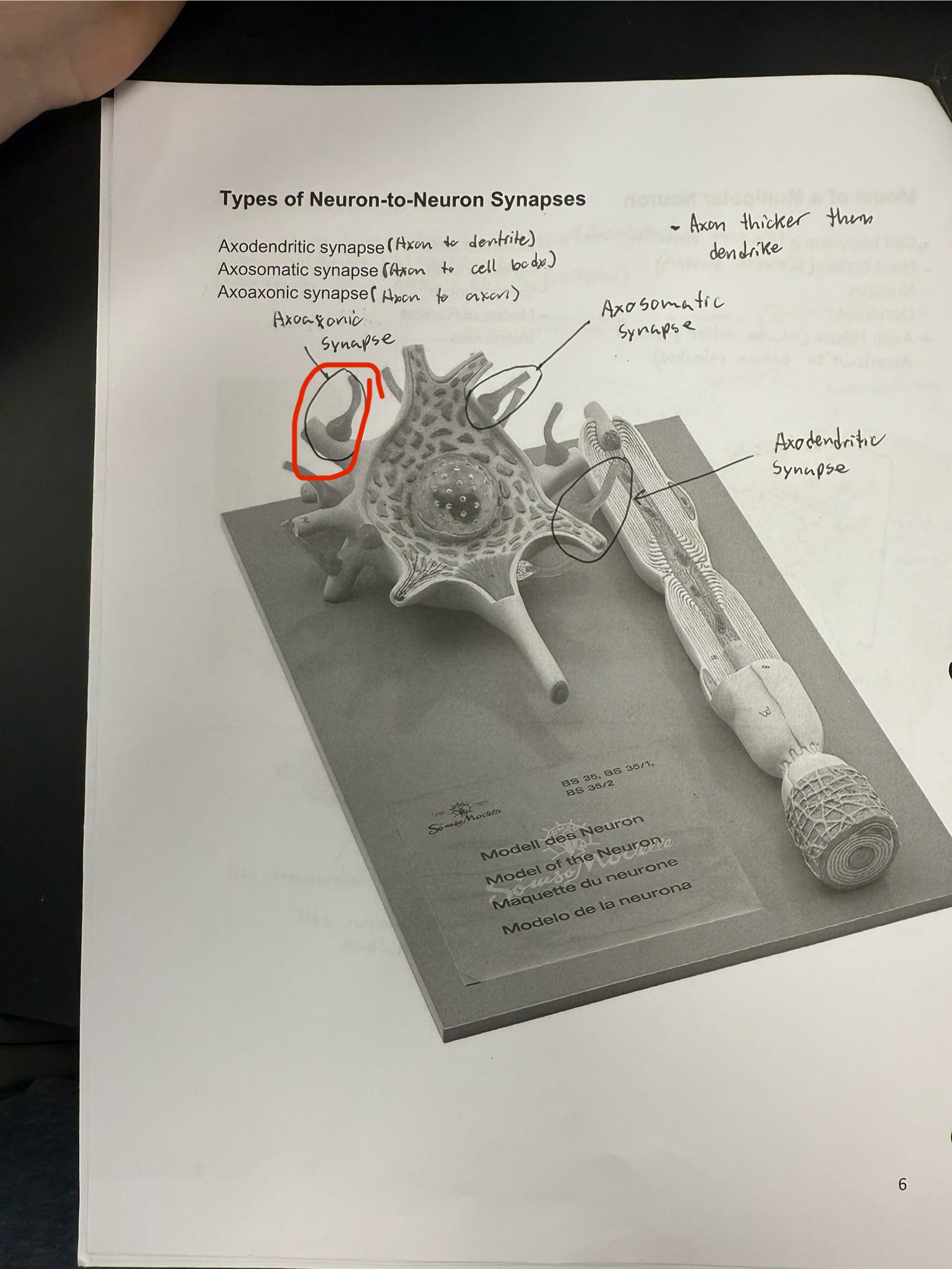
Axodendritic synapse
Synaps type: Axon connects to dendrite
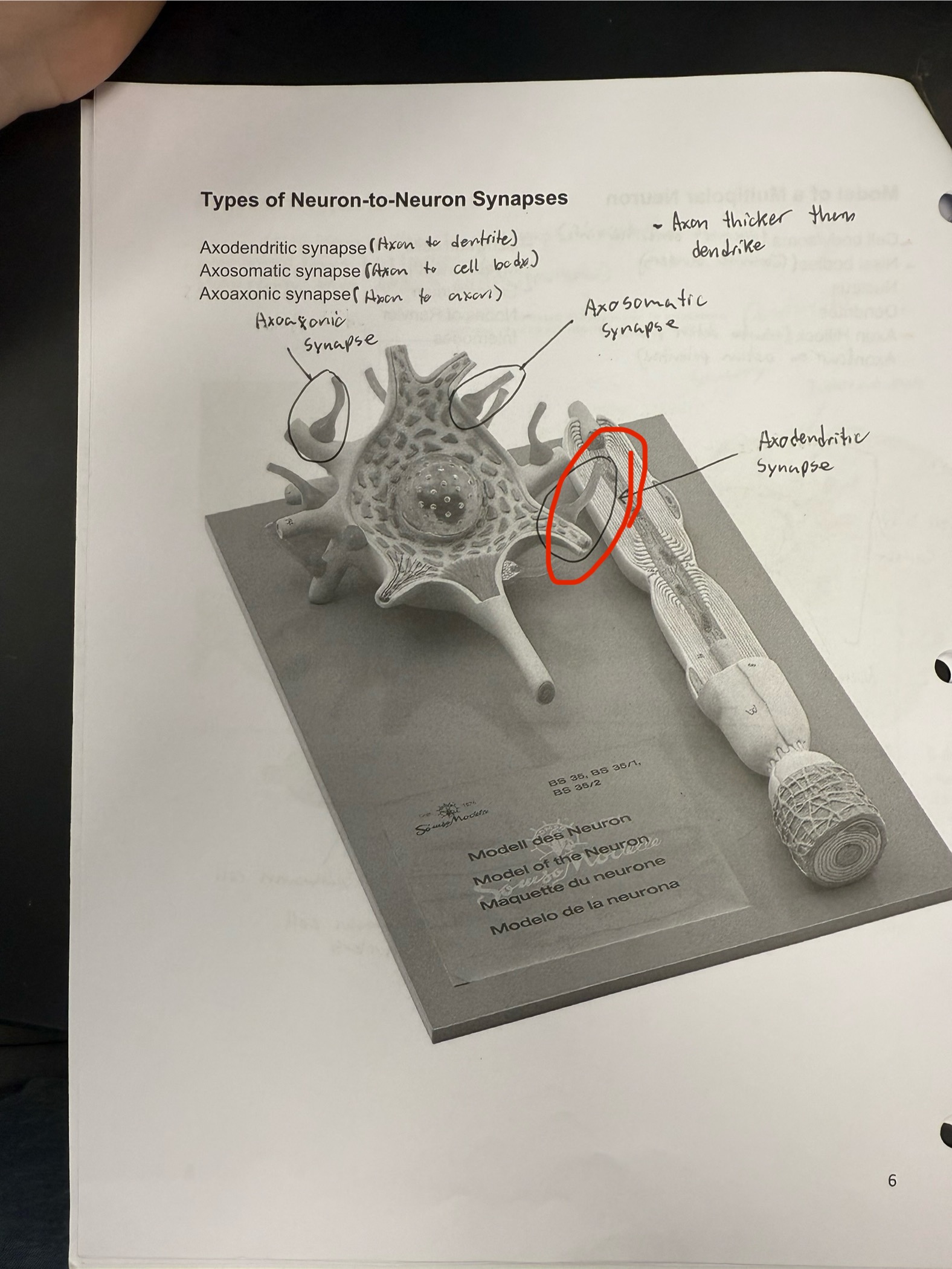
Axosomaric synapse
Synaps type: Axon to soma
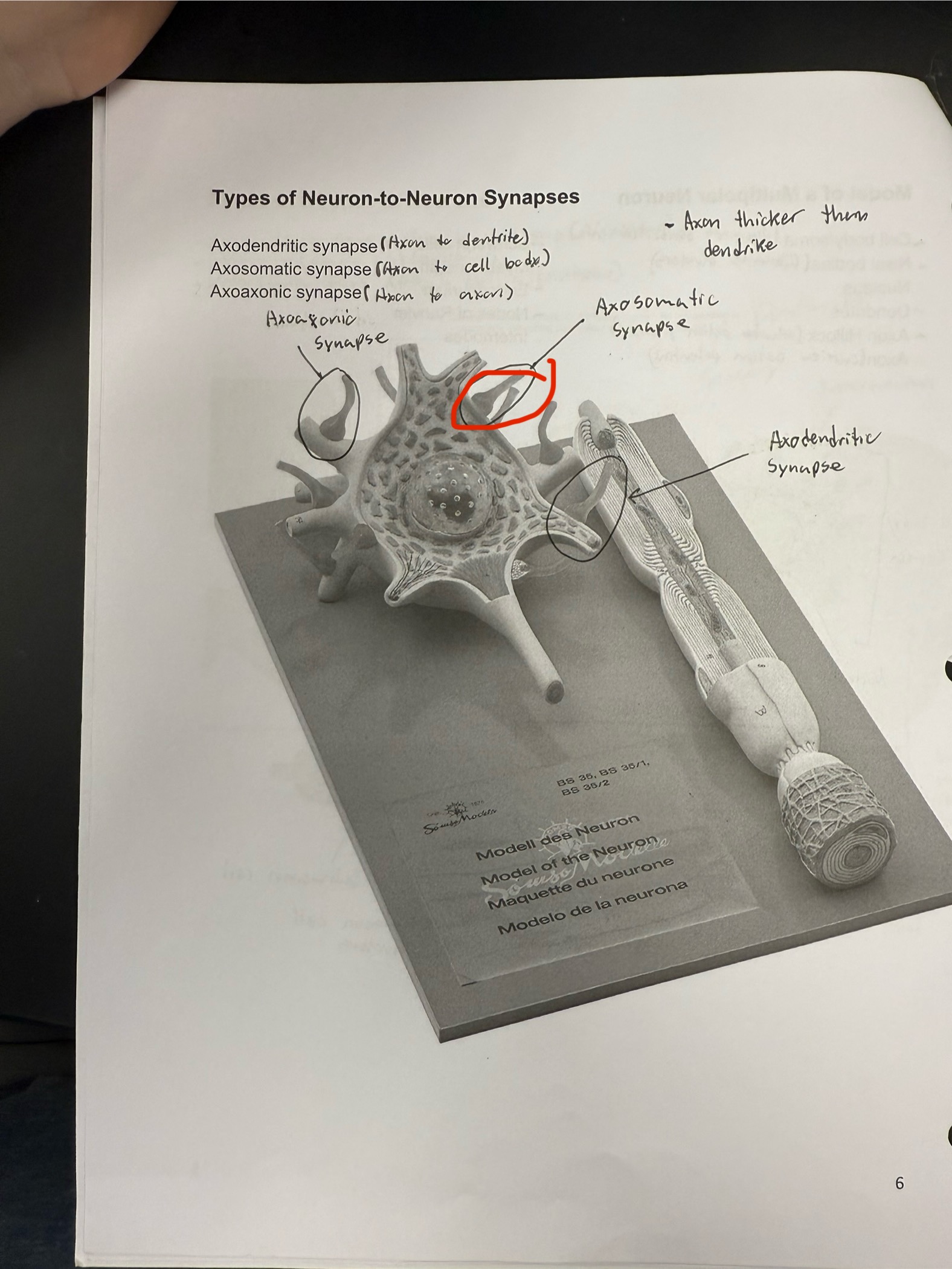
Axoaxonic synapse
Synapse type: Axon to axon
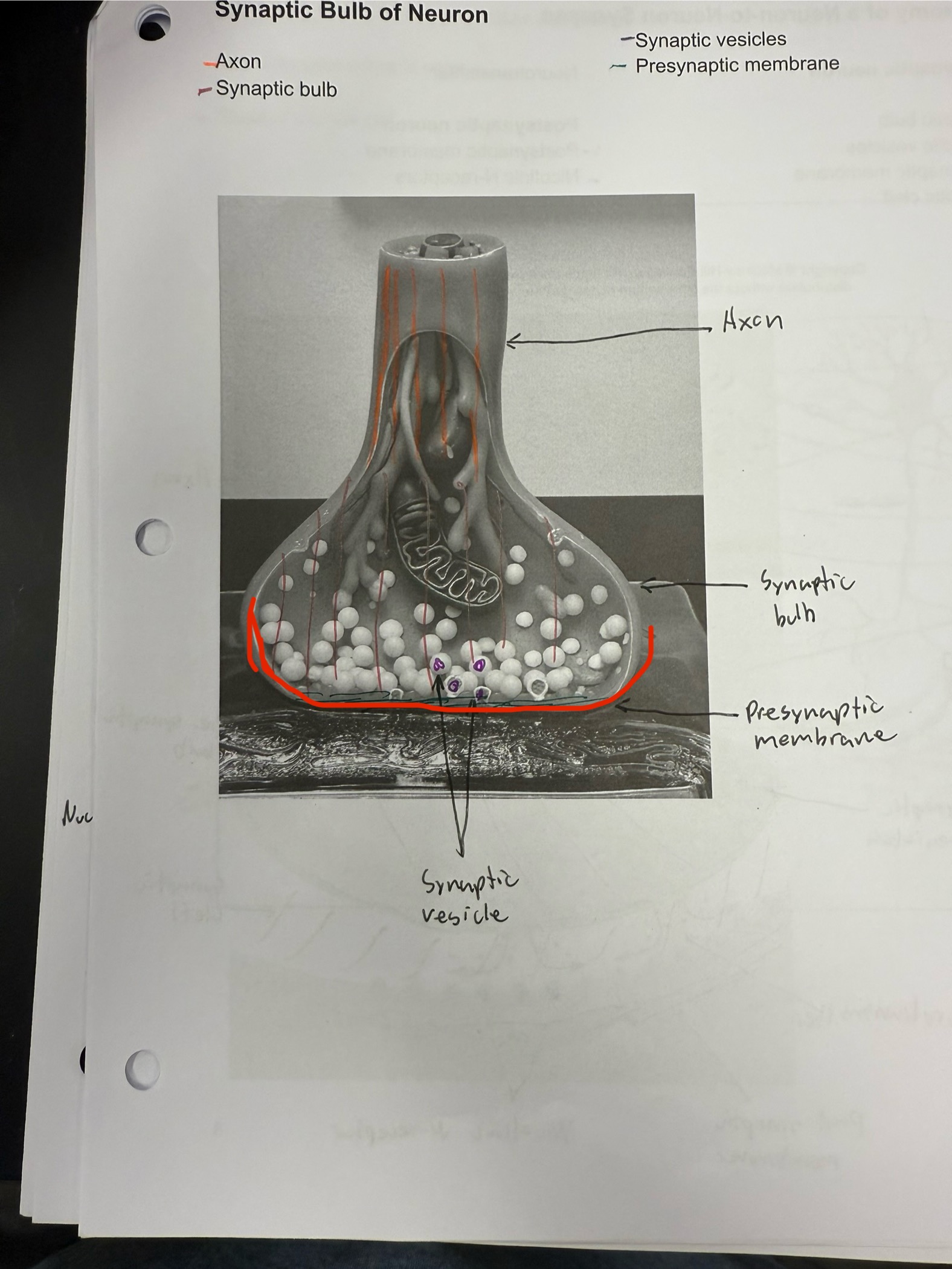
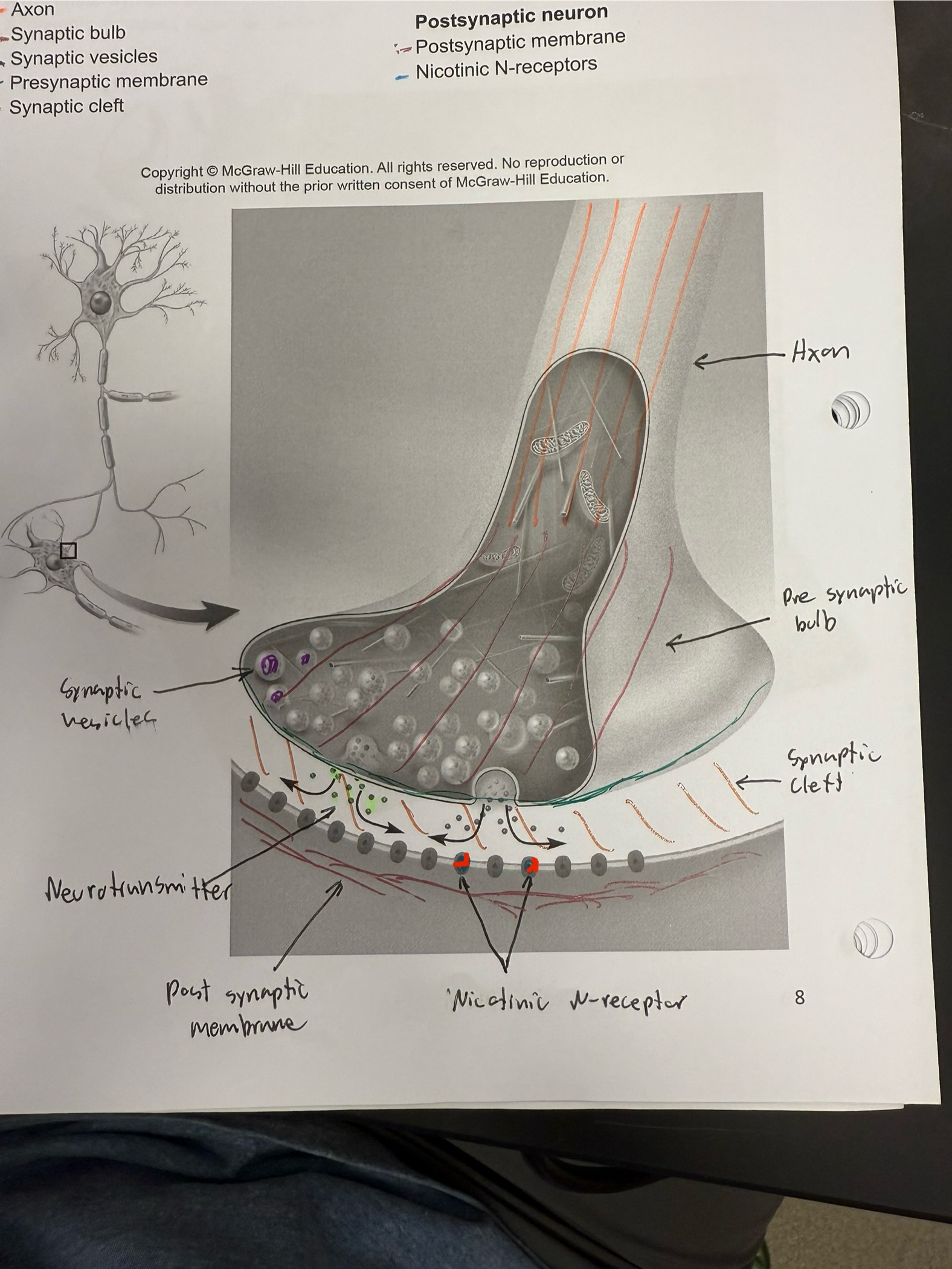
Synaptic knob/bulb / terminal
button
Bulb like area of nerve at neromuscular junction
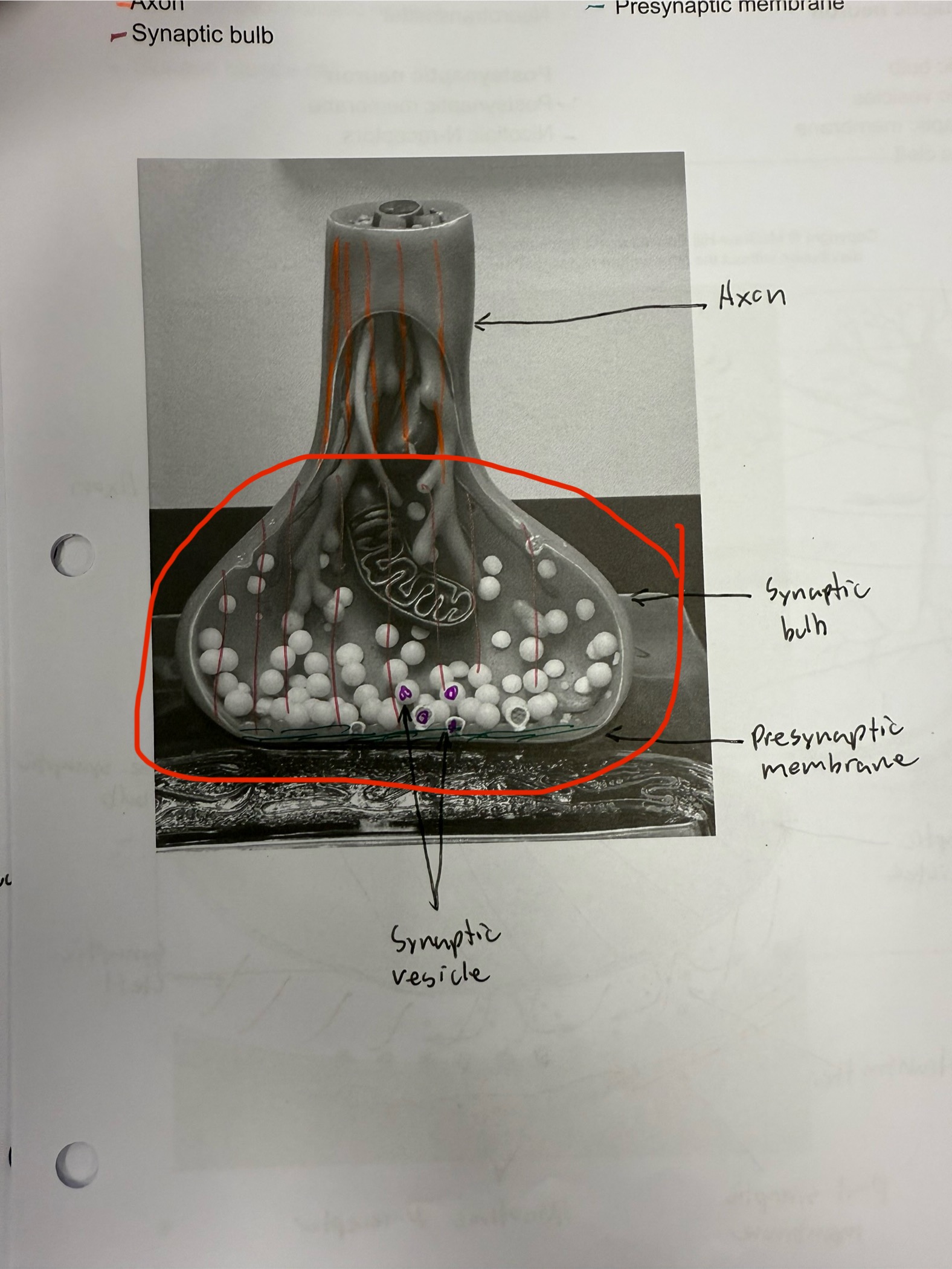
Synaptic vesicles
Vesicle inside of axon bulb that holds neurotransmitters
Take neurotransmitters to the muscle
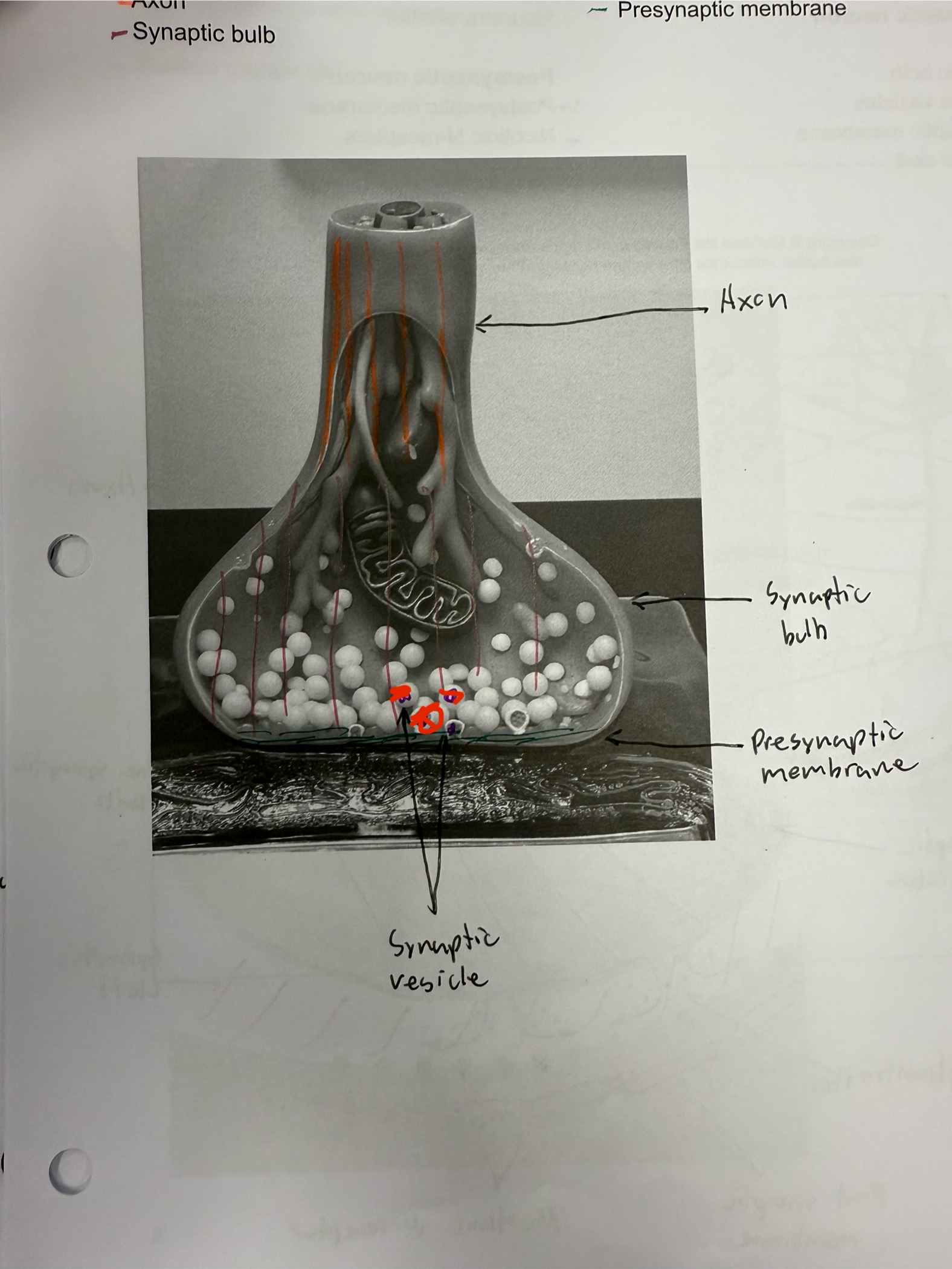
Presumptic membrane
Membrane of the axon bulb just before the synaptic cleft
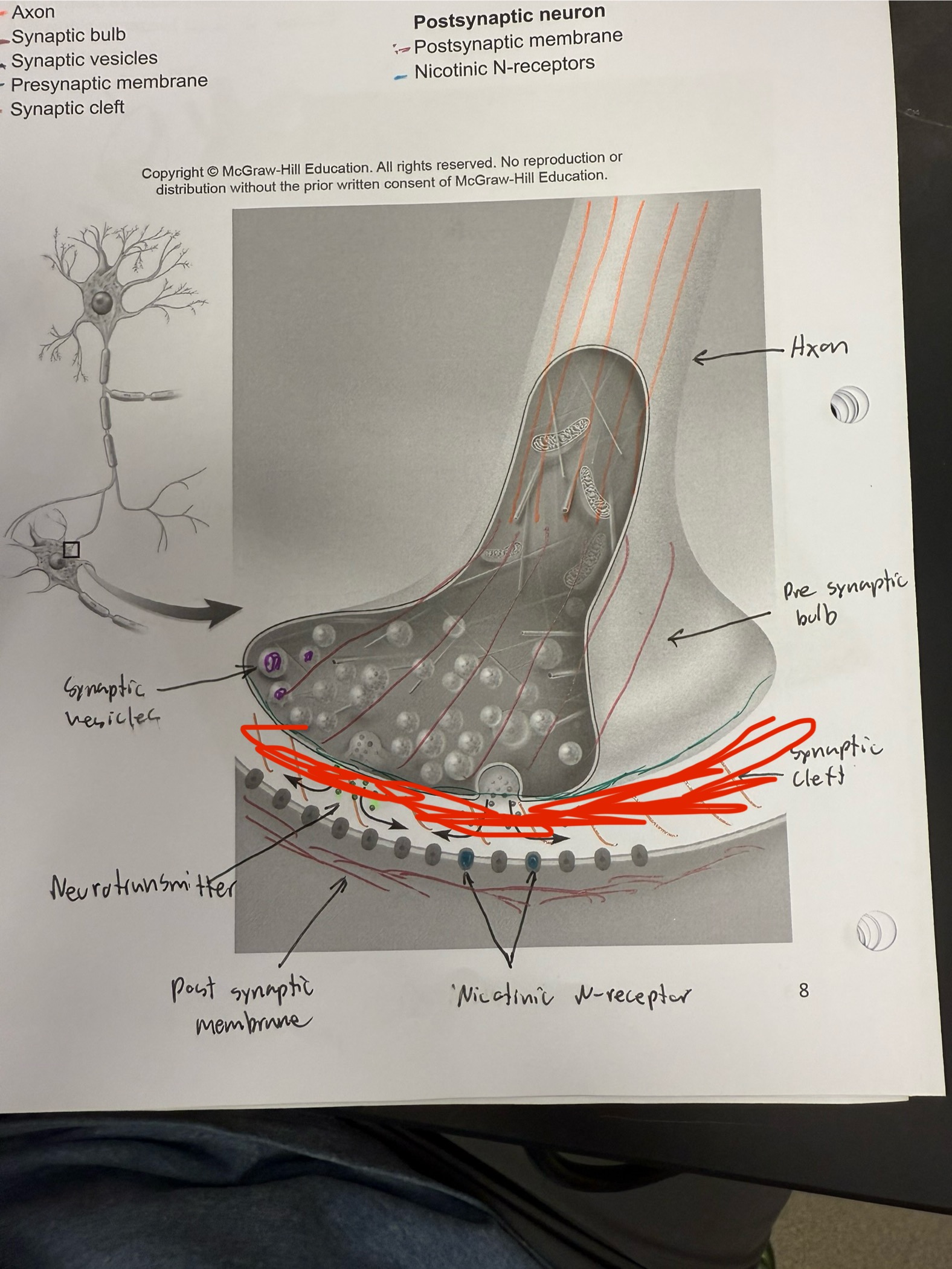
Synaptic cleft
Space between the motor end plate and synaptic bulb
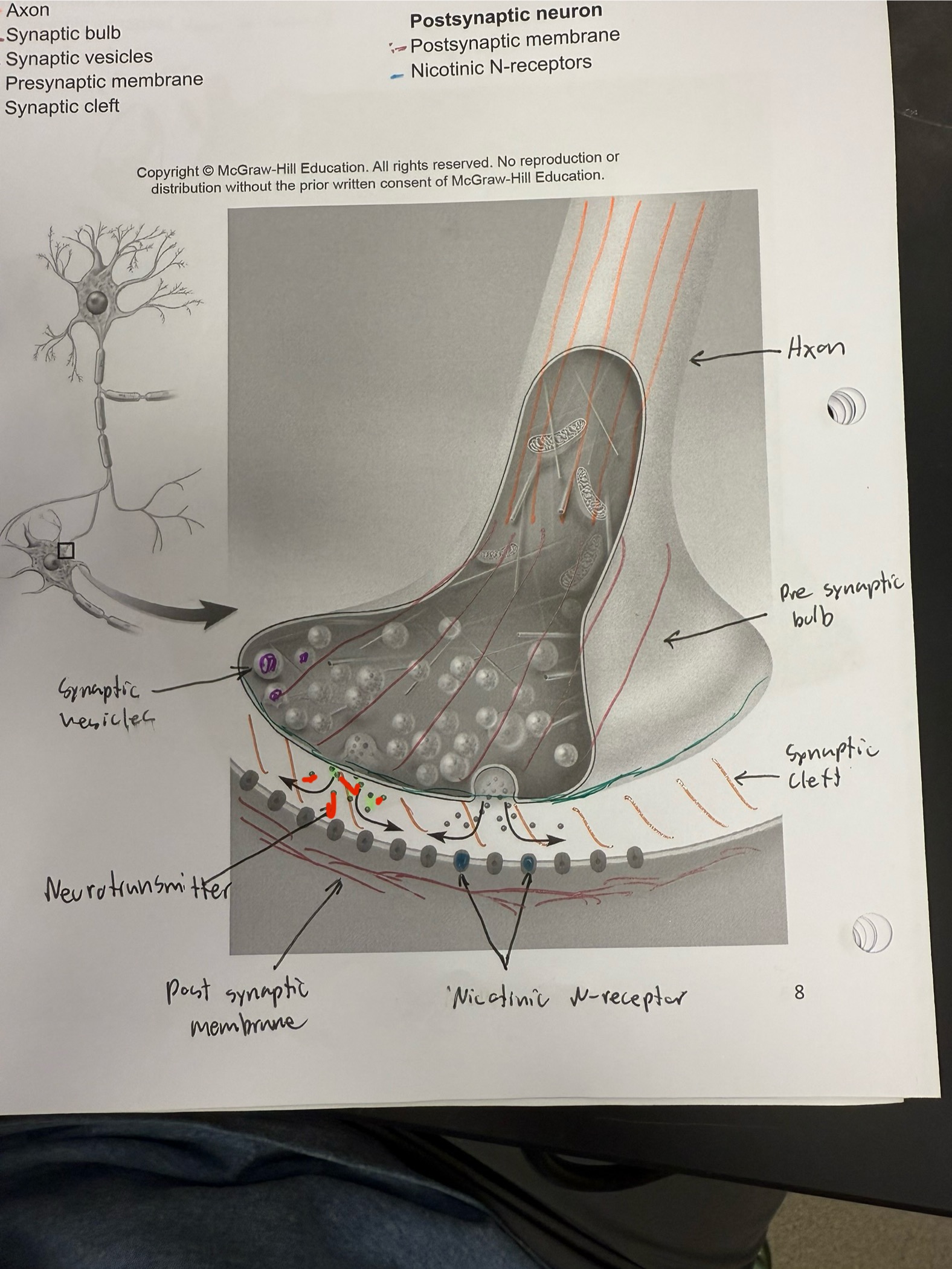
Neurotransmitter
Messenger from neuron to muscle
Diffuses through the synaptic bulb and into the motor end plate
Post synaptic membrane
Membrane of the motor end plate
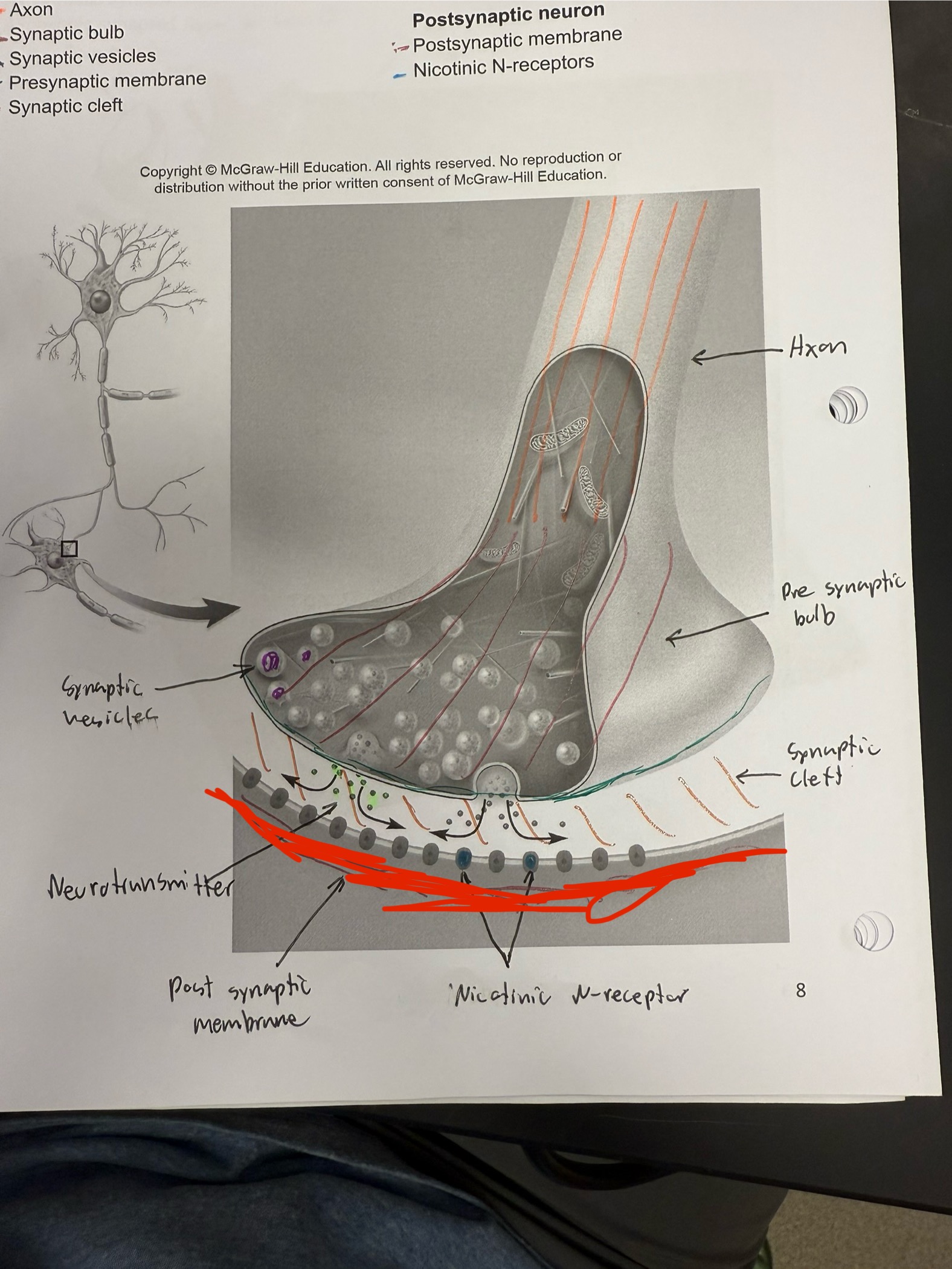
Nicotine receptor
Receptor of part of the motor end plate
Binds to nicotine and acidocoline
Epineurium
Connective tissue surrounding the entire nerve
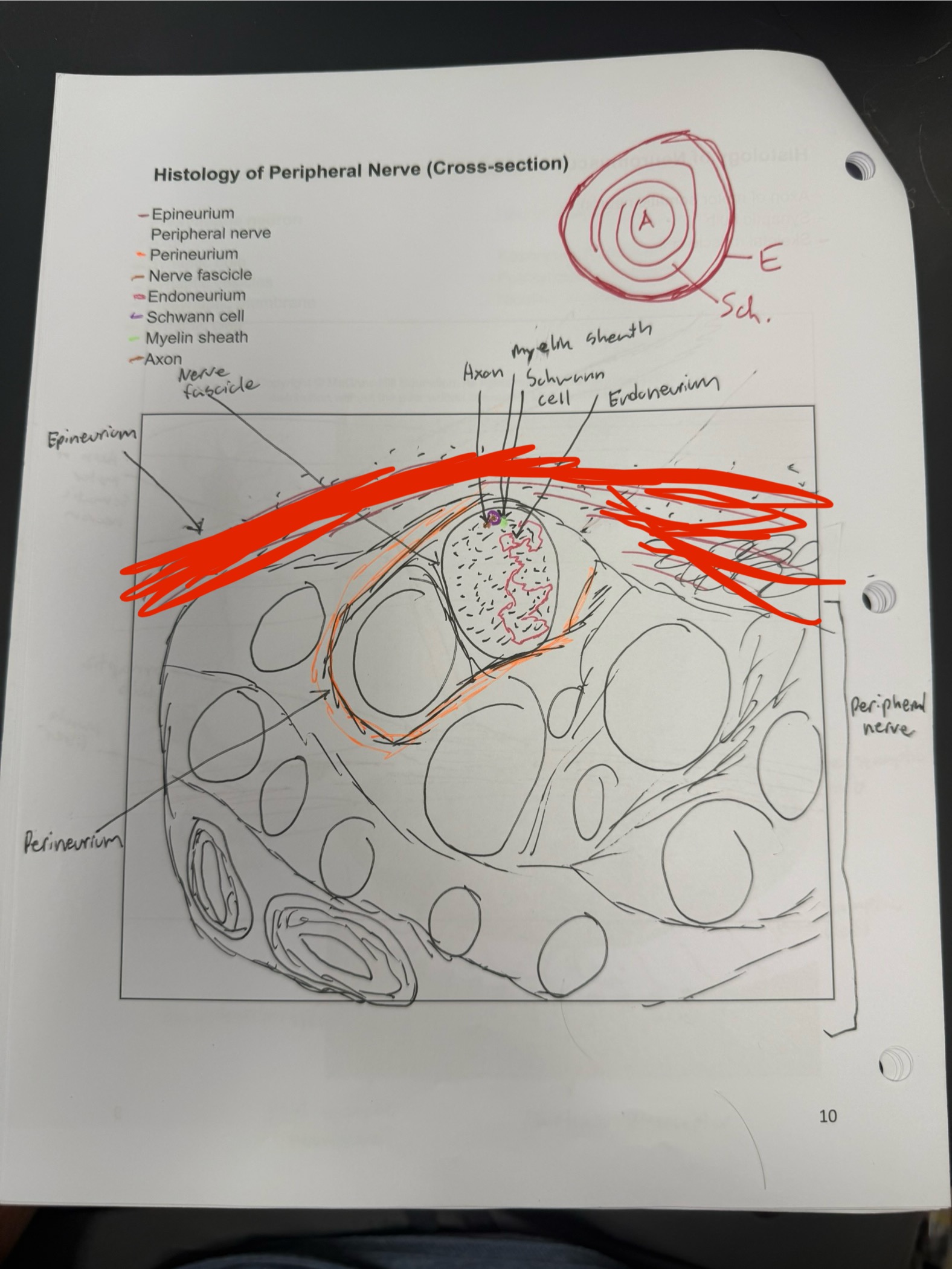
Peripheral never
Collection of neurons that travel bound together together
Contains mixture of motor and sensory neurons
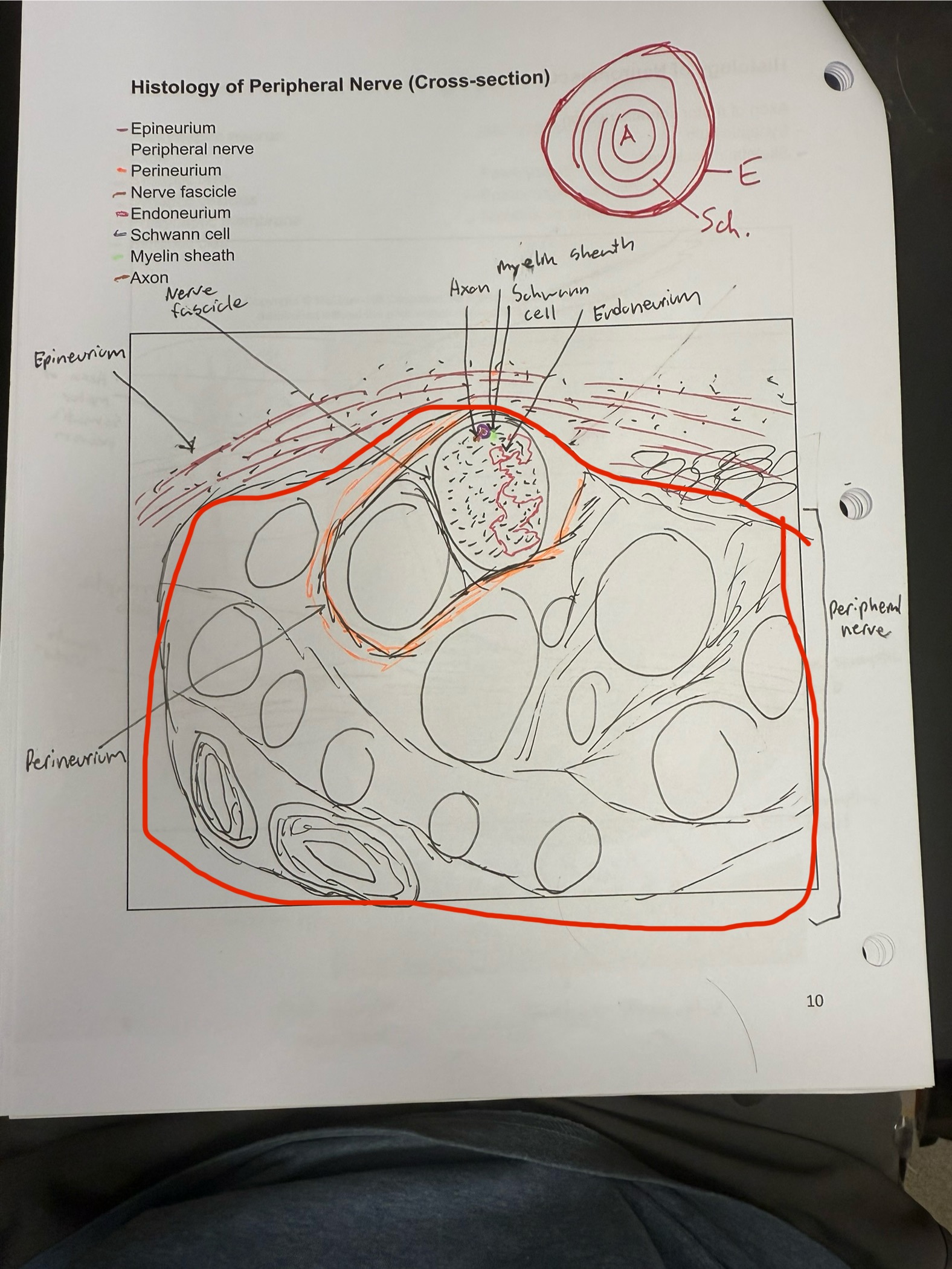
Perineurium
Connective tissue surrounding nerve fascicles
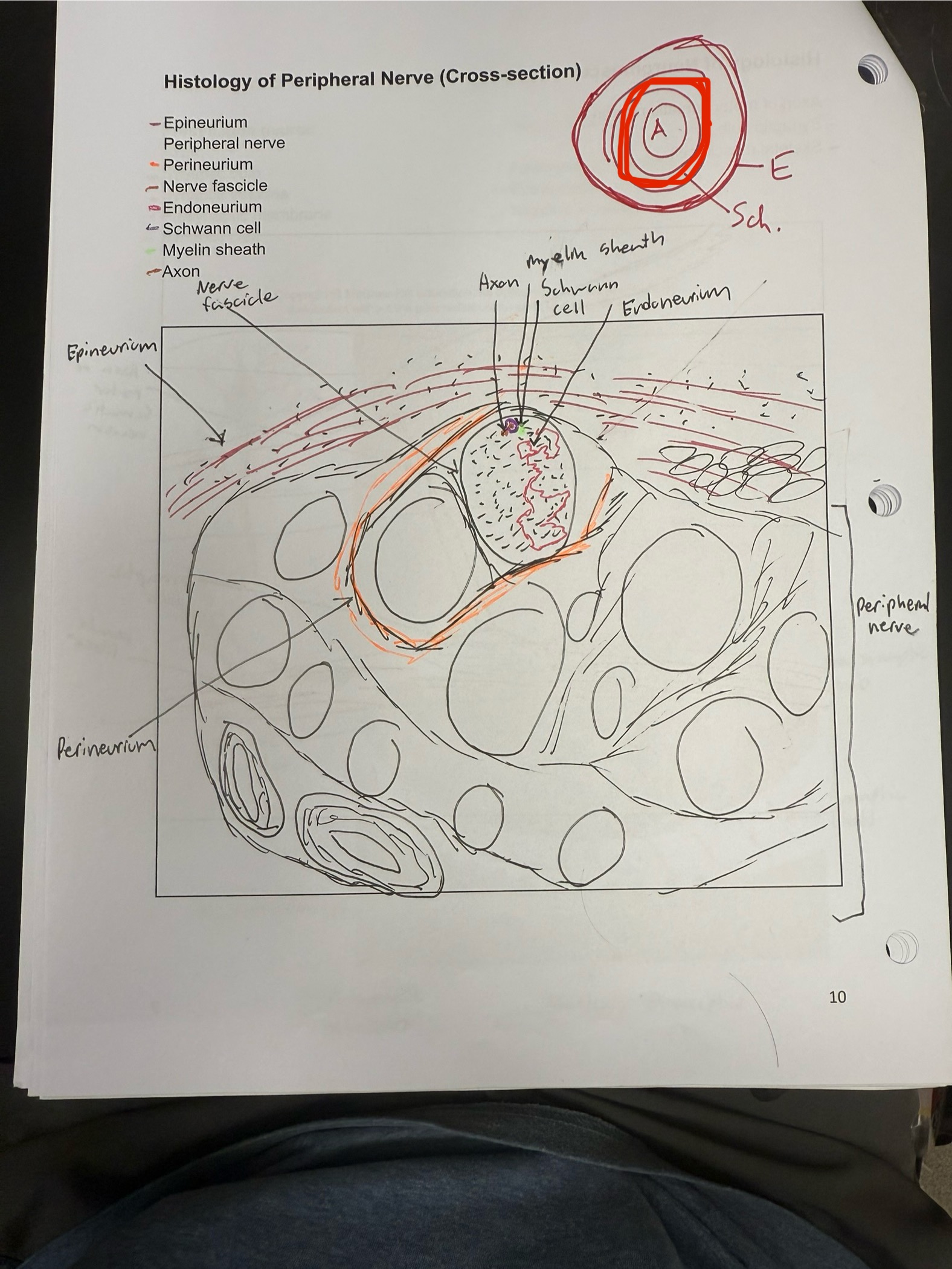
Nerve facile
Collection of axons held together by perineurium
Astrocyte cell
Glial cell
90% of nervous tissue
Makes blood-brain barrier, regulates tissue fluid, synaptic transmission
Responsible for learning
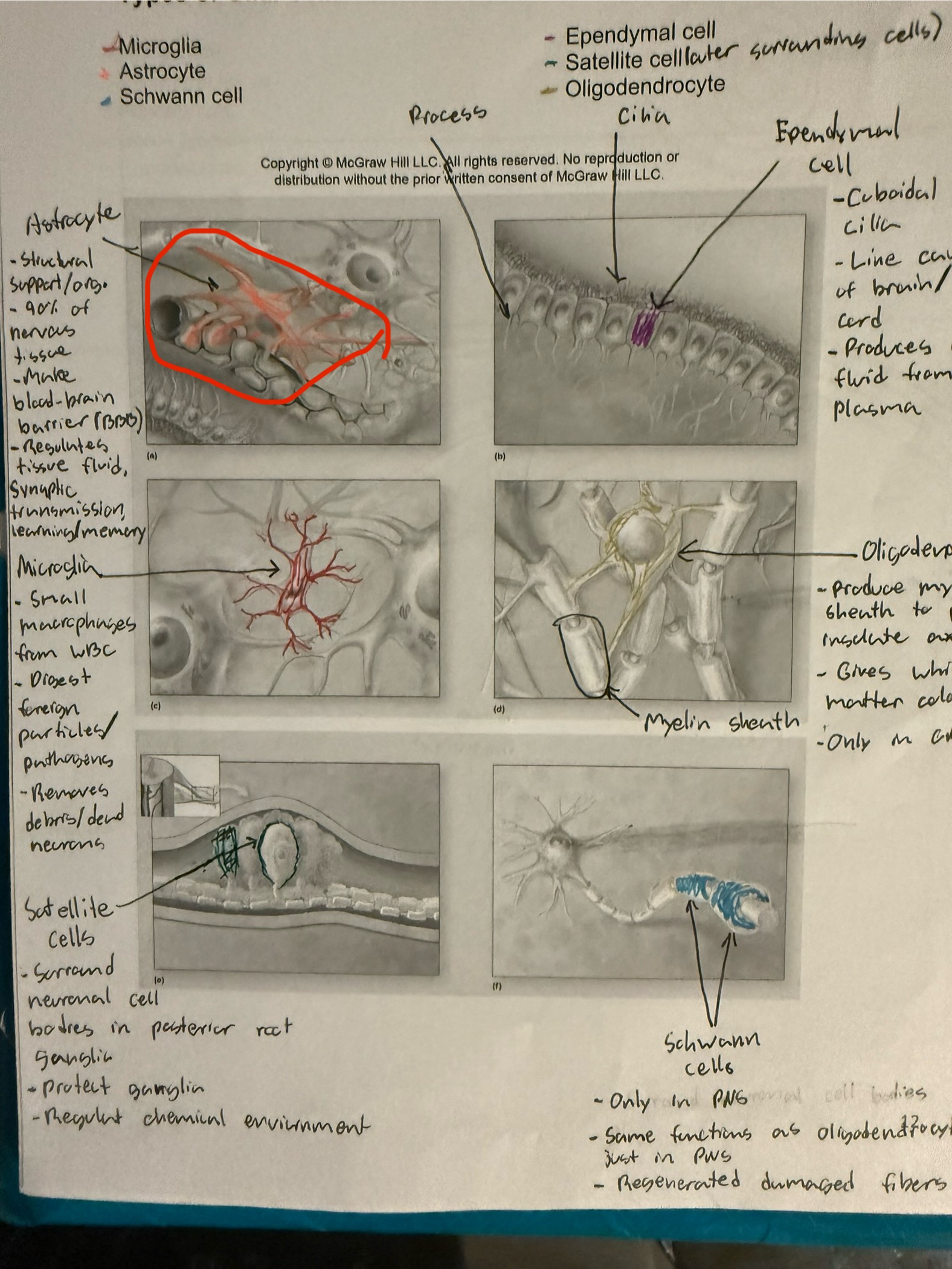
Microgila cell
Glial cell
Immune cell for nervous system
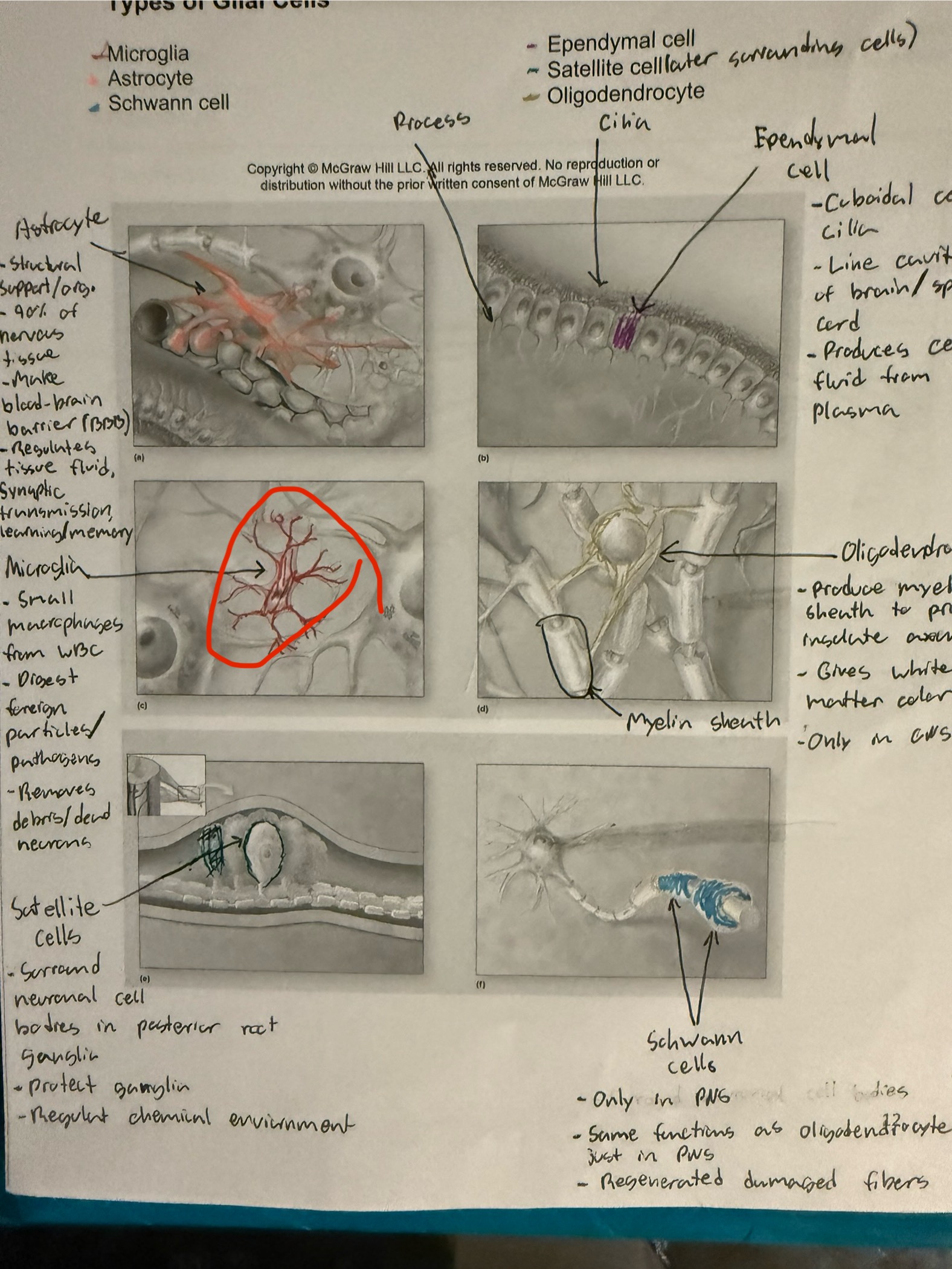
Satellite cell
Glial cell
Surrounds neurons in posterior root ganglion
Regulate chemical environment
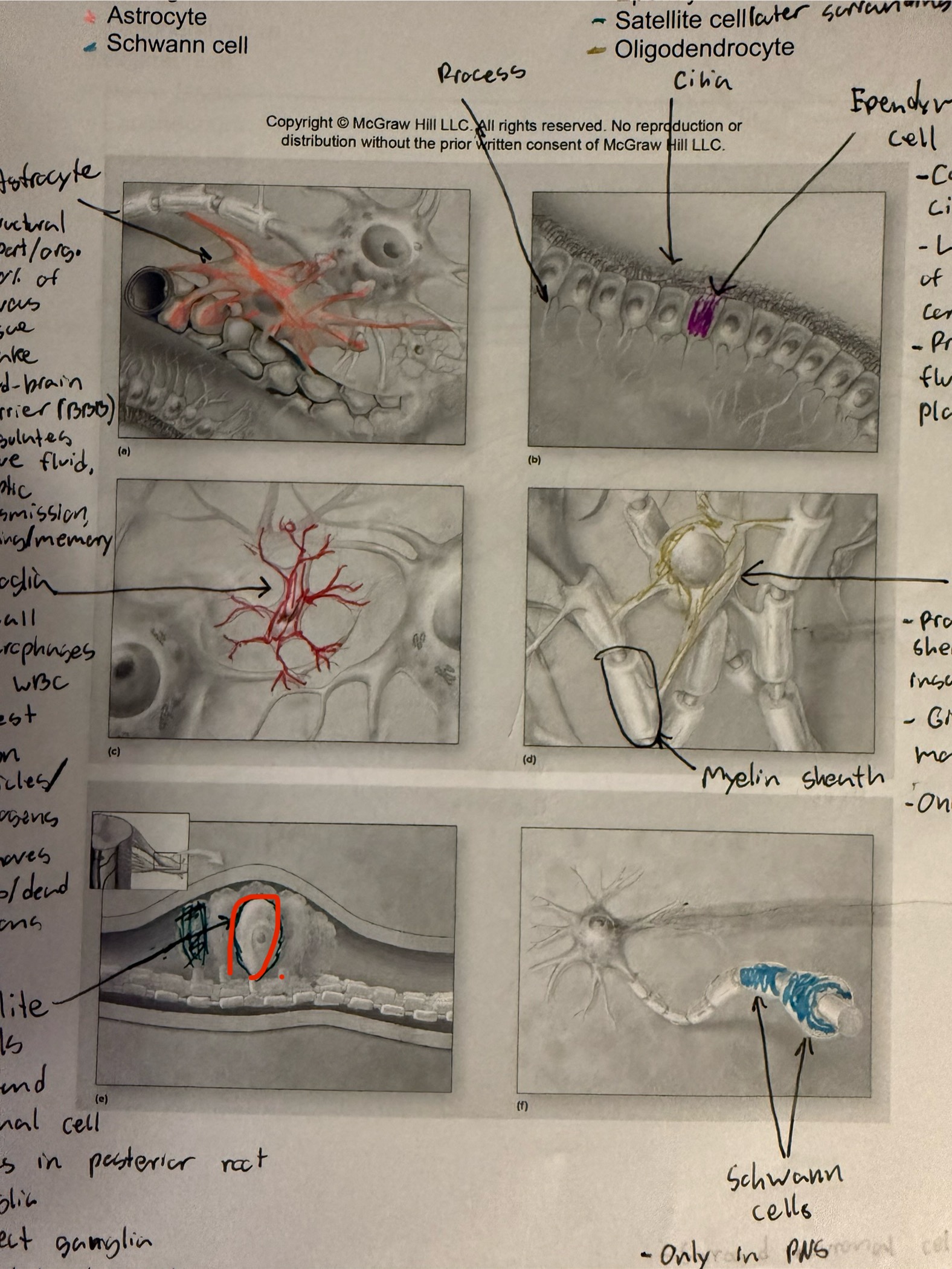
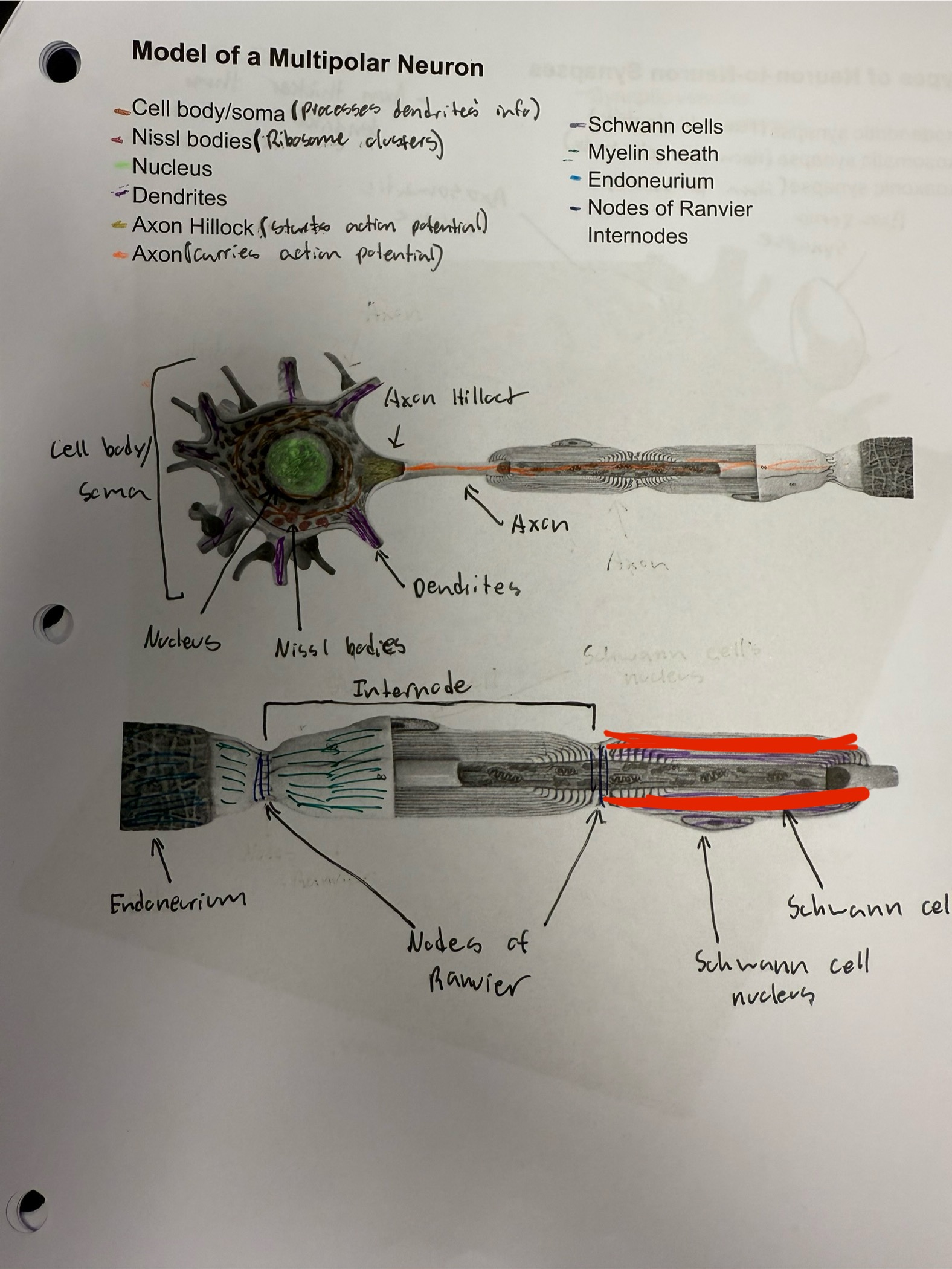
Schwann cell
Glial cell
Makes myelin sheath in PNS
Can myeline one axons at a time, covered some axons in CNS
Speeds up electrical signaling by allowing saltatory conduction
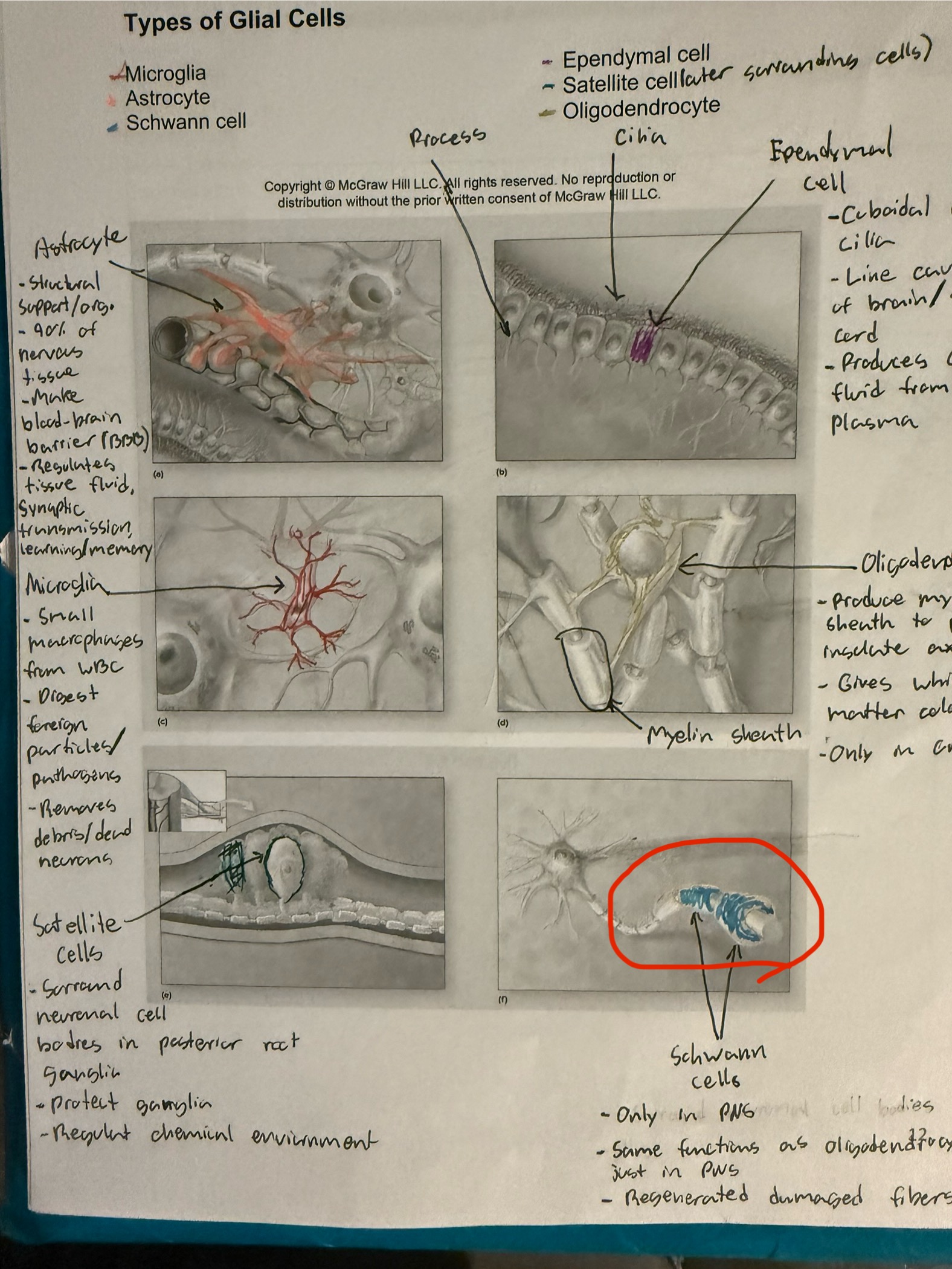
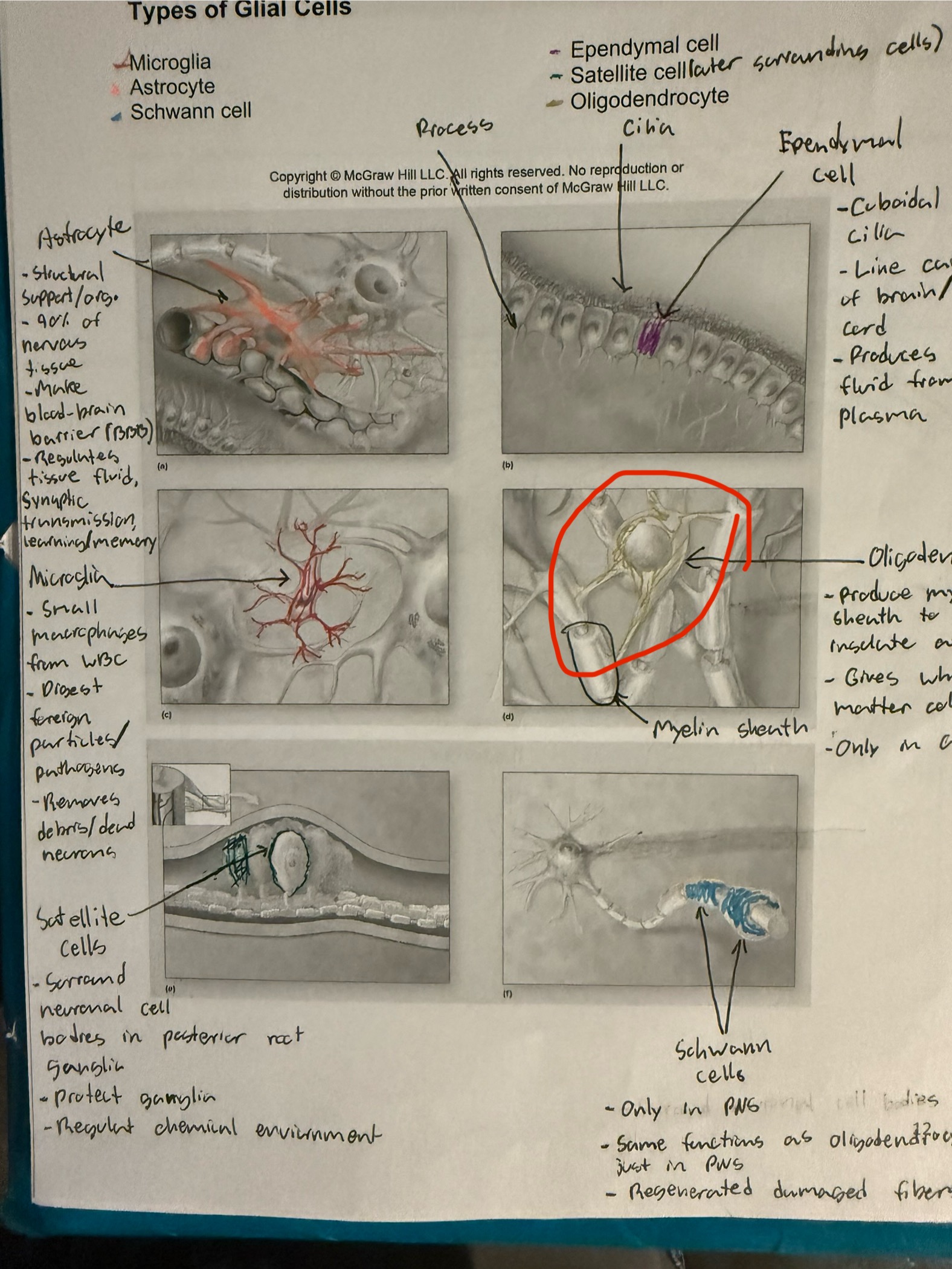
Oligodendrocyte
Glial cell
Creates myelin sheath around axon of CNS
Can myeline multiple axons at once, covered every single axon in CNS
Causes white appearance of white matter
Speeds up electrical signaling
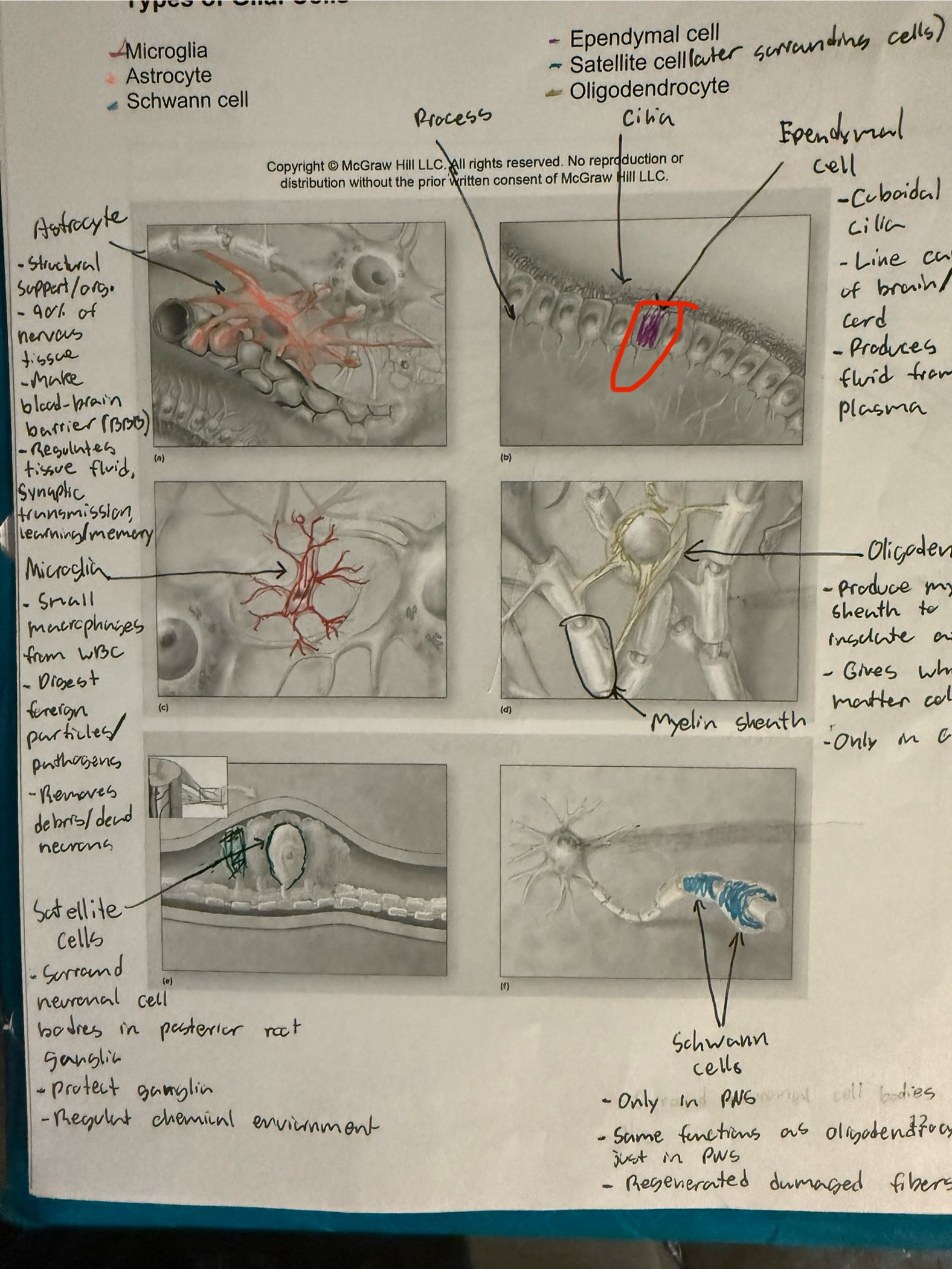
Ependymal cell
Glial cell
Cuboidal cell with cilia
Lines cavities of brain and spinal cord
Produces ceribrosponal fluid from blood plasma
Terminal arborization/
Telodendria
Branching part of an axon that protrudes from the end of the axon
Looks like tree branches
Synaptic bulbs held and end of telodendria
Parasympathetic division
Relaxes the body and promotes recovery
Has control of autonomic functions such as digestion
Sympathetic division
Prepares body for fight or flight situations
Controls autonomic responses like increased heart rate, dilated pupils, and energy mobilization
Electrical synaps
Membranes held together by gap junction
Two way signaling
Found in smooth cells, intercalated discs, some CNS neurons
Chemical synaps
Membranes not joint together by anything
Most common in body
Membranes held together by gap junction
One way signaling
Choroid plexus
Made of ependymal cells
Where CSF is produced
Saltatory conduction
Fast conduction in myelinated axon than non-myelinated axon and bigger diameter
Electrical impulses bounce from one gap in myelin sheath to the other
Takes less ATP than continuous
Type A: Conducts to skeletal muscles in limbs
Type B: Sensory axons from organs to CNS
Continuous conduction
Slower conduction in non-myelinated axon than myelinated axon and smaller diameter
Electrical impulses travels down whole axon
Takes more ATP than saltory
Type C: Sensory axons conducting pain as well as some pressure and cold
Cycle at chemical synapse
Step 1: Action potential in presynaptic cell opens Ca++ channels in synaptic bulb
Step 2: Ca++ influx causes synaptic vesicles to fuse to presynaptic membrane
Step 3: Synaptic vesicles release neurotransmitter
Step 4: Neurotransmitter diffusion across synaptic cleft
Step 5: Neurotransmitter binds to receptor in postsynaptic cell
Step 6: Stimulation or inhibition of postsynaptic cell
Step 7: Termination of synaptic transmission