Lenses and magnification: Waves in matter: Physics: GCSE (9:1)
 Call Kai
 Learn
Learn Practice Test
 Spaced Repetition
 Match
Match Flashcards
 Knowt Play
1/15

There's no tags or description
Looks like no tags are added yet.
Name | Mastery | Learn | Test | Matching | Spaced | Call with Kai |
|---|
No analytics yet
Send a link to your students to track their progress
16 Terms
Lens
A shaped piece of transparent glass or plastic that forms an image by refracting light

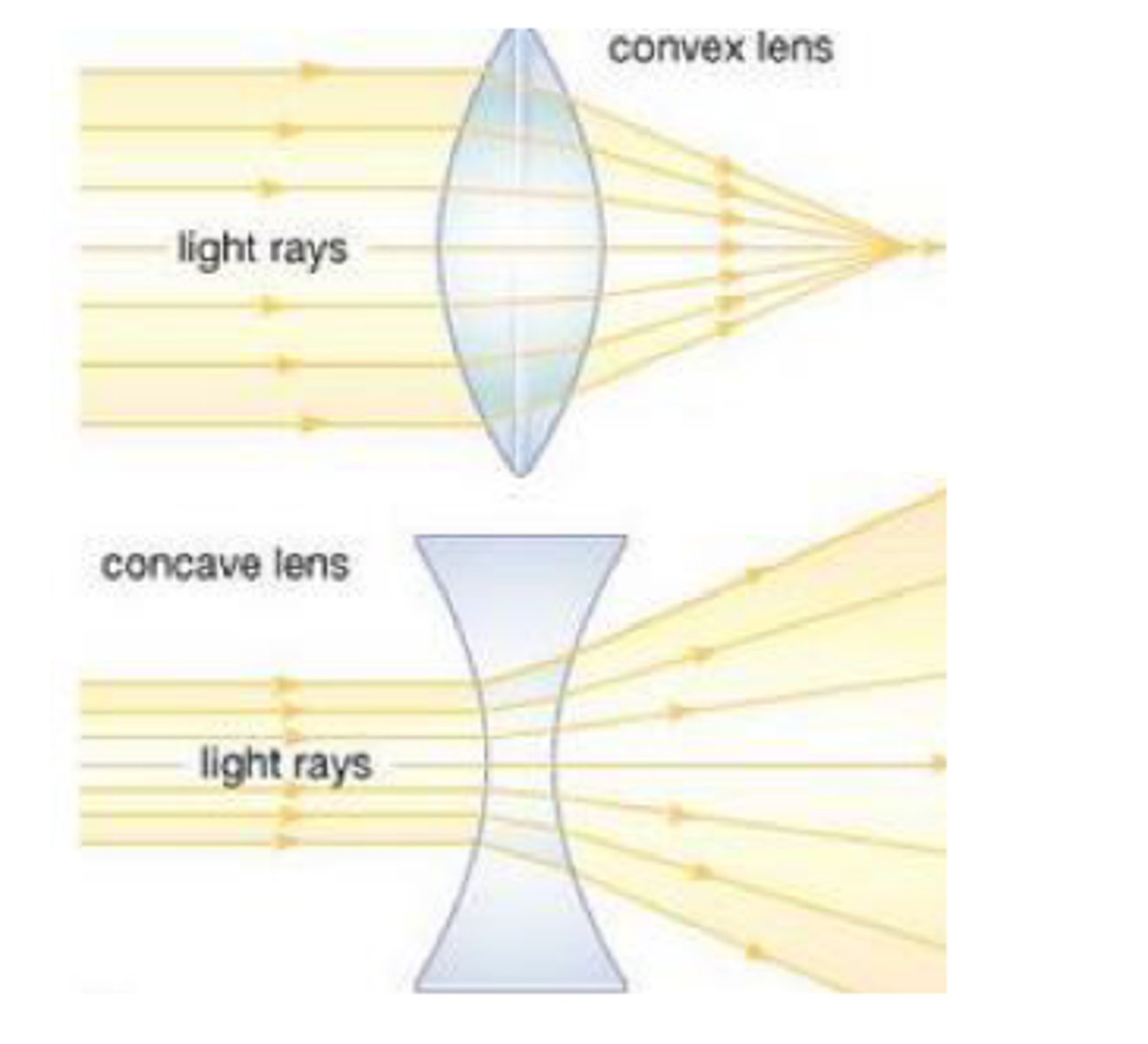
Convex (converging) lens
A lens that is thicker in the middle than it is at the edges and causes light rays to converge
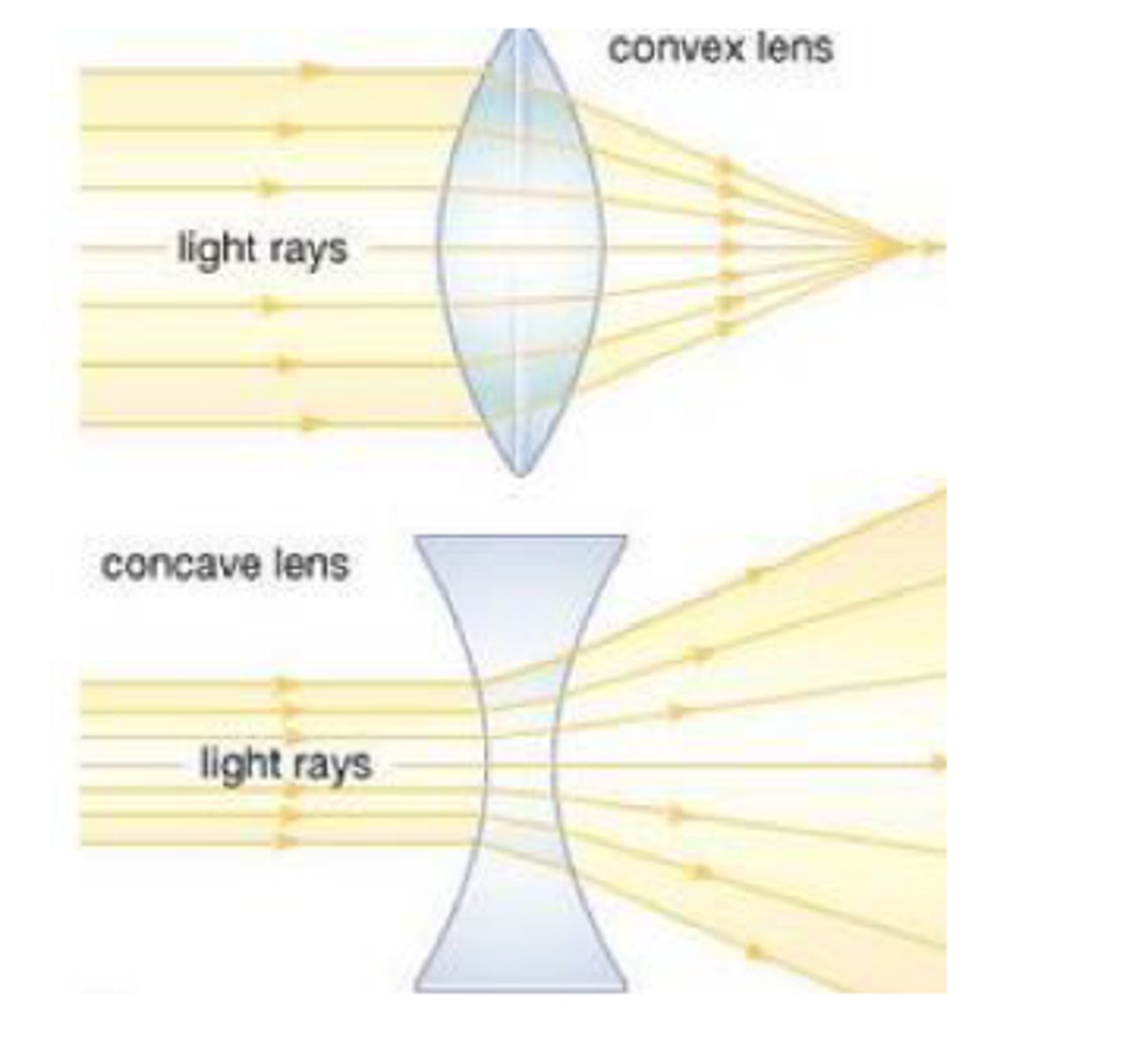
Concave (diverging) lens
A lens that is thinner in the middle than it is at the edges. and causes light rays to diverge
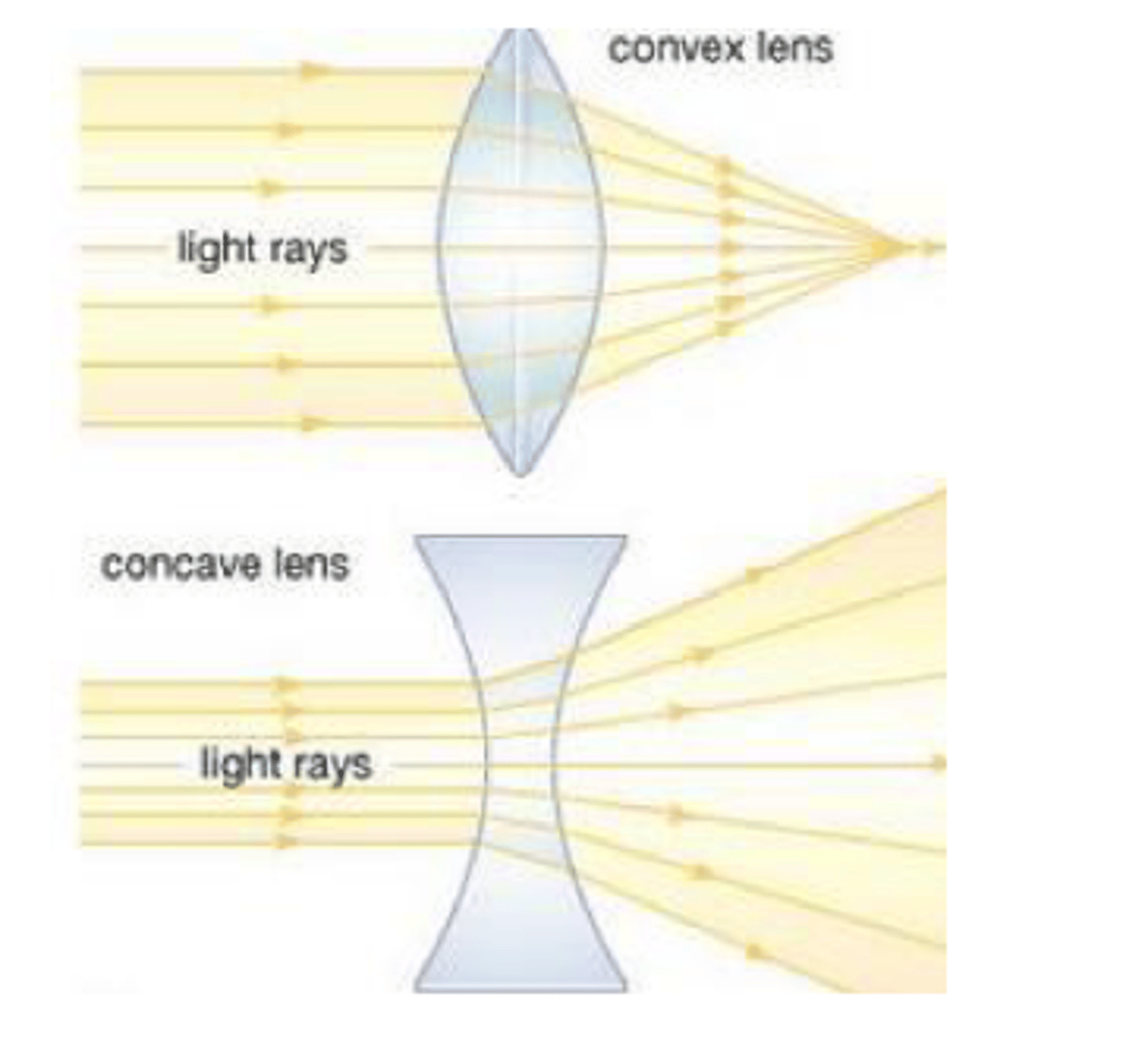
Converge
When light rays move together to meet at a common point
Diverge
When a light ray splits up or spreads out
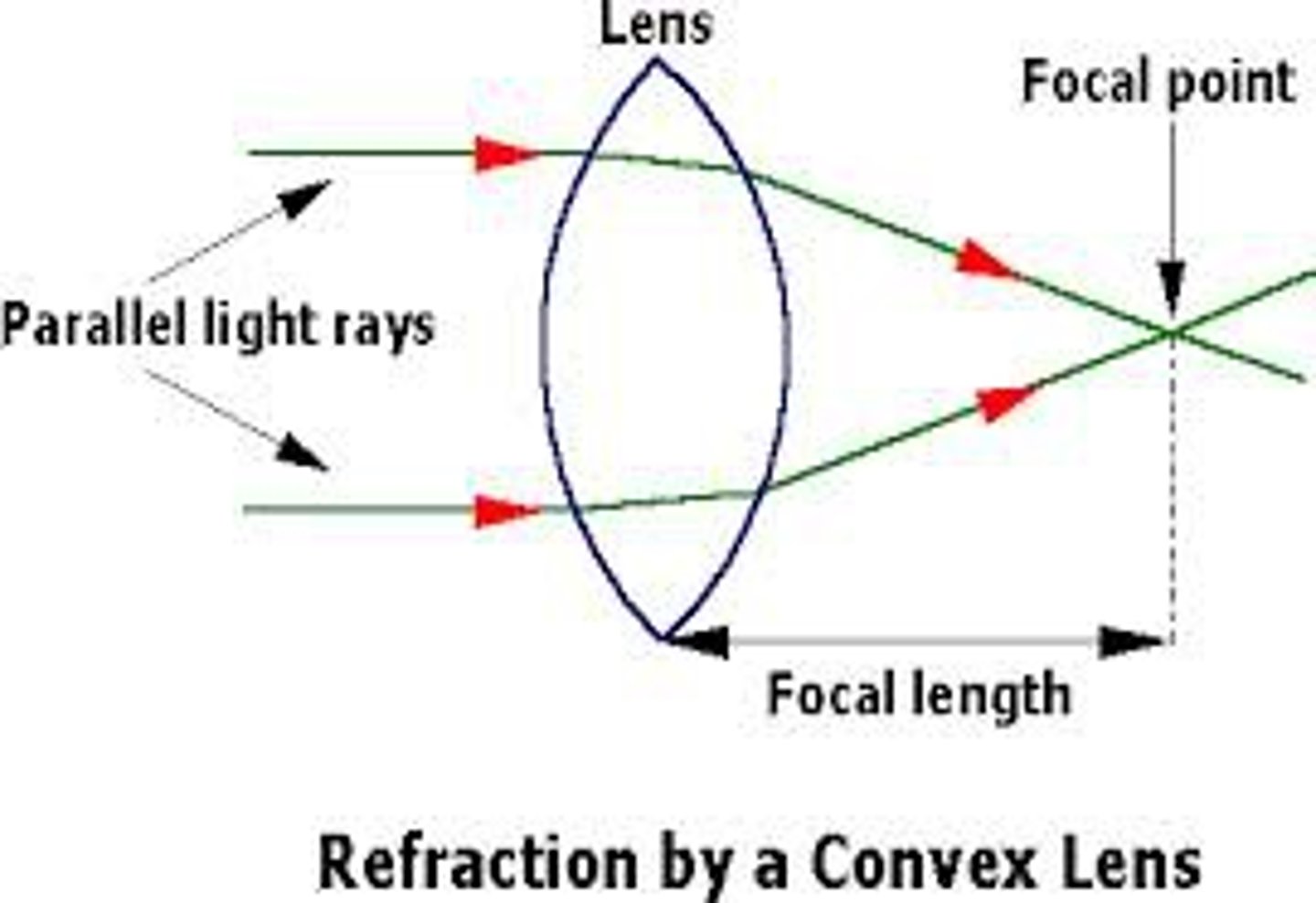
Principal focus (focal point)
The focus of a lens where light rays appear to converge or to diverge from
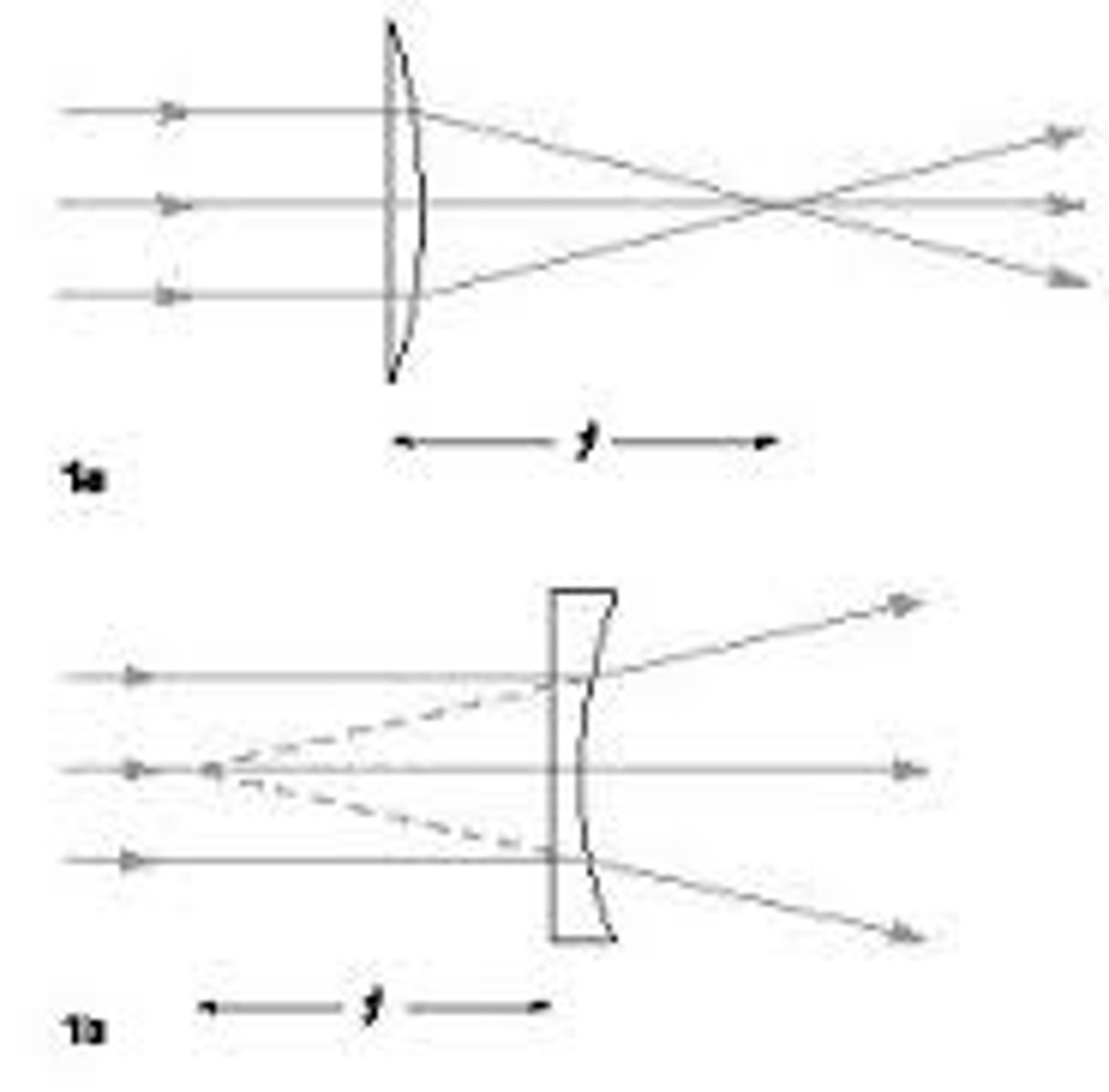
How a convex lens works
Parallel rays of light move together and are brought to a focus at the principal focus
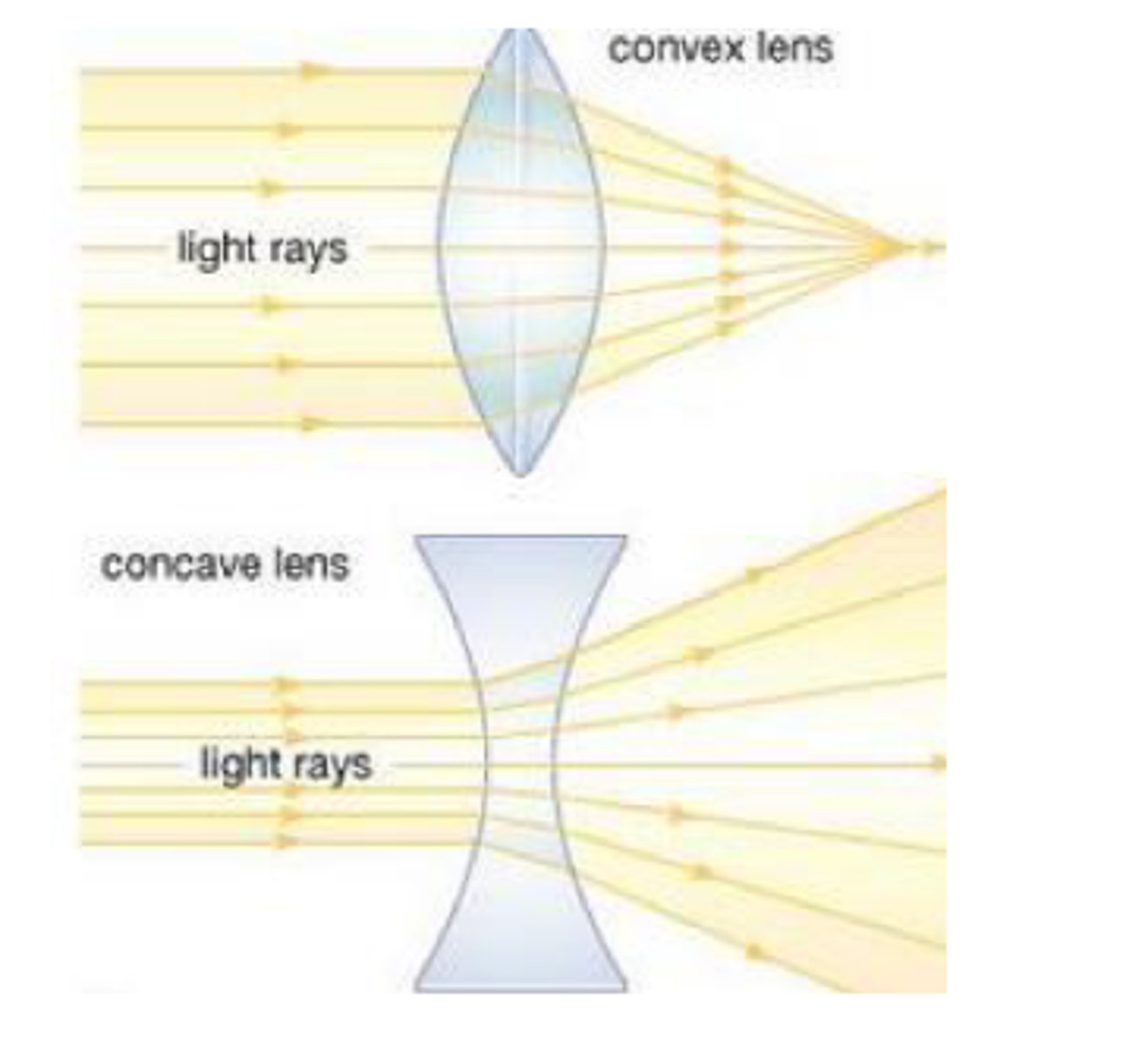
How a concave lens works
Parallel light rays spread out and separate but appear to come from a principle focus on the other side of the lens
Focal length
The distance from the lens to the principal focus
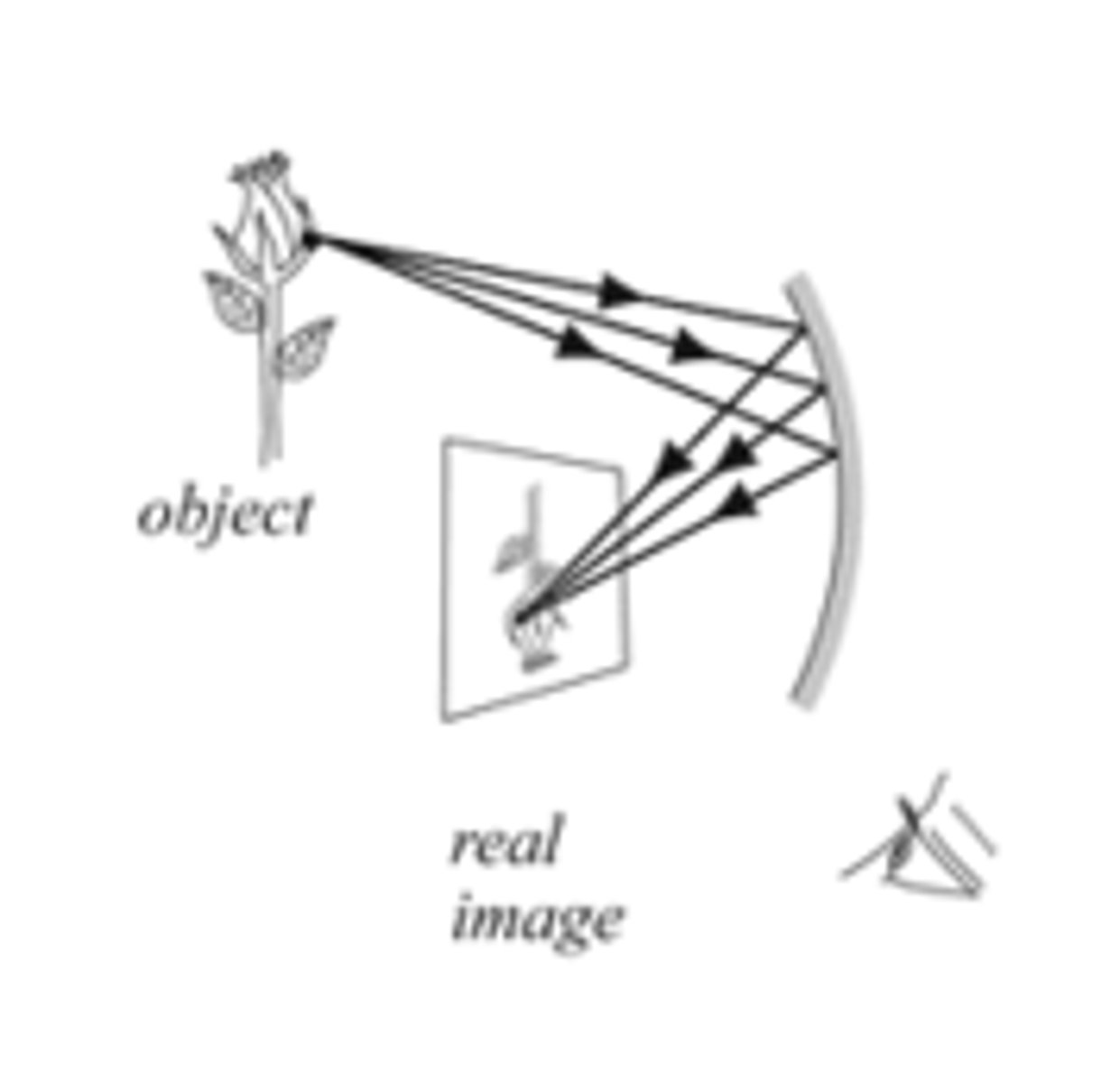
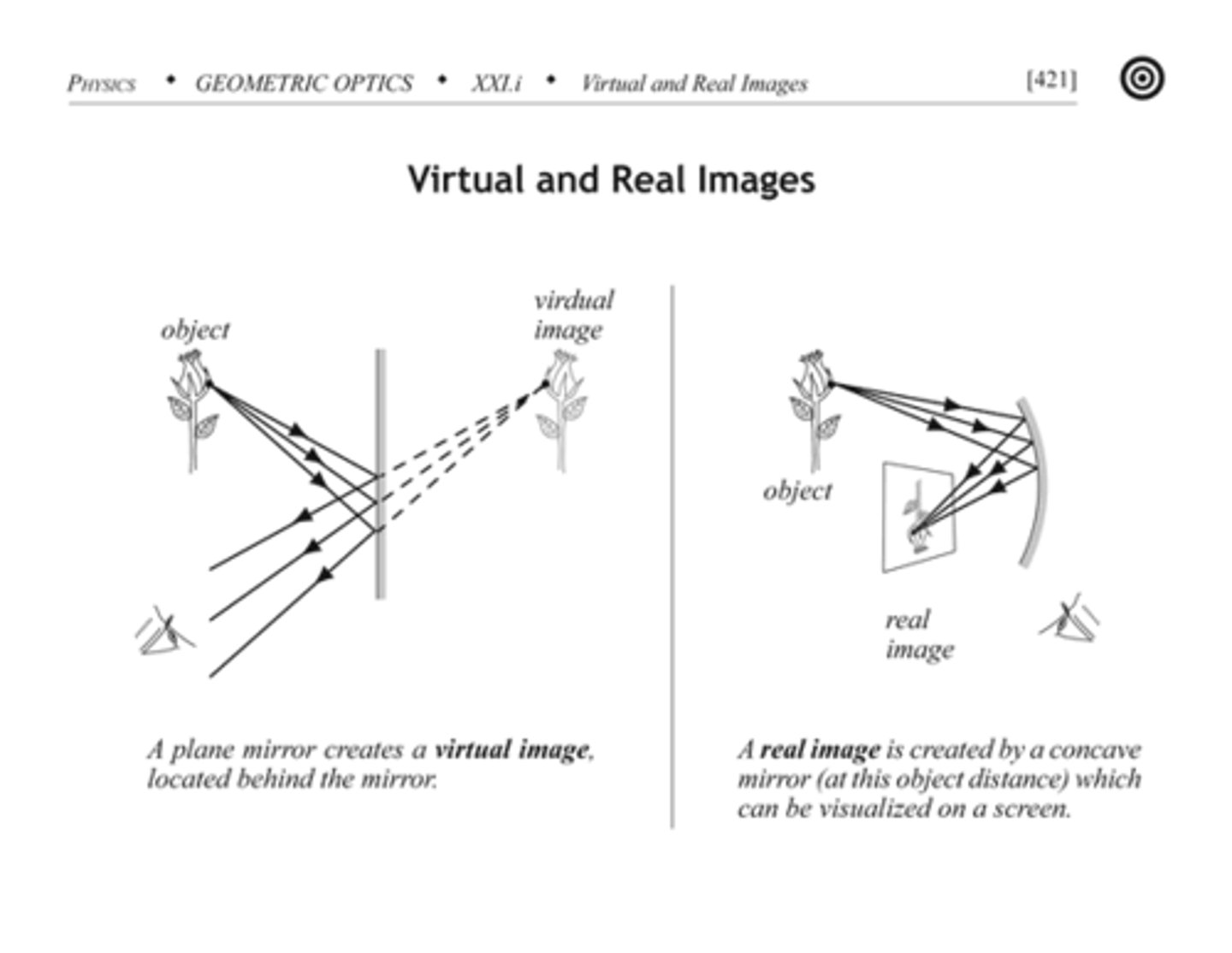
Real image
An image that can be projected onto a screen
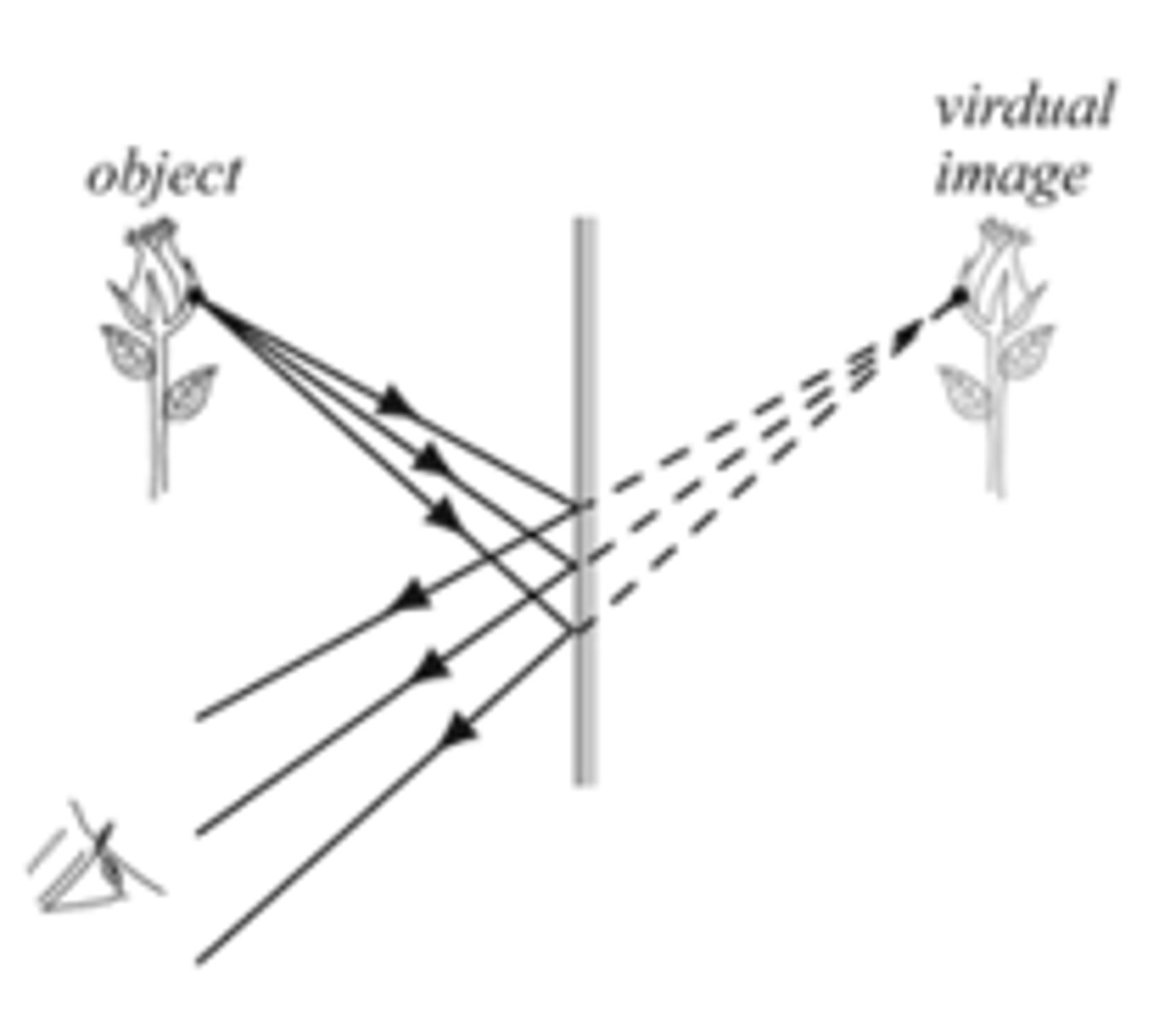
Virtual image
An image that appears to come from behind the lens
Type of image formed by convex lens
Real or virtual
Type of image formed by concave lens
Always virtual
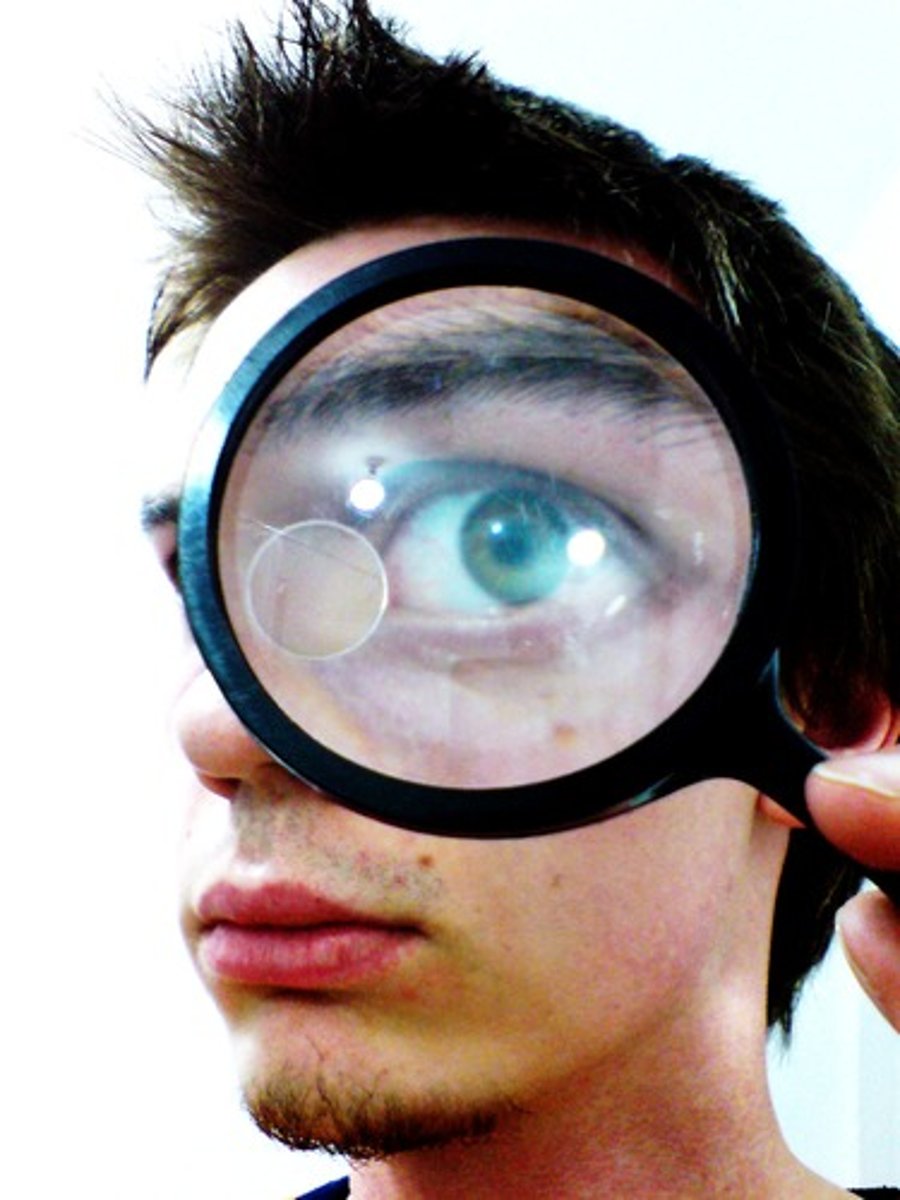
Magnification
A measure of the size of an image compared to the size of the object
Equation for magnification
magnification = image height / object height

Units for magnification
Magnification is a ratio so has no units but both heights should be measured using the same unit