Exam 2 Content
 Call Kai
 Learn
Learn Practice Test
 Spaced Repetition
 Match
Match Flashcards
 Knowt Play
1/66

There's no tags or description
Looks like no tags are added yet.
Name | Mastery | Learn | Test | Matching | Spaced | Call with Kai |
|---|
No analytics yet
Send a link to your students to track their progress
67 Terms
What’ the word for a regular heart rate?
rhythmic
Whats the word for an irregular heart rate?
arrhythmic
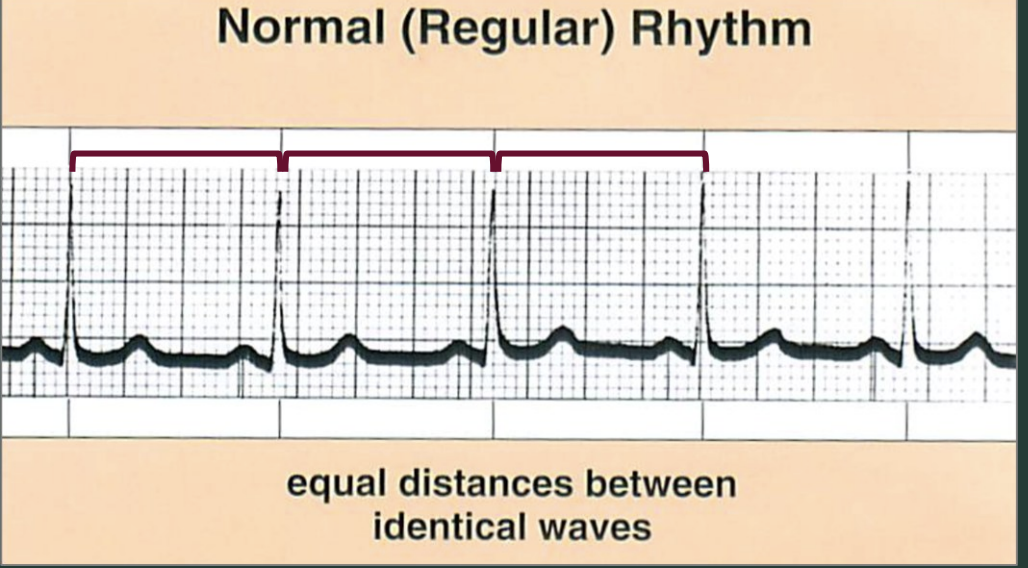
What is NSR and what is the pace?
normal sinus rhythm, 60-100 bpm
How do you tell on an ECG if the SAN is the pacemaker?
upright (+) P in lead I/II
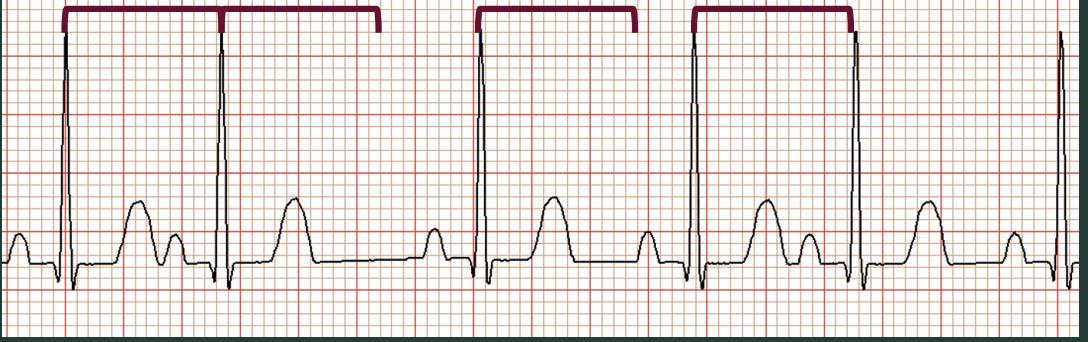
Identify this rythm?
sinus arrhythmia: because the SAN node is pacemaker (normal upright P), irregular HR
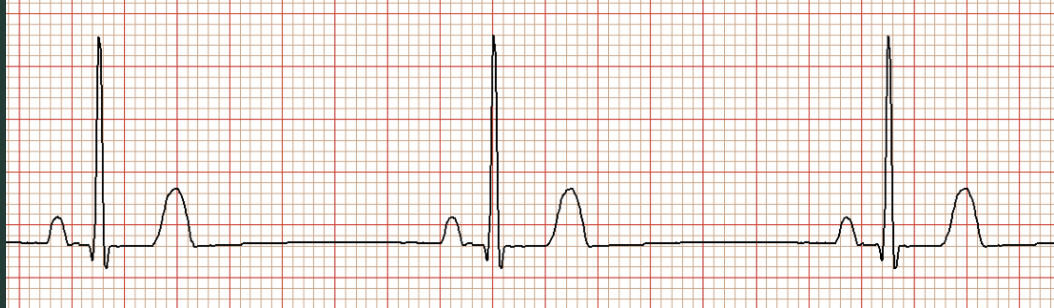
ID this rythm?
Sinus bradycardia: SAN pacemaker (normal upright P), regular HR, rate <60 bpm
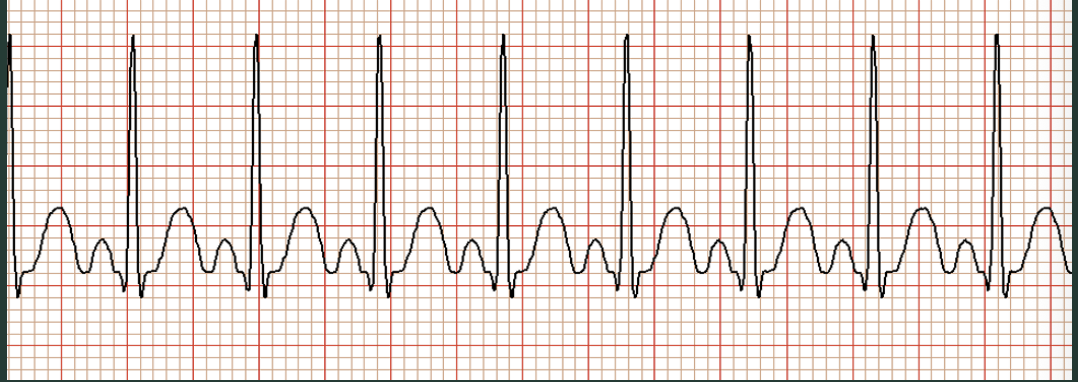
ID this rhythm?
sinus tachycardia: SAN pacemaker (normal upright P), regular rhythm, rate >100 bpm
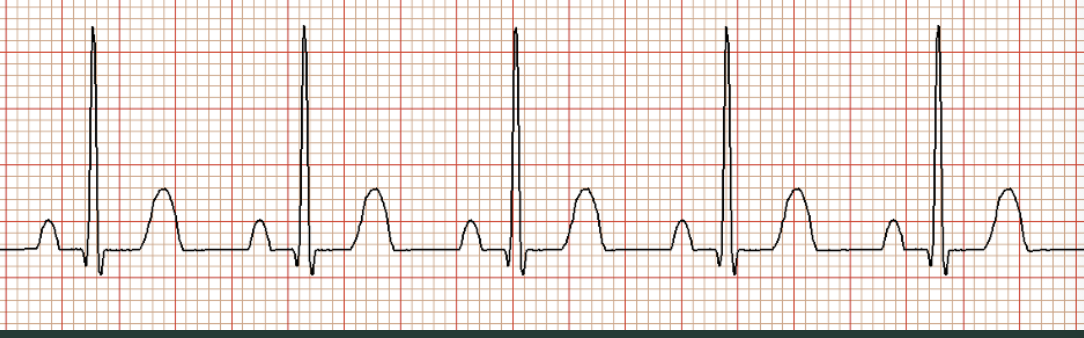
ID this rythm?
NSR: SAN pacemaker (normal upright P), regular rhythm, rate 60-100
Name the 3 regular sinus rhythms?
sinus tachycardia, NSR, sinus bradycardia
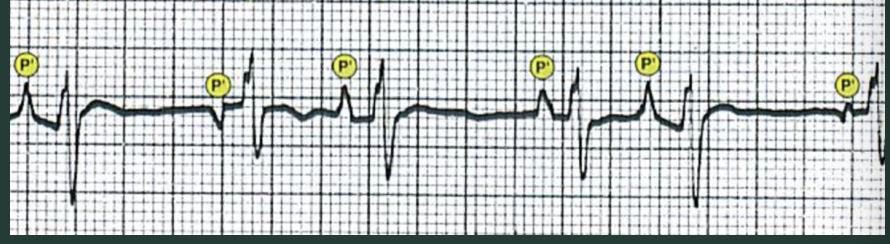
What are the traits of a wandering atrial pacemaker (WAP)?
multiple atrial AC’s, variable P wave morph., irregular, HR <100 bpm
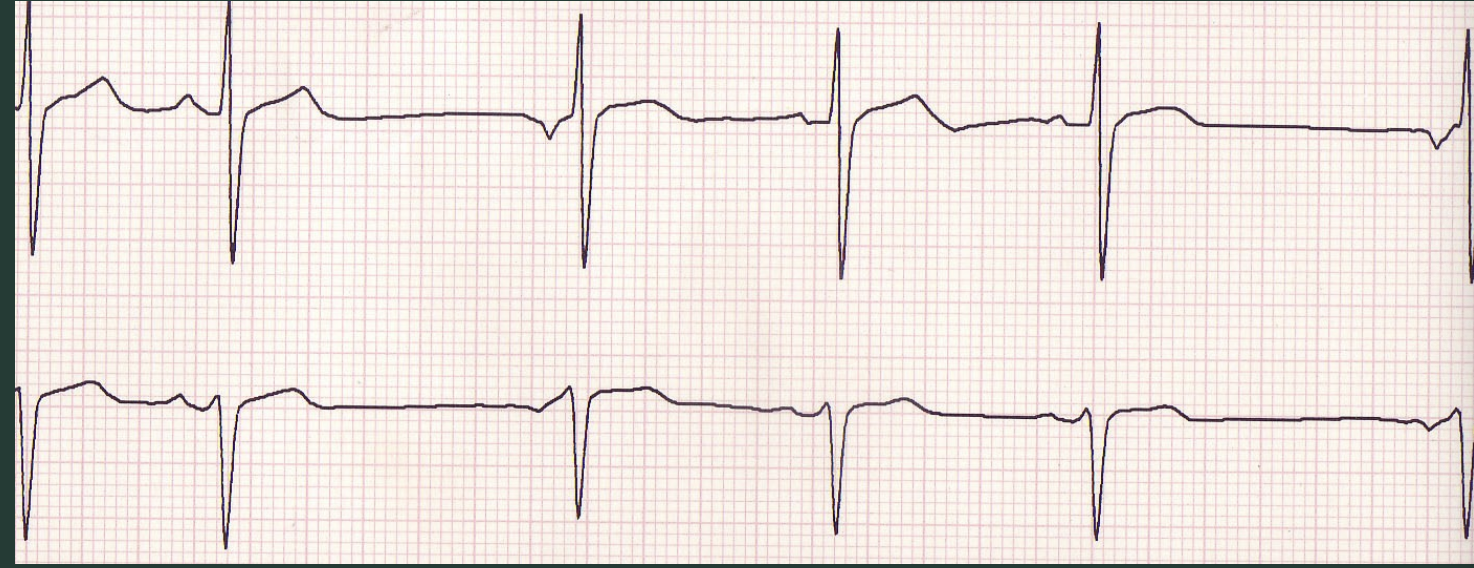
ID this rythm?
WAP
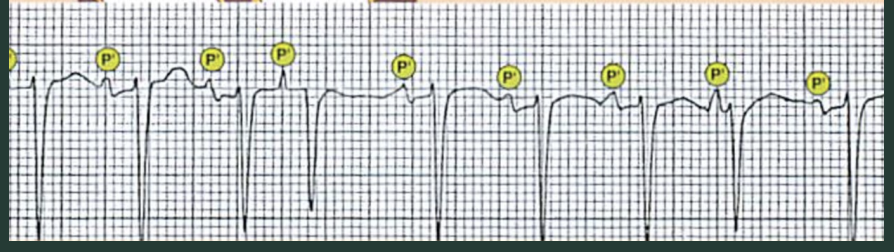
Name the traits of multifocal atrial tachycardia (MAT)?
multiple atrial AC’s, different P wave morphology, irregular, HR >100 bpm
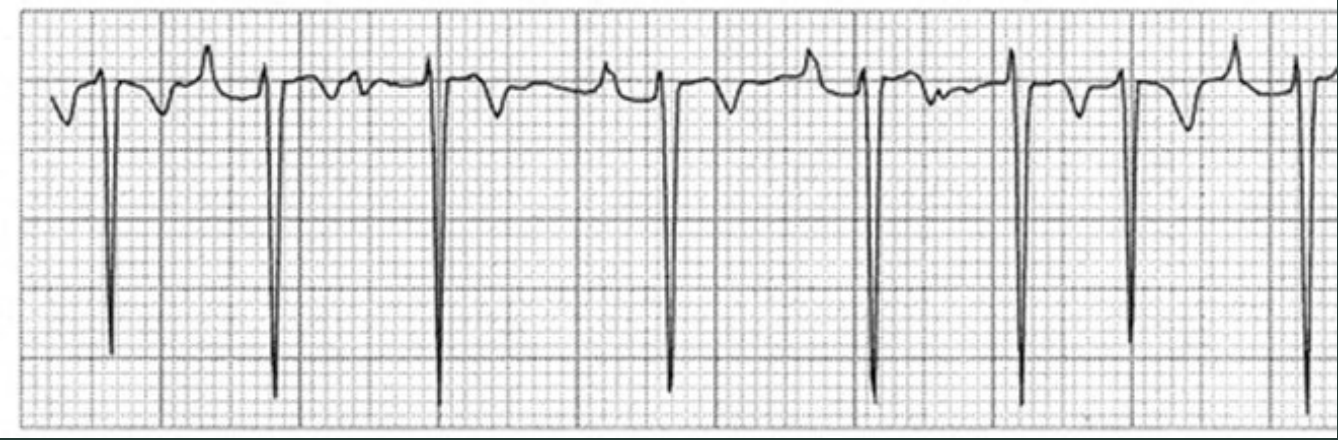
ID this rhythm?
MAT
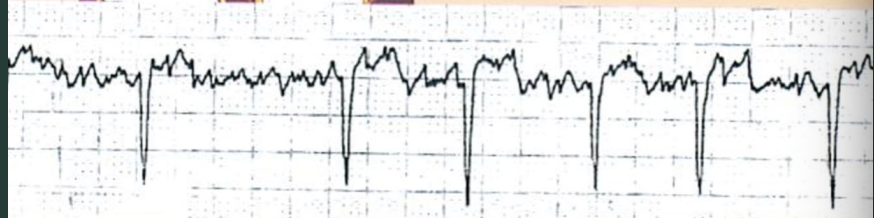
Name the traits of Atrial fibrillation?
multiple rapid AC’s, parasystolic (no overdrive suppression), no P waves (no contraction), irregular, normal QRS morph
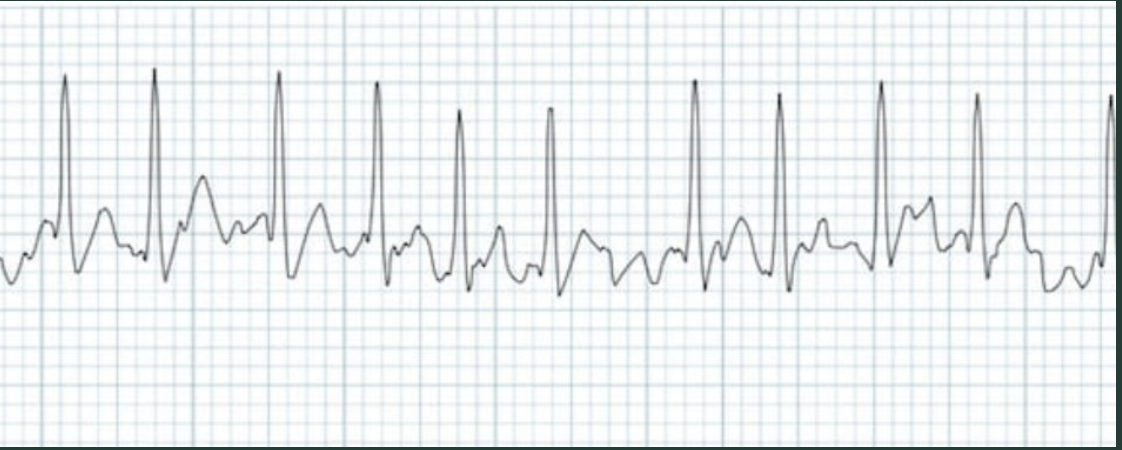
ID this rythm?
AFib: no visible p waves, irregular R-R, vent rate variable
Name the irregular rhythms?
atrial fibrillation (AFib), wandering atrial pacemaker (WAP), multifocal atrial tachycardia (MAT), sinus arrhythmia
What does escape mean in ECG?
normal response to pause
What’s an escape rhythm?
an automaticity focus escapes ODS to pace PACE at its inherent rate
What’s an escape beat?
an automaticity focus TRANSIENTLY escapes ODS to emit ONE BEAT
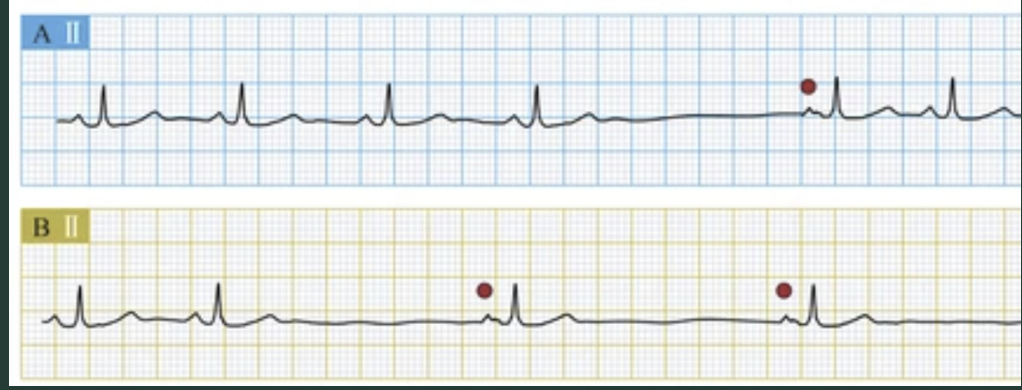
What two things are these ECG showing?
A: escape beat (P’ after pause, lower rate but only one).
B: Escape rhythm: (multiple P’ after pause, lower rate)
Inherent rate of an atrial escape ryhtm?
60-80 bpm
Inherent rate of junctional escape rythm?
40-60 bpm
Inherent rate of ventricular escape rhythm?
20-40 bpm
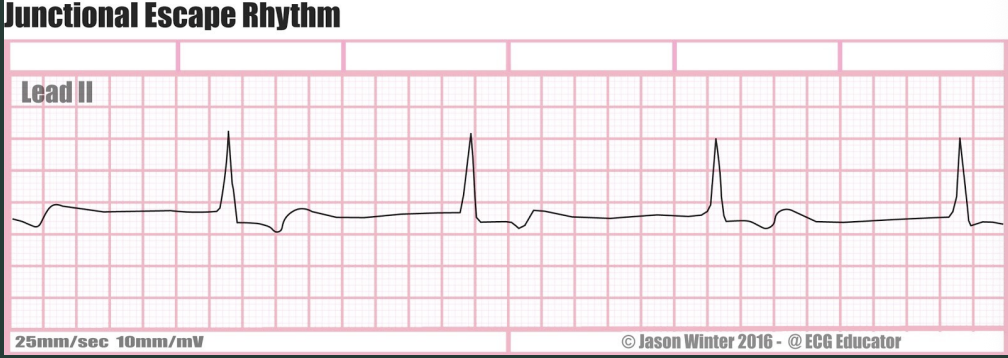
What’s characteristic of a junctional escape rythm?
no Ps
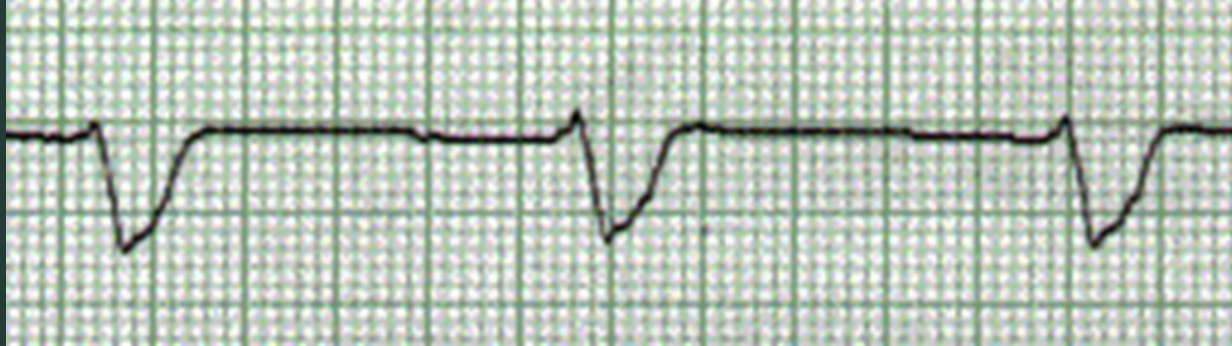
What’s characteristic of a ventricular escape rhythm?
no Ps and a wide QRS
What is a sinus block?
a missed/dropped beat, pause…ODS lost, then allows for an escape
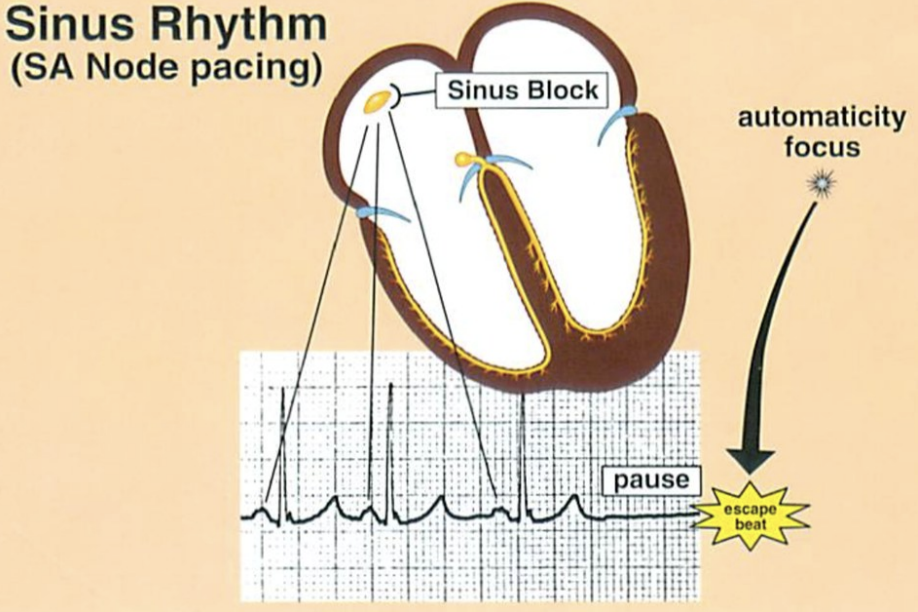
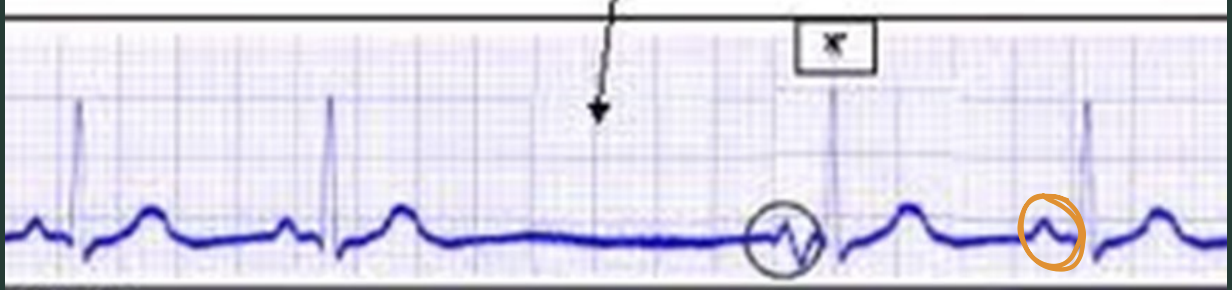
What does this ECG show?
atrial escape beat: sinus block/pause, then an atrial escape beat (P’) then a return back to NSR
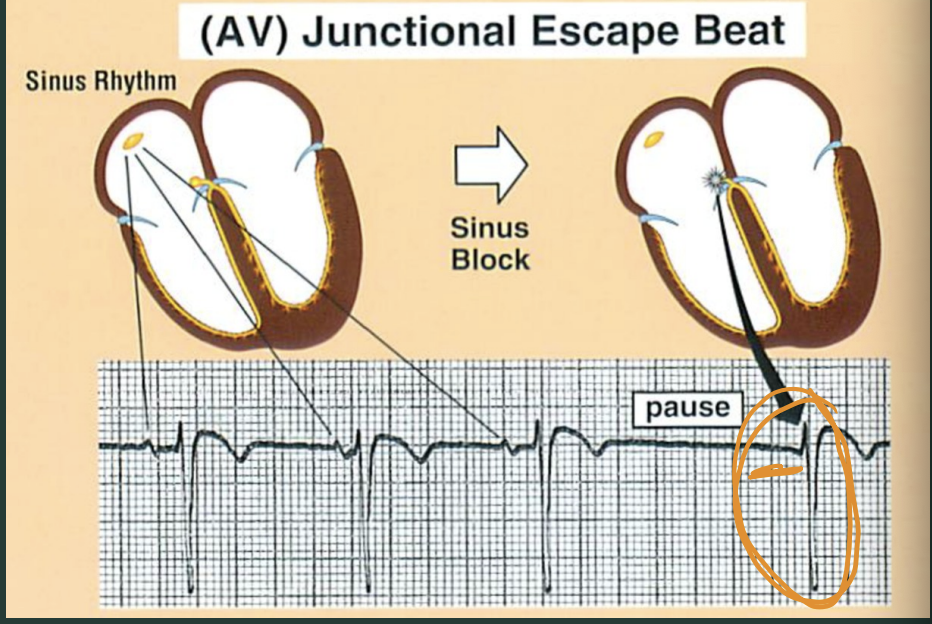
What’s a junctional escape beat?
sinus block, missed/dropped beat, pause, escape beat with no P and narrow QRS
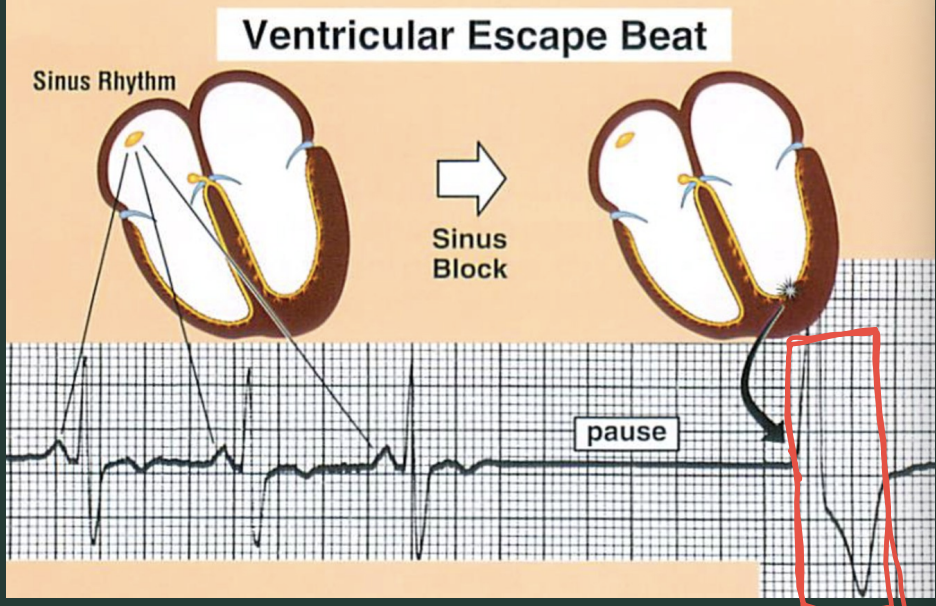
What’s a ventricular escape beat?
sinus block, missed/dropped beat, pause, escape beat with no P/P’ and a wide QRS
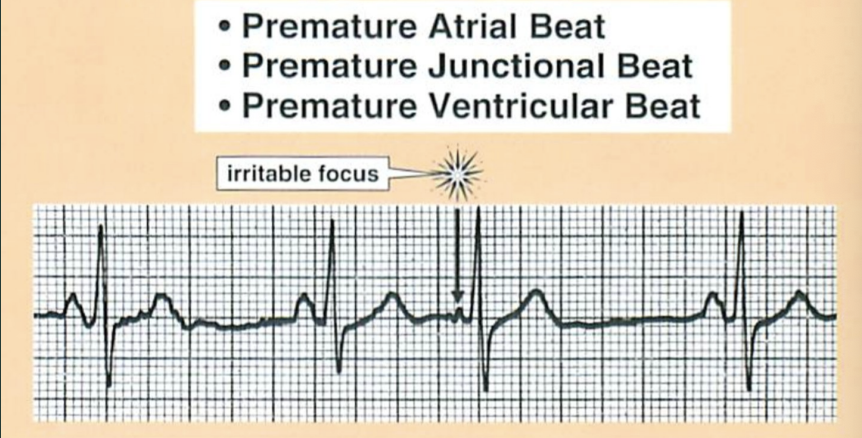
What’s a premature beat?
An irritable focus spontaneously fires a single stimulus
What does irritability mean in ECG?
increased inherent rate
What causes atrial and junctional foci irritability?
SNS outflow (NE), hormones (E), Exog subst (caffeine, drugs, toxins, etc)
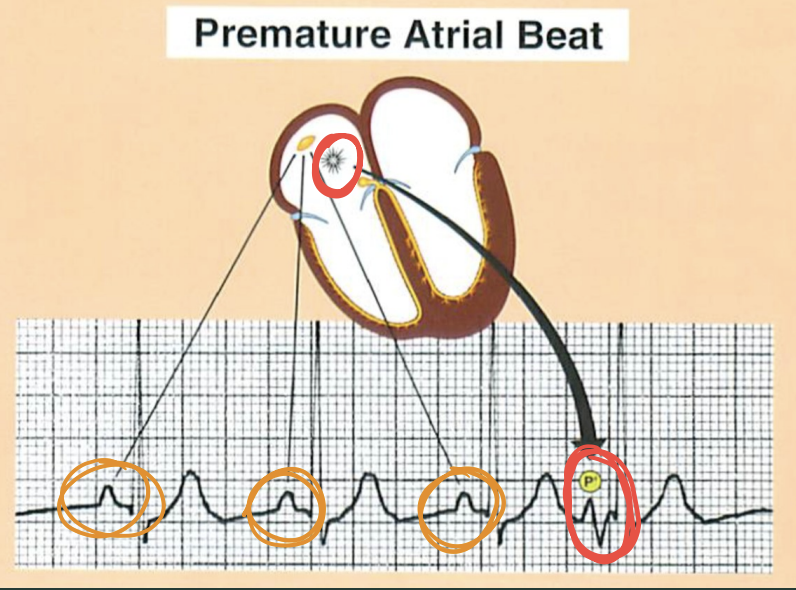
What makes this a PAB?
early P’ then back to a normal SAN cycle
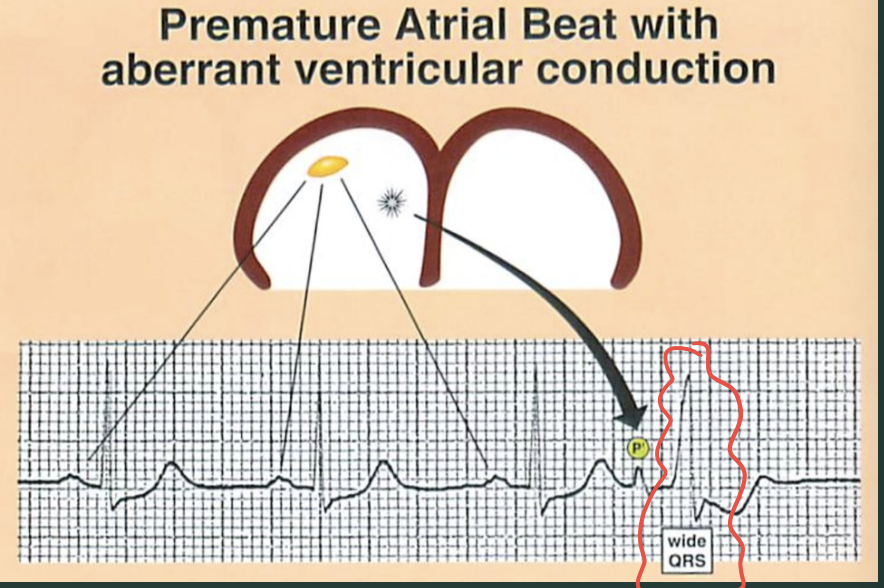
What’s PAB/PAC with aberrant vent conduction?
incomplete repol of BB (one still refractory), wide QRS
What’s a non-conducted PAB/PAC?
incomplete repol of 2 BBs (AVN still refractory), no QRS
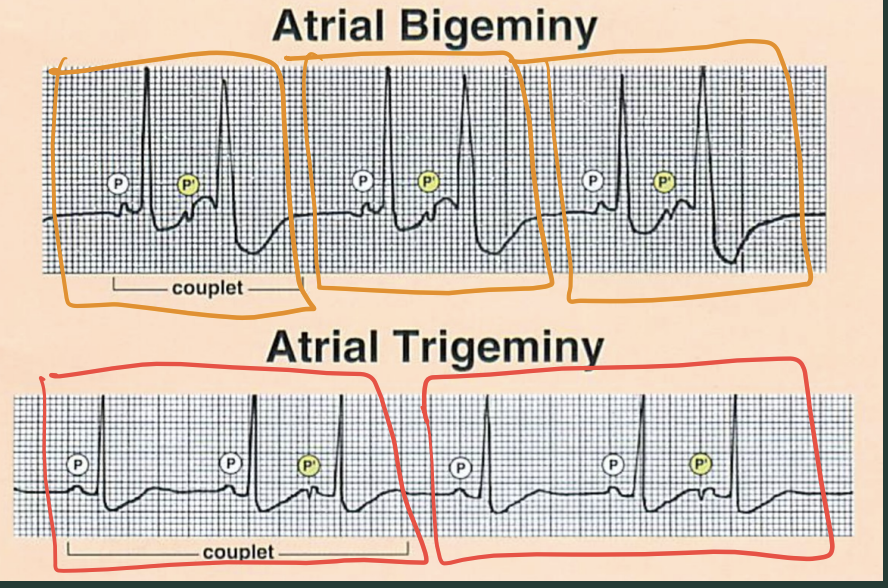
What are the repeating patterns of PAB’s?
bigeminy (1 normal/1 PAB), trigeminy (2 normal/1 PAB)
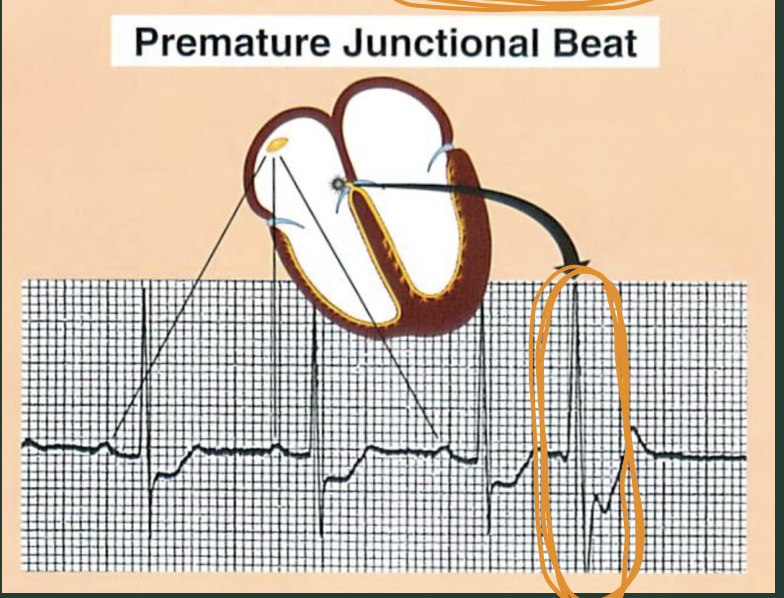
What makes this a PJB?
early beat with narrow QRS complex
What causes premature ventricular beats?
↓PO2 → ↑ vent irritability
↓K+ / Mitral Valve Prolapse → ↑ vent irritability
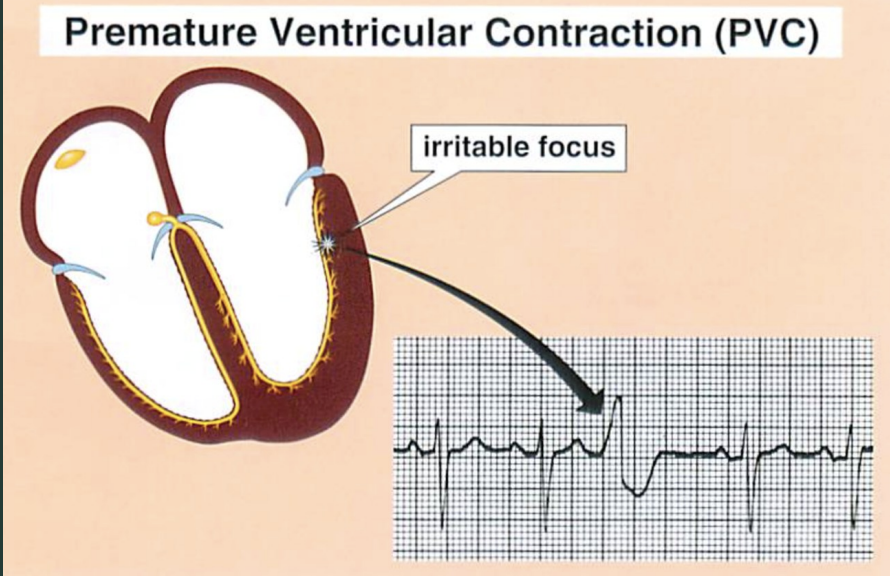
What makes this a PVC?
wide QRS early in the cycle with no SAN reset
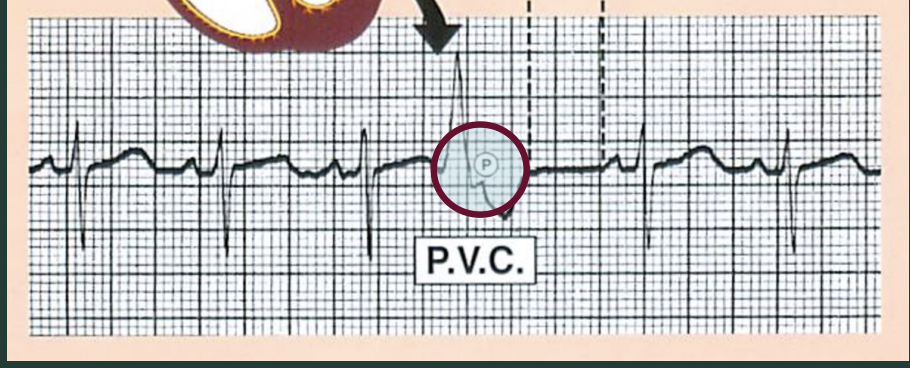
What are the dotted lines showing?
compensatory pause, result of nl refractory period
What is ,multiple PVCs >6.im indicative of?
pathological, stop a stress test (low PO2)
What is the name for 3+ consecutive PVCs? What about when they last >30 sec?
3+ = run of PVC = VT.
>30 sec = sustained VT
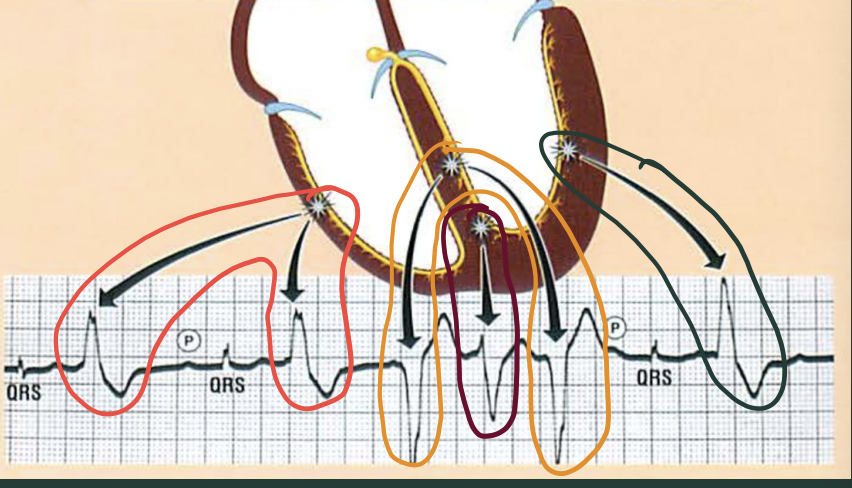
What are multifocal PVC’s?
each focus produces a unique PVC
Why do multifocal PVCs indicate a global/systemic problem rather than a local one?
multiple different ectopic foci across the ventricles are firing simultaneously, can't be explained by one irritable spot
What are the two main causes of multifocal hypoxia?
very low K+ and diffuse cardiac hypoxia
What are the three categories of tachy-arrhythmias?
paroxysmal tachycardia, flutter, fibrillation
What are tachy-arrythmias?
rapid rhythms originating in very irritable automaticity foci
What is paroxysmal tachy?
sudden onset of very irritable automaticity focus at a rate of 150-250
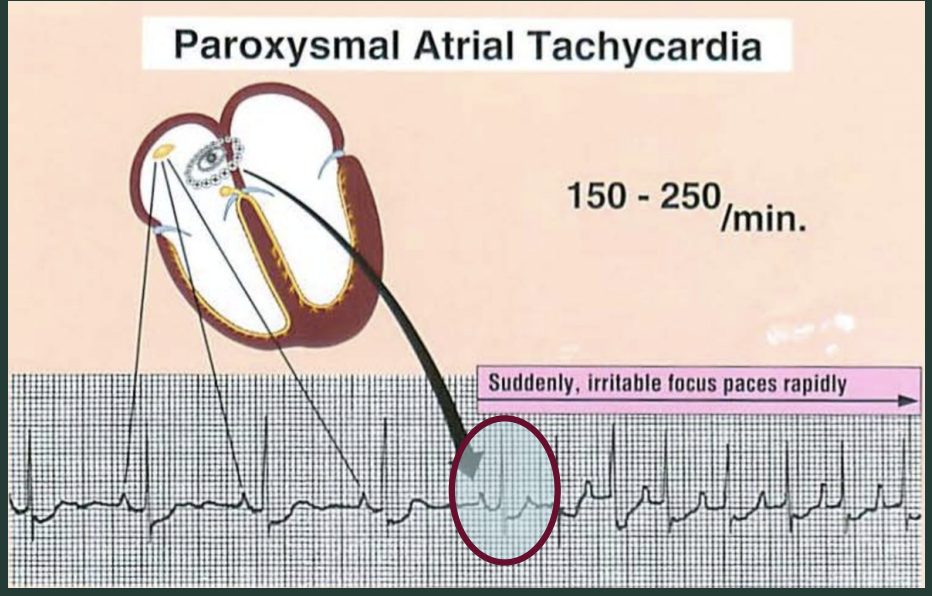
What defines PAT?
sudden/irritable/150-250, P’ (alt atrial AC), normal QRS
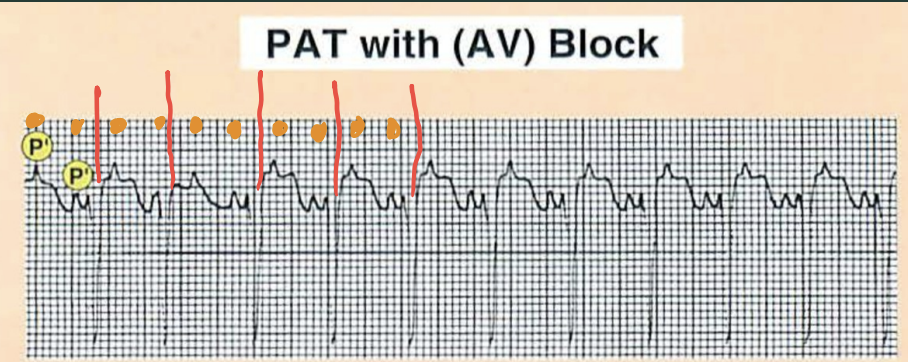
What is different about a PAT with block?
2:1 conduction ratio of P’ to QRS
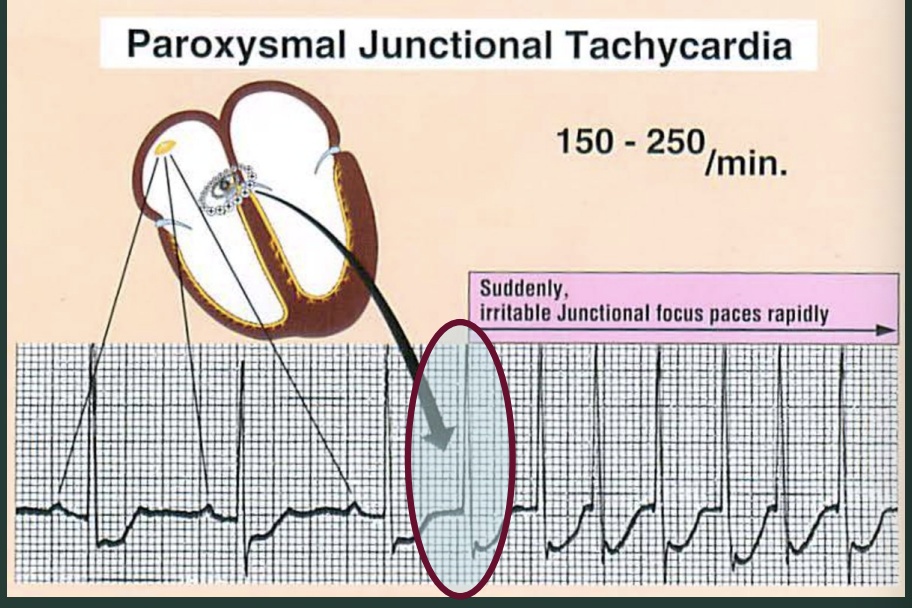
What defines PJT?
sudden/ irritable/ 150-250, no P/P’, normal (narrow) QRS
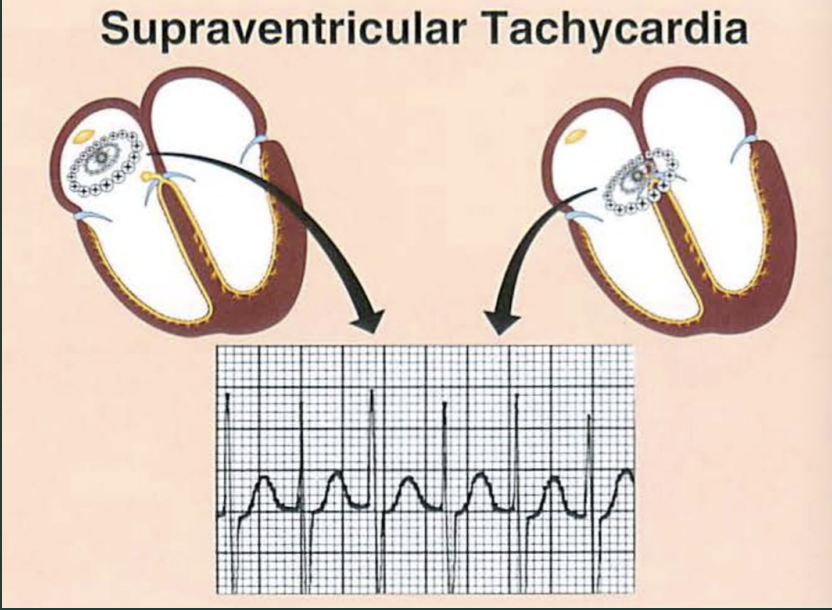
What defines PSVT/SVT?
sudden/ irritable/ 150-250, “narrow complex tachy”, originates above ventricles (normal QRS), umbrulla term thate ncompasses PAT and PJT
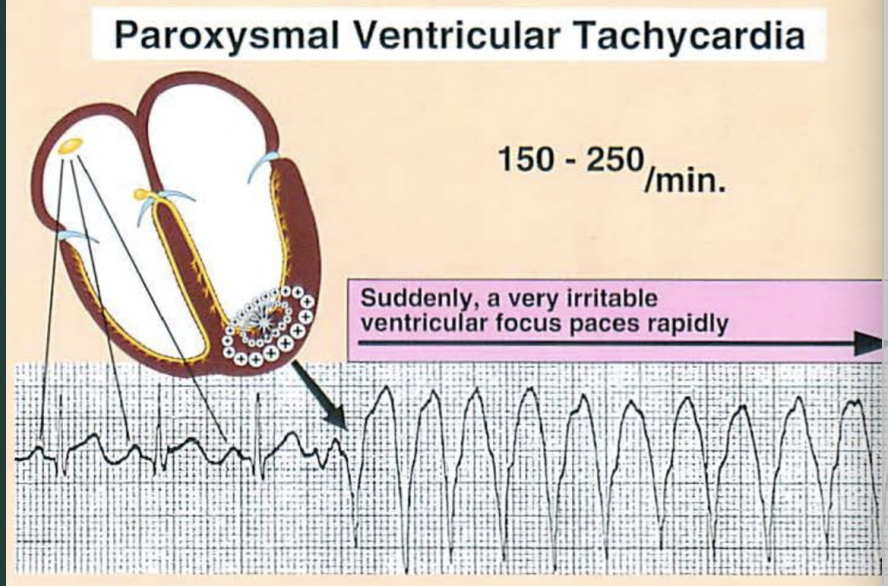
What defines PVTs?
sudden/irritable, 150-250, wide QRS, runs of PVCs,
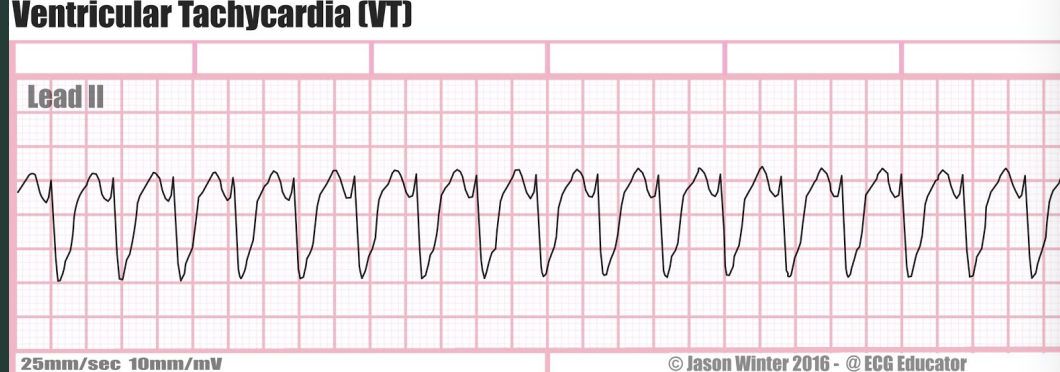
What defines ventricular tachy (VT)?
sudden, irritable, 150-250, wide QRS
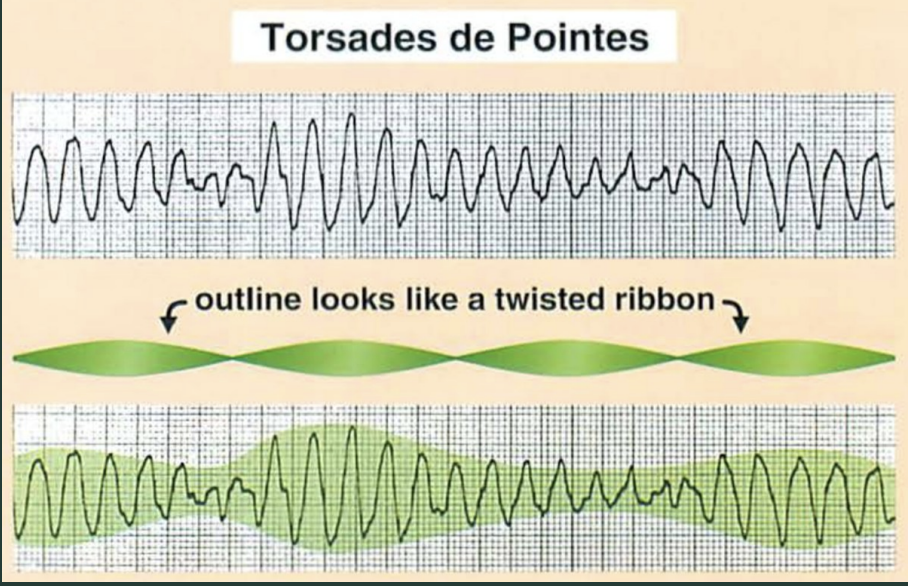
What defines torsades de pointes?
rapid VT (250-350) and polymorphic (difference in amplitude)
What rate do tachy-arrhythmia flutters occur at?
250-350
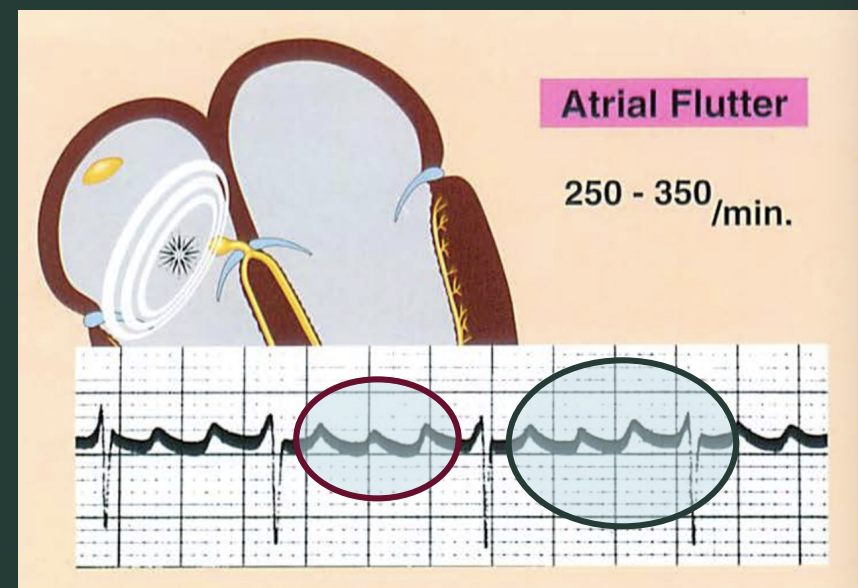
What defines an atrial flutter?
rate 250-350, “saw-tooth P waves), normal QRS, regular, 3/2:1 conduction (atria to ventricles)
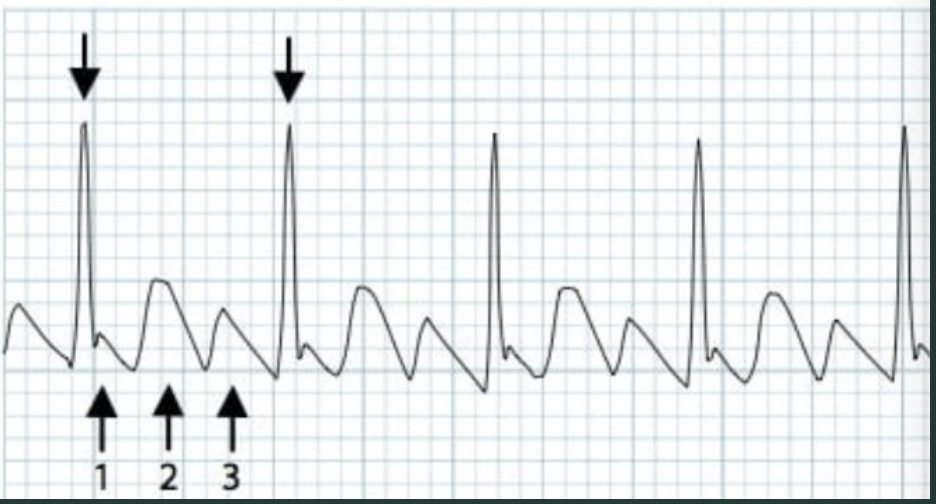
What does this ECG depict?
Atrial Flutter: rate 250-350, saw tooth, 3:1 conduction
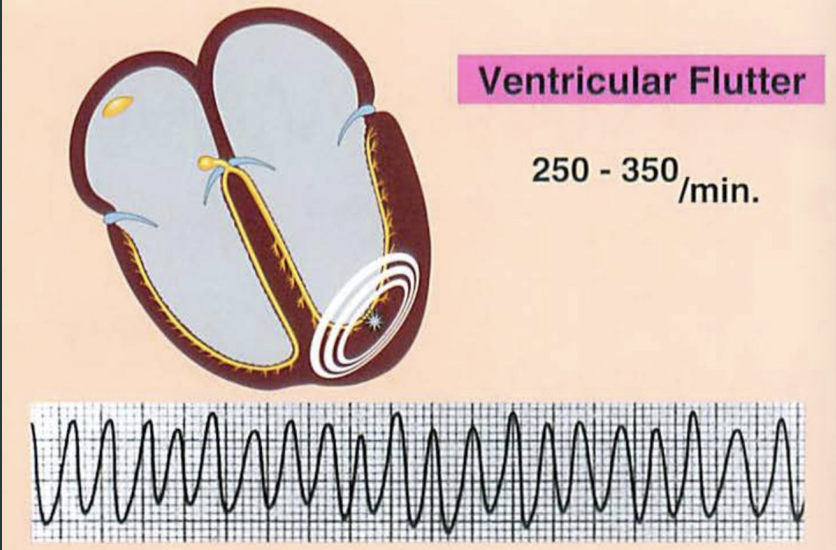
What defines a ventricular flutter?
rate 250-350, “sine wave” (smooth), stable amplitude
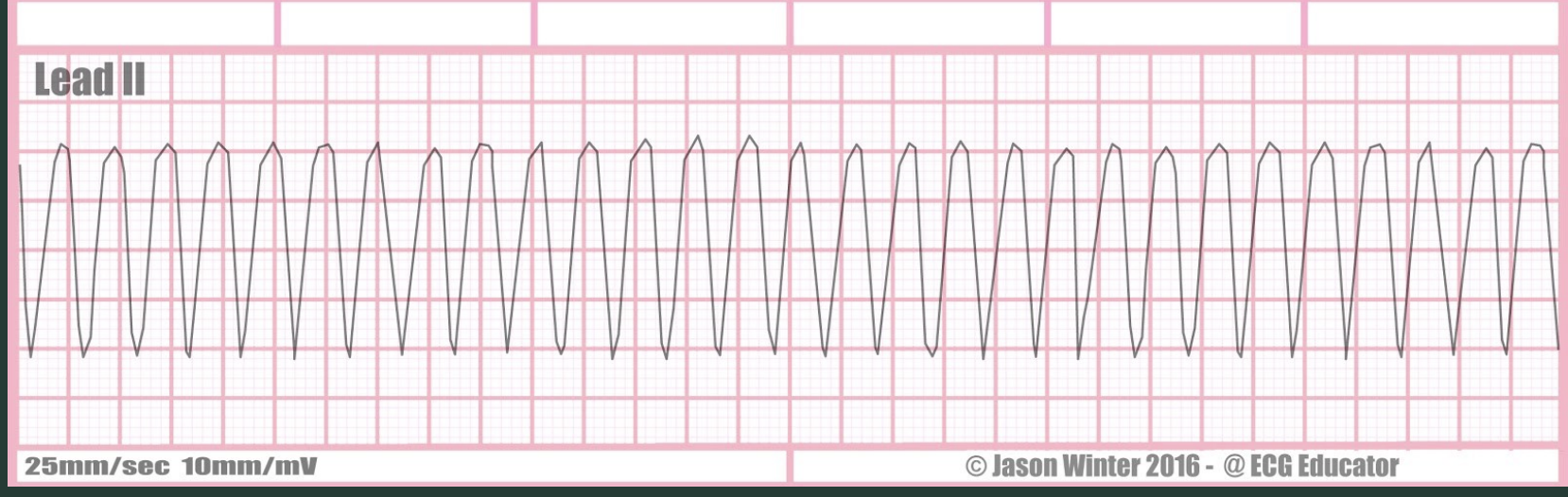
ID this rhythm?
ventricular flutter
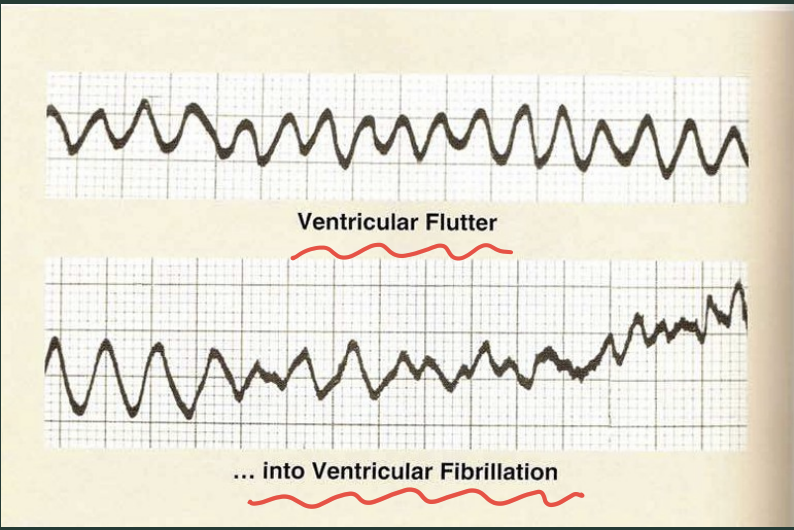
What’s ventricular flutter deterioration?