econ unit 1 vocabulary/concepts
 Call Kai
 Learn
Learn Practice Test
 Spaced Repetition
 Match
Match Flashcards
 Knowt Play
1/117

There's no tags or description
Looks like no tags are added yet.
Name | Mastery | Learn | Test | Matching | Spaced | Call with Kai |
|---|
No analytics yet
Send a link to your students to track their progress
118 Terms
economics
the study of scarcity and choice; how individuals, businesses, and governments allocate scarce resources to meet their needs and wants.
factors of production
resources used to produce goods and services: capital, entrepreneurship, land, labor (CELL)
entrepreneurship
innovation and ideas; the process of creating, organizing, and managing a new business venture in order to generate profit by taking on financial risks
tradeoff
sacrificing one thing for the sake of gaining another
opportunity costs
your 2nd choice, or the highest valued option you gave up; the value of the next best alternative that is forgone when making a choice
ceterus peribus
“all other things being equal”
full efficiency
full employment level of output; producing at maximum output with available resources, any point on the PPC curve; all available resources, particularly labor, are utilized efficiently
allocative efficiency
mix of goods and services matches consumer preferences, maximizing total benefit to society
specialization
the practice of individuals, firms, or countries focusing on the production of a specific good or service in which they have an advantage, rather than attempting to produce a wide variety of goods and services
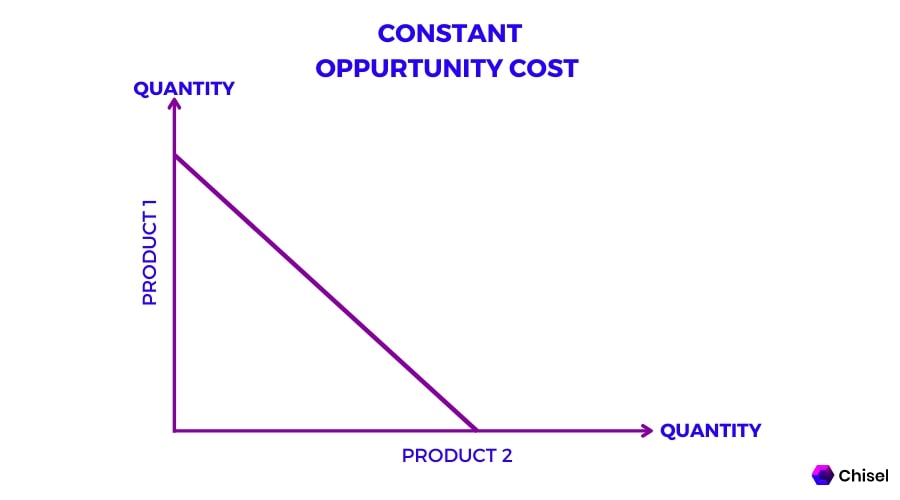
constant opportunity cost
a situation where the trade-off between two goods remains the same, meaning that the amount of one good that must be given up to produce an additional unit of another good does not change.
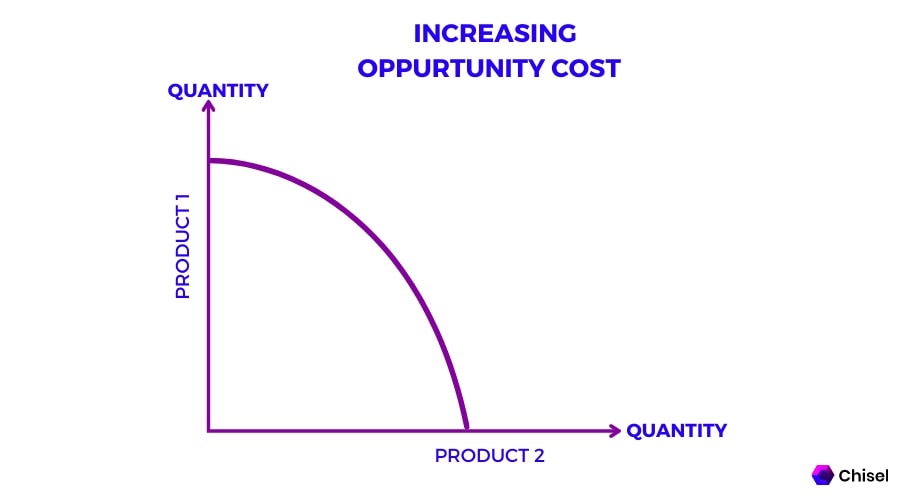
increasing opportunity cost
the principle that as production of one good increases, the opportunity cost of producing additional units of that good also increases
comparative advantage
having the lowest opportunity cost (giving up the least) among the producers
absolute advantage
being able to produce more of a good with a given amount of time and resources
output method
OOO
input method
IOU
terms of trade
indicate the rate at which one good can be exchanged for another
mutually beneficial terms of trade
between the producer’s opportunity cost and the buyer’s opportunity cost
market
producers and consumers meet to exchange goods/services for payment
competitive market
there are MANY buyers and sellers of the same good/service
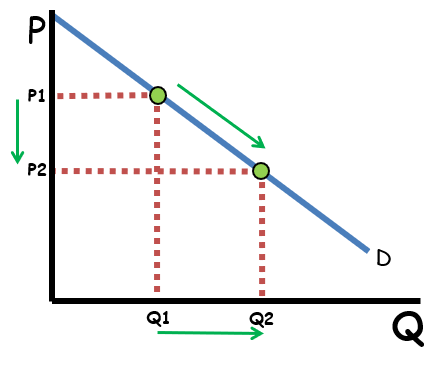
law of demand
a higher price for a good will lead people to demand a smaller quantity of it
demand curve
demand slopes down
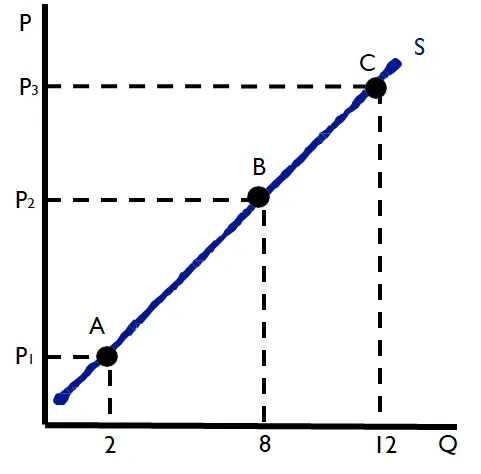
law of supply
all other things equal, the price and quantity supplied for a good are positively related
supply curve
super slope
change in price
change in quantity demanded/supplied; movement ALONG the curve
change in anything else
change in supply/demand; SHIFT OF the curve
demand shifters
Income of buyers
Number of buyers
Expectations
Price of related goods
Tastes/preferences
INEPT
supply shifters
Income - taxes/subsidies
Number of producers
Expectations
Price of resources
Technology
INEPT
market equilibrium
a good/service price has moved to a level that the quantity of the good demanded is the same as the good supplied
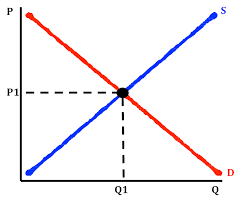
equilibrium price/market clearing price
price at which demand matches supply
equilibrium quantity
the amount of goods bought and sold at the equilibrium price
disequilibrium
when the market price differs from the price that would equate quantity demanded with quantity supplied
surplus
more supply than demand, will drive price down until equilibrium is reached
shortage
more demand than supply, will push the price up to equilibrium
national income and product accounts/national accounts
track spending by consumers/sales of producers, business investment spending, government purchases, and other flows of money among different sectors of the economy
product markets
markets for goods and services
factor markets
markets in which firms buy resources needed to produce goods and services
income approach to calculating gdp
adding up the income earned by factors of production in the economy - WAGES (labor), RENT (land), INTEREST (capital), and PROFIT (entrepreneurship)
GDP=W+R+I+P
value-added approach to calculating gdp
adding up the value of all final goods and services produced in the economy; excludes intermediate goods
expenditure approach to calculating gdp
adding up aggregate spending on domestically produced final goods and services
GDP=C+I+G+Xn
unemployment
individuals are considered unemployed if they don’t currently have a job and have been actively seeking a job during the past 4 weeks
labor force
people who are currently working and those who are actively looking for work, or LF = employed + unemployed
labor force participation rate
% of the working age population that is willing and able to work, or LFPR = (labor force / population age 16+) * 100
unemployment rate
UER = (number of unemployed workers / labor force) * 100
frictional unemployment
unemployment due to the time workers spend in the job search
structural unemployment
unemployment resulting from a mismatch between the characteristics of job seekers and the types of jobs available
cyclical unemployment
overall unemployment resulting from downturns in business cycle
natural rate of unemployment
the rate of unemployment that arises from the effects of frictional and structural unemployment, or NRU = frictional + structural
changes in the NRU
Changes in Government Policies: Minimum wage, unemployment benefits, job training, employment subsidies
Changes in Labor Force Statistics: Age of workers, experience levels, etc.
Changes in Labor Market Institutions: Policy interventions and organizations within labor markets. (Ex: Labor Unions, temporary employment agencies, social media platforms for job searches)
business cycle
fluctuations in economic activity that an economy experiences over a period of time. measured by indicators including employment and aggregate output
expansion
economic upturn; period of rising output and employment
recession
economic downturn; period of contracting employment and output
aggregate output
the economy’s total production of goods and services for a given time (usually a year)
actual unemployment
Natural Unemployment + Cyclical
potential output
full employment level of output; the level of GDP with the natural rate of unemployment (NRU)
inflation
an increase in the general prices of goods and services/a decrease in the purchasing power of a dollar
deflation
fall in overall price level/increase in buying power
disinflation
declining rate of inflation
hyperinflation
rapid/out of control inflation from a human-made disaster
shoe-leather costs
increased cost of transactions caused by inflation
menu costs
real cost of changing listed prices
unit-of-account costs
costs arising from the way inflation makes money a less reliable unit of measurement
price indexes
help measure inflation by summarizing the prices of goods and services with a single number; any number <100 means we have deflation and >100 means we have inflation
market basket
hypothetical consumption bundle of consumer goods and services; used to track average price changes on consumer goods and services
consumer price index (CPI)
an index that measures the cost of a market basket of goods and services purchased by a typical urban household; quantity stays the same, price changes
Market Basket = (yr 1 quantity x yr 2 price) + (yr 1 quantity x yr 2 price)
Good 1 Good 2
(price of market basket this yr, / price of market basket base yr.) * 100
consumer inflation rate
((new cpi - old cpi) / old cpi) * 100
nominal interest rate
real interest rate + expected inflation rate
real interest rate
nominal interest rate - actual inflation rate
real income
(nominal income/CPI) x 100
nominal GDP
nGDP = PxQ
nGDP = C + Ig + G + Xn
real GDP
rGDP = GDP adjusted for inflation; quantity changes, price stays the same
(yr 2 quantity x yr 1 price) + (yr 2 quantity x yr 1 price)
Good 1 Good 2
(nominal gdp / gdp deflator) * 100
real GDP per capita
rGDP / population
real GDP growth rate
((Yr. 2 GDP – Yr. 1 GDP) / Yr. 1 GDP) X 100
GDP deflator
(nGDP / rGDP) * 100
real income
(nominal income / CPI) * 100
aggregate demand
a schedule or curve that shows the amounts of real output that buyers collectively desire to purchase at each possible price level
wealth effect
higher price level reduces the real value of the public’s accumulated savings (and vice versa); Since the public has lost wealth in terms of real dollars, it must reduce spending
interest-rate effect
when price level rises, people need more money, so the demand for borrowed money increases (which increases the interest rate); Higher interest rates discourage spending
foreign purchases effect
when U.S. price level rises, foreign purchases of American goods decrease and Americans buy more foreign goods; This causes imports to increase and exports to decrease. (Xn decreases)
aggregate supply
a schedule or curve showing the level of real domestic output that firms will produce at each price level
sticky wages
nominal wages that are slow to fall in the face of high employment or slow to rise in the face of labor shortages
AD shifters
a change in any component of GDP - C+Ig+G+Xn
SRAS shifters
change of input prices
change in productivity
LRAS shifters
A change in the quantity of the factors of production
A change in the quality of factors of production
Any technological progress
In other words, ANYTHING THAT WOULD SHIFT THE PPC
Means full employment level of output, NRU, and economic capacity have all changed too
stabilization policy
policies aimed at reducing the severity of recessions and fighting excessively strong expansions
discretionary fiscal policy
when the gov’t. takes deliberate action to impact ADa
average propensity to save
percentage of total income that is saved (saving/income)
average propensity to consume
percentage of total income that is consumed (consumption/income)
marginal propensity to save
the fraction of any income change that is saved
marginal propensity to consume
the fraction of any income change that is spent
functions of money
Medium of exchange
Unit of account
Store of value
characteristics of money
Durability
Portability
Divisibility
Hard to counterfeit (recognizable)
Relative scarcity
commodity money
money with intrinsic value
representative money
convertible, or commodity-backed money
fiat money
money by decree; value derived from official status or acceptability
M1 supply
cash, checkable deposits, traveler’s checks, savings accounts
M2 supply
M1 + near monies
Near monies - not cash, but can easily be converted to cash, like certificates of deposit
federal reserve system
Central bank of the United States
Two parts:
Board of Governors - 7 app./conf. members; 14-year terms
Chair appointed every 4 years; currently Jerome Powell
12 regional Federal Reserve Banks
These are privately owned
Functions:
Provide financial services as the “banker’s bank”
U.S Treasury has its bank account with the Fed
Supervise and regulate banking institutions
Maintain stability of the financial system
Conduct MONETARY POLICY- both contractionary and expansionary
demand in the money market
represents the relationship between the nominal interest rate and the quantity of money (M1) people want to hold
shifters for money demand
Four main shifters/determinants
Changes in aggregate price level
Demand for money is actually proportional to the price level - if prices increase by 10%, it will take 10% more money to buy a market basket of goods/services
Changes in rGDP (national income)
When national income increases, spending increases, so more money is needed
Changes in technology
More technology available actually makes money demand decrease because it is easier to make purchases without large quantities of physical currency
Changes in institutions
Has to do with banking regulations, etc.
When banks were finally allowed to give interest on checking accounts (after 1980), more people shifted money to their checking accounts, increasing the demand for money
shifters for money supply
three federal reserve tools (OMOs, RRR, DR),