biology
 Call Kai
 Learn
Learn Practice Test
 Spaced Repetition
 Match
Match Flashcards
 Knowt Play
1/55

Earn XP
Description and Tags
ao3
Name | Mastery | Learn | Test | Matching | Spaced | Call with Kai |
|---|
No analytics yet
Send a link to your students to track their progress
56 Terms
muscle tissues
tissues that can contract to exert a force. 3 main types are skeletal cordiac and smooth tissue muscle
nervous tissue
tissues that detect stimuli and transmit electrical signals. composed of neurons that detect stimuli and carry electrical signals and glia that assist neuron signal transmission
connective tissue
tissues that connect and support other tissues and organ structures of the body
epithilial tissue
tissues which compose the external and internal layers of the body. These tissues assist in protection, secretion and absorbtion
digestive system purpose
breaks down and processes food to be used by the body
levels of cell organistation
cell tissue organ system
excretory system purpose
removes water substances from the blood via excretion, also assists in control of water balence
endocrine system purpose
responsible for the production and secretion of hormones
skeletal system purpose
provides internal structure to suppirt the body, works with muscular system to enable movement
muscular system purpose
responsible for contractions in skeletal muscle, the heart, and other contractions throughout the body
nervous system purpose
detects and processes sensory information to activate responses in the body
immune system purpose
defends the body against infection
integumentory system purpose
protects internal body structures from the external environment
respitory system purpose
responsibel for remove carbon dioxide from the body and delivering oxygen to the blood
blood circlatory system
delivers oxygen and nutrients to the tissues of the body via blood
reproductive system purpose
regulates production of sex cells and reproduction
organisation of plants
cell tissue organ system organism
xylem cells function
responsible for transport of water thoughout the plant
pholem cells function
responsible for the transport of sugars and other nutrients throughout the plant
collenshyma and sklernchyma cells
provide support to the cell
parenchyma cellls
responsible for photosynthesis
plant tissues
vascular tissue - transport water and nutrientts dermal tissue - collection of cells that form the outer layer of a plant ground tissue - encompassy term for different plant tissue types
plant organs
leaves - photosynthesis flowers - reproduction fruits - protects seeds stems - support other organs and transport water and nutrients Roots - absorbtion of water and nutrients from the soil
plant organisation
roots shoots
types of vascular tissue
xylem and phloem
vascular bundles
closer arrangement of pholem and xylem
why do we urinate
amino acids cant be stored and must be immediantly used or converted
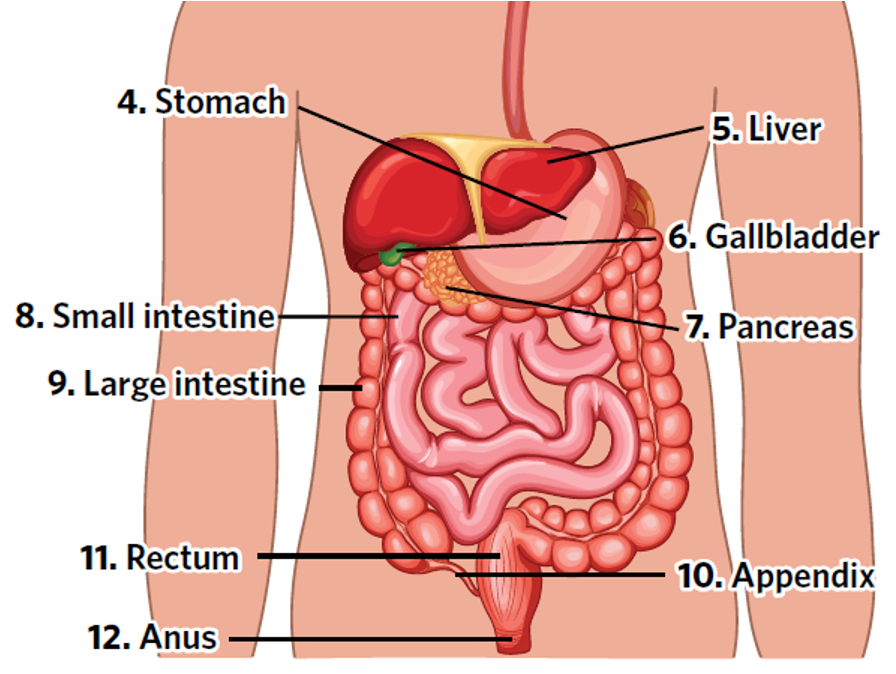
digestive system process
oral cavity - teeth mechanically break down food, enzymes in saliva and mouth start breakdown of carbs and fats
salivary glands - glands that produce and release saliva into the mouth and oesophagus
oesophagus - a hollow tube connecting the oral cavity to the stomach which food travels down after being swallowed. saliva continues to mix with food. The movement of food is aided by muscular contractions of the tube, known as perisstalsis
stomach - a temp storage tank where food is mixed by muscular movements known as churning protase enzymes begin digestion of protiens. digestive juices are released by stomach membrane, which creates an acidic environment. persistalsis of the stomach musles helps push food along the small intestine. partially digested food that leaves the stomach is known as chyme
liver - site of bile production. bile is important in the breakdown of fat
galbladder - bile is stored and furthur concentrated in the galbadeer
pancreas - digestive enzymes are produced in the pancreas and are released when food reaches the fist part of the small intestine
small intestine - asborbs nutrients from food. made up of the duodedum, jejunum and the ileum. enzymes aid in digeestion
large intestine - final absorbion of water nutrients and and minerals. made up of cecum colon rectum. as water is reabsorbed from undigested food it becomes more solid and compact, eventually ready for excretion
appendix - play a role in immune
rectum - final area of the large intestine stores feaces
anus - feaces expelled from body
steps of digestipon
its definitly all eaten (ingestion, digetsion, absorbtion, elimination)
types of digestion
chemical and physical
translocation
movement of nutients creted in leaves to other areas of the plqnt
to reduce transpirtaion plants…
activly pump pottasium ions out of guard cells, water diffuses out of guard cells, guard cell becomes flaccid clsoing the stomata
to increase transpiration
activly pump potassium ions into guard cells, increasing concentration of solutes, water tehn diffuses into guard cells, guard cells are shaped like beans and go turgid which leaves stomata open
what do guard cells regulate
transpiration
capillary action
when a liquid flows in narrow tubes due to adhesion of liquid to surface of the tube
differences betwee n phloem ad xylem
phloem is nutrients xylem is minerals phloem is 2 way and has end walls with perforations
companion cells
regulate entry of nutrients to the phloem
structure of the phloem
long skinny tubes that run trhorugh plant. made from sieve cells and companion cells
structure of the xylem
long, skinny tubes that run from roots to shoots. made form vessel elements an trahceids
cytoplasmic pathway
The cytoplasmic pathway involves minerals being pumped into root hair cells via active transport, which then draws water in through osmosis. These nutrients travel through the living part of the plant—the cytoplasm and plasmodesmata—allowing the plant to selectively filter what enters its system before it reaches the xylem
extracellular pathway in plants
A process where water and nutrients diffuse through gaps in root cells, facilitating their absorption into the plant.
role of kidneys
to filter blood, reabsorb the useful sustances and secrete the unwanted ones
nephron neumonic
big puppies love dancing cutely
BPLDC
Bowmans capule promixal coveluted tubule loop of henle collecting duct
response model
stimulus receptor modulator effector response
positive feedback model
increases or amplifies the stimulis
conduction
tranfer of heat through physical contact with another object
convection
tranfer of heat through movement of liquid or gas between areas of diferent temperatures
thermoregulation too hot
stimulus - change in temperture receptor - thermorecpetors modulater - hypothalumus effecter - nervous system sweat glands arector pili muscle blood vessels cells cerebal cortex respose - change in behaviuour flatting of hair decrease of metaolic rate sweating dialation of aritoles
thermoregulation too cold
stimulus - change in temperture receptor - thermorecpetors modulater - hypothalumus effecter - nervous system brown fat sweat glands arector pili muscle blood vessels cells cerebal cortex respose lifting of hair change in behaviour constriction of aritoles increaes in metabolic rate burning of triglycerides
blood glucucose to high
receptor and modulator - islets langerhans and beta cells release inculin effector - skeletal fat cells and liver cells travel in blood response - increased uptake of glucose and increase conversion of glucose to glycogen
blood glucose too low
receptor and modulator- islets langerhans and alpha cells secrete glucagon efefctor - liver cells reponse breakdown of glucagon
high osmalality
receptor - baroreceptor (blood pressure) osmoreceptor (osmality levels) modulator - hypothalumus supress relese of adh from pituatary gland effector - decreased insertion of aquaporijs in the distal convoluting tube and collecting duct and thirst center iss supressed response - decrease of reabsorbtion and consumption of fluid
low osmolality
receptor - baroreceptor (bp) osmoreeptor (osmality levels) modulator - hypothalymus release adh from pituatary gland causing realse of aldosterone and kidneys relese renin effector - activation of sodium pottasium pumps increasing reasorbtion of sodium aquaporins inserted into the distal conveuluting tube and the collecting duct stimulate thirst cneter response - increased reabsorbtion of water and consumption of water
hyperthyroidism
overactivity of the thyroid gland
hyperglycemia syptoms
thirst urination weight loss hunger tiredness