Biology- Chapter 2 & 3 Review (Openstax Biology 2e Textbook)
 Call Kai
 Learn
Learn Practice Test
 Spaced Repetition
 Match
Match Flashcards
 Knowt Play
1/140

There's no tags or description
Looks like no tags are added yet.
Name | Mastery | Learn | Test | Matching | Spaced | Call with Kai |
|---|
No analytics yet
Send a link to your students to track their progress
141 Terms
If xenon has an atomic number of 54 and a mass number of 108, how many neutrons does it have?
54
27
100
108
54
Atoms that vary in the number of neutrons found in their nuclei are called ________.
ions
neutrons
neutral atoms
isotopes
isotopes
Potassium has an atomic number of 19. What is its electron configuration?
shells 1 and 2 are full, and shell 3 has nine electrons
shells 1, 2 and 3 are full and shell 4 has three electrons
shells 1, 2 and 3 are full and shell 4 has one electron
shells 1, 2 and 3 are full and no other electrons are present
shells 1, 2 and 3 are full and shell 4 has one electron
.
Which type of bond represents a weak chemical bond?
hydrogen bond
atomic bond
covalent bond
nonpolar covalent bond
hydrogen bond
Which of the following statements is not true?
Water is polar.
Water stabilizes temperature.
Water is essential for life.
Water is the most abundant molecule in the Earth's atmosphere.
Water is the most abundant molecule in the Earth's atmosphere.
When acids are added to a solution, the pH should ________.
decrease
increase
stay the same
cannot tell without testing
decrease
We call a molecule that binds up excess hydrogen ions in a solution a(n) ________.
acid
isotope
base
donator
base
Which of the following statements is true?
Acids and bases cannot mix together.
Acids and bases will neutralize each other.
Acids, but not bases, can change the pH of a solution.
Acids donate hydroxide ions (OH-); bases donate hydrogen ions (H+).
Acids and bases cannot mix together.
Each carbon atom can bond with as many as________ other atom(s) or molecule(s).
one
two
six
four
four
.
Which of the following is not a functional group that can bond with carbon?
sodium
hydroxyl
phosphate
carbonyl
sodiumIonic bonds-
Ionic bonds
transfer of electrons
Covalent bonds
Bonds created by sharing electrons with other atoms.
Noncovalent bonds
Weak chemical bonds in which no electrons are shared
Polar Covalent
unequal sharing of electrons
Non-polar covalent
electrons are shared equally
Is a "trace element" an essential element"?
Yes, because trace elements are required by an organism but only in minute (small) quantities.
Cohesion
Attraction between molecules of the same substance
Adhesion
An attraction between molecules of different substances
pH
hydrogen ion concentration
Acid
compound that forms hydrogen ions (H+) in solution
Base
a compound that produces hydroxide ions (OH-) in solution
Buffer
compound that prevents sudden changes in pH
What are the pH values for acidic solutions?
Anything below 7.0 (ranging from 0.0 to 6.9) is acidic
What are the pH values for basic solutions?
anything above 7.0 (from 7.1 to 14.0) is alkaline (basic)
What are the four emergent properties of water that are important for life?
cohesion, expansion upon freezing, high heat of evaporation, capillarity
cohesion, moderation of temperature, expansion upon freezing, versatility as a solvent
the heat of vaporization, high specific heat, high surface tension, capillarity
polarity, hydrogen bonding, high specific heat, high surface tension
cohesion, moderation of temperature, expansion upon freezing, versatility as a solvent
If you were a spider gliding across a pond in the summer in Virginia, for what property of water
would you be most grateful?
the high heat of fusion
high specific heat
Cohesion
Adhesion
Cohesion
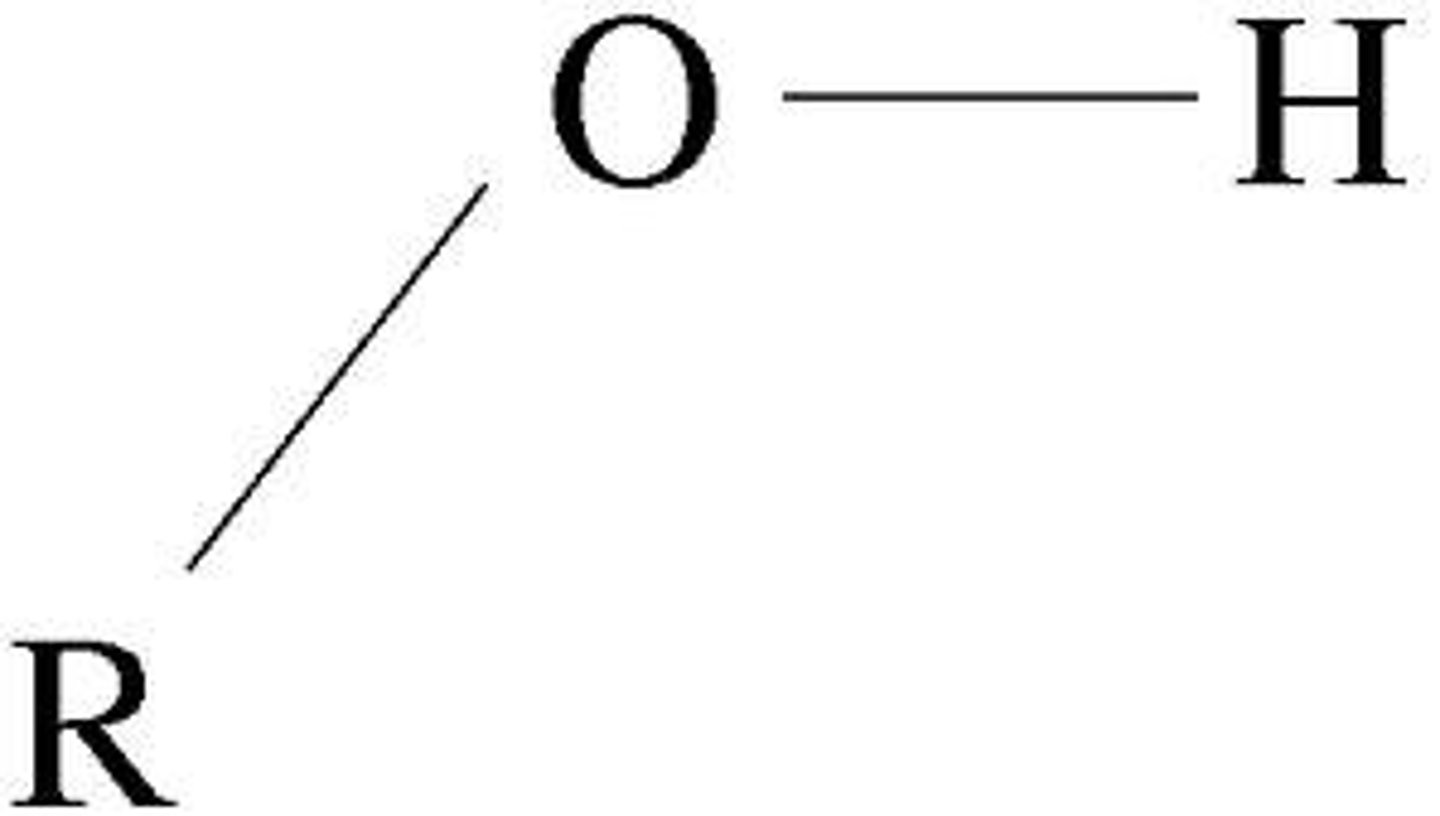
hydroxyl group
a hydrogen atom joined to an oxygen atom by a polar covalent bond; polar
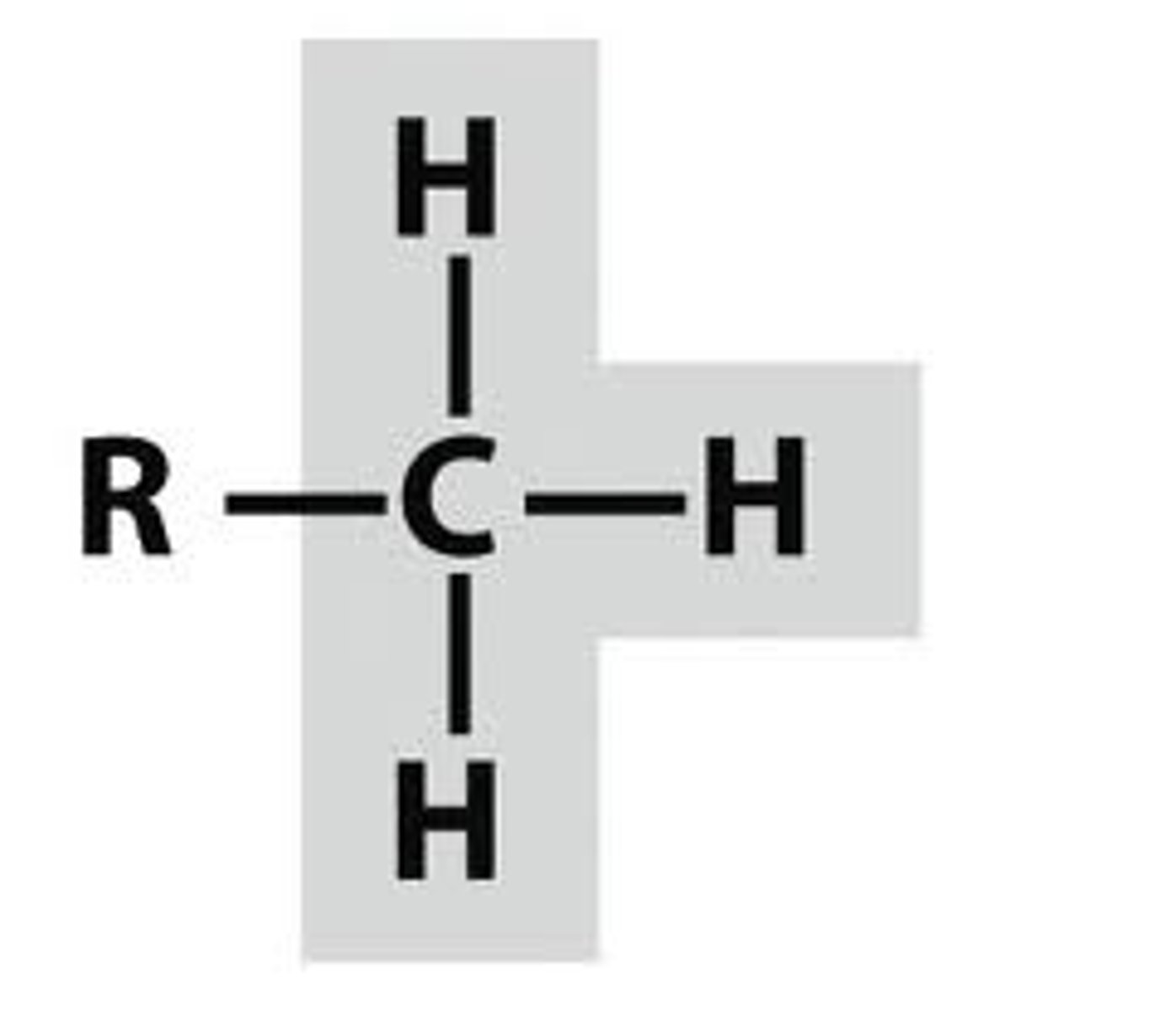
methyl group
nonpolar (thus hydrophobic), found in such things as lipids, and other membrane components.
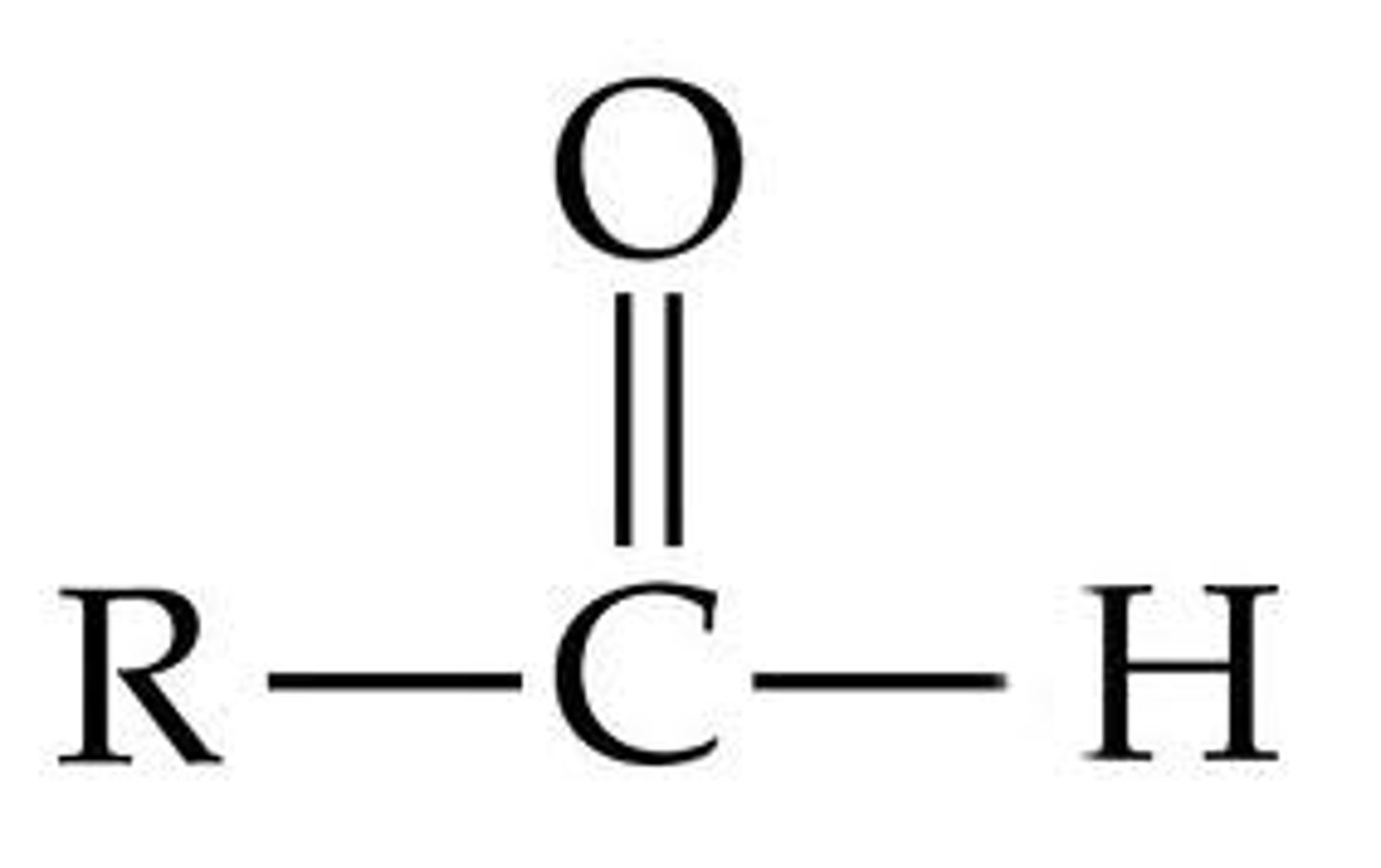
carbonyl group
a carbon atom linked by a double bond to an oxygen atom; polar
carboxyl group
A functional group in organic acids consists of a single carbon atom double-bonded to an oxygen atom and bonded to a hydroxyl group; acidic
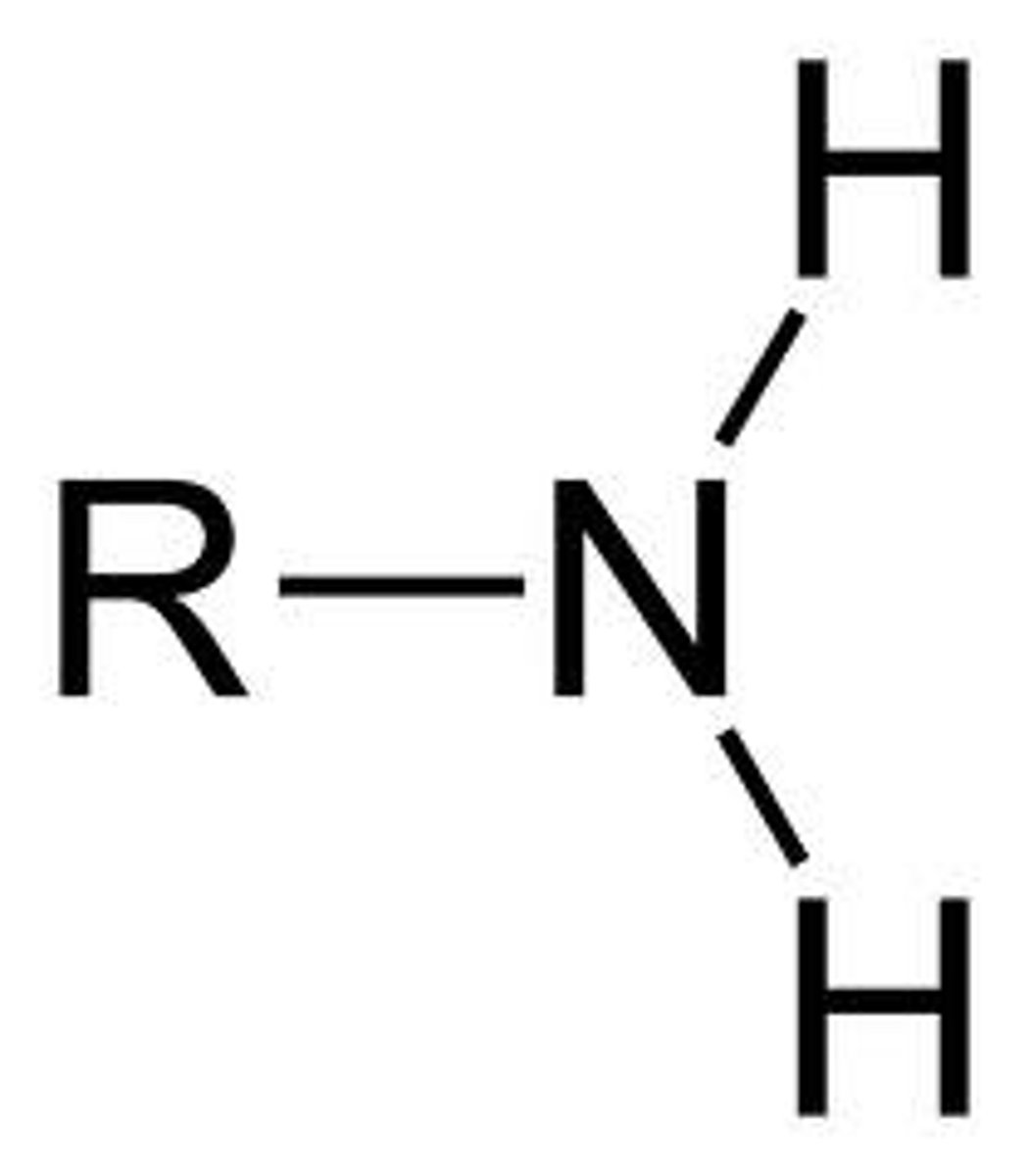
amino group
consisting of a nitrogen atom bonded to two hydrogen atoms; basic
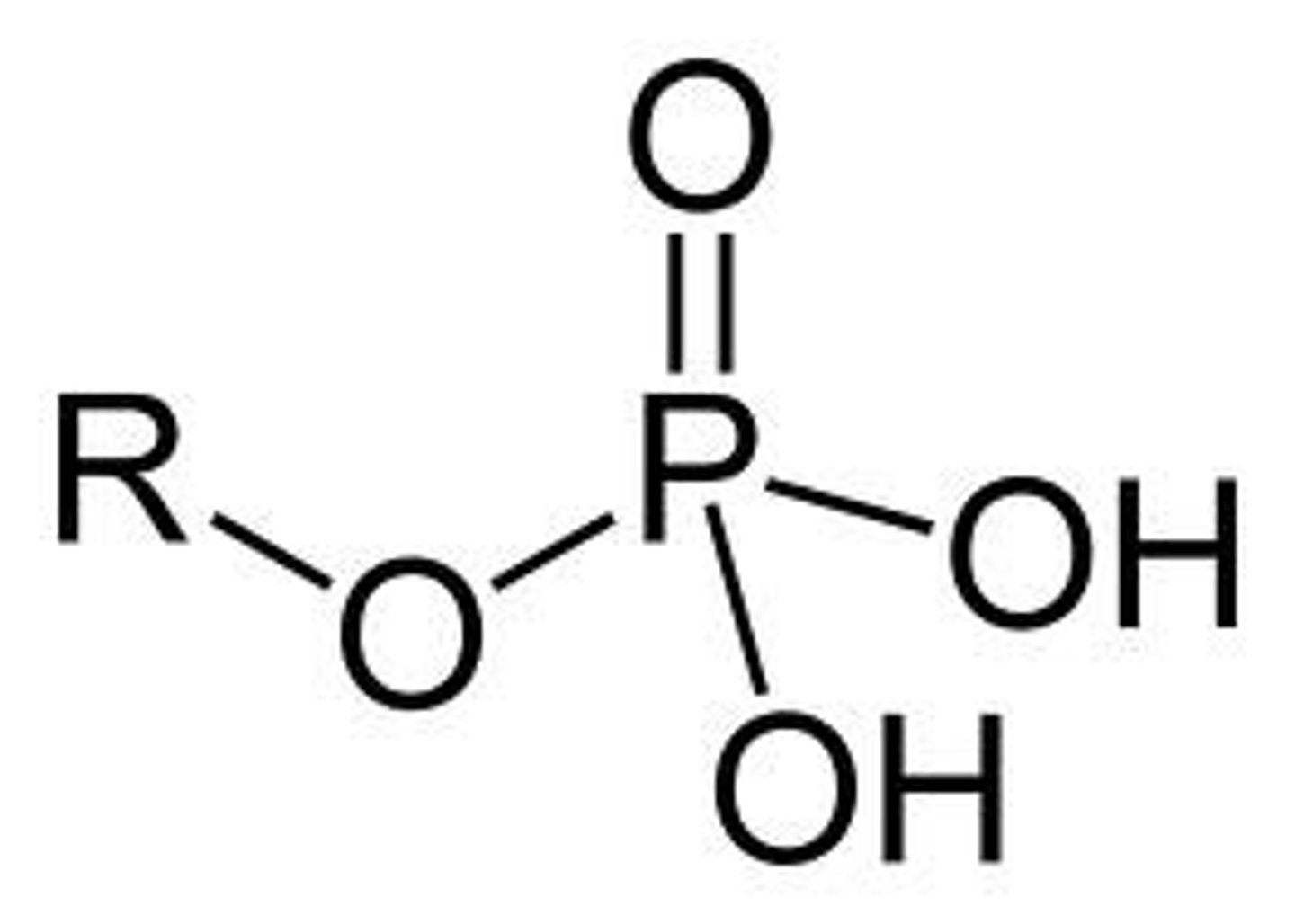
phosphate group
consisting of a phosphorus atom covalently bonded to four oxygen atoms; acidic
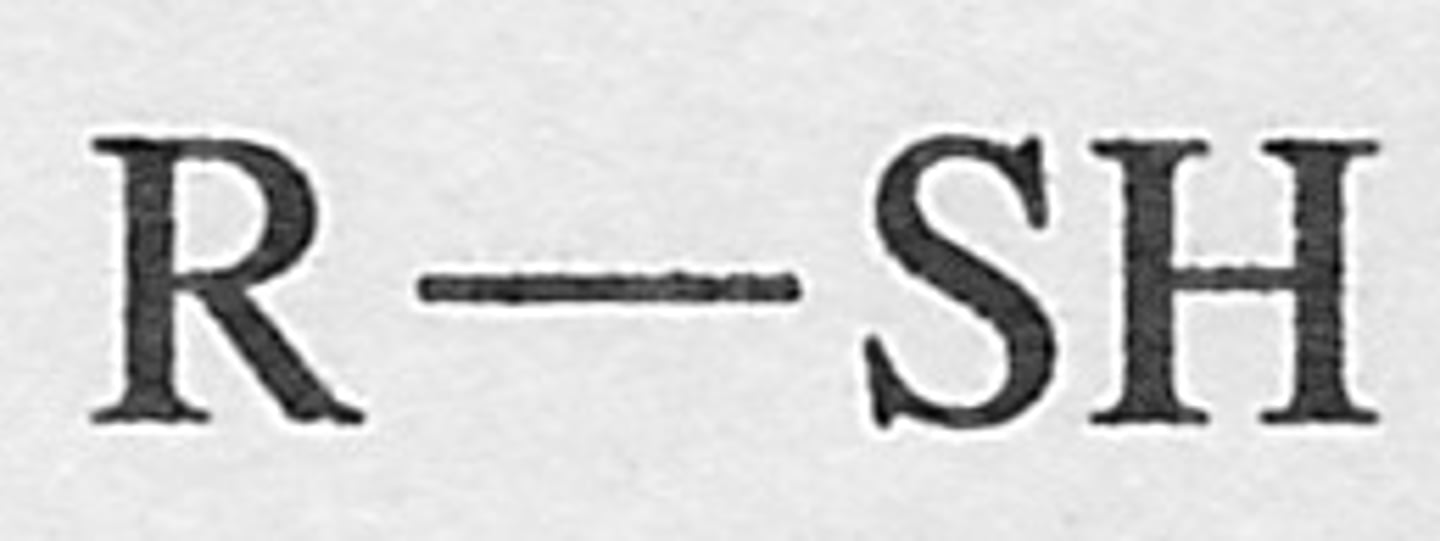
Sulffhydryl group
polar
What kind of bond would be present in a completely flat section of a biological molecule?
single bonds
double bond
triple bond
b or c
double bond
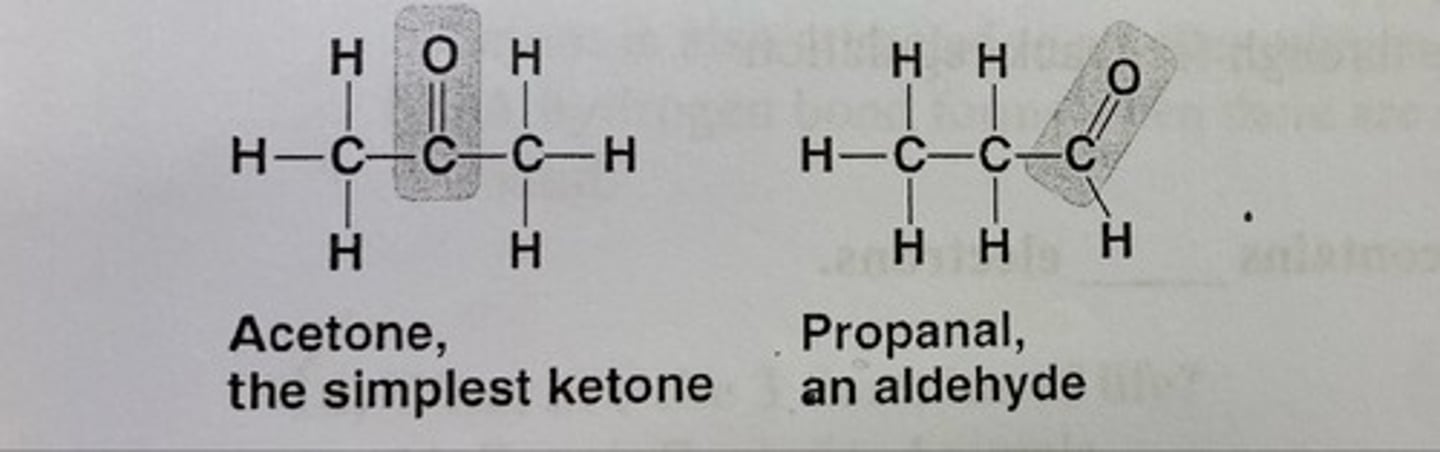
What type of isomer is propanol compared to acetone?
cis-trans isomer
structural isomer
Enantiomer
none of the above
structural isomer
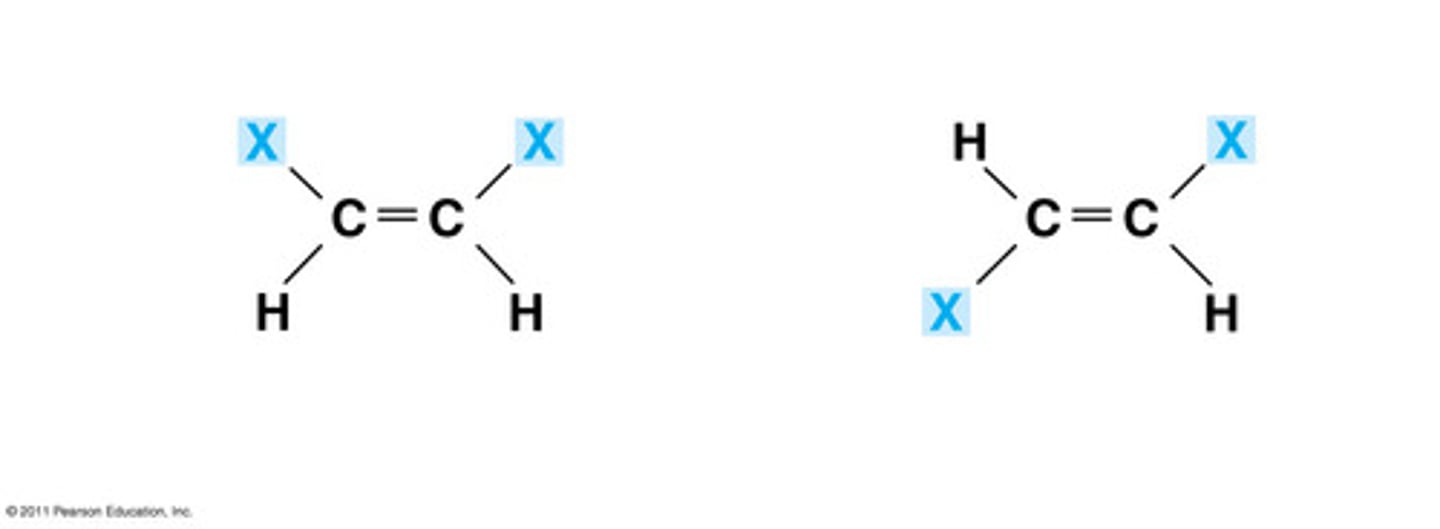
cis-trans isomer
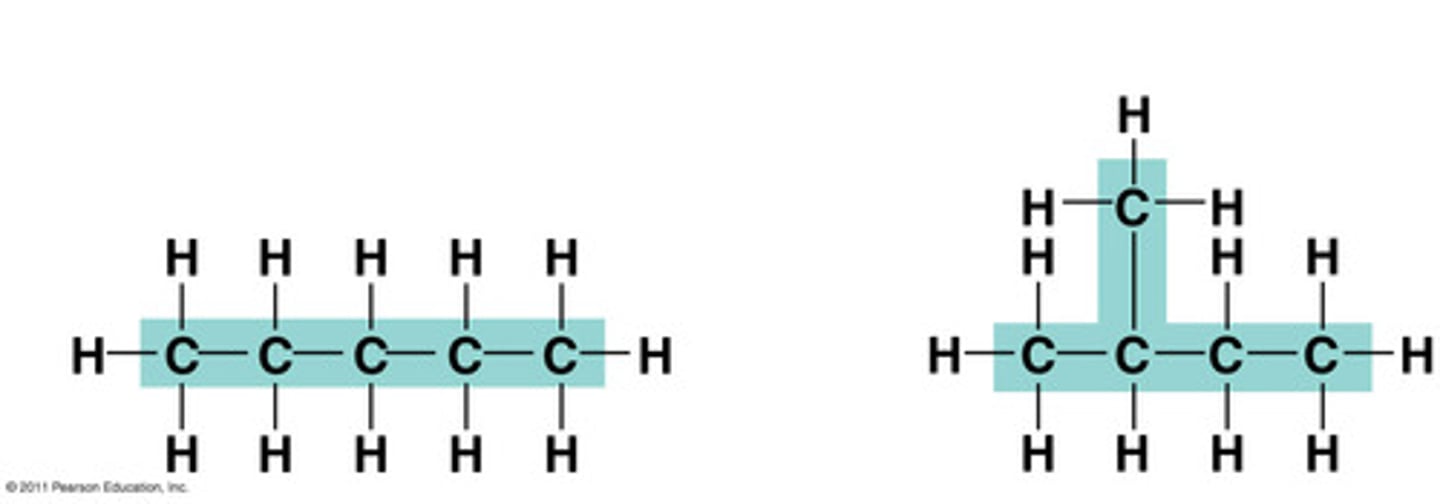
have the same covalent bonds but differ in spatial arrangements
structural isomer
same molecular formula but differ in the covalent arrangements of their atoms.
Dehydration synthesis leads to the formation of
monomers
polymers
water and polymers
none of the above
polymers
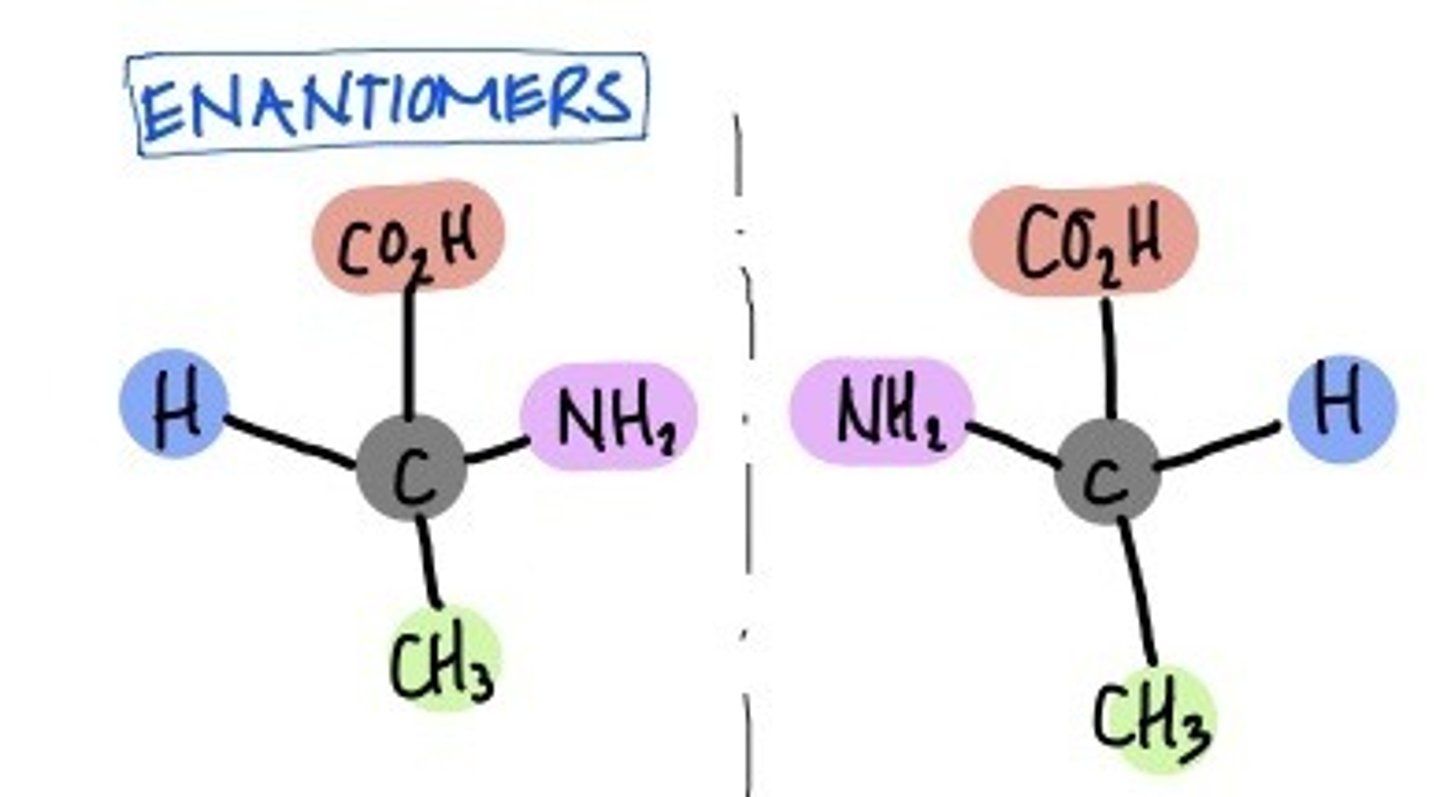
Enantiomer
isomers that are mirror images of each other
During the breakdown of polymers, which of the following reactions takes place?
hydrolysis
dehydration
condensation
covalent bond
hydrolysis
The following chemical reactants produce the ester ethyl ethanoate (C4H8O2):
C2H6O + CH3COOH
What type of reaction occurs to make ethyl ethanoate?
condensation
hydrolysis
combustion
acid-base reaction
condensation
An example of a monosaccharide is ________.
fructose
glucose
galactose
all of the above
all of the above
Cellulose and starch are examples of:
monosaccharides
disaccharides
lipids
polysaccharides
polysaccharides
Plant cell walls contain which of the following in abundance?
starch
cellulose
glycogen
lactose
cellulose
.
Lactose is a disaccharide formed by the formation of a ________ bond between glucose and ________.
glycosidic; lactose
glycosidic; galactose
hydrogen; sucrose
hydrogen; fructose
glycosidic; galactose
Which of the following is not an extracellular matrix role of carbohydrates?
protect an insect's internal organs from external trauma
prevent plant cells from lysing after the plant is watered
maintain the shape of a fungal spore
provide energy for muscle movement
provide energy for muscle movement
Saturated fats have all of the following characteristics except:
they are solid at room temperature
they have single bonds within the carbon chain
they are usually obtained from animal sources
they tend to dissolve in water easily
they tend to dissolve in water easily
Phospholipids are important components of ________.
the plasma membrane of cells
the ring structure of steroids
the waxy covering on leaves
the double bond in hydrocarbon chains
the plasma membrane of cells
Cholesterol is an integral part of plasma membranes. Based on its structure, where is it found in the membrane?
on the extracellular surface
embedded with the phospholipid heads
within the tail bilayer
attached to the intracellular surface
within the tail bilayer
The monomers that makeup proteins are called ________.
nucleotides
disaccharides
amino acids
chaperones
amino acids
The α-helix and the β-pleated sheet are part of which protein structure?
primary
secondary
tertiary
quaternary
secondary
Mad cow disease is an infectious disease where one misfolded protein causes all other copies of the protein to begin misfolding. This is an example of a disease impacting ____ structure.
primary
secondary
tertiary
quaternary
tertiary
A nucleotide of DNA may contain ________.
ribose, uracil, and a phosphate group
deoxyribose, uracil, and a phosphate group
deoxyribose, thymine, and a phosphate group
ribose, thymine, and a phosphate group
deoxyribose, thymine, and a phosphate group
The building blocks of nucleic acids are ________.
sugars
nitrogenous bases
peptides
nucleotides
nucleotides
How does the double helix structure of DNA support its role in encoding the genome?
The sugar-phosphate backbone provides a template for DNA replication.
tRNA pairing with the template strand creates proteins encoded by the genome.
Complementary base pairing creates a very stable structure.
Complementary base pairing allows for easy editing of both strands of DNA.
Complementary base pairing creates a very stable structure
storage forms of glucose for plants
cellulose
storage forms of glucose for animals
Glycogen
three major types of biologically important lipids
Fats, phospholipids, steroids
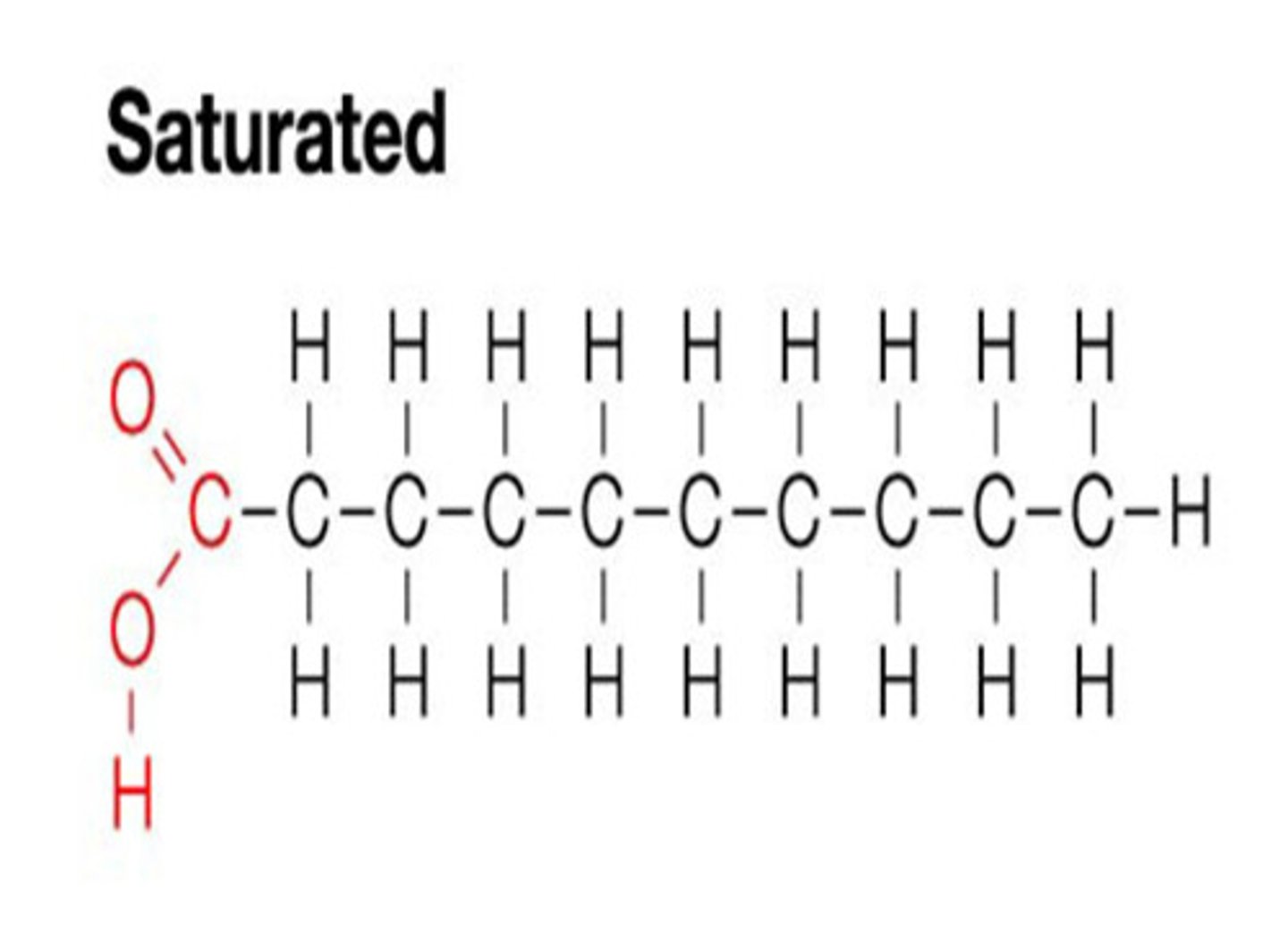
saturated fats
A fat that is solid at room temperature and found in animal fats, lards, and dairy products; only single bonds or has no double bonds
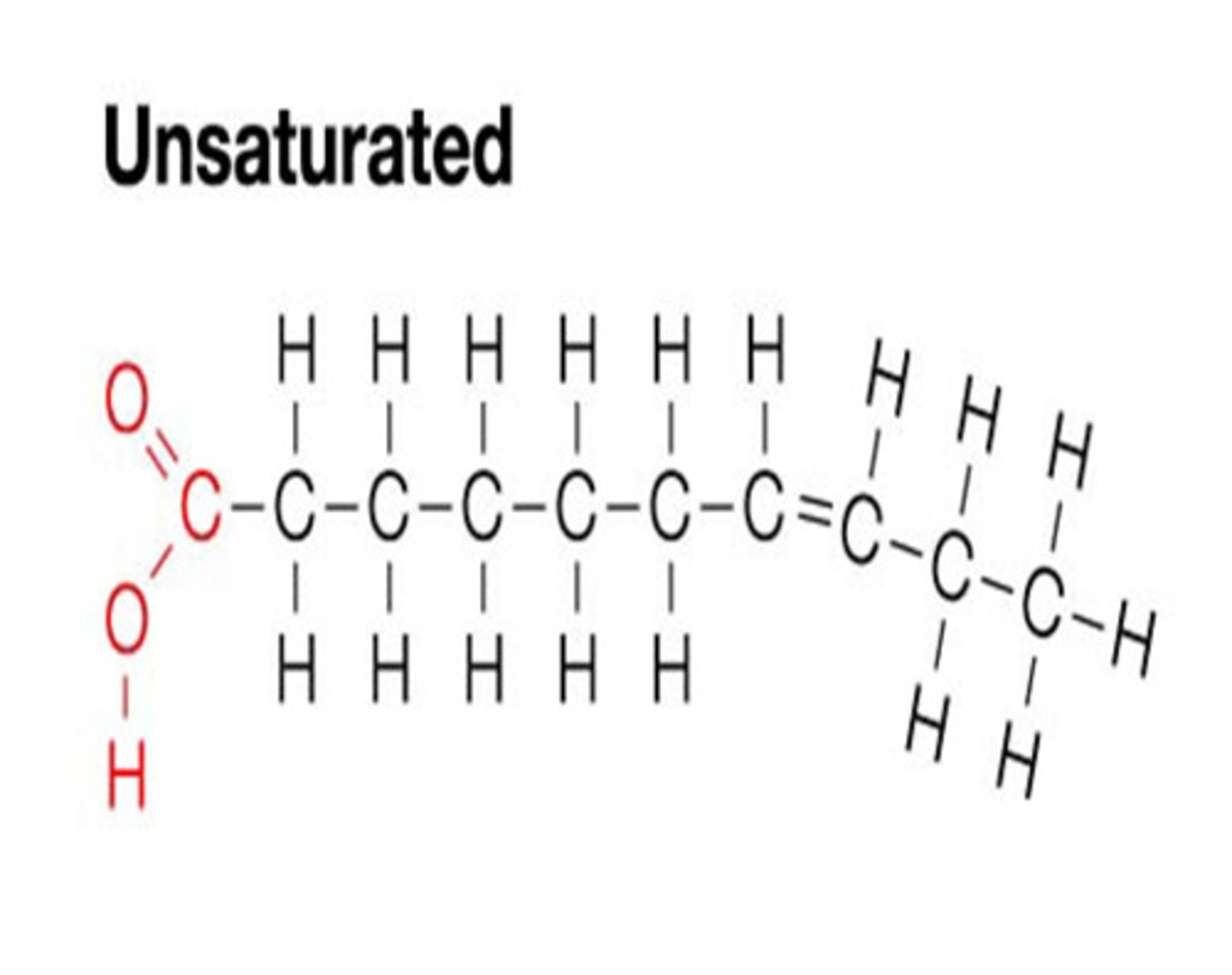
unsaturated fats
A fat that is liquid at room temperature and found in vegetable oils, nuts, and seeds.
cis fatty acids
Two covalent single C-C bonds angle in the same direction adjacent to the C=C double bond, unsaturated
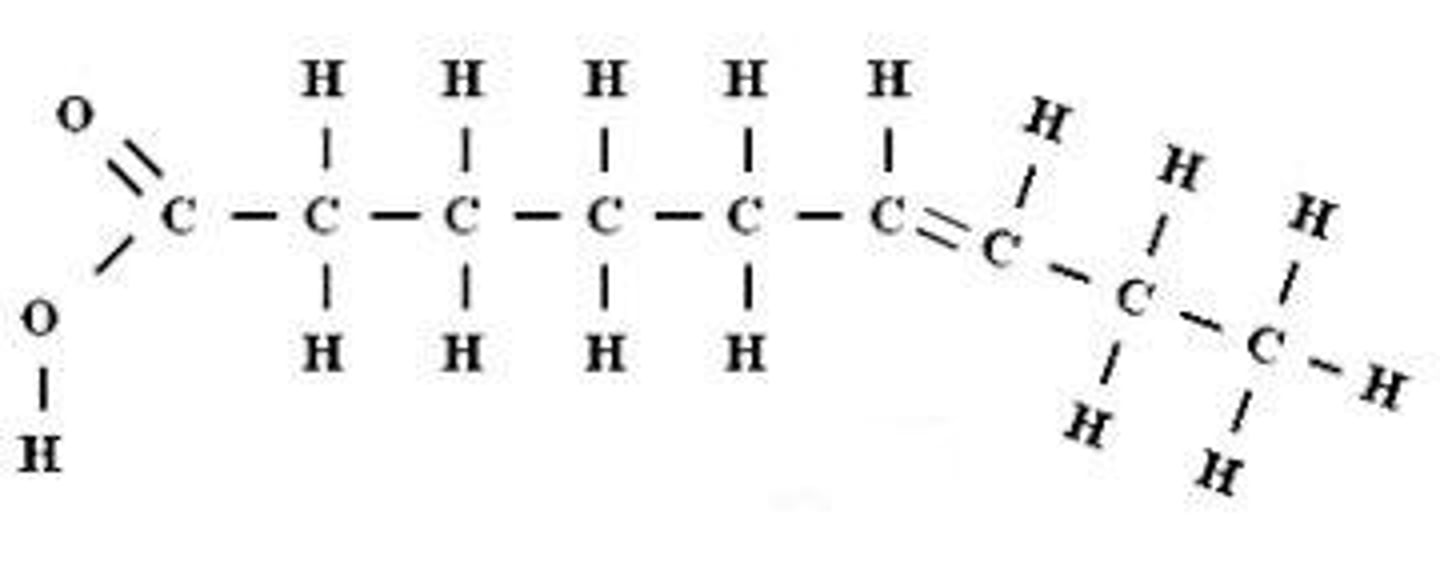
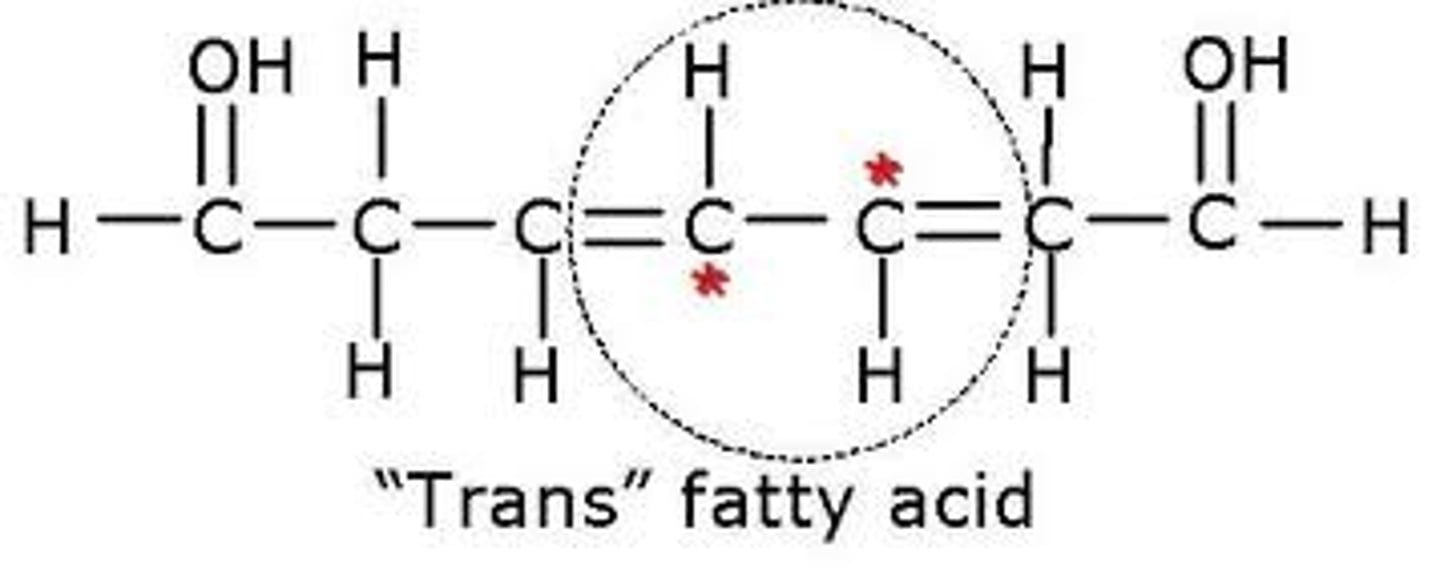
trans fatty acids
fatty acids with unusual shapes that can arise when hydrogens are added to the unsaturated fatty acids of polyunsaturated oils
Explain why carbohydrates can dissolve in water and lipids cannot.
Carbohydrates can dissolve in water because they are hydrophilic whereas lipids are hydrophobic
Polymers are made of monomer subunits that are joined by what type of bonds?
Ionic bonds
Covalent bonds
Hydrogen bonds
Hydrophobic bonds
Covalent bonds
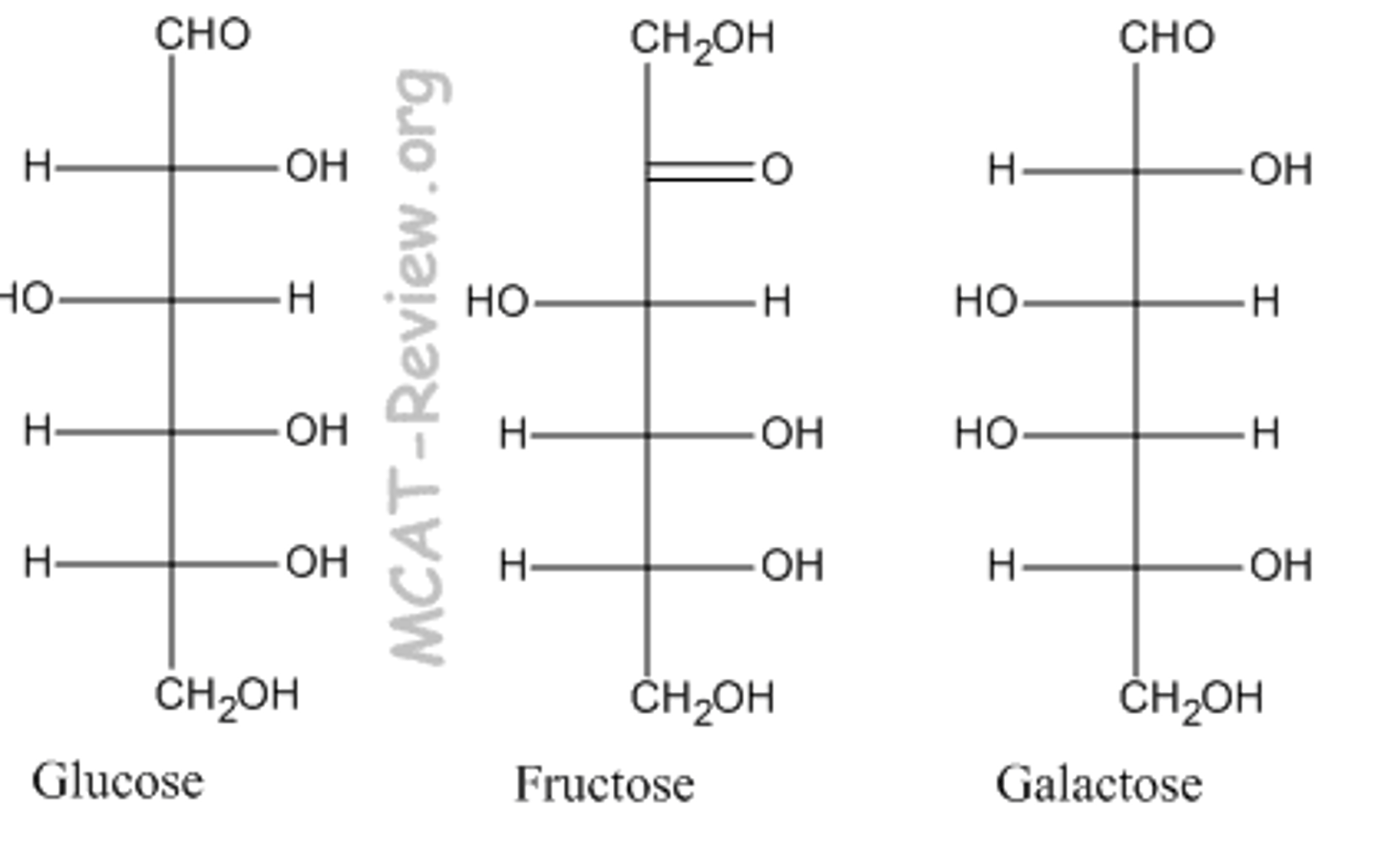
What kind of isomers are glucose galactose and Fructose?
Geometric isomers (Cis-Trans Isomers)
Structural Isomers
Enantiomers
Hydrocarbons
Enantiomers
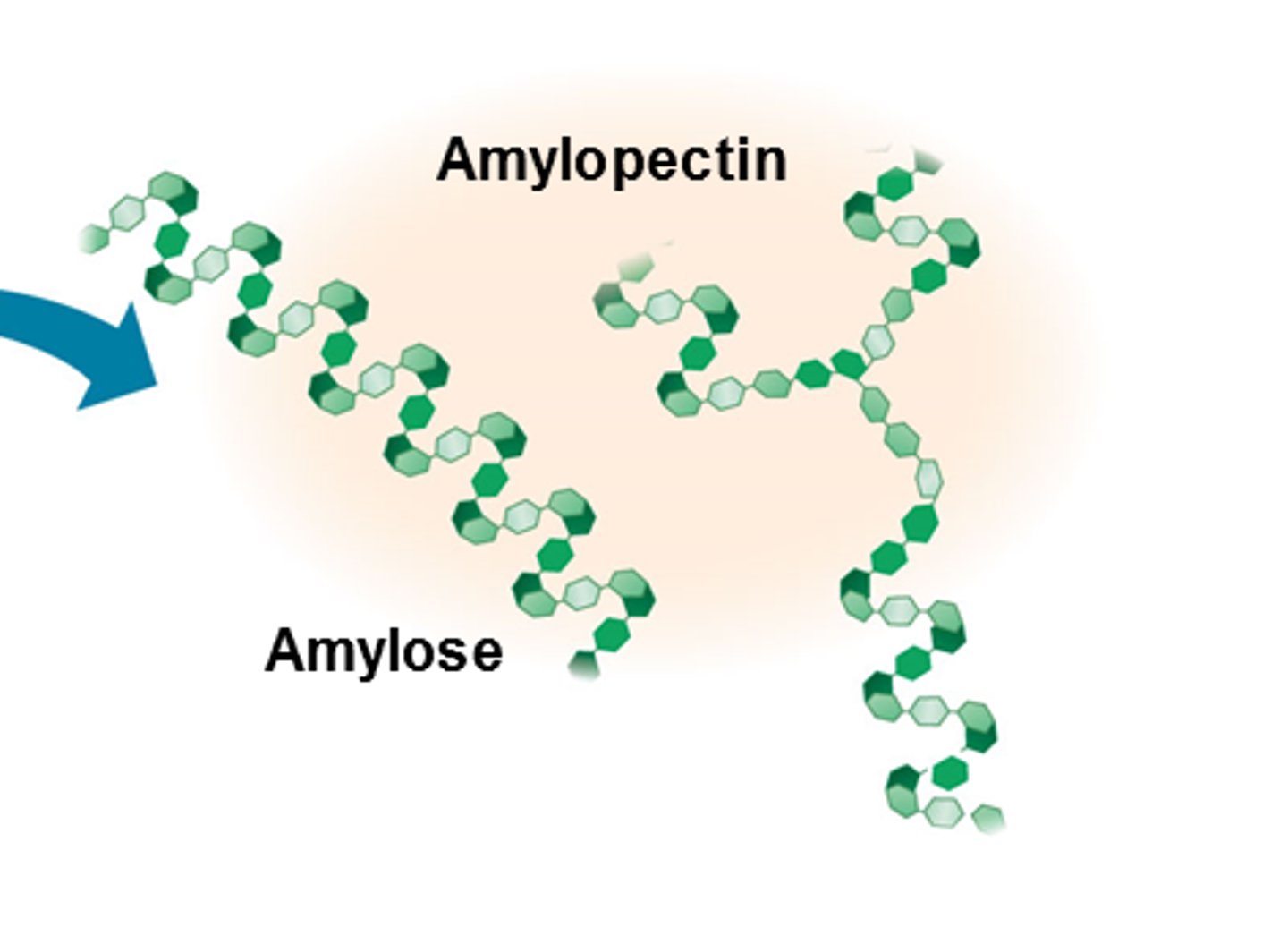
Which polysaccharide has the greatest number of branches?
Cellulose
Chitin
Amylose
Amylopectin
Glycogen
Amylopectin
A polysaccharide you are studying contains unbranched β glucose molecules and cannot be digested by humans. Which polysaccharide are you studying?
Cellulose
DNA
Chitin
Star
Glycogen
Cellulose
Lipids cannot be considered polymers because
They contain polar covalent bonds.
Their structure includes carbon rings.
They can be artificially created.
Their monomers are connected via ionic bonds.
They are not composed of monomer subunits.
They are not composed of monomer subunits.
primary structure
sequence of amino acids
secondary structure
Either an alpha helix or beta pleated sheet.
tertiary structure
three-dimensional shape of a polypeptide due to interactions of the R groups of the amino acids making up the chain.
quaternary structure
Results from two or more polypeptide subunits.
Identify the three components of nucleic acids
DNA, RNA, mRNA
Describe the basic structure of DNA
Double helix, with a sugar phosphate backbone, linked by complementary nucleotide pairs (linked by hydrogen bonds)
How does RNA differ from DNA?
DNA encodes hereditary information; RNA does
DNA forms duplexes; RNA does not.
DNA contains thymine; RNA contains uracil.
All of the above
DNA contains thymine; RNA contains uracil.
The reactivity of an atom arises from
the average distance of the outermost electron shell from the nucleus
the potential energy of the valence shell.
the sum of the potential energies of all the electron shells
the existence of unpaired electrons in the valence shell.
the existence of unpaired electrons in the valence shell.
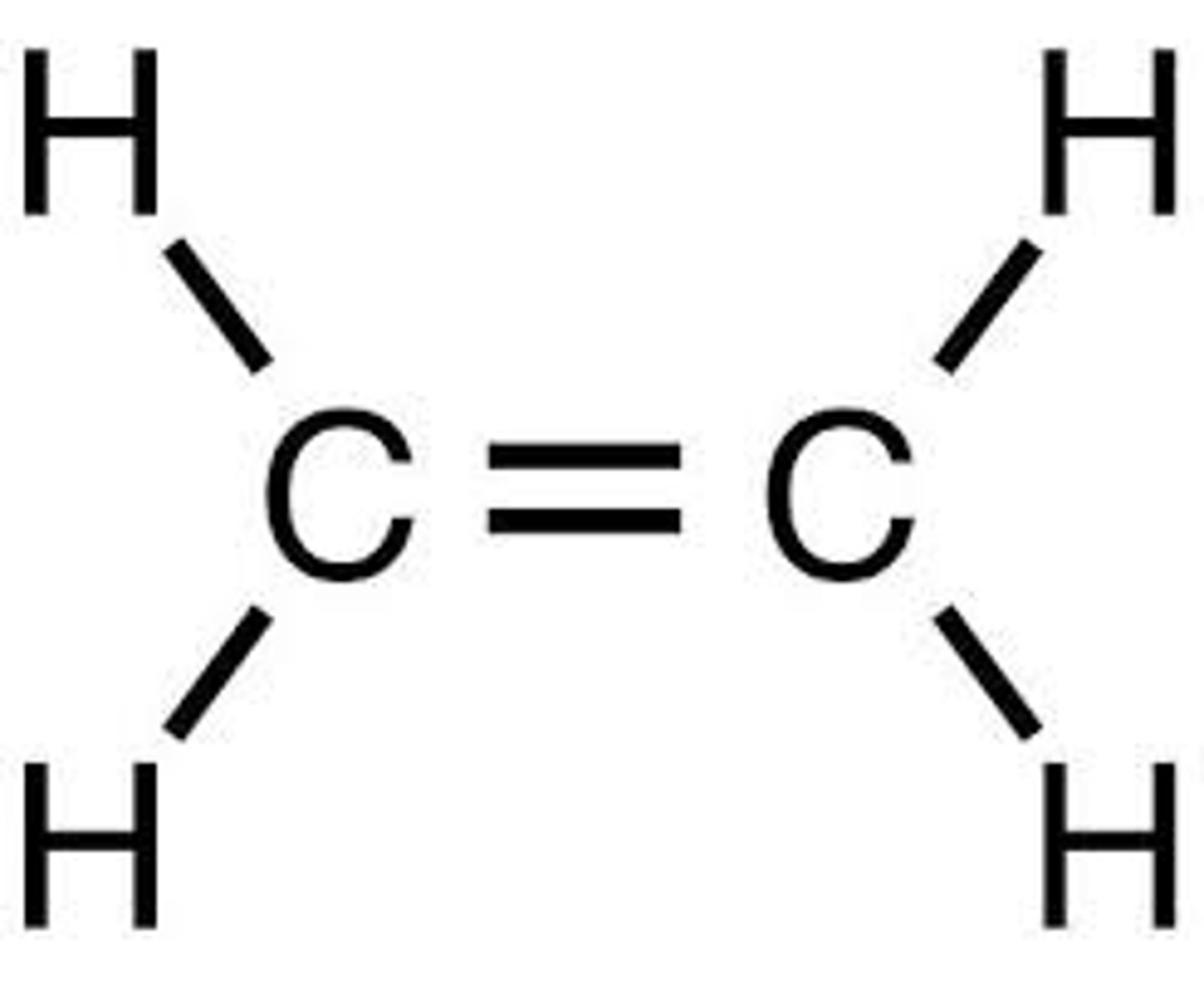
How many electron pairs are shared between carbon atoms in a molecule that has the formula C2H4?
one
two
four
three
two
Water molecules can form hydrogen bonds with ________.
oils
chloride ions
oxygen gas (O2) molecules
compounds that have polar covalent bonds
compounds that have polar covalent bonds

To act as an effective coolant in a car's radiator, a substance has to have the capacity to absorb a great deal of heat. You have a reference book with tables listing the physical properties of many liquids. In choosing a coolant for your car, which table would you check first?
specific heat
density at room temperature
heat of vaporization
pH
specific heat
The partial negative charge in a molecule of water occurs because ________.
the oxygen atom has two pairs of electrons in its valence shell that are not neutralized by hydrogen atoms
the oxygen atom donates an electron to each of the hydrogen atoms
one of the hydrogen atoms donates an electron to the oxygen atom
the electrons shared between the oxygen and hydrogen atoms spend more time around the oxygen atom nucleus than around the hydrogen atom nucleus
the electrons shared between the oxygen and hydrogen atoms spend more time around the oxygen atom nucleus than around the hydrogen atom nucleus
Humans can digest starch but not cellulose because ________.
Starch is softer than cellulose
starch monomers are joined by covalent bonds, and cellulose monomers are joined by ionic bonds
humans have enzymes that can hydrolyze the α-glycosidic linkages of starch but not the β-glycosidic linkages of cellulose
the monomer of starch is glucose, while the monomer of cellulose is a galactose
humans have enzymes that can hydrolyze the α-glycosidic linkages of starch but not the β-glycosidic linkages of cellulose
Why are hydrocarbons insoluble in water?
The majority of their bonds are nonpolar covalent carbon-to-hydrogen linkages.
They exhibit considerable molecular complexity and diversity.
They are less dense than water.
The majority of their bonds are polar covalent carbon-to-hydrogen linkages.
The majority of their bonds are nonpolar covalent carbon-to-hydrogen linkages.
Which two functional groups are always found in amino acids?
amino and sulfhydryl groups
carbonyl and amino groups
hydroxyl and carboxyl groups
carboxyl and amino groups
carboxyl and amino groups
Which atom matches this electron configuration 1s^2 2s^2 2p^5?
Florine
How many valence electrons are present in florine?
7
Can the atomic mass of an element vary?
Yes. Adding or losing electrons will substantially change the atomic mass.
Yes. Adding or losing protons will change the atomic mass without forming a different element.
No, it is fixed; otherwise a new element will be formed.
Yes. Adding or losing neutrons will change the atomic mass without forming a different element.
Yes. Adding or losing neutrons will change the atomic mass without forming a different element.
What is the major structural difference between starch and glycogen?
the type of glycosidic linkages in the molecule
whether glucose is in the α or β form
the types of monosaccharide subunits in the molecules
the amount of branching that occurs in the molecule
the amount of branching that occurs in the molecule
You disrupt all hydrogen bonds in a protein. What level of structure will be preserved?
secondary structure
tertiary structure
primary structure
quaternary structure
primary structure
Denaturation
loss of normal shape of a protein due to heat or other factor
Pure water
neutral; equal amounts of acidity and basicity
hydration shell
the sphere of water molecules around each dissolved ion
Which statement is true of covalent bonds?
Regardless the element, bond length between neighboring atoms are the same.
Valence electrons must be shared equally between atoms in order to achieve stability.
Covalent bonds form when electrons are shared between two or more atoms to satisfy the octet rule.
Covalent bonds form when the nuclei of two atoms attract each other.
Covalent bonds form when electrons are shared between two or more atoms to satisfy the octet rule.
Triglycerides (fats) containing only single bonds between their carbon atoms are called ________________________ and tend to be solid at room temperature.
Saturated fats
Fossil fuels
Unsaturated fats
Trans fats
Saturated fats
central dogma
DNA -> RNA -> Protein
adenine, thymine, cytosine, guanine
The four bases in DNA
Adenine
The base that pairs with Thymine in DNA (2 bonds)
thymine
the nucleotide that hydrogen bonds with the nucleotide adenine in DNA (2 bonds)
cytosine
The base that pairs with Guanine with DNA (3 bonds)
guanine
The base that pairs with Cytosine in DNA (3 bonds)
Thymine
replaced with uracil in RNA