Medicine Vocabulary: Unit 6 & 7 Key Terms & Definitions
 Call Kai
 Learn
Learn Practice Test
 Spaced Repetition
 Match
Match Flashcards
 Knowt Play
1/39

There's no tags or description
Looks like no tags are added yet.
Name | Mastery | Learn | Test | Matching | Spaced | Call with Kai |
|---|
No analytics yet
Send a link to your students to track their progress
40 Terms
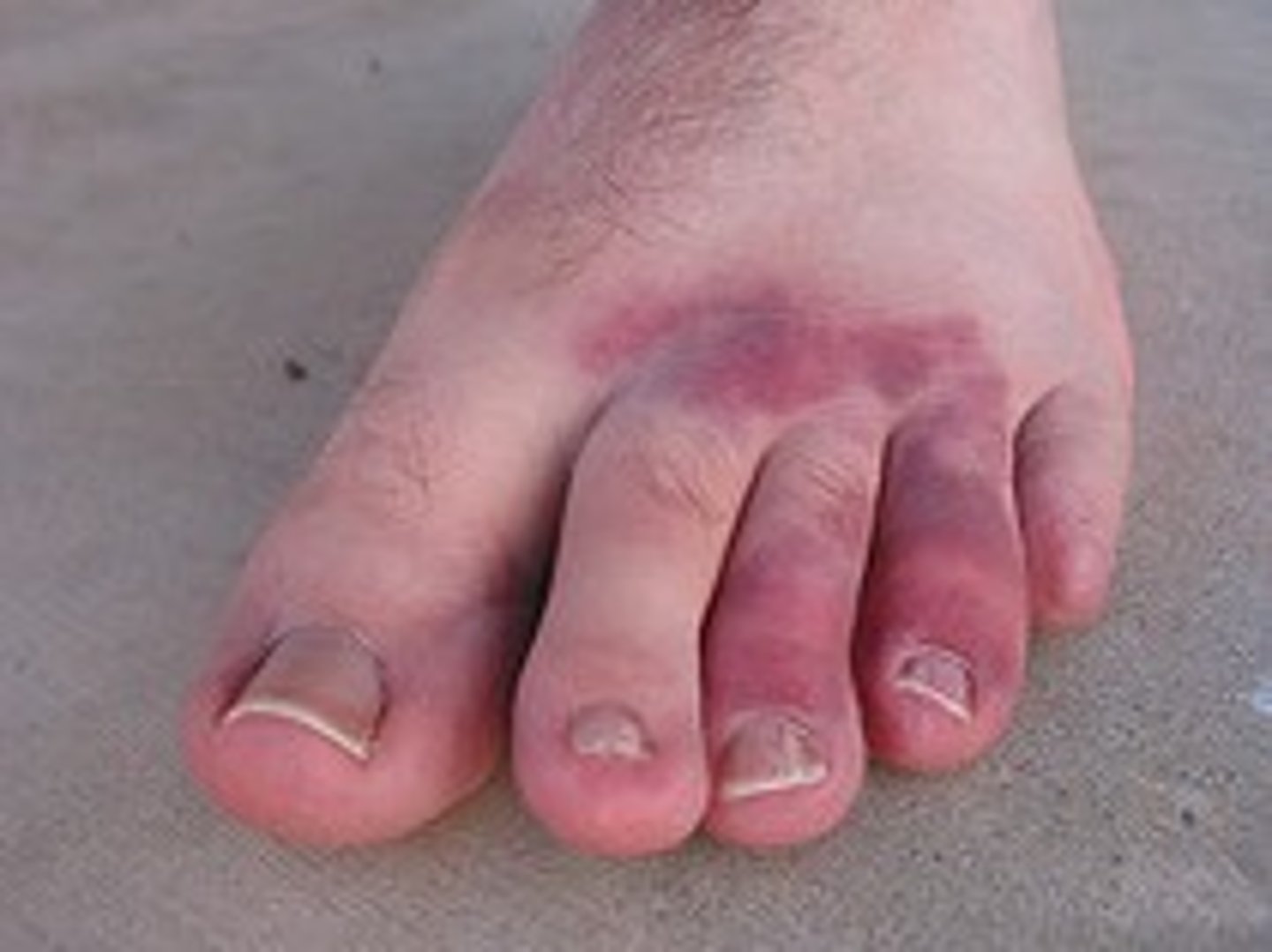
Contusion
A "bruise-type" injury without a fracture or break in the skin
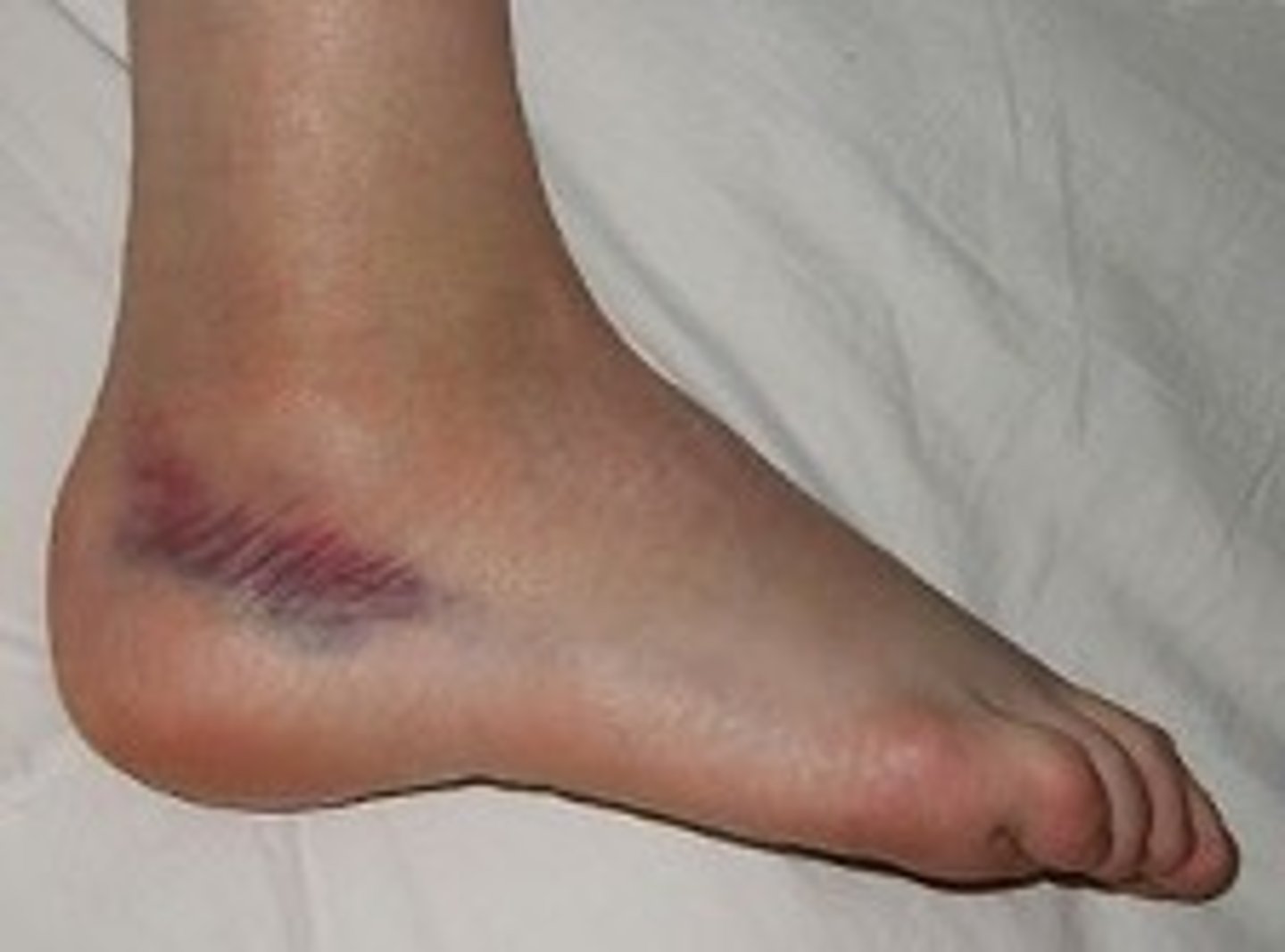
sprain
Forced wrenching or twisting of a joint, resulting in partial rupture or tearing of supporting ligaments
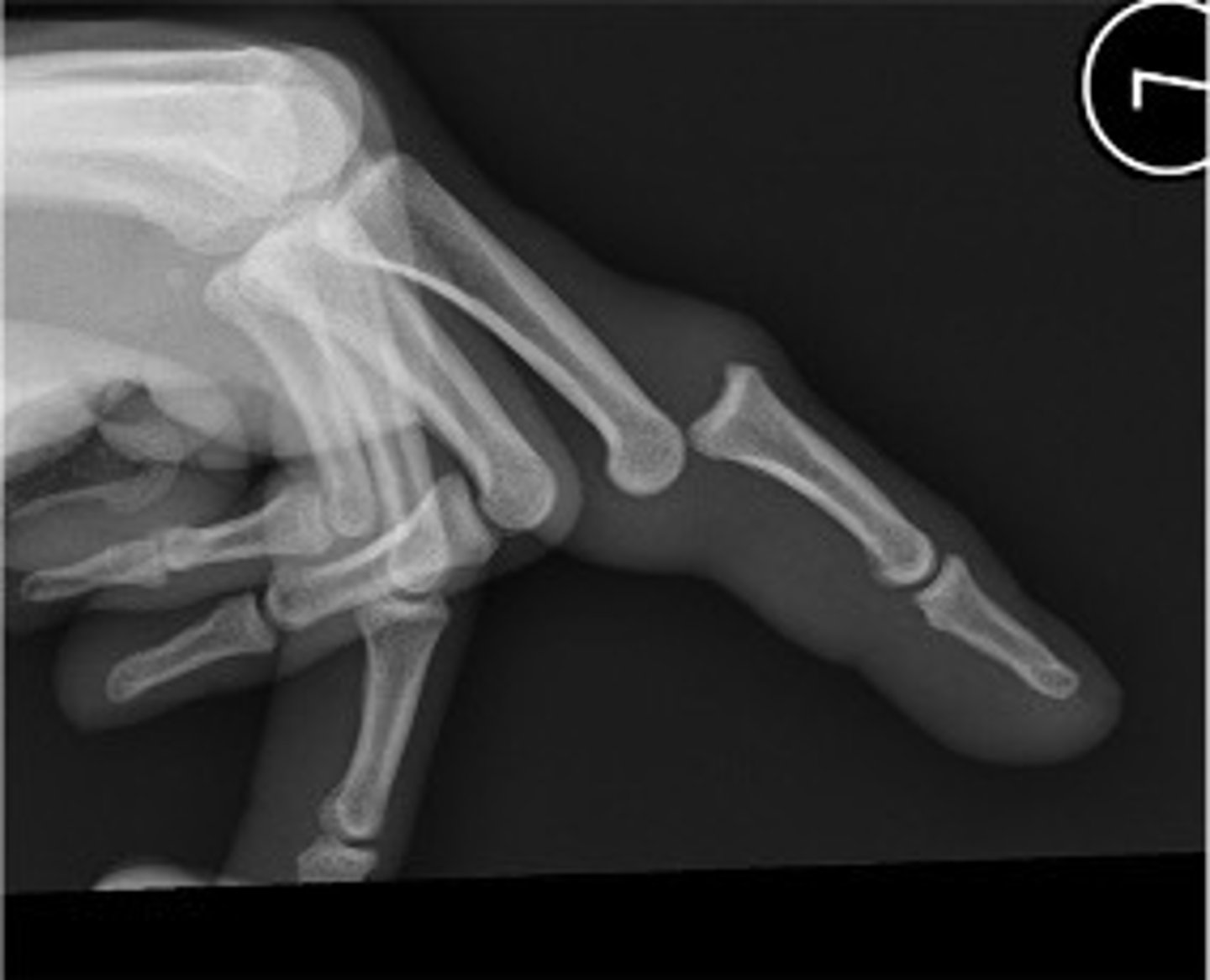
Dislocations
Displacement of a bone that is no longer in contact with its normal articulation
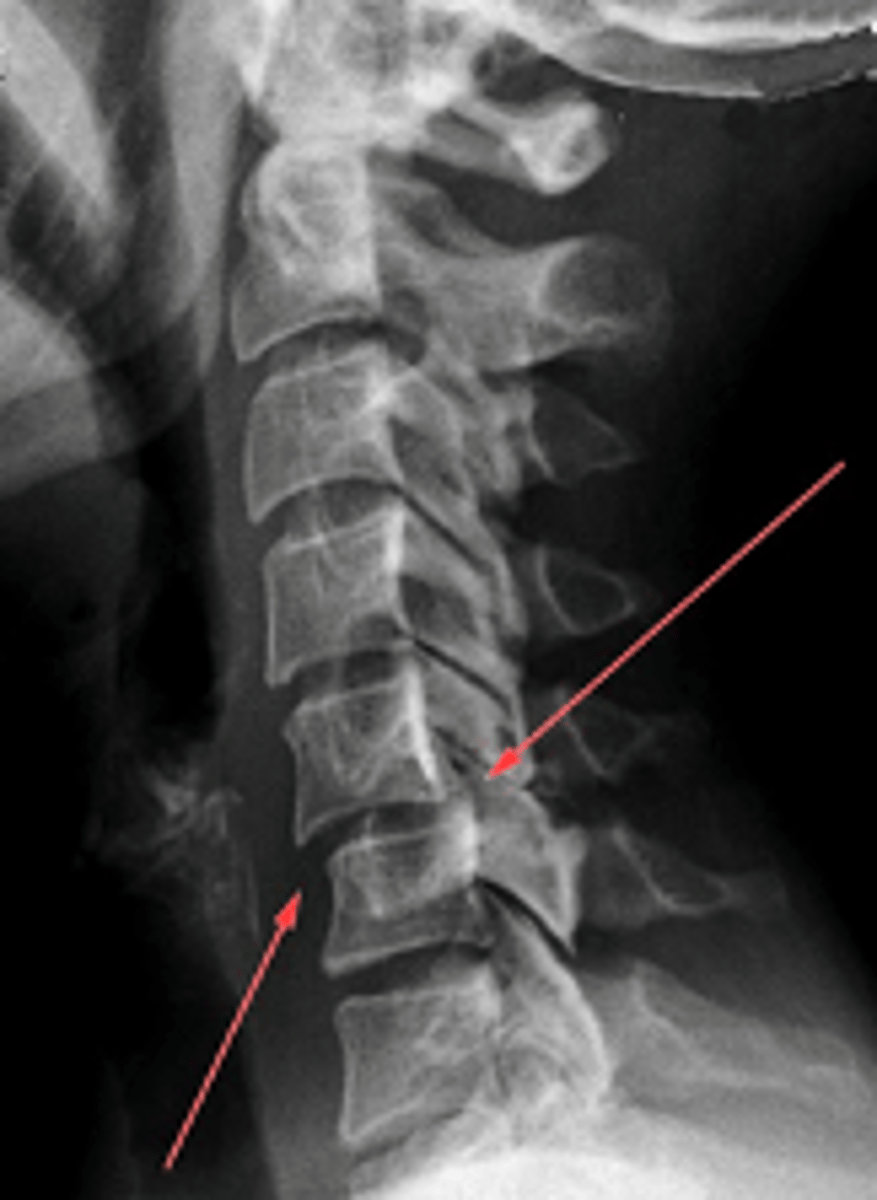
Subluxation
a partial dislocation of a joint; common in the vertebral column
Fractures
A disruption (break) in a bone usually caused by mechanical forces
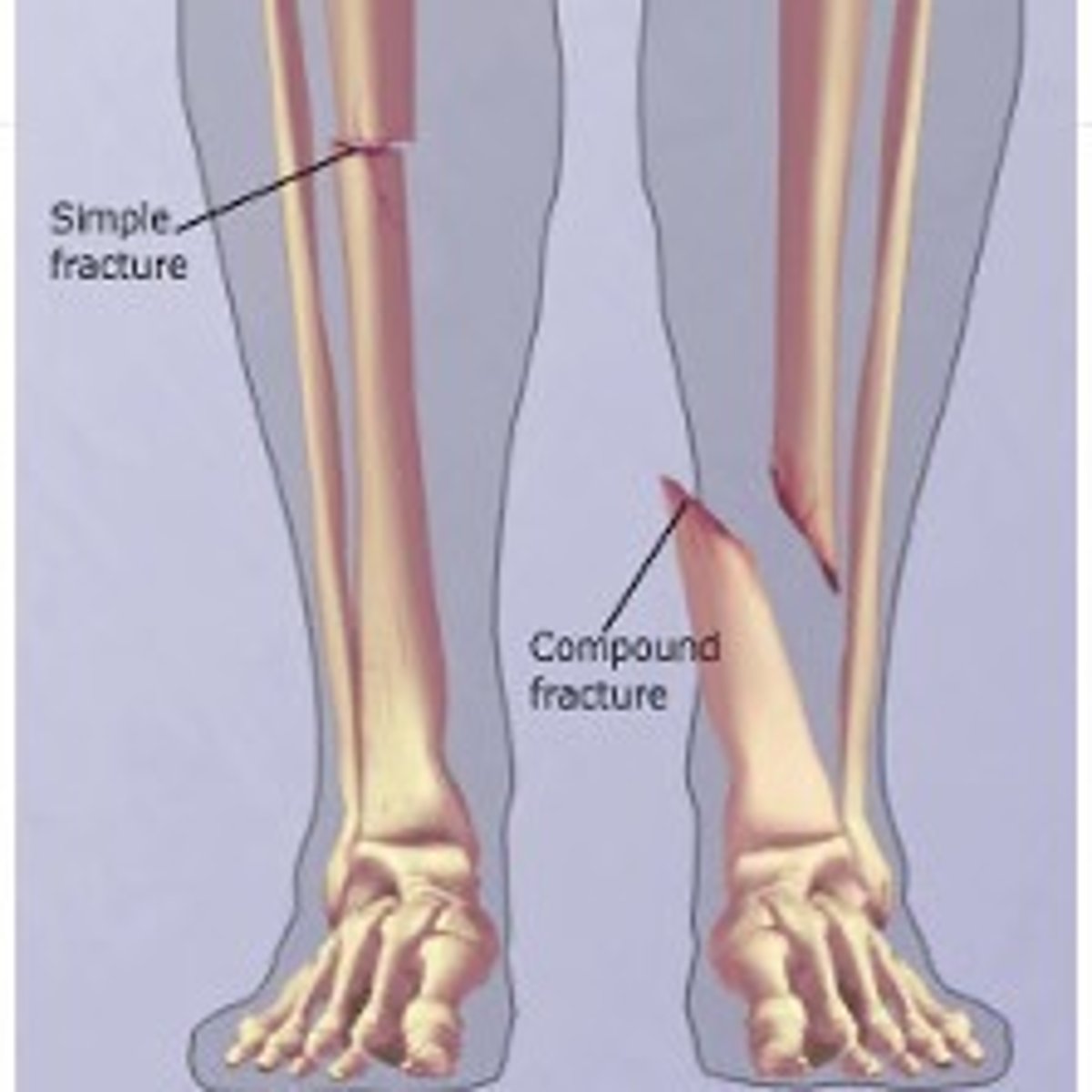
Simple (closed) fracture
a fracture in which the bone does not break through the skin (classification)
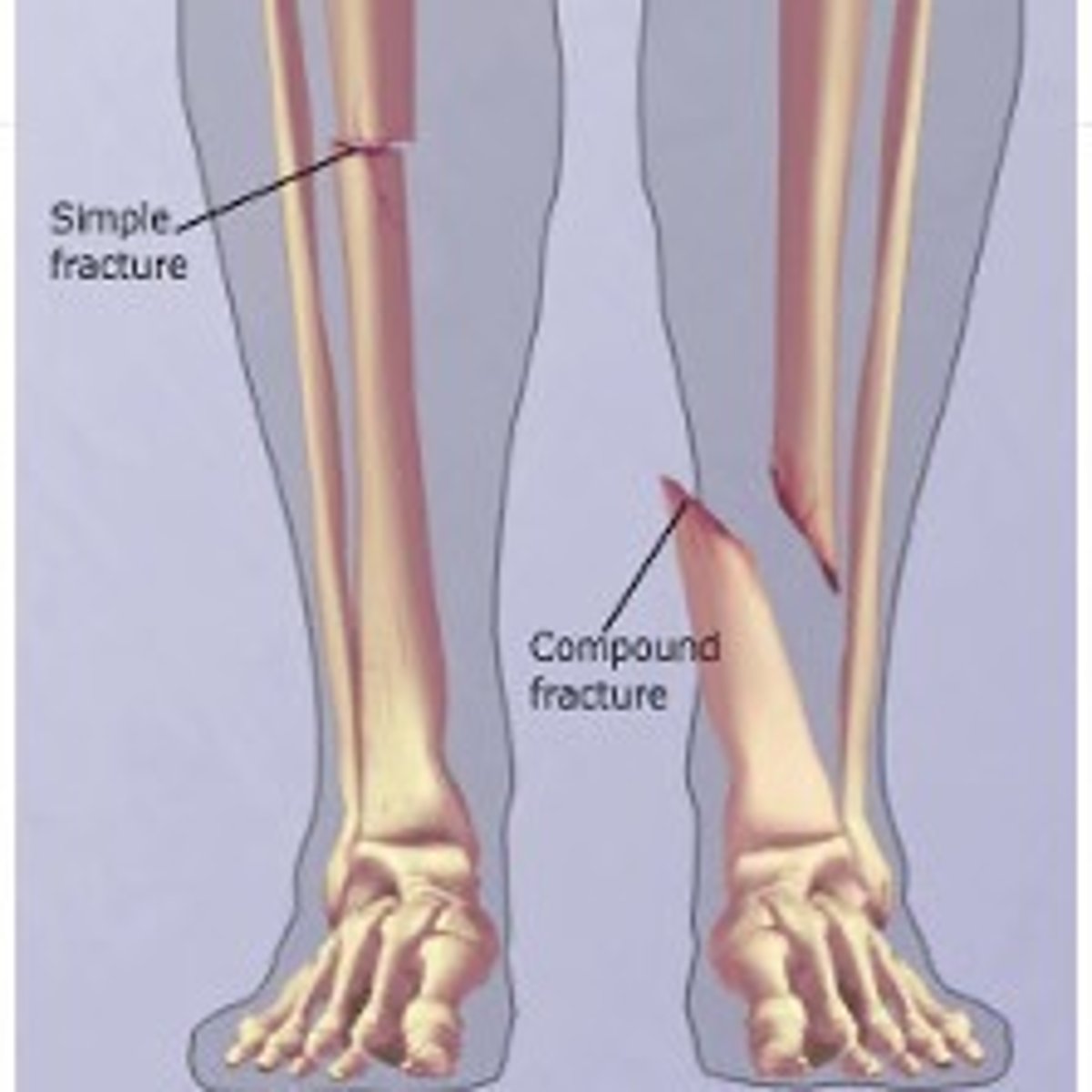
Compound (partial) fracture
a fracture in which a portion of the bone protrudes through the skin (classification)
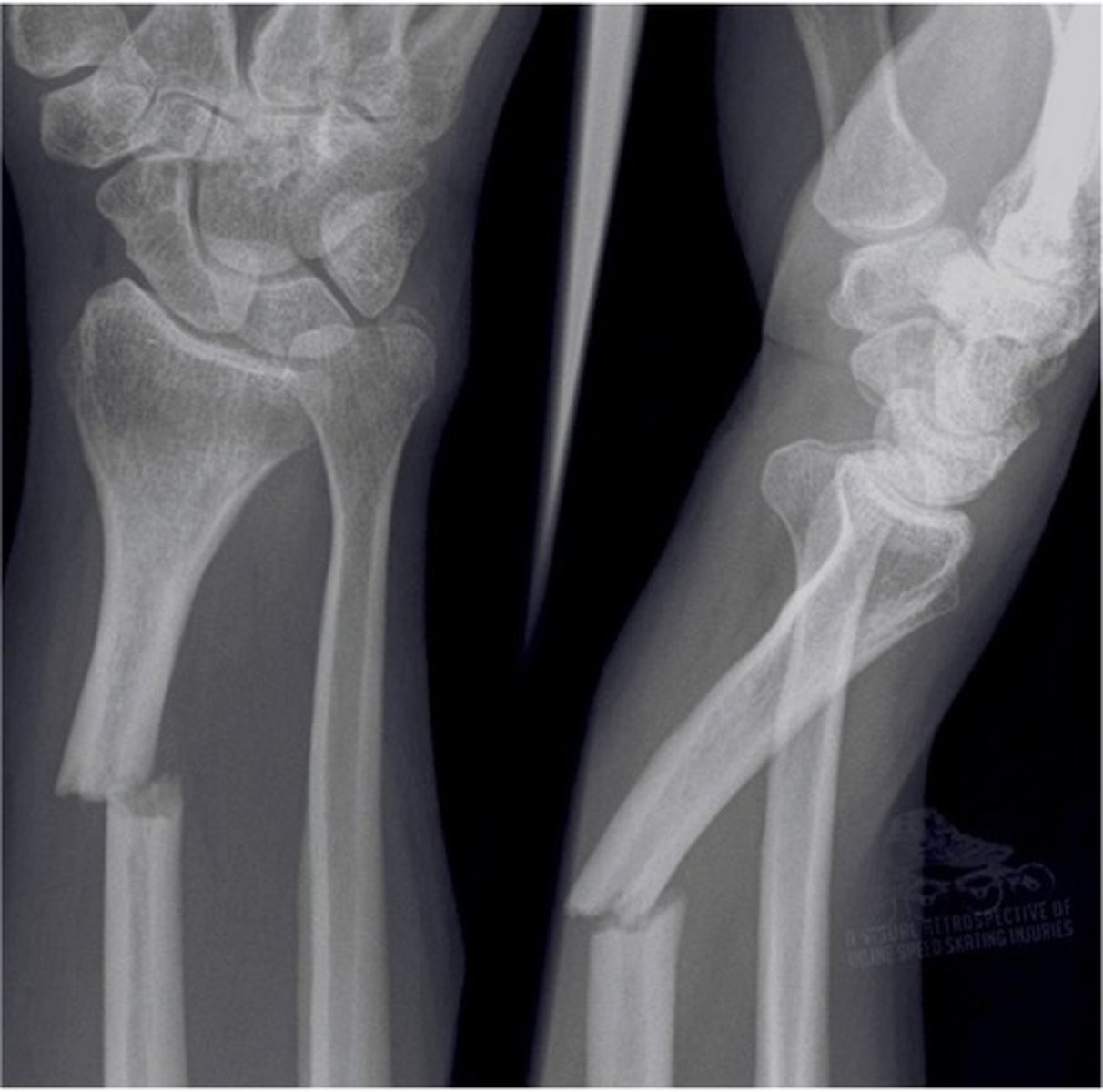
Complete fracture
fracture through the bone that is broken into 2 pieces (transverse, oblique, spiral)
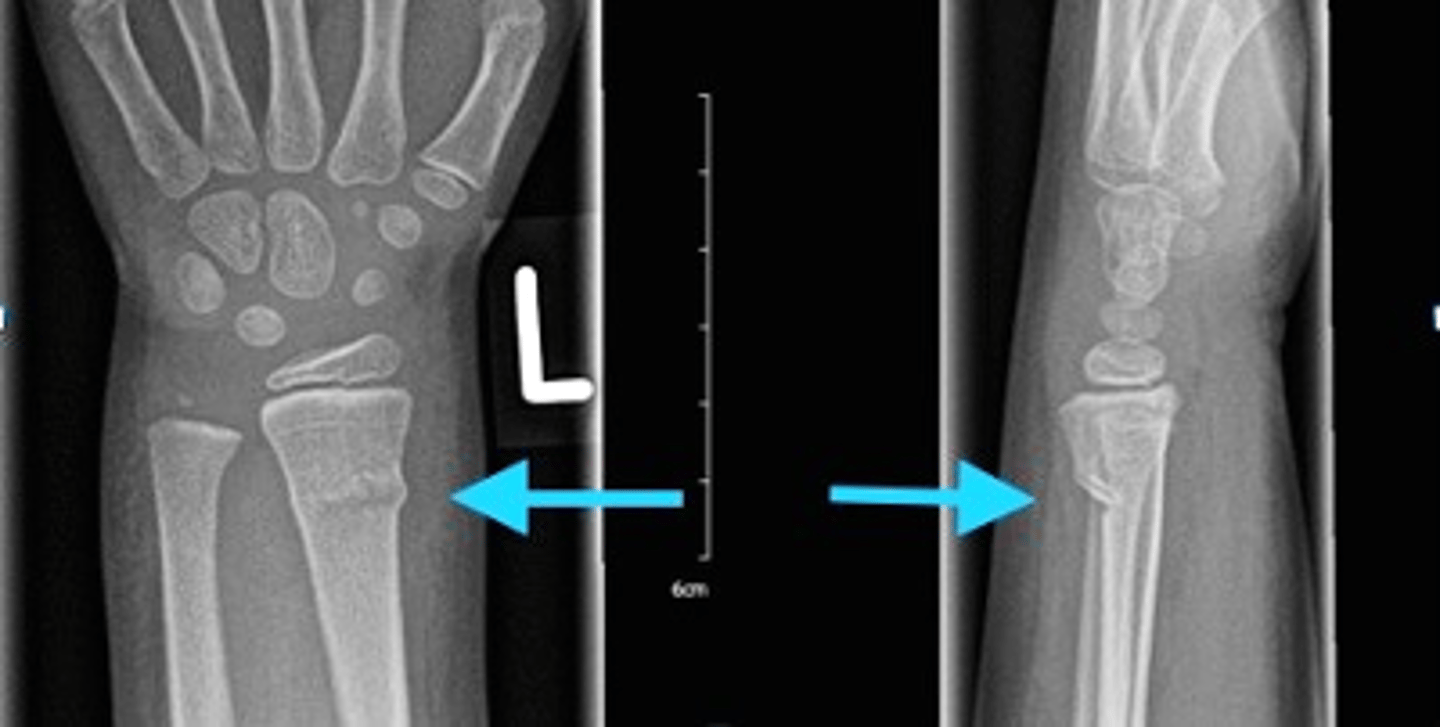
Incomplete (partial) fracture
fracture does not traverse through entire bone (greenstick)
Comminuted fracture
bone is splintered or crushed, resulting in 2 or more fragments
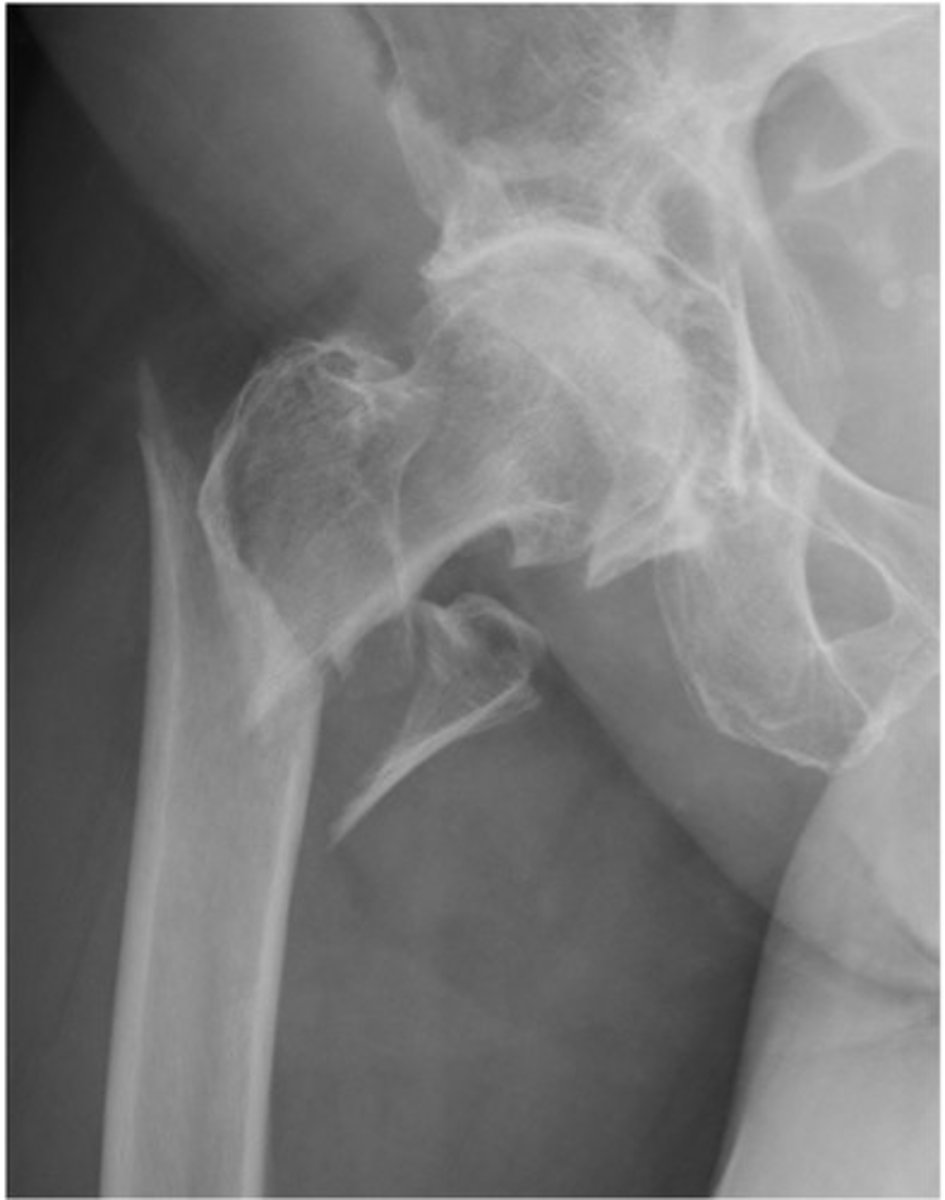
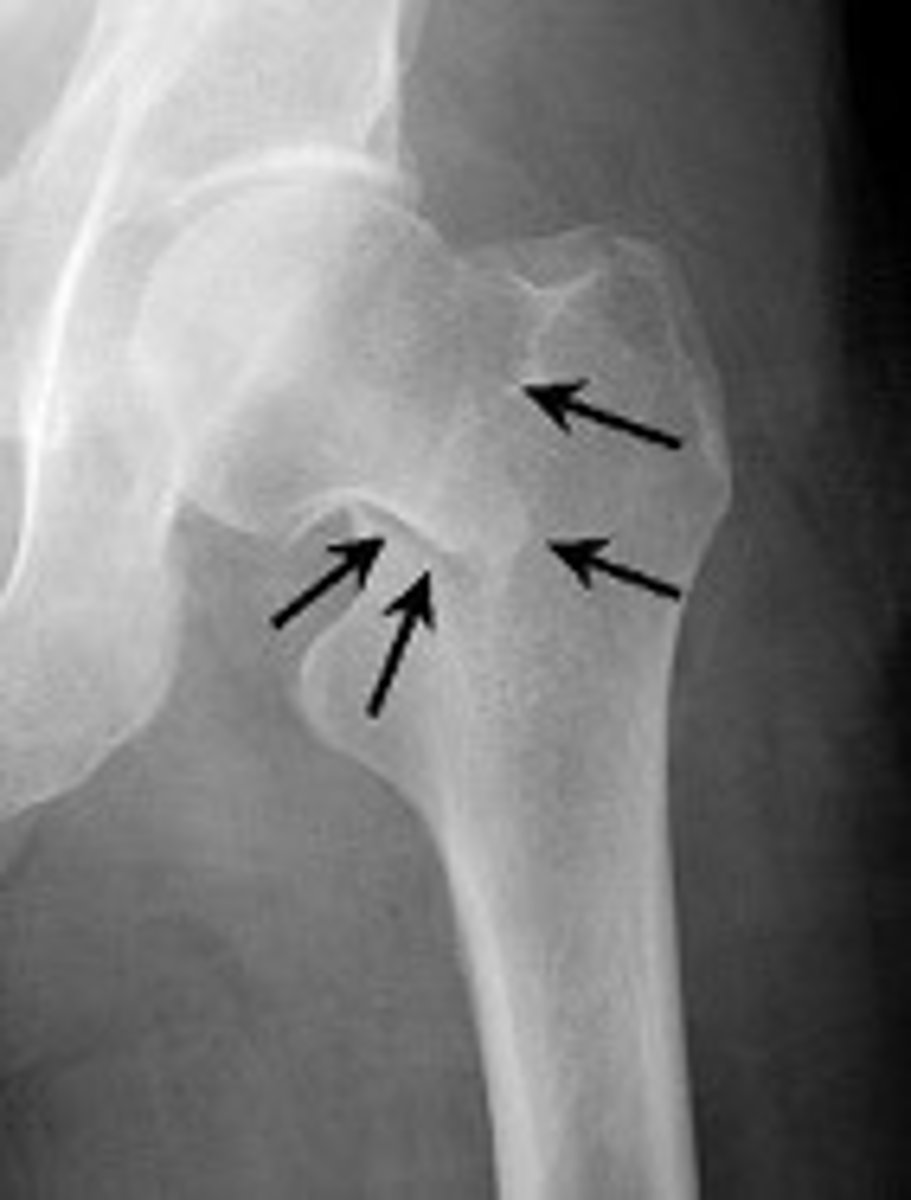
Impacted fracture
one fragment firmly driven into another (shaft into head; common in proximal end of femur, humerus, ulna)
Orthogonal views
at right angles to each other (what type of view)
Typically a true AP/PA & lateral
Images obtained though:
-Standard positioning if possible
-Angling the CR and/or IR to maintain CR-part-IR alignment
-Horizontal beam laterals (cross-table)
Intramedullary fixation
refers to the use of rods & nails inserted into the shaft of a long bone to stabilize fractures. This technique is usually done on the humerus, tibia, & femur.
External fixation
refers to the use of an orthopedic device outside the patient to immobilize bone & align fractures. External fixation devices usually require pins to be drilled through the skin & into the bone. The part of the pins outside of the body are attached to the external fixator device. Such devices are kept on for a period of time & can be periodically adjusted to help with alignment.
Internal fixation
refers to the use of orthopedic hardware inside the patient to align the fracture(s). An open reduction surgery where hardware is implanted to align a fracture is called an ORIF (open reduction with internal fixation).
ORIF (open reduction with internal fixation).
An open reduction surgery where hardware is implanted to align a fracture is called an
Open reduction
alignment of a fracture through a surgical incision & implantation of screws, plates, rods, or other orthopedic hardware. Open reductions may or may not use fluoroscopy. If fluoroscopy is not used, portable images are usually done during surgery. The part will have sutures and/or staples closing the skin & a surgical dressing applied. The part may also be immobilized with a splint. Post-surgical images are obtained.
Closed reduction
alignment of a fracture by manual manipulation. Closed reductions involve fluoroscopy while the surgeon manipulates the body part to align the fracture(s). Small pins may be inserted through the skin into the part to help with stabilization. The part is usually immobilized with a cast or splint & post-reduction images are obtained.
C-Arm
A __________ is typically used for fluoroscopic guidance & imaging. Some may require images taken with a portable x-ray unit.
Scoliosis correction
A surgical procedure done to correct severe forms of scoliosis through implantation of devices such as a Harrington rod
Kyphoplasty
A surgical procedure done to provide stability & pain relief to patients suffering from compression fractures. The procedure involves the introduction of a balloon into the body of the affected vertebra, which is then inflated to expand the collapse. Bone cement is then introduced to fill the space, as is done with vertebroplasty
Vertebroplasty
A surgical procedure done to provide stability & pain relief to patients suffering from compression fractures. The procedure involves the introduction of bone cement (an acrylic) directly into the body of the affected vertebrae
Diskectomy & Microdiskectomy
A surgical procedure done to remove a portion of an intervertebral disc, typically due to herniation
Pacemaker Insertion Procedure
what procedure
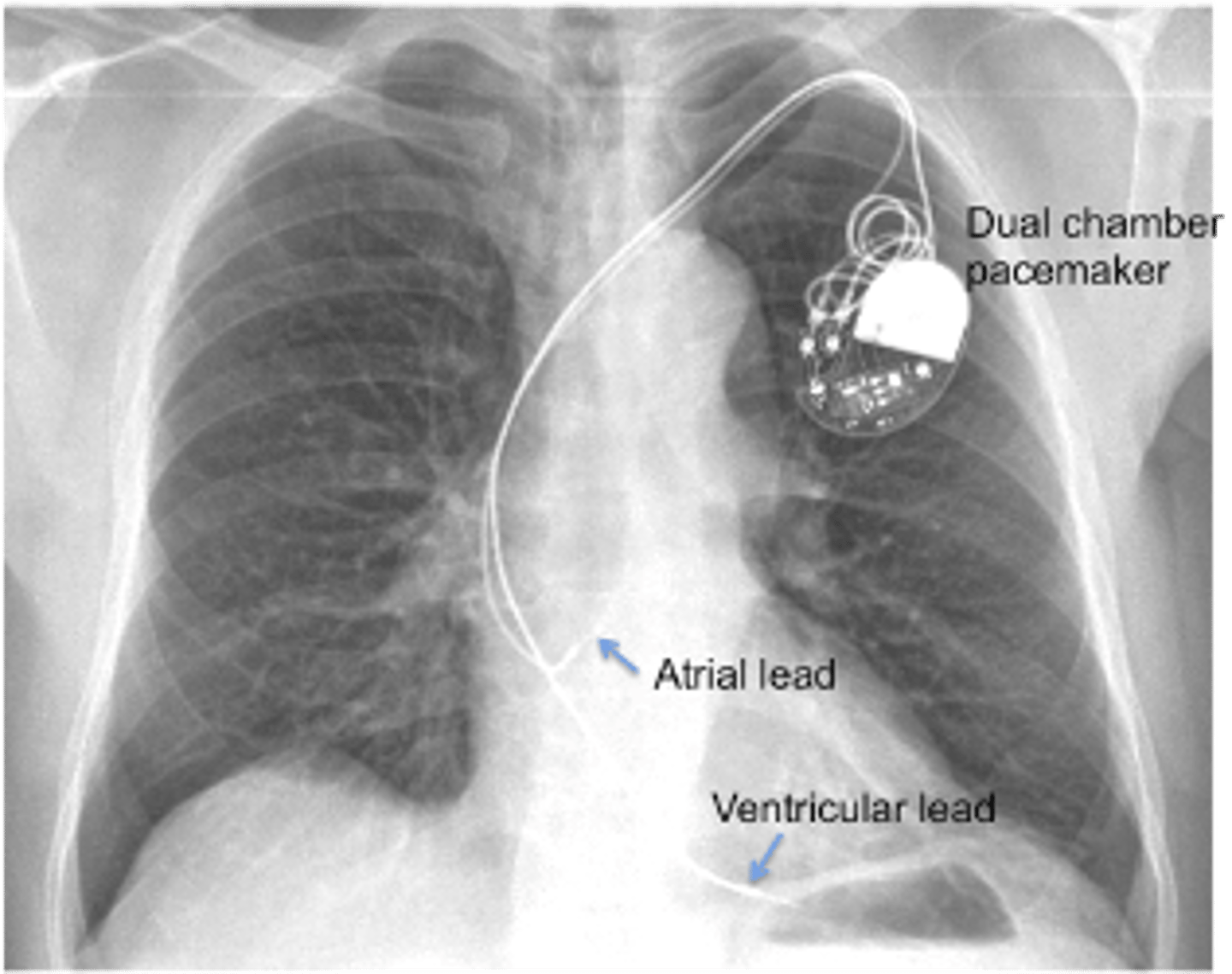
pacemaker
A ___________________ is a medical device implanted in the chest or abdomen that uses electrical impulses to regulate the heart beat. Pacemakers are used to treat a variety of arrhythmias, most notably bradycardia.
Cholangiogram Procedure
what procedure (study image incase labeling is asked)
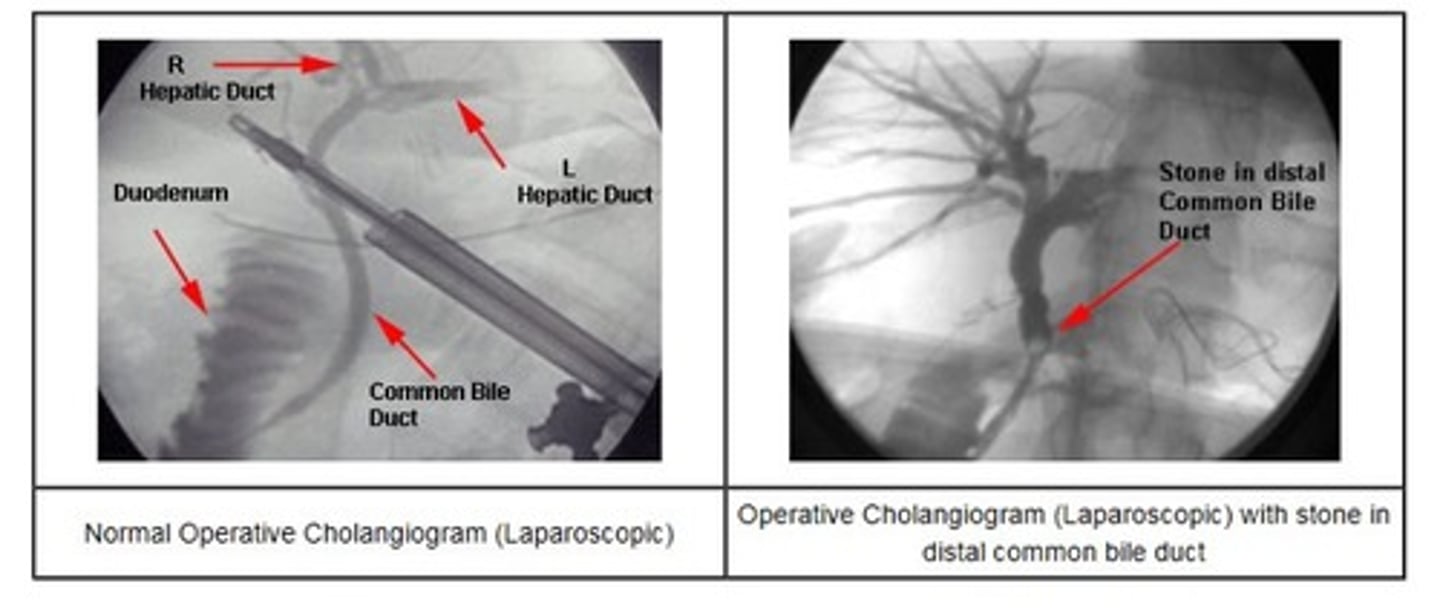
operative cholangiogram
An ________________________________ is an x-ray procedure done to demonstrate anatomy of the biliary ductal system & drainage into the duodenum
time
distance
shielding
the 3 cardinal rules of radiation protection
mask
Surgical masks usually have a pliable nose stripe & 2 sets of ties to secure it to your face. They are disposable, must be discarded after each use & changed for each procedure.
Shoes & Shoe Covers
Shoes worn in the OR must be clean & closed toe. Disposable shoe covers slide over footwear. They must be discarded after each use & changed for each procedure.
Head Cover
Disposable caps or hoods slide over the head & have a tie that secures them. Hair & jewelry must be tucked completely under the cap/hood before entering the OR.
Scrubs
A clean, fresh pair of surgical scrubs must be worn during surgery. Scrubs worn as a uniform while working throughout the hospital are not to be worn inside an OR room.
scrubs
head cover
shoes & shoe covers
masks
list all the surgical attire
draped with a sterile barrier.
If radiographic equipment is to be brought near a sterile area or passed over the surgical field, then it must be ________________________________
1 foot
Anything that is draped is considered a sterile area & you should maintain at least a ______________ distance from such areas.
sterile
The ____________ area in an OR include the patient, surgical field, surgeon, surgical assistants, surgical equipment on the sterile field, draped tables & carts
non sterile
The _____________________ areas are places within the OR where the anesthesiologist, circulating nurse & others (such as a radiographer) are located. Radiographic equipment can be operated in this area without being draped.
confidence
communication
problem-solving
mastery
what 4 skills are needed to work in the OR
portable shields
Besides lead aprons, OR rooms usually have _____________________ that can be moved around the room
sprain
Seen as soft tissue swelling on x-ray (sprain or contusion_