Class 16 transcript + slides
 Call Kai
 Learn
Learn Practice Test
 Spaced Repetition
 Match
Match Flashcards
 Knowt Play
1/39

There's no tags or description
Looks like no tags are added yet.
Name | Mastery | Learn | Test | Matching | Spaced | Call with Kai |
|---|
No analytics yet
Send a link to your students to track their progress
40 Terms
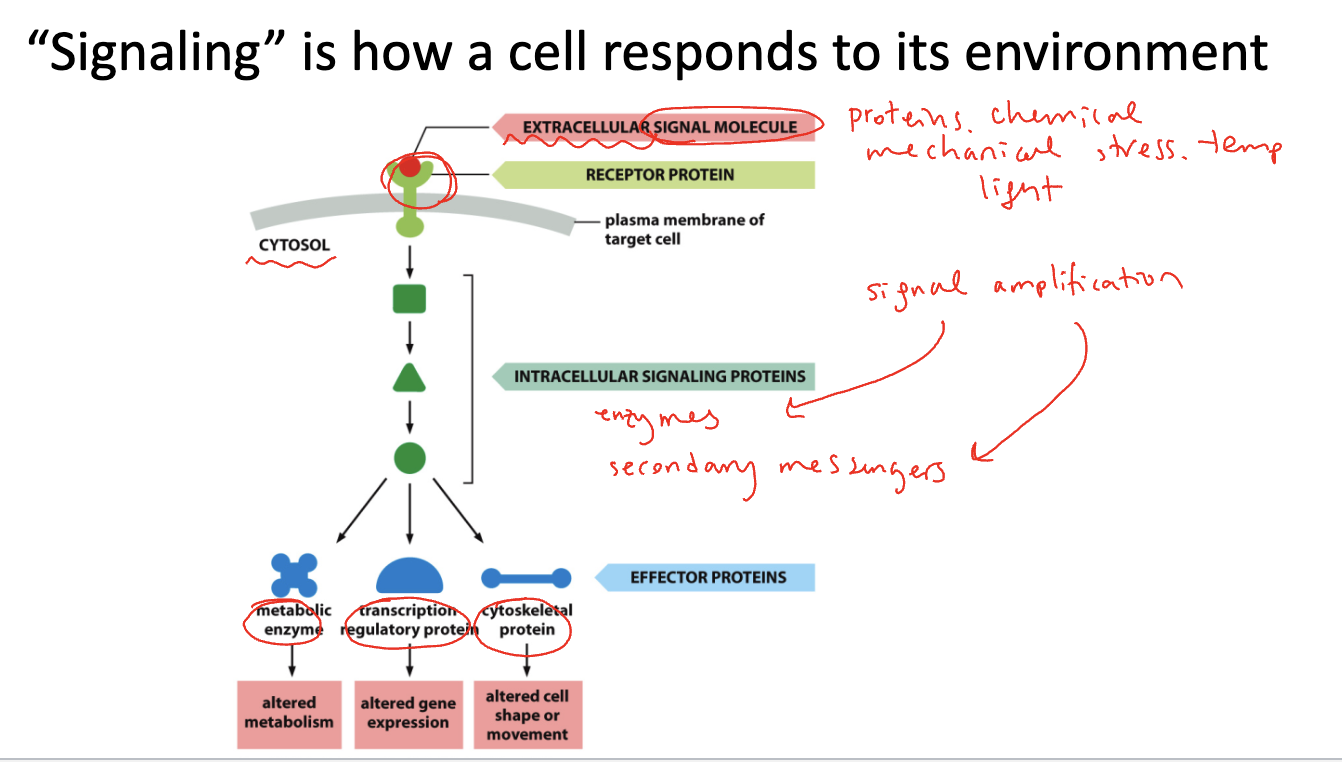
Signaling molecule
A molecule or physical stimulus that carries information from one cell to another or from the environment to a cell.
Can be a ligand (peptide, small chemical), mechanical force, temperature, or light.
Physical signals are often converted to chemical signals inside the cell.
Receptor (cell signaling)
A protein, often spanning the plasma membrane, that binds to a signaling molecule (ligand) or detects a physical stimulus.
Ligand binding induces a conformational change in the receptor, initiating intracellular signaling.
Signal transduction
The process by which an extracellular signal is converted into an intracellular response.
Involves a relay of signaling molecules (often enzymes) that amplify and transmit the signal from the receptor to effector proteins.
Signal amplification
The process by which a small initial signal is greatly magnified as it travels through a signaling pathway.
Achieved through enzymes (which act on multiple substrates) and second messengers (small molecules produced in large quantities).
Effector proteins
The final targets of a signaling pathway that execute the cellular response. Can include metabolic enzymes (alter metabolism), transcription factors (alter gene expression), or cytoskeletal regulators (alter cell shape/movement).
Second messenger, what are they, what do they do
A small, diffusible signaling molecule produced in large quantities in response to an extracellular signal.
Examples include cyclic AMP (cAMP), cyclic GMP, and calcium ions (Ca²⁺).
Second messengers greatly amplify signals.
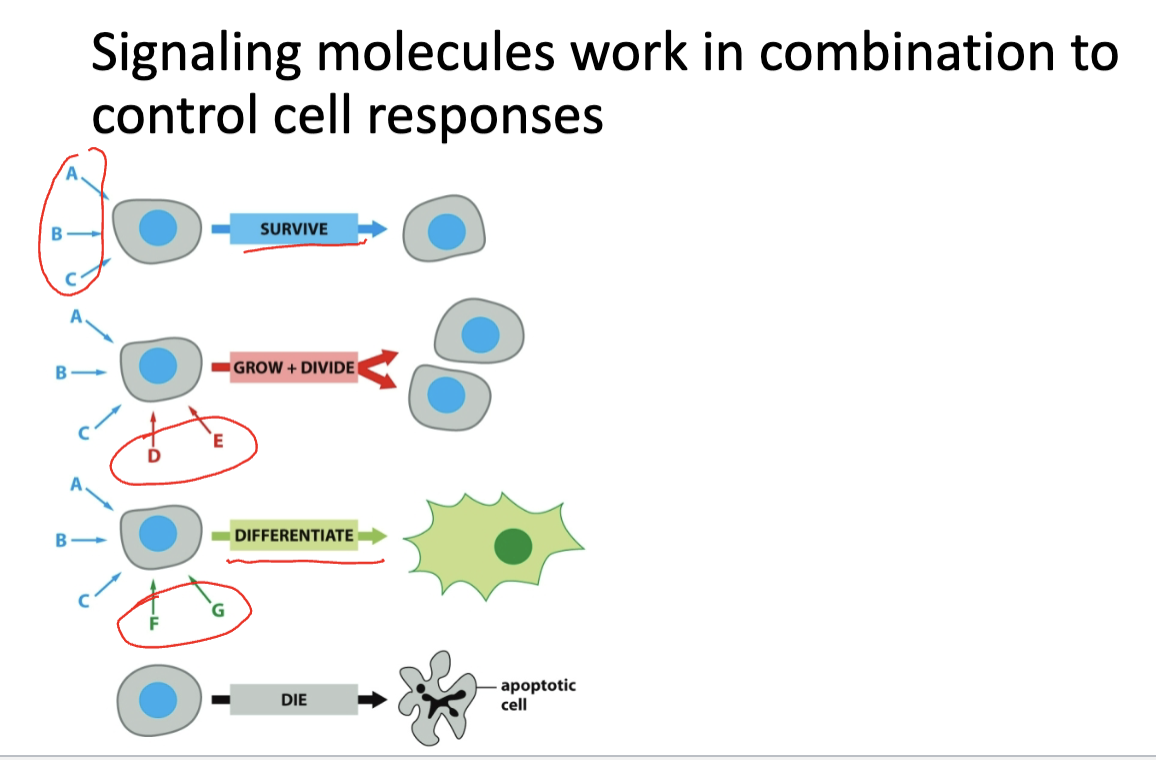
multiple signals
Cells receive multiple signals simultaneously and must integrate them to produce an appropriate response.
The combination of signals (e.g., survival + growth vs. survival + differentiation) determines the cellular outcome (e.g., proliferate, differentiate, or die).
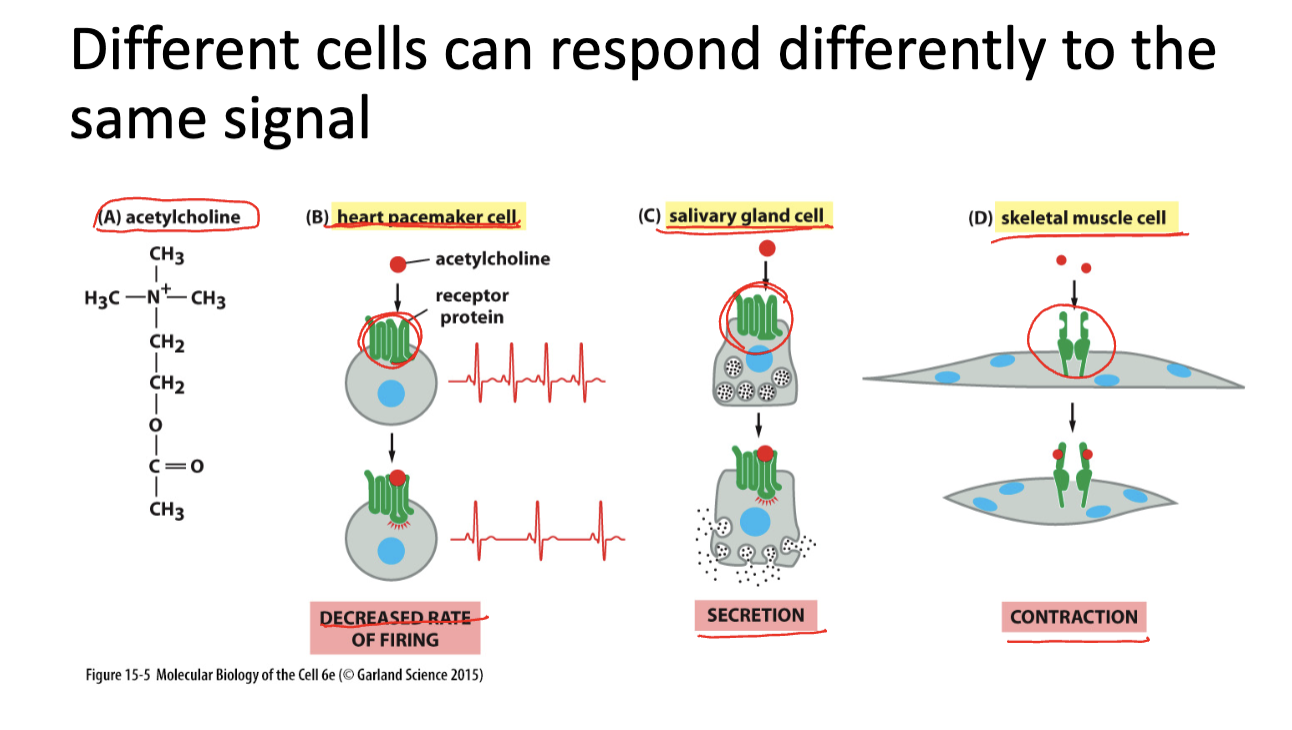
Cell-type specific signaling responses
The same signaling molecule can produce different responses in different cell types because the intracellular wiring (expression of receptors, signaling intermediates, and effectors) differs.
Example: acetylcholine decreases firing in heart pacemaker cells but induces secretion in salivary gland cells and contraction in skeletal muscle.
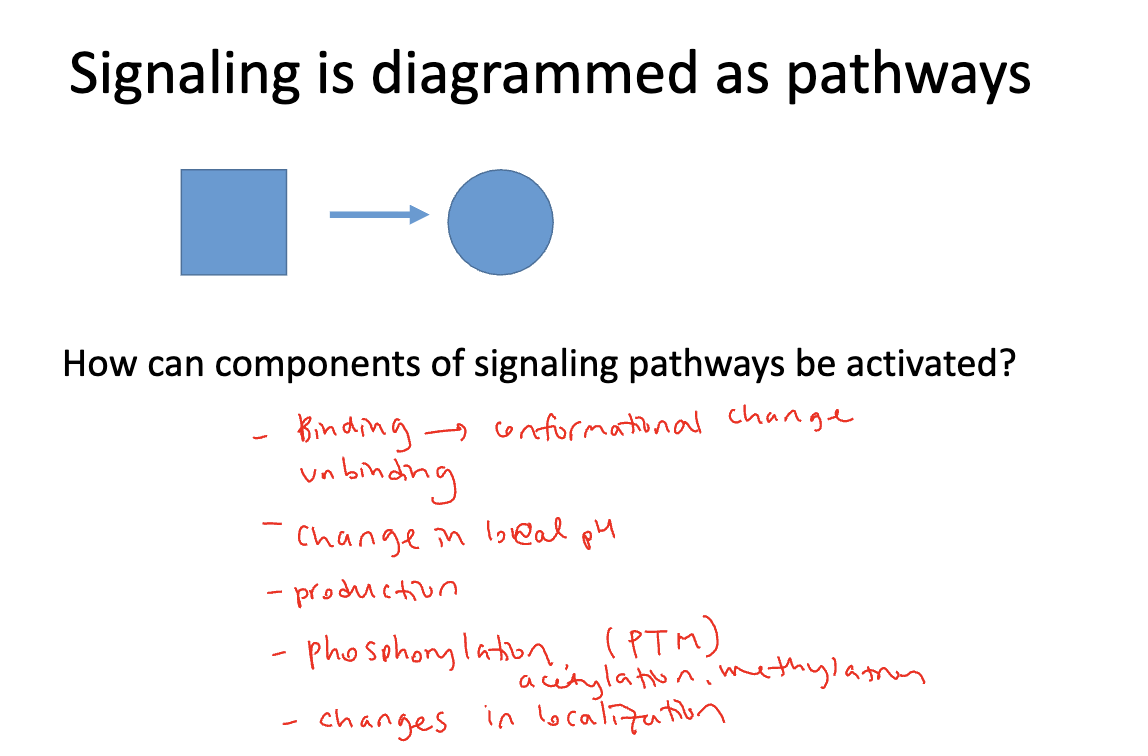
Activation of signaling molecules (mechanisms)
Signaling molecules can be activated by:
binding/unbinding (inducing conformational change),
post-translational modifications (phosphorylation, acetylation, methylation),
changes in localization,
changes in quantity (increased production or decreased degradation),
GTP/GDP exchange (small G proteins)
proteolytic cleavage.
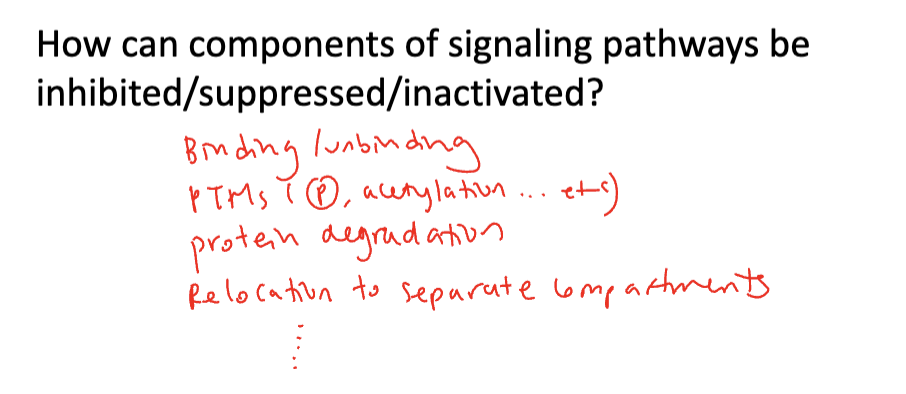
Inhibition of signaling molecules (mechanisms)
Inhibition can occur through the same mechanisms as activation but in reverse:
binding (blocking activity),
unbinding (releasing an activator),
post-translational modifications (inactivating),
degradation (removing the protein),
relocalization (sequestering away from active site),
changing pH/local environment.
Positive feedback loop, what is it, effects, useful for
A regulatory mechanism where a downstream signaling molecule feeds back to reinforce the activation of an upstream component.
This creates self-sustaining signaling that persists even after the original signal disappears.
Positive feedback is used for making drastic, long-term cellular changes such as differentiation.
Negative feedback loop
A regulatory mechanism where a downstream signaling molecule feeds back to inhibit an upstream component.
This dampens the signal, allowing adaptation and maintaining homeostasis.
Negative feedback enables cells to respond again to stronger signals (adaptation).
Adaptation (signaling)
A phenomenon where a cell's response to a constant signal decreases over time, allowing the cell to detect changes in signal intensity.
Adaptation is often mediated by negative feedback loops.
Example: smelling a bad odor, then no longer noticing it, but detecting a stronger odor.
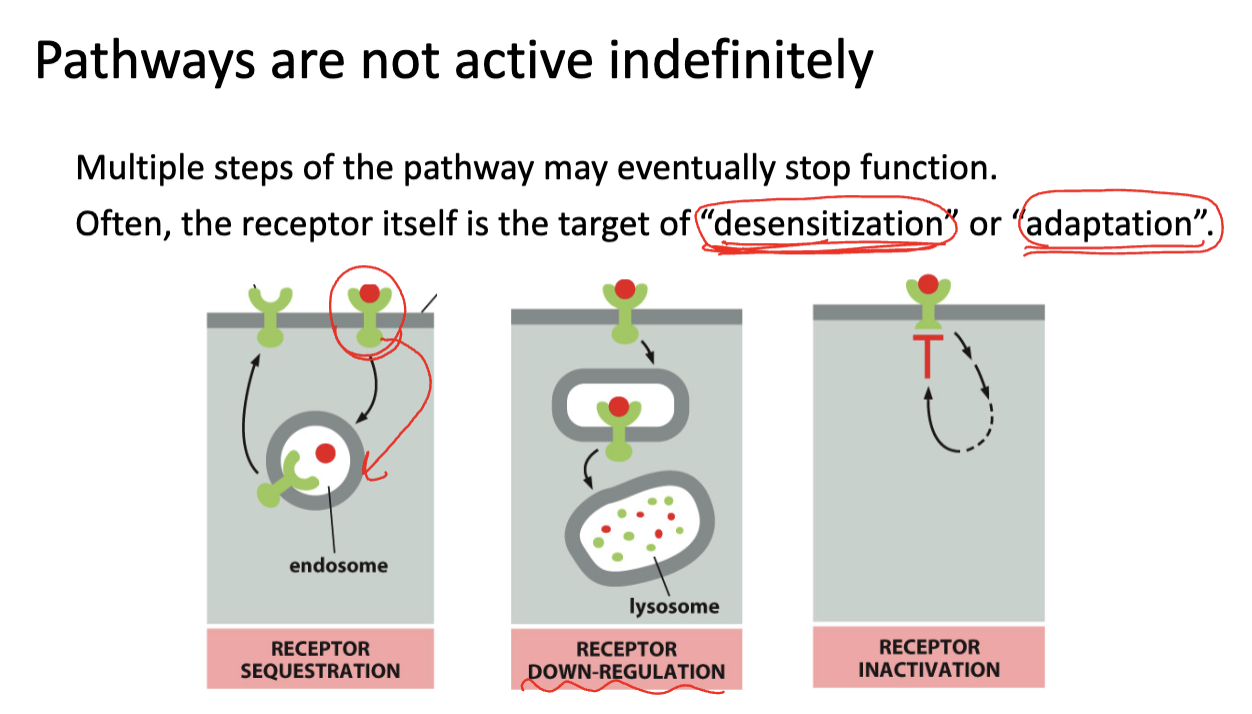
Desensitization, what is it, how does it happen, effect
A specific molecular mechanism for adaptation where receptors are removed from the plasma membrane or inactivated.
Can occur through endocytosis (sequestering receptors inside the cell) or lysosomal degradation (downregulating receptor levels).
Desensitization makes cells temporarily or permanently unresponsive to a signal.
Oscillatory signaling output
A signaling pattern that oscillates over time, often generated by the combination of positive and negative feedback loops.
Positive feedback drives signal up, negative feedback dampens it, creating repeated cycles.
This allows precise temporal control of cellular responses.
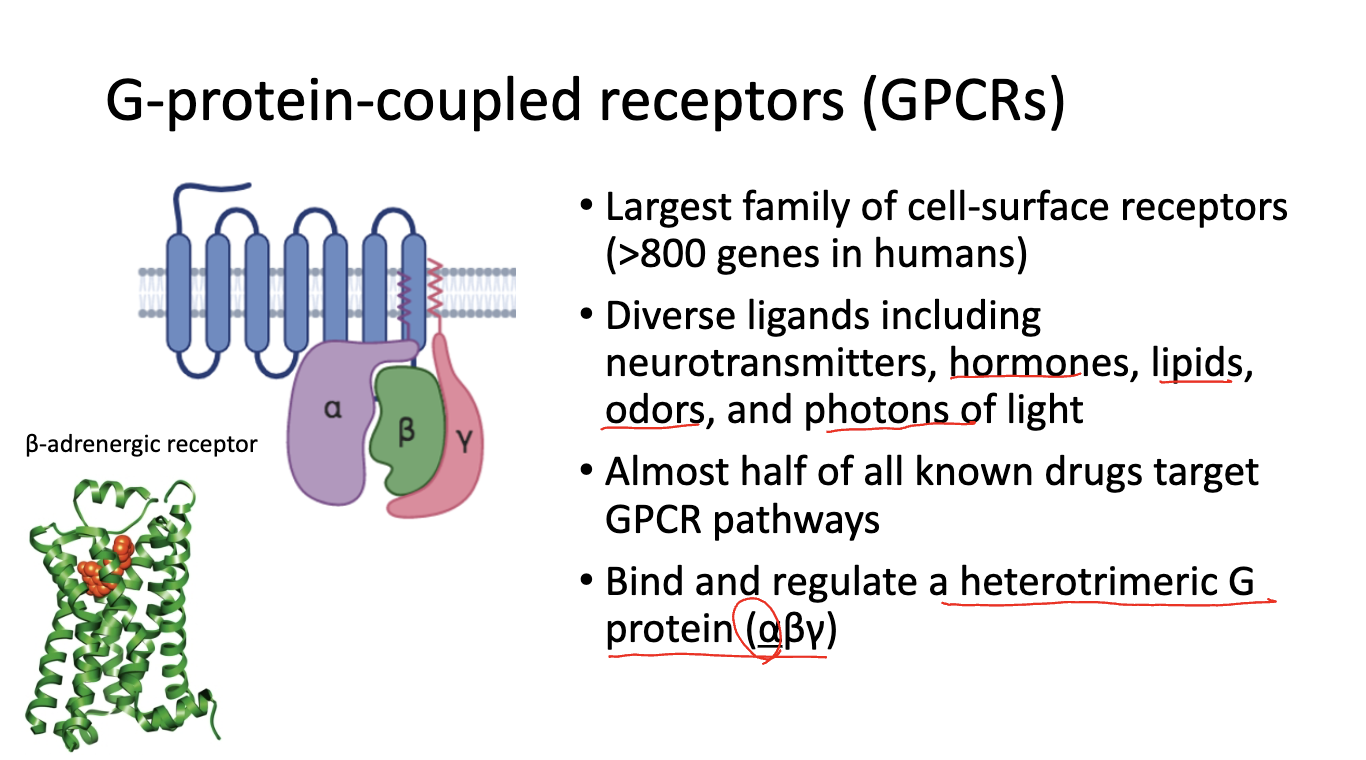
G protein-coupled receptor (GPCR)
The largest family of cell surface receptors, characterized by seven transmembrane domains forming a cylinder-like structure with a ligand-binding pocket inside.
GPCRs activate heterotrimeric G proteins (Gα, Gβ, Gγ).
Approximately half of all drugs target GPCRs.
GPCR ligands
GPCRs bind diverse ligands including neurotransmitters, hormones, lipids, and even photons of light (in the case of rhodopsin in the retina).
Heterotrimeric G protein
A signaling complex
composed of Gα, Gβ, and Gγ subunits. The Gα subunit binds GDP/GTP and has intrinsic GTPase activity.
Gβ and Gγ function as a tightly associated dimer.
All three subunits are anchored to the plasma membrane via lipid modifications.
GPCR activation of G protein
Upon ligand binding, the activated GPCR acts as a Guanine Nucleotide Exchange Factor (GEF), promoting the exchange of GDP for GTP on Gα.
This activates Gα, causing it to dissociate from Gβγ.
Both Gα-GTP and free Gβγ can then activate downstream effectors.
Adenylyl cyclase, what is it, what does it do, how does it do it
A membrane-bound enzyme activated by Gα (specifically Gαs)
converts ATP to cyclic AMP (cAMP).
Adenylyl cyclase removes two phosphate groups to form the cyclic nucleotide.
Cyclic AMP (cAMP), what is it, characteristics, what does it do
A second messenger
produced from ATP by adenylyl cyclase.
cAMP is unstable and short-lived because it is continuously hydrolyzed by phosphodiesterase to 5'-AMP.
cAMP activates protein kinase A (PKA).
Phosphodiesterase (cAMP)
enzyme that hydrolyzes cyclic AMP to 5'-AMP, terminating the cAMP signal.
The balance between adenylyl cyclase (produces cAMP) and phosphodiesterase (destroys cAMP) determines the steady-state level of cAMP.
Protein kinase A (PKA)
A kinase activated by cAMP. PKA is a tetramer of two catalytic subunits and two regulatory subunits. cAMP binds to the regulatory subunits, causing them to dissociate from and thereby activate the catalytic subunits. Active PKA phosphorylates target proteins including transcription factors.
CREB (cAMP Response Element-Binding protein)
A transcription factor that is phosphorylated and activated by PKA. CREB binds to the cAMP Response Element (CRE) in DNA to induce gene expression changes. This pathway is important for learning and long-term memory.
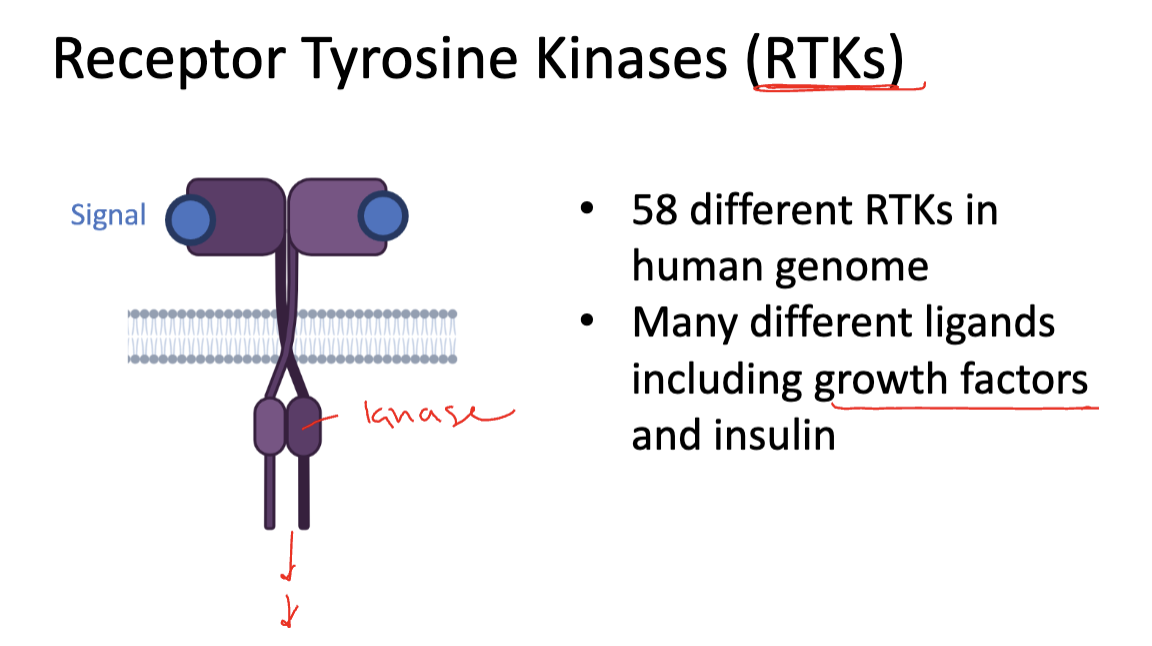
Receptor Tyrosine Kinase (RTK)
A class of enzyme-coupled receptors that are typically dimeric. Ligand binding induces dimerization and autophosphorylation (trans-autophosphorylation) of the intracellular kinase domains, activating downstream signaling pathways. RTKs are often activated by growth factors and regulate cell growth and division. Mutations in RTK pathways are frequently linked to cancer.
Signal amplification steps (GPCR pathway)
Amplification occurs at multiple steps: 1) One activated GPCR can activate multiple Gα proteins. 2) One adenylyl cyclase produces many cAMP molecules. 3) PKA, a kinase, can phosphorylate many target proteins. 4) Ion channels (e.g., in smell) allow massive ion influx.
Smell (olfactory) signaling pathway
Odorant binds GPCR → GPCR activates Gα (amplification) → Gα activates adenylyl cyclase → adenylyl cyclase produces cAMP (amplification) → cAMP opens cyclic nucleotide-gated (CNG) cation channels → Na⁺/Ca²⁺ influx depolarizes membrane → Ca²⁺ opens Cl⁻ channels (further depolarization) → neurotransmitter release. All steps are activating (arrows).
Vision (phototransduction) signaling pathway - Inverse logic
In the dark: high cGMP keeps CNG channels open → membrane depolarized → neurotransmitter released. Light: photon activates rhodopsin (GPCR) → GPCR activates Gα (transducin) → Gα activates phosphodiesterase → phosphodiesterase hydrolyzes cGMP to GMP (removing the second messenger) → CNG channels close → membrane hyperpolarizes → neurotransmitter release stops. The pathway uses a blocker (inhibition) rather than activation.
Transducin
The Gα subunit in the vision pathway (rod cells). Light-activated rhodopsin (GPCR) acts as a GEF for transducin, causing it to exchange GDP for GTP and activate. Activated transducin then activates phosphodiesterase.
Phosphodiesterase (vision pathway)
The effector enzyme activated by transducin (Gα) in the vision pathway. Instead of producing a second messenger, it hydrolyzes cyclic GMP (cGMP) to GMP, reducing cGMP levels and closing cGMP-gated ion channels.
Cyclic GMP (cGMP)
A second messenger in the vision pathway. In the dark, cGMP levels are high, keeping cGMP-gated channels open. Light triggers hydrolysis of cGMP, closing the channels.
Amplification in the vision pathway
Amplification still occurs despite the inverse logic: 1) One activated rhodopsin activates multiple transducin (Gα) molecules. 2) One activated phosphodiesterase hydrolyzes many cGMP molecules (amplifying the "emptiness"). The closing of channels also prevents ion influx, but whether this is "amplification" is debate
“Signaling”
Signaling molecules work
in combination to control cell responses
Different cells
can respond differently to the same signal
How can components of signaling pathways be activated?
How can components of signaling pathways be inhibited/suppressed/inactivated?
Pathways are no
active indefinitely
Multiple steps of the pathway may eventually stop function.
Often, the receptor itself is the target of “desensitization” or “adaptation”.
G-protein-coupled receptors (GPCRs)
• Largest family of cell-surface receptors (>800 genes in humans)
• Diverse ligands including neurotransmitters, hormones, lipids, odors, and photons of light
• Almost half of all known drugs target GPCR pathways
• Bind and regulate a heterotrimeric G protein (αβγ)
Receptor Tyrosine Kinases (RTKs)
• 58 different RTKs in human genome
• Many different ligands including growth factors and insulin