1.2 The Persian Wars and Greek (Dis)unity OCR A Level Classical Civilisation
 Call Kai
 Learn
Learn Practice Test
 Spaced Repetition
 Match
Match Flashcards
 Knowt Play
1/40

There's no tags or description
Looks like no tags are added yet.
Name | Mastery | Learn | Test | Matching | Spaced | Call with Kai |
|---|
No analytics yet
Send a link to your students to track their progress
41 Terms
Darius
King of Persia, tried to invade Greece but failed
Xerxes
King of Persia, son of Darius, wanted to continue his father's legacy by successfully invading Greece and also didn't like the Athenians because of the Burning of Sardis
Burning of Sardis
498 BC, Athenians sent help during the Ionian revolt to help burn down Sardis and the Persians NOT happy
Mardonius
General of Persian army and advisor of Xerxes
Hoplite
Heavily armed foot soldier, ancient Greece, would fight in a Phalanx
Marathon
490 BC, land battle in which the Athenians and their allies defeated the Persians
Thermopylae
480 BC, land battle in a mountain pass where the Persians had a Pyrrhic victory
Salamis
480 BC, naval battle where the Greeks won against odds
Plataea
479 BC, last major battle of the Persian War where the Greeks defeated the Persians
Hippias
Tyrant of Athens, exiled in 510 BC and joined the Persians, went to the battle of Marathon
Hippias' omen at Marathon
(According to Herodotus) he lost a tooth and couldn't find it again which meant he wouldn't regain his city (Athens)
Datis
Persian general at the Battle of Marathon who took some of his troops back to the ship to sail to Athens
Artaphernes
Persian general left at Marathon with 12,000 soldiers
Parthenon frieze interpretation
Some think that it commemorates the 192 who died at Marathon as horsemen (Marathon important to Athenian identity because defending the new democracy)
Pheidippides
Runner who ran from Athens to Sparta to request aid, and from Marathon to Athens to deliver the message of the Persian defeat (then died from exhaustion)
Miltiades
Athenian general who defeated the Persians at Marathon in 490 BC
Hellespont
Long, narrow body of water between Europe and Asia, Xerxes tried to build bridge across it but the sea destroyed and he ordered it to be given 300 lashes
Persian troop numbers
Xerxes is said to have brought 5 million troops by Herodotus but it is more likely 200,000
Isthmus of Corinth
Where poleis met to discuss how they will respond to Persian invasion
What was decided when the poleis met?
Leadership of land army would be Sparta, navy leadership was given to Sparta instead of Athens who had most of the ships (Herodotus suggests they were jealous), penalties for medising states
Medise
To go over to the Persian side
Why did many poleis decide to medise?
States in the north didn't think they would be defended and the Persians had a large army
Vale of Tempe
Originally they wanted to defend it (10,000 hoplites) but they realised that there were other routes through Thessaly the Persians could go through so they withdrew further south (ended up at Thermopylae)
Leonidas
King of Sparta and hero of the battle of Thermopylae where he was killed by the Persians, only had a force of 7,000 with 300 Spartans, the rest of the Spartans were celebrating a religious festival and other states were at the Olympic games
Euboea
The Greeks had to defend the strait between this island and the mainland because there were land and naval army
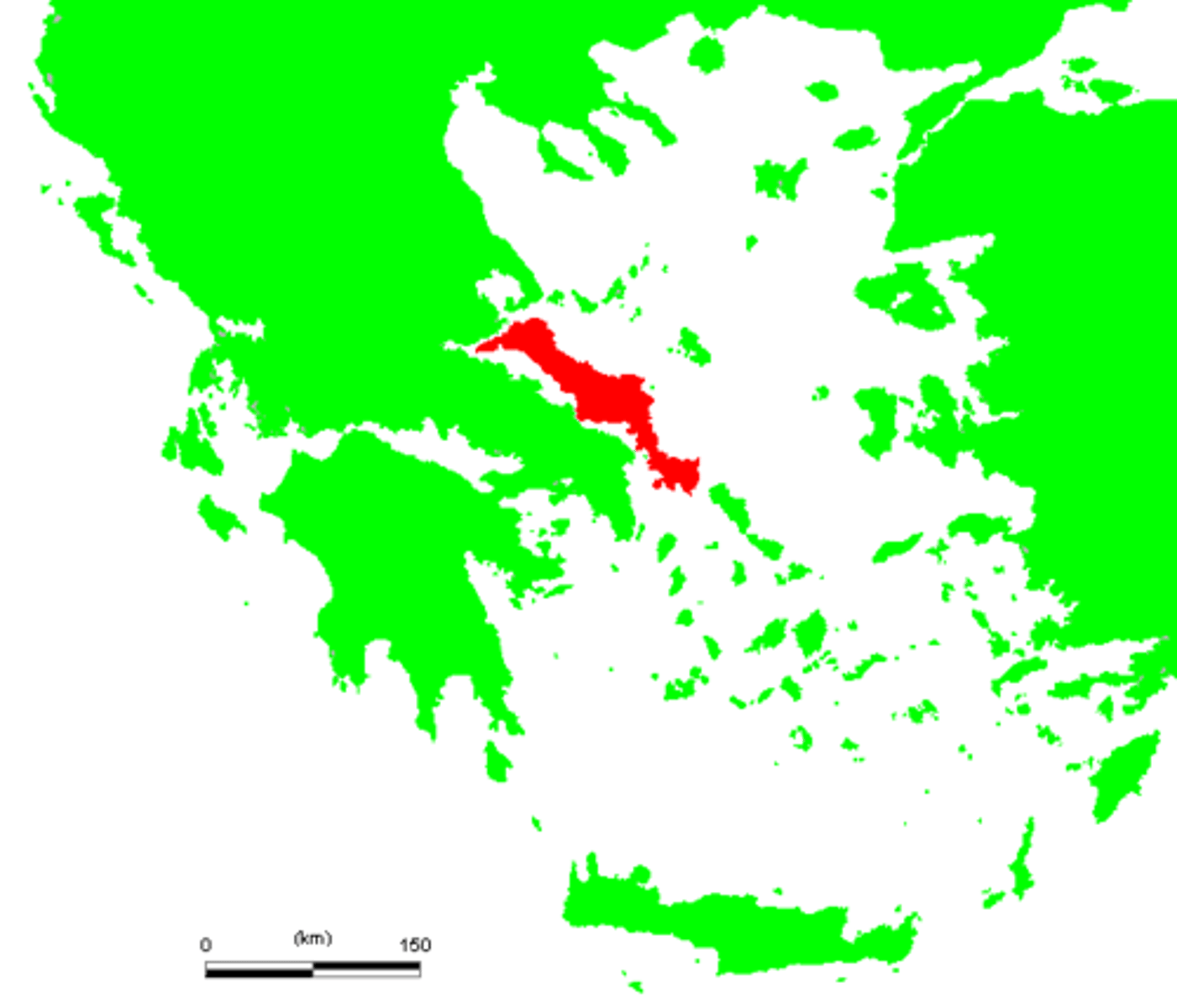
Cape Sepias
The Persians suffered heavy losses when their ships were moored alongside each other here and a storm hit
Herodotus groups of poleis
Those who gave earth and water (submission token) were scared of Persian interference, those who didn't were scared to fight against a bigger force
Interpretation of Herodotus' account of the Persian wars
Some suggest that Herodotus' account of the war recasts the Greek victory over the Persians as an ideological victory of democracy over tyranny
Herodotus' opinion on Athens
He thought they were the saviours of Greece and supported Athens' decisions even though he thought it might be controversial
Oracle from Delphi in Persian wars
"terrifying oracles", Athens responded by demanding another one which then told them to trust the wooden walls (interpreted as boats/navy by Themistocles), Argives withdrew from fighting (Herodotus suspects medising)
Themistocles
Athenian statesman who led Athens to victory over the Persians, Herodotus portrays him as very intelligent and persuasive, convinced other leaders to stay at battles and threatened to have the Athenians leave and start a new city in Italy if others didn't fight at Salamis
Adeimantus
Corinthian Leader at the Battle of Salamis, was bribed by Themistocles to stay at Artemisium, argued and insulted Themistocles at Salamis
Eurybiades
Spartan who yielded leadership at Salamis to Themistocles, was bribed by Themistocles to stay at Artemisium, convinced by Themistocles to fight at Salamis (different points than the other Greeks)
Date of Battle of Salamis
September 20, 480 BC (supposedly, also believed Euripides could have been born on this day)
Athenian response to being asked to ally to Persia
"We are well aware the Mede is far more powerful than us [...]. Nevertheless, as lovers of freedom, we will defend ourselves as best as we can." "as long as the sun travels across the same path as it does now, we will never make any pact with Xerxes."
Athenian speech to Sparta
"we are Greek, we share the same blood, the same language, the same shrines of the gods and methods of sacrifice, the same customs; it would not be right for the Athenians to betray all of this"
Medised states (gave earth and water) according to Herodotus
Thessalians, Dolopes, Aenianes, Perhaebi, Locrians, Magnetes, Malians, Achaeans of Phthiopis, Thebans, all Boetians bar Plataea and Thespiae
States that gave troops to Persia according to Herodotus
Thracians, Paeonians, Eordi, Bottiaei, Chalcidians, Byrigi, Pierians, Macedonians, Perrhoebians, Enionians, Dolopes, Magnetes, Achaeans, coastal Thrace
States that fought at Thermopylae according to Herodotus
Sparta, Tegea, Mantinea, Orchomenus, Arcadia, Corinth, Phlius, Mycenae, Thespiae, Phocis, Thebes (Thebes is also listed as medised by Herodotus -- he thinks they secretly did it)
States that fought at Artemisium and Salamis according to Herodotus
Athens, Corinth, Megara, Chalchis, Aegina, Sicyon, Sparta, Epidaurus, Eretria, Troezen, Stura, Ceos, Opus
States that fought at Plataea according to Herodotus
Sparta, Tegea, Mantinea, Orchomenus, Arcadia, Corinth, Phlius, Mycenae, Thespiae, Phocis, Thebes (⬅states at Thermopylae), Potidaea, Sicyon, Epidaurus, Troezen, Lepreum, Tiryns, Hermion, Eretria, Styra, Chalcis, Ambraciots, Anactorians, Leucadians, Paleans, Aeginetans, Athens, Plataea, Megara