Obesity Algorithm
 Call Kai
 Learn
Learn Practice Test
 Spaced Repetition
 Match
Match Flashcards
 Knowt Play
1/14

There's no tags or description
Looks like no tags are added yet.
Name | Mastery | Learn | Test | Matching | Spaced | Call with Kai |
|---|
No analytics yet
Send a link to your students to track their progress
15 Terms
What is the stepwise treatment approach to obesity?
Diagnose ABCD, stage complications, initiate lifestyle therapy, add pharmacotherapy if needed, consider procedures if severe.
What does ABCD stand for in the context of the AACE obesity algorithm?
Adiposity-Based Chronic Disease.
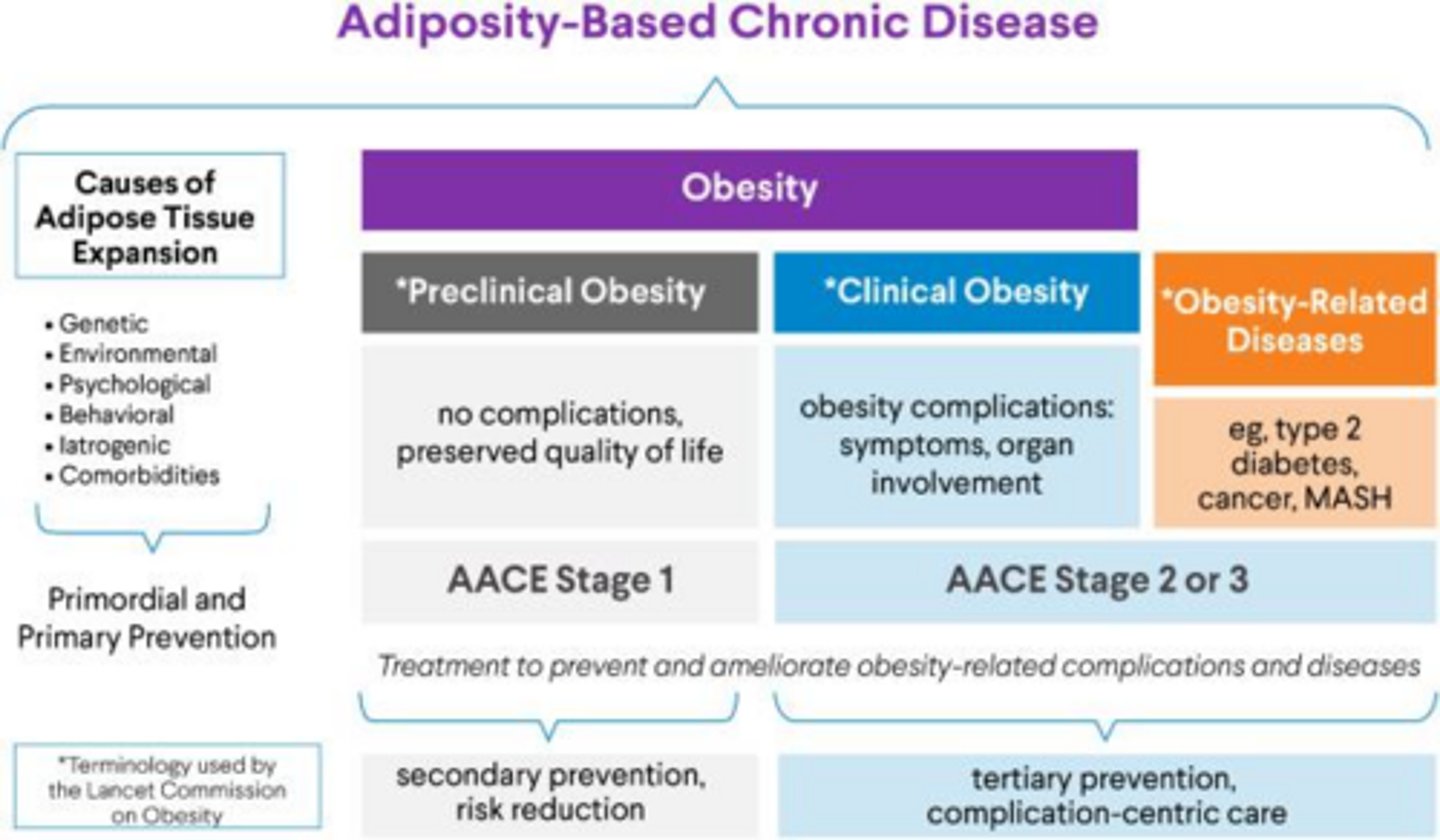
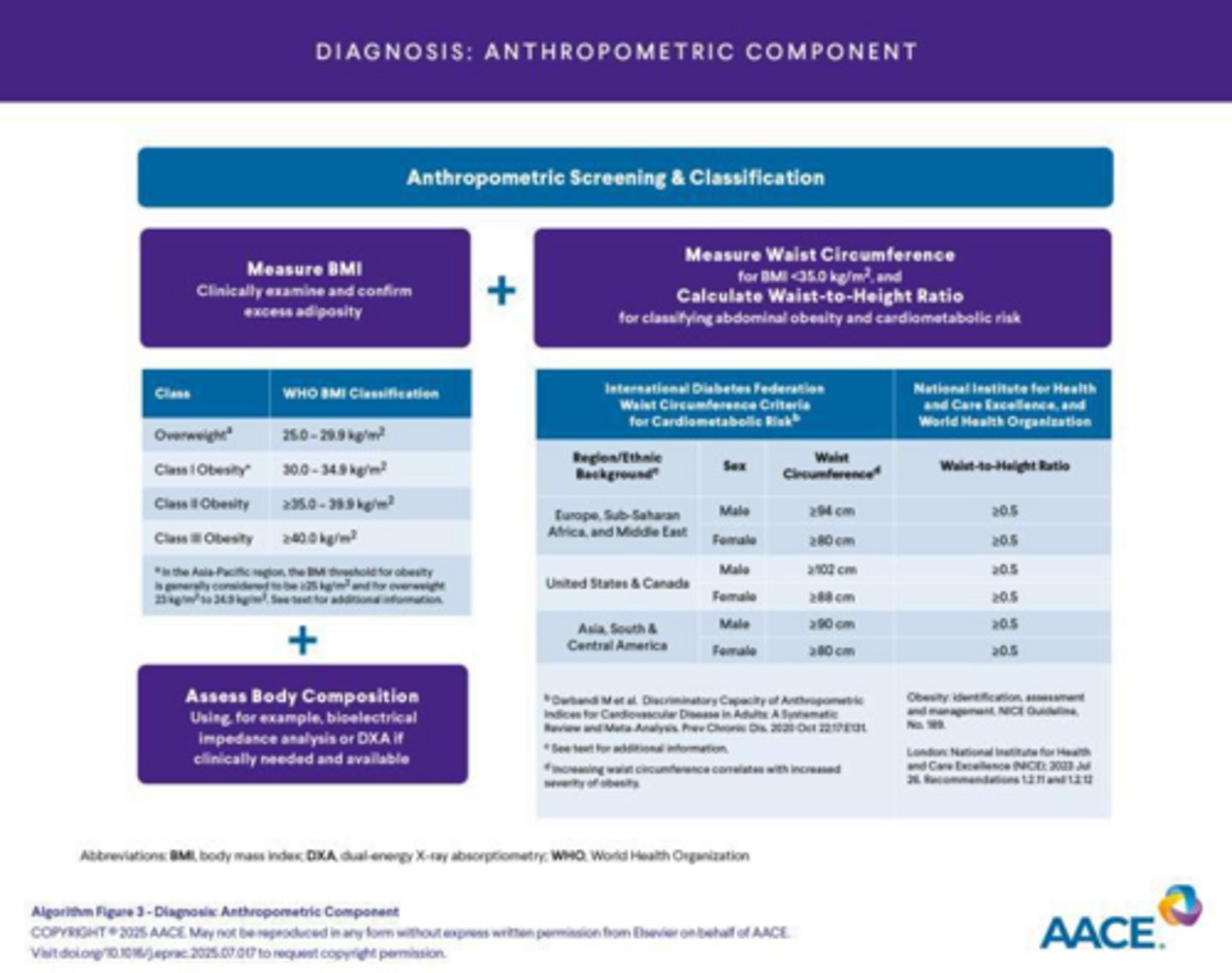
What are the two primary components used to diagnose ABCD?
BMI and the presence of obesity-related complications.
What is the fundamental shift in focus when managing ABCD compared to traditional weight-loss models?
The focus is on disease burden and complications rather than weight alone.
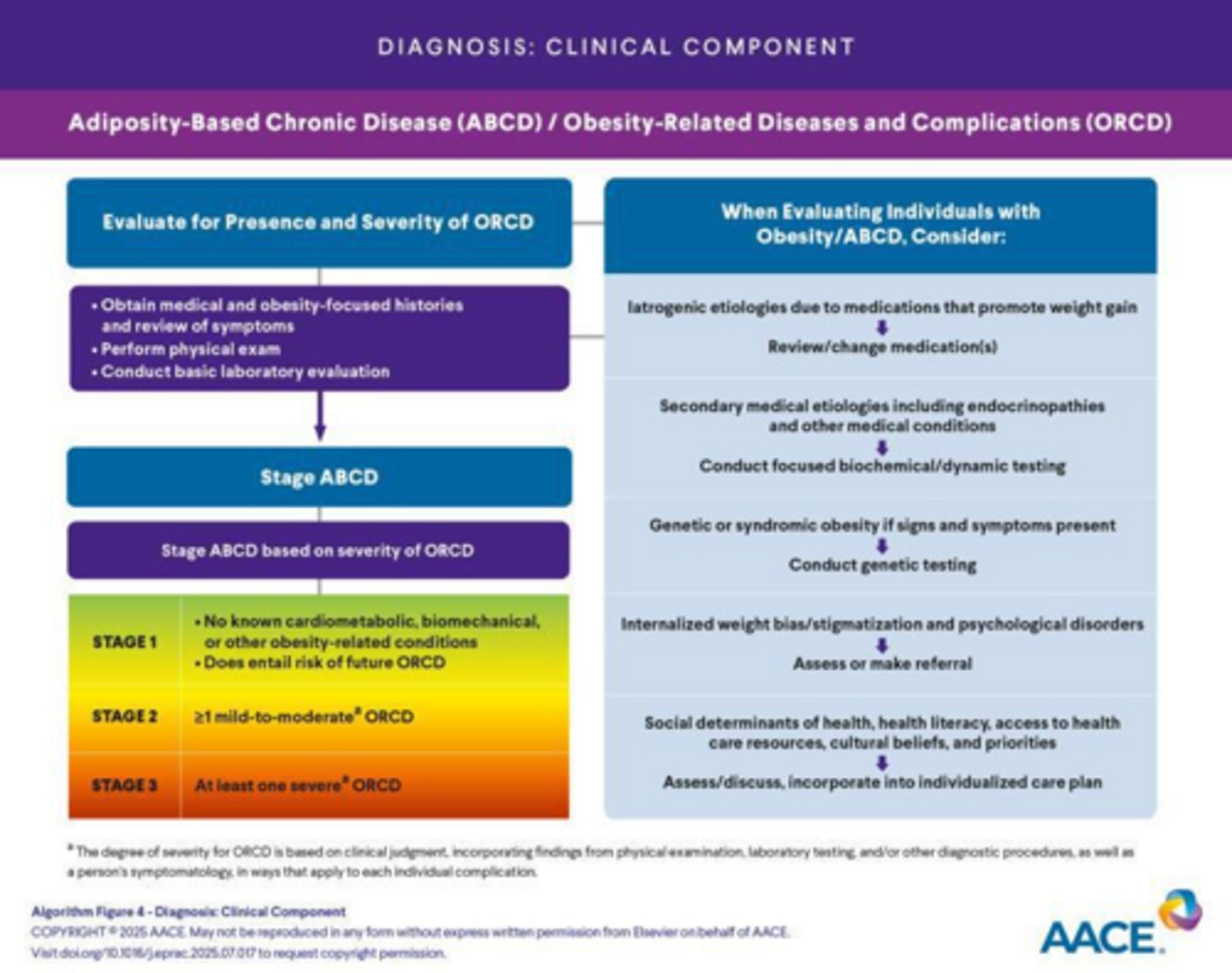
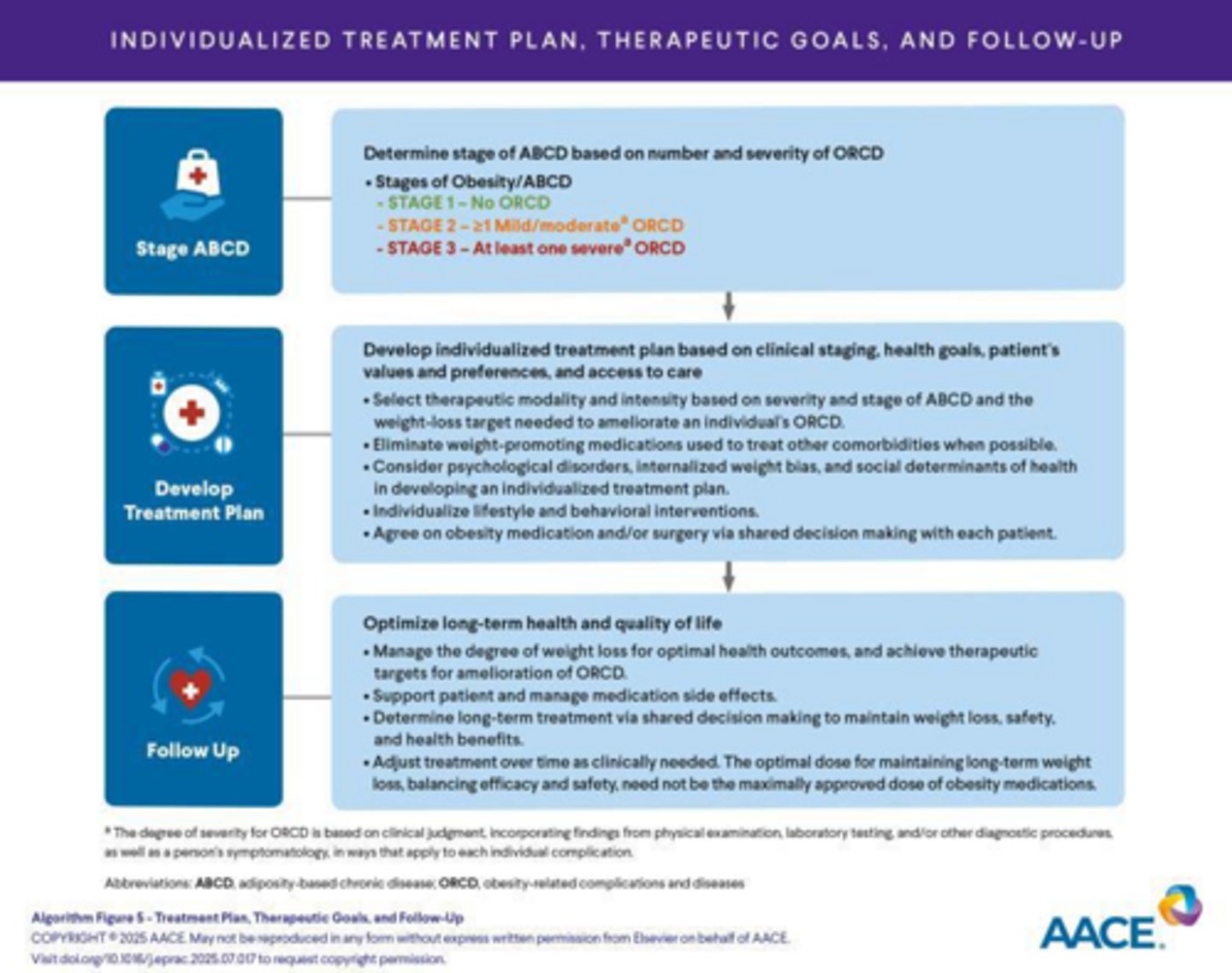
What are the three stages of complication-based staging in the AACE algorithm?
Stage 1 (no complications), Stage 2 (mild/moderate complications), and Stage 3 (severe complications).
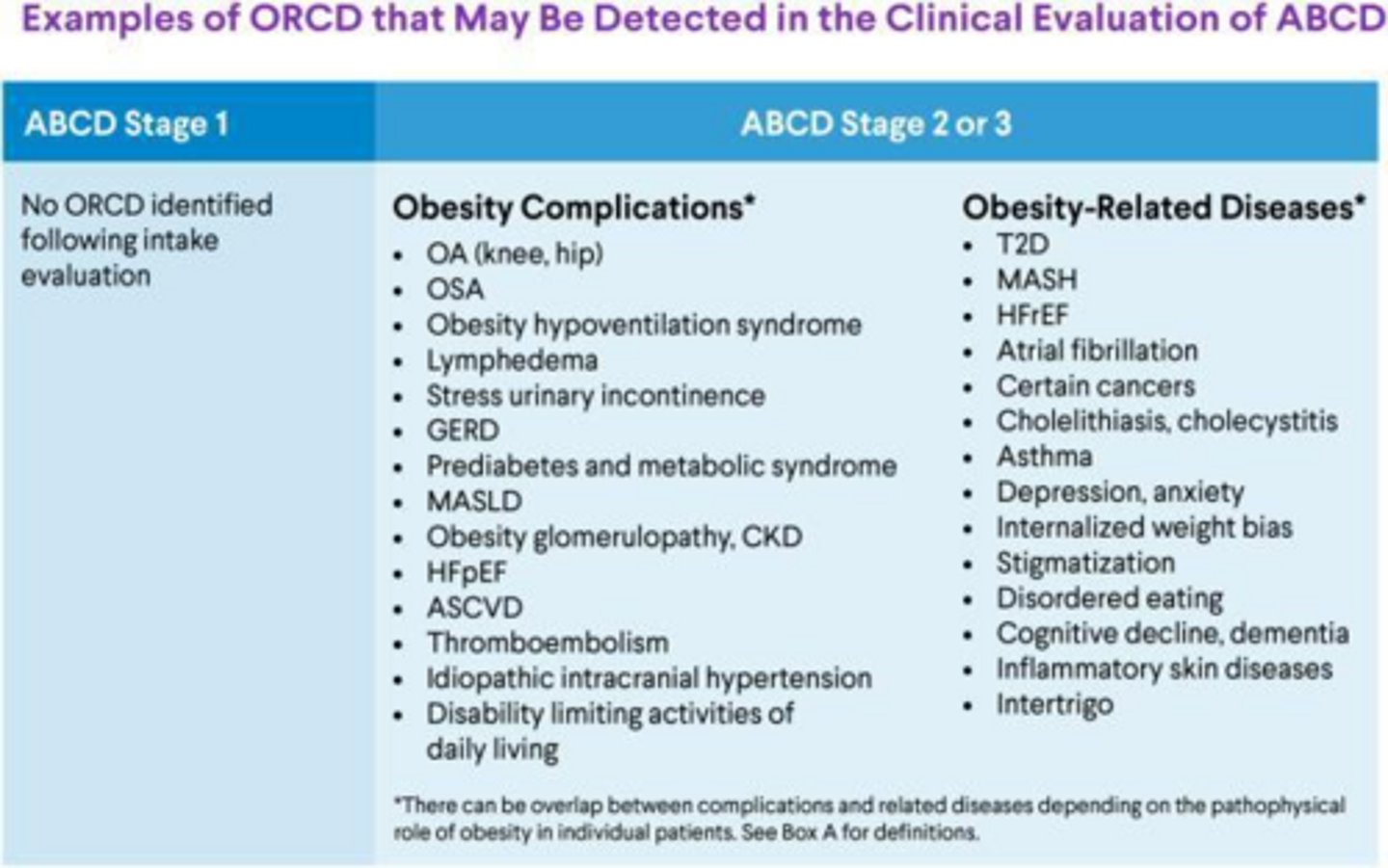
What is included in the initial evaluation of obesity?
BMI and waist circumference, assessing obesity-related complications, medication and lifestyle review, psychosocial factors and readiness.
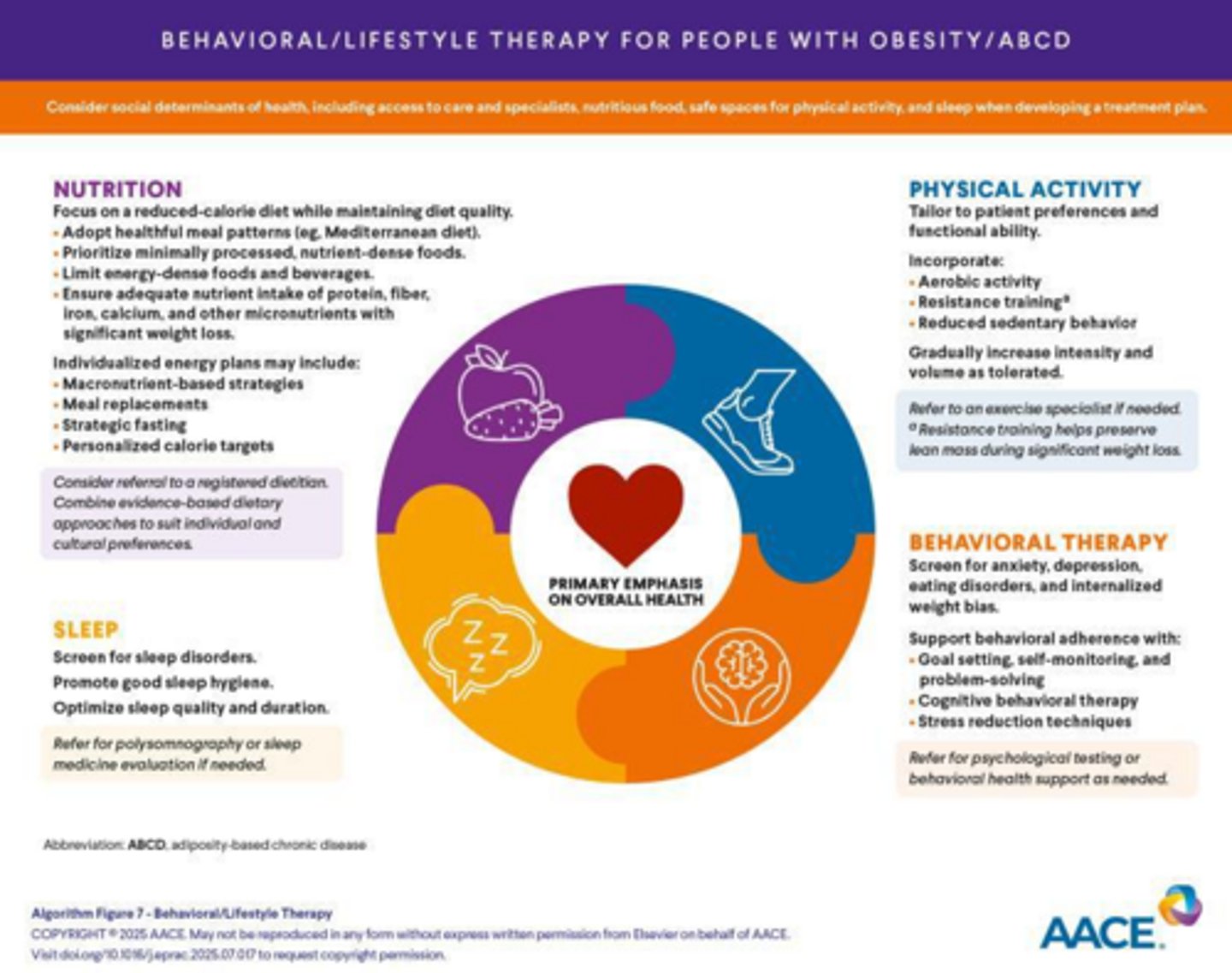
What are the four key elements of the foundation of lifestyle therapy for ABCD?
Calorie deficit (500-750 kcal/day), physical activity (≥150 min/week), behavioral interventions, and sleep/stress optimization.
What is the clinical significance of achieving a >15% weight loss in ABCD patients?
It offers potential for disease remission.
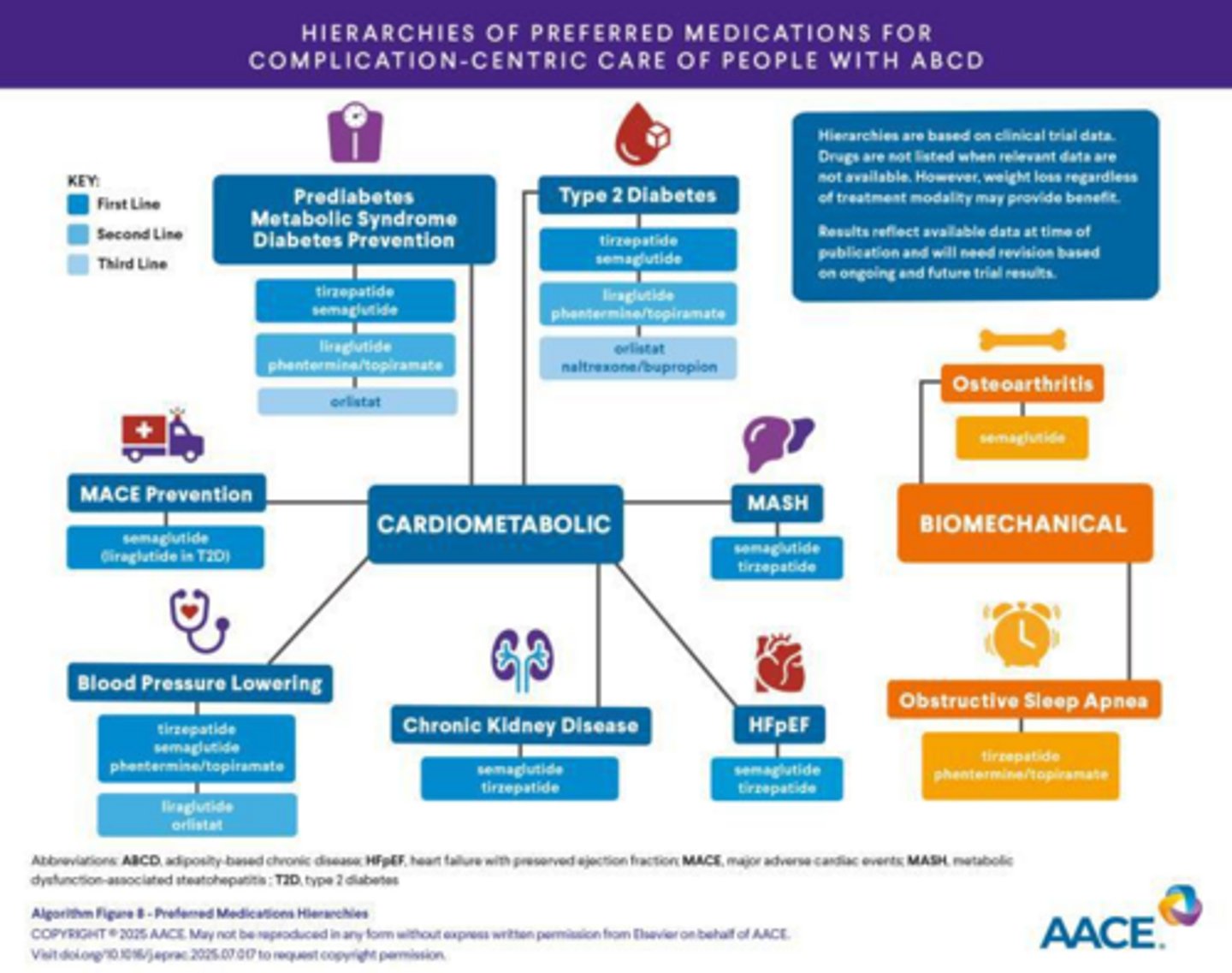
What are the criteria for initiating pharmacotherapy in patients with ABCD?
BMI ≥30 OR ≥27 with comorbidities, following the failure of lifestyle therapy alone.
Is pharmacotherapy for ABCD intended to be short-term or chronic?
It is intended for chronic, long-term therapy.
What are two examples of medication classes used in the pharmacotherapy of ABCD?
GLP-1 receptor agonists (e.g., semaglutide) and dual incretin (GLP-1/GIP) agents.
When should procedural options like bariatric surgery be considered according to the AACE algorithm?
When the patient has a BMI ≥35 with comorbidities.
What is the most effective procedural option for treating severe ABCD?
Bariatric surgery.
How often should therapy be adjusted for a patient undergoing ABCD management?
Every 3-6 months.
What parameters should be tracked during follow-up visits for ABCD?
Weight, waist circumference, symptoms, and obesity-related comorbidities (e.g., DM, HTN, lipids).