Chapter 11 - Drugs: Use and Misuse
 Call Kai
 Learn
Learn Practice Test
 Spaced Repetition
 Match
Match Flashcards
 Knowt Play
1/46

There's no tags or description
Looks like no tags are added yet.
Name | Mastery | Learn | Test | Matching | Spaced | Call with Kai |
|---|
No analytics yet
Send a link to your students to track their progress
47 Terms
Drug
Any substance, other than food, that affects bodily functions and structures when taken into the body.
Can help the body heal or relieve physical and mental distress
Drug misuse, abuse, and addiction
Misuse: The use of a drug for a purpose (or person) other than that for which it was medically intended. Ex. Borrowing a friend’s prescription, not complying with prescription medication instructions
Abuse: The excessive use of a drug in a manner inconsistent with accepted medical practice. Drug abuse can mean taking prescription painkillers or illicit drugs to get high or inflict self-harm.
Addiction: A habitual and persistent relapsing disorder. It includes compulsive drug use despite the knowledge of adverse consequences that disrupt the healthy functioning of our bodies.
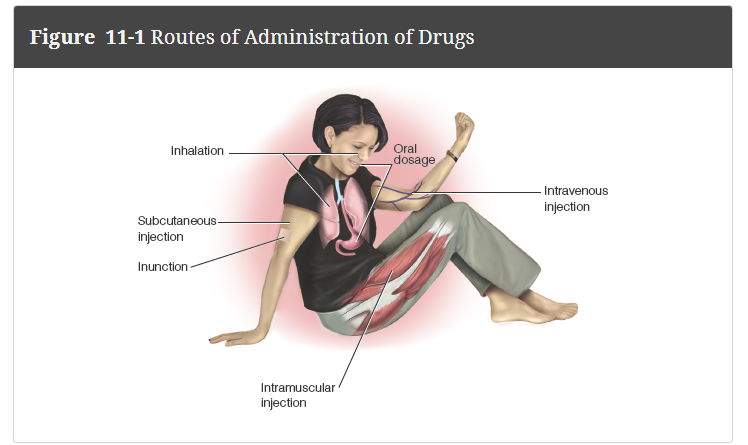
What are Different Ways Drugs can enter the body?
Oral ingestion: The most common way of taking a drug. Swallowing a tablet, capsule, or liquid are examples.
Inhalation: Drugs can enter the body through the lungs by inhaling smoke from cigarettes, vapes, or cannabis, or gases, aerosol sprays, and fumes from solvents and compounds that evaporate quickly.
Injection: Often done with a syringe, can be done intravenously (directly into a vein), intramuscularly (into muscle tissue, which is richly supplied with blood vessels), or subcutaneously (beneath the skin).
Intravenous (IV) injection: A method of administration that gets a concentrated form of a drug into the bloodstream within seconds. Effects are felt within minutes.
Intramuscular injection: A slower and consistent method of administering drugs, usually by way of hypodermic needle into the muscular tissue.
Subcutaneous injection: A method of administering a drug by an injection into the fatty layer beneath the skin. The drug is absorbed more slowly because there is very little blood flow in the fatty tissue (10 mins to 24 hrs)
Inunction: Anointing or applying an ointment by rubbing or by applying adhesive patches containing a drug to the skin.
Toxicity
The dosage level at which a drug becomes poisonous to the body, causing either temporary or permanent damage.
The effects of any drug depend on the amount an individual takes → Increasing the dose usually intensifies the effects produced by smaller doses
In most cases, drugs are eventually broken down in the liver by special body chemicals called detoxification enzymes.
Set and Setting
Set
Can be defined as the internal environment or mindset—a person’s expectations or preconceptions about using the drug.
Often drugs intensify the emotional state of a person → If you’re feeling depressed, a drug may make you feel more depressed.
Genetic differences among individuals may account for varying reactions.
Setting
An external environment that a drug user is in.
Can include the number and type of people in the setting, the level of noise and lighting, and the type of room an individual is in.
The setting influences drug use → Leaving a drug-free halfway house and returning to an unsafe housing situation or meeting up with past friends who were still using drugs upended their resolve to stay clean
Addiction and the Dimensions of Wellness (6)
Physical dimension: They can improve a person’s physical functioning. However, overuse → takes a toll on every organ system in the body
Emotional dimension: Prescription drugs monitored by a health professional can be a lifeline for managing mental health issues. However, when people engage in addictive behaviours as a way of “self-medicating” symptoms of anxiety or depression → become addictive.
Spiritual dimension: Addictive behaviour blocks the pursuit of meaning and inner fulfillment. As people rely more on a chemical or behavioural escape, they can lose their sense of self and of connection with other people.
Intellectual Dimension: The brain is one of the targets of drugs and alcohol → Impulses become more difficult to control. Judgment falters. Certain substances can lead to permanent changes in brain chemistry.
Occupational Wellness: Drug use and abuse can impact alertness, perception, motor coordination, and a person’s emotional state, which reduces safety levels and increases the potential for injury on the job. Drug withdrawals and hangovers can affect job performance
Environmental Wellness: The use of some substances directly harms the environment. Drugs are also finding their way to our waterways and ending up in the ocean, affecting marine life.
Non-Prescription Drugs/Over the Counter Drugs
Medication that can be obtained without a prescription from a medical professional (i.e., over the counter at a retail outlet). (6 Billion in sales)
Painkillers: Taking Aspirin while or after drinking alcohol increases blood-alcohol concentrations. Large daily doses of Aspirin and other NSAIDs can severely damage the stomach lining and cause ulcers. Certain pain relievers, specifically including acetaminophen (Tylenol), have been linked to kidney problems.
Nasal Sprays: Relieve congestion by shrinking blood vessels in the nose. Used too often → blood vessels widen instead of contracting → swollen → congestion. The result can be complete loss of smell.
Laxatives: Contain phenolphthalein irritate the lining of the intestines and cause muscles to contract or tighten, often making constipation worse rather than better.
Eye Drops: Eye drops make the blood vessels of the eye contract. With overuse → blood vessels expand, making the eye look redder than before.
Cough Drops/Sleeping aids
Prescription Drugs
Prescription medications are drugs that are prescribed by a physician or healthcare professional to help a person manage various health conditions (39 billion!)
The most frequent mistakes doctors make are overdosing or underdosing, omitting information from prescriptions, ordering the wrong dosage form (a pill instead of a liquid), and not recognizing a patient’s allergy to a drug.
Patients often take prescription drugs without discussing the risks with their physician or do not follow the prescription protocol.
Non-Adherence
Not properly taking prescription drugs the way they should be taken.
Some people have trouble understanding dosage information or cannot read standard labels.
One in five Canadian adults did not have prescription insurance to cover their medication costs.
The drugs most likely to be taken incorrectly are those that treat problems with no obvious symptoms (such as high blood pressure), require complex dosage schedules, treat psychiatric disorders, or have unpleasant side effects.
Caffeine
Most widely used psychotropic drug in the world → Mind-affecting drugs. Also known as a psychoactive substance.
38 billion dollar industry → Canadian coffee drinkers average almost three cups per day
The Government of Canada recommends consuming no more than 400 milligrams of caffeine a day for adults ages 18 years and older
Caffeine is also known as a stimulant → An agent, such as a drug, that temporarily relieves drowsiness, helps in the performance of repetitive tasks, and improves capacity for work.
Too much caffeine can lead to dependence, anxiety, insomnia, rapid breathing, upset stomach and bowels, and dizziness.
Large amounts of caffeine over time have been associated with loss of bone density, which increases the risk of osteoporosis.
Although there is no conclusive proof that caffeine causes birth defects, it does cross the placenta into the tissues of a growing fetus
Energy Drinks
Prepackaged beverages or mixes containing added caffeine, sugar, vitamins, minerals, and sometimes herbs, marketed to boost energy and alertness.
Limits caffeine to a maximum of 100 mg for small single-serve cans (< 250 mL) and 180 mg for larger single-serve cans (250–500 mL).
Over 50% of university consumers experienced "jolt and crash" episodes, and nearly 44% reported heart palpitations.
Psychoactive
Mood-altering effect of chemicals.
The 1960s ushered in an explosive increase in drug use and in the number of drug users in our society.
Cannabis use soared in the 1960s and 1970s; cocaine, in the 1980s. In 1986, crack—a smokeable form of cocaine—hit the streets and the number of regular cocaine users multiplied → ecstasy (MDMA) and methamphetamine (crystal meth) followed
Now we are facing an opioid epidemic across Canada
Addiction
A behavioural pattern characterized by compulsion, loss of control, and continued repetition of a behaviour or activity in spite of adverse consequences.
Examples include spending money on drugs even though you cannot afford it. It might also mean taking risks like driving under the influence of a drug or continuing to use a drug even though you know it is causing harm.
Drug abuse can lead to drug dependence.
Dependence
Physical or psychological need of one or more drugs to function.
You can be dependent on a drug without being addicted → An example would be the need for medication to control a disease such as diabetes.
Psychological dependence: The emotional or mental attachment to the use of a drug → feel a strong craving for a drug because it produces pleasurable feelings or relieves stress and anxiety
Physical dependence: The physiological attachment to, and need for, a drug. Occurs when a person develops tolerance to the effects of a drug and needs larger and larger doses to achieve intoxication or another desired effect
Individuals with drug dependence become intoxicated or high on a regular basis—whether every day, every weekend, or several binges a year.
Intoxication and Withdrawal and Polyabuse
Intoxication refers to maladaptive behavioural, psychological, and physiologic changes that occur because of substance use.
Withdrawal is the development of symptoms that cause significant psychological and physical distress when an individual reduces or stops drug use.
Polyabuse: The misuse or abuse of more than one drug. The average user who enters treatment is on five different drugs. The more drugs anyone uses, the greater the chance of side effects, complications, and possibly life-threatening interactions.
Concurrent Disorder
A situation where an individual has both a mental health and a substance abuse problem.
Individuals with concurrent disorders require careful evaluation and appropriate treatment for the complete range of complex and chronic difficulties they face.
Drugs and Gender
Boys usually receive early drug offers from other males or parents, whereas girls get them from female friends or family members.
Men encounter more drug opportunities later in life and use illicit drugs more often than women.
However, when given a first-time opportunity, both genders are equally likely to use drugs and progress to dependence.
Women are more vulnerable to sedatives and anxiety/sleep medications, but less likely than men to abuse alcohol and cannabis.
Women entering treatment have higher rates of co-occurring health issues, trauma, and suicide attempts. They succeed more in comprehensive programs offering childcare and parenting/assertiveness training than in traditional male-centric models.
Dopamine
A brain chemical or neurotransmitter is a messenger that links nerve cells in the brain which causes a rise of pleasurable feelings of satisfaction and euphoria.
Certain mood-altering substances and experiences—a puff of cannabis, a shot of whisky, a snort of cocaine, a big win at blackjack—trigger a rise in this brain chemical
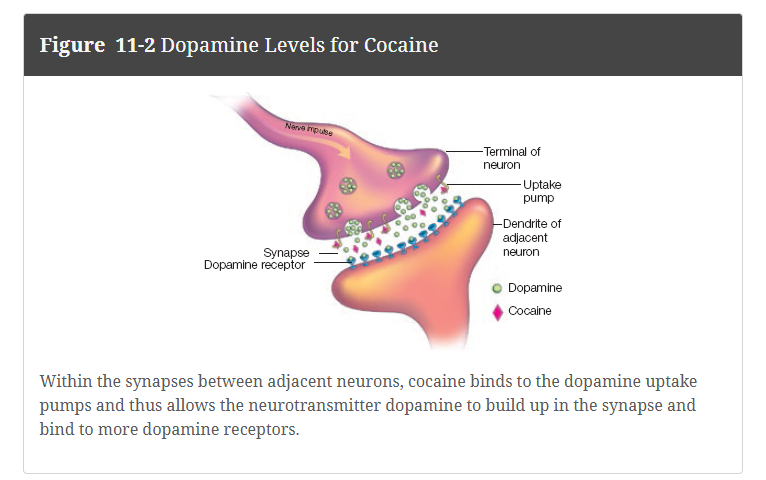
Normally, after dopamine is released from the axon terminal of a neuron and activates dopamine receptors on the adjacent neuron, the dopamine is then transported back to its original neuron by “uptake pumps.”
Cocaine binds to the uptake pumps and prevents them from transporting dopamine back into the neuron terminal.
Drug Use and Mental Health
The one psychological trait most often linked with drug use is denial.
Young people in particular are absolutely convinced that they will never lose control or suffer in any way because of drug use.
Many drug users have been diagnosed with at least one mental disorder, particularly depression or anxiety, or bipolar
Individuals who are isolated from friends and family or who live in communities where drugs are widely used have higher rates of drug abuse + lower income households
What is the most used drug by University Students?
Cannabis is the most popular drug of choice for college and university students.
“Ever used” → 53.5% and “Used in last three months” → 38.2%
While cannabis can be used as a medical option to treat pain levels, anxiety, and nausea, some students are not aware that there are also potential risks.
Cannabis use does affect the developing brain, and the earlier a person begins using cannabis the more likely the harm.
Regular use can cause anxiety and panic, and affect concentration, memory, and the ability to make decisions.
It can slow reaction times, cause drowsiness, and impair coordination, which impacts driving or operating equipment.
They also found that the participants in their study believed cannabis was a safer alternative compared to many other drugs or alcohol, though at the same time did not appear to understand health-related consequences of cannabis use
Amphetamines
A stimulant that triggers the release of epinephrine, which stimulates the central nervous system; users experience a state of hyper-alertness and high energy, followed by a crash as the drug wears off.
Recently used to treat attention-deficit hyperactivity disorder (ADHD)
At peak: agitated and restless, talkative, moody, and irritable. confused and anxious, confident in one’s ability to perform exceptionally well—although they do not boost performance or thinking
At bottom: tremors, incoherent speech, headache, paranoid, palpitations, and excessive sweating
Can lead to an increase in heart rate, blood pressure, temperature, and breathing.
Crystal Meth
Also known as methamphetamine (MA).
A white, odourless, bitter-tasting crystalline powder that readily dissolves in water or alcohol. It can be snorted, swallowed, or injected.
Ice (or crank, crystal, glass, or tina) is a smokeable form of methamphetamine.
Not legal in Canada
Despair and suicidal thinking can develop when the stimulus effect wears off.
Can increase intellectual impairment and permanent damage to blood vessels in the brain resulting in stroke → irreversible lifetime damage to the frontal cortex lobe of the brain
Parkison’s Disease
“Meth mouth,” with teeth turning a greyish brown, twisting, falling out, and taking on a peculiar texture
Cannabinoids
A group of closely related compounds that include the active constituents of cannabis and cannabidiol.
Example: THC and Cannabidiol, or CBD
CBD is being marketed as a treatment for pain, inflammation, anxiety, or other chronic conditions → Does not produce same highs as THC
Marijuana
The drug derived from the cannabis plant; contains the psychoactive ingredient THC, which causes a mild sense of euphoria when inhaled or eaten.
It consists of the leaves, fruiting tops, and dried flowers of the cannabis plant.
THC triggers a series of reactions in the brain that ultimately lead to the high that users experience when they smoke cannabis → Heredity + Genetic Influence
Canadian adults (age depending on the province you live in) can now possess up to 30 grams of legal dried cannabis in public
Medical cannabis (THC + CBD) has been proven to help treat some pain and nausea for people dealing with cancer or multiple sclerosis.
Cannabis Usage in Canada
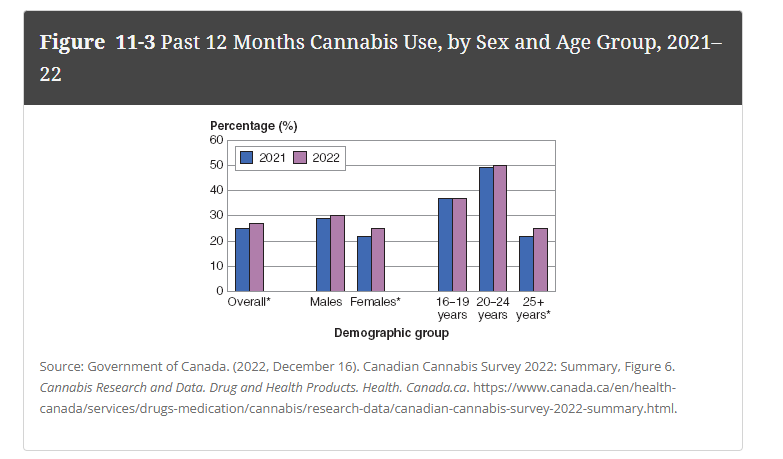
20-to 24-year-olds at 50 percent
16-to 19-year-olds at 37 percent
25 years and older at 25 percent
Males reported a 30 percent use of cannabis in 2021.
Females reported a 25 percent use.
Cannabis use in 2021 was higher among Canadians who identified as bisexual (61 percent), another sexuality (55 percent), and lesbian or gay (39 percent) compared to those who identified as heterosexual (25 percent)
Effects of Cannabis
The High & Safety: Causes a temporary 3-hour high with relaxation and heightened senses, but can trigger anxiety and paranoia. It impairs motor skills, memory, and reaction time, making driving unsafe for 4 to 6 hours. THC stays in fat cells for 50+ hours. Increased pulse rate, bloodshot eyes, dry mouth and throat
Brain Damage:
Short-term: Disrupts learning, memory, coordination, and sleep.
Long-term: Shrinks key brain structures, causes cognitive decline, and increases risks of depression, addiction, and schizophrenia (especially if used daily from a young age).
Organ Damage:
Lungs: Causes chronic bronchitis and progressive COPD.
Heart: Spikes blood pressure, lowers heart oxygen, and can cause heart attacks (deadly if mixed with cocaine).
Reproduction: Impairs ovulation in women and reduces sperm count/motility in men.
Fetal & Birth Outcomes: It impairs fetal development, restricts mid- to late-term fetal growth, and frequently results in a low birth weight. Linked to attention deficits, hyperactivity, anxiety, memory issues, and depression.
Cannabis withdrawal syndrome (CWS)
Characterized by insomnia, nervousness, restlessness, loss of appetite, and irritability.
Past users have also reported depressed moods.
Physical symptoms include sweating, fevers, chills, tremors, headaches, and at times abdominal pain
Cannabis users can develop a compulsive, often uncontrollable, craving for the drug.
Cocaine
A white crystalline powder extracted from the leaves of the coca plant that stimulates the central nervous system and produces a brief period of euphoria (20 mins) followed by depression. Crack is a smokeable form of cocaine.
When sniffed or snorted, cocaine anesthetizes the nerve endings in the nose and relaxes the lung’s bronchial muscles.
The drug is rapidly metabolized by the liver, so the high is relatively brief, typically lasting only about 20 minutes → repeated consumption
At the High: Feelings of happiness, Feelings of enormous physical and mental ability, Restlessness and irritability
At the Low: Slump into a depression. Cocaine binges → as soon as crack users come down from one high, they want more crack
Effects: Panic and anxiety, Paranoid thinking, Elevated or lowered blood pressure
Prolonged cocaine snorting can result in ulceration of the mucous membrane of the nose and damage to the nasal septum (the membrane between the nostrils) severe enough to cause it to collapse
Cocaine use can cause blood vessels in the brain to clamp shut and can trigger a stroke, bleeding in the brain, and potentially fatal brain seizures
Cocaine can damage the liver and cause lung damage in freebasers
The combination of alcohol and cocaine is particularly lethal → liver combines the two agents and manufactures cocaethylene
Club Drugs
Illegally manufactured psychoactive drug (including ecstasy, Special K, and Rohypnol) that has dangerous physical and psychological effects; often used at all-night rave or trance events.
Although users may think of club drugs as harmless and fun, they can produce a range of unwanted effects, sometimes even causing death
Club drugs found in party settings are often adulterated or impure and are even more dangerous.
Gamma Hydroxybutyrate (GHB)
A brain messenger chemical (also known as blue nitro or the date-rape drug) that stimulates the release of the human growth hormone; commonly abused for its high and its alleged ability to trim fat and build muscles.
GHB is usually found in liquid form, but also comes in powder and capsule form
It is colourless, odourless, and has no taste when mixed with a drink
Because it is a sedative and can be slipped into a drink without people noticing it can disorient a person or cause blackouts and memory loss. Sexual violence is often linked with this drug.
Users can feel relaxed, dizzy, and inebriated as if they had been drinking alcohol. Become uninhibited—willing to do things they would not normally do
Impacts brain and the lungs → slows the breathing and can create respiratory problems.
If the level of GHB is high enough people can lose consciousness, go into a coma, or die because they stop breathing. Seizures are frequent. Decreased blood pressure and loss of coordination are also commonplace
Methylenedioxymethamphetamine (MDMA)
A synthetic compound with both stimulant and mildly hallucinogenic properties. The common street name is ecstasy.
Although it can be smoked, inhaled (snorted), or injected, ecstasy is usually taken as a pill or tablet.
Its effects begin in 45 minutes and last for two to four hours.
This drug increases the activity of three brain chemicals: dopamine, norepinephrine, and serotonin
May feel relaxed and euphoric → Mood elavator
Can alter the neuronal function in a brain structure called the hippocampus → affect memory, learning, and general intelligence.
Psychological difficulties (confusion, depression, sleep problems, drug craving, severe anxiety, and paranoia)
Physical symptoms (muscle tension, involuntary teeth clenching, nausea, vomiting, blurred vision, and rapid eye movement) may occur
Hallucinogens
A drug that causes hallucinations.
Produce vivid and unusual changes in thought, feeling, and perception
LSD (Acid)
A drug made from lysergic acid, considered to be one of the strongest mind-altering chemicals that makes a person lose touch with reality.
Taken orally → chewed along with another substance, such as a sugar cube.
Effects: Hallucinations, including bright colours and altered perceptions of reality beginning within 30 to 60 minutes and lasting 9 to 12 hours for a single dose, Lost touch with reality, Possibly mystical experiences
LSD is not considered to have addictive properties, but people can build up a tolerance for this drug so they start needing higher doses to “get high.”
Tremors and uncoordinated movements, known as ataxia, are common
Irrational acts such as jumping out a window, swimming out to sea, or throwing themselves in front of a car
Increase in their heart rate and blood pressure, sweating excessively (hyperhidrosis) and flushing, drowsy or sleepy, nausea and vomiting
Ketamine
An anesthetic drug that healthcare professionals and veterinarians access but it is not meant for recreational drug use.
Makes a person feel detached from their body/Pleasant sensation for some users, but terrifying for others
It is both tasteless and odourless and is sometimes put in drinks → It is classified as one of the date-rape drugs
Risks and health consequences for ketamine include vomiting, high blood pressure, depression, delirium, and amnesia
Phencyclidine (PCP)
A synthetic psychoactive substance that produces effects similar to other psychoactive drugs when swallowed, smoked, sniffed, or injected, but may also trigger unpredictable behavioural changes
Hallucinations or euphoria to feelings of emptiness or numbness
Risks and health consequences for PCP include nausea and vomiting, drooling, loss of balance, lower heart rate and blood pressure, and blurred vision
Inhalants/Deliriants
Substance that produces vapours having psychoactive effects when inhaled.
Chemical, such as solvent, aerosol, glue, cleaning fluid, petroleum product, and some anesthetics, that produces vapours with psychoactive effects when inhaled.
Inhalants rapidly reach the lungs, bloodstream, and other parts of the body so users feel intoxicated (Within 5 minutes)
Inhalants interfere with thinking and impulse control, so users may act in dangerous or destructive ways.
Users risk the loss of motor skills, seizures, diarrhea, dementia (chronic), anxiety, and even death from a single use.
Inhalation of butane from cigarette lighters displaces oxygen in the lungs, causing suffocation
Opioids
Drug that has sleep-inducing and pain-relieving properties; includes opium (and its derivatives) and non-opioid, synthetic drugs.
They reduce the intensity of pain perception by interacting with opioid receptors in the spinal cord and brain
Natural Opioids - made from the resin taken from the seedpod of the Asian opium poppy. Ex. heroin, morphine, and codeine
Synthetic Opioids - Chemically synthesized drug. Ex. fentanyl and methadone
Common Types of Opioids
Heroin—is the most widely abused opioid (Illegal, unless prescribed). It is used as a potent painkiller for conditions such as terminal cancer. Heroin users typically inject the drug into their veins
Morphine - used as a painkiller and anesthetic, acts primarily on the central nervous system, eyes, and digestive tract. By producing mental clouding it does not decrease the physical sensation of pain as much as it alters a person’s awareness of the pain; in effect, they no longer care about it.
Codeine - a weaker painkiller than morphine. Prescribed for relieving coughs and in tablet and injectable form for relieving pain.
OxyContin- It induces a high similar to heroin, is highly addictive, and produces side effects such as confusion, altered mental state, vomiting, nausea, and even death. Federal and provincial governments delisted this drug → Marketed as a safe drug that would not lead to addiction “if taken as prescribed.” → Still popular street drug and started opioid epidemic
Fentanyl
A drug that is used to reduce severe pain
It is 20 to 40 times more toxic than heroin and 100 times more potent than morphine.
The use of fentanyl has become a national public health concern
It takes only a very small amount of pure fentanyl to cause the death of an adult. → The size of a few grains of salt is all that is needed.
You cannot taste or smell fentanyl → test strips to be careful!
How Opioid Users Feel
All opioids relax the user.
When injected, they can produce an immediate euphoria that lasts 10 to 30 minutes.
For two to six hours after, users may feel indifferent, lethargic, discontented, clouded thinking, and drowsy
Effects: Liver or kidney disease, Possible hepatitis from shared needles and syringes, Shock, coma, and death, slowed respiratory system
Opioids affect how our brains control breathing so it is critical to act fast to save someone’s life → Weak breathing or no breathing are very important signs to note. Look for blue lips and nails. Is usually unable to stay awake or be woken, even if they are shaken or shouted at.
Benzodiazepines
Anti-anxiety drug that depresses the central nervous system, reduces activity, and induces relaxation, drowsiness, or sleep; often prescribed to relieve tension, muscular strain, sleep problems, anxiety, or panic attacks; also used as an anesthetic and in the treatment of alcohol withdrawal.
A type of Sedative-Hypnotic Drug
Effects include: Dizziness, confusion, drowsiness, delusion, sudden anxiety or euphoria, rapid mood changes, impaired judgment
Risks: A risk of an overdose if a person stops taking the drugs for a few days and then starts again at the same dose.
A risk of overdose when mixing a sedative-hypnotic drug with other depressants such as alcohol or opioids, which can result in respiratory arrest and death.
Anabolic Steroids
A synthetic artificial version of the male sex hormone testosterone.
This hormone is responsible for the growth of bones and muscles.
Sometimes they are used to treat specific medical conditions such as delayed puberty and loss of muscle mass in cancer patients.
Many young people believe that the use of steroids will help them feel more confident, that by having a well-developed body they will gain respect and admiration from their peers.
Psychologically, users often experience increased aggressiveness and bursts of anger, known as “roid rage.”
A decrease in testicle size and lowered sperm count, which may lead to sterility and impotence, is a risk. There is an increased risk for testicular cancer too.
For females, irregular periods are common.
You can’t stop using steroids and keep the muscle mass and weight gain → Fatigue and depression are common
Harm reduction
A compassionate approach that aims to reduce the consequences of using psychoactive substances across a continuum of care.
The philosophy of harm reduction is to identify the goals that drug users have and find ways to keep them as safe as possible while they continue using drugs or are planning to reduce their use or quit drugs in the future
By supporting people with care and compassion instead of judgment and punishment, they are more likely to seek help with their drug use and addictions when they need it
Naloxone
A fast-acting drug that can temporarily reverse the effects of opioids by blocking opiate receptors in the nervous system.
Along with CPR, naloxone can restore a person’s breathing within two to five minutes after an opioid overdose. It works only if a person has opioids in their system.
Because naloxone is active in someone’s body for only 20 to 90 minutes, the effects of this intervention sometimes wear off before the opioid has worn off → another dose of naloxone may be necessary to administer it again
Methadone Maintenance
Abstinence Challenge: Opioid dependence is incredibly difficult to overcome, with only 10% to 30% of heroin users successfully maintaining abstinence.
Substitution Therapy: Treatment relies on medications like methadone, naltrexone, and buprenorphine to manage withdrawal symptoms.
Methadone Treatment:
Mechanism: It is a long-acting opioid agonist (activates receptors to produce a biological response) used for medical detoxification.
Timeline: Prescribed dosages are adjusted over a 21-to-180-day period until withdrawal symptoms stop.
Benefits vs. Criticism: While critics argue it merely substitutes one drug for another, research proves methadone maintenance decreases illicit opioid use and criminal behavior, lowers HIV risk, and improves physical health and employment.
12-step program
Self-help group program based on the principles of Alcoholics Anonymous.
No single treatment is appropriate for everyone and effective treatment attends to multiple needs of an individual, not just the drug use
Treatment needs to be readily available.
There needs to be a commitment to provide an adequate period of time for a drug user to commit to a treatment plan.
Counselling options for individual or group therapy can be beneficial.
Medications are an important element of treatment for many patients so should be made available if needed
Four Pillars Drug Strategy—City of Vancouver
Harm reduction—reducing the spread of deadly communicable diseases, preventing drug overdose deaths, increasing substance users’ contact with healthcare services and drug treatment programs, and reducing consumption of drugs in the street.
Prevention—using a variety of strategies to educate people about substance misuse and the negative health impacts and legal risks associated with drug use, and to encourage people to make healthy choices.
Treatment—offering individuals access to services such as counselling, methadone programs, daytime and residential treatment, housing support, and medical care.
Enforcement—targeting organized crime, drug dealing, drug houses, and problem businesses, and improving coordination with health services and other drug-treatment agencies.