A Level Chemistry Paper 2: General Exam Flashcards
 Call Kai
 Learn
Learn Practice Test
 Spaced Repetition
 Match
Match Flashcards
 Knowt Play
1/39

There's no tags or description
Looks like no tags are added yet.
Name | Mastery | Learn | Test | Matching | Spaced | Call with Kai |
|---|
No analytics yet
Send a link to your students to track their progress
40 Terms
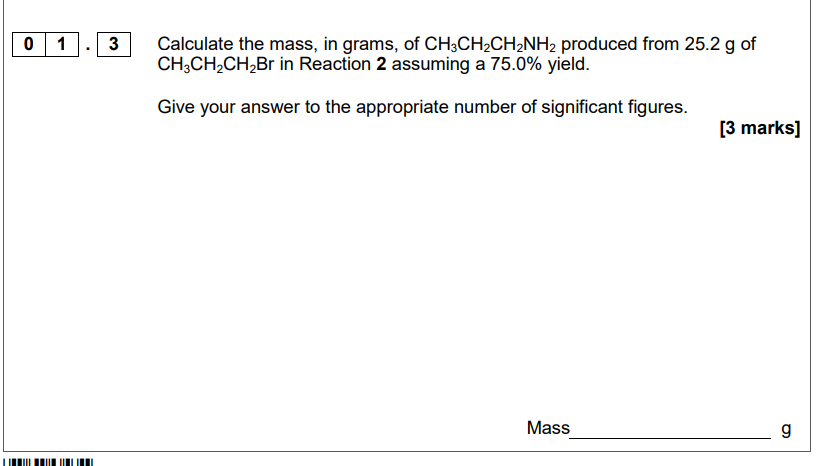
Step 1: Calculate moles of reactant
Mr of CH3CH2CH2Br=(3×12.0)+(7×1.0)+79.9=122.9 (or 123.0)Moles=MrMass=122.925.2=0.2050… mol
Step 2: Account for 75.0% percentage yield
Actual moles of product=0.2050×0.750=0.1537… mol Step 3: Convert moles to mass of product
Mr of CH3CH2CH2NH2=(3×12.0)+(9×1.0)+14.0=59.0Mass=moles×Mr=0.1537×59.0=9.071… g
In a mass calculation, at what stage do you multiply by the percentage yield?
You can do it at the Moles stage (multiply theoretical moles by 0.xx) OR at the very end with the Theoretical Mass. Do NOT divide by yield unless calculating how much reactant is needed.
If the question asks for "appropriate significant figures," where do you look?
Look at the data in the question. Identify the value with the fewest significant figures. Your answer must match that number.
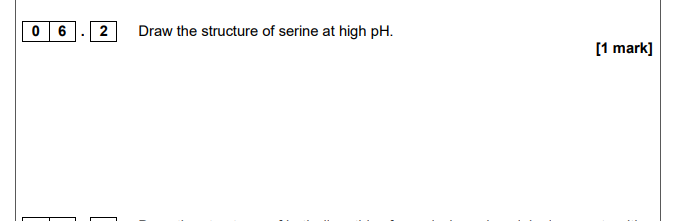
High pH = Lots of OH- , not a lot of H+
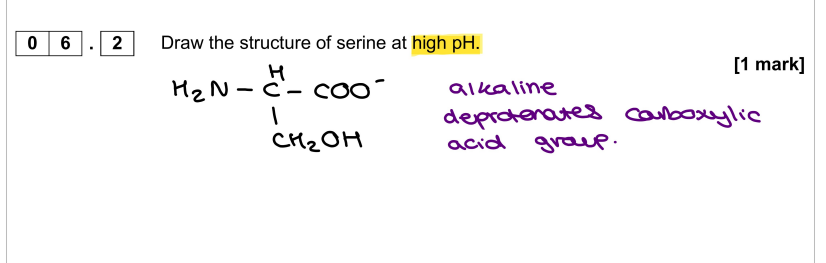
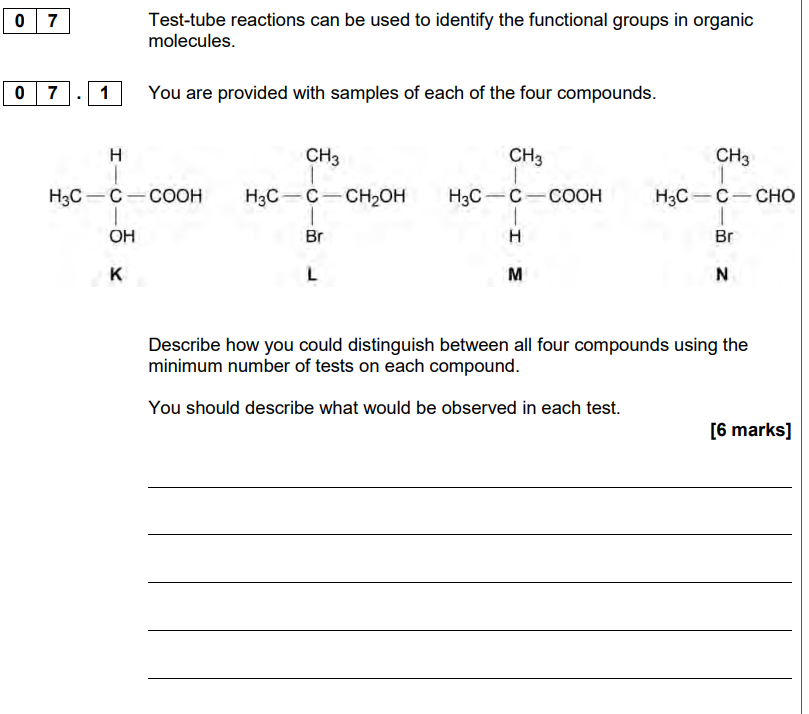
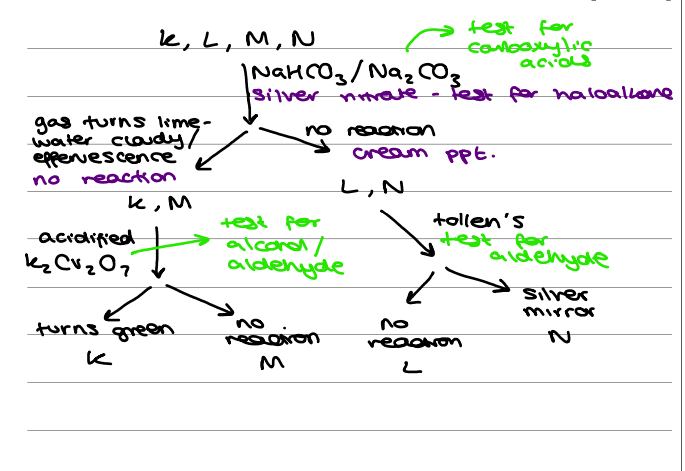
What is the logical structure for answering a 4-compound distinction question?
The Split: Use a reagent (like Na2CO3) to separate Acids from Neutrals.
The Acid Test: Test the acid group for secondary features (e.g., use Dichromate to find alcohol groups).
The Neutral Test: Test the neutral group for specific functionality (e.g., use Fehling's for Aldehydes).
In chromatography (TLC), what determines how far a spot travels (Rf value)?
Solubility in the moving phase and retention in the stationary phase.
What is the critical requirement regarding solvent depth when placing a TLC plate in a beaker?
The solvent level must be below the pencil line (baseline).
Reason: To prevent the samples from dissolving into the solvent reservoir instead of traveling up the plate.
Why must a lid be placed on the beaker during TLC development?
To prevent the solvent from evaporating and to create a saturated atmosphere inside the beaker.
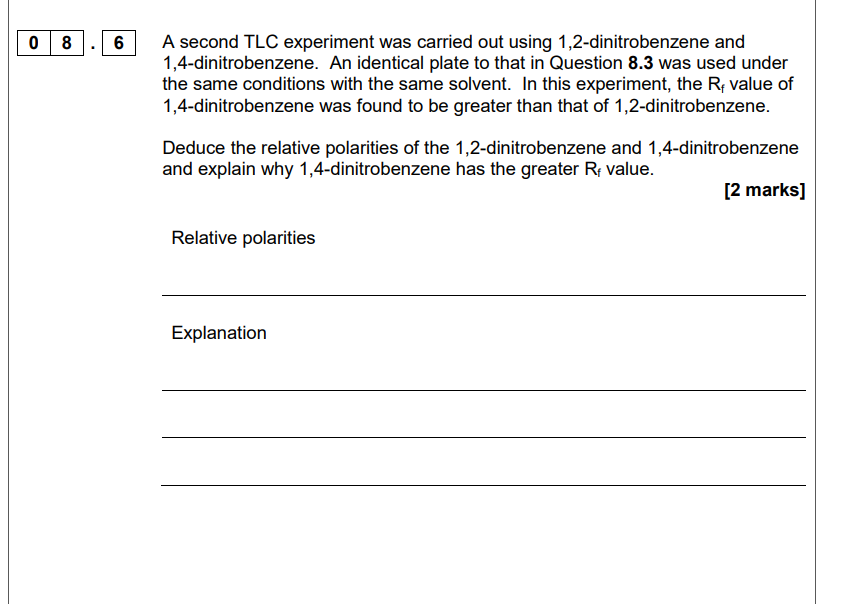
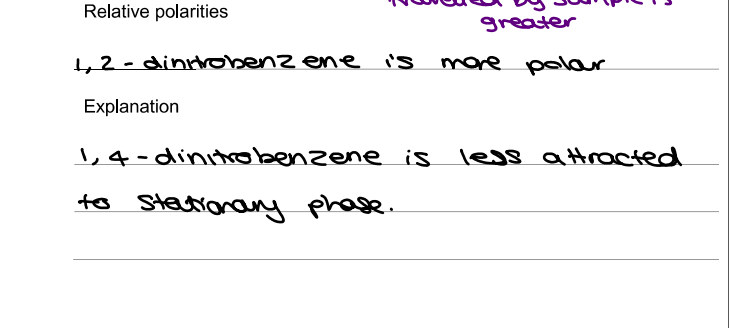
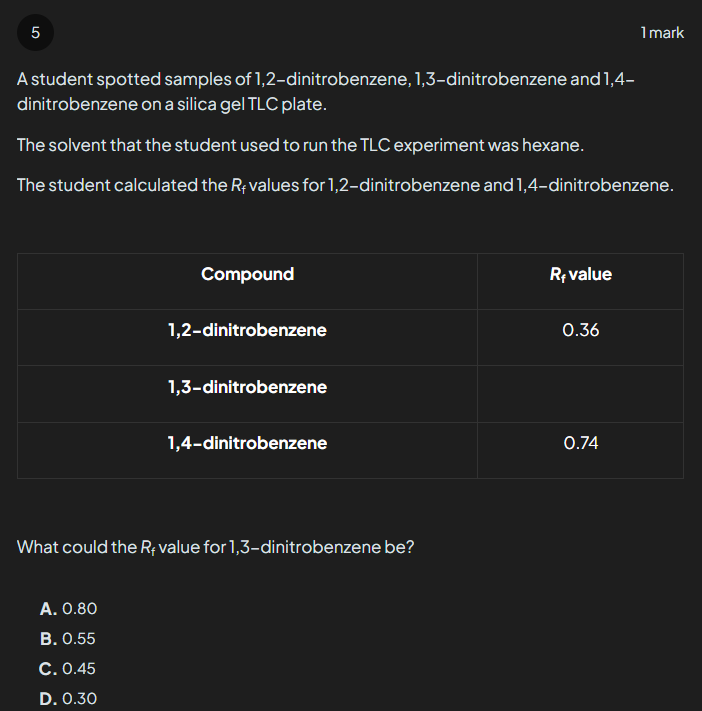
Here is the logic chain you need for TLC analysis questions involving isomers:
Step 1: Determine Polarity from Structure
1,2-dinitrobenzene (Ortho): The two polar -NO2 groups are adjacent. Their dipole moments add together to create a net dipole. This molecule is polar.
1,4-dinitrobenzene (Para): The two polar -NO2 groups are on opposite sides of the benzene ring. Their dipole moments point in opposite directions and cancel out. This molecule is non-polar (or significantly less polar).
Step 2: Understand the Stationary Phase
Standard TLC plates (silica or alumina) are polar.
Rule: Polar substances stick (adsorb) to the polar plate. Non-polar substances do not stick as well.
When naming an alkene with specific stereochemistry shown (e.g., in a mechanism or isomer question), what must be included in the IUPAC name?
Back: The (E) or (Z) designator.
Z (Zusammen): High priority groups on the Same side.
E (Entgegen): High priority groups on Opposite sides.
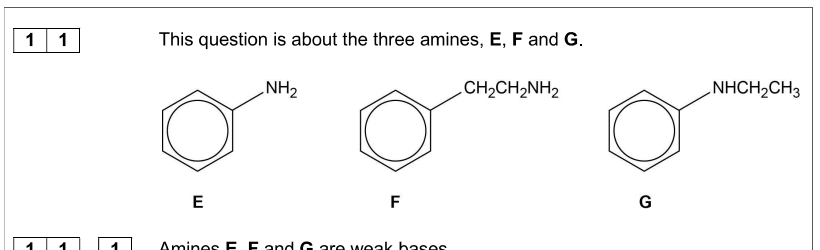
Why are aromatic amines (like E) weaker bases than aliphatic amines (like F)?
In aromatic amines, the lone pair on the nitrogen overlaps with the pi-system of the benzene ring. This delocalisation reduces the electron density on the nitrogen, making the lone pair less available to bond with a H+ ion
How do alkyl groups affect the base strength of an amine?
Alkyl groups have a positive inductive effect (+I), meaning they "push" electron density toward the nitrogen atom. This increases the lone pair's availability to accept a proton.
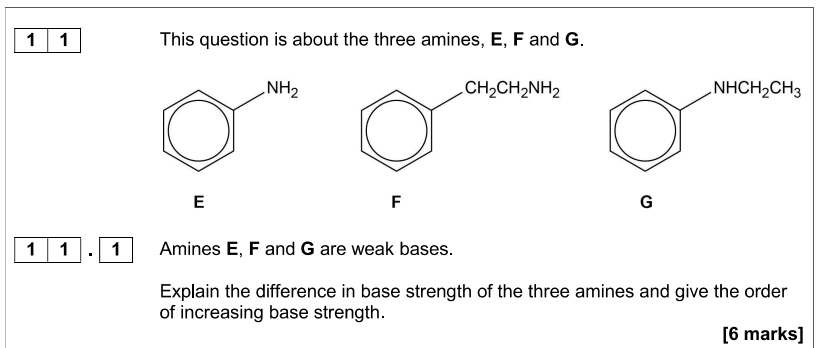
What is the Order of Increasing Base Strength for amines E, F, and G?
E < G < F
(Weakest → Strongest)
E (Phenylamine): Weakest base.
G (N-ethyl phenylamine): Intermediate strength.
F (2-phenylethanamine): Strongest base.
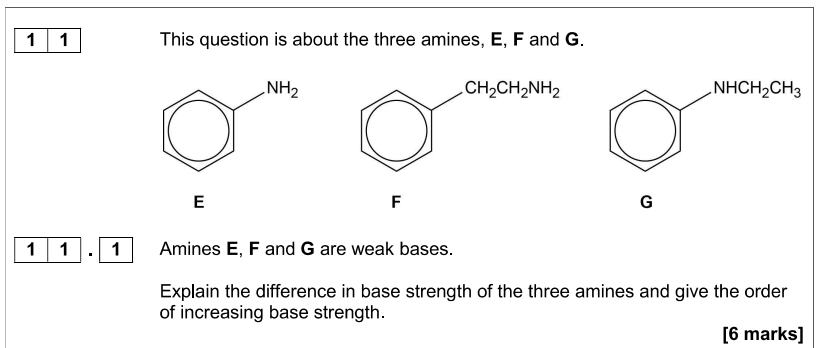
Explain why Amine E (Phenylamine) is a weak base.
Delocalisation: The lone pair of electrons on the Nitrogen atom overlaps with the delocalised pi-electron system of the benzene ring.
Availability: This delocalisation reduces the electron density on the Nitrogen atom.
Result: The lone pair is less available to accept a proton (H+).
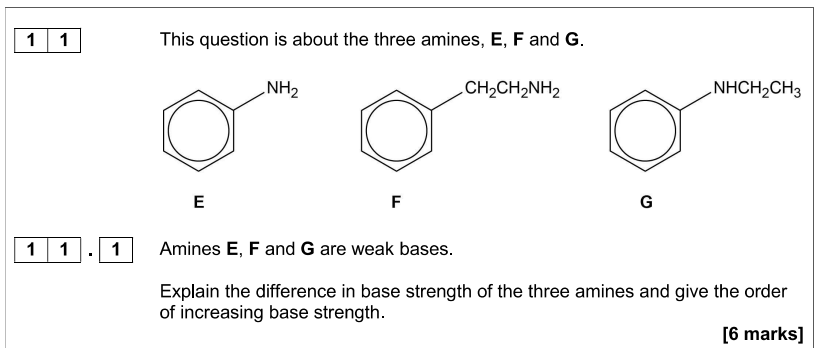
Explain why Amine F (Aliphatic) is a stronger base than Amine E.
Inductive Effect: The Nitrogen is attached to an alkyl group , which exerts a positive inductive effect, pushing electron density towards the Nitrogen.
No Delocalisation: The lone pair is not delocalised into the benzene ring because the Nitrogen is separated from the ring by carbons.
Result: The lone pair is more available to accept a proton (H+ ) compared to E.
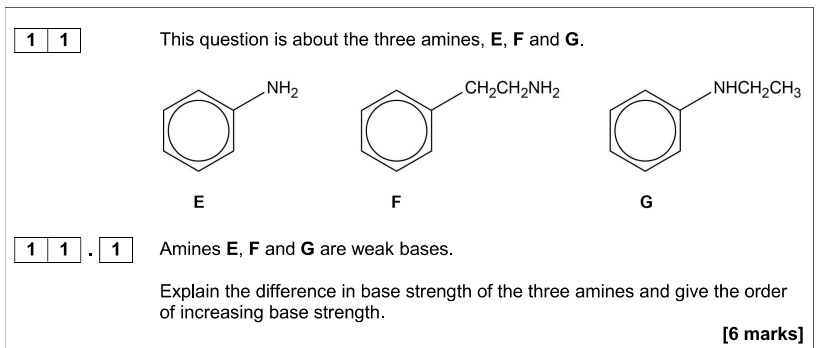
Explain why Amine G is a stronger base than E, but weaker than F.
vs E (Stronger): Like E, the lone pair is delocalised into the ring (making it weak), BUT the ethyl group attached to the Nitrogen exerts a positive inductive effect. This slightly increases electron density on the Nitrogen compared to E.
vs F (Weaker): The delocalisation into the ring (resonance) is a stronger factor than the inductive effect, so it remains a weaker base than the aliphatic amine F.
Starting from benzene, outline the reagents and conditions to synthesize Amine E (Phenylamine). (Hint: It involves two steps, one of which is reduction ).
Reaction: Benzene → Nitrobenzene
Reagents: Concentrated Nitric Acid (HNO3) and Concentrated Sulfuric Acid (H2SO4).
Conditions: Low temperature (usually below 55°C) to prevent multiple substitutions.
Mechanism: Electrophilic Substitution.
Step 2: Reduction
Reaction: Nitrobenzene → Phenylamine
Reagents: Tin (Sn) and Concentrated Hydrochloric Acid (HCl).
Conditions: Heat under reflux.
Note: This produces the salt C6H5NH3+Cl− . You must add Sodium Hydroxide NaOH at the end to liberate the free amine.
Amine F can be prepared in a three-step synthesis starting from methylbenzene. Suggest the structures of the two intermediate compounds. For each step, give reagents and conditions only. Equations and mechanisms are not required.
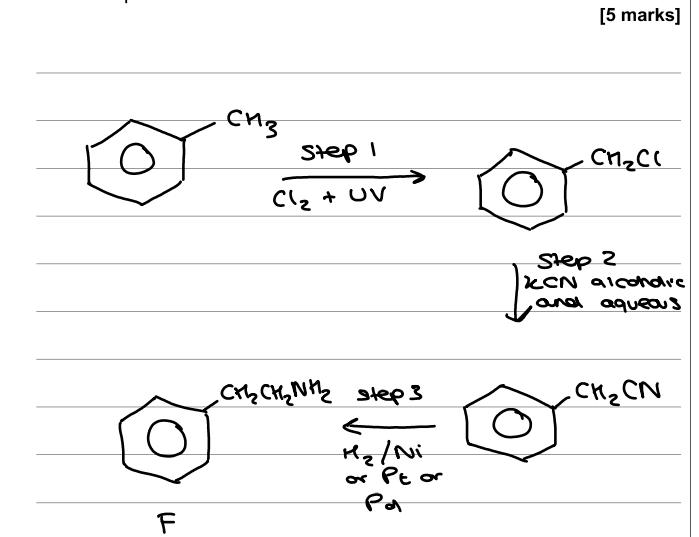
Synthesis Strategy: When to use Free Radical Substitution (Cl2 + UV)?
Use this when you need to react a Hydrocarbon Side Chain (Alkane part) or make a bond on a carbon that currently only has hydrogens.
Key Clue: You need to attach a functional group (like OH, CN, or NH2) to a plain alkyl chain (CH3). You can't stick them on directly; you must chlorinate first!
Reagents & Conditions: Aldehyde → Carboxylic Acid (e.g., Propanal → Propanoic Acid).
Reagent: Acidified Potassium Dichromate(VI) (K2Cr2O7) .
Condition: Heat under Reflux.
Observation: Colour change from Orange (Cr2O72− ) to Green (Cr3+).
Cr2O72−
Why must Reflux be used when oxidising an aldehyde to a carboxylic acid?
Reflux allows continuous heating without losing volatile organic components (like the aldehyde). It ensures the reaction goes to completion (fully oxidising to the acid) rather than stopping at the aldehyde stage or evaporating away.
Why is Acidified Potassium Dichromate NOT a valid test to prove Propan-1-ol has been formed from Propanal?
Reverses the Reaction: It oxidises the alcohol back to the starting materials (aldehyde/acid), which the question forbids.
False Positive: The starting material (Propanal) also reacts with Dichromate (Orange → Green), so you cannot tell if the reaction has finished.
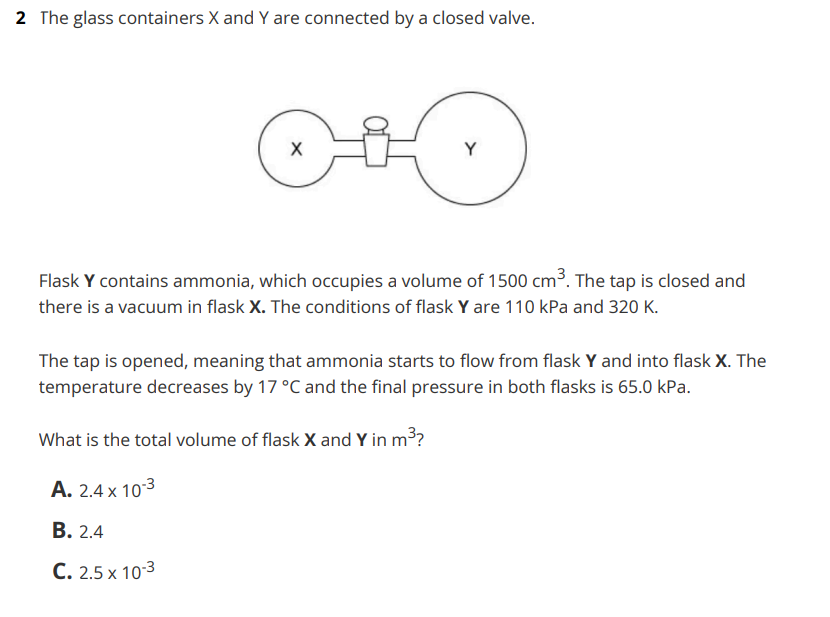
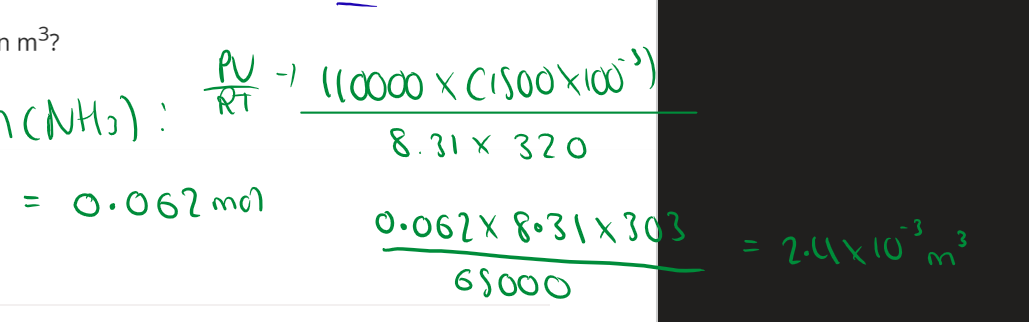
STEP 1: Find mol of NH₃
STEP 2: Find vol using M1
C
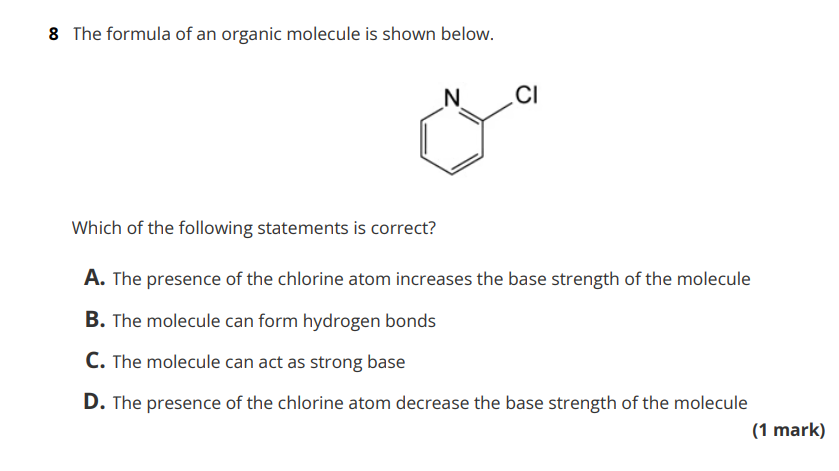
D
Chlorine atoms being electron withdrawing lowers electron density of the N, makes it less available to accept a proton.
Misconception about H bonds. H bonds form if a H is actually present.
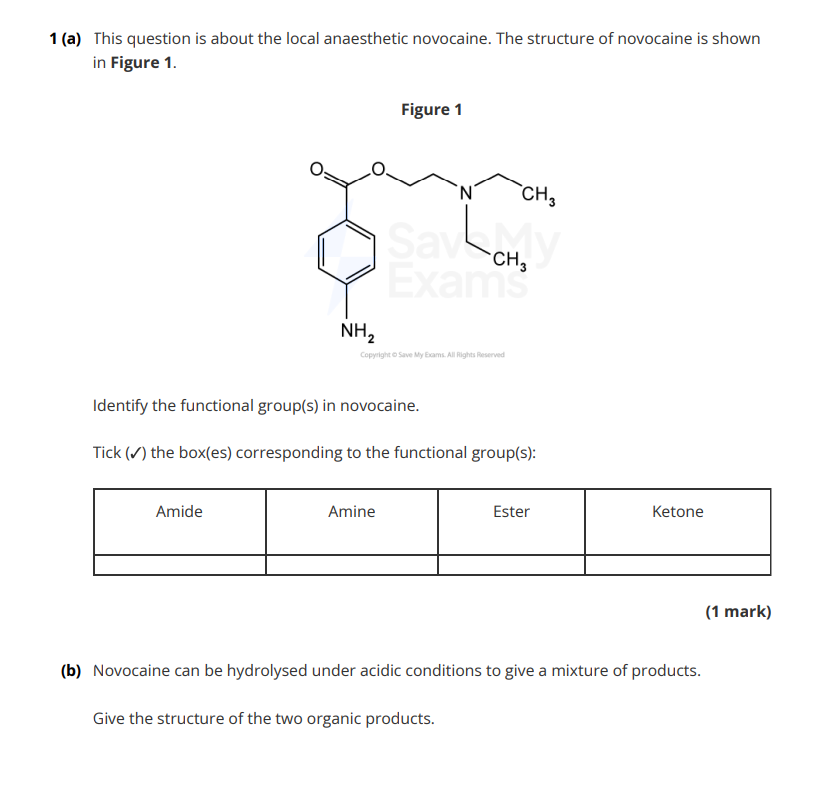
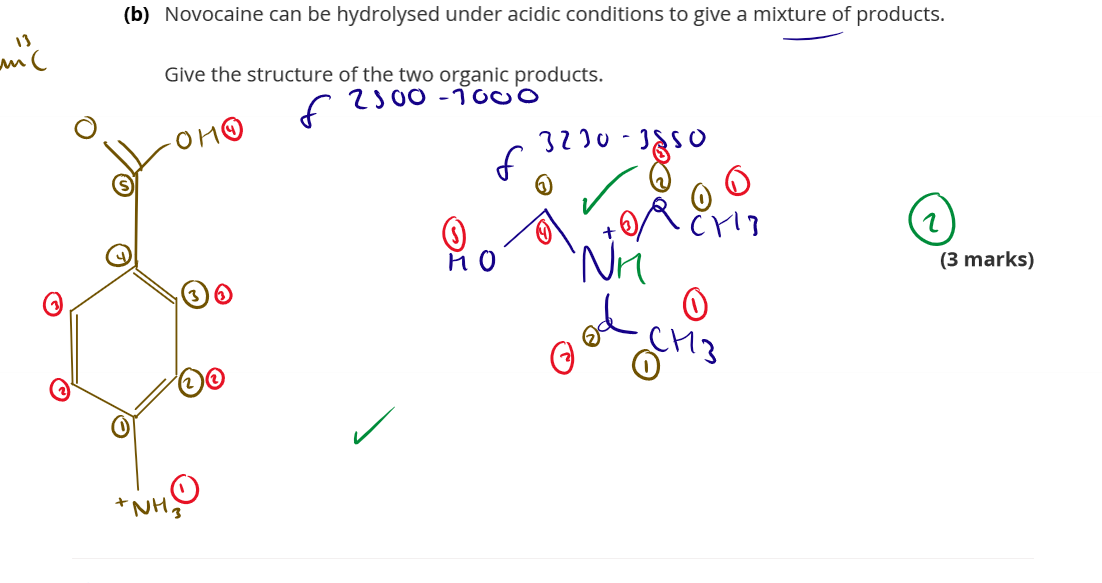
Acid Catalysed Hydrolysis forms a Carboxylic Acid + Alcohol.
Hence ester bond breaks and H is added to both of the compounds involved as a water molecule used up.
As acidic = High H+ content, the N is also protonated and quaternary ammonium salts are formed.
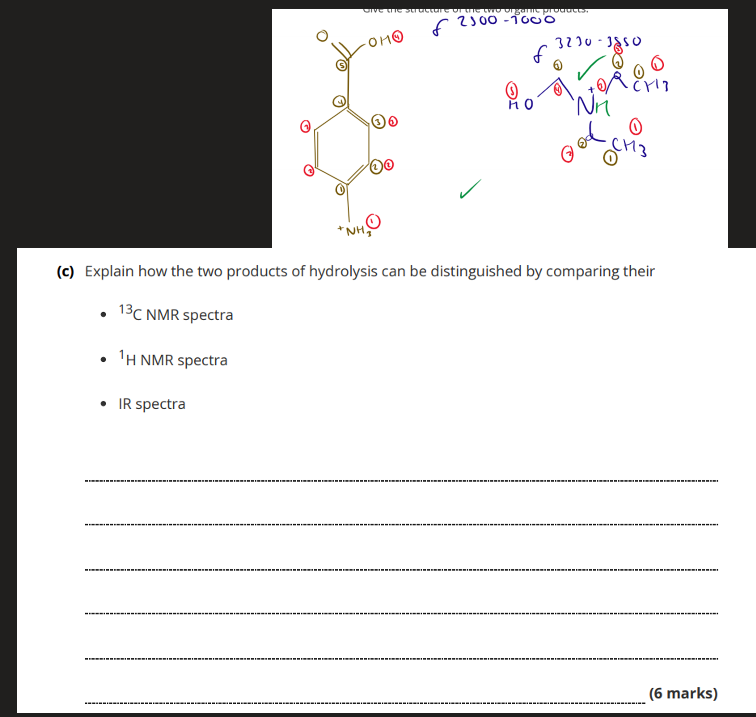
Specify the function of each of the types of Spectroscopy used for each step
State amount of peaks in both
Repeat 3X for full marks.
Stage 1
¹³C used to distinguish unique C environments.
Product 1 shows 5 unique Carbon environments
Product 2 shows 3 unique Carbon environments
Stage 2
¹H NMR used to identify hydrogen environments, relative number of hydrogens and information about adjacent hydrogens.
Product 1 shows 4 unique hydrogen environments.
Product 2 shows 5 unique hydrogen environments.
Stage 3
IR used to identify functional groups
Product 1 shows absorption for N-H, O-H(acid) and C=O(reference the wavelength values)
Product 2 shows absorption for N-H and O-H(alcohols)
Cisplatin is a Square Planar molecule. Suggest why the molecule has a bond angle of 90°.
Lone pairs above and below the plane.
Explain why some drugs like cisplatin have adverse effects.
Damages DNA in both healthy and cancerous cells.
Several methods exist for the synthesis of cisplatin. Outline, with reasons, two factors that influence chemists' choice of the synthesis of an organic compound.
Any two from:
Doesn’t require a solvent, fewer problems with disposal
Using non-hazardous starting materials, safer to work with
Using fewer steps, greater efficiency
Chromatography is a technique used in drug development. Explain the principles of thin layer chromatography. Explain how R values are used to identify different substances present in drugs.
3 marks going over principles:
Small spot containing a mixture of compounds placed 1cm above a TLC plate
Plate placed in a tank containing a small amount of the solvent
Solvent allowed to rise to almost the top of the plate
Plate is then removed, position of which the solvent has moved is marked
(ANY 3 POINTS)
1 mark explaining how Rf values are used:
Rf value of each spot compared with value obtained by known substances run in the same solvent mixture.
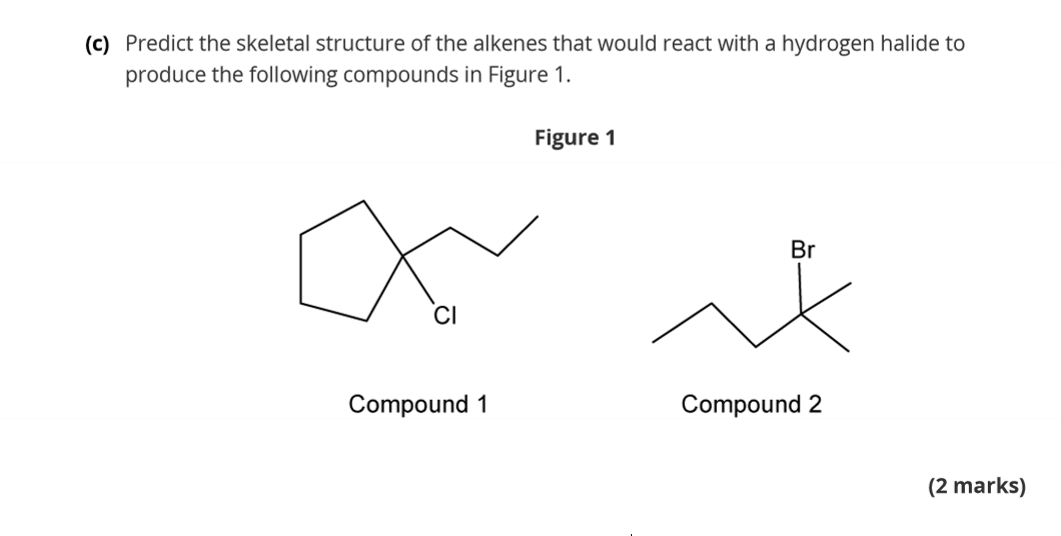
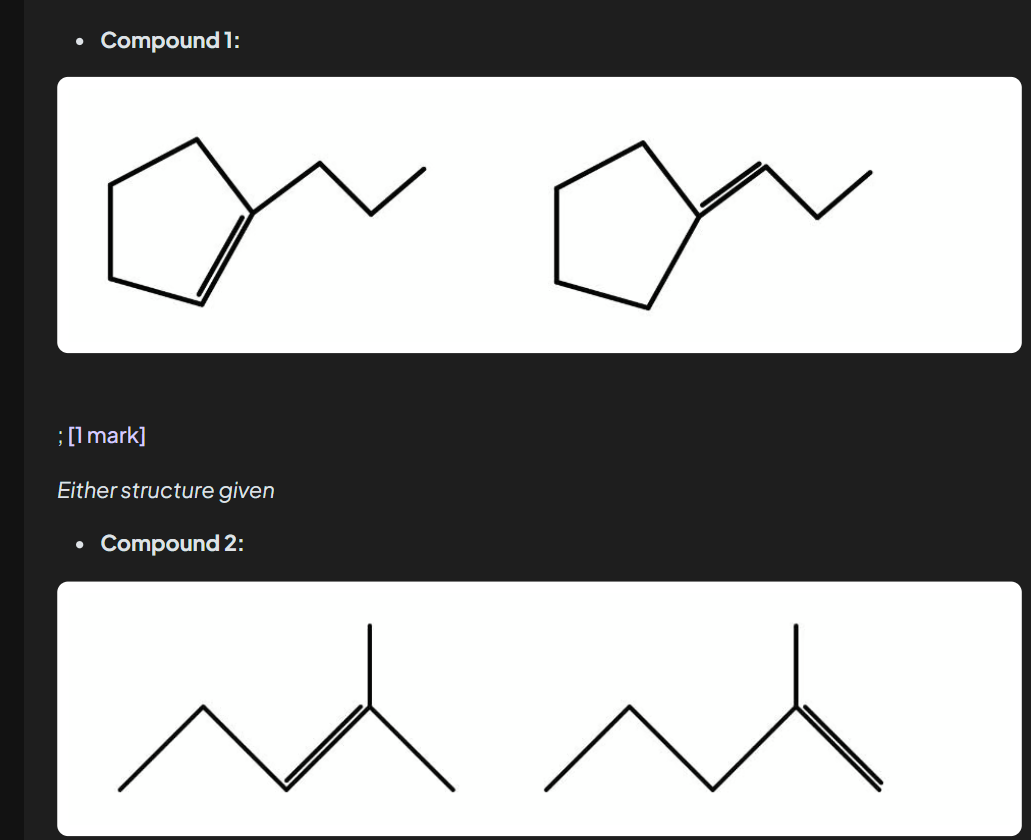
What is the role of the acid in the reaction between iodine and propanone/butanone?
It acts as a catalyst. The rate of reaction is independent of the iodine concentration (zero order) because the iodine only reacts after the rate-determining step.
What is the visual endpoint for the acidified iodine-ketone "clock" reaction?
The disappearance of the brown/yellow colour of the iodine.