OCEAN 2002: Module Based Questions

0.0(0)
Studied by 0 people
call kaiCall Kai
learnLearn
examPractice Test
spaced repetitionSpaced Repetition
heart puzzleMatch
flashcardsFlashcards
GameKnowt Play
Card Sorting

1/23

encourage image

There's no tags or description

Looks like no tags are added yet.

Last updated 4:03 PM on 4/10/26
Name
Mastery
Learn
Test
Matching
Spaced
Call with Kai

No analytics yet

Send a link to your students to track their progress

24 Terms

1
New cards

Identify key roles of cyanobacteria in ocean ecosystems

-              95% of food from ocean comes from photosynthesis

o   Remainder comes from chemosynthesis

-              Many different marine primary producers which undergo photosynthesis, but predominantly phytoplankton (archaea, bacteria, eukarya)

o   Of the phytoplankton, cyanobacteria (blue-green algae) are the dominant type of photosynthesizing bacteria in the ocean.

-              Cyanobacteria are found in many different environments, and serve great importance globally…

o   Oxygenate the atmosphere

o   Diazotrophs

§  Meaning they can use N2 dissolved in sea water that other photosynthetic organisms cannot use.

§  Entry way for the N cycle

o   Major primary producers (more than 50% of marine primary production is due to CB)

§  This is because of the incredibly small size of Synechococcus and Prochlorococcus, and their amazing abundance, and ability to photosynthesize  

2
New cards

Outline the role of urchins in kelp ecosystems

-              Urchins one of the only organisms which feed on kelp (acting on kelp ecoystems both as grazers and detritivores)

-              Keystone species

o   A species on which other species in an ecosystem largely depend, such that if they were removed from the ecosystem, it would change drastically

o   Urchins are keystone species to kelp forests

-              In mature kelp forests, urchins…

o   Shelter in cracks

o   Feed on drift kelp (detached kelp starting to breakdown, now young kelp are able to establish themselves in same spot)

-              In the case of a disturbed kelp forest, the urchins move out of cracks in search of food

o   Graze on everything other than coralline algae, and create urchin barrens, devoid of kelp

-              Alternative stable states:

o   Ecosystems can have multiple stable states (mature kelp forest, vs urchin barren), and disturbances cause the ecosystems to shift states

3
New cards

Describe 3 threats to sea grass ecosystems

-              Sea grasses are in decline worldwide (in 58% of marine ecosystems), losing a soccer pitch equivalent every 30 minutes. What causes this?

o   Epiphytes

§  Plants that grow on the surface of other plants

§  Many invasive species which don’t have any natural predators, which cause seagrass blades to weaken and break

o   Wasting disease

§  Devastated 90% of eastern NA’s seagrass beds in the 30s

§  Cause seagrass to weaken and break

§  Still causing problems today

o   Sediment

§  Elevated sediment associated with human activities, which…

·      Blocks light

·      Bury/smother young seagrasses

o   Trophic disruptions

§  Removal of suspension feeders

·      No suspension feeders = no removal of particles in water, therefore creating similar effect to sediment (blocking light)

§  Removal of herbivores

·      Manatees, dugongs, sea turtles

§  Removed predators on herbivores

·      Small herbivores can graze down entire seagrass meadows

§  Invasive species

·      Green crab snip off blades and deplete seagrass meadows

4
New cards

Associate major zooplankton groups with feeding strategies

-              Passive ambush feeders:

o   Foraminifera encounter food particles with large spines

o   Radiolarians similar

o   Pteropods cast large mucous nets to catch particles

o   Ctenophores drag sticky tentacles through the water

-              Active ambush feeders: detect, and seize particles

o   Chaetognath have structures to detect prey and capture

o   Copepods ‘kings of active ambush’, detects a particle, and re-ordinates body length, and deploys feeding structures.

-              Feeding current feeders:

o   Cnidaria: pulse bells to generate currents, particles contacted by tentacles with nematocysts

§  Siphonophores: generate feeding currents by projecting a ‘sail’ out of the water, allowing the tentacles to extend (up to 30m)

o   Appendicularians: benthic tunicate, build a ‘house’ around themselves which houses mucous-feeding-nets that catches particles

o   Salps: benthic tunicate

-              Cruise feeders

o   Ichthyoplankton: fish larvae, voracious consumers (just eyes with a stomach)

5
New cards

Describe the Cnidaria

-              Cnidaria:

o   Jellies, anemones, corals all united by their unique stinging nematocysts

-              Anemones

o   Tentacles open and equipped with nematocysts, passive ambush feeders

o   Defensive mechanism to withdraw tentacles when disturbed

o   Asexual (budding) and sexual reproduction (release egg and sperm in water column)

-              Stony Corals

o   Colonial reef builders (seen in deep sea too)

o   Resides within a CaCO3 ‘cup’

o   Endosymbiotic dinoflagellate relationship with zooxanthellae

§  Corals get food from zooxanthellae

§  Zooxanthellae get somewhere to live

-              Soft Corals

o   Sea fans, whips, pens

o   Colonial polyps on gorgonin protein complex (rather than CaCO3)

6
New cards

Differentiate fish reproductive strategies

-              Ocean is a dangerous world, so the survival strategies for fish is:

o   Produce many small offspring

o   Invest in a few large offspring

-              3 fish reproductive strategies

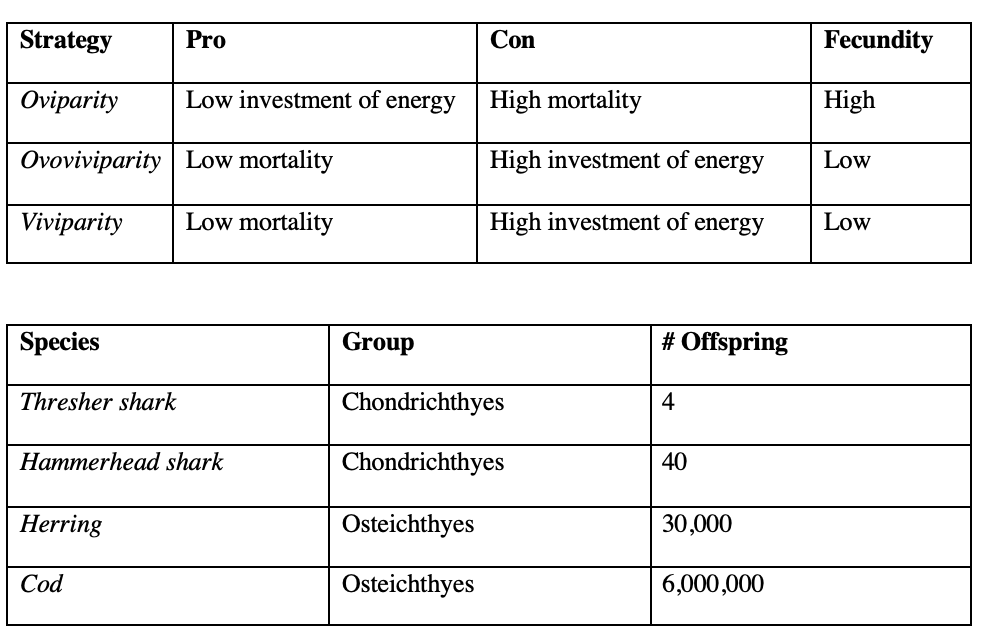
o   Oviparity

§  External fertilization of eggs in the water column

o   Viviparity

§  Internal fertilization, live young nourished by mother

o   Ovoviviparity

§  Internal fertilization, live young nourished by yolk sac

-              Why so many?

o   Massive mortality in plankton

§ 2%/day mortality in 6,000,000 cod larva means only 2 survive to sexual maturity

-              When timing is right…

o   High fecundity species have variable potential for success

o   Many environmental determinants

o   Large year classes are possible

-              Dangers of exploiting low fecundity species

o   Few offspring means slow recovery from over-fishing

o   Shark fin fisheries particularly problematic

o   Bycatch a problem, too
<p><span>-</span><span style="font-family: &quot;Times New Roman&quot;; line-height: normal; font-size: 7pt;">&nbsp;&nbsp;&nbsp;&nbsp;&nbsp;&nbsp;&nbsp;&nbsp;&nbsp;&nbsp;&nbsp;&nbsp;&nbsp; </span><span>Ocean is a dangerous world, so the survival strategies for fish is:</span></p><p class="MsoListParagraphCxSpMiddle"><span style="font-family: &quot;Courier New&quot;;">o</span><span style="font-family: &quot;Times New Roman&quot;; line-height: normal; font-size: 7pt;">&nbsp;&nbsp; </span><span>Produce many small offspring</span></p><p class="MsoListParagraphCxSpMiddle"><span style="font-family: &quot;Courier New&quot;;">o</span><span style="font-family: &quot;Times New Roman&quot;; line-height: normal; font-size: 7pt;">&nbsp;&nbsp; </span><span>Invest in a few large offspring</span></p><p class="MsoListParagraphCxSpMiddle"><span>-</span><span style="font-family: &quot;Times New Roman&quot;; line-height: normal; font-size: 7pt;">&nbsp;&nbsp;&nbsp;&nbsp;&nbsp;&nbsp;&nbsp;&nbsp;&nbsp;&nbsp;&nbsp;&nbsp;&nbsp; </span><span>3 fish reproductive strategies</span></p><p class="MsoListParagraphCxSpMiddle"><span style="font-family: &quot;Courier New&quot;;">o</span><span style="font-family: &quot;Times New Roman&quot;; line-height: normal; font-size: 7pt;">&nbsp;&nbsp; </span><span>Oviparity</span></p><p class="MsoListParagraphCxSpMiddle"><span>§</span><span style="font-family: &quot;Times New Roman&quot;; line-height: normal; font-size: 7pt;">&nbsp; </span><span>External fertilization of eggs in the water column</span></p><p class="MsoListParagraphCxSpMiddle"><span style="font-family: &quot;Courier New&quot;;">o</span><span style="font-family: &quot;Times New Roman&quot;; line-height: normal; font-size: 7pt;">&nbsp;&nbsp; </span><span>Viviparity</span></p><p class="MsoListParagraphCxSpMiddle"><span>§</span><span style="font-family: &quot;Times New Roman&quot;; line-height: normal; font-size: 7pt;">&nbsp; </span><span>Internal fertilization, live young nourished by mother</span></p><p class="MsoListParagraphCxSpMiddle"><span style="font-family: &quot;Courier New&quot;;">o</span><span style="font-family: &quot;Times New Roman&quot;; line-height: normal; font-size: 7pt;">&nbsp;&nbsp; </span><span>Ovoviviparity</span></p><p class="MsoListParagraphCxSpLast"><span>§</span><span style="font-family: &quot;Times New Roman&quot;; line-height: normal; font-size: 7pt;">&nbsp; </span><span>Internal fertilization, live young nourished by yolk sac</span></p><p class="MsoListParagraphCxSpLast"><span>-</span><span style="font-family: &quot;Times New Roman&quot;; line-height: normal; font-size: 7pt;">&nbsp;&nbsp;&nbsp;&nbsp;&nbsp;&nbsp;&nbsp;&nbsp;&nbsp;&nbsp;&nbsp;&nbsp;&nbsp; </span><span>Why so many?</span></p><p class="MsoListParagraphCxSpMiddle"><span style="font-family: &quot;Courier New&quot;;">o</span><span style="font-family: &quot;Times New Roman&quot;; line-height: normal; font-size: 7pt;">&nbsp;&nbsp; </span><span>Massive mortality in plankton</span></p><p class="MsoListParagraphCxSpMiddle"><span>§</span><span style="font-family: &quot;Times New Roman&quot;; line-height: normal; font-size: 7pt;">&nbsp;</span><span>2%/day mortality in 6,000,000 cod larva means only 2 survive to sexual maturity</span></p><p class="MsoListParagraphCxSpMiddle"><span>-</span><span style="font-family: &quot;Times New Roman&quot;; line-height: normal; font-size: 7pt;">&nbsp;&nbsp;&nbsp;&nbsp;&nbsp;&nbsp;&nbsp;&nbsp;&nbsp;&nbsp;&nbsp;&nbsp;&nbsp; </span><span>When timing is right…</span></p><p class="MsoListParagraphCxSpMiddle"><span style="font-family: &quot;Courier New&quot;;">o</span><span style="font-family: &quot;Times New Roman&quot;; line-height: normal; font-size: 7pt;">&nbsp;&nbsp; </span><span>High fecundity species have variable potential for success</span></p><p class="MsoListParagraphCxSpMiddle"><span style="font-family: &quot;Courier New&quot;;">o</span><span style="font-family: &quot;Times New Roman&quot;; line-height: normal; font-size: 7pt;">&nbsp;&nbsp; </span><span>Many environmental determinants</span></p><p class="MsoListParagraphCxSpMiddle"><span style="font-family: &quot;Courier New&quot;;">o</span><span style="font-family: &quot;Times New Roman&quot;; line-height: normal; font-size: 7pt;">&nbsp;&nbsp; </span><span>Large year classes are possible</span></p><p class="MsoListParagraphCxSpMiddle"><span>-</span><span style="font-family: &quot;Times New Roman&quot;; line-height: normal; font-size: 7pt;">&nbsp;&nbsp;&nbsp;&nbsp;&nbsp;&nbsp;&nbsp;&nbsp;&nbsp;&nbsp;&nbsp;&nbsp;&nbsp; </span><span>Dangers of exploiting low fecundity species</span></p><p class="MsoListParagraphCxSpMiddle"><span style="font-family: &quot;Courier New&quot;;">o</span><span style="font-family: &quot;Times New Roman&quot;; line-height: normal; font-size: 7pt;">&nbsp;&nbsp; </span><span>Few offspring means slow recovery from over-fishing</span></p><p class="MsoListParagraphCxSpMiddle"><span style="font-family: &quot;Courier New&quot;;">o</span><span style="font-family: &quot;Times New Roman&quot;; line-height: normal; font-size: 7pt;">&nbsp;&nbsp; </span><span>Shark fin fisheries particularly problematic</span></p><p class="MsoListParagraphCxSpLast"><span style="font-family: &quot;Courier New&quot;;">o</span><span style="font-family: &quot;Times New Roman&quot;; line-height: normal; font-size: 7pt;">&nbsp;&nbsp; </span><span>Bycatch a problem, too</span></p>
7
New cards

Distinguish between poikilotherms and homeotherms

-              Emergence of tetrapods

o   4 footed: amphibians, reptiles, birds, mammals

o   Ancestral form evolved from lobe-finned fishes 400 MYA

-              Marine tetrapods:

o   Marine reptiles

o   Sea birds

o   Marine mammals

-              Temperature regulation:

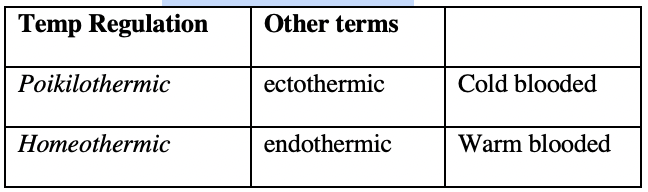
o   Poikilothermic

§  “poikilo”: variable

§  “thermo”: temperature

§  Reptiles, therefore, have varying body temperature according to external environment

·      Because of this, poikilotherms are generally restricted to southern latitudes to keep warm temperature

o   Homeothermic

§  “homo”: same

§  “thermo”: temperature

§  Sea birds and mammals have a constant internal temperature (regulated internally by organism)
<p><span>-</span><span style="font-family: &quot;Times New Roman&quot;; line-height: normal; font-size: 7pt;">&nbsp;&nbsp;&nbsp;&nbsp;&nbsp;&nbsp;&nbsp;&nbsp;&nbsp;&nbsp;&nbsp;&nbsp;&nbsp; </span><span>Emergence of tetrapods</span></p><p class="MsoListParagraphCxSpMiddle"><span style="font-family: &quot;Courier New&quot;;">o</span><span style="font-family: &quot;Times New Roman&quot;; line-height: normal; font-size: 7pt;">&nbsp;&nbsp; </span><span>4 footed: amphibians, reptiles, birds, mammals</span></p><p class="MsoListParagraphCxSpMiddle"><span style="font-family: &quot;Courier New&quot;;">o</span><span style="font-family: &quot;Times New Roman&quot;; line-height: normal; font-size: 7pt;">&nbsp;&nbsp; </span><span>Ancestral form evolved from lobe-finned fishes 400 MYA</span></p><p class="MsoListParagraphCxSpMiddle"><span>-</span><span style="font-family: &quot;Times New Roman&quot;; line-height: normal; font-size: 7pt;">&nbsp;&nbsp;&nbsp;&nbsp;&nbsp;&nbsp;&nbsp;&nbsp;&nbsp;&nbsp;&nbsp;&nbsp;&nbsp; </span><span>Marine tetrapods:</span></p><p class="MsoListParagraphCxSpMiddle"><span style="font-family: &quot;Courier New&quot;;">o</span><span style="font-family: &quot;Times New Roman&quot;; line-height: normal; font-size: 7pt;">&nbsp;&nbsp; </span><span>Marine reptiles</span></p><p class="MsoListParagraphCxSpMiddle"><span style="font-family: &quot;Courier New&quot;;">o</span><span style="font-family: &quot;Times New Roman&quot;; line-height: normal; font-size: 7pt;">&nbsp;&nbsp; </span><span>Sea birds</span></p><p class="MsoListParagraphCxSpMiddle"><span style="font-family: &quot;Courier New&quot;;">o</span><span style="font-family: &quot;Times New Roman&quot;; line-height: normal; font-size: 7pt;">&nbsp;&nbsp; </span><span>Marine mammals</span></p><p class="MsoListParagraphCxSpMiddle"><span>-</span><span style="font-family: &quot;Times New Roman&quot;; line-height: normal; font-size: 7pt;">&nbsp;&nbsp;&nbsp;&nbsp;&nbsp;&nbsp;&nbsp;&nbsp;&nbsp;&nbsp;&nbsp;&nbsp;&nbsp; </span><span>Temperature regulation:</span></p><p class="MsoListParagraphCxSpMiddle"><span style="font-family: &quot;Courier New&quot;;">o</span><span style="font-family: &quot;Times New Roman&quot;; line-height: normal; font-size: 7pt;">&nbsp;&nbsp; </span><span>Poikilothermic</span></p><p class="MsoListParagraphCxSpMiddle"><span>§</span><span style="font-family: &quot;Times New Roman&quot;; line-height: normal; font-size: 7pt;">&nbsp; </span><span>“poikilo”: variable</span></p><p class="MsoListParagraphCxSpMiddle"><span>§</span><span style="font-family: &quot;Times New Roman&quot;; line-height: normal; font-size: 7pt;">&nbsp; </span><span>“thermo”: temperature</span></p><p class="MsoListParagraphCxSpMiddle"><span>§</span><span style="font-family: &quot;Times New Roman&quot;; line-height: normal; font-size: 7pt;">&nbsp; </span><span>Reptiles, therefore, have varying body temperature according to external environment</span></p><p class="MsoListParagraphCxSpMiddle"><span>·</span><span style="font-family: &quot;Times New Roman&quot;; line-height: normal; font-size: 7pt;">&nbsp;&nbsp;&nbsp;&nbsp;&nbsp; </span><span>Because of this, poikilotherms are generally restricted to southern latitudes to keep warm temperature</span></p><p class="MsoListParagraphCxSpMiddle"><span style="font-family: &quot;Courier New&quot;;">o</span><span style="font-family: &quot;Times New Roman&quot;; line-height: normal; font-size: 7pt;">&nbsp;&nbsp; </span><span>Homeothermic</span></p><p class="MsoListParagraphCxSpMiddle"><span>§</span><span style="font-family: &quot;Times New Roman&quot;; line-height: normal; font-size: 7pt;">&nbsp; </span><span>“homo”: same</span></p><p class="MsoListParagraphCxSpMiddle"><span>§</span><span style="font-family: &quot;Times New Roman&quot;; line-height: normal; font-size: 7pt;">&nbsp; </span><span>“thermo”: temperature</span></p><p class="MsoListParagraphCxSpLast"><span>§</span><span style="font-family: &quot;Times New Roman&quot;; line-height: normal; font-size: 7pt;">&nbsp; </span><span>Sea birds and mammals have a constant internal temperature (regulated internally by organism)</span></p><p class="MsoListParagraphCxSpLast"></p>
8
New cards

Name the groups of birds that occupy marine habitats but are not considered sea birds

-              Marine-oriented birds, but not strict sea birds

o   Sandpipers, heron, osprey, sea ducks,

-              Lack one or more traits that classify them as seabirds

o   Webbed feet, homeotherms, nest on land, downy feathers

-              Sea ducks:

o   Have all traits of sea birds

o   Often migratory

o   Feed in shallows (going for benthic invertebrates)

o   Not classed as seabirds for economical/historical purposes

§  Food, down feathers

9
New cards

Distinguish the feeding strategies of mysticetes and odontocetes

  • Mysticetes: strainers

    • Via baleen

  • Odontocetes: siezers

    • Via teeth

  • 3 Mysticete feeding strategies

    • Gulping

      • Take in a large volume of water into expandable buccal cavity

      • Expel water while straining out plankton and small nekton

      • Bubble net feeding:

        • Group gulping strategy by humpback whales

        • Creates barrier of bubbles around prey items, gulp water concentrated with prey in a coordinated way

    • Skimming

      • Swim with continuous intake of water

      • Water expelled through baleen

      • Plankton and small nekton caught on baleen

      • Feed at surface (which puts them at boat striking risk), or at depth (they love stage 5 copepods)

    • Sediment straining

      • Practiced primarily by gray wale

      • Scoop mouthfuls of sediment

      • Shake out sediment

      • Retain invertebrates

  • Odontocete feeding strategies

    • Cruise feeders

      • Sperm whale, dolphins, etc. feed at great depths, and therefore use echolocation since light is restricted deep down

    • Opportunistic

      • Feed on whatever prey items are around

    • Cooperative

      • Ram feeding

      • Wave washing

        • Orcas dive right before ice flow, make a wave on the ice flow to wash off the seal, and then attack once in the water

10
New cards

Outline Stephensons’ Universal Scheme of Zonation in rocky intertidal ecosystems

  • Where to find rocky intertidal zones?

    • Recently glaciated margins

      • Glaciers are great at leaving exposed bedrock behind

    • Active margins

      • Haven’t had much time to accumulate sediment

    • Energetic waters

      • Keep intertidal clean and empty of sediment

  • Zonation in the Rocky Intertidal

    • Black lichen zone

      • In zone of wave spray

    • Littorinid snails at limit of tidal range

    • Mid-tide levels

      • Indicated by presence of barnacles and mussels

    • Lower tidal levels

      • Red and brown algae

  • Zonation is typical

    • Northeast North America, Alaskan fjord, Korean peninsula all show the same zonation!

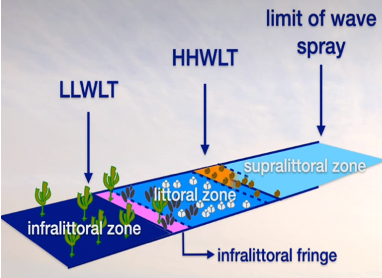
  • Stephensons’ Universal Scheme of Zonation

o   LLWLT: lowest low water on a large tide

o   HHWLT: highest high water on a large tide

o   Infralittoral zone: kelp (limit of kelp represent infralittoral fringe)

o   Littoral zone: muscles, barnacles (limit where barnacles give out represent supralittoral fringe)

o   Supralittoral zone: Littorinid snails
<ul><li><p><span>Where to find rocky intertidal zones?</span></p><ul><li><p><span>Recently glaciated margins</span></p><ul><li><p><span style="font-family: &quot;Times New Roman&quot;; line-height: normal; font-size: 7pt;"> </span><span>Glaciers are great at leaving exposed bedrock behind</span></p></li></ul></li><li><p class="MsoListParagraphCxSpMiddle"><span style="font-family: &quot;Courier New&quot;;">Active margins</span></p><ul><li><p class="MsoListParagraphCxSpMiddle"><span>Haven’t had much time to accumulate sediment</span></p></li></ul></li><li><p class="MsoListParagraphCxSpMiddle"><span>Energetic waters</span></p><ul><li><p class="MsoListParagraphCxSpMiddle"><span>Keep intertidal clean and empty of sediment</span></p></li></ul></li></ul></li><li><p class="MsoListParagraphCxSpMiddle"><span>Zonation in the Rocky Intertidal</span></p><ul><li><p class="MsoListParagraphCxSpMiddle"><span>Black lichen zone</span></p><ul><li><p class="MsoListParagraphCxSpMiddle"><span>In zone of wave spray</span></p></li></ul></li><li><p class="MsoListParagraphCxSpMiddle"><span>Littorinid snails at limit of tidal range</span></p></li><li><p class="MsoListParagraphCxSpMiddle"><span>Mid-tide levels</span></p><ul><li><p class="MsoListParagraphCxSpMiddle"><span>Indicated by presence of barnacles and mussels</span></p></li></ul></li><li><p class="MsoListParagraphCxSpMiddle"><span>Lower tidal levels</span></p><ul><li><p class="MsoListParagraphCxSpMiddle"><span>Red and brown algae</span></p></li></ul></li></ul></li><li><p class="MsoListParagraphCxSpMiddle"><span>Zonation is typical</span></p><ul><li><p class="MsoListParagraphCxSpMiddle"><span>Northeast North America, Alaskan fjord, Korean peninsula all show the same zonation!</span></p></li></ul></li><li><p class="MsoListParagraphCxSpMiddle"><span>Stephensons’ Universal Scheme of Zonation</span></p></li></ul><p class="MsoListParagraphCxSpMiddle"><span style="font-family: &quot;Courier New&quot;;">o</span><span style="font-family: &quot;Times New Roman&quot;; line-height: normal; font-size: 7pt;">&nbsp;&nbsp; </span><span>LLWLT: lowest low water on a large tide</span></p><p class="MsoListParagraphCxSpMiddle"><span style="font-family: &quot;Courier New&quot;;">o</span><span style="font-family: &quot;Times New Roman&quot;; line-height: normal; font-size: 7pt;">&nbsp;&nbsp; </span><span>HHWLT: highest high water on a large tide</span></p><p class="MsoListParagraphCxSpMiddle"><span style="font-family: &quot;Courier New&quot;;">o</span><span style="font-family: &quot;Times New Roman&quot;; line-height: normal; font-size: 7pt;">&nbsp;&nbsp; </span><span>Infralittoral zone: kelp (limit of kelp represent infralittoral fringe)</span></p><p class="MsoListParagraphCxSpMiddle"><span style="font-family: &quot;Courier New&quot;;">o</span><span style="font-family: &quot;Times New Roman&quot;; line-height: normal; font-size: 7pt;">&nbsp;&nbsp; </span><span>Littoral zone: muscles, barnacles (limit where barnacles give out represent supralittoral fringe)</span></p><p class="MsoListParagraphCxSpLast"><span style="font-family: &quot;Courier New&quot;;">o</span><span style="font-family: &quot;Times New Roman&quot;; line-height: normal; font-size: 7pt;">&nbsp;&nbsp; </span><span>Supralittoral zone: Littorinid snails</span></p>
11
New cards

Identify the primary source of organic matter to sandy intertidal ecosystems

  • Food supply on beaches:

    • Beaches have low primary productivity, but have lots of organic matter for consumption

  • Causes of low productivity:

o   Lack of stable holdfasts for macroalgae

o   Near constant sediment motion

o   Damaging wave stresses

  • Abundant organic matter

    • Stokes Drift produces shoreward flux of detritus, which can strand on beach

      • Drift of water produced because waves are moving faster at the top of their orbitals than they are at the bottom because those orbital velocities get lower as you go deeper in the water

      • Shoreward transport of water onto the beach

    • Bacteria breaks down organic matter, detritovores feed on decaying organic matter

12
New cards

Explain the environmental factors that determine delta planform shape

  • River Delta

    • Coastal accumulation of river-derived sediment formed adjacent to a river mouth

    • Form in any body of water where river-derived sediment accumulates faster than it is dispersed

  • Delta Planform

    • Vary in shapes

      • Nile Delta; triangular shape WAVE DOMINATED

      • Mississippi Delta: birdsfoot RIVER DOMINATED

      • Ganges Brahmaputra: shore-perpendicular channels TIDE DOMINATED

        • Self-channelize

        • Mud deposits at high tide, as the flow goes back out, the mud is pulled back out, thus creating channel walls

        • Channel walls create a flow focused within the channels

  • Sediment Deposition

    • Sediment deposits where currents slow down

    • Mixing of river water and basin water slows the river plume
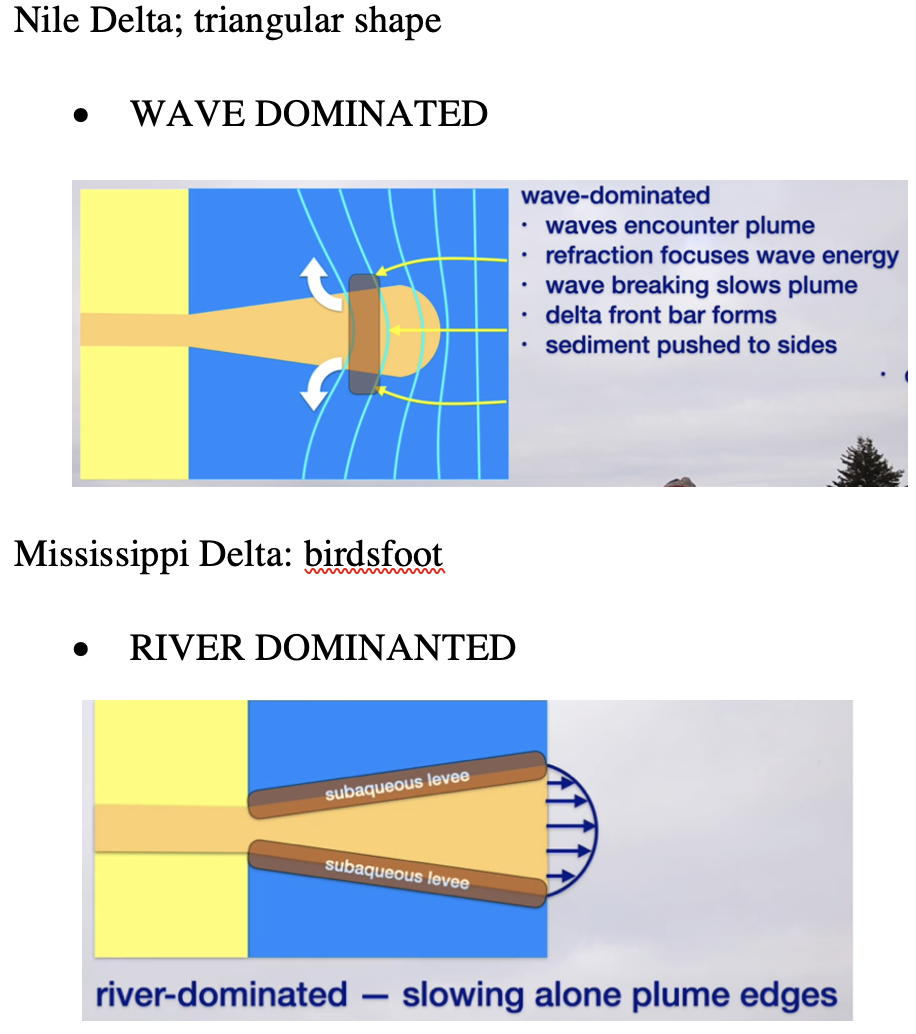
<ul><li><p><span>River Delta</span></p><ul><li><p><span>Coastal accumulation of river-derived sediment formed adjacent to a river mouth</span></p></li><li><p><span>Form in any body of water where river-derived sediment accumulates faster than it is dispersed</span></p></li></ul></li><li><p class="MsoListParagraphCxSpMiddle"><span>Delta Planform</span></p><ul><li><p class="MsoListParagraphCxSpMiddle"><span>Vary in shapes</span></p><ul><li><p class="MsoListParagraphCxSpMiddle"><span>Nile Delta; triangular shape WAVE DOMINATED</span></p></li><li><p class="MsoListParagraphCxSpMiddle"><span>Mississippi Delta: birdsfoot RIVER DOMINATED </span></p></li><li><p class="MsoListParagraphCxSpMiddle"><span>Ganges Brahmaputra: shore-perpendicular channels TIDE DOMINATED</span></p><ul><li><p class="MsoListParagraphCxSpMiddle"><span>Self-channelize</span></p></li><li><p class="MsoListParagraphCxSpMiddle"><span>Mud deposits at high tide, as the flow goes back out, the mud is pulled back out, thus creating channel walls</span></p></li><li><p class="MsoListParagraphCxSpMiddle"><span>Channel walls create a flow focused within the channels</span></p></li></ul></li></ul></li></ul></li></ul><ul><li><p class="MsoListParagraphCxSpMiddle"><span>Sediment Deposition</span></p><ul><li><p class="MsoListParagraphCxSpMiddle"><span>Sediment deposits where currents slow down</span></p></li><li><p class="MsoListParagraphCxSpMiddle"><span>Mixing of river water and basin water slows the river plume</span></p></li></ul></li></ul><p></p>
13
New cards

Classify estuaries according to mode of formation

  • Estuary: where a river meets the inlet of the ocean, classified in many ways

  • Mode of Formation

    • Drowned river valley estuaries

      • River carves valley into the sea

      • Sea levels rise, causing sea water to invade valley

      • Recent sea level rise caused melting of ice sheets

        • Thus why we have so many drowned river valley estuaries!
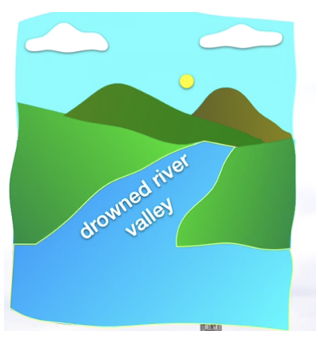
    • Bar-built estuaries

      • Alongshore sediment transport builds bar (aka spit) near river mouth

      • Bar can be breached to form barrier islands

      • Partially enclosed inlet is bar-built estuary
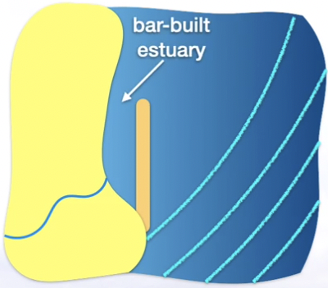
    • Tectonic estuaries

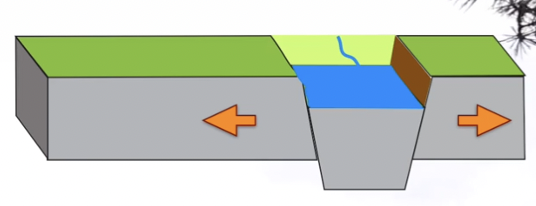
      • Formed by tectonic processes (movements of the earths crust)

      • Faulting causes down drop of crust

      • Sea water invades

    • Fjords

      • Glaciers erode deep, U-shaped valleys

        • Some reach tidewater

      • When glaciers recede, sea water invades
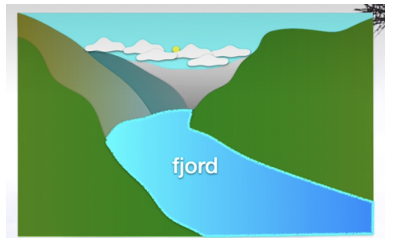
  • Local examples:

o   Drowned river valley: La Have Estuary (Lunenburg)

o   Bar-built estuary: Tracadie Bay Estuary (PEI)

o   Tectonic estuary: Bay of Fundy (NS)

o   Fjords: Halifax Harbour Estuary (NS)

14
New cards

Outline adaptations of salt marsh plants that allow them to thrive in the challenging environmental conditions

-              Salt marsh stresses:

o   Wave stress

§  Shallow water and thick vegetation limit wave stress in inner marsh

§  Outer marsh is less protected

·      Spartina alterniflora adapted to wave stress at marsh edge by binding sediment with roots and rhizomes

o   Nutrient stress

§  Seawards edge of marsh sees deposition of organic-rich sediment at marsh edge

§  Landward decrease in nutrient availability

o   Oxygen stress

§  Muddy organic-rich sediment has low permeability, making low oxygen very common

§  Adaptation: Aerenchyma

·      Low resistance channels in blades which provide oxygen pathways to the roots

·      Seen in plants in salt marshes

o   Desiccation stress

§  Water is saltier than internal tissues, which leads to desiccation

§  Adaptations:

·      Excrete salt via salt glands

·      Retain water via succulent leaves (limits water loss)

15
New cards

Identify mangrove adaptations that have evolved to deal with high salt content, low soil strength, and sediment anoxia

-              Living at fringe poses several environmental challenges

o   Wave stress

§  Adaptation: prop-roots

·      Wide base allows plants to stay upright in waves and weak soils

·      Large surface area above group provides oxygen to roots

·      Slowing of current builds up sediment

o   Weak, water-logged sediment

o   Low oxygen

§  Adaptation: pneumatophores

·      Snorkel-like structures from roots to atmosphere

·      Allows diffusion of oxygen to roots in otherwise anoxic muds

o   Like the aerenchyma seen in salt-marsh grasses

o   Salt water

§  Adaptation: salt excretion

·      Salt excretion regulates internal salt content

§  Adaptation: regulate water loss

·      Tough, leathery leaves regulate water loss

16
New cards

Major environmental variables that can limit development of coral reefs

-              Coral reef ecosystems:

o   Diverse

§  Diversity of higher taxa greater than any other marine ecosystem

§  By some estimates, ¼ of all marine species rely on reefs for food/shelter

o   Productive

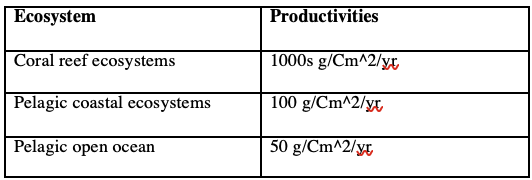
§  Similar to macroalgae, sea grasses, and salt marshes

·      Unlike above, the waters which corals achieve these high productivies are generally nutrient poor

·      Efficient cycling nutrient ability

o   Important to biogeochemical cycles

§  Reef structure made up of CaCO3

·      Key for carbon cycling

-              Numerous variables affect coral abundance

o   Temperature

§  Just right temp required! (20–30o range)

·      Restricted to lower latitudes

§  Minimum temp: 18-20o C

§  Maximum temp: 28o C

o   Light

§  Zooxanthellae require light levels greater than 20% of surface light

·      This restricts coral growth to relatively shallow water (generally shallower than 25m)

·      Shelf reefs: attached to continental barrier

·      Oceanic reefs: attached to island

o   Fringing reefs: close to shore

o   Barrier reef: significant lagoon between coral and beach

o   Atoll reef: no land in middle at all

§  Deep water corals are not hermatypic corals (which require light, shallow depth as they house zooxanthellae)

o   Salinity

§  Can’t stand lower salinity

·      Therefore, not found at the mouths of small rivers

o   Sedimentation

§  Blocks light, clogs up feeding structure

o   Exposure to air

§  Truly sub-tidal organisms
<p><span>-</span><span style="font-family: &quot;Times New Roman&quot;; line-height: normal; font-size: 7pt;">&nbsp;&nbsp;&nbsp;&nbsp;&nbsp;&nbsp;&nbsp;&nbsp;&nbsp;&nbsp;&nbsp;&nbsp;&nbsp; </span><span>Coral reef ecosystems:</span></p><p class="MsoListParagraphCxSpMiddle"><span style="font-family: &quot;Courier New&quot;;">o</span><span style="font-family: &quot;Times New Roman&quot;; line-height: normal; font-size: 7pt;">&nbsp;&nbsp; </span><span>Diverse</span></p><p class="MsoListParagraphCxSpMiddle"><span>§</span><span style="font-family: &quot;Times New Roman&quot;; line-height: normal; font-size: 7pt;">&nbsp; </span><span>Diversity of higher taxa greater than any other marine ecosystem</span></p><p class="MsoListParagraphCxSpMiddle"><span>§</span><span style="font-family: &quot;Times New Roman&quot;; line-height: normal; font-size: 7pt;">&nbsp; </span><span>By some estimates, ¼ of all marine species rely on reefs for food/shelter</span></p><p class="MsoListParagraphCxSpMiddle"><span style="font-family: &quot;Courier New&quot;;">o</span><span style="font-family: &quot;Times New Roman&quot;; line-height: normal; font-size: 7pt;">&nbsp;&nbsp; </span><span>Productive</span></p><p class="MsoListParagraphCxSpMiddle"><span>§</span><span style="font-family: &quot;Times New Roman&quot;; line-height: normal; font-size: 7pt;">&nbsp; </span><span>Similar to macroalgae, sea grasses, and salt marshes</span></p><p class="MsoListParagraphCxSpMiddle"><span>·</span><span style="font-family: &quot;Times New Roman&quot;; line-height: normal; font-size: 7pt;">&nbsp;&nbsp;&nbsp;&nbsp;&nbsp; </span><span>Unlike above, the waters which corals achieve these high productivies are generally nutrient poor</span></p><p class="MsoListParagraphCxSpLast"><span>·</span><span style="font-family: &quot;Times New Roman&quot;; line-height: normal; font-size: 7pt;">&nbsp;&nbsp;&nbsp;&nbsp;&nbsp; </span><span>Efficient cycling nutrient ability</span></p><p class="MsoListParagraphCxSpLast"><span style="font-family: &quot;Courier New&quot;;">o</span><span style="font-family: &quot;Times New Roman&quot;; line-height: normal; font-size: 7pt;">&nbsp;&nbsp; </span><span>Important to biogeochemical cycles</span></p><p class="MsoListParagraphCxSpMiddle"><span>§</span><span style="font-family: &quot;Times New Roman&quot;; line-height: normal; font-size: 7pt;">&nbsp; </span><span>Reef structure made up of CaCO3</span></p><p class="MsoListParagraphCxSpMiddle"><span>·</span><span style="font-family: &quot;Times New Roman&quot;; line-height: normal; font-size: 7pt;">&nbsp;&nbsp;&nbsp;&nbsp;&nbsp; </span><span>Key for carbon cycling</span></p><p class="MsoListParagraphCxSpMiddle"><span>-</span><span style="font-family: &quot;Times New Roman&quot;; line-height: normal; font-size: 7pt;">&nbsp;&nbsp;&nbsp;&nbsp;&nbsp;&nbsp;&nbsp;&nbsp;&nbsp;&nbsp;&nbsp;&nbsp;&nbsp; </span><span>Numerous variables affect coral abundance</span></p><p class="MsoListParagraphCxSpMiddle"><span style="font-family: &quot;Courier New&quot;;">o</span><span style="font-family: &quot;Times New Roman&quot;; line-height: normal; font-size: 7pt;">&nbsp;<strong>&nbsp; </strong></span><span><strong>Temperature</strong></span></p><p class="MsoListParagraphCxSpMiddle"><span>§</span><span style="font-family: &quot;Times New Roman&quot;; line-height: normal; font-size: 7pt;">&nbsp; </span><span>Just right temp required! (20–30<sup>o</sup> range)</span></p><p class="MsoListParagraphCxSpMiddle"><span>·</span><span style="font-family: &quot;Times New Roman&quot;; line-height: normal; font-size: 7pt;">&nbsp;&nbsp;&nbsp;&nbsp;&nbsp; </span><span>Restricted to lower latitudes</span></p><p class="MsoListParagraphCxSpMiddle"><span>§</span><span style="font-family: &quot;Times New Roman&quot;; line-height: normal; font-size: 7pt;">&nbsp; </span><span>Minimum temp: 18-20<sup>o</sup> C</span></p><p class="MsoListParagraphCxSpMiddle"><span>§</span><span style="font-family: &quot;Times New Roman&quot;; line-height: normal; font-size: 7pt;">&nbsp; </span><span>Maximum temp: 28<sup>o</sup> C</span></p><p class="MsoListParagraphCxSpMiddle"><span style="font-family: &quot;Courier New&quot;;"><strong>o</strong></span><span style="font-family: &quot;Times New Roman&quot;; line-height: normal; font-size: 7pt;"><strong>&nbsp;&nbsp; </strong></span><span><strong>Light</strong></span></p><p class="MsoListParagraphCxSpMiddle"><span>§</span><span style="font-family: &quot;Times New Roman&quot;; line-height: normal; font-size: 7pt;">&nbsp; </span><span>Zooxanthellae require light levels greater than 20% of surface light</span></p><p class="MsoListParagraphCxSpMiddle"><span>·</span><span style="font-family: &quot;Times New Roman&quot;; line-height: normal; font-size: 7pt;">&nbsp;&nbsp;&nbsp;&nbsp;&nbsp; </span><span>This restricts coral growth to relatively shallow water (generally shallower than 25m)</span></p><p class="MsoListParagraphCxSpMiddle"><span>·</span><span style="font-family: &quot;Times New Roman&quot;; line-height: normal; font-size: 7pt;">&nbsp;&nbsp;&nbsp;&nbsp;&nbsp; </span><span>Shelf reefs: attached to continental barrier</span></p><p class="MsoListParagraphCxSpMiddle"><span>·</span><span style="font-family: &quot;Times New Roman&quot;; line-height: normal; font-size: 7pt;">&nbsp;&nbsp;&nbsp;&nbsp;&nbsp; </span><span>Oceanic reefs: attached to island</span></p><p class="MsoListParagraphCxSpMiddle"><span style="font-family: &quot;Courier New&quot;;">o</span><span style="font-family: &quot;Times New Roman&quot;; line-height: normal; font-size: 7pt;">&nbsp;&nbsp; </span><span>Fringing reefs: close to shore</span></p><p class="MsoListParagraphCxSpMiddle"><span style="font-family: &quot;Courier New&quot;;">o</span><span style="font-family: &quot;Times New Roman&quot;; line-height: normal; font-size: 7pt;">&nbsp;&nbsp; </span><span>Barrier reef: significant lagoon between coral and beach</span></p><p class="MsoListParagraphCxSpMiddle"><span style="font-family: &quot;Courier New&quot;;">o</span><span style="font-family: &quot;Times New Roman&quot;; line-height: normal; font-size: 7pt;">&nbsp;&nbsp; </span><span>Atoll reef: no land in middle at all</span></p><p class="MsoListParagraphCxSpMiddle"><span>§</span><span style="font-family: &quot;Times New Roman&quot;; line-height: normal; font-size: 7pt;">&nbsp; </span><span>Deep water corals are <em>not </em>hermatypic corals (which require light, shallow depth as they house zooxanthellae)</span></p><p class="MsoListParagraphCxSpMiddle"><span style="font-family: &quot;Courier New&quot;;"><strong>o</strong></span><span style="font-family: &quot;Times New Roman&quot;; line-height: normal; font-size: 7pt;"><strong>&nbsp;&nbsp; </strong></span><span><strong>Salinity</strong></span></p><p class="MsoListParagraphCxSpMiddle"><span>§</span><span style="font-family: &quot;Times New Roman&quot;; line-height: normal; font-size: 7pt;">&nbsp; </span><span>Can’t stand lower salinity</span></p><p class="MsoListParagraphCxSpLast"><span>·</span><span style="font-family: &quot;Times New Roman&quot;; line-height: normal; font-size: 7pt;">&nbsp;&nbsp;&nbsp;&nbsp;&nbsp; </span><span>Therefore, not found at the mouths of small rivers</span></p><p class="MsoListParagraphCxSpLast"><span style="font-family: &quot;Courier New&quot;;"><strong>o</strong></span><span style="font-family: &quot;Times New Roman&quot;; line-height: normal; font-size: 7pt;"><strong>&nbsp;&nbsp; </strong></span><span><strong>Sedimentation</strong></span></p><p class="MsoListParagraphCxSpMiddle"><span>§</span><span style="font-family: &quot;Times New Roman&quot;; line-height: normal; font-size: 7pt;">&nbsp; </span><span>Blocks light, clogs up feeding structure</span></p><p class="MsoListParagraphCxSpMiddle"><span style="font-family: &quot;Courier New&quot;;">o</span><span style="font-family: &quot;Times New Roman&quot;; line-height: normal; font-size: 7pt;">&nbsp;&nbsp; </span><span>Exposure to air</span></p><p class="MsoListParagraphCxSpLast"><span>§</span><span style="font-family: &quot;Times New Roman&quot;; line-height: normal; font-size: 7pt;">&nbsp; </span><span>Truly sub-tidal organisms</span></p>
17
New cards

Describe adaptations that allow bluefin tuna to access cooler northern waters in search of food

-              Blue fin tuna: cold water predators

o   High latitude

o   Dive up to 1000m to hunt (specifically for squid)

-             How are they able to remain so active in these cold waters?

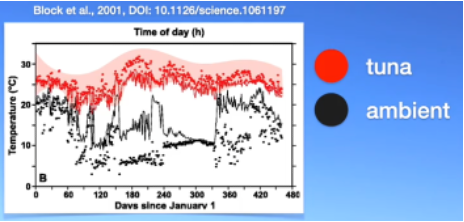
o   Verging on endothermic fish (exercise internal regulation of body temperatures)

o   Tuna temperatures are above ambient temperatures of the environment

-              Adaptations:

o   Large size, small surface area to volume ratio

o   Counterflow in their veins and arteries

§  Veins: circulate in warm blood

§  Arteries: bring in cold blood from exterior

§  Arteries are able to “pick up” some of the heat from the veins

o   Heart able to handle cold

§  Shots of adrenaline are sent to the heart to make sure it doesn’t fail in the cold temperatures
<p><span>-</span><span style="font-family: &quot;Times New Roman&quot;; line-height: normal; font-size: 7pt;">&nbsp;&nbsp;&nbsp;&nbsp;&nbsp;&nbsp;&nbsp;&nbsp;&nbsp;&nbsp;&nbsp;&nbsp;&nbsp; </span><span>Blue fin tuna: cold water predators</span></p><p class="MsoListParagraphCxSpMiddle"><span style="font-family: &quot;Courier New&quot;;">o</span><span style="font-family: &quot;Times New Roman&quot;; line-height: normal; font-size: 7pt;">&nbsp;&nbsp; </span><span>High latitude</span></p><p class="MsoListParagraphCxSpMiddle"><span style="font-family: &quot;Courier New&quot;;">o</span><span style="font-family: &quot;Times New Roman&quot;; line-height: normal; font-size: 7pt;">&nbsp;&nbsp; </span><span>Dive up to 1000m to hunt (specifically for squid)</span></p><p class="MsoListParagraphCxSpMiddle"><span>-</span><span style="font-family: &quot;Times New Roman&quot;; line-height: normal; font-size: 7pt;">&nbsp;&nbsp;&nbsp;&nbsp;&nbsp;&nbsp;&nbsp;&nbsp;&nbsp;&nbsp;&nbsp;&nbsp;&nbsp;</span><span>How are they able to remain so active in these cold waters?</span></p><p class="MsoListParagraphCxSpMiddle"><span style="font-family: &quot;Courier New&quot;;">o</span><span style="font-family: &quot;Times New Roman&quot;; line-height: normal; font-size: 7pt;">&nbsp;&nbsp; </span><span>Verging on endothermic fish (exercise internal regulation of body temperatures)</span></p><p class="MsoListParagraphCxSpMiddle"><span style="font-family: &quot;Courier New&quot;;">o</span><span style="font-family: &quot;Times New Roman&quot;; line-height: normal; font-size: 7pt;">&nbsp;&nbsp; </span><span>Tuna temperatures are above ambient temperatures of the environment</span></p><p class="MsoListParagraphCxSpMiddle"><span>-</span><span style="font-family: &quot;Times New Roman&quot;; line-height: normal; font-size: 7pt;">&nbsp;&nbsp;&nbsp;&nbsp;&nbsp;&nbsp;&nbsp;&nbsp;&nbsp;&nbsp;&nbsp;&nbsp;&nbsp; </span><span>Adaptations:</span></p><p class="MsoListParagraphCxSpMiddle"><span style="font-family: &quot;Courier New&quot;;">o</span><span style="font-family: &quot;Times New Roman&quot;; line-height: normal; font-size: 7pt;">&nbsp;&nbsp; </span><span>Large size, <em>small surface area to volume ratio</em></span></p><p class="MsoListParagraphCxSpMiddle"><span style="font-family: &quot;Courier New&quot;;">o</span><span style="font-family: &quot;Times New Roman&quot;; line-height: normal; font-size: 7pt;">&nbsp;&nbsp; </span><span>Counterflow in their veins and arteries</span></p><p class="MsoListParagraphCxSpMiddle"><span>§</span><span style="font-family: &quot;Times New Roman&quot;; line-height: normal; font-size: 7pt;">&nbsp; </span><span>Veins: circulate in warm blood</span></p><p class="MsoListParagraphCxSpMiddle"><span>§</span><span style="font-family: &quot;Times New Roman&quot;; line-height: normal; font-size: 7pt;">&nbsp; </span><span>Arteries: bring in cold blood from exterior</span></p><p class="MsoListParagraphCxSpMiddle"><span>§</span><span style="font-family: &quot;Times New Roman&quot;; line-height: normal; font-size: 7pt;">&nbsp; </span><span>Arteries are able to “pick up” some of the heat from the veins</span></p><p class="MsoListParagraphCxSpMiddle"><span style="font-family: &quot;Courier New&quot;;">o</span><span style="font-family: &quot;Times New Roman&quot;; line-height: normal; font-size: 7pt;">&nbsp;&nbsp; </span><span>Heart able to handle cold</span></p><p class="MsoListParagraphCxSpLast"><span>§</span><span style="font-family: &quot;Times New Roman&quot;; line-height: normal; font-size: 7pt;">&nbsp; </span><span>Shots of adrenaline are sent to the heart to make sure it doesn’t fail in the cold temperatures</span></p>
18
New cards

Outline the uses of bioluminescence in the deep ocean

-              Bioluminescence: light produced and emitted by organisms.

o   One of the most common adaptations on Earth (because most of the living space on the planet is dark)

-              Many uses:

o   Communication

o   Mate location

o   Predation

o   Predator avoidance

-              Bioluminescent colours

o   Blue and green most common colours, as they attenuate the least (they go the farthest possible)

o   Red light is emitted by some predators

§  No red light in the deep part of the ocean, so eyes of organisms in the deep sea are not adapted to this. Thus, predators are able to us red light to find (the often red-pigmented) prey without the prey knowing.

19
New cards

Explain the concept of maximum sustainable yield

  • MSY: how much fish can we take out of the ocean sustainably?

o   Mortality must be evened out by recruitment (growth of young fish into marketable sized fish)

o   To be even, recruits coming in each year must = natural deaths + caught deaths

o   Ryther estimated global fisheries production to be about 240 million tons per year (1969)

§  MSY was estimated to be 100 million tons

o   What we need to know: carrying capacity, recruitment, catch

§  What we don’t know: carrying capacity, recruitment, catch

§  This is why it is so difficult to implement MSY in practice

  • The idea

o   We, by fishing, reduce the population of fish by fishing

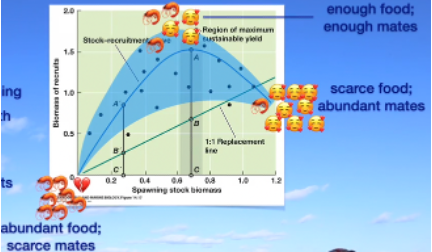
o   This improves the growth conditions for recruits, therefore the # of recruitments increase, and we can catch extra recruits sustainably

o  Smallest population size=

§  Plenty of food, scarce mates

o   Middle population size=

§  Enough food, enough mates

o   Largest population size=

§  Scarce food, plenty of mates

  • Peak recruitment at intermediate stock biomass!

  • Carrying capacity

o   Natural deaths are replaced by recruits (seen in a natural, ‘no fishing’ world)

o   Steady state population, and fishing deaths would deplete the population

o   We don’t really know what natural carrying capacity is since we’ve been fishing for decades!

§  “catch per hundred hooks” well correlated with fish biomass, and from this, carrying capacity was able to be studied in Japanese fishing data

§  Biomass in ‘virgin’ (unfished) oceans fall by 90% within a decade of fishing. This means our estimated carrying capacities is too low, and recruitment is not maximized

-              MSY strategy

o   Reduce the population, so that more recruits are needed to maintain carrying capacity

§  Thus, we can catch the “extra” recruits, which leads to a smaller, but steady-state population

-              MSY trouble

o   Evidence that fisheries are not actually sustainable!

o   Though global catches are near Ryther’s MSY estimate, many fish stocks are unsteady

-              Unsteady fish stocks

o   Under MSY, stocks should be relatively constant. However…

§  Atlantic cod sow multi-decade decline

§  Atlantic herring show large decadal fluctuation (ie not steady)

-              Catch

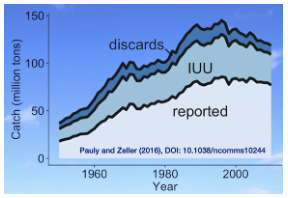
o Reported catch, but also discarded/bycatch, and IUU (illegal, unreported, and unregulated catches)

§  Reported catch has plateaued in the past 30 years, which makes us believe we are fishing sustainably. However, the total catch is showing we are not fishing sustainably.
<ul><li><p><span>MSY: how much fish can we take out of the ocean sustainably?</span></p></li></ul><p class="MsoListParagraphCxSpMiddle"><span style="font-family: &quot;Courier New&quot;;">o</span><span style="font-family: &quot;Times New Roman&quot;; line-height: normal; font-size: 7pt;">&nbsp;&nbsp; </span><span>Mortality must be evened out by recruitment (growth of young fish into marketable sized fish)</span></p><p class="MsoListParagraphCxSpMiddle"><span style="font-family: &quot;Courier New&quot;;">o</span><span style="font-family: &quot;Times New Roman&quot;; line-height: normal; font-size: 7pt;">&nbsp;&nbsp; </span><span>To be even, recruits coming in each year must = natural deaths + caught deaths</span></p><p class="MsoListParagraphCxSpMiddle"><span style="font-family: &quot;Courier New&quot;;">o</span><span style="font-family: &quot;Times New Roman&quot;; line-height: normal; font-size: 7pt;">&nbsp;&nbsp; </span><span>Ryther estimated global fisheries production to be about 240 million tons per year (1969)</span></p><p class="MsoListParagraphCxSpMiddle"><span>§</span><span style="font-family: &quot;Times New Roman&quot;; line-height: normal; font-size: 7pt;">&nbsp; </span><span>MSY was estimated to be 100 million tons</span></p><p class="MsoListParagraphCxSpMiddle"><span style="font-family: &quot;Courier New&quot;;">o</span><span style="font-family: &quot;Times New Roman&quot;; line-height: normal; font-size: 7pt;">&nbsp;&nbsp; </span><span>What we need to know: carrying capacity, recruitment, catch</span></p><p class="MsoListParagraphCxSpMiddle"><span>§</span><span style="font-family: &quot;Times New Roman&quot;; line-height: normal; font-size: 7pt;">&nbsp; </span><span>What we don’t know: carrying capacity, recruitment, catch</span></p><p class="MsoListParagraphCxSpLast"><span>§</span><span style="font-family: &quot;Times New Roman&quot;; line-height: normal; font-size: 7pt;">&nbsp; </span><span>This is why it is so difficult to implement MSY in practice</span></p><ul><li><p class="MsoListParagraphCxSpLast"><span>The idea</span></p></li></ul><p class="MsoListParagraphCxSpMiddle"><span style="font-family: &quot;Courier New&quot;;">o</span><span style="font-family: &quot;Times New Roman&quot;; line-height: normal; font-size: 7pt;">&nbsp;&nbsp; </span><span>We, by fishing, reduce the population of fish by fishing</span></p><p class="MsoListParagraphCxSpMiddle"><span style="font-family: &quot;Courier New&quot;;">o</span><span style="font-family: &quot;Times New Roman&quot;; line-height: normal; font-size: 7pt;">&nbsp;&nbsp; </span><span>This improves the growth conditions for recruits, therefore the # of recruitments increase, and we can catch extra recruits sustainably</span></p><p class="MsoListParagraphCxSpMiddle"><span style="font-family: &quot;Courier New&quot;;">o</span><span style="font-family: &quot;Times New Roman&quot;; line-height: normal; font-size: 7pt;">&nbsp;&nbsp;</span><span>Smallest population size=</span></p><p class="MsoListParagraphCxSpMiddle"><span>§</span><span style="font-family: &quot;Times New Roman&quot;; line-height: normal; font-size: 7pt;">&nbsp; </span><span>Plenty of food, scarce mates</span></p><p class="MsoListParagraphCxSpMiddle"><span style="font-family: &quot;Courier New&quot;;">o</span><span style="font-family: &quot;Times New Roman&quot;; line-height: normal; font-size: 7pt;">&nbsp;&nbsp; </span><span>Middle population size=</span></p><p class="MsoListParagraphCxSpMiddle"><span>§</span><span style="font-family: &quot;Times New Roman&quot;; line-height: normal; font-size: 7pt;">&nbsp; </span><span>Enough food, enough mates</span></p><p class="MsoListParagraphCxSpMiddle"><span style="font-family: &quot;Courier New&quot;;">o</span><span style="font-family: &quot;Times New Roman&quot;; line-height: normal; font-size: 7pt;">&nbsp;&nbsp; </span><span>Largest population size=</span></p><p class="MsoListParagraphCxSpMiddle"><span>§</span><span style="font-family: &quot;Times New Roman&quot;; line-height: normal; font-size: 7pt;">&nbsp; </span><span>Scarce food, plenty of mates</span></p><ul><li><p class="MsoListParagraphCxSpLast"><span>Peak recruitment at intermediate stock biomass!</span></p></li><li><p class="MsoListParagraphCxSpLast"><span>Carrying capacity</span></p></li></ul><p class="MsoListParagraphCxSpMiddle"><span style="font-family: &quot;Courier New&quot;;">o</span><span style="font-family: &quot;Times New Roman&quot;; line-height: normal; font-size: 7pt;">&nbsp;&nbsp; </span><span>Natural deaths are replaced by recruits (seen in a natural, ‘no fishing’ world)</span></p><p class="MsoListParagraphCxSpMiddle"><span style="font-family: &quot;Courier New&quot;;">o</span><span style="font-family: &quot;Times New Roman&quot;; line-height: normal; font-size: 7pt;">&nbsp;&nbsp; </span><span>Steady state population, and fishing deaths would deplete the population</span></p><p class="MsoListParagraphCxSpMiddle"><span style="font-family: &quot;Courier New&quot;;">o</span><span style="font-family: &quot;Times New Roman&quot;; line-height: normal; font-size: 7pt;">&nbsp;&nbsp; </span><span>We don’t really know what natural carrying capacity is since we’ve been fishing for decades!</span></p><p class="MsoListParagraphCxSpMiddle"><span>§</span><span style="font-family: &quot;Times New Roman&quot;; line-height: normal; font-size: 7pt;">&nbsp; </span><span>“catch per hundred hooks” well correlated with fish biomass, and from this, carrying capacity was able to be studied in Japanese fishing data</span></p><p class="MsoListParagraphCxSpLast"><span>§</span><span style="font-family: &quot;Times New Roman&quot;; line-height: normal; font-size: 7pt;">&nbsp; </span><span>Biomass in ‘virgin’ (unfished) oceans fall by 90% within a decade of fishing. This means our estimated carrying capacities is too low, and recruitment is not maximized</span></p><p class="MsoListParagraphCxSpLast"><span>-</span><span style="font-family: &quot;Times New Roman&quot;; line-height: normal; font-size: 7pt;">&nbsp;&nbsp;&nbsp;&nbsp;&nbsp;&nbsp;&nbsp;&nbsp;&nbsp;&nbsp;&nbsp;&nbsp;&nbsp; </span><span>MSY strategy</span></p><p class="MsoListParagraphCxSpMiddle"><span style="font-family: &quot;Courier New&quot;;">o</span><span style="font-family: &quot;Times New Roman&quot;; line-height: normal; font-size: 7pt;">&nbsp;&nbsp; </span><span>Reduce the population, so that more recruits are needed to maintain carrying capacity</span></p><p class="MsoListParagraphCxSpMiddle"><span>§</span><span style="font-family: &quot;Times New Roman&quot;; line-height: normal; font-size: 7pt;">&nbsp; </span><span>Thus, we can catch the “extra” recruits, which leads to a smaller, but steady-state population</span></p><p class="MsoListParagraphCxSpMiddle"><span>-</span><span style="font-family: &quot;Times New Roman&quot;; line-height: normal; font-size: 7pt;">&nbsp;&nbsp;&nbsp;&nbsp;&nbsp;&nbsp;&nbsp;&nbsp;&nbsp;&nbsp;&nbsp;&nbsp;&nbsp; </span><span>MSY trouble</span></p><p class="MsoListParagraphCxSpMiddle"><span style="font-family: &quot;Courier New&quot;;">o</span><span style="font-family: &quot;Times New Roman&quot;; line-height: normal; font-size: 7pt;">&nbsp;&nbsp; </span><span>Evidence that fisheries are not actually sustainable!</span></p><p class="MsoListParagraphCxSpMiddle"><span style="font-family: &quot;Courier New&quot;;">o</span><span style="font-family: &quot;Times New Roman&quot;; line-height: normal; font-size: 7pt;">&nbsp;&nbsp; </span><span>Though global catches are near Ryther’s MSY estimate, many fish stocks are unsteady</span></p><p class="MsoListParagraphCxSpMiddle"><span>-</span><span style="font-family: &quot;Times New Roman&quot;; line-height: normal; font-size: 7pt;">&nbsp;&nbsp;&nbsp;&nbsp;&nbsp;&nbsp;&nbsp;&nbsp;&nbsp;&nbsp;&nbsp;&nbsp;&nbsp; </span><span>Unsteady fish stocks</span></p><p class="MsoListParagraphCxSpMiddle"><span style="font-family: &quot;Courier New&quot;;">o</span><span style="font-family: &quot;Times New Roman&quot;; line-height: normal; font-size: 7pt;">&nbsp;&nbsp; </span><span>Under MSY, stocks should be relatively constant. However…</span></p><p class="MsoListParagraphCxSpMiddle"><span>§</span><span style="font-family: &quot;Times New Roman&quot;; line-height: normal; font-size: 7pt;">&nbsp; </span><span>Atlantic cod sow multi-decade decline</span></p><p class="MsoListParagraphCxSpLast"><span>§</span><span style="font-family: &quot;Times New Roman&quot;; line-height: normal; font-size: 7pt;">&nbsp; </span><span>Atlantic herring show large decadal fluctuation (ie not steady)</span></p><p class="MsoListParagraphCxSpLast"><span>-</span><span style="font-family: &quot;Times New Roman&quot;; line-height: normal; font-size: 7pt;">&nbsp;&nbsp;&nbsp;&nbsp;&nbsp;&nbsp;&nbsp;&nbsp;&nbsp;&nbsp;&nbsp;&nbsp;&nbsp; </span><span>Catch</span></p><p class="MsoListParagraphCxSpMiddle"><span style="font-family: &quot;Courier New&quot;;">o</span><span style="font-family: &quot;Times New Roman&quot;; line-height: normal; font-size: 7pt;">&nbsp;</span><span>Reported catch, but also discarded/bycatch, and IUU (illegal, unreported, and unregulated catches)</span></p><p class="MsoListParagraphCxSpLast"><span>§</span><span style="font-family: &quot;Times New Roman&quot;; line-height: normal; font-size: 7pt;">&nbsp; </span><span>Reported catch has plateaued in the past 30 years, which makes us believe we are fishing sustainably. However, the total catch is showing we are not fishing sustainably.</span></p><img src="https://assets.knowt.com/user-attachments/c851aabc-7da2-4044-9f36-ae032f8d159f.png" data-width="100%" data-align="center"><p class="MsoListParagraphCxSpLast"></p>
20
New cards

Identify the major aquacultural sectors internationally and in Canada

-              Aquaculture: farming of fish, shellfish or aquatic plants in salt or freshwater

o   Mariculture refers to aquaculture based in salt-water

o   Grown because of an increasing demand on the planet for fish (7x increase in 30 years)

§  Wild capture fisheries have plateaued

§  Population continues to grow

§ Aquaculture production responding to increased demand

-              Aquaculture sectors (globally)

o   Dominated by freshwater fishes and aquatic plants

§  Reflects the importance of aquaculture in Asia

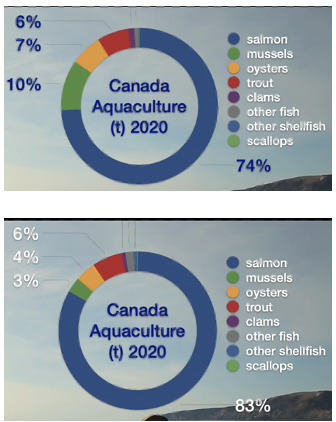
-             Aquaculture sectors (in Canada)

o   Top: Species caught  

o   Bottom: Species values

-              Aquaculture in Atlantic Canada

o  Dominant in less populated communities, therefore a very important economic sector for rural communities

o   Seen also in BC

-              Common growing methods

o   Salmon: grown in open net pens

o   Mussels: suspended socks

o   Oysters: trays
<p><span>-</span><span style="font-family: &quot;Times New Roman&quot;; line-height: normal; font-size: 7pt;">&nbsp;&nbsp;&nbsp;&nbsp;&nbsp;&nbsp;&nbsp;&nbsp;&nbsp;&nbsp;&nbsp;&nbsp;&nbsp; </span><span>Aquaculture: farming of fish, shellfish or aquatic plants in salt or freshwater</span></p><p class="MsoListParagraphCxSpMiddle"><span style="font-family: &quot;Courier New&quot;;">o</span><span style="font-family: &quot;Times New Roman&quot;; line-height: normal; font-size: 7pt;">&nbsp;&nbsp; </span><span>Mariculture refers to aquaculture based in salt-water</span></p><p class="MsoListParagraphCxSpMiddle"><span style="font-family: &quot;Courier New&quot;;">o</span><span style="font-family: &quot;Times New Roman&quot;; line-height: normal; font-size: 7pt;">&nbsp;&nbsp; </span><span>Grown because of an increasing demand on the planet for fish (7x increase in 30 years)</span></p><p class="MsoListParagraphCxSpMiddle"><span>§</span><span style="font-family: &quot;Times New Roman&quot;; line-height: normal; font-size: 7pt;">&nbsp; </span><span>Wild capture fisheries have plateaued</span></p><p class="MsoListParagraphCxSpMiddle"><span>§</span><span style="font-family: &quot;Times New Roman&quot;; line-height: normal; font-size: 7pt;">&nbsp; </span><span>Population continues to grow</span></p><p class="MsoListParagraphCxSpMiddle"><span>§</span><span style="font-family: &quot;Times New Roman&quot;; line-height: normal; font-size: 7pt;">&nbsp;</span><span>Aquaculture production responding to increased demand </span></p><p class="MsoListParagraphCxSpMiddle"><span>-</span><span style="font-family: &quot;Times New Roman&quot;; line-height: normal; font-size: 7pt;">&nbsp;&nbsp;&nbsp;&nbsp;&nbsp;&nbsp;&nbsp;&nbsp;&nbsp;&nbsp;&nbsp;&nbsp;&nbsp; </span><span>Aquaculture sectors (globally)</span></p><p class="MsoListParagraphCxSpMiddle"><span style="font-family: &quot;Courier New&quot;;">o</span><span style="font-family: &quot;Times New Roman&quot;; line-height: normal; font-size: 7pt;">&nbsp;&nbsp; </span><span>Dominated by freshwater fishes and aquatic plants</span></p><p class="MsoListParagraphCxSpMiddle"><span>§</span><span style="font-family: &quot;Times New Roman&quot;; line-height: normal; font-size: 7pt;">&nbsp; </span><span>Reflects the importance of aquaculture in Asia</span></p><p class="MsoListParagraphCxSpMiddle"><span>-</span><span style="font-family: &quot;Times New Roman&quot;; line-height: normal; font-size: 7pt;">&nbsp;&nbsp;&nbsp;&nbsp;&nbsp;&nbsp;&nbsp;&nbsp;&nbsp;&nbsp;&nbsp;&nbsp;&nbsp;</span><span>Aquaculture sectors (in Canada)</span></p><p class="MsoListParagraphCxSpMiddle"><span style="font-family: &quot;Courier New&quot;;">o</span><span style="font-family: &quot;Times New Roman&quot;; line-height: normal; font-size: 7pt;">&nbsp;&nbsp; </span><span>Top: Species caught &nbsp;</span></p><p class="MsoListParagraphCxSpMiddle"><span style="font-family: &quot;Courier New&quot;;">o</span><span style="font-family: &quot;Times New Roman&quot;; line-height: normal; font-size: 7pt;">&nbsp;&nbsp; </span><span>Bottom: Species values</span></p><p class="MsoListParagraphCxSpMiddle"><span>-</span><span style="font-family: &quot;Times New Roman&quot;; line-height: normal; font-size: 7pt;">&nbsp;&nbsp;&nbsp;&nbsp;&nbsp;&nbsp;&nbsp;&nbsp;&nbsp;&nbsp;&nbsp;&nbsp;&nbsp; </span><span>Aquaculture in Atlantic Canada</span></p><p class="MsoListParagraphCxSpMiddle"><span style="font-family: &quot;Courier New&quot;;">o</span><span style="font-family: &quot;Times New Roman&quot;; line-height: normal; font-size: 7pt;">&nbsp;&nbsp;</span><span>Dominant in less populated communities, therefore a very important economic sector for rural communities </span></p><p class="MsoListParagraphCxSpMiddle"><span style="font-family: &quot;Courier New&quot;;">o</span><span style="font-family: &quot;Times New Roman&quot;; line-height: normal; font-size: 7pt;">&nbsp;&nbsp; </span><span>Seen also in BC</span></p><p class="MsoListParagraphCxSpMiddle"><span>-</span><span style="font-family: &quot;Times New Roman&quot;; line-height: normal; font-size: 7pt;">&nbsp;&nbsp;&nbsp;&nbsp;&nbsp;&nbsp;&nbsp;&nbsp;&nbsp;&nbsp;&nbsp;&nbsp;&nbsp; </span><span>Common growing methods</span></p><p class="MsoListParagraphCxSpMiddle"><span style="font-family: &quot;Courier New&quot;;">o</span><span style="font-family: &quot;Times New Roman&quot;; line-height: normal; font-size: 7pt;">&nbsp;&nbsp; </span><span>Salmon: grown in open net pens</span></p><p class="MsoListParagraphCxSpMiddle"><span style="font-family: &quot;Courier New&quot;;">o</span><span style="font-family: &quot;Times New Roman&quot;; line-height: normal; font-size: 7pt;">&nbsp;&nbsp; </span><span>Mussels: suspended socks</span></p><p class="MsoListParagraphCxSpLast"><span style="font-family: &quot;Courier New&quot;;">o</span><span style="font-family: &quot;Times New Roman&quot;; line-height: normal; font-size: 7pt;">&nbsp;&nbsp; </span><span>Oysters: trays</span></p>
21
New cards

Differentiate point source vs. non-point source pollution

-              Point source: direct discharge

o   Ex. Deepwater Horizon 2010: methane bubble from deepwater drilling for oil made it up to the rig, and blew up, killing 11 people, and spilled oil out into Gulf of Mexico for months

o   Where the pollution is coming from is identifiable (ideally)

§  Therefore, easier to control

o   Common examples:

§  Ship discharges

·      Big spills are the most harmful, as they are incredibly difficult to clean up

·      Most of the water degrades in the water, some of the water is trapped in sediments (either on beach, or bottom sediments), very little is recovered

·      Multi-decadal decrease in spills! Large spills have become rare!

§  Oil platforms

§  Industrial, municipal outfalls

-              Non-point source: diffuse discharge

o   Where the pollution is coming from is not identifiable (or difficult)

§  Control is much more difficult

o   Ex. dead zone which forms in the Gulf of Mexico when the Mississippi River discharges excess nutrients from interior agricultural regions of the US, therefore spiking phytoplankton availability, leading to oxygen depletion, stratification,  and the creation of a plume

o   Common examples:

§  Agricultural runoff

§  Municipal runoff

§  Atmospheric deposition

22
New cards

Relate coverage by impermeable surfaces to environmental degradation

-              Development and runoff correlation

o   Development causes an increase in impermeable surfaces (waterproof)

o   This is an issue as impermeable surfaces direct water over the surface rather than into the ground.  

-              Impermeable surfaces:

o   Roads

o   Sidewalks

o   Paved parking lots

o   Roofs

-              Increased surface runoff:

o   Water runs off either as surface water (not good) or groundwater (good)

o   Impermeable surfaces increase surface runoff relative to groundwater (by over 10x)!

o   This is harmful in that:

§  It creates larger slow speeds and volumes which can rip out the bottom of stream beds

§  It creates variable water temperatures, as water heats up greatly when flowing over IPS (in the summer), and cools down greatly when flowing over IPS (in the winter)

§  Pollutants from the land easily move into the waters

-              Threshold behaviour in terms of environmental degradation associated with IPS

o   Low coverage of IPS: no problem

o   Effects increase rapidly once 10% of land coverage is impermeable

§  Typical suburban development has about 40% IPS

23
New cards

Describe long and short term correlations between carbon dioxide concentrations and global temperature

-              CO2 and temperature

o   Increase in CO2 accompanied by increase in average global temperature (by about +1oC globally, annually)

-              Longer-term correlations

o   Accurate temperature records go back to late 1800s

o  CO2 measured from Antarctic ice cores, and shown that the correlation persists between CO2 rise and temperature rise

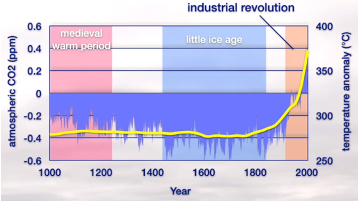
o   1000-year reconstruction: hockey stick plot

§  Medieval warm period temperature anomaly

§  Little ice age temperature anomaly

§  Rapid temperature rise correlated with CO2 rise from industrial revolution

o   Glacial-interglacial correlation

§  Antarctic ice cores used to reconstruct CO2 800 000 years in the past!

§  Temperature and CO2 correlation persists

§  Sawtooth pattern of glacial and interglacial with 100 000-year period

-              A Global-Scale “experiment”

o   CO2 is a greenhouse gas correlated with global temperature

o   Anthropogenic emissions have caused atmospheric CO2 to increase significantly

§  We are well above the CO2 maximum that has been seen for the past nearly 1 000 000 years

-              Different scenarios

o   Small increase in emissions: we will see a 2oC increase in temperature

o   Moderate increase in emissions: we will see a 3oC increase in temperature

o   Large increase in emissions: we will see a 4oC increase in temperature
<p><span>-</span><span style="font-family: &quot;Times New Roman&quot;; line-height: normal; font-size: 7pt;">&nbsp;&nbsp;&nbsp;&nbsp;&nbsp;&nbsp;&nbsp;&nbsp;&nbsp;&nbsp;&nbsp;&nbsp;&nbsp; </span><span>CO2 and temperature</span></p><p class="MsoListParagraphCxSpMiddle"><span style="font-family: &quot;Courier New&quot;;">o</span><span style="font-family: &quot;Times New Roman&quot;; line-height: normal; font-size: 7pt;">&nbsp;&nbsp; </span><span>Increase in CO2 accompanied by increase in average global temperature (by about +1<sup>o</sup>C globally, annually)</span></p><p class="MsoListParagraphCxSpMiddle"><span>-</span><span style="font-family: &quot;Times New Roman&quot;; line-height: normal; font-size: 7pt;">&nbsp;&nbsp;&nbsp;&nbsp;&nbsp;&nbsp;&nbsp;&nbsp;&nbsp;&nbsp;&nbsp;&nbsp;&nbsp; </span><span>Longer-term correlations</span></p><p class="MsoListParagraphCxSpMiddle"><span style="font-family: &quot;Courier New&quot;;">o</span><span style="font-family: &quot;Times New Roman&quot;; line-height: normal; font-size: 7pt;">&nbsp;&nbsp; </span><span>Accurate temperature records go back to late 1800s</span></p><p class="MsoListParagraphCxSpMiddle"><span style="font-family: &quot;Courier New&quot;;">o</span><span style="font-family: &quot;Times New Roman&quot;; line-height: normal; font-size: 7pt;">&nbsp;&nbsp;</span><span>CO2 measured from Antarctic ice cores, and shown that the correlation persists between CO2 rise and temperature rise </span></p><p class="MsoListParagraphCxSpMiddle"><span style="font-family: &quot;Courier New&quot;;">o</span><span style="font-family: &quot;Times New Roman&quot;; line-height: normal; font-size: 7pt;">&nbsp;&nbsp; </span><span>1000-year reconstruction: hockey stick plot</span></p><p class="MsoListParagraphCxSpMiddle"><span>§</span><span style="font-family: &quot;Times New Roman&quot;; line-height: normal; font-size: 7pt;">&nbsp; </span><span>Medieval warm period temperature anomaly</span></p><p class="MsoListParagraphCxSpMiddle"><span>§</span><span style="font-family: &quot;Times New Roman&quot;; line-height: normal; font-size: 7pt;">&nbsp; </span><span>Little ice age temperature anomaly</span></p><p class="MsoListParagraphCxSpMiddle"><span>§</span><span style="font-family: &quot;Times New Roman&quot;; line-height: normal; font-size: 7pt;">&nbsp; </span><span>Rapid temperature rise correlated with CO2 rise from industrial revolution</span></p><p class="MsoListParagraphCxSpMiddle"><span style="font-family: &quot;Courier New&quot;;">o</span><span style="font-family: &quot;Times New Roman&quot;; line-height: normal; font-size: 7pt;">&nbsp;&nbsp; </span><span>Glacial-interglacial correlation</span></p><p class="MsoListParagraphCxSpMiddle"><span>§</span><span style="font-family: &quot;Times New Roman&quot;; line-height: normal; font-size: 7pt;">&nbsp; </span><span>Antarctic ice cores used to reconstruct CO2 800 000 years in the past!</span></p><p class="MsoListParagraphCxSpMiddle"><span>§</span><span style="font-family: &quot;Times New Roman&quot;; line-height: normal; font-size: 7pt;">&nbsp; </span><span>Temperature and CO2 correlation persists</span></p><p class="MsoListParagraphCxSpMiddle"><span>§</span><span style="font-family: &quot;Times New Roman&quot;; line-height: normal; font-size: 7pt;">&nbsp; </span><span>Sawtooth pattern of glacial and interglacial with 100 000-year period</span></p><p class="MsoListParagraphCxSpMiddle"><span>-</span><span style="font-family: &quot;Times New Roman&quot;; line-height: normal; font-size: 7pt;">&nbsp;&nbsp;&nbsp;&nbsp;&nbsp;&nbsp;&nbsp;&nbsp;&nbsp;&nbsp;&nbsp;&nbsp;&nbsp; </span><span>A Global-Scale “experiment”</span></p><p class="MsoListParagraphCxSpMiddle"><span style="font-family: &quot;Courier New&quot;;">o</span><span style="font-family: &quot;Times New Roman&quot;; line-height: normal; font-size: 7pt;">&nbsp;&nbsp; </span><span>CO2 is a greenhouse gas correlated with global temperature</span></p><p class="MsoListParagraphCxSpMiddle"><span style="font-family: &quot;Courier New&quot;;">o</span><span style="font-family: &quot;Times New Roman&quot;; line-height: normal; font-size: 7pt;">&nbsp;&nbsp; </span><span>Anthropogenic emissions have caused atmospheric CO2 to increase significantly</span></p><p class="MsoListParagraphCxSpMiddle"><span>§</span><span style="font-family: &quot;Times New Roman&quot;; line-height: normal; font-size: 7pt;">&nbsp; </span><span>We are well above the CO2 maximum that has been seen for the past nearly 1 000 000 years</span></p><p class="MsoListParagraphCxSpMiddle"><span>-</span><span style="font-family: &quot;Times New Roman&quot;; line-height: normal; font-size: 7pt;">&nbsp;&nbsp;&nbsp;&nbsp;&nbsp;&nbsp;&nbsp;&nbsp;&nbsp;&nbsp;&nbsp;&nbsp;&nbsp; </span><span>Different scenarios</span></p><p class="MsoListParagraphCxSpMiddle"><span style="font-family: &quot;Courier New&quot;;">o</span><span style="font-family: &quot;Times New Roman&quot;; line-height: normal; font-size: 7pt;">&nbsp;&nbsp; </span><span>Small increase in emissions: we will see a 2<sup>o</sup>C increase in temperature</span></p><p class="MsoListParagraphCxSpMiddle"><span style="font-family: &quot;Courier New&quot;;">o</span><span style="font-family: &quot;Times New Roman&quot;; line-height: normal; font-size: 7pt;">&nbsp;&nbsp; </span><span>Moderate increase in emissions: we will see a 3<sup>o</sup>C increase in temperature</span></p><p class="MsoListParagraphCxSpLast"><span style="font-family: &quot;Courier New&quot;;">o</span><span style="font-family: &quot;Times New Roman&quot;; line-height: normal; font-size: 7pt;">&nbsp;&nbsp; </span><span>Large increase in emissions: we will see a 4<sup>o</sup>C increase in temperature</span></p>
24
New cards

Discuss environmental concerns associated with deep sea mining of metals

-              Mining in the Deep Sea targets

o   Seafloor massive sulphide deposits (SMS)

§  Form around hydrothermal vents, which are concentrated along plate boundaries, and generally in deep water (outside of EEZ)

o   Polymetallic manganese nodules (MN)

§  Found in abyssal plains

§  Require extremely low sedimentation rates, which means that they are also in deep water zones, outside of EEZ

o   Ferromanganese cobalt crusts (FCC)

§  Form on volcanic rocks, which must be swept clean of sediments by currents to be mined

§  Form on seamounts, which means that they are also in deep water zones, outside of EEZ

-              Challenges to Deep Sea Mining

o   Cost

o   Environmental concerns

§  Boat, tethered to a mining vehicle (similar to a bulldozer) which digs up the materials and brings it to the ship. The ship then drops a riser and the materials are lifted off the seabed up the riser. Once at the ship processing is done, and all waste materials are disposed of in the mid-water column (ideally below the aphotic zone)

§  This generates 2 plumes (one at the mining vehicle, and one at the waste disposal site), both generating particles, nutrients, and toxins.

§  Disturbance of seafloor communities

·      Loss of undescribed biodiversity

§  Degradation of the light field when sediment is disposed in the mid-ocean zone, which alters the ability of the bioluminescent animals living in the column

o   Jurisdictional challenges

§  ISA (international seabed authority) has responsibility to 167 member states and the European Union, and must make decisions based off the idea that the international seabed area of common heritage to mankind, and must be utilized for the benefit of mankind as a whole (not just the country which harvests it), therefore equitability must be shared

-              Current status:

o   No mining operations have been started

o   ISA has approved 31 exploration contracts, but still lost to figure out